Where is Determination Square?
Kuwait City, Kuwait
March 7, 2011
To: All American Wardens
From: Consular Section
Subject: Warden Notice 2011 – 6
Please circulate the following message without additions or omissions
immediately to all U.S. citizens within your area of responsibility.
According to the Kuwait Ministry of the Interior, public gatherings may take
place March 8, at Safat and “Determination” Squares in downtown Kuwait City.
The embassy therefore recommends that these areas be avoided.
Spontaneous and/or planned demonstrations take place in Kuwait from time to time
in response to world events or local developments. At times, even
demonstrations intended to be peaceful can turn confrontational and possibly
escalate into violence. Avoid the areas of demonstrations if possible, and
exercise caution if within the vicinity of any demonstrations. Please stay
current with media coverage of local events, be aware of your surroundings and
practice personal security awareness at all times.
For the latest security information, U.S. citizens living and traveling abroad
should regularly monitor the Department of State’s Bureau of Consular Affairs
Internet website, where the current Worldwide Caution, Travel Warnings, Travel
Alerts, as well as the Country Specific Information for Kuwait can be found.
Up-to-date information on security can also be obtained by calling
1-888-407-4747 toll-free in the United States and Canada or, for callers outside
the United States and Canada, a regular toll line at 1-202-501-4444. These
numbers are available from 8:00 a.m. to 8:00 p.m. Eastern Time, Monday through
Friday (except U.S. federal holidays).
If you are a U.S. citizen in need of emergency assistance in Kuwait, you may
reach the U.S. Embassy by calling +965-2259-1001 and requesting the duty
officer.
U.S. citizens living or traveling in Kuwait are encouraged to enroll in the
Department’s Smart Traveler Enrollment Program (STEP) so that they can obtain
updated information on travel and security. U.S. citizens without internet
access may enroll directly with the nearest U.S. Embassy or Consulate. By
enrolling, U.S. citizens make it easier for the Embassy or Consulate to contact
them in case of emergency. For additional information, please refer to “A Safe
Trip Abroad”.
This message may be accessed on the Embassy website, http://kuwait.usembassy.gov
Please note that the Consular Section is closed for U.S. and most local
holidays. The current holiday schedule for 2011 is posted on
http://kuwait.usembassy.gov/holidays.html.
Comfort and Joy
I’ve been catching up with my bible study homework, and one of the questions had to do with ‘when has God’s comfort and compassion brought joy in your life?’ and I had an answer!
It was today!
Our son had been away on a trip; he came home early. We all got to go to church together. We all got to go to breakfast together, and Baby Q was as good as gold in the restaurant. We always figure with four adults, we can trade off if he gets bored or restless, but he is getting better and better at sitting and eating with the rest of us. He is also getting very adventurous in his eating habits; last night eating hot and sour soup, Thai curry, Thai fish, along with some mandarin oranges and lichis.
Today, it was breakfast food. AdventureMan ordered the Vegetable plattter (he got to choose the vegetables) and when it came, three of the four selections were NOT meat-free (he didn’t care).
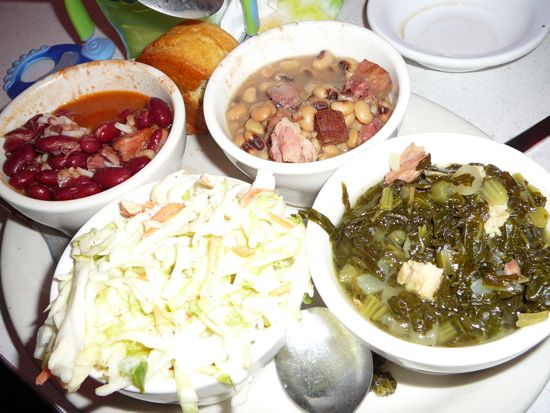
Baby Q got to eat collard greens, red beans and rice and some of Mom’s omelette:
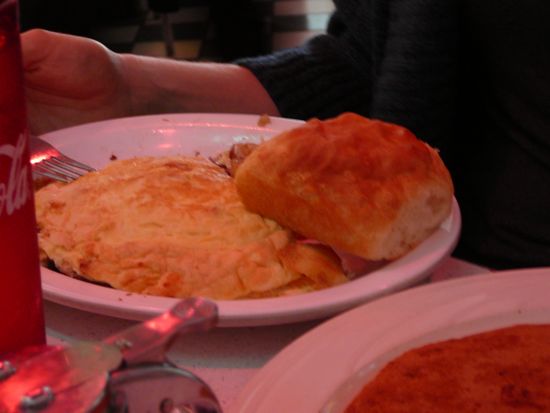
And a few bites of Dad’s short stack:

It is hilarious; Baby Q is feeding himself. He is very fussy; he doesn’t like anything that sticks to his hand, and after one bite, he knows what he likes and what he doesn’t. His Mom says the kids in his class at Baby School are starting to eat with a spoon, so Baby Q will be starting that, too.
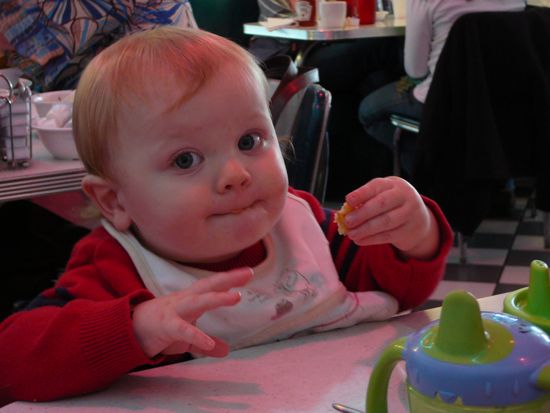
We are off to the park to take some photos of Q and his parents. 🙂 My life is full of comfort and joy. 🙂 Thanks be to God; Alhamdallah!
Lord of Death by Eliot Pattison
I didn’t know that much about the Chinese obliteration of Tibetan culture in Tibet. I didn’t know about the systematic destruction of the monasteries, or at least not in detail. I didn’t know about the brutal re-education techniques for the Bhuddist monks. I didn’t know how strong and resistant the peoples of Tibet are to the Chinese incursion.
I’ve learned most of what I know reading Eliot Pattison’s series featuring Shan Tao Yun, a Chinese detective. Or he used to be. In the first book, The Skull Mantra, we meet Inspecter Shan Tao Yun in one of those re-education camps, where he has been tortured and mistreated almost to his physical limits, and the Bhuddist monks teach him new ways of thinking, and those ways help him to see things differently – and to survive.
The Tibetans hate the Chinese, but they make an exception for Inspector Shan Tao Yun, who earns the respect of both Tibetans and Chinese for his unwavering integrity, and his ability to solve the most intricate puzzles. As he does, we learn more about different aspects of life today in Tibet.
The Lord of Death introduces us to the evolving mountain climbing industry developing in Tibet, just across the border with Nepal. Western climbers will see themselves in a very new light reading this book, which involves the murder of the visiting Chinese Minister of Tourism, an American female climber, and former members of a clandestine CIA trained group of Tibetans during WWII.
In every volume, I learn something fascinating. In this book, I learned more about the early struggles of the Chinese Cultural revolution, the corruption of Chinese ideals, and more about Tibetan ways of thinking. I cannot wait for the next book to come out. You can visit his website here: Eliot Pattison.com
Michelin Red “R”s in Pensacola
There is an entire category of restaurants we call Michelin Red R’s, which is for good local food at reasonable prices. I don’t even know if the category still exists, but these are the restaurants where the locals eat.
We’ve eaten high and we’ve eaten low. What we found was that while we have loved many excellent French restaurants, often in the most expensive restaurants, the food is too rich for us. We spent a wedding anniversary at a two star French restaurant, one year when we lived in Germany, and had the tasting menu, which was delicious. At least the first three courses or so were delicious; it’s about all we can remember. Even though portions were tiny, they were rich, and fatty, and we were up all night digesting the rich food. It’s hard to go into these restaurants and only order a soup and salad, or anything simple, so now, when in France, we only go rarely, with friends, and select carefully.
Our all time favorite dining has been in the Red R’s. Once, in Concarneau, we were directed to a local Red R where we were the only non-French people in the restaurant. There may have been other items on the menu (I am sure there were because we had our son with us and he would not have eaten mussels) but we had the Moules – we didn’t see anyone eating anything else. They were so simply prepared – steamed in white wine with garlic and parsley, maybe just a little butter. And they were divine. A little bread, salad, moules, and something truly ordinary, like chocolate mousse or dessert – it was heaven. We sat at long tables, full of French families, the windows dripping from the steam of all the mussels – not elegant dining, but fully memorable, simple and delicious.
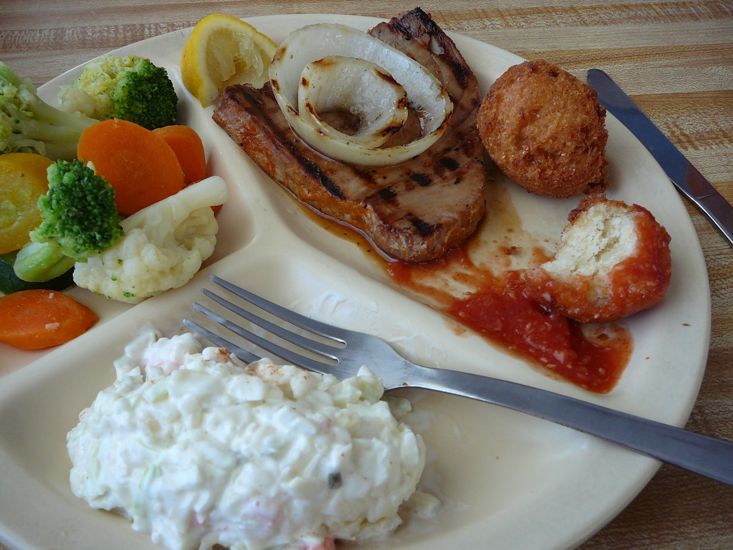
We have found some Red R’s in Pensacola, and we give them a try, but in Pensacola, much of the traditional local food is deep fried, so we have to eat with caution. Our favorite Pensacola Red R restaurant is nearby, the Marina Oyster Barn, where we can get our seafood grilled. It is always full of local people, not tourists, and I love their oyster stew. We also love their grilled tuna, their crab cakes, and their grouper sandwiches. Actually, there is little we do not love there. 🙂

The grilled tuna:
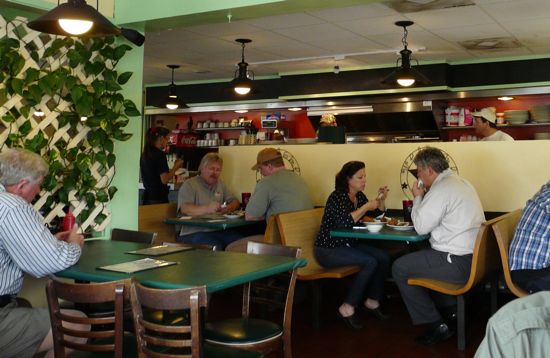
We stopped at CJ’s a week or so ago (on Garden, near Pace), and the place was packed; we had to wait for a table.
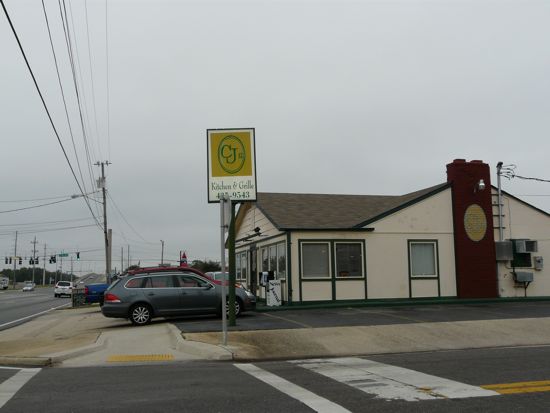
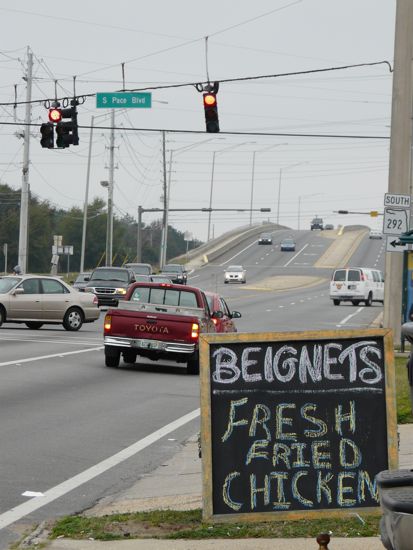
CJ’s club sandwich with onion rings:

CJ’s Reuben sandwich with onion rings:

We can understand why the place is packed; they have fabulous local food. My Reuben was really good. We probably won’t go back; everything is accompanied by french fries and we couldn’t resist trying the onion rings, which you will notice are fried, and there are a lot of them. We can’t afford to eat like that. Our wallets can handle it; our hearts cannot, LOL.
Part of what we want to do it to make ourselves try new places. We find a few we like and we get into a rut, going back to them. AdventureMan had always wanted to try this place, Porcetta’s, also on Garden:
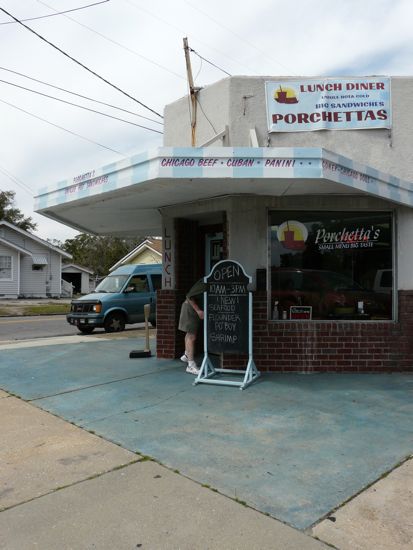
I had thought it was a take-out place, but I was wrong, there was seating inside for maybe forty people. You order at the counter; here is the menu:
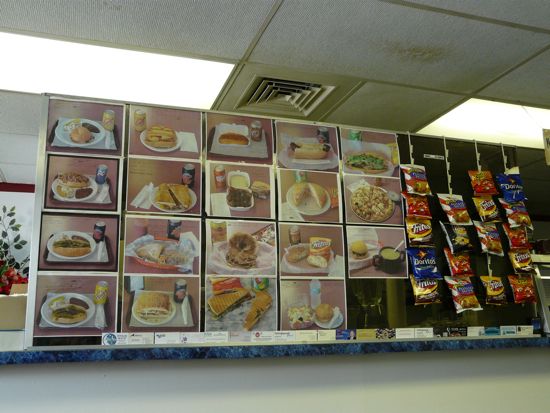
AdventureMan had soup and a ham and cheese grilled sandwich – delicious! There was so much food that after eating the soup, he could only eat half a sandwich, and took the additional half home for dinner.

I wanted to get the Porcetta, not knowing what it was, and the smallest I could get was the Big Mama. It was good:

We often go to Sonny’s BBQ, a Florida chain, where the real Sonny actually visits all the restaurants himself, to make sure they follow his standards. We really like Sonny’s smoked turkey, and tell ourselves that it makes barbecue healthy. If you know differently, please, please – don’t tell us.
I mention Sonny’s because it is a Red R – always packed. Sonny’s is a very large restaurant, so when we arrived a week or so ago and it was packed and about 50 people were waiting to get in (there was a bus with maybe some sport team and maybe a band from Louisiana) we decided to head across the street to the new Chow Tyme. Normally we avoid Chinese buffets, but this place is new and we wanted to see what it was like.

Chow Tyme, off 9th near Creighton, is not what you would usually think of as ‘local’ cuisine, but these days local can be more diverse, and Chow Time is . . . . diverse. Just open, they did a really smart thing, they bought billboards all over town to advertise their opening. It paid off.
It’s hard for me to imagine how they can make money, even with all the customers. They offer so much food. Everyone was chowing down on the steamed crab, which was coming out hot and served with melted butter. There must be room for 300 – 400 patrons in the restaurant; it is huge. At the same time, there is fresh grilled food coming off the open grills, and it isn’t bad. There is also fresh sushi. There is also pizza. Macaroni and cheese. Ice Creams and puddings for dessert. It is a bad mix, but the customers are happy, so who am I to criticize? Chow Tyme is packing in the locals, and the price is reasonable.
Final Week of Mardi Gras in Pensacola
Tonight is the Grand Mardi Gras parade in Pensacola, and I thought I would go. I was even betting I could talk my daughter-in-law into going with me, but the day has dawned windy and rainy, and the forecast is 100% for thunderstorms tonight.
Of course, 100% predictions just make me laugh. It could be that there will be no storms tonight, and no rain and no wind. But I’m putting any plans on hold.
Meanwhile, everywhere you go, you see the green, purple and gold of Mardi Gras in Pensacola. Houses have Mardi Gras wreaths on their doors, and masks decorate tables and walls.
Wreaths for sale at Sam’s Club:

Wreath at the Marina Oyster Bar:

Kuwait Independence / Liberation Fireworks 2011
Wow. Magnificent. Amazing. I’ve never seen anything like it, so creative, so wonderful:
Come back and watch this when you have twelve minutes, and click the expansion box so that it fills your screen. Oh WOW.
Thank you, N, for sending that link. WOW.
Update – Part 2
King Abdulla Returns to Saudi Arabia, Announces Benefits
Sometimes, there is little to say, the news says it all. Ghadaffi calling his own Libyans “rats” “cockroaches” “cowards” “traitors”, aging, long term leaders announcing increased benefits for citizens . . . These are interesting times. The winds of change are blowing, and no one can tell where those changes will take us . . .
From todays BBC World News:
Saudi King offers benefits as he returns from treatment
The king was greeted by hundreds of well-wishers on his arrival at Riyadh airport
Continue reading the main story
Saudi Arabia’s King Abdullah has announced increased benefits for his citizens, as he returned after months abroad getting medical treatment.
There will be extra funds for housing, studying abroad and social security, according to state television.
King Abdullah has been away from the country for three months, during which time mass protests have changed the political landscape of the Middle East.
There have been few demonstrations in Saudi Arabia.
You can read more at BBC World News/Middle East
“We All Have Red Blood in Our Veins”
I joke with my bible study group that God kept sending me back to the Middle East until I ‘got’ what he was trying to tell me. The dilemma now is how do I share this? When my Christian friends see Islam as the great enemy, how do I tell them that some of the best Christians I know are Muslims?
Sunday, at Christ Church in Pensacola, Father C. Neal Goldsborough gave a sermon on loving one another, a “who is my neighbor?” sermon. He is only the second priest I have ever met who mentioned Osama bin Laden, that we have to forgive him and to love him. The first time, it was in a military church, and the gasp was audible. What a courageous priest! Imagine, going among the warriors and telling us we have to love our enemy! Imagine!
Living in the Middle East, living in Tunisia, Jordan, Saudi Arabia, Qatar and Kuwait, I was greatly blessed. My friends were of all nationalities, and I learned one great lesson – we all have red blood in our veins, and we all share more similarities than we do differences. I try to texplain to my friends here by telling small stories of my experiences. I blog a little about them. We are all God’s children, and we create needless barriers when we draw lines that say the equivalent of ‘our way is the right way and you way is not.’
This is from today’s Forward Day by Day meditation for today:
Today’s Meditation
Tuesday, february 22
Ruth 1:15-22. Do not press me to leave you or to turn back from following you! Where you go, I will go; where you lodge, I will lodge; your people shall be my people, and your God my God.
During political upheaval and mounting racial tensions, we were having a Bible study at home. A Fijian woman came in great distress. She was from a rural area that grew sugar cane. She had grown up alongside people of another ethnic group. They were her friends. She could not understand why people were being victimized because they were of another ethnic group. She was so disturbed she had to be taken aside. She kept clutching her arm. “We have red blood in our veins. We all have red blood in our veins!” she repeated, weeping.
In the scripture we have the moving words of the widow Ruth to the widow Naomi, whose son Ruth had married. Ruth and Naomi had in common that they were bereaved, but Ruth was a Moabite, whereas Naomi was from Bethlehem. Naomi shows kindness to Ruth, and Ruth proves loyal to Naomi—a loyalty that goes beyond narrow family blood ties.
We are all God’s children. Today I give thanks for strong bonds of friendship. I give thanks for loyal friends who are not of my ethnic group.
Assorted Photos from the Kuwait Visit
These are a few photos I didn’t really have a post to go with, just random photos from my recent visit to Kuwait:
This one was just a good combination as I was waiting for a light to change; the Athel tree along the road, and the banner celebrating 5 years of rule by the current Amir of Kuwait:

Yeh, it’s a little blurry; I’m shooting as we’re rolling along in the carnage of traffic on the Kuwait Corniche:
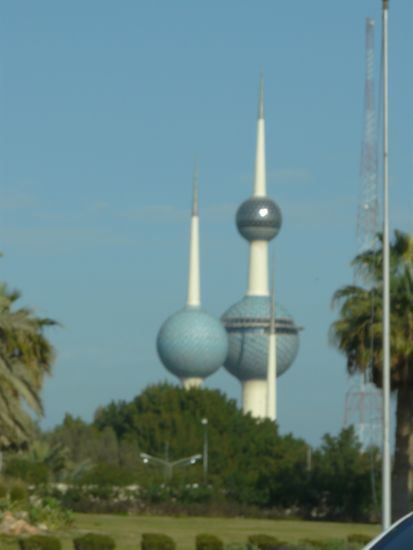
I am such a sucker for picturesque fishing boats:

Only thing better than fishing boats is fishing boats AND the Kuwait skyline 🙂

I love being downtown at night:
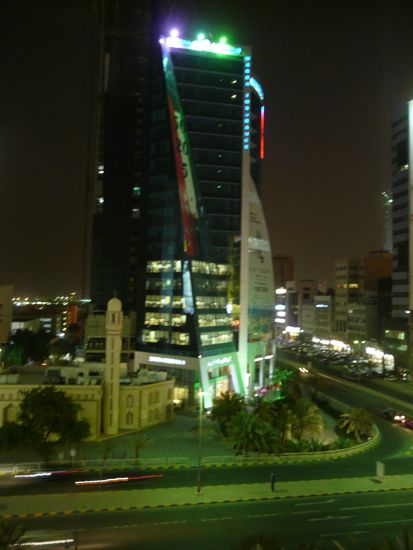
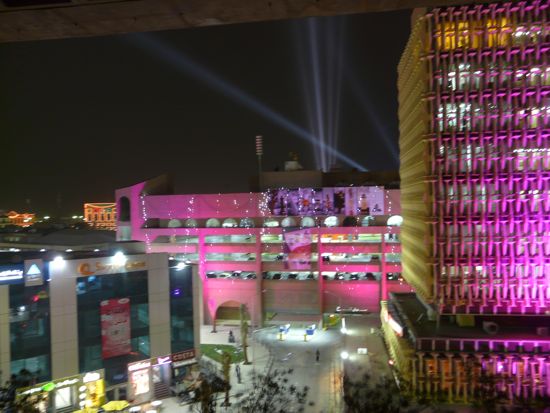

And this one is from the Kuwait airport, and it just makes me sad; I think we are supposed to overcome barriers 🙂

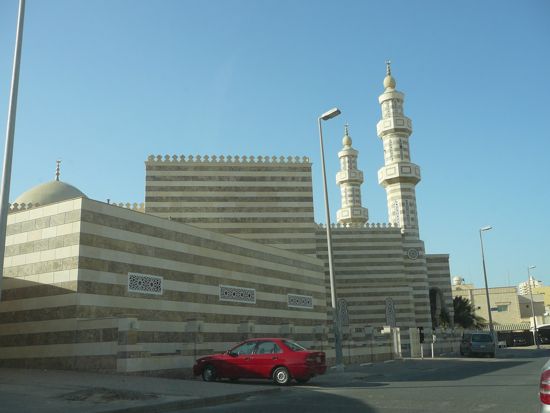
I had to go by the Fintas Co-op to see how the new mosque turned out – it’s mammoth!
Hitting the Wall
“Ummm . . . . I can’t stay up any longer. I have to go to bed now,” AdventureMan says to me, bleary-eyed. It’s 8:15 PM.
I’m still slowly going through mail that came while we were gone. I went through quickly the first day, checking for any bills that needed to be paid right away, and the rest I’m going through when I can.
We are not exactly not jet lagging. We are sleeping through the night, which is a really good thing, but we still hit slumps at odd times during the day. I am waking up early, but I don’t mind. This morning was a huge full moon, so I went out and walked a mile; it doesn’t even take 20 minutes, and I am savoring this spring weather. In the summer, it is hot – for me – even at 5 in the morning, even when that is the coolest it is going to be all day, it is still hot for me in the summer. I relish my walks at this time of year, relish the coolness.
We spent yesterday taking care of the Happy Baby, who was a little less happy than normal. Well, happy enough, he is such a good baby, but suffering the after-effects of the one year vaccinations, fever, lethargy, just not his normal self. We were delighted not to have anything else on our calendar, and at the same time, we were exhausted by the end of the day. My heart goes out to grandparents who are raising their children’s children . . . we just don’t have that energy anymore; it takes two of us to keep up with a very mobile one-year-old. No wonder God gives babies to young people!
Today, a beautiful spring day when the high will be around 72°, I think I will start cleaning out the garden in back. Last year, I had to completely cut it back, but when it started growing, it was lush and glorious. I’ll just pull out the dead growth this year, trim where it might need trimming, and look for a new honeysuckle vine to plant along my back fence. I love the smell of honeysuckle. I might also plant a jasmine plant, see how it does, have a great smelling back yard. 🙂
Recent Comments
intlxpatr on Shampoo Ginger tigerbutterya0c5ff1d… on Shampoo Ginger intlxpatr on British Soldier Kidnapped, Esc… John on British Soldier Kidnapped, Esc… intlxpatr on British Soldier Kidnapped, Esc… Wikipedia Donate Button

Amazina


Early Voting in Florida


