Oh! My Aching Back!
“My back hurts,” AdventureMan complained, “and I am really, really tired.” He slept in yesterday, and I went to the early service alone.
We’ve been helping our son this weekend with the Happy Baby while his wife is out of town. 🙂
It is so easy to forget – a baby is hard work! Especially a mobil baby, able to explore and who moves quickly!
Fortunately for us, he is also a very very good baby, a sweet tempered baby who is easily distracted from his more dangerous attractions, and who is not yet fast enough to catch the cats, who evade him easily.
We took him out for barbecue yesterday, and fed him baked beans, sweet potato and broccoli. He gets this concerned look on his face, but he doesn’t complain, as he explores the new textures and tastes. I also bathed him when we got home, because he managed to get his hands and feet sticky between spoons of food.
It was a lot of fun, and we understand thoroughly why God gives babies to young parents, LOL!
Show Me the Money
Two themes came together, early this Sunday morning in Pensacola, first, as Father Harry spoke to us at Christ Church this morning on stewardship, and giving generously, and then later, as I was reading my Sunday Pensacola News Journal, an article on our elected officials, and their finances, their net worth and where their money is coming from.
Father Harry spoke about the rich man, at whose gate Lazarus begs, covered with sores, and then, at death, how the rich man asks God to send Lazarus to wet his lips, as he burns in the eternal hellfires, and Lazarus sits with God. He also asks God to send Lazarus to warn his rich family members that their choices, their lack of generosity, will have consequences, but God says (I paraphrase here) that Moses already told them, and earlier prophets, and that if the rich didn’t listen to them, they are not going to listen to Lazarus.
To me, it seems a given, that if you are blessed with plenty, then you have an obligation to help those who struggle. It isn’t necessarily money, it can be food, it can be time, it can be expertise, or – in my case – it can even be fabric. 🙂 We learn it in pre-school and kindergarten, don’t we? Share what you have, and everyone gets along.
It totally boggles my mind that many of our good friends, government and military people, have excellent health care under a highly socialized system – that’s what the military health care system is all about, we all have access to the same treatment. Many of the people who have access to medical treatment become rabid about supporting health care for those who don’t. Part of it seems to be “I earned it, and those lazy bums expect it for nothing.”
Most of my life, I’ve worked with ‘those lazy bums’ and have grown to have a lot of understanding and compassion for the circumstances that can make an entire family bone poor. Sometimes, it is poor choices – but how do people learn to make better choices without help? How do people aspire to more when they think that the ‘more’ is inaccessible to them?
The face of our nation changed after World War II when many more Americans gained access to higher education as a veteran’s benefit; prior to the GI Bill, higher education was only available to those comfortable people who could afford it.
Also in today’s Pensacola News Journal is an article about Study: Educating Women Saves Millions of Children which is an Associated Press Story about a study published this month in Lancet. “Educated women tend to use health services more and often make better choices on hygiene, nutrition and parenting,” the study (funded by the Bill and Melinda Gates Foundation) concludes.
And last, in the Pensacola News Journal, is an article that makes my heart sing, that makes me proud to live in a democracy, the article about how much our elected officials are worth, and where there money is coming from. I love it that we hold our leaders accountable, and that their wealth is (theoretically) transparent to us.
I’m a great advocate of wealth. I admire people who create wealth, who invest, who work hard for their money. The best of these people, and I mentioned Bill and Melinda Gates (above) for a reason, give back generously. Many people don’t start out rich, they start from little or nothing and build slowly slowly until they have reached a comfortable level. Sometimes, even in hard times, if you have built a strong foundation, that money just keeps multiplying, especially if it is invested with some diversity.
“It’s called the law of the harvest,” my Mormon friends told me when we were discussing how what you give comes back to you multiplied. It was so graphic, I’ve never forgotten it. There is nothing wrong with money. Money is just another tool, like a computer, or a hammer. It’s what you do with your money (tool) that makes the difference. Money is kind of like a seed, you plant and you harvest, but it is also like fertilizer – you spread it around, and amazing things happen.
Having money is a blessing, and giving it away is even more of a blessing. When you give, good things come back to you, multiplied. It’s the Law of the Harvest.
Guide to Giving to Beggers
I don’t see so many beggers in Pensacola, but I do see a lot of men sleeping rough; the warm temperate climate here attracts a lot of homeless. The churches provide hot breakfasts, sometimes, and there is a homeless shelter and long term transition facility downtown. Giving to beggers was a much bigger issue in Qatar and Kuwait, where the begging woman with the baby in the souks or the guy with the plastic bag full of urine and blood would accost me, and I always had half a feeling I was being scammed.
Today’s reading in Forward Day by Day puts it all in perspective:
THURSDAY, September 23
Luke 4:14-30. The Spirit of the Lord is upon me, because he has anointed me to bring good news to the poor.
Snow fell on me as I waited for a cab. A rumpled homeless man in a stocking cap and fingerless gloves asked me for money.
I like to know that anyone I give money to is worthy (which usually means working or actively looking for work) and I don’t want him spending the money on alcohol or drugs. So I donate through a church or community organization. Pastors usually encourage that kind of giving.
I gave the man twenty dollars because I’d just been to the ATM and had nothing smaller. He stared at me for a moment and stammered, “Ma’am? You meant to give me a dollar, didn’t you?” When I said no, he put his head back and began to yell, “Thaaaank you, Jesus!” over and over. He went to a nearby coffee shop and came out with a huge cookie and a cup of coffee, still singing out, “Thaaaank you, Jesus!”
What if a beggar misuses my money? That isn’t my business. Giving to a beggar is between me and God; what he does with the money is between the beggar and God. (2004)
Thank you, Jesus. 🙂
Only As Old as You Think You Are :-)
I found this great story in BBC Health News. The part that cracks me up is that they made these people carry their own bags, and they left all the uneven floors and throw carpets in place and forced them to pay attention to where they walked. . . and the result – they all did BETTER than they had been doing before!
Can You Trick Your Body into Feeling Younger?
Our volunteers were actors Liz Smith (88), Sylvia Syms (76) and Lionel Blair (78), cricket umpire Dickie Bird (77), newsreader Kenneth Kendall (86) and former Daily Mirror editor Derek Jameson (80).
They agreed to live in our time capsule house for a week, during which they dressed in 1970s clothes, slept in replicas of their very own 70s bedrooms, watched television from that era, and talked about 1975 in the present tense.
It proved to be a fascinating but draining experience – for both experimenters and experimentees.
From the beginning we made it clear to our volunteers that they would be expected to look after themselves. Research in nursing homes shows clearly that giving residents control over their own lives and their own choices has a hugely beneficial impact on health and happiness.
In one study, residents who were allowed to choose a plant to care for, and when and where to receive visitors, were found 18 months later to be significantly more cheerful, active and alert. They were also far more likely to be still alive.
Another thing about our 1970s house was that it was full of physical challenges. There were shag pile carpets to trip over, door ridges to step over and lots of slippery linoleum. Research on mice has shown that those who live in a challenging environment live nearly 30% longer than those who in a secure but boring environment.
In this spirit, on their arrival, our volunteers were asked to carry their bags up a flight of stairs to their bedrooms. It was the first time they’d been forced into such physical activity in many years, and they were not happy.
But they rose to the challenge. When they started at the bottom of the stairs, a couple were adamant it would be impossible to make it to the top. Watching from a laboratory close by, it was hard to resist going to their aid.
Slowly, step by step, they succeeded. We had made them question whether, perhaps, they were more physically capable than they had given themselves credit for.
It was a tough initiation, but a core element of Ellen’s original experiment was the idea that our prior beliefs play a huge part in how we perceive the world, and how we perceive ourselves. By immersing our volunteers in a 1970s world, we were hoping to make them think of themselves as younger, fitter and healthier.
For many of them, the 70s had been a golden decade, a highlight of their careers.
We took Dickie Bird back to Lords to relive the atmosphere. As he walked through the tunnel, onto the grounds, he blossomed before our eyes. Dickie had had a stroke, suffered 18 months of illness, lost confidence and come to think of himself as old. By the end of the week, his confidence was back and he showed remarkable improvement across a range of tests, including memory and stamina.
Over the week we gave all the celebrities tasks to do, but we also left them to fend for themselves. For up to 12 hours a day, we observed them through our surveillance cameras and, just as Ellen had discovered all those years before, we saw great changes.
Half way through the week, Liz Smith took 148 steps with the aid of just one stick. For someone who had not walked without both sticks since her stroke – and who often relied on a wheelchair – it was a real breakthrough. She was no longer willing to be limited by the physical constraints she had imposed on herself.
At the end of the week we put our guinea pigs through the same rigorous battery of physical and psychological tests we had at the beginning. Memory, mood, flexibility, stamina and even eye sight had improved in almost all of them.
The results were not uniform, but in some cases they shed up to 20 years in their apparent biological age.
It made a compelling case for Ellen Langer’s argument that opening our minds to what’s possible can lead to better health, whatever our age.
Organization and Settling In
We’ve only been back a week, but we’ve spent this time unpacking, cleaning things up, sorting out things we don’t need, finding places for things and putting things up. AdventureMan is having a lot of fun, he bought this beautiful tent hanging which just exactly fits around three of the walls in his office and the entry:

He spent a day putting tiny nails into the wall while I sewed a cord for hanging onto the back of the band. He has it up now, and he loves it. He also put up some pictures on the wall and instituted a recycle basket and a shred basket. He is so organized:
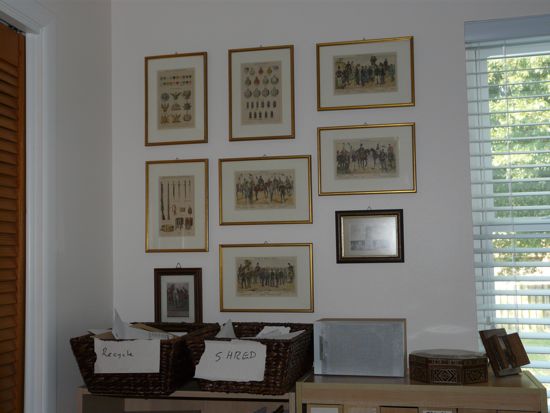
He put together another set of cubicles for me so I can keep order in my closet:

We are people who need order in our lives; we live chaotic lives in an ordered environment. 🙂
Squirrel Proof Bird Feeder
Before we left on our 5,000+ mile trip to Seattle and back, we bought a bird feeder. I found it at Home Depot, and didn’t pay much, but it said it was squirrel-proof. It wasn’t. It deterred the squirrels for maybe two days as they figured out how to climb the thin pole and lean over to nibble at the bird-goodies.
When we got back, the feeder was ripped apart; the squirrels had torn out all the bird perches, so we got a new one, a more expensive one, ‘totally squirrel proof.’
Yeh. Right.

The good news is that we also bought a hummingbird feeder. A hummingbird had been by, and we could tell he was looking for a feeder, and figured there had probably been one before, when the previous owners were in the house. As I was waiting to catch a shot of the squirrel, he came back and found the feeder, where he is a regular visitor. He also visits our garden, full of hummingbird-friendly flowers. 🙂

Mediterranean Plus ReVisit
One of the very first places we head once we are back in Pensacola is Mediterranean Plus, because the food there is always good.
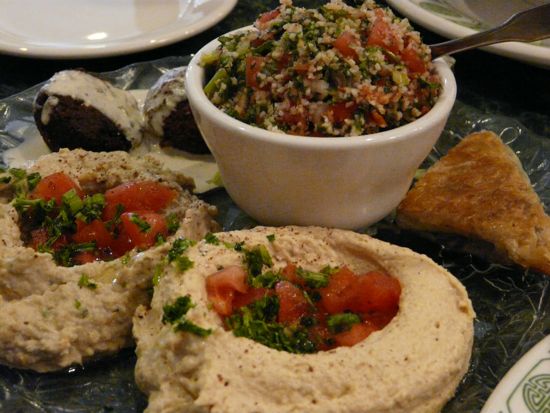
This time, we order the Vegetarian Mezze (appetizer assortment) and I had the Seafood Soup.
The mezze is as good as anything we have ever had in the Gulf, or in Jordan. The Seafood Soup is spectacular, oh, sooooo goood.

If you are in Pensacola, you go to where 9th meets Creighton. On the north side of Creighton is the Walmart, across Creighton is a large strip mall. In the section closest to Creighton, in the same section with Four Winds Market and the liquor store, and Rob’s Cameras – is where you will find Mediterranean Plus. Parking is plentiful. The food is fabulous.

Welcome to Louisiana
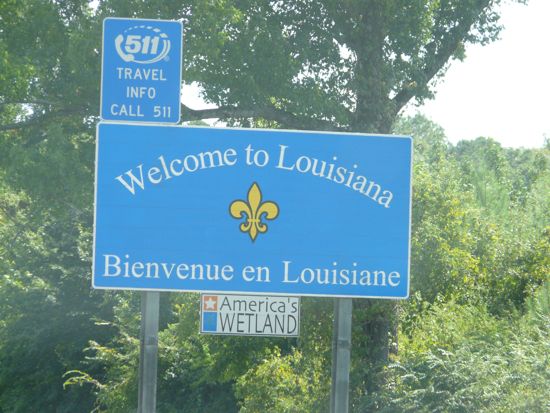
We have had some beautiful drives on this road trip, but I would have to say that my absolute favorite drive of the trip was from Lafayette to Baton Rouge. About 18 miles of the drive was along a 1930’s era freeway over miles of bayou and swamp land, it was beautiful, just lovely. I was driving, so I couldn’t take any photos, and the lanes were a little narrow so I was truly focused on the driving, but couldn’t help but notice the beauty we were driving past.
Our stay in Baton Rouge was a little noisy, there were LSU alumni gathered in our hotel to watch a football game, which is great except their children were running up and down the halls and screeching, oh aarrgh.
Our drive home was uneventful – about an hour across the rest of Louisiana:


Another hour crossing Mississippi, then another hour crossing Alabama, about a half and hour and we are home in Pensacola! It is barely noon, we unload the car and go to pick up the Qatari Cat, who moans loudly to tell us how annoyed he is with us for abandoning him. Once home, he is quickly settled and happy again.
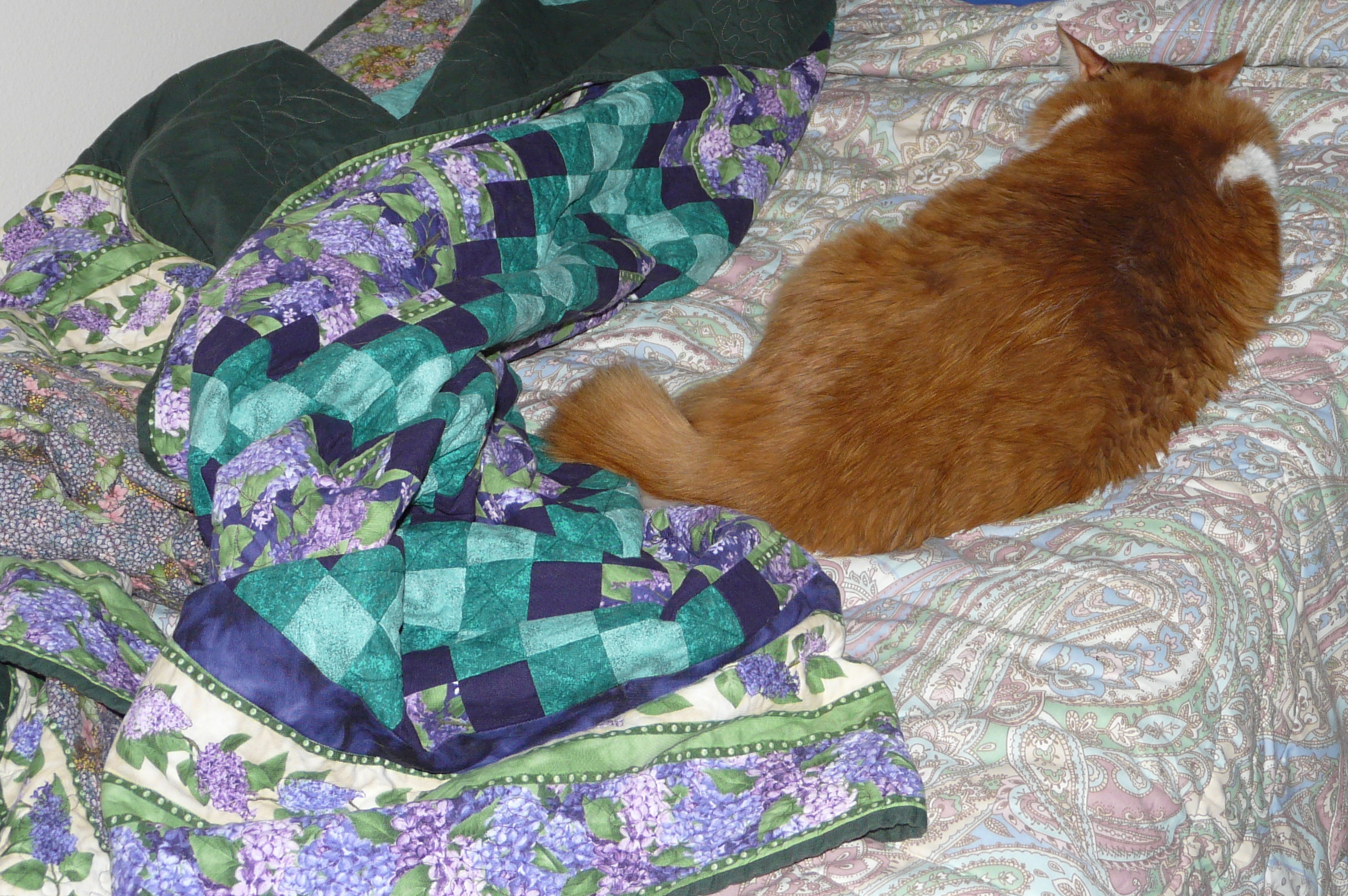
It’s been a long, fun, trip and we are glad to be home. AdventureMan is airing out our old carpets, cleaning some which our cats threw up on (previous cats, not the Qatari Cat. Big Nick. Morganna. Cinnamon. Merlin. We’ve had a lot of sweet cats.) There is work to do, bills to catch up with, doctors to see (oh aarrgh) and meetings to attend. We have to catch up from our trip AND we have to catch up with our ‘normal’ lives. The best part is catching up with our son and his family and Baby Q. 🙂
So Much Hatred . . .
Today I saw a story about US soldiers in Afghanistan, killing for fun. It follows hard on the heels of the story of Reverend Terry Jones who has ‘prayerfully’ decided to burn a copy of the Quran on the anniversary, today, of 9-11. These stories are like wounds in my heart, and I begin to wonder if there is any hope for ‘peace on earth, good will toward men.’
Sometimes I get discouraged.
9-11 wounded us badly, wounded that fountain of optimism that believes we can all be friends, that we can overcome, that ‘Yes, we can.’
We’ve recovered.
Acts of hate are acts of hate, whether they originate from Americans, from Moslems, from Hindus, from Mongolians, from Krakens . . . We each have it within us to make the right choice, to choose NOT to act in hate against our fellow man. It’s not a one-time choice. It’s a choice we each, individually, make over and over again, every day.
Pat Conroy and South of Broad
I don’t know where to start, telling you how much I like this book. I couldn’t wait for reading time to read it. It never flagged, every page kept me glued. I want you to read it, I want to be able to talk about it with you, but there is so much in this book that I don’t want to spoil it for you.
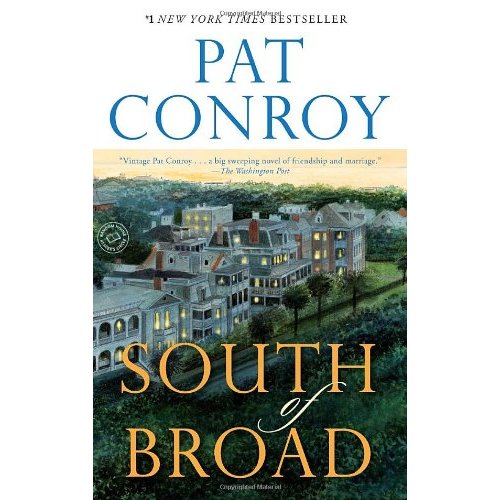
There are huge themes. There are some very bad people. There are some very good people. Sometimes the very good people can do very bad things, and sometimes the bad people can have some redeeming moments.
We meet the main character as he is about to begin his senior year in college. On the day we meet him, his life changes. Several new people come into his life. Two orphans. A beautiful sister and equally beautiful brother. A black football coach and his son. Three rich kids kicked out of the best private school in town for doing dope.
There are two ‘characters’ who are not people. One is the city of Charleston, SC, and there are entire paragraphs in this book which will make you fall in love, through Pat Conroy’s eyes, with this complicated, beautiful city. Another is Hurricane Hugo, which is as destructive as Charleston is beautiful.
South of Broad covers a time of tumult and change, and you see it through the eyes of of Conroy’s endearing characters. Times changes, society changes and change comes hard for those who stand to lose the most. Conroy deals with segregation, integration, child abuse, suicide, gay sex, economic discrimination, and psychiatric illness, a psycopathic criminal, who happens to be the father of two of this friends, and a hurricane.
For me, what was most engrossing was the complicated question of who is righteous? It’s what I want to talk about with you. Who is most like Jesus? (LOL, give examples) Which characters would you expect think themselves closest to God? Do you think they are? (Be prepared to defend your opinion.) What is a good parent? In this book, who do you think was the best parent?
If you decide to buy this book, please buy a copy with the Reader’s Guide in the back – an interview with Pat Conroy and questions that help you think about the book. I’d like to share with you a segment of the interview which I found so brightly illuminating:
. . . . I found the Parisians rarified, vigilant, hypercritical and fabulous. They had made themselves worthy of the great city they lived in. They oozed style and they ate like kings. . . . The Parisians seem special to both the world and themselves. Then it hit me: My God, they are like Charlestonians.
As I see it, you can take out Charlestonians and substitute Kuwaitis. Or New Yorkers. Or Romans. In fact, just about every society I have visited have their elite, who consider themselves rarified and special, and fight to keep themselves so.
So not only is the book dealing with spiritual righteousness, but also with themes of entitlement and deprivation, bullies and the bullied, parenting, self-fulfillment, and the very real and over-arching theme of friendship and the power of a close circle of friends.
I don’t want to tell you too much. I loved this book. I’m still thinking about it. I hope you’ll read it and think about it, too, and then come back and tell me what you’re thinking. 🙂
Recent Comments
intlxpatr on Shampoo Ginger tigerbutterya0c5ff1d… on Shampoo Ginger intlxpatr on British Soldier Kidnapped, Esc… John on British Soldier Kidnapped, Esc… intlxpatr on British Soldier Kidnapped, Esc… Wikipedia Donate Button

Amazina


Early Voting in Florida


