Cucina Verona In Fort Bragg, California
This was AdventureMan’s pick, and we both agreed it was one of the best meals of our trip.
Fort Bragg is quirky. It’s a real people kind of town, with grocery stores and drug stores and bakeries.
At dinner, at Cucina Verona, there was an aged guitar-player, but it almost seemed like he might have been someone famous at some time. He played very abstractly, with almost identifiable tunes, but just when you would think you were about to figure out what it was, he would drift off into something else.
Cucina Verona was nearly packed. We had made reservations, good thing. The menu was impressive. They have great waitstaff, helpful, chatty but not intrusive. They made us feel welcome, helped us find the right local wines and checked often to see if we needed anything.

(Just in time, I figured out what I had done and switched back to color!)
AdventureMan had a Pacific Coast Bouillabaisse, and he said it was the best, ever.
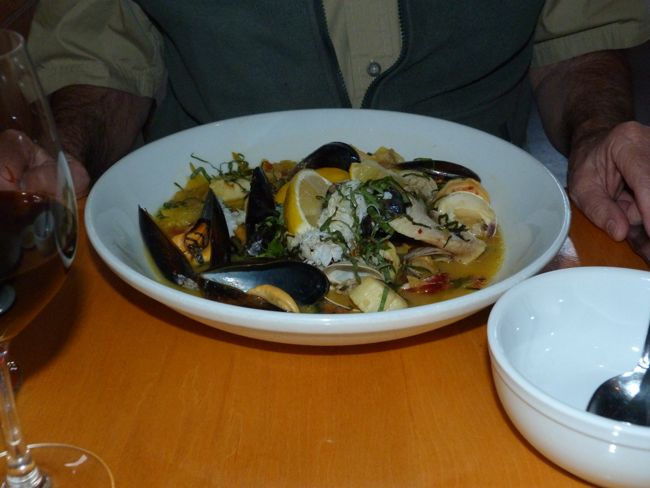
I had scallops with a seafood risotto; five or six exquisite, rich scallops (I adore scallops, but they are so rich I never can eat a lot of them) and a rich, creamy risotto full of sea-flavor with local crab and shrimp, oh yummmmmm.

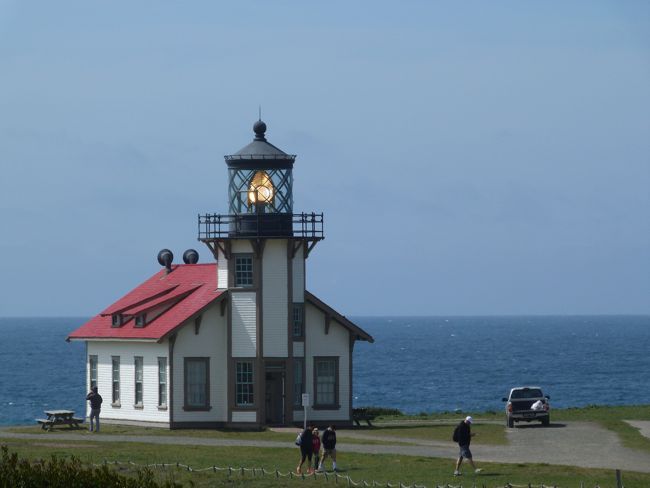
Point Cabrillo Lighthouse, Another Great Hike
There is a huge problem with the Cabrillo Lighthouse hike, and it is obvious from the very beginning. It is only a half mile, and it is downhill all the way.
What’s the problem, you might ask?
Well, if it is downhill all the way getting there, then coming back, it will be a half mile all . . . . What? You fill in the blank.
But it is another gorgeous day on the California sea coast, and it is a glorious day for a hike, even uphill.


There is a wonderful story about a man who came to take the lighthouse keeper position, but he wasn’t married and only married keepers were allowed to live in the lighthouse keeper’s house. So a local girl – maybe the daughter of the previous lighthouse keeper – volunteered to marry him, and they stayed married the rest of their lives.

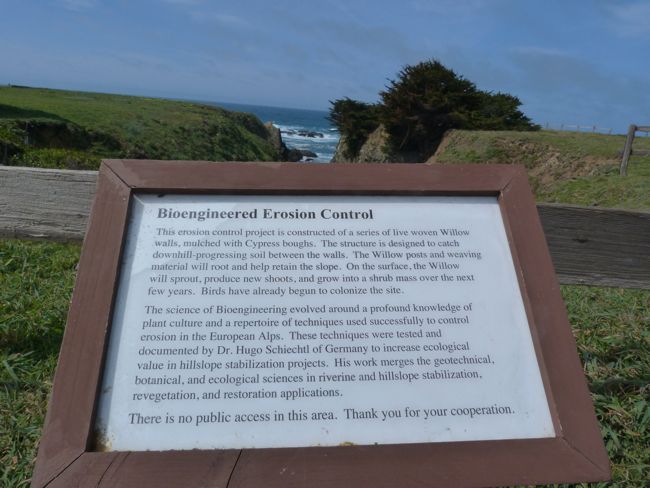
I love using natural means to bioengineer against erosion loss:
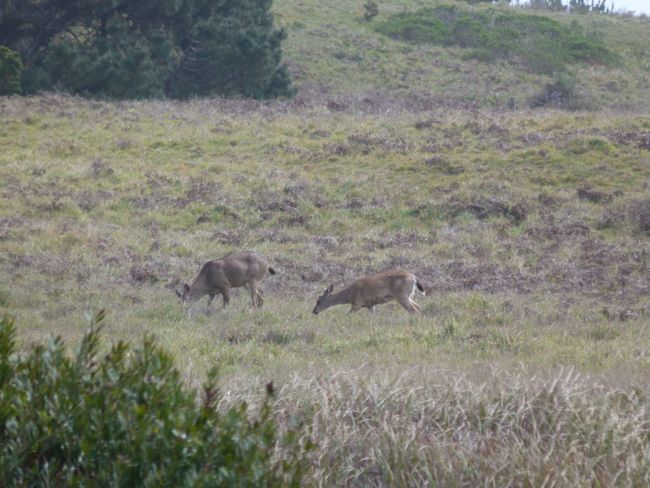
And, on the way back, yes, uphill all the way, we come across some very calm deer, not worried in the slightest by the steady trickle of visitors on the nearby path:
Mendocino, CA and the GoodLife Cafe
Mendocino was one of our destinations, it gets such good write ups, it sounds so attractive. Mendocino has the same gorgeous coastline, and it is cute. There are a lot of Bed and Breakfast kind of places, very nice, just, as it turns out, not our thing so much. We really like spacious.
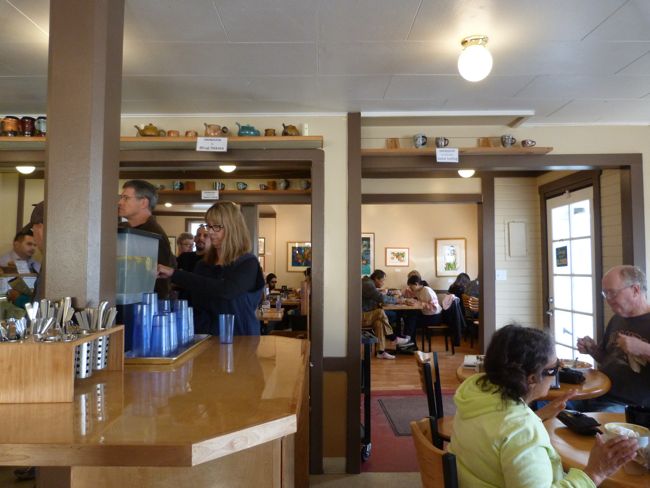
We found a cafe we really liked, The Goodlife Cafe, where we stopped, and so did a lot of other people. It was hard to find a place to sit, and people were even sitting outside on a very cool windy day.

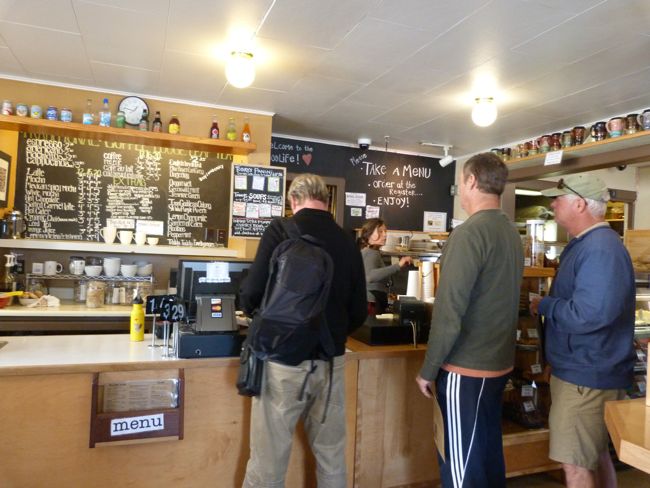
I found a place barely big enough for two; the woman sitting next to us had spread out all her reading materials, so I asked “are these seats taken?” and she had to make room. We barely had room, but it was all right, at least we were seated.
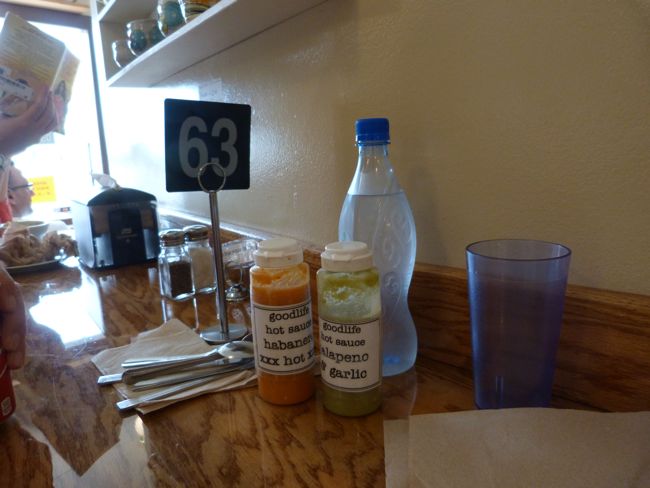
AdventureMan said this was one of the best sandwiches and chowder he had on his trip:

I felt the same way about the pumpkin curry; it was unusual and magnificent. Warm and filling after a morning full of hikes!


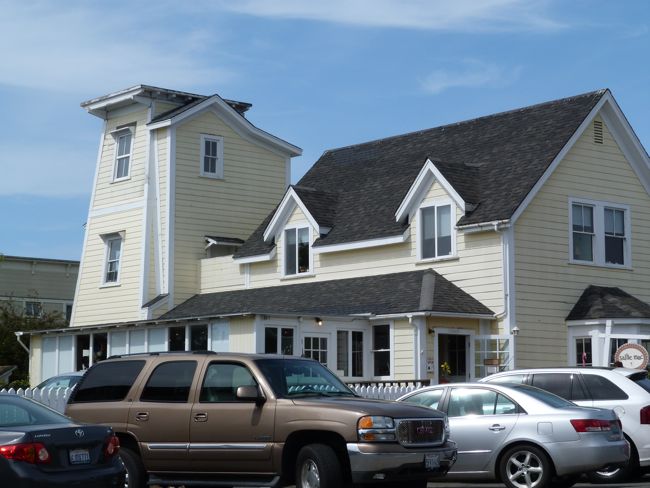
Navarro Point Park
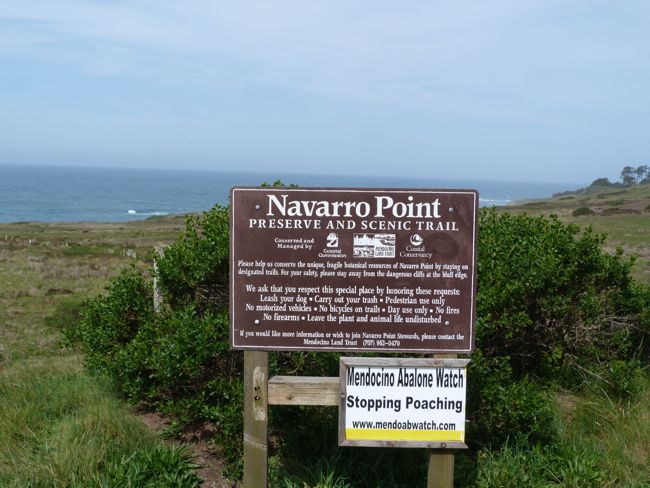
At Navarro Point, I make my ten thousand steps without even trying. It is so beautiful, you can hike and it doesn’t even feel like you are hiking, there is so much to look at, so much to enjoy. There is a brisk Pacific wind blowing, great for hiking, so you don’t even get too hot.

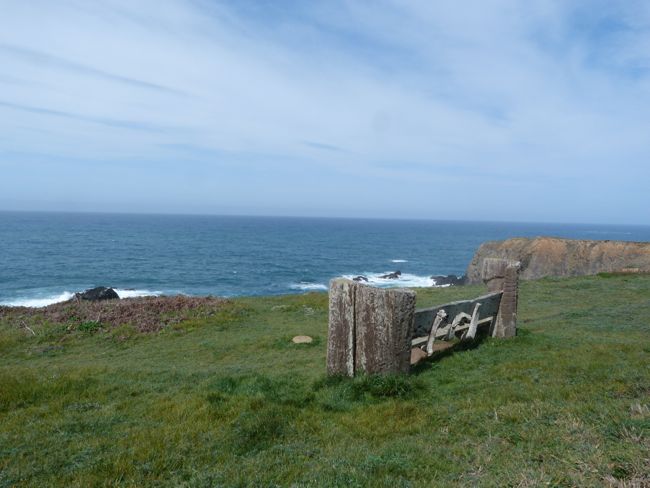
You can see this stone in front of the bench overlooking the crashing waves:

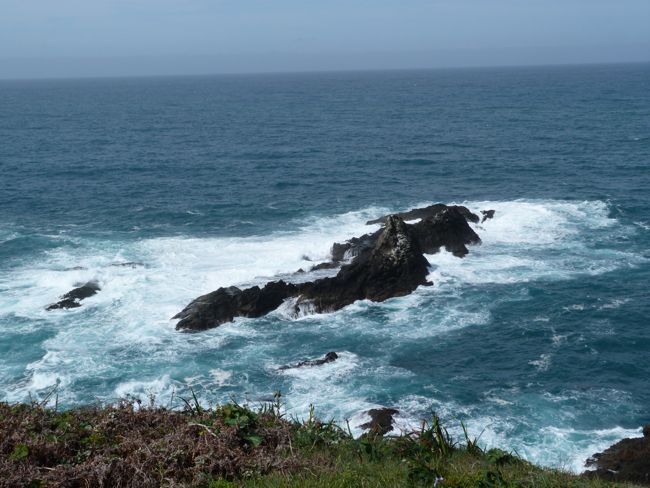
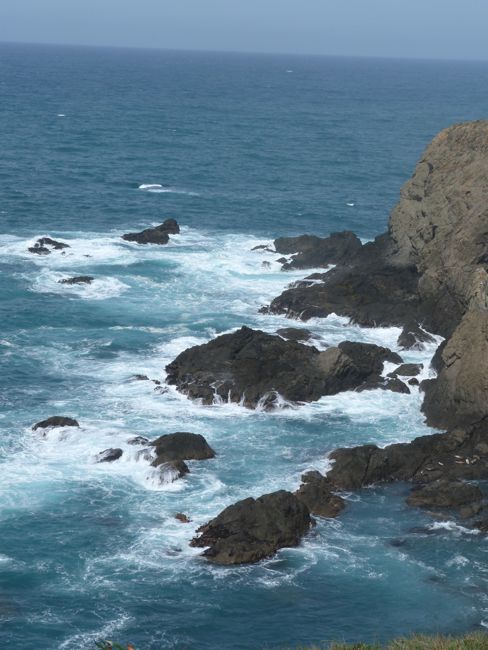
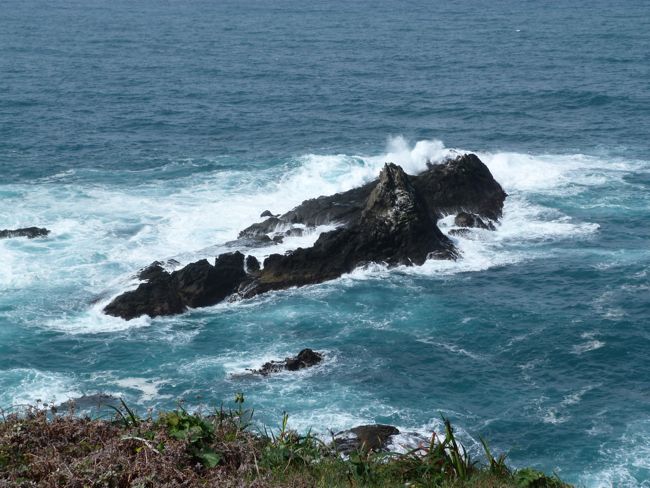
I am careful not to go too close to the edge; I love crashing waves but I don’t want to be smashed against the rocks by crashing waves after tumbling down a rocky bluff!


For me, this was the best hike of the trip. I love the smell of salt sea air, I love the feel of the wind on my face and the sound of crashing waves.
“From the Redwood Forests . . .”
When I was little, this is the song that everyone was belting out. So many people sang it, Woody Guthrie, Peter Paul and Mary – and I believe it was based on an old American folk song:
As we hit the North California Coast, I could hear this song.
“From California . . . to the New York Island . . . this land is made for you and me.”
We live in a beautiful country. No matter where we turn, we have found beauty. Even parts of the country others find desertified and grim are beautiful in the spring, unbelievably green, but California has to be one of the most beautiful states of all, so much variety, so much beauty.
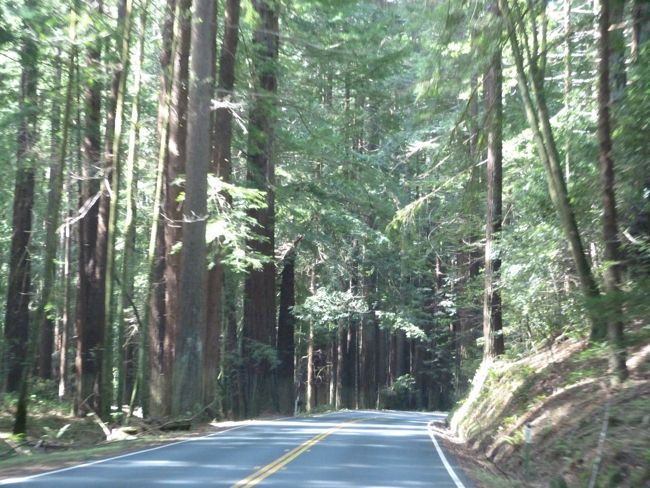
We love coastal areas, but driving through the redwood forests is also a thrill. The redwoods are just so beautiful, especially on a spring day with sunlight filtering through. It’s cool-warm. Too warm for a sweatshirt, too cool without it. Fortunately, we have time on our schedule to just stop and enjoy whatever we wish, because we are making a lot of stops along these forested roads.

Even a California Poppy! Today is a blessed day!

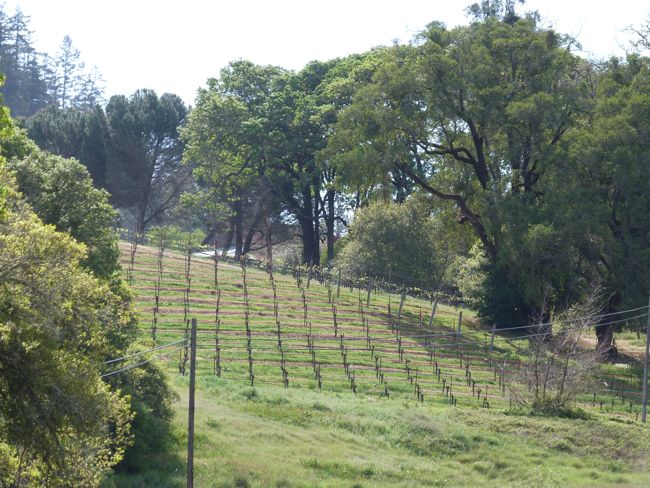
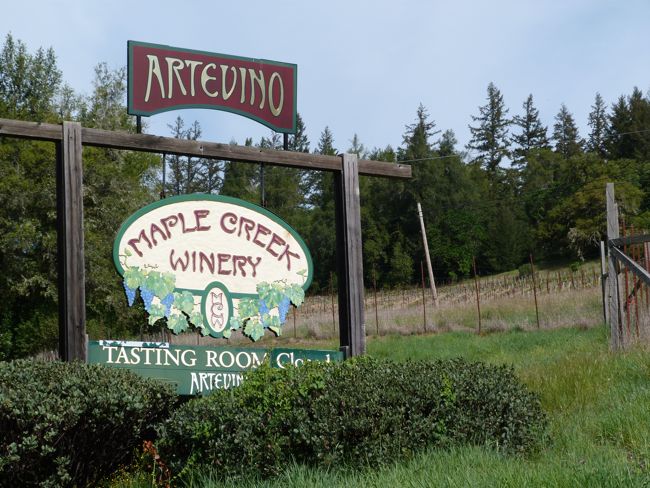
Of all the vineyards we saw, I liked this one the best. It’s that Art Nouveau thing they have going on 🙂



A Family Interlude in Los Gatos
I have a favorite nephew, an amazing young man who is, like AdventureMan and myself, a total nerd about maps and all things geographical. From the time he was young, he showed wisdom, and understanding, and a quirky way of thinking outside the box. His license plate said “Earthling.” He cracked me up.
We watched together in horror as the planes hit the World Trade towers.
Now, these years later, he has a delightful wife, who is both intellectual equal and a playful heart who makes him happy and helps him not to take himself too seriously, nor to underestimate his talents. He has a job he loves, at GoogleEarth. They have two children, children around the same age as my own grand children, and I have never met them, so we ask if we can get together and they are eager to see us.
This was one of the best days of our journey.
One of the best moments, and you have to know four year old boys to know how serious and wonderful this is, is when my nephew’s son invited me to come up to his room so he could show me some things. When we got there, he pulled out his pajamas and underpants, and I totally got it, being a person who buys Avenger underwear for my own grandson 🙂 I was so honored, so delighted to be shown his treasures 🙂 It was one of life’s special moments.
AdventureMan had his own conquest; we had brought games and puzzles and things for children, and the two-and-a-half year old took a real shine to AdventureMan. Together, they stacked up pieces to the puzzle, and knocked them over. She had a Viewmaster that she considered her camera, and she snapped “photos” of me. We had a glorious time.
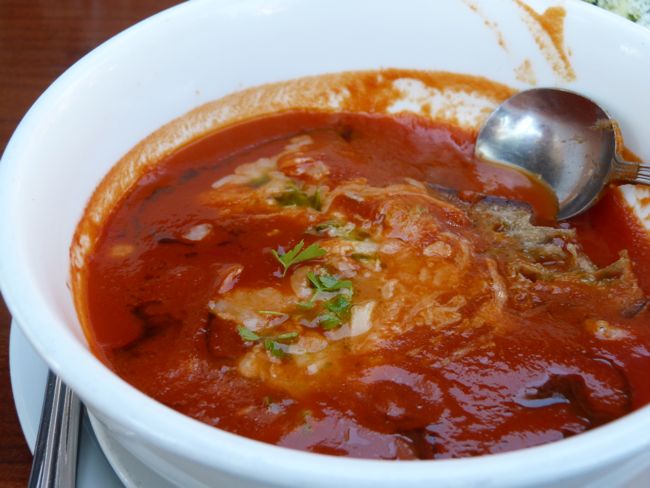
They took us to a wonderful restaurant in Los Gatos, Oak and Rye, where I followed my nephew’s wife’s lead and had a fabulous tomato soup and a shaved brussle sprout salad. This was one of the tastiest and most satisfying meals of the trip.

We were a large and noisy group, two children and five adults who had a lot of catching up to do (we had asked that our nephew’s wife’s mother also join us) and the restaurant found a large table for us outside (it was a gorgeous day) with a shade over us to keep us cool. The kids could move around and we could talk and we weren’t disturbing anyone. Friends of the family saw us dining there, and came over to chat, so it got even noisier – just more to catch up with 🙂 It was a grand reunion.
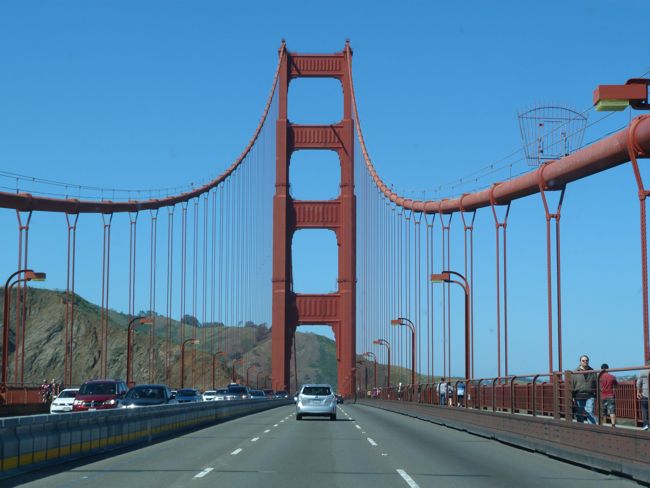
All too soon, we were saying goodbye, wishing we could stay longer but the road is calling, and we are on our way to another stop on the California coast. We hit San Francisco in the late afternoon, and get to go across the Golden Gate Bridge in perfect weather, accompanied by hundreds of people taking advantage of the perfect day to march across the bridge on foot.
Monterey, CA; A Sentimental and Nostalgic Journey
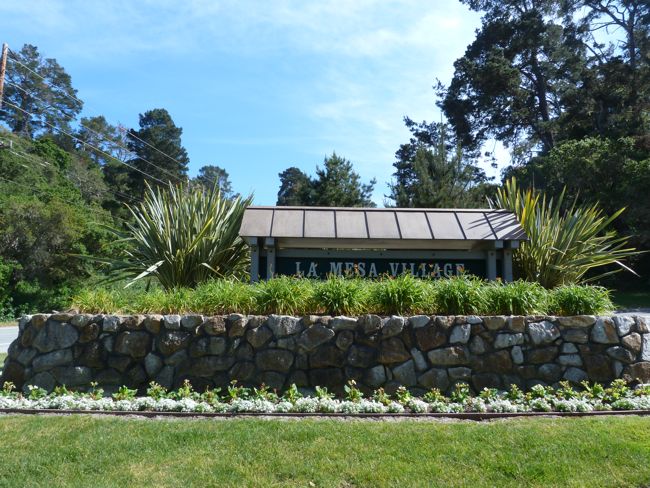
One of the (many) highlights of our trip was spending time, once again, in Monterey, California where we had attended the Naval Postgraduate School and the Defense Language Institute. We used to lie in our bed in La Mesa Village, and we could hear the seals barking. We discovered that with our mighty ID cards, we could get a wonderful suite at the old Del Monte Hotel, now Navy Lodging on the campus of the Naval Postgraduate School.

The Del Monte is one of those magnificent hotels built to welcome post guests to destinations served by the railroads. The Ahwahnee is another such, as are Yellowstone and Glacier Lodges. The Navy took it over during the war, and used it as a rest and rehabilitation center, then later turned the hotel campus into a school specific to Navy needs of navigation, engineering, strategy and decision-making.
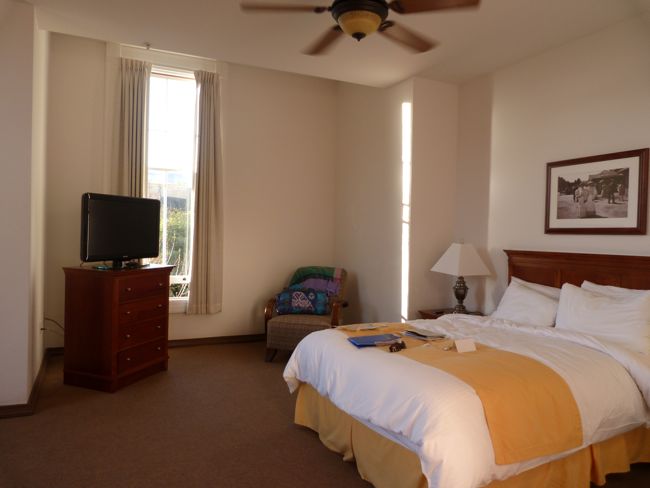
We had a two room suite with a bathroom and a kitchen. It was spare, but very spacious. Having space, for me, is like breathing. Having high ceilings makes all the difference.
This was the sunset from one of our windows:

After settling in, we went out to revisit our old haunts. The biggest shock was La Mesa Village, where we once lived. When we got to Monterey, and saw our quarters, I cried. They were little three bedroom units in groups of four. We were lucky, we got an outside corner unit, so we had more windows and more light than many others, but we also had black linoleum. It was horrible. I cried.
AdventureMan found someone leaving who had carpeting cut exactly for our unit, and bought it to cover the linoleum floors. It was pretty hideous, a greeny-gold kind of shag carpet, but it covered the black linoleum. I thought he was a rock-star.
We couldn’t even find our old unit in La Mesa Village. Now, they are all duplexes, two story, I think they tore down all the old units and built new, modern ones. Each is painted differently, and they look very California suburban, no longer like military housing, except that one or two units have flags outside.
We head down to Asilomar, always one of our favorite drives, and feast our eyes on the coastal rocks and the crashing waves. It is a glorious spring day, people are all barefoot and enjoying the sun.


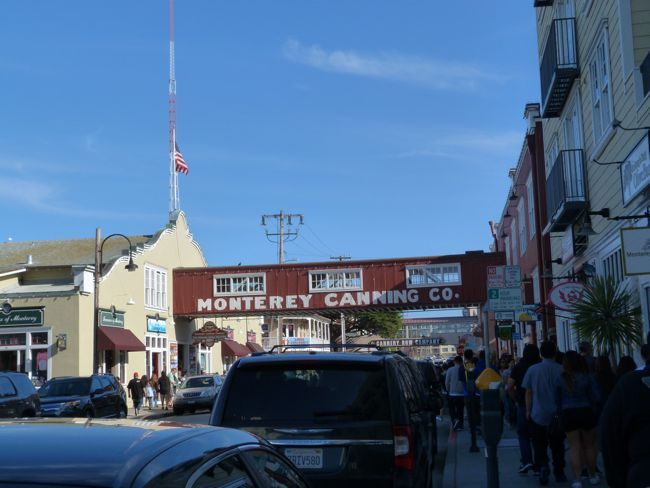
We stroll along the Monterey waterfront, which has changed also. It was always touristy, but it used to be sort of grungy, and now it is clean – and kind of bland, full of shops full of tourist kitch made in China.
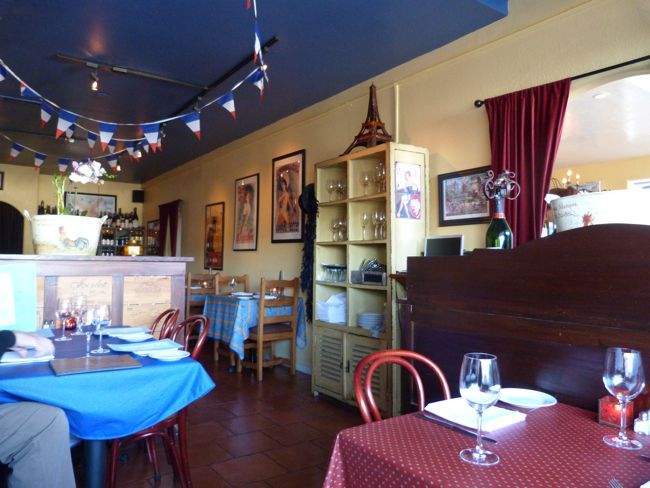
When planning the trip, we spent a lot of time looking for fun places to eat, and this was the place we agreed on instantly, the Bistro Moulin. Good thing we made reservations, they were turning people away as fast as they showed up. It’s an adorable place, very welcoming, and the food was fabulous. It got too crowded to take photos with discretion; we started with a pate, then I had the Petrale Sole, which was fabulous, and AdventureMan had Mussels in Wine Sauce which were more fabulous than my Sole 🙂

We were totally caught by surprise by the most nostalgic moment on this part of our trip. We were enjoying ourselves so thoroughly, being back in Monterey and Carmel, just relishing soaking in all the good times available, and then, as we got back to our room, we heard a trumpet. The long, haunting notes of Taps began to play, and it was as if we were still young students at the PG school, everything stopping to pay homage to the end of the day and its sacrifices.
We were equally surprised to be greeted by Reville the next morning!
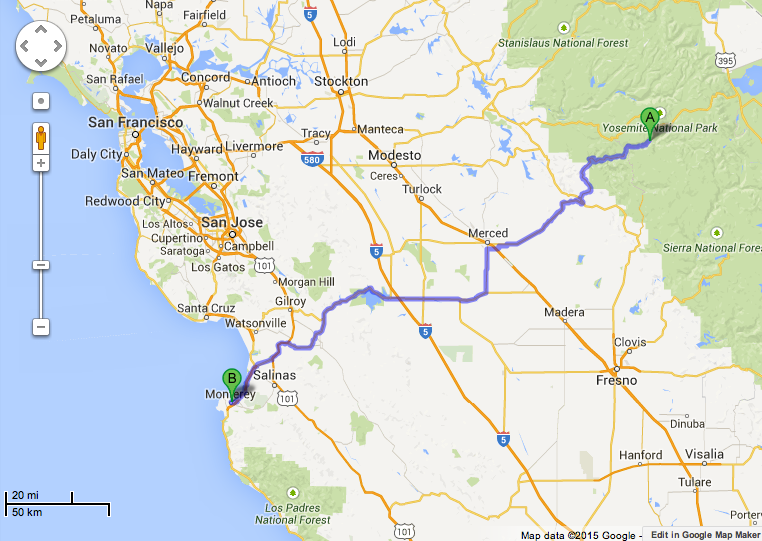
Driving by Faith from Yosemite to Monterey
I only discovered by accident that my GoogleMaps app talks. Leaving San Antonio, we discovered she would tell us which lane to be in, when to exit, etc. I liked it because most of the time, we had plenty of warning and when we missed something, there was no judgement in her tone, just new instructions, helpful instructions, with none of that annoying righteousness navigators can assume. (I can say that, being the navigator.)
I like it that AdventureMan and I listen together, and so I am not sounding like a nag. She repeats. Occasionally, AdventureMan told her to please shut up, that he had this, but she just wanted to be sure.
Leaving Yosemite was easy driving. I drove the leg to Merced so AdventureMan could look, and as we approached Merced, there were signs for stops with fruits and nuts and garlics and oils – all the bounty of the California Valley.
One thing I saw a lot of on this trip was a move towards multi-use restrooms; they were marked for male or female, and to me, this just makes sense. It especially makes sense if you are female, there are always huge lines in female restrooms and never lines in male restrooms. Now, we just all share. Of course, there is always the question of cleanliness, but I found, generally speaking, most of these unisex toilets were maintained with high degrees of cleanliness.
Behind this Merced shop, they are setting up for a large lunch crowd, and they have a petting zoo, as well as parrots
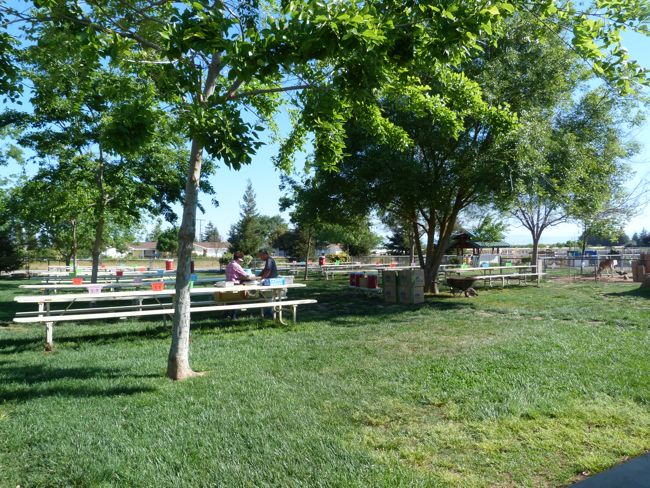
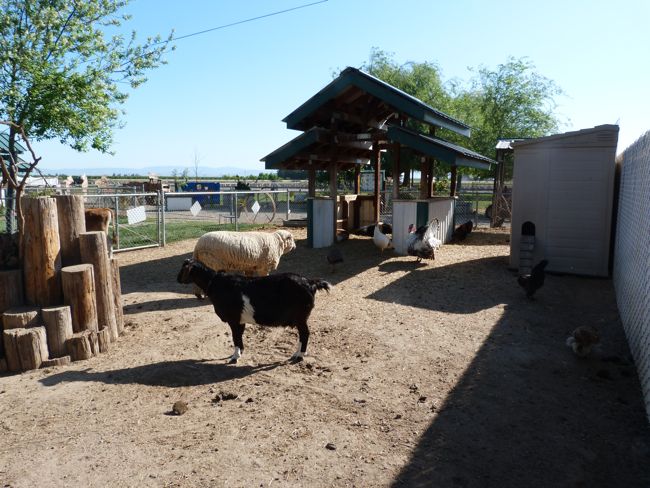

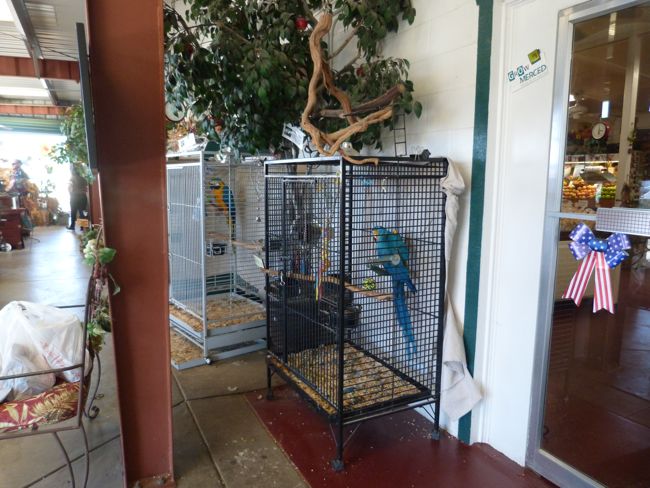
They had such marvelous food-stuffs, I found wonderful dates, and an avocado oil, and all kinds of almonds and walnuts, pickled garlics, and AdventureMan found peanut brittle.
Leaving Merced, however, the GoogleMap voice told us to take a route that did not seem right. AdventureMan did not want to do it, but as it turned out, it helped us avoid traffic in Merced, took us on these very fast country roads to an intersection where we quickly found ourselves en route to Monterey.
Later, stopped in inexplicable traffic, she kept telling us she could save us six minutes, but it meant getting off the route, going through town and getting on again at the next light. We saw others doing it, but it kind of seemed like cheating to do that, and for what, you’re still stopped in traffic, just a little farther down the road? Most of the time, however, we learned to listen to her voice 🙂
The saddest thing we found, in this paradise where fruits and vegetables grow happily, were all the signs saying “Pray for Water.” California is one of the great food-baskets of the world, and the food supply is reliant on water. In the midst of a drought, with signs it may go on for many more years, they ask for our prayers.
Pray for Water.
The Ahwahnee Hotel, Yosemite
If you’re going to live a dream come true, might as well live it right. We loved the Ahwahnee as soon as we read about it. As long as we were going to be there, we wanted to enjoy the experience all the way. We booked the Ahwahnee.
It was so worth it, just to see the joy in AdventureMan’s face as he checked in. He couldn’t even take it in, it is so beautiful. It is European, and grand, but not in a formal way but in a rustic way. The public spaces are gracious and welcoming, and so beautiful. There is art everywhere, even the fabrics on the furnishings are chosen with care.
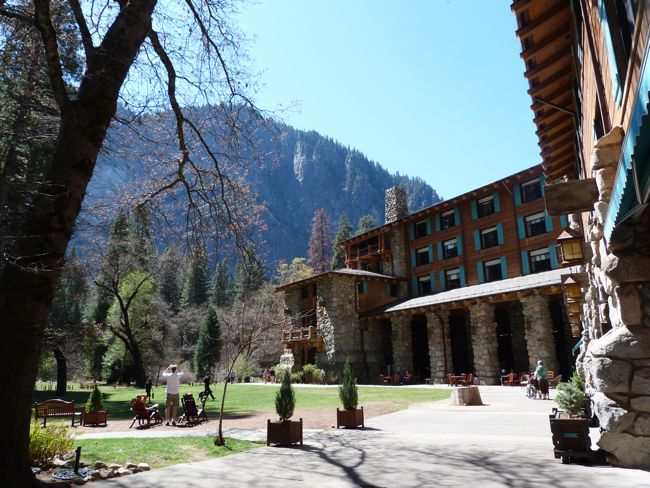


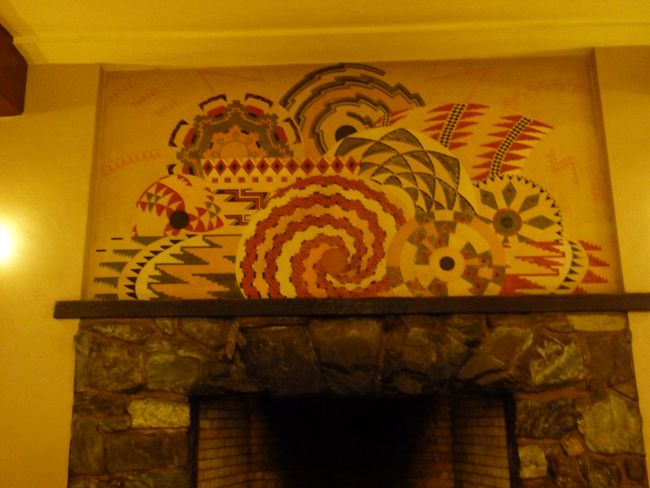
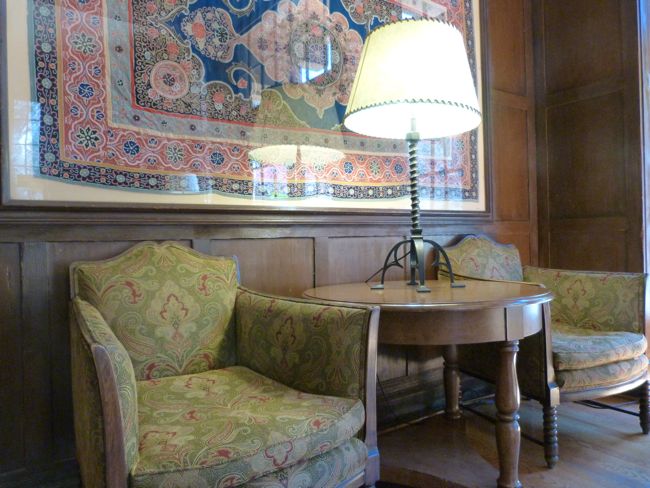
The private spaces are also spacious and welcoming, and on the mezzanine floor, they have coffee service set out every morning, and afternoon tea for guests. There is a full breakfast available in the dining room. This is our own space 🙂

And this was the view from our room:

And this was the sunrise from our room on the first day:

In the bathroom, they had rubber duckies. We wanted to buy them, but the staff wouldn’t let us; they insisted on giving them to us. Every staff member we encountered seemed happy to be working there. It was like stepping back in time to a place where customer service mattered. Total wow.
We could live here happily for months.
Sedona, the Beautiful
We are up before sunrise (having our bodies still on Central Time has its advantages) and head for Red Rock Upper Drive, where we wait for the first rays of the sun in utter privacy, except for a family of hikers, with their hiking sticks, who shout ‘good morning!’ as they hike past our viewpoint and head on up the hill.
And here it is! Our first Sedona sunrise! (We didn’t get up for any of the others, LOL)

The early light hits the red stone opposite:
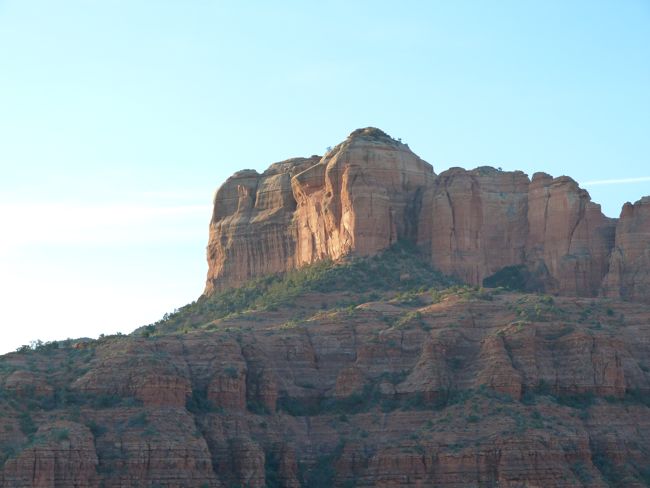
And every morning, there were balloons over Sedona while it was still cool in the mornings.


It is still chilly in the early morning, but Spring has begun. By noon, it will be in the 70’s (F).

This was one of my favorite formations, in Boynton Canyon, near the hiking trails. It reminds me of Petra, and our camel treks into the lands of Lawrence of Arabia.

Lots of hiking trails here:
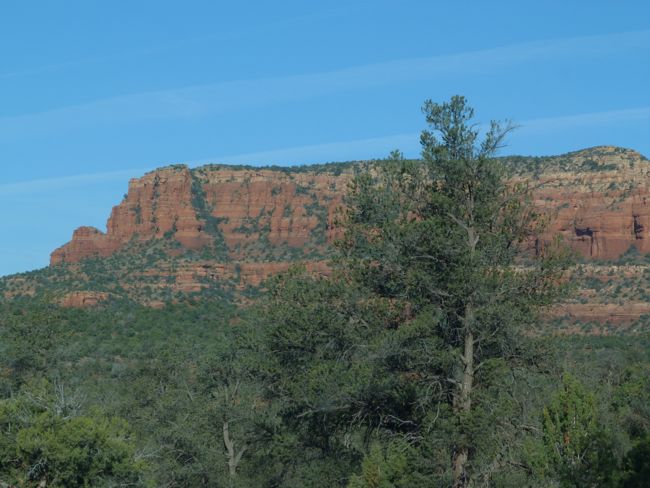
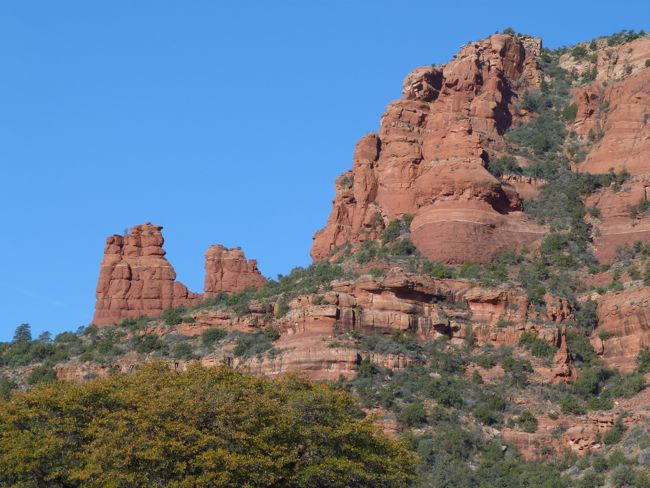
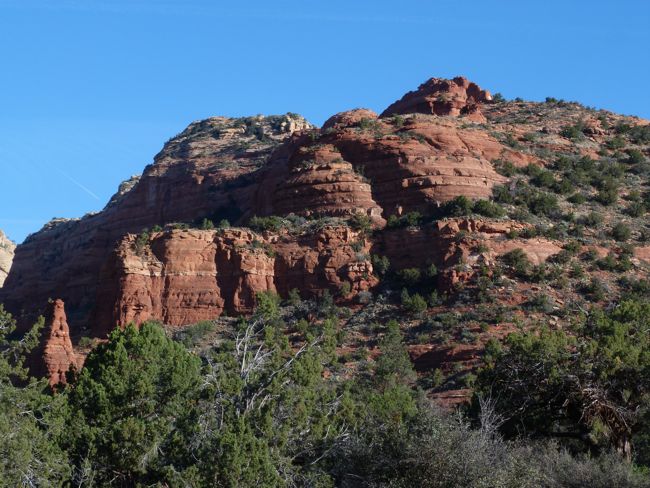


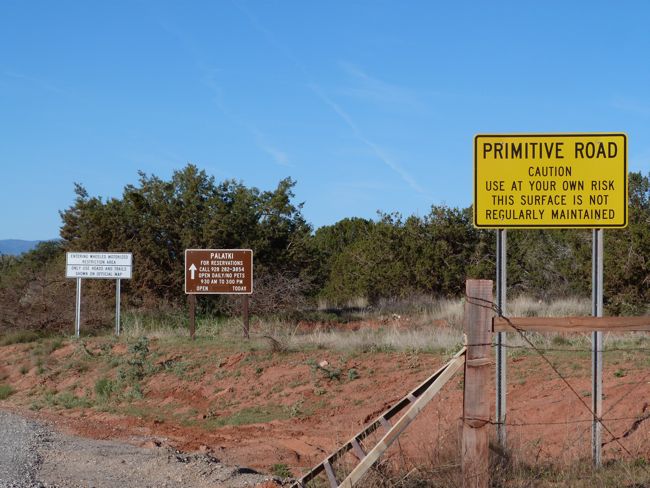
This totally cracked us up. We know primitive roads. We went over a road in Tunisia that Montgomery used when he flanked Rommel’s forces. THAT was primitive. I was outside the car, guiding AdventureMan over ruts as deep as our Volkswagon Bus. These roads are not paved, but they are passable. Primitive is in the eye of the beholder.
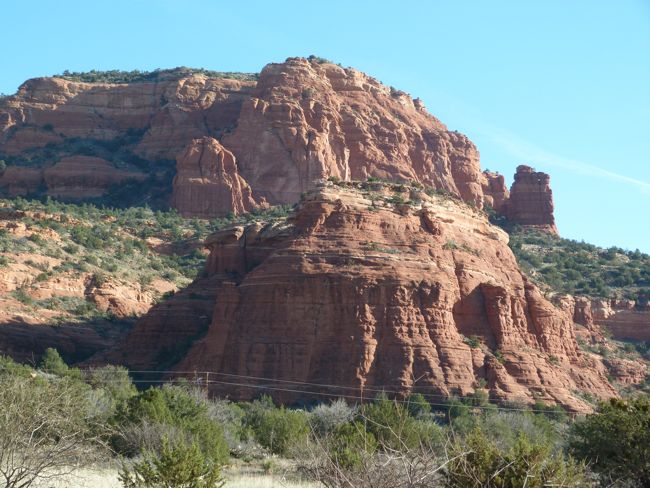
This is the only purple cactus I ever saw. Clearly it is related to the prickly pear, if it is not a prickly pear. I wonder if it is like hydrangeas; that you can change the color of the prickly pear by adding iron or something else to the soil? This was at an entrance to a new housing development that is just beginning; the houses will have pretty spectacular views.

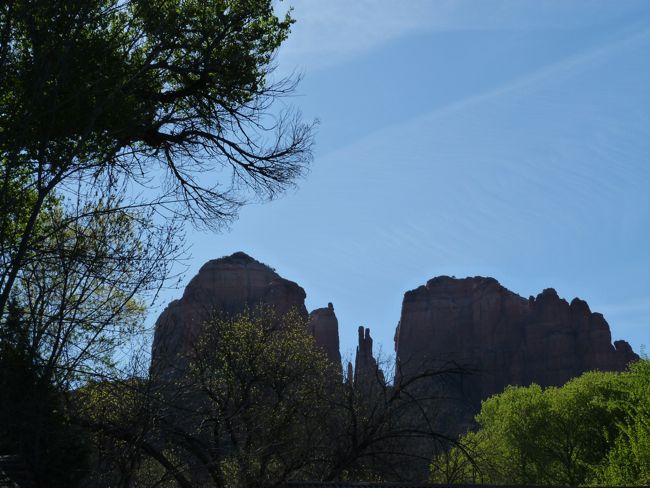
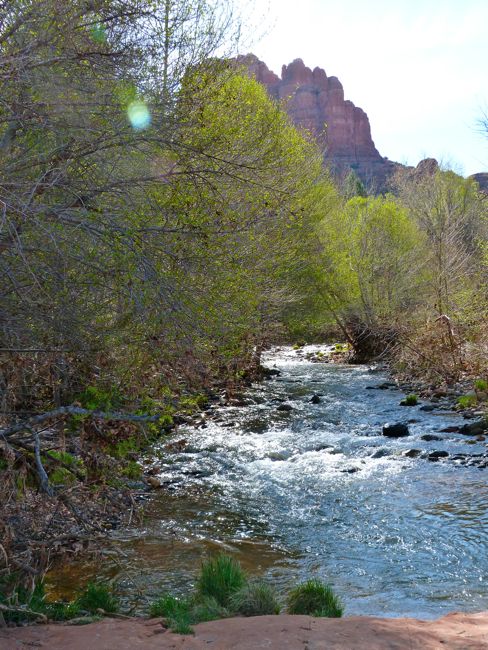
Sedona is beautiful. Everywhere you look, there is something beautiful to see. Of all the beautiful places, Crystal Creek park was my favorite. It had all the elements – red rock formations, a rippling creek, and a hungry heron. It also reaches a powerful vortex, at the base of Cathedral Rock, and we hiked the trail, took photos, enjoyed a lot of positive energy, but I don’t think we were sensitive to the vortex.

Red Rock State Park is another of those wonderful parks created and maintained with public funding, and manned by happy volunteers. We met several here, this wonderful guide, who gave us a first rate explanation of all the geological formations, and volunteers who ran the gift shop and museum/gallery.


Sedona has stolen our hearts 🙂
Recent Comments
intlxpatr on Shampoo Ginger tigerbutterya0c5ff1d… on Shampoo Ginger intlxpatr on British Soldier Kidnapped, Esc… John on British Soldier Kidnapped, Esc… intlxpatr on British Soldier Kidnapped, Esc… Wikipedia Donate Button

Amazina


Early Voting in Florida


 Here There and Everywhere