Uwem Akpan and Say You’re One of Them

This is a very troubling book, and, for me, a difficult book to read. It has taken me weeks, and I will admit I have often interrupted the reading of it to read other, easier books. This book makes me very uncomfortable. The stories and images trouble my sleep.
Uwem Akpan is of the tribe of Annang, from Nigeria, and has committed to an even larger tribe, the Catholic Church, of which he is a priest, and this gives him a unique perspective. The stories in this book often focus on tribal differences, including religious differences, and although they are set in different African states, have parallels in lives lived elsewhere. Those tribal differences are between Moslem and Christian, but also between Pentecostal and Catholic, Tutsi and Hutu, and, most significantly, the differences between to tribe of the very poor and the very rich.
Each story is told through the eyes of a child living in a different African state – Kenya, Benin, Ethiopia, Nigeria, Rwanda.
In one of my favorite segments of the book, strife has broken out in Nigeria, strife between the Moslems and the Christians, but also throw in the Pentecostals and the Pagans and really mix it up. A bus is waiting in the bus station to take people back to the southern part of Nigeria, and on this bus is a young man, half Moslem, half Christian. The bus stands idle for hours, while the bus driver seeks fuel to make the trip. During this time on the bus, many conversations take place, and what I loved was how alliances shifted with each conversation. The people on the bus were from different traditions, but came together as a community. No community is without arguments and dissensions, however, and consensus builds, diminishes, shifts – it is a microcosm of the tensions and stressors pulling apart the Nigerian nation state.
Uwem Akpan treats the children in each story lovingly, treasuring their innocent perspective and the sweetness of their hearts and vision. The adults don’t come off so well, passing their days in drug-induced stupors, drunk, selling children into slavery and prostitution, chopping off their limbs with machetes, and closing themselves off into groups which protect themselves and exploit others.
It would be an easier book to read if it were about aliens, or if these stories were confined to Africa, but the stories of these abused, neglected and exploited children echo in every continent, country and city in the world.
Uwem Akpan writes prose that is poetry; the surroundings are described with such detail that you feel in the moment, you see through the eyes of each child, and you see things that are beautiful as well as scenes you did not want to see. As you can see, I have a lot of ambiguous feelings about this book. At the same time I can admire the writing, the stories have left images in my mind that cannot be erased. Dark images. There is hope in the persistence and resilience of many of the children, but concern about their long term survival. It leaves a heavy weight on my heart.
Touched the Hem of His Garment
Today’s meditation from Forward Day by Day touches on one of my very favorite stories – and its opposite. It’s all about the power of belief. The woman, suffering from bleeding, would have lived a terrible life, considered unclean, untouchable, and trying everything to be cured without success. Just a touch – one touch – and her illness is gone. Jesus is astonished and tells her that her faith has made her well.
In contrast, the people in his own village are skeptical. How can good ole Jesus, son of Mary and that carpenter, how can he be anything special? In the face of such callous disbelief, Jesus can do little.
SATURDAY, July 27
Mark 6:1-13. And he could do no deed of power there, except that he laid his hands on a few sick people and cured them.
What a contrast, in just a few verses. Yesterday the bleeding woman merely touched Jesus’ garment, and Jesus’ power streamed into her. Today he is home, and those who watched him grow up ask, “Just who do you think you are?” and the Son of God is stopped in his tracks, like Superman when he is exposed to kryptonite.
My field education rector preached on this passage a year ago, and I was spellbound by his ending. He asked, “If Jesus came to All Saints, would he be able to do deeds of power?” Then the rector got even more personal, asking, “If Jesus came to you, would he be able to deeds of power?”
Oh, how I hope so. I’m not sure how to have the faith that allows Jesus to perform deeds of power, but I can see what kind of behavior does. It is hopeful, brave actions that seem to open the way for Jesus to work; and it is arrogant, fear-based behavior that seems to block the way.
Lord, teach us not to fear the change you bring. Teach us to reach out to touch your garment.
When my Mother was still living on her own, there was a revolving guest room, and my sister left a CD for me there, as she departed and I arrived, which contained the song above. I want it sung at my funeral. It is a succinct statement of faith; it is the song of the bleeding woman who believes and is cured, and nothing is ever the same.
Saudis Say MERS Virus Not Following SARS Path
What do you think? While ministers in Saudi Arabia seem unconcerned, this virus, which appears to have originated among an as yet unidentified animal in Saudi Arabia, kills about half the people infected with it. And soon, with the Hajj, the Moslem pilgrimage to Mecca, thousands will travel to Saudi Arabia, testing the theory that this virus does not spread easily. . .
Mers: New virus ‘not following Sars’ path’
By James Gallagher
Health and science reporter, BBC News
The new Mers virus, which has killed half of those infected, is “unlikely” to reach the same scale as Sars, ministers in Saudi Arabia say.
Most of the 90 Mers cases reported so far have been in Saudi Arabia.
Mers is from the same group of viruses as the common cold and Sars, which killed 774 people.
However, a detailed analysis of the Saudi cases, published in Lancet Infectious Diseases, did warn of “major gaps” in understanding of the virus.
The Middle East respiratory-syndrome coronavirus (Mers) emerged in 2012 and has infected 90 people worldwide, 45 of them have died.
The global concern is that cases could spread much further, echoing the Sars outbreak.
Cases have been centred on the Middle East – with patients in Jordan, Qatar, Saudi Arabia and the United Arab Emirates. Additional cases in France, Germany, Italy, Tunisia and the UK have all been linked to travel to the Middle East.
Researchers in Saudi Arabia have published details of the 47 cases reported in the country.
They suggest a pattern of mostly older men being infected. Most cases were also in people with other medical problems, more than two-thirds of the reported cases also had diabetes.
Low threat
The lead researcher and Deputy Minister for Public Health, Prof Ziad Memish, said: “Despite sharing some clinical similarities with Sars, there are also some important differences.
“In contrast to Sars, which was much more infectious especially in healthcare settings and affected the healthier and the younger age group, Mers appears to be more deadly, with 60% of patients with co-existing chronic illnesses dying, compared with the 1% toll of Sars.
“Although this high mortality rate with Mers is probably spurious due to the fact that we are only picking up severe cases and missing a significant number of milder or asymptomatic cases.
“So far there is little to indicate that Mers will follow a similar path to Sars.”
A report earlier this month showed that the virus struggled to spread in people.
However, it and the latest Saudi investigation both highlighted the need to find where the virus was coming from.
Prof Memish’s report said: “Reducing the rate of introduction of Mers coronavirus into human beings is unpredictable because the source of the virus is not yet known.
“We are searching vigorously for the source.”
Here is a graph from a private report called Virology Down Under, a fascinating read on the identification and development of the MERS Virus by Middle East Respiratory Syndrome Coronavirus (MERS-CoV)..
Last Updated 19-Jul-2013
Written by Ian M. Mackay, PhD on his personal time.
All opinions are his own and do not represent medical advice or the views of any institution.:

Pakistan’s Swat Valley Women Fight Back with Jirga
I love this. Women are using technology – and the traditional system – to persist in seeking justice for women who are often little more than slaves to their husband.

Tahira
Women in Pakistan’s Swat valley are making history, and perhaps some powerful enemies, by convening an all-female jirga, a forum for resolving disputes usually reserved for men. Some readers may find details of this report by the BBC’s Orla Guerin disturbing.
Tahira was denied justice in life, but she continues to plead for it in death – thanks to a grainy recording on a mobile phone.
As she lay dying last year the young Pakistan wife and mother made a statement for use in court.
In the shaky amateur video, she named her tormentors, and said they should burn like she did.
Tahira was married off at the age of 12 and died last year following a suspected acid attack
Tahira’s flesh was singed on 35% of her body, following a suspected acid attack. Her speech was laboured and her voice was hoarse, but she was determined to give her account of the attack, even as her flesh was falling off her bones.
“I told her you must speak up and tell us what happened,” her mother Jan Bano said, dabbed her tears with her white headscarf. “And she was talking until her last breath.”
Tahira’s husband, mother-in-law, and father-in-law were acquitted this month of attacking her with acid. Her mother plans to appeal against that verdict, with help from a new ally – Pakistan’s first female jirga.
Under the traditional – and controversial – jirga system, elders gather to settle disputes. Until now this parallel justice system has been men-only, and rulings have often discriminated against women. The new all-women jirga, which has about 25 members, aims to deliver its own brand of justice.
It has been established in an unlikely setting – the scenic but conservative Swat valley, formerly under the control of the Pakistan Taliban. We sat in on one of its sessions in a sparsely furnished front room. Women crowded in, sitting in a circle on the floor, many with children at their feet. Most wore headscarves, and a few were concealed in burqas.
Probing injustice
For more than an hour they discussed a land dispute, problems with the water supply, unpaid salaries, and murder. The only man in the room was a local lawyer, Suhail Sultan. He was giving legal advice to jirga members including Jan Bano who he represents.
“In your case the police is the bad guy,” he told her. “They are the biggest enemy. ” He claims the police were bribed by the accused, and were reluctant to investigate the case properly.

The jirga tackled land disputes, water supplies, and murder
The jirga is making history, and perhaps making enemies. In Swat, as in many parts of Pakistan, men make the key decisions – like whether or not their daughters go to school, when they marry, and who they marry. And oppression starts early. Tahira was married off at just 12 years old, to a middle-aged man.
“Our society is a male-dominated society, and our men treat our women like slaves,” said the jirga founder, Tabassum Adnan. “They don’t give them their rights and they consider them their property. Our society doesn’t think we have the right to live our own lives.”
This chatty social activist, and mother of four, knows that challenging culture and tradition comes with risks. “Maybe I could be killed,” she said, “anything could happen. But I have to fight. I am not going to stop.”
They glued [my daughter’s] mouth and eyes closed. Just her face was left, the rest was flesh and broken bones”
Taj Mehal
As we spoke in a sun-baked courtyard Tabassum got a disturbing phone call. “I have just been told that the body of another girl has been found, ” she said. ” Her husband shot her.” She plans to investigate the case, and push the authorities to act.
“Before my jirga women have always been ignored by the police and by justice, but not now. My jirga has done a lot for women,” she said.
There was agreement from Taj Mehal, a bereaved mother with a careworn face, sitting across the courtyard on a woven bed.
Her beloved daughter Nurina was tortured to death in May.
“They broke her arm in three places, and they strangled her,” she told me, putting her hands to her own throat to mimic the action. “They broke her collarbone. They glued her mouth and eyes closed. Just her face was left, the rest was flesh and broken bones.”
She speaks of her daughter’s suffering with a steady voice, but grief is wrapped around her, like a heavy shawl.
“When I looked at her, it was like a piece was pulled out of my heart,” she said. “I was turned to stone. I see her face in front of my eyes. I miss her laughter.”
Women are a rare sight on the streets of Mingora
Nurina’s husband, and his parents, have now been charged with her murder, but her mother says that initially the courts took no interest.
“Whenever we brought applications to the judge he would tear them up and throw them away,” she said. “Now our voice is being heard, because of the jirga. Now we will get justice. Before the jirga husbands could do whatever they wanted to their wives.”
Women are little seen or heard on the bustling streets of Mingora, the biggest city in Swat. Rickshaw taxis dart past small shops selling medicines, and hardware supplies.
There are stalls weighed down with mangoes, and vendors dropping dough into boiling oil to make sugar-laden treats. Most of the shoppers are men.
‘No justice’ at jirgas
When we asked some of the local men their views on the women’s jirga, the results were surprising. Most backed the women.
“It’s a very good thing,” said one fruit seller, “women should know about their rights like men do, and they should be given their rights.”
Another said: “The jirga is good because now finally women have someone to champion their cause.”
The response from the local male jirga was less surprising. They were dismissive, saying the women have no power to enforce their decisions.
Most local men who spoke to the BBC expressed support for the women’s initiative
That view was echoed by the prominent Pakistani human rights activist Tahira Abdullah. “I don’t see it as more than a gimmick,” she said. “Who is going to listen to these women? The men with the Kalashnikovs? The Taliban who are anti-women? The patriarchal culture that we have?”
Ms Abdullah wants jirgas stopped whether male or female. “The jirga system is totally illegal, and has been declared illegal by the Supreme Court of Pakistan. It can never be just. There are several extremely notorious cases where we have noticed that women do not get justice from jirgas, neither do non-Muslims.”
One of those cases took place last year in a remote region of northern Pakistan where a jirga allegedly ordered the killing of five women – and two men – for defying local customs by singing and dancing together at a wedding.
And there are regular reports of jirgas decreeing that women and young girls be handed over from one family to another to settle disputes.
But for some, like Jan Bano, the women’s jirga is bringing hope. Every day she climbs a steep hill to visit Tahira’s grave, and pray for the daughter whose voice has still not her heard. Her video recording was not played in court.
Yemeni Girl Escapes Child Marriage
This little girl is lucky; she has a sympathetic uncle who protected her when her own mother, twice, tried to sell her into marriage.
She is an amazingly articulate and resourceful little girl. I look forward to seeing the woman she grows into, safe under her uncle’s care. I love it that he convinced one prospective husband that she was not modest enough to be his bride 🙂
In a bone-chilling three minutes, a young girl who evaded child marriage tells the world that she would “rather die,” than be forced to undergo an arranged marriage.
After learning that her parents had plans to marry her off to a wealthy suitor, brave Nada al-Ahdal of Yemen risked her life and fled to the refuge of her uncle. The precocious little girl, who saw how her teenage aunt took her own life after being abused in an arranged marriage, shared in a harrowing translated video the cruelty of the child bride practice.
“I would have had no life, no education. Don’t they have any compassion?,” Nada asks. “I’m better off dead. I’d rather die [than be forced into a marriage].”
According to NOW News, Nada’s uncle, Abdel Salam al-Ahdal, a montage and graphics technician at a TV station, has protected his niece from being married off twice. Nada’s parents first accepted an offer from a wealthy expatriate, but al-Ahdel intervened and told the prospective groom that Nada was not nearly modest enough for him, in order to “scare him off.”
“When I heard about the groom, I panicked,” he told NOW. “Nada was not even 11 years old; she was exactly 10 years and 3 months. I could not allow her to be married off and have her future destroyed.”
When Nada’s mother tried once again to marry off her daughter against her will, Nada — despite threats that she could be killed — fled to her uncle’s once more, and filed a complaint with the police. She’ll now be living with al-Ahdal permanently.
But such forced marriages, like Nada’s, are on the rise across the globe.
According to a World Vision study released in March, more child brides are being led into arranged marriages due to an increase in global poverty and crises. Parents who live in fear of natural disasters, political instability and financial ruin look to arranged marriages as a way to save their struggling families.
Every day, 39,000 girls, younger than 18, will marry, according to the World Health Organization.
“Women have no rights to give an opinion in the family,” Humaiya, a 16-year-old from Bangladesh who managed to escape marriage, told The Huffington Post in March. “My father didn’t listen.”
Nada, whose video on YouTube has already garnered more than 2 million hits, hopes that the world will hear her message loud and clear.
“They have killed our dreams. They have killed everything inside us,” Nada said in the video. “This is no upbringing. This is criminal, simply criminal.”
Flashing Lights to Warn of Speed Trap: Free Speech?
I’ve done it – warned other drivers of a speed trap ahead. And I have benefited from other drivers warning me. And I am fully aware that for a law and order kind of girl, that is contradictory behavior. So the question is . . . are we allowed?
From AOL Auto News:
When Michael Elli of Missouri flashed his headlights to warn other drivers of an upcoming speed trap in Ellisville Mo. he didn’t think he was doing anything illegal.
After he received a ticket for obstruction of justice, which carried a $1,000 fine, he fought back, saying the warning was protected free speech. Eventually prosecutors in Missouri dropped the charges, but now Elli and the American
“Those who use their First Amendment rights to warn others to drive cautiously should not be punished for their message,” said Tony Rothert, legal director of the ACLU-EM. “After all, the purpose of traffic laws is to promote safety, not generate revenue.”
Is flashing your headlights protected free speech? It depends on where in the U.S. you are. Florida, Utah and Tennessee, Ohio, New Jersey and Pennsylvania have all deemed that warning other drivers with a flicker of your high beams is protected by the first amendment of the U.S. Constitution. Alaska and Arizona have laws strictly forbid headlight flashing in any situation.
Dubai’s Weight Loss Challenge: 1 Gram Gold Per Kilo Lost
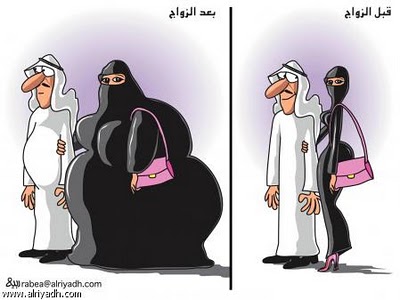
Need some motivation to cut that flab? If you live in Dubai, you can win gold to do just that. A new campaign “You are Worth … Your Weight in Gold” is aimed at promoting a healthy lifestyle and achieving optimal body weight. The contest is open for public.
The winner will be the one who loses maximum weight during the program period of 30 days from its inception on Friday this week. The top three winners will get a gold coin equivalent to AED 20,000. Other participants will get a gram of gold for each kilo reduced from their body weight. However, the minimum weight to lose for the eligibility is two kilograms.
Addressing a press conference on Tuesday, Dubai Municipality officials said the winners will get two grams of gold if they could reduce at least two kilograms within one month.
Hussain Nasser Lootah, director-general of Dubai Municipality, said the initiative comes after the grand success of ‘Yallah Walk’ campaign launched in 2011.
“It is also aimed at introducing walking tracks in different parks in the city of Dubai. Walking is an easy and economic way to stay fit and healthy. The municipality has provided residents with safe and accessible walking tracks in urban and rural areas,’ Lootah said.
“Currently Dubai has a total of 91 places where one can practice sport activities. These include residential parks, public parks, jogging track and beaches. In addition to this, every year the civic body opens new parks in more areas and adds sports equipments and tools for the public to promote a healthy community, he said.
“Ramadan is the most appropriate season to launch such initiatives as it reminds us about many health benefits of reducing weight and encourages us to take strong steps to change our bad lifestyles,’ he added.
The weight of each participant will be measured during registration and at the end of program. Participants can register at the event sites any day during the period. Participants must have excess weight to reduce and stay away from unhealthy methods to lose weight.
The final weight will be measured after the Eid holidays on Aug. 16.
Ahmed bin Sulayem, executive chairman of Dubai Multi Commodities Center (DMCC), said the DMCC is proud to support this health awareness drive to encourage society to change their daily routines in return for a healthier lifestyle.
‘We would highly encourage everyone from all walks of life to take part in this great initiative and hope DMCC’s contribution of AED 100,000 worth of gold coins will help motivate individuals reach the final target of improving and sustaining a healthy lifestyle and consequently a better quality of life,’ he said.
“I am sure Dubai can be the role model and astonish the world by its innovative ideas and initiatives,” said Anil Dhanak, general manager of Dubai Gold & Jewelry Group.”
Justin Cronin: The Twelve

I had downloaded The Twelve to my iPad for a trip, but didn’t get to it, and sort of forgot it was there until my son mentioned he was listening to it on audio-books, and it was good, maybe even better than the first book in the trilogy, The Passage. He had loaned me The Passage several years ago when it came out, and as soon as I finished, I got on the list to download as soon as the next book came out – it was that good.
Cronin’s gift is an ability to create a future world entirely different from our own, with a devastating enemy – the virals – who, literally, are us, transformed. Cronin can make the enemy terrifying, destructive, truly horrifying – and can make them also captive to their repugnant nature and even pitiable. I think that is an amazing dance for an author to accomplish.
The setting is post-apocalyptic USA; the government had a sector working on a secret weapon which – of course – was not able to be contained, creating 12 super vampire-like creatures called Virals, who in turn create hordes of minions. This volume, The Twelve, is set more than 100 years later, but shifts back to earlier times to help us understand how this disaster occurred, and how characters relate back to the earliest times of the disaster. The populations live in fear of sudden attacks; one family, out on a picnic, are almost totally wiped out by an eclipse for which the Virals were prepared – and the families were not.
As I read his books, I find them very cinematic, but, as my son and I discussed, too complex for a movie; it would need a gritty HBO series like The Wire, or OZ, or Deadwood to capture the subtleties, the nuances that make this a best-selling series. The heroes and heroines are all make for the screen, their relationships – and inter-relationships – make them interesting, and then, as we learn more, interesting again. We never know enough to make a final judgement on any character; the characters are complex and the relationships obscure until the author chooses to reveal. It makes it fun to try to spot them before he tells us. I missed a couple!
Although it can be read as a great-adventure stand-alone, you’ll be happier if you read The Passage before you read The Twelve. If you have a problem with postponing gratification, you might want to wait until the third and conclusive volume of the trilogy is published – and that may be a year or so.
Recent Comments
ExpatAlien on What Country am I Living … intlxpatr on Yellowstone: Old Faithful to C… Michelle on Yellowstone: Old Faithful to C… Cathy on No Grown-Ups in Charge intlxpatr on Waiting for Snow Wikipedia Donate Button

Amazina


Early Voting in Florida


 Here There and Everywhere