Round-Up Herbicide Tied to Serious Health Deterioration
Shocking news for everyone with grounds and gardens – we’ve all been using this, not knowing its long term impact on our environment – and on us.

Roundup, An Herbicide, Could Be Linked To Parkinson’s, Cancer And Other Health Issues, Study Shows

The peer-reviewed report, published last week in the scientific journal Entropy, said evidence indicates that residues of “glyphosate,” the chief ingredient in Roundup weed killer, which is sprayed over millions of acres of crops, has been found in food.
Those residues enhance the damaging effects of other food-borne chemical residues and toxins in the environment to disrupt normal body functions and induce disease, according to the report, authored by Stephanie Seneff, a research scientist at the Massachusetts Institute of Technology, and Anthony Samsel, a retired science consultant from Arthur D. Little, Inc. Samsel is a former private environmental government contractor as well as a member of the Union of Concerned Scientists.
“Negative impact on the body is insidious and manifests slowly over time as inflammation damages cellular systems throughout the body,” the study says.
We “have hit upon something very important that needs to be taken seriously and further investigated,” Seneff said.
Environmentalists, consumer groups and plant scientists from several countries have warned that heavy use of glyphosate is causing problems for plants, people and animals.
The EPA is conducting a standard registration review of glyphosate and has set a deadline of 2015 for determining if glyphosate use should be limited. The study is among many comments submitted to the agency.
Monsanto is the developer of both Roundup herbicide and a suite of crops that are genetically altered to withstand being sprayed with the Roundup weed killer.
These biotech crops, including corn, soybeans, canola and sugarbeets, are planted on millions of acres in the United States annually. Farmers like them because they can spray Roundup weed killer directly on the crops to kill weeds in the fields without harming the crops.
Roundup is also popularly used on lawns, gardens and golf courses.
Monsanto and other leading industry experts have said for years that glyphosate is proven safe, and has a less damaging impact on the environment than other commonly used chemicals.
Jerry Steiner, Monsanto’s executive vice president of sustainability, reiterated that in a recent interview when questioned about the study.
“We are very confident in the long track record that glyphosate has. It has been very, very extensively studied,” he said.
Of the more than two dozen top herbicides on the market, glyphosate is the most popular. In 2007, as much as 185 million pounds of glyphosate was used by U.S. farmers, double the amount used six years ago, according to Environmental Protection Agency (EPA) data.
Doha, Qatar on House Hunters International
Oh what fun – last night on House Hunters International, I got to search for an apartment in Doha. Well, not really, but virtually. Here is what the episode description says on HGTV:
Just after getting married to Meena, architect Ken jumped at the chance to help design Doha’s new international airport. So, they’re trading in the golden state of California for the golden lands of Qatar. But as these newlyweds discover each other, the new city of Doha is also discovering its own identity as it moves towards the future. From sleek new development to traditional neighborhoods, real estate agent Ana Figueiredo will help them navigate Doha’s changing landscape. Watch as House Hunters International uncovers all that glitters in Doha, Qatar.
I checked YouTube; the episode is not yet up. It was so much fun, seeing this young couple in the Souks, down near Al Saad in Mirqab, and out at the Pearl. The apartment they settled on was in Al Ashmak, near the Corniche; I think it was one of the Bilal apartment buildings.
Western Diet Killer:
From the UK Daily Mail Online:
The Western diet really IS a killer: People who eat white bread, butter and red meat are most likely to die young
- Those who ate fried and unhealthy food had doubled risk of early death
- Key culprits include red meat, white bread, butter, cream and sweet foods
- Findings ‘help explain’ why heart disease is still the UK’s biggest killer
PUBLISHED: 13:20 EST, 16 April 2013 | UPDATED: 02:08 EST, 17 April 2013
The typical Western diet, high in fat and sugar, really does lead to an early grave, new research suggests.
A study of more than 5,000 civil servants found those who ate the most fried and sweet food, processed and red meat, white bread and butter and cream doubled their risk of premature death or ill health in old age.
It adds to evidence that ‘Western style food’ is the reason why heart disease claims about 94,000 lives a year in the UK – more than any other illness.
The findings published in The American Journal of Medicine are based on a survey of British adults and suggest adherence to the diet increases the risk of premature death and disability later in life.
 People who ate the most fried and sweet food, processed and red meat, white bread, butter and cream doubled their risk of premature death or ill health in old age
Lead researcher, Dr Tasnime Akbaraly, of the National Institute of Health and Medical Research in France, said: ‘The impact of diet on specific age-related diseases has been studied extensively, but few investigations have adopted a more holistic approach to determine the association of diet with overall health at older ages.’
She examined whether diet, assessed in midlife, using dietary patterns and adherence to the Alternative Healthy Eating Index (AHEI), is associated with physical ageing 16 years later.
The AHEI is an index of diet quality, originally designed to provide dietary guidelines with the specific intention to combat major chronic conditions such as heart disease and diabetes.
More…
Dr Akbaraly added: ‘We showed that following specific dietary recommendations such as the one provided by the AHEI may be useful in reducing the risk of unhealthy ageing, while avoidance of the “Western-type foods” might actually improve the possibility of achieving older ages free of chronic diseases.’
The researchers analysed data from the British Whitehall II cohort study and found following the AHEI can double the odds of reversing metabolic syndrome, a range of disorders known to cause heart disease and mortality.
 The research adds to evidence that Western style food is the reason why heart disease claims about 94,000 lives a year in the UK – more than any other illness
They followed 3,775 men and 1,575 women from 1985-2009 with a mean age of 51 years.
Using a combination of hospital data, results of screenings conducted every five years, and registry data, investigators identified death rates and chronic diseases among participants.
At the follow up stage, just four per cent had achieved ‘ideal ageing’ – classed as being free of chronic conditions and having high performance in physical, mental and mental agility tests.
About 12 per cent had suffered a non-fatal cardiovascular event such as a stroke or heart attack, while almost three per cent had died from cardiovascular disease.
About three quarters were categorised as going through ‘normal ageing’.
The researchers said participants who hadn’t really stuck to the AHEI increased their risk of death, either from heart disease or another cause.
Those who followed a ‘Western-type diet’ consisting of fried and sweet food, processed food and red meat, refined grains, and high-fat dairy products, lowered their chances for ideal ageing.
Worst Drivers in the World: Traffic Fatalities by Country
Driving in the Middle East is a whole other world, a world of chaos until you realize that the rules are different, no matter what the published rules are. To drive in Qatar, I started at 0430 on a Friday morning, when there was little or no traffic (things have changed) and would drive until traffic began to thicken. Eventually, I knew the city and gained confidence that I could drive without getting killed. In Kuwait, for months, I would only drive to relatively nearby shopping areas, or drive only on back roads carefully plotted on the map during low traffic hours. After a while, you begin to get a sense of things, and the sensation of imminent death lessens.
Adventures in Qatar: a radiator dropping off a truck in front of me, being hit on purpose by a man who didn’t like women driving, being pushed into a round about by a Hummer, being nearly assaulted by two young Qataris who believed we had insulted them by being in the lane where they wanted to be, watching men drive up the wrong side of the ring roads because they were too important to wait in line, later standing and laughing at their crashed cars – Daddy would buy them another. It sounds crazy, but you get used to it.

Kuwait was a whole different ball game, controlled chaos at high speeds. Adventures in Kuwait: the sleeping elderly man driving in the lane next to me who almost hit me, watching drivers drive through red lights as if they were green, sparks off the fenders of SUVs on Highway 30 as people wove quickly in and out of traffic, the dramatic crashed and burned out cars on the sides of the highways, the car impaled on a palm tree – 10 feet above the road. Kuwait was so surreal that I couldn’t even begin to imagine how some of the accidents happened; I learned to be a very prayerful driver.
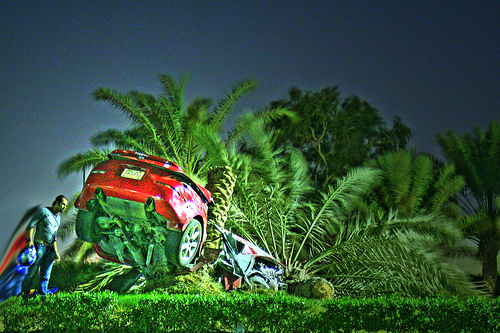
So out of idle curiosity, today I looked up highest rate of traffic fatalities per country, and found this on Wikipedia. So here’s a surprise . . . Kuwait’s fatalities statistic is roughly equal to that of the United States. Qatar’s is significantly higher, and many countries are even double or triple Kuwaits fatality rate. I’m having trouble wrapping my mind around this.
List of countries Fatalities per 100,000 inhabitants
World 20.8
Afghanistan 39.0
Albania 13.9
Angola 37.7
Argentina 13.7
Armenia 13.9
Australia 5.71
Austria 8.2
Azerbaijan 13.0
Bahamas 14.5
Bahrain 12.1
Bangladesh 12.6
Barbados 12.2
Belarus 10.9
Belgium 10.1
Belize 15.6
Benin 31.2 1
Bhutan 14.4
Bolivia 16.7
Bosnia and Herzegovina 10.9
Botswana 33.8
Brazil 19.9
British Virgin Islands 21.7
Brunei Darussalam 13.8
Bulgaria 8.8
Burkina Faso 31.1
Burundi 23.4
Cambodia 12.1
Cameroon 28.1
Canada 9.2
Cape Verde 25.1
Central African Republic 32.2
Chad 34.3
Chile 13.7
China 5.1
Colombia 11.7
Comoros 30.3
Republic of the Congo 28.8
Cook Islands 45.0
Costa Rica 15.4
Croatia 9.1
Cuba 8.6
Cyprus 10.4
Czech Republic 10.4
Denmark 3.1
Dominican Republic 17.3
Ecuador 11.7
Egypt 42.0
El Salvador 12.6
Eritrea 48.4
Estonia 7.5
Ethiopia 35.0
Fiji 7.0
Finland 6.5
France 5.5
The Gambia 36.6
Georgia 16.8
Germany 4.5
Ghana 9.32
Greece 14.4
Guatemala 14.7
Guinea-Bissau 34.4
Guyana 19.9
Honduras 13.5
Hungary 9.9
Iceland 3.8
India 11.1
Indonesia 16.2
Iran 35.8
Iraq 38.1
Republic of Ireland 3.51
Israel 3.7
Italy 8.7
Jamaica 12.3
Japan 3.85
Jordan 34.2
Kazakhstan 30.6
Kenya 34.4
Kiribati 7.4
Republic of Korea 11.3
Kuwait 16.9
Kyrgyzstan 22.8
Laos 18.3
Latvia 8.7
Lebanon 28.5
Lesotho 26.7
Liberia 32.9
Libya 40.5
Lithuania 14.8
Luxembourg 9.0
Madagascar 33.7
Malawi 26.0
Malaysia 24.1
Maldives 18.3
Mali 32.1
Malta 3.4
Marshall Islands 7.4
Mauritania 35.5
Mauritius 11.1
Mexico 20.7
Federated States of Micronesia 14.4
Mongolia 14.5
Montenegro 14.6
Morocco 28.3
Mozambique 7.0
Myanmar 23.4
Namibia 28.6
Nauru 9.9
Nepal 15.1
Netherlands 3.9
New Zealand 8.6
Nicaragua 14.2
Niger 37.7
Nigeria 32.3
Norway 5.4
Oman 21.3
Pakistan 25.3
Palau 14.8
Palestinian territories 5.6
Panama 12.7
Papua New Guinea 14.2
Paraguay 19.7
Peru 21.5
Philippines 20.0
Poland 10.7
Portugal 7.9
Puerto Rico 12.8
Qatar 23.7
Republic of Macedonia 6.9
Republic of Moldova 15.1
Romania 9.4
Russia 19.5
Rwanda 31.6
Saint Lucia 17.6
Saint Vincent and the Grenadines 6.6
Samoa 12.8
San Marino 0
Sao Tome and Principe 33.0
Saudi Arabia 29.0
Senegal 32.5
Serbia 9.8
Seychelles 18.5
Sierra Leone 28.3
Singapore 4.8
Slovakia 7.1
Slovenia 10.4
Solomon Islands 16.9
South Africa 33.2
Spain 6.9
Sri Lanka 13.5
Sudan 34.7
Suriname 15.8
Swaziland 26.3
Sweden 2.9
Switzerland 4.7
Syrian Arab Republic 32.9
Tajikistan 14.1
Thailand 19.6
Timor-Leste 16.1
Togo 28.1
Tonga 7.0
Trinidad and Tobago 15.5
Tunisia 34.5
Turkey 13.4
Turkmenistan 18.6
Tuvalu 9.5
Uganda 24.7
Ukraine 11.2
United Arab Emirates 37.1
United Kingdom 3.59
United Republic of Tanzania 34.3
United States of America 12.3
Uruguay 12.8
Uzbekistan 9.7
Vanuatu 18.6
Venezuela 21.8
Vietnam 16.1
Yemen 29.3
Zambia 25.6
Zimbabwe 27.5
Like all statistics, I think some are honest, and some need to be taken with a grain of salt. I found reading through them fascinating. You can get more information, accidents per thousand cars, total accidents, etc.
Antarctic Ice Melting Faster Now than Last 1,000 Years
Found this morning on AOL News; this is not good news.
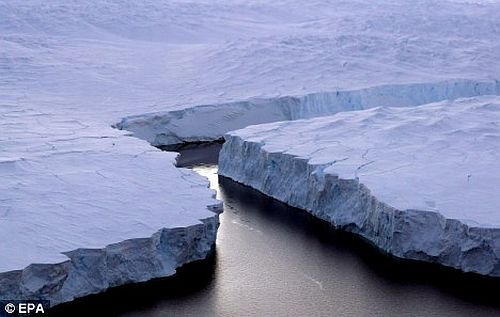
Summer Ice Melt In Antarctica Is At The Highest Point In 1,000 Years, Researchers Say
Reuters | Posted: 04/15/2013 2:39 am EDT | Updated: 04/15/2013 6:36 pm EDT
CANBERRA (Reuters) – The summer ice melt in parts of Antarctica is at its highest level in 1,000 years, Australian and British researchers reported on Monday, adding new evidence of the impact of global warming on sensitive Antarctic glaciers and ice shelves.
Researchers from the Australian National University and the British Antarctic Survey found data taken from an ice core also shows the summer ice melt has been 10 times more intense over the past 50 years compared with 600 years ago.
“It’s definitely evidence that the climate and the environment is changing in this part of Antarctica,” lead researcher Nerilie Abram said.
Abram and her team drilled a 364-metre (400-yard) deep ice core on James Ross Island, near the northern tip of the Antarctic Peninsula, to measure historical temperatures and compare them with summer ice melt levels in the area.
They found that, while the temperatures have gradually increased by 1.6 degrees Celsius (2.9 degrees Fahrenheit) over 600 years, the rate of ice melting has been most intense over the past 50 years.
That shows the ice melt can increase dramatically in climate terms once temperatures hit a tipping point.
“Once your climate is at that level where it is starting to go above zero degrees, the amount of melt that will happen is very sensitive to any further increase in temperature you may have,” Abram said.
Robert Mulvaney, from the British Antarctic Survey, said the stronger ice melts are likely responsible for faster glacier ice loss and some of the dramatic collapses from the Antarctic ice shelf over the past 50 years.
Their research was published in the Nature Geoscience journal.
(Reporting by James Grubel; Editing by Paul Tait)
Backyard Haven
We’ve had a stormy weekend, temperatures dropped once again and we were able to turn off the air conditioning and open all the windows 🙂 I love the cool winds. Today is overcast and warmer, sigh, but still not so hot as to have to close the windows and turn on the A/C.
Meanwhile, we are enjoying our yard, including the new Mother’s Day gift – to me, and more widely, to my family. Everyone loves this swing!

I’ve started up some new roses from my ever-flowering old branches, which the Pensacola Rose Society helped me identify as French Lace:
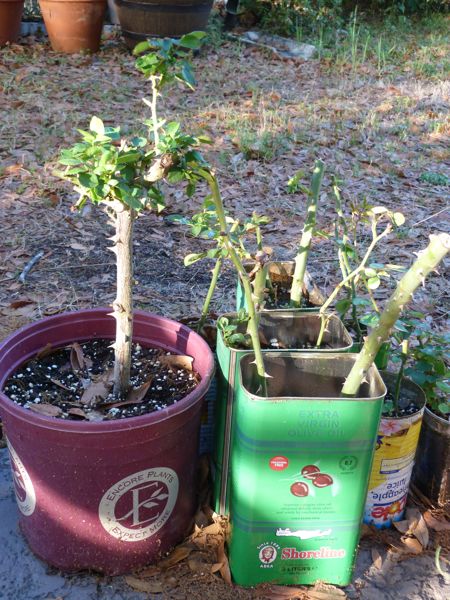
AdventureMan has potted up our mints – we have a large variety – and they are thriving! We also appear to have a good crop of blueberries coming in! 🙂


“I Joined the Navy Because of the Blue Angels”

One of our recent house guests was here visiting when it was announced that the 2013 Blue Angel season was cancelled. It was a stunning blow to the Pensacola community – we ALL love the booming roar of those jets screeching over our houses when they practice. All heads look up. It might sound annoying, all that noise, but it isn’t – it’s exciting! We’re proud to be home to the Blue Angels.
“You know, I joined the navy because of the Blue Angels,” he said.
No. I didn’t know that.
He saw them when he was a boy, living in Idaho (yearning to escape Idaho) and they ignited his imagination. He didn’t need to BE a Blue Angel, but he wanted to be a part of what they were a part of.
When cutting budgets, we all gotta do what we gotta do. Budget cuts suck, no matter what level you are on. But losing a Blue Angel season – ouch! That really hurts!
Kuwait Media Legislation Harms Standing in Transparency?
When I lived in Kuwait, many reporters self-censored, but there was still a lively – and, in relative terms, relative to the rest of the Gulf, free press. The Kuwait Legislature is going loony tunes with this proposed legislation. This, from the Kuwait Times:
Media draft law under fire for stiff penalties
KUWAIT: Former opposition MPs, writers, journalists and activists have strongly lashed out at a new media draft law that stipulates unprecedented hefty penalties against violators. The new draft law was approved earlier this week by the Cabinet but must pass the National Assembly to be effective. The 99-article draft law stipulates a 10 year sentence for insulting the Almighty, prophets, companions, relatives and wives of Prophet Muhammad (PBUH). It also stipulates a fine of between KD 50,000 and KD 300,000 for those convicted of insulting the Amir.
The draft law gives the Information Ministry the right to shut down with an administrative decision any publication for up to three years even without a court ruling, a key article in the current law. Former liberal opposition MP Abdulrahman Al-Anjari described the draft legislation as a “stigma” for the government which is “suffering from psychological disorders”. Former MP Obaid Al-Wasmi described it as the “capital punishment law” while former MP Jamaan Al-Harbash said it belongs to the old ages and will send too many people to jail.
Meanwhile, the criminal court yesterday issued a two-year jail term against opposition tweeter Hijab Al-Hajeri for writing tweets deemed offensive to HH the Amir in yet another verdict targeting activists. But the court asked the convict to pay a bail of KD 100 to suspend the implementation of the imprisonment until the appeals court issues its verdict on the case. Like several opposition tweeters, Hajeri was charged of insulting the Amir and undermining his status. Several tweeters and former opposition MPs have been handed several years in prison over the same charge and some of them have been sent to jail.
In another case, the criminal court postponed the case of Al-Youm Television to May 8. Two announcers for the pro-opposition station, its chairman and a director are facing charges of violating the law by reading a statement issued by the opposition several weeks ago. Another court also set May 1 as the date to issue its verdict on opposition tweeter Abdulaziz Al-Mutairi on charges of insulting the Amir.
In a related development, the public prosecution released well-known Islamist thinker and university professor Abdullah Al-Nafisi on a KD 5,000 bail after interrogating him on accusations of threatening national unity. Nafisi had reportedly undermined Shiites at a diwaniya meeting about two weeks ago which was held to highlight the dangers Iran was posing against the Gulf states including Kuwait. During the speech, Nafisi was cited as saying that some of the 17 Shiite MPs in the Assembly have links with Iran and claimed that one of them had taken part in a suicide car bombing on the life of the late former Amir Sheikh Jaber Al-Ahmad Al-Sabah in May 1985. He also claimed that another MP was involved in the hijacking of a Kuwaiti passenger plane in 1988 that was blamed on Shiite militias.
Meanwhile, Islamist MP Hamed Al-Dossari called yesterday on the ministries of interior and foreign affairs to follow the footsteps of Bahrain and treat the Lebanese Shiite militia Hezbollah as a terrorist organisation. He also charged that Iran has ambitions in the Gulf and is inciting discord in Bahrain and the rest of the Gulf Arab states.
By B Izzak, Staff Writer
AdventureMan and the Box Turtle
“There’s a box turtle in our backyard!” AdventureMan exclaimed, coming in after making his early morning rounds to make sure all was well in the garden, and to bring us up to date on any new developments. I was eating breakfast with our house guests, getting ready to leave for water aerobics class. (If you come to visit, you get to come to water aerobics 🙂 too!)
The two guys went back out to consider the box turtle, but the box turtle had disappeared. Of course we kidded AdventureMan.
“Are you SURE you saw a turtle? How would it get in to the backyard?”
He was mystified, but certain he had seen a box turtle. They searched all the spots they could think of, but could not find any turtle.
This morning, I was up early feeding the Qatari Cat when I saw a movement in the yard, and there he was, the box turtle.
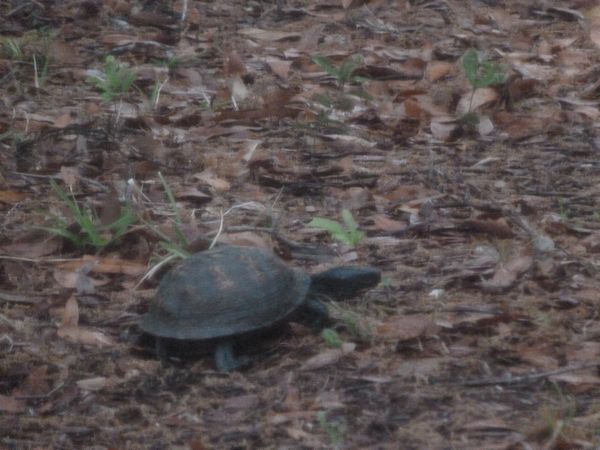

AdventureMan was still sleeping; so I ran and got my camera and took some photos. I think he was aware of me, but couldn’t figure out where I was (I was inside, he was outside). When he got up, AdventureMan was delighted to have his observation verified, and hurried outside to see if he could spot him. Nope! Turtle back in hiding.
The Baboon Coughed
We’ve had three sets of houseguests in a very short time span, and today is our first day of ‘normal.’ We saw our friends off at 0430 (we used to call it oh-dark-hundred) and I couldn’t get back to sleep, so by the grace of God (and I mean that literally) I got up and walked.
I know I need to walk. I’ve always walked. I used to run, but I suffered for it – the knees – and decided I didn’t want to pay that price. But when my sister was here, we decided to take a walk and I said “don’t worry, I walk fast” and she said “I don’t, I am so slow now, my body has to warm up.” Confidently I started – and starting is uphill from my house. Very shortly, I discovered my fast was her slow, and I was HUFFING and puffing, and so embarrassed because I guess it’s been a while since I did this walk . . . but we did it. It felt good. And I was happy for a nice cool morning so I could do it again.
I ran into a neighbor, ignored that she was in her nightgown, we both pretended she was as fully dressed as I, had a brief conversation and she went inside with her newspaper and I carried on. About halfway through my walk, as I puffed along, I heard it.
The baboon coughed.
I could even smell a faint drift of wood burning fire. I could hear the doves. But it was only very briefly, very intangential, and I quickly realized it must have been a dog barking distantly; I could still hear him. For one brief moment I was back in Zambia, and while I love the magic of Zambia, I would not be out for a mile long hike early in the morning while the lions prowl for a last meal before they settle down for their day-long snooze.
We are off this morning to a grand plant sale across the bay in Milton. Symphony tonight. Back to “normal” for Pensacola.
Recent Comments
ExpatAlien on What Country am I Living … intlxpatr on Yellowstone: Old Faithful to C… Michelle on Yellowstone: Old Faithful to C… Cathy on No Grown-Ups in Charge intlxpatr on Waiting for Snow Wikipedia Donate Button

Amazina


Early Voting in Florida


 Here There and Everywhere