You’ve seen photos of Baby in the food dish, and Baby by the garage door. I opened the door into summer for the Qatari Cat, just the door, and propped the screen door tightly shut so QC could watch the birds and squirrels from the safety of the house.
In Qatar, when he was young and strong, he actually knocked a screen off and escaped. When we replaced the screen, he scratched a long rent in the screening and escaped again. He had a tree he would run for, and once on the wall – he was king of the roost. Only cheese or sardines would get him back again, and it could take hours just to find him before we could tempt and capture him.
Now, he is more content to be an indoor cat. At least, content most of the time. There are times he leaves a message telling us he still yearns to chase a squirrel or two . . .

May 16, 2013
Posted by intlxpatr |
Family Issues, Living Conditions, Pensacola, Qatteri Cat, Survival |
Leave a comment
Oops!
Sorry! I intended to keep writing, but as it sometimes can, life just got away from me. I took a quick trip to Seattle to see my Mom on Mother’s Day, stayed with my best friend from college, ummm . . . when I count the number of years we have been friends, I am shocked!
Flying out of Pensacola, we flew over Bayou Texar:

I had a great seat, but the lady next to me sounded like she had terminal pneumonia, so I kept my face toward the window. Everything went smoothly, arrived a little early. Two hassles: I had decided for just a short trip I would use a shoulder bag/suitcase, and even though it was light, it gets heavy lugging it from gate to gate. On the good news side, it sure is a lot easier to travel with just cabin baggage, easy on – easy off.
Second, I just hate it that Seattle has relocated all the rental cars to an off-site location. The buses only stop at one end of the terminal or the other so again, there is a lot of lugging, whether it is wheeled or shoulder. You have no control over when the bus will come or when it will leave. It used to be so easy, just dropping the car off and walking directly into the terminal; now I have to calculate extra time for unknowns in the rental return process, oh aarrgh.
Traffic to north Seattle was horrible, even on a Saturday, it was like a normal work day when all the workers are streaming out of the city. On work days, there are windows when traffic is less, but a Saturday! Aarrgh!
It was not raining, or not much. That was a really good thing. Temperatures were lower than Pensacola. That was a good thing. We had a great Mother’s Day brunch, with my sisters and their hubbies, and Mom and I did some shopping. The next day, more errands and catching up on banking and bureaucracies. Those were all good things.
My good friend and I had time to catch up and – as we are wont to do – analyze and strategize. We spent a good amount of time laughing at ourselves and our dilemmas. We laughed at the problems of aging. We laughed at who we thought we would be (who ever thinks they will get old??) and who we have become. Here is what sunrise over Lake Washington looks like from my friend’s house:

Flight home uneventful; arrived in Atlanta a few minutes early and I was out the door in a flash, running running running down one concourse and up the other to see if I could get on the earlier flight to Pensacola which was leaving in MINUTES! “No, no, not possible” the gate clerk said without even looking up; she was already working on two other women, I am guessing flight attendants trying to get back home. I waited a minute, bushed from the long run and lugging the shoulder luggage, then said “I think I will just go find a barbecue” and the gate attendant said “Wait!” and I thought she was going to tell me where to find the best barbecue, because I had like three hours, but no . . . she was printing me out a ticket! I got the last seat, back, back, way back in between two great big United States Marines, but it was a fun 45 minutes and I was home three hours earlier. All that is really good!
Even though it is not Seattle to Kuwait, I still like to shower after a long flight, I just feel germy! AdventureMan made me a beautiful salad with sauteed Portobello mushrooms on top, oh yummmmm and we delighted to be together again. Woooo HOOOOO, home again 🙂 Sorry to be out of the loop, but when you are one day out, one day back with two days in between, time just swooshes by.
May 15, 2013
Posted by intlxpatr |
Adventure, Aging, Beauty, Blogging, Bureaucracy, Civility, Cooking, Customer Service, ExPat Life, Living Conditions, Pensacola, Seattle, Travel |
2 Comments
Little drops of water, little grains of sand, make the mighty ocean and the beauteous land . . .
Little drops of water, in the form of expressions of international outrage against the sentence of 100 lashings for a 15 year old girl, impregnated by her stepfather, who bore his still-born babe, and was ordered punished by the court system for immorality. A call to express outrage by boycotting travel to the Maldives seems to have gotten the attention of the government. It appears they will try to find a way to avoid this grueling punishment . . . thanks to the attention being paid.
From the English edition of Haveeru Online:
President Dr Mohamed Waheed Hassan Manik on Tuesday urged patience from the international community in the case of the 15 year old alleged rape victim who received a flogging after being convicted of adultery in a separate incident.
The conviction had sparked an international outcry and condemnation from rights groups such as Amnesty International. While an online petition condemning the Maldives over the sentencing has received over two million signatures. The petition, started by New York-based campaign group avaaz.org, calls on President Waheed to intervene and has been signed by over two million users.
“We appreciate the international compassion for this young woman and ask for your patience as this case moves through the judicial system,” President Waheed said in a statement.
“Currently the case is being appealed and I have urged the judiciary to resolve this matter as quickly as possible.”
“This case should never have been presented in the courts and we are working to ensure that cases like this are never brought to the courts again.”
In the statement, President Waheed also assured that the young woman remains under the care of the Gender Ministry and is receiving the appropriate physical and psychological counseling at this time.
“As both the President and as a father, I am fully committed to protecting and advancing the rights of women and girls in the Maldives and throughout the world and share your deep concern about this young victim.”
In its attempt to pressure the Maldives government to overturn the sentence, Avaaz had called for tourism to be boycotted.
“Tourism is the big earner for the Maldives elite, including government ministers. Let’s build a million-strong petition to President Waheed this week, then threaten the islands’ reputation through hard-hitting ads in travel magazines and online until he steps in to save her and abolish this outrageous law,” Avaaz said on its website.
In that regard, President noted that the Maldives is a young democracy working to balance religious faith with new democratic values and asked the international community to support as partners as the country works through this challenge.
“A boycott on tourism will only serve as a setback to the economic opportunities and rights we are all striving to uphold for women, girls and the hardworking Maldivian people in general,” Waheed stressed.
The 15 year old girl who gave birth and buried the baby in Shaviyani Atoll Feydhoo had been sentenced to eight months under house arrest and 100 lashes after the Juvenile Court found her guilty of pre marital sex.
Prosecutors have maintained that the 15 year old was charged with adultery over another case which came to light during the investigation of the buried baby.
The baby born last June was found buried in the bath house of the girl’s home. The child delivered out of wedlock was dead at the time of discovery. Charges have been filed against the 15 year old’s mother and step-father over the deliberate murder of the baby.
May 2, 2013
Posted by intlxpatr |
Bureaucracy, Community, Crime, ExPat Life, Family Issues, Health Issues, Law and Order, Leadership, Living Conditions, Mating Behavior, News, Social Issues |
4 Comments
From today’s Kuwait Times . . . .
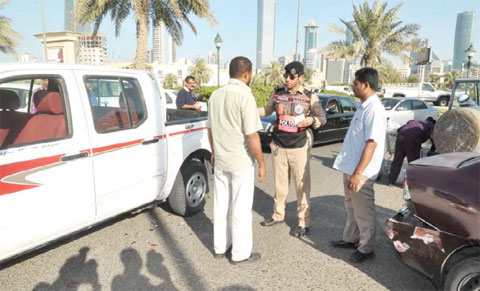
KUWAIT: The government has sent a draft law to the parliament stipulating an increase in fees collected from expatriate residents for using public services in Kuwait, a senior state official said in statements reported yesterday by the local press.
Minister of Cabinet Affairs Sheikh Mohammad Al-Abdullah Al-Sabah further indicated that the proposal is currently under review primarily to ensure it was in keeping with the constitution. “The state pays KD6 billion to subsidize public services, including electricity and water, while only KD2 billion of it is the average share of Kuwaitis,” he told a gathering of third constituency women voters at MP Ahmad Al-Mulaifi’s dewaniya on Monday night.
He also termed the remaining KD4 billion, a cost which supposedly the government bears for services used by expatriates, “a burden on the state.” Al-Sabah, who is also the State Minister for Municipality Affairs, added that similar steps have been adopted in the rest of the Gulf Cooperation Council states to increase the state revenue from expatriates. “Unfortunately, Kuwait’s law prohibits the government from increasing the fees unilaterally,” he said, referring to regulations which stipulate that such decisions must be passed by the parliament before becoming effective.
The minister’s statement is the latest turn in the government’s efforts seen targeted at the country’s expatriate community which comprises two thirds of the population, including a Ministry of Social Affairs and Labor announcement to deport 100,000 foreigners annually as part of a ‘demographic balance restoration plan’; the details of which are yet to be announced.
Meanwhile, Undersecretary Assistant for Traffic Affairs in the Interior Ministry, Major General Abdulfattah Al-Ali, announced that 213 expats were deported in the past few days for committing ‘grave’ traffic violations. In this regard, Al-Ali told Al-Rai on Tuesday that deportations only happen in cases where people have a record of repeated violations. “An expatriate who commits the same violation over and over again must be deported in the public interest,” he said, calling a person in this case as “abnormal” and “untreatable.” According to the ministry, the violations warranting deportation include driving without a driver’s license, jumping the red traffic light for a second time, using private vehicles to carry passengers and exceeding speed limits by 40 km. Al-Ali refuted the notion that the recent deportations were connected to the MSAL’s plan mentioned above.
Minister of Social Affairs and Labor Thekra Al-Rashidi had indicated that the annual deportation plan, through which the government hopes to deport a million foreigners in ten years, is chiefly going to target ‘marginal labor forces’ or workers who usually accept menial jobs and often live without valid visas.
Such workers are often the victim of visa traffickers who exploit loopholes in the ministry’s system to release work permits in the name of fake companies or nonexistent job openings, and then sell them to unskilled labor forces looking for a chance to work in the oil-rich Gulf region. The system is based on the kafala (sponsorship of foreign workers) program which is often criticized by international organizations for human right violations recorded in Kuwait and the entire region.
On a related note, Al-Rai reported yesterday that the social affairs and interior ministries are studying the possibility of creating an ‘amnesty period’ during the summer to allow illegal residents to leave Kuwait or obtain a new visa without paying the cumulative fines.
Anonymous sources were quoted in the report as saying that the project depends on the two ministries’ ability to “plug some loopholes” which could make violators irresponsive to it. “For example, we cannot expect Bangladeshi nationals staying illegally in Kuwait to leave when they know that they will be banned by law in this case from ever returning to Kuwait,” one source explained. “There are violators who become stuck in Kuwait due to circumstances in their home countries combined with regulations that prevent them from issuing a residency in Kuwait.
Legal obstacles in similar cases need to be removed before an amnesty period is announced,” the source added.
May 2, 2013
Posted by intlxpatr |
Community, Cultural, ExPat Life, Financial Issues, Kuwait, Law and Order, Living Conditions, Work Related Issues |
Leave a comment
I have had wonderful women who have worked for me; they were from the Philippines, from Sri Lanka, from India. They worked hard and they didn’t spend their money. They sent their money home to help support mothers, fathers, siblings, children. They had some real horror stories to tell about how they had been treated in prior employment – employers with jealous wives, touchy-feelie employers and their sons, people who seemed to assume that because they were working under their sponsorship, they owned their lives. In Qatar and in Kuwait, Labor law provides for a mandatory day off – except for house-workers. Some work from crack of dawn getting the children ready for school until the last thobe is ironed, late late in the night.
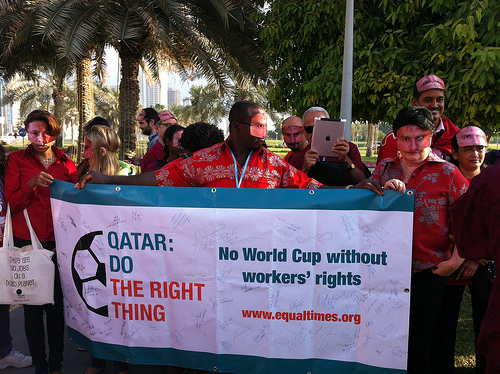
I did a little research. Here is what 38 Euros per month – slave wages – is worth:
$50.13 US Dollars (Minimum wage $7.25/hour + social security)
Qatari Rial 182.52 (Qatar has not set a minimum wage)
Kuwaiti Dinar 14.24 (Minimum wage = 60 KD per month)
From Agence France Presse via AOL News:
Pope Francis on Wednesday condemned as “slave labour” the work conditions of victims of a factory collapse in Bangladesh in which more than 400 people have been found dead, Vatican radio reported.
“A headline that really struck me on the day of the tragedy in Bangladesh was ‘Living on 38 euros a month’. That is what the people who died were being paid. This is called slave labour,” the pope was quoted as saying at a private mass.
“Today in the world this slavery is being committed against something beautiful that God has given us — the capacity to create, to work, to have dignity. How many brothers and sisters find themselves in this situation!” he said.
“Not paying fairly, not giving a job because you are only looking at balance sheets, only looking at how to make a profit. That goes against God!” he was quoted as saying.
“There are many people who want to work but cannot. When a society is organised in a way that not everyone is given the chance to work, that society is not just,” he said.
Copyright (2013) AFP. All rights reserved.
If you have the time for some fascinating reading, it’s all available on the internet at the US State Departments Human Rights website; you can access by clicking here. Read – or skip – the overview, then go to the second column where you can see what is happening in every individual country. I’ve printed out labor excerpts below, but there are also fascinating observations on leadership, government, human rights and human trafficking.
QATAR: Labor Conditions according to
Country Reports on Human Rights Practices for 2012
a. Freedom of Association and the Right to Collective Bargaining
The law does not adequately protect the right of workers to form and join independent unions, conduct legal strikes, and bargain collectively, a situation that made the exercise of these rights difficult. The law provides workers in private sector enterprises that have 100 citizen workers who are18 and older a limited right to organize, strike, and bargain collectively. For those few workers covered by the law protecting the right to collective bargaining, the government circumscribed the right to bargain collectively through its control over the rules and procedures of the bargaining and agreement processes. The labor code allows for only one trade union, the General Union of Workers of Qatar (General Union), which was composed of general committees for workers in various trades or industries. Trade or industry committees were composed of worker committees at the individual firm level.
Noncitizens are not eligible to join worker committees or the national union, effectively banning foreign workers from organizing, striking, or bargaining collectively. The law explicitly prohibits public sector workers or the military from organizing.
Civil servants and domestic workers do not have the right to strike; the law also prohibits strikes at public utilities and health or security service facilities, which include the gas, petroleum, and transportation sectors. Although the law recognizes the right to strike for some workers, restrictive conditions made the likelihood of a legal strike extremely remote. The law requires approval for a strike by three-fourths of a company’s workers committee. The Complaint Department of the Ministry of Labor in coordination with the Ministry of Interior must rule on all industrial disputes before workers can call a strike.
In organizations with more than 30 workers, the law permits the establishment of “joint committees” with an equal number of worker and management representatives to deal with a limited number of workplace issues. Foreign workers may be members of joint labor-management committees. The law offers a means to file collective disputes. If not settled internally between the employees and employer, the Ministry of Labor can be brought in to mediate a solution to such disputes.
The law requires Ministry of Labor approval for worker organizations to affiliate with groups outside the country. The law does not prohibit antiunion discrimination or provide for reinstatement of workers fired for union activity.
Freedom of association and the right to collective bargaining were not respected in practice. The General Union was not a functioning entity. Employees could not freely practice collective bargaining, and there were no workers under collective bargaining contracts. While rare, when labor unrest occurred, mostly involving the country’s overwhelmingly foreign workforce, the government responded by dispatching large numbers of police to the work sites or labor camps involved; the strikes generally ended peacefully after these shows of force. In most cases the government summarily deported the workers’ leaders and organizers. For example, on January 24, 127 Nepali workers were detained after they went on strike to protest low pay; some were later deported.
b. Prohibition of Forced or Compulsory Labor
The law prohibits all forms of forced or compulsory labor, and the government generally enforced the law.
The government made efforts to prevent and eliminate forced labor during the year. The government arrested and prosecuted individuals for labor law violations; two cases each of forced labor and bonded labor were before courts at year’s end. In addition the government closed 15 recruitment firms during the year. The QFCHT and the NHRC conducted several training sessions during the year for migrant laborers to educate them on their rights in the country. The NHRC printed and distributed pamphlets that included pertinent articles of the labor and sponsorship laws in multiple languages to better educate migrant workers on their rights. In addition the Ministry of Labor opened a free legal clinic for low-income migrant workers in March.
There were continuing indications of forced labor, especially in the construction and domestic labor sectors, which disproportionately affected migrant workers. Exorbitant recruitment fees incurred abroad entrapped many workers in long-term debt, making them more vulnerable to being exploited for forced labor. Some foreign workers who voluntarily entered the country to work had their passports and pay withheld, were refused exit permits, and worked under conditions to which they had not agreed. In a critical June report, Human Rights Watch highlighted a number of these problems, including poor living conditions, employers who routinely confiscated worker passports, and a sponsorship system that gave employers inordinate control of workers.
Also see the Department of State’s Trafficking in Persons Report at www.state.gov/j/tip.
c. Prohibition of Child Labor and Minimum Age for Employment
The law sets the minimum age for employment at 16 and stipulates that minors between the ages of 16 and 18 can work with parental or guardian permission. Minors may not work more than six hours a day or more than 36 hours a week. Employers must provide the Labor Department with the names and occupations of their minor employees and obtain permission from the Ministry of Education to hire a minor. The Labor Department may prohibit the employment of minors in jobs judged dangerous to their health, safety, or morals. The government generally enforced relevant laws effectively, and child labor rarely occurred in practice.
d. Acceptable Conditions of Work
There is no minimum wage. The law requires equal pay for equal work in the private sector. The labor law prescribes a 48-hour workweek with a 24-hour rest period and paid annual leave days. Employees who work more than 48 hours per week or 36 hours per week during the holy month of Ramadan are entitled to an overtime pay supplement of at least a 25 percent. The law requires premium pay for overtime and prohibits excessive compulsory overtime. The government set occupational health and safety standards. The labor law and provisions for acceptable conditions of work do not apply to workers in the public sector, agriculture, or to domestic servants.
Responsibility for laws related to acceptable conditions of work fell primarily to the Ministry of Labor as well as the Ministry of Energy and Industry and the Ministry of Health. The government did not effectively enforce standards in all sectors; working conditions for citizens were generally adequate, as government agencies and the major private sector companies employing them generally followed relevant laws. Enforcement problems were in part due to insufficient training and lack of personnel. There were approximately 150 inspectors in the Ministry of Labor. Fear of penalties such as blacklisting, which allows the Ministry of Labor to suspend specific operations, appeared to have had some effect as a deterrent to some labor law violations.
The government took action to prevent violations and improve working conditions during the year. According to foreign diplomats and some individual migrant workers, the Ministry of Labor’s Department of Labor Affairs was perceived to be objective within its mandate when dealing with the nonpayment of wages, health and safety violations, and other labor law violations. The department claimed it resolved 80 percent of the 6,000 complaints filed by workers during the year. The ministry referred 292 cases to the labor courts for judgment. During the first half of the year, the labor courts heard 8,101 cases, of which 813 received final verdicts, 920 received preliminary verdicts, 5,236 were still under review, 1,111 were cancelled, and 21 were linked to existing cases. The courts ordered that companies provide both financial compensation and airline tickets to their country of origin for plaintiffs in 49 cases, financial compensation only in six cases, and airline tickets only in five cases. A limited number of labor complaints were referred to the criminal courts, but statistics were not publicly available.
The Labor Inspection Department conducted monthly and random inspections of labor camps; when it found them below minimum standards, the operators received a warning, and authorities ordered them to remedy the violations within one month. If they did not remedy the violations, the Ministry of Labor blacklisted the company and on occasion referred the matter to the public prosecutor for action. Some cases went to trial. During the year inspectors conducted 46,624 observations of work and labor housing sites. Inspectors found 90 percent of companies were compliant with the administrative aspects of the law, such as timely payment of salaries and work regulations, while 70 percent were found to be compliant with safety standards. The Ministry of Labor issued 7,337 warning notices, 5,245 for health and safety reasons and 2,092 for administrative reasons. There were 377 companies that were issued reports of violations, 231for health and safety reasons and 146 for administrative reasons. Violators faced penalties of up to 6,000 riyal ($1,648) and 30 days’ imprisonment in the most serious cases, but labor observers reported that most safety and health violations were handled through administrative fines or blacklisting. The Ministry of Labor maintained an office in Doha’s industrial area, where most unskilled laborers resided, to receive complaints about worker safety or nonpayment of wages.
Violations of wage, overtime, and safety and health standards were relatively common, especially in sectors employing foreign workers, in which working conditions were often poor. Employers often ignored working hour restrictions and other laws with respect to domestic workers and unskilled laborers, the majority of whom were foreigners. A November survey by Qatar University’s Social and Economic Survey Research Institute found that 90 percent of unskilled laborers worked on average six days per week and 9.3 hours per day. Many unskilled foreign laborers were housed in cramped, dirty, and hazardous conditions, often without running water, electricity, or adequate food. The International Trade Union Confederation (ITUC) has repeatedly reported abusive conditions, including unexplained and work-related deaths, for migrant workers, especially in the construction sector. After an ITUC investigation of working conditions for Nepali workers, the organization alleged that work-related deaths due to problems such as heat exhaustion were wrongly attributed to heart attacks or natural causes.
Domestic workers, who are not protected by the labor law, often faced unacceptable working conditions. Many such workers frequently worked seven days a week and more than 12 hours a day with few or no holidays, no overtime pay, and no effective means to redress grievances.
According to the ITUC and other organizations, foreign workers faced legal obstacles and lengthy legal processes that prevented them from seeking redress for violations and exploitative conditions. The sponsorship law was widely considered the root of these violations. Under the country’s sponsorship system, most employees cannot leave the country without permission and are prevented from switching jobs without a “no objection letter” from their employer. Employees leaving the country without a no objection letter are barred from reemployment in the country for two years.
Kuwait Labor Practices According to
Country Reports on Human Rights Practices for 2012
a. Freedom of Association and the Right to Collective Bargaining
The law protects the right of workers to form and join trade unions, conduct legal strikes, and bargain collectively, with significant restrictions. The law does not apply to public-sector employees, domestic workers, or maritime employees. Discrete labor laws set work conditions in the public and private sectors, with the oil industry treated separately. The law permits limited trade union pluralism at the local level, but there was only one government-authorized federation, the Kuwait Trade Union Federation (KTUF). The law also stipulates any new union must include at least 100 workers, and that at least 15 of the total must be Kuwaiti citizens.
The law provides workers a limited right to collective bargaining, excepting domestic servants, maritime workers, and civil servants. There is no minimum number of workers needed to conclude such agreements.
Public-sector workers do not have the right to strike. Private-sector workers have the right to strike, although cumbersome provisions calling for compulsory negotiation and arbitration in the case of disputes limit that right. Legal strikes require permission from the Ministry of Interior, which was rarely granted. The law does not prohibit retaliation against striking workers or prevent the government from interfering in union activities, including the right to strike.
The law prohibits antiunion discrimination and employer interference with union functions, and provides for reinstatement of workers fired for union activity.
However, the law empowers the courts to dissolve any union for violating labor laws or for threatening “public order and morals,” although a union can appeal such a court decision. The Ministry of Social Affairs and Labor can request the Court of First Instance to dissolve a union. Additionally, the emir may dissolve a union by decree.
Foreign workers, who constitute approximately 85 percent of the workforce, may join unions only as nonvoting members after five years of work in the particular sector the union represents, provided they obtain a certificate of good conduct and moral standing from the government. They cannot run for seats or vote in board elections. Both the International Labor Organization and the International Trade Union Confederation criticized the citizenship requirement for discouraging unions in sectors that employ few citizens, including much of private-sector employment, such as construction.
The government enforced applicable laws, and procedures were generally not subject to lengthy delay or appeals.
Although the law restricts freedom of association and collective bargaining rights, the government did not always enforce these limits. For example, according to KTUF, the government did not consistently enforce the requirement that foreign workers have at least five years working in Kuwait in a specific sector prior to joining a union.
The government also treated worker actions by citizens and noncitizens differently. While citizens and public-sector union leaders and workers faced no government repercussions for their roles in union or strike activities, companies directly threatened noncitizen workers calling for strikes with termination and deportation.
The government did not respect freedom of association and the right to collective bargaining. Worker organizations were generally not independent of the government, and the government interfered in union activities. The government essentially treated licensed unions as parastatal organizations, providing as much as 90 percent of their budgets and inspecting financial records; if a union ceases to exist, the government confiscates its assets.
While the National Trade Union Federation petitioned the government for official recognition during the year, it did not receive a license by year’s end.
b. Prohibition of Forced or Compulsory Labor
The law prohibits forced or compulsory labor “except in cases specified by law for national emergency and with just remuneration,” but the government did not effectively enforce the law.
Forced labor and conditions indicative of forced labor occurred in practice, especially among migrant workers. Such practices were usually a result of employer abuse of the sponsorship system for noncitizen workers. Employers frequently and illegally withheld salaries from domestic workers and minimum-wage laborers.
Domestic servitude was the most common type of forced labor, principally involving foreign domestic workers employed under the sponsorship system, but forced labor in the construction and sanitation sectors also existed. Forced labor conditions for migrant workers included nonpayment of wages, long working hours, deprivation of food, threats, physical and sexual abuse, and restrictions on movement, such as withholding passports or confinement to the workplace. There were numerous media reports throughout the year of domestic workers being abused by their sponsors or sustaining significant injuries while trying to escape from their sponsors; some reports alleged abuse resulted in workers’ deaths. Female domestic workers were particularly vulnerable to sexual abuse. Police and courts were reluctant to prosecute citizens for abuse in private residences.
See also the Department of State’s Trafficking in Persons Report at www.state.gov/j/tip.
c. Prohibition of Child Labor and Minimum Age for Employment
The law prohibits child labor. The legal minimum age for employment is 18 years; however, employers may obtain permits from the Ministry of Social Affairs and Labor to employ juveniles between 15 and 18 years old in some nonhazardous trades. Juveniles may work a maximum of six hours a day with no more than four consecutive hours followed by a one-hour rest period. Juveniles cannot work overtime nor between 7:00 p.m. and 6:00 a.m.
Although it was not extensive, there were credible reports of child labor by domestic servants of South Asian origin and Bidoon children. Some underage workers entered the country on travel documents with falsified birth dates.
Bidoon children as young as seven worked long hours as street vendors, sometimes under dangerous conditions, according to reports by human rights NGOs. Their need to provide for their families often led to poor educational performance or abandoning school.
The government made efforts to enforce the law effectively. Approximately 300 Ministry of Social Affairs and Labor inspectors routinely monitored private firms for labor law compliance, including laws against child labor. Noncompliant employers faced fines or a forced suspension of their company operations. However, the government did not enforce child labor laws in informal sector occupations, such as street vending.
d. Acceptable Conditions of Work
The law sets the national minimum private-sector wage at 60 dinars ($216) per month.
The law limits the standard workweek to 48 hours (40 hours for the petroleum industry), and gives private-sector workers 30 days of annual leave. The law also forbids requiring employees to work more than 60 hours per week or 10 hours per day. The law provides for 13 designated national holidays annually. Workers are entitled to 125 percent of base pay for working overtime and 150 percent of base pay for working on their designated weekly day off.
The government issued occupational health and safety standards. For example, the law provides that all outdoor work stop between 11 a.m. and 4 p.m. during June, July, and August or times when the temperature rises to more than 120 degrees Fahrenheit in the shade.
The law and regulations governing acceptable conditions of work do not apply to domestic workers. The Ministry of Interior has jurisdiction over domestic worker matters.
The Ministry of Social Affairs and Labor was responsible for enforcement of wage and hour, overtime, and occupational safety and health regulations. However, enforcement by the ministry was poor, especially with respect to unskilled foreign laborers.
Approximately 500 labor inspectors monitored private firms. The government periodically inspected enterprises to raise awareness among workers and employers and to ensure they abided by existing safety rules, controlled pollution in certain industries, trained workers to use machines, and reported violations.
The Ministry of Social Affairs and Labor monitored work sites to ensure compliance with rules banning summer work and recorded hundreds of violations during the year. Workers could also report these violations to their embassies, the KTUF, or the Labor Disputes Department. Noncompliant employers faced warnings, fines, or forced suspensions of company operations, but these were often not substantial enough to deter violators.
Workers submitted complaints to the Ministry of Social Affairs and Labor’s Labor Disputes Department; however, the government did not enforce the standards uniformly.
At times the Ministry of Social Affairs and Labor intervened to resolve labor disputes between foreign workers and their employers. The Ministry of Social Affairs and Labor’s labor arbitration panel sometimes ruled in favor of foreign laborers who claimed violations of work contracts by their employers. The government was more effective in resolving unpaid salary disputes involving private-sector laborers than those involving domestic workers. However, during the year the Ministry of Interior’s Department of Domestic Labor Office collected 8,340 dinars ($30,000) owed to 71 domestic workers by their employers.
Foreign workers were vulnerable to unacceptable conditions of work. Domestic servants and other unskilled foreign workers in the private sector frequently worked substantially in excess of 48 hours a week, often with no day of rest.
Since labor standards did not apply to domestic workers, such workers had little recourse when employers violated their rights. There were no inspections of private residences, the workplace of the majority of the country’s domestic workers, nor did the government make significant efforts to address working conditions for these workers. Reports commonly indicated employers forced domestic workers to work overtime without additional compensation. There were frequent reports of domestic workers committing or attempting suicide due to desperation over abuse or poor working conditions.
May 1, 2013
Posted by intlxpatr |
Civility, Community, Cross Cultural, Doha, ExPat Life, Family Issues, Health Issues, Kuwait, Living Conditions, Middle East, Qatar, Social Issues, Statistics, Transparency, Work Related Issues | Human Rights Practices, Labor Law Kuwait, Labor Law Qatar, Pope Francis, slaves |
Leave a comment
This is a very interesting article from the April 27th Kuwait Times; after stating all the things that will happen to expats violating traffic rules – like running a red light – Lt Gen Al Ali adds that “of course” they will deal strictly with Kuwaits when their violations might endanger the safety of people on the roads. Hmm. When Qatar implemented a very strict traffic code with high fines for violations, they quickly discovered that the majority of the violations were committed by Qataris, whose families were highly indignant that they would be expected to pay fines – high fines.
Traffic laws are only effective when equally applied across the board. I congratulate the Kuwaiti police for making the decision to implement this new law equally, against all traffic violators, native and expat alike.
KUWAIT: The Assistant Undersecretary for Traffic Affairs Lt Gen Abdul Fattah Al-Ali said 86 expats have been deported during the past few days, emphasizing that he is implementing the instructions of the First Deputy Premier and Interior Minister Sheikh Ahmad Al-Hmoud, and the Undersecretary Gen Ghazi Al-Omar. He said that traffic department will not allow any kind of violation of the country’s law.
The traffic department held an extended traffic campaign in Shuwaikh industrial area, with the participation of 72 traffic patrols and 17 cranes. The campaign resulted in more than 300 citations, and the detention of about 70 vehicles, . Lt Gen Al Ali also announced some new procedures to be taken besides activating the existing traffic law articles, to overcome all mistakes that used to happen before.
Al-Ali said: “We have received green light from the minister of interior and undersecretary to take strict actions against expatriates who do not abide by traffic rules, especially those who jump red traffic light and drive without driving license and over speed. Those instructions have been passed to all patrols, and was given the blessings of first deputy prime minister and minister of interior, which calls for immediate deportation of any expatriate who drives without license.
Also all expatriates who jump red signal or overspeed will be deported. Of course, we will also take strict actions against citizens who commit such traffic violations as those violations endanger the lives of other people. Therefore, article 33 of traffic law will be strictly implemented, and the vehicle of the citizen who breaks the law will be impounded for three months.”
Al Ali said that new procedures will be taken against owners of the cars that are taken into custody, and they will have to pay all fines in addition o detention charges and cost of transporting the vehicle to the dumping ground. He added that the Ministry of Interior will take strict actions against reckless driving in Wafra, Subhan and Fahaheel.
He added in his report to press reporters that once the law completely implemented,there will be safety and security on the road and the number of road accidents which costs the state billions of dinars annually will come down. Ministry of Interior started communicating with Ministry of Commerce to cancel the license of any garage found repairing cars without repair permit from the local police station.
By Hanan Al-Saadoun, Staff Writer
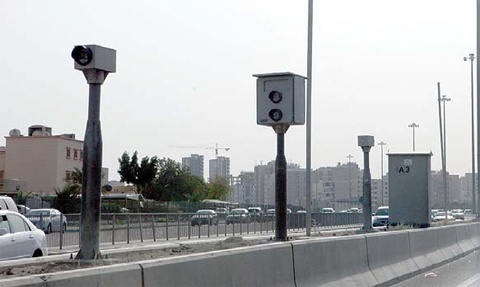
KUWAIT: MoI assistant undersecretary for traffic affairs, Maj General Abdul Fattajh Al-Ali said that citizens and bedoons would be detained for committing severe traffic violation whereas expats would be deported for doing the same. “Law must be applied without exceptions”, he said noting that drivers committing severe traffic violations such as driving through red lights, speeding, driving without holding a driver’s license or vehicle registration or illegal use of vehicle as a taxi would be immediately detained and a special record would be made of their ‘traffic records’ to check if they had committed the same violations earlier. —Al-Rai
Top MOI officials to retire in reshuffle
KUWAIT: Two top Interior Ministry officers are poised to retire by the end of the month in a prelude to major reshuffles planned by First Deputy Prime Minister and Minister of Interior Sheikh Ahmad Al-Hmoud Al-Sabah. This was published by Al-Rai on Thursday quoting “reliable sources” who indicated that Minister Al-Hmoud “did not request extending the service for Major General Mustafa Al- Zaabi and Major General Khalil Al-Shamali”, who occupy the posts of Assistant Undersecretary for Traffic Affairs and Assistant Undersecretary for Correctional Institutions Affairs respectively. The reshuffle which starts sometime this month is set to cover directors and deputy directors and will fill the vacuum left by the two assistant undersecretaries. In this regard, the sources who spoke on condition of anonymity indicated that Assistant Undersecretary for General Security Affairs, Major General Mahmoud Al-Dousary, is expected to be shifted to the traffic affairs department “in order to utilize his long experience in the field which can prove helpful in carrying out strategic plan to end the state’s traffic problem”. The same sources further indicated that the ministry plans to launch a “comprehensive study” to address the problem of the shortage of staff through measures that will include “simplifying enrollment conditions at the Saad Al-Abdullah Police Academy”. — Al-Rai
April 30, 2013
Posted by intlxpatr |
Bureaucracy, Civility, Community, ExPat Life, Kuwait, Law and Order, Living Conditions, Social Issues |
Leave a comment
Hilarious! Thank you, John Mueller and the Guardian for this giggle.
Qatar returns statues to Greece amid nudity dispute
Culture clash erupts after Greek minister visits Doha show and spots ancient treasures covered in strategically placed cloth.

Naked ambition: cash-strapped Greece has long been wooing Qatar. The display was meant to ‘open a bridge of friendship’ between the countries. Photograph: Alamy
It was a spat that nobody wanted – neither the Greeks, the Qataris nor, say officials, the two nude statues that sparked the furore.
But in a classic clash of cultures, Greece has found itself at odds with the oil-rich state – a nation it is keen to woo financially – over the presentation of masterworks depicting athletes in an exhibition dedicated to the Olympic games.
“The statues are now back at the National Archaeological Museum in Athens,” said a culture ministry official.
The dispute, though authorities are not calling it that, broke when Greece’s culture minister, Costas Tzavaras, arrived in Doha last month to discover the “anatomically challenging” treasures cloaked in cloth for fear of offending female spectators.
“In a society where there are certain laws and traditions authorities felt women would be scandalised by seeing such things, even on statues,” added the official who was present at the time.
“The minister, of course, said while he totally respected local customs he couldn’t accept the antiquities not being exhibited in their natural state,” she told the Guardian. “They were great works of art and aesthetically it was wrong.”
The statues, an archaic-era Greek youth and a Roman-era copy of a classical athlete, were to be the centrepiece of an exhibition entitled Olympic Games: Past and Present. Bankrupt Greece was delighted to facilitate when organisers in Doha got in touch. Mired in its worst economic crisis in modern times, the debt-stricken country is eager for investment from the Gulf state, which this year promised to pour €1bn into a joint investment fund.
In another hopeful sign, the emir of Qatar, Sheik Hamad bin Khalifa Al Thani, recently bought six isles in the Ionian sea with a view to building palaces on them for his three wives and 24 children.
Visiting the Qatari capital for the opening of the show, Tzavaras seized the opportunity to describe the exhibition as “opening a bridge of friendship” between the countries. The discovery of the covered-up antiquities was a setback few had envisaged.
“We don’t want to portray it as a row, and we certainly didn’t want it to overshadow the exhibition,” explained the official. “It was all very friendly. When they turned down our request (to remove the cloth) the statues were boxed up again and sent back to Athens.”
Mystery, nonetheless, shrouds the affair. The show, which had previously been hosted in Berlin, features more than 700 artworks from around Greece, including numerous nude statues. It remains unclear why Qatari authorities had taken such umbrage over the antiquities in question, although officials in Athens described the young athletes – both from Eleusis – as being especially beautiful.
April 29, 2013
Posted by intlxpatr |
Arts & Handicrafts, Beauty, Bureaucracy, Community, Cross Cultural, Doha, ExPat Life, Humor, Living Conditions, Public Art, Qatar, Values | Greece |
Leave a comment
Shocking news for everyone with grounds and gardens – we’ve all been using this, not knowing its long term impact on our environment – and on us.

Roundup, An Herbicide, Could Be Linked To Parkinson’s, Cancer And Other Health Issues, Study Shows

April 25 (Reuters) – Heavy use of the world’s most popular herbicide, Roundup, could be linked to a range of health problems and diseases, including Parkinson’s, infertility and cancers, according to a new study.
The peer-reviewed report, published last week in the scientific journal Entropy, said evidence indicates that residues of “glyphosate,” the chief ingredient in Roundup weed killer, which is sprayed over millions of acres of crops, has been found in food.
Those residues enhance the damaging effects of other food-borne chemical residues and toxins in the environment to disrupt normal body functions and induce disease, according to the report, authored by Stephanie Seneff, a research scientist at the Massachusetts Institute of Technology, and Anthony Samsel, a retired science consultant from Arthur D. Little, Inc. Samsel is a former private environmental government contractor as well as a member of the Union of Concerned Scientists.
“Negative impact on the body is insidious and manifests slowly over time as inflammation damages cellular systems throughout the body,” the study says.
We “have hit upon something very important that needs to be taken seriously and further investigated,” Seneff said.
Environmentalists, consumer groups and plant scientists from several countries have warned that heavy use of glyphosate is causing problems for plants, people and animals.
The EPA is conducting a standard registration review of glyphosate and has set a deadline of 2015 for determining if glyphosate use should be limited. The study is among many comments submitted to the agency.
Monsanto is the developer of both Roundup herbicide and a suite of crops that are genetically altered to withstand being sprayed with the Roundup weed killer.
These biotech crops, including corn, soybeans, canola and sugarbeets, are planted on millions of acres in the United States annually. Farmers like them because they can spray Roundup weed killer directly on the crops to kill weeds in the fields without harming the crops.
Roundup is also popularly used on lawns, gardens and golf courses.
Monsanto and other leading industry experts have said for years that glyphosate is proven safe, and has a less damaging impact on the environment than other commonly used chemicals.
Jerry Steiner, Monsanto’s executive vice president of sustainability, reiterated that in a recent interview when questioned about the study.
“We are very confident in the long track record that glyphosate has. It has been very, very extensively studied,” he said.
Of the more than two dozen top herbicides on the market, glyphosate is the most popular. In 2007, as much as 185 million pounds of glyphosate was used by U.S. farmers, double the amount used six years ago, according to Environmental Protection Agency (EPA) data.
April 26, 2013
Posted by intlxpatr |
Circle of Life and Death, Environment, Experiment, Gardens, Health Issues, Living Conditions, Technical Issue, Wildlife |
2 Comments
Oh what fun – last night on House Hunters International, I got to search for an apartment in Doha. Well, not really, but virtually. Here is what the episode description says on HGTV:
Just after getting married to Meena, architect Ken jumped at the chance to help design Doha’s new international airport. So, they’re trading in the golden state of California for the golden lands of Qatar. But as these newlyweds discover each other, the new city of Doha is also discovering its own identity as it moves towards the future. From sleek new development to traditional neighborhoods, real estate agent Ana Figueiredo will help them navigate Doha’s changing landscape. Watch as House Hunters International uncovers all that glitters in Doha, Qatar.
I checked YouTube; the episode is not yet up. It was so much fun, seeing this young couple in the Souks, down near Al Saad in Mirqab, and out at the Pearl. The apartment they settled on was in Al Ashmak, near the Corniche; I think it was one of the Bilal apartment buildings.
April 19, 2013
Posted by intlxpatr |
Adventure, Cross Cultural, Doha, ExPat Life, Living Conditions, Local Lore, Moving, Qatar | Al Ashmak, Corniche, House Hunters International, Mirqab, The Pearl |
4 Comments
The Western diet really IS a killer: People who eat white bread, butter and red meat are most likely to die young
- Those who ate fried and unhealthy food had doubled risk of early death
- Key culprits include red meat, white bread, butter, cream and sweet foods
- Findings ‘help explain’ why heart disease is still the UK’s biggest killer
By ANNA HODGEKISS
PUBLISHED: 13:20 EST, 16 April 2013 | UPDATED: 02:08 EST, 17 April 2013
The typical Western diet, high in fat and sugar, really does lead to an early grave, new research suggests.
A study of more than 5,000 civil servants found those who ate the most fried and sweet food, processed and red meat, white bread and butter and cream doubled their risk of premature death or ill health in old age.
It adds to evidence that ‘Western style food’ is the reason why heart disease claims about 94,000 lives a year in the UK – more than any other illness.
The findings published in The American Journal of Medicine are based on a survey of British adults and suggest adherence to the diet increases the risk of premature death and disability later in life.

People who ate the most fried and sweet food, processed and red meat, white bread, butter and cream doubled their risk of premature death or ill health in old age
Lead researcher, Dr Tasnime Akbaraly, of the National Institute of Health and Medical Research in France, said: ‘The impact of diet on specific age-related diseases has been studied extensively, but few investigations have adopted a more holistic approach to determine the association of diet with overall health at older ages.’
She examined whether diet, assessed in midlife, using dietary patterns and adherence to the Alternative Healthy Eating Index (AHEI), is associated with physical ageing 16 years later.
The AHEI is an index of diet quality, originally designed to provide dietary guidelines with the specific intention to combat major chronic conditions such as heart disease and diabetes.
Dr Akbaraly added: ‘We showed that following specific dietary recommendations such as the one provided by the AHEI may be useful in reducing the risk of unhealthy ageing, while avoidance of the “Western-type foods” might actually improve the possibility of achieving older ages free of chronic diseases.’
The researchers analysed data from the British Whitehall II cohort study and found following the AHEI can double the odds of reversing metabolic syndrome, a range of disorders known to cause heart disease and mortality.

The research adds to evidence that Western style food is the reason why heart disease claims about 94,000 lives a year in the UK – more than any other illness
They followed 3,775 men and 1,575 women from 1985-2009 with a mean age of 51 years.
Using a combination of hospital data, results of screenings conducted every five years, and registry data, investigators identified death rates and chronic diseases among participants.
At the follow up stage, just four per cent had achieved ‘ideal ageing’ – classed as being free of chronic conditions and having high performance in physical, mental and mental agility tests.
About 12 per cent had suffered a non-fatal cardiovascular event such as a stroke or heart attack, while almost three per cent had died from cardiovascular disease.
About three quarters were categorised as going through ‘normal ageing’.
The researchers said participants who hadn’t really stuck to the AHEI increased their risk of death, either from heart disease or another cause.
Those who followed a ‘Western-type diet’ consisting of fried and sweet food, processed food and red meat, refined grains, and high-fat dairy products, lowered their chances for ideal ageing.
Read more: http://www.dailymail.co.uk/health/article-2310053/The-Western-diet-really-IS-killer-People-eat-white-bread-butter-red-meat-likely-die-young.html#ixzz2QkUxf96L
April 17, 2013
Posted by intlxpatr |
Aging, Cooking, Cultural, Diet / Weight Loss, ExPat Life, Food, Health Issues, Living Conditions, Statistics |
Leave a comment






 Here There and Everywhere