Congress Overturns Bush Veto
From BBC News.
The United States Congress has for the first time overturned President George W Bush’s veto, on a bill authorising spending on water projects.

The Senate voted 79-14 to overturn the veto, after the House of Representatives voted 361-54, well over the two-thirds majority required.
The last time a veto was overridden was in 1998, under President Bill Clinton.
The bill authorises billions of dollars-worth of local projects, many of which Mr Bush says are unnecessary.
It includes funding for coastal restoration in Louisiana after Hurricane Katrina, improving the Florida Everglades and fisheries in the Great Lakes.
Many local projects, such as dams, sewage plants and beach restoration, are considered important to local communities and therefore to politicians’ electors.
My comment: It’s about time. I only wish it had happened before, when Congress approved a child healthcare plan, Bush vetoed it, and Congress didn’t have the votes to override the veto.
In the US system, there are two houses in the legislature; the Senate, with two representatives from each state, and the House of Representatives, with representations allocated according to population. When a bill is passed, it has to be passed by both houses, by a simple majority, more voting for than against. Then the bill goes to the President for his signature. If he vetos the bill (says no) then the bill can still become a law if 2/3 of the members of the Senate and 2/3 members of the House vote for it.
Several members of Bush’s party, the Republicans, had to vote with the Democrats in order to overcome the veto.
You can read the rest of the story HERE.
In addition to national laws, there are state laws. In my state, Washington state, there is a really cool way a bill may be introduced by the people, called an initiative. If you can gather enough genuine signatures – and they will be sampled and verified, so you really have to have more than enough real signatures – you can put an issue on the ballot. It usually takes a lot of signatures, and most of the time the initiatives can be a little bit crack-pot, but it puts a lot of power in the hands of the people to have this instrument for making laws.
On the other hand, there are also referendums, in which the elected legislators will send a bill to the people to vote on.
These are both forms of direct democracy, where the people vote for themselves, instead of trusting elected representatives make the decisions for them.
You would think it would be an ideal form of democracy, but to work, it requires that people educate themselves on the issues, and people often aren’t willing to do that.
“Can You Help Me Get to Bangladesh?”
I have a dilemma. I don’t know how to handle it.
I carry small bills with me, because I am often asked for money. I keep it so I always have money to give to the people who help me get groceries to my car, the people who deliver propane, people who give good service – I don’t mind. Part of the blessing of having work is the obligation to pass that blessing along to others. We know that God Almighty knows where there is real need, and he moves us to give where giving is needed; he gives us a little shove in our hearts.
Yesterday, a well dressed man with a steady job told me he wants to go home to Bangladesh to see his parents. Could I help him?
I understand about aging parents. I’ve made a few trips myself. I totally understand what it is like to be far away when crises strike. We have always had funds set aside for emergency trips, and, by the grace of God, we haven’t had to dip into those funds often.
“How can I help you?” I asked.
“I need money,” he responded.
Money for a ticket to Bangladesh – that’s not small change. Along with that thought is the thought that were I to “help” this man, word would get around, and I would have many people knocking on my door for serious help with funds.
I don’t think he wants the kind of help I could easily give – showing how to set up an account and contribute to it faithfully, letting the money accumulate until you reach your goal. I don’t think he wants to do what my parents did with me, and what we did with our son – matching funds. (You save up half and we will match your savings dollar for dollar.) He wants an outright big gift.
In our church, we sing a song that says “Freely, freely, you have received, Freely, freely give.” I’ve always believed that with all my heart, it is like a magnified spiritual Locard Exchange Principal especially for blessings; what you have received you give, and it comes back to you doubled, tripled, magnified.
We tend to give larger charitable donations to organizations that make the money work hard – Medicins Sans Frontiers, African schools, our church fund. I consider a ticket to Bangladesh a relatively large charitable donation, large especially for one individual, one individual who is well employed.
So I ask for your prayers for clear guidance. I am not feeling that shove in my heart.
Blessings of Eid and Eidiyya
(*Note for non-Muslim, non-Kuwaitis – Eidiyya is money given for Eid, mostly to young children, but I have a few grown up women friends who tell me their Daddy still gives them money for Eid, the big holiday at the end of Ramadan.)
We had a yen for French food last night, and were at the restaurant, finishing up a fairly mediocre meal. We were enjoying watching all the couples and families, all dressed in Eid finery. Many of the women literally sparkled – gold threads woven into scarf or hijab, clothing beaded or glittering. . . we were like plain little quail, surrounded by swans, but that was fine with us, kept us below the radar as we ate our dinner.
As we came in, we had been warned that the credit card machines were not working, but that wasn’t a problem for us, we tend to carry cash, just keeps things simpler.
So we are waiting for our change, when a very good looking family comes in and sits at a table near us. The husband and wife are dressed beautifully, not glam, but well tailored, well fitted, expensive clothing, and they have five beautiful children with them, youngest maybe 10, up to maybe college age. As they are about to order, the waiter reminds them that the charge machines are out of order and the restaurant will accept only cash tonight.
The distinguished looking man sits in a stunned and embarrassed silence. The faces of his family are all turned to him as sunflowers to the sun, waiting. Then his wife says “Don’t worry, I have 10KD here, you can have it.” (10KD would not have taken care of this family!) The oldest girl jumps in: “Dad, I have my Eidiyya with me! You can have it!” and each of the children start digging in their pockets and purses for money to help their Dad out.
Our change came back and we were leaving. I don’t know if they stayed, if the Dad accepted any of the money as a loan, but my own heart was warmed – as I am betting his was – that his family would jump to help him out, so that he would not be embarrassed and so that the family could have the meal they planned. How proud he must be of his beautiful family, and their beautiful hearts. How blessed he must feel!
I have seen in my own life how God can take the most awful circumstances, even trivial events, and use them for great good. We’re all cash-strapped now and then, but God used this embarrassment to demonstrate to this man where his greatest blessings abide – in his own home.
OJ Simpson Charged Again
And speaking of idiots, if you’ve committed a double murder and gotten away with it, why would you be so arrogant as to keep having run-ins with the cops? No matter how good the lawyers are that you hire, one day your luck runs out. With all my heart, I am hoping that this is the day for OJ Simpson.
God willing, your criminal arrogance will trip you.
The following is from CNN News, where you can read the entire story.
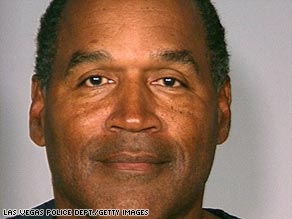
LAS VEGAS, Nevada (CNN) — Prosecutors on Tuesday filed numerous criminal charges against former NFL star O.J. Simpson and three other men in connection with an alleged armed robbery at a Las Vegas hotel last week.
The 11 charges include two counts of first-degree kidnapping with use of a deadly weapon; two counts of robbery with a deadly weapon; and two counts of assault with a deadly weapon.
Prosecutors say Simpson and his co-defendants — Walter Alexander, Clarence Stewart and Michael McClinton — committed kidnapping because they intended to hold or detain the two alleged victims using a weapon.
Halal Neighborhood Market
I have never seen this on a truck before. JD’s market is in an area near the local college, near the hub of the bus system, and near a lot of stores people can walk to. It is a neighborhood rich in immigrants, rich in opportunities for work, rich in transportation options – and it just tickles me to see a truck advertising “halal meat” on it.

You hear complaints in Kuwait and Qatar, and most of the Gulf countries, about the Americanization of the world – the supersize-me fast food outlets, the same western stores in every mall, the spread of western – and particularly American – culture.
Look closely. It’s not a one-way street. We are all influencing one another, more than we know.
Al-Enezi praises MOE’s Decision
This is from today’s Kuwait Times.
Does this decision by the Ministry of Education, applicable to all the private schools in Kuwait, mean that no expatriates can be hired for any administrative or assistant teacher positions in any of the private schools, only Kuwaitis? Is this a part of the Kuwaitization program?
By A Saleh
KUWAIT: The manager of the national labor ratio at the Manpower and Government Restructuring Program (MGRP) Fares Al Enezi announced the preparations for a training course to qualify national laborers to work in administrative jobs and as assistant teachers in private schools.
Speaking at a press conference, Al Enezi praised the Ministry of Education’s decision on banning the hiring of expatriates in private schools as this move would help find hundreds of job opportunities for citizens.
Al Enezi stressed that the MGRP was ready to provide enough qualified national substitutes and he highlited that only 410 citizens currently worked in private schoools as compared to 1617 expatriates of various nationalities. Moreover, he noted that only 140 teachers worked ther versus 10,793 expatriates who worked there as well.
The Nativity of John the Baptist
This will be a long, technical post that you can skip if religious matters don’t interest you. It is aimed at my colleagues who enjoy comparing points of religion.

This week, we celebrated the feast of the birth of St. John, known as The Baptist. There were several scriptural readings (see below which is from the online Lectionary on my blogroll)
We had a reading I hadn’t heard before:
An account of the mercy of thy Lord bestowed upon his servant Zachariah, when he called upon his lord in low tones, praying: My Lord, my very bones have become feeble and my head has turned hoary with age, but never have my supplications to Thee, Oh Lord, remained unfruitful. I am apprehensive of the behavior of my relations after my death, and my wife is barren. I beg Thee, therefore, do Thou bestow upon me from Thyself a successor to be my heir and to be the heir of the blessings of the House of Jacob; and to make him one who should be pleasing in Thy sight, O Lord . . . .
(it tells of Johns conception and birth)
We commanded Yahya (John): Hold fast the Book; and we bestowed upon him wisdom while he was still young, as a token of tenderness from Ourself and to purify him. He grew up righteous, and was dutiful towards his parents and was not haughty or rebellious. Peace was on him on the day of his birth, and on the day of his death, and peace will be on him on the day he will be raised up to life again.
As I am hearing this reading, I am thinking “I am pretty familiar with our scriptures, and while it sounds familiar, I don’t think I have ever heard this reading before,” and I thought maybe it was from one of the less often read books that not all churches agree is part of the scripture.
And then – the reader said “This reading on John is from the Qu’ran.”
I was amazed. First – I had no idea John was mentioned in the Qu’ran. I know Jesus is in the Qu’ran, and my Saudi women friends told me Jesus’ name is in there more than the name of the Prophet Mohammed. (Peace be upon all the prophets!) But I had no idea John was in the Qu’ran, Chapter 19, which is called the book of Maryam, and also tells of the life and ministry of Jesus.
Second – I’ve never heard the Qu’ran read in a Christian church service before, but why not? It added, not subtracted, from our understanding of John. I thought it was pretty cool.
Here is what our Lectionary has to say about John the Baptist:
THE BIRTH OF JOHN THE BAPTIST
(24 JUNE NT)
Our principal sources of information about John the Baptist are
(1) references to his birth in the first chapter of Luke,
(2) references to his preaching and his martyrdom in the Gospels, with a few references in Acts, and
(3) references in Josephus to his preaching and martyrdom, references which are consistent with the New Testament ones, but sufficiently different in the details to make direct borrowing unlikely.
According to the Jewish historian Josephus (who wrote after 70 AD), John the Baptist was a Jewish preacher in the time of Pontius Pilate (AD 26-36). He called the people to repentance and to a renewal of their covenant relation with God. He was imprisoned and eventually put to death by Herod Antipas (son of Herod the Great, who was king when Jesus was born) for denouncing Herod’s marriage to Herodias, the wife of his still-living brother Philip. In order to marry Herodias, Herod divorced his first wife, the daughter of King Aretas of Damascus, who subsequently made war on Herod, a war which, Josephus tells us, was regarded by devout Jews as a punishment for Herod’s murder of the prophet John.
In the Book of Acts, we find sermons about Jesus which mention His Baptism by John as the beginning of His public ministry (see Acts 10:37; 11:16; 13:24). We also find accounts (see Acts 18:24; 19:3) of devout men in Greece who had received the baptism of John, and who gladly received the full message of the Gospel of Christ when it was told them.
Luke begins his Gospel by describing an aged, devout, childless couple, the priest Zechariah and his wife Elizabeth. As Zechariah is serving in the Temple, he sees the angel Gabriel, who tells him that he and his wife will have a son who will be a great prophet, and will go before the Lord “like Elijah.” (The Jewish tradition had been that Elijah would herald the coming of the Messiah = Christ = Annointed = Chosen of God.) Zechariah went home, and his wife conceived. About six months later, Gabriel appeared to the Virgin Mary, a kinswoman of Elizabeth, and told her that she was about to bear a son who would be called Son of the Most High, a king whose kingdom would never end. Thus Elizabeth gave birth to John, and Mary gave birth six months later to Jesus.
After describing the birth of John, Luke says that he grew, and “was in the wilderness until the day of his showing to Israel.” The people of the Qumran settlement, which produced the Dead Sea Scrolls, sometime use the term “living in the wilderness” to refer to residing in their community at Qumran near the Dead Sea. Accordingly, it has been suggested that John spent some of his early years being educated at Qumran.
All of the gospels tell us that John preached and baptized beside the Jordan river, in the wilderness of Judea. He called on his hearers to repent of their sins, be baptized, amend their lives, and prepare for the coming of the Kingship of God. He spoke of one greater than himself who was to come after. Jesus came to be baptized, and John told some of his disciples, “This is the man I spoke of.” After His baptism by John, Jesus began to preach, and attracted many followers. In fact, many who had been followers of John left him to follow Jesus. Some of John’s followers resented this, but he told them: “This is as it should be. My mission is to proclaim the Christ. The groomsman, the bridegroom’s friend, who makes the wedding arrangements for the bridegroom, is not jealous of the bridegroom. No more am I of Jesus. He must increase, and I must decrease.” (John 3:22-30)
John continued to preach, reproving sin and calling on everyone to repent. King Herod Antipas had divorced his wife and taken Herodias, the wife of his (still living) brother Philip. John rebuked him for this, and Herod, under pressure from Herodias, had John arrested, and eventually beheaded. He is remembered on some calendars on the supposed anniversary of his beheading, 29 August.
When John had been in prison for a while, he sent some of his followers to Jesus to ask, “Are you he that is to come, or is there another?” (Matthew 11:2-14) One way of understanding the question is as follows: “It was revealed to me that you are Israel’s promised deliverer, and when I heard this, I rejoiced. I expected you to drive out Herod and the Romans, and rebuild the kindom of David. But here I sit in prison, and there is no deliverance in sight? Perhaps I am ahead of schedule, and you are going to throw out the Romans next year. Perhaps I have misunderstood, and you have a different mission, and the Romans bit will be done by someone else. Please let me know what is happening.”
Jesus replied by telling the messengers, “Go back to John, and tell him what you have seen, the miracles of healing and other miracles, and say, ‘Blessed is he who does not lose faith in me.'” He then told the crowds: “John is a prophet and more than a prophet. He is the one spoken of in Malachi 3:1, the messenger who comes to prepare the way of the LORD. No man born of woman is greater than John, but the least in the Kingdom of God is greater than John.”
This has commonly been understood to mean that John represents the climax of the long tradition of Jewish prophets looking forward to the promised deliverance, but that the deliverance itself is a greater thing. John is the climax of the Law. He lives in the wilderness, a life with no frills where food and clothing are concerned. He has renounced the joys of family life, and dedicated himself completely to him mission of preaching, of calling people to an observance of the law, to ordinary standards of virtue. In terms of natural goodness, no one is better than John. But he represents Law, not Grace. Among men born of woman, among the once-born, he has no superior. But anyone who has been born anew in the kingdom of God has something better than what John symbolizes. (Note that to say that John symbolizes something short of the Kingdom is not to say that John is himself excluded from the Kingdom.)
Traditionally, the Birth of Jesus is celebrated on 25 December. That means that the Birth of John is celebrated six months earlier on 24 June. The appearance of Gabriel to Mary, being assumed to be nine months before the birth of Jesus, is celebrated on 25 March and called the Annunciation, and the appearance of Gabriel to Zechariah in the Temple is celebrated by the East Orthodox on 23 September. At least for Christians in the Northern Hamisphere, these dates embody a rich symbolism. (NOTE: Listmembers living in Australia, New Zealand, South Africa, southern South America, or elsewhere in the Southern Hemisphere, press your delete keys NOW!) John is the last voice of the Old Covenant, the close of the Age of Law. Jesus is the first voice of the New Covenant, the beginning of the Age of Grace. Accordingly, John is born to an elderly, barren woman, born when it is really too late for her to be having a child, while Jesus is born to a young virgin, born when it is really too early for her to be having a child. John is announced (and conceived) at the autumnal equinox, when the leaves are dying and falling from the trees. Jesus is announced (and conceived) at the vernal equinox, when the green buds are bursting forth on the trees and there are signs of new life everywhere. John is born when the days are longest, and from his birth on they grow steadily shorter. Jesus is born when the days are shortest, and from his birth on they grow steadily longer. John speaks truly when he says of Jesus, “He must increase, but I must decrease.”
(Of course, it is to be noted that none of this symbolism proves anything, since the Scriptures do not tell us that Jesus was born on 25 December. The symbolism of the dates is used by Christians, not as evidence, but as material for the devout imagination.)
FIRST LESSON: Isaiah 40:1-11
(Isaiah speaks of someone who will cry out, “Prepare the way of the LORD.”)
PSALM 85
(The long exile is over, God has retored his people, mercy and truth are reconciled.)
SECOND LESSON: Acts 13:14b-26
(Paul preaches about Christ, and how the prophets, including John the Baptist, all pointed forward to him.)
THE HOLY GOSPEL: Luke 1:57-80
(The birth of John the Baptist; his father Zechariah’s song of praise.)
by James Kiefer
The Good Husband of Zebra Drive
In Alexander McCall Smith’s newest book about Mma Ramotswe, it is a time of transition and unease. Unthinkable things happen. Mma Makutsi quits her job as Mma Ramotswe’s assistant detective, and Charlie, the apprentice, quits to start his own taxi service. Mr. J.L.B. Matekoni feels a restless urge to try out his detecting skills and everything is in turmoil.

And underneath, amazing things happen. When you think differently, there is room for change, and forgiveness.
With Mma Makutsi back in her usual place, the heavy atmosphere that had prevailed that morning lifted. The emotional reunion, as demonstrative and effusive as if Mma Makutsi had been away for months, or even years, had embarrassed the men, who had exchanged glances and then looked away, as if in guilt at an intrusion into essentially female mysteries. But when the ululating from Mma Ramotswe had died down and the tea had been made, everything returned to normal.
“Why did she bother to leave if she was going to be back in five minutes?” asked the younger apprentice.
“It’s because she doesn’t think like anybody else,” said Charlie. “She thinks backwards.”
Mr. J.L.B. Matekoni, who overheard this, shook his head. “It’s a sign of maturity to be able to change your mind when you realize that you’re wrong,” he explained. “It’s the same with fixing a car. If you find out that you’re going along the wrong lines then don’t hesitate to stop and correct yourself. If, for example, you’re changing the oil seal at the back of a gearbox, you might try to save time by doing this without taking the gearbox out. But it’s always quicker to take the gearbox out. If you don’t, you end up taking the floor out and anyway, you have to take the top of the gearbox off, and the prop shaft too. So it’s best to stop and admit your mistake before you go any further and damage things.”
Charlie listened to this – it was a long speech for Mr. J.L.B. Matekoni – and then looked away. He wondered if this was a random example siezed upon by Mr. J.L.B. Matekoni, or if he knew about the seal he had tried to install in the old rear-wheel-drive Ford. Could he have found out somehow?
In another place, Charlie has just told Mma Ramotswe of his plans to start the No. 1 Ladies Taxi Service:
For a minute or two, nobody spoke. Mma Ramotswe was aware of the sound of Charlie’s breathing, which was shallow, from excitement. We must remember, she thought, what it is like to be young and enthusiastic, to have a plan, a dream. There is always a danger that as we went on in life we forget about that; caution – even fear – replaced optimism and courage. When you were young, like Charlie, you believed that you could do anything, and, in some circumstances at least, you could. . . . .
“I will tell all my friends to use your taxi,” she said. “I am sure you will be very busy.”
And oh yes, in the midst of all this, three mysteries get solved – a case of inventory gone missing, a case of a string of inexplicable hospital deaths, and a case of a husband potentialy gone astray.
GREAT summer reading, deceptively simple. You find yourself mulling over the situations, the responses and the outcomes, and trying out new ways of thinking. Give it a try – you don’t have to read the whole series to enjoy each volume.
This eighth book in the series is available from Amazon.com for a mere $12.70. It makes great summer reading.
Parking Wall of Shame
At the Al Manshar Mall, where there are only about forty spaces for a huge mall:

Cat Meat Rumors Refuted (Ho ho ho ho ho)
Front page of todays Kuwait Times is this article:
KUWAIT: A ministry of Commerce official denied rumors that a local restaurant has been closed for selling cat meat. According to Ali Baghli, assistant undersecretary for commercial supervision affairs at the Ministry of Commerce, no violation has been registered against the Arabic restaurant in the Jahra governate as of yet. . . .
My comment – So here is what we know for sure:
A ministry official says the restaurant has not been closed for selling cat meat.
He says no violations has been registered AS YET.
He does not say the restaurant was not selling cat meat; he is saying the restaurant was not closed for selling cat meat.
What was interesting, is that both the Kuwait Times and Arab Times, when they reported this cat meat restaurant closing, said that because of connections in the government, this restaurant was unlikely to stay closed.
It is not unlike Make This Case Go Away where two youths are caught with a maid they have abducted and raped, they fight the arresting officer and bite him on the hand, they confess to what they have done . . . and no violation is registered, because the police officer is pressured by his superiors to drop the case.
It’s not like your next schwarma is guaranteed not to contain fresh cat meat. It’s only guaranteed not prosecuted.
If I sound angry, I am. Police and law enforcement officials are supposed to protect the public – that’s you and me. When the system is broken so badly that laws are not enforced against the transgressors, and worse, when courageous policement are punished for doing their job, it is a very very sorry state of affairs.
And I am convinced that God has a very special place in hell for those who abuse the trust the public places in them.
I sure wouldn’t eat any schwarma in Jahra.
Recent Comments
ExpatAlien on What Country am I Living … intlxpatr on Yellowstone: Old Faithful to C… Michelle on Yellowstone: Old Faithful to C… Cathy on No Grown-Ups in Charge intlxpatr on Waiting for Snow Wikipedia Donate Button

Amazina


Early Voting in Florida


 Here There and Everywhere