High prices, shortages pressure IS – Black markets abound – Strict social laws bad for business
BAGHDAD: Saadi Abdul-Rahman was recently forced to pull his three children out of school in the Iraqi city of Mosul, where Islamic State militants have ruled with an iron fist since June. The cost of living has soared there, and the family is barely able to make ends meet, even after putting the kids to work. “We are not able to pay for cooking gas, kerosene and food,” laments the 56-year-old retired government worker. “The situation in Mosul is miserable.”
The economy in the self-styled “caliphate” declared by the Islamic State group bridging Iraq and Syria is starting to show signs of strain. Prices of most staples have more than doubled as coalition airstrikes make it difficult for products to move in and out of militant strongholds, leading to shortages, price-gouging and the creation of black markets.
Resentment has grown among residents under the rule of the extremists, who initially won support with their ability to deliver services. In the early days of its rule, the Islamic State group subsidized food and gas prices through the wealth it accumulated from oil smuggling, extortion and ransom demands. They sold their smuggled oil at a discount – $25 to $60 a barrel for oil that normally cost $100 a barrel or more, according to analysts and government officials.
But in recent weeks, prices have soared in militant-held cities. Items like kerosene, used for heating and cooking, are in short supply, while others, such as alcohol and cigarettes, strictly banned by the group, are making a comeback at higher prices on the black market. Smoking is a punishable offense in militant-held Mosul. But at a warehouse on the outskirts of the city, cigarettes, as well as hard-to-come-by essentials like kerosene, can be found at hugely inflated prices on a black market run by the extremists. There, a pack of cigarettes sells for 30,000 dinars – the equivalent of $26 – more than double the pre-caliphate price, according to residents who spoke on condition of anonymity for fear of reprisals.
‘Unsustainable Economy’
The militants “are developing an unsustainable economy,” said Paul Sullivan, an expert on Middle East economies at the National Defense University in Washington. “Eventually the costs of keeping the subsidies and price controls going will overpower their smuggling funds, which are also used for offensive and defensive actions. They can collect taxes, extort money, and so forth,” he said. “But that will likely not be enough in the long run to keep such an unbalanced economic system going.”
In the Syrian city of Raqqa, the extremists’ so-called capital, the breakdown of security along the border with Iraq in areas under Islamic State control has led to flourishing trade with Mosul. Trucks are also able to access the city from Turkey, allowing for a steady supply of fruit and vegetables, wheat and textiles. However, the cost of living has surged since US-led airstrikes began in September, and power and water cuts grew more frequent, residents said.
In addition, the strict social laws imposed by the group have been very bad for business, said Bari Abdelatif, an activist in the Islamic State-controlled town of al-Bab in Syria’s northern Aleppo province. But, he said, foreign fighters were bringing with them lots of hard currency, making up somewhat for the shortfall. Last month, Abu Bakr Al-Baghdadi, the leader of the Islamic State group, decreed the minting of gold, silver and copper coins for the militants’ own currency the Islamic dinar – to “change the tyrannical monetary system” modelled on Western economies. But trade in most militant-held cities continues to be in Iraqi dinars and US dollars.
The start of winter has led to serious shortages of gasoline and kerosene. The official price for a liter of gas in government-controlled areas of Iraq is 450 dinars (40 cents) – but in Mosul, it sells for four times that. Two hundred-liter barrels of kerosene are now sold in Mosul for 250,000 dinars ($220), versus the official price of 30,000 dinars. In the western Iraqi city of Fallujah, under militant control for almost a year, residents have started cutting trees for firewood because kerosene is in such short supply. The city is surrounded by government troops and near-daily shelling often make parts of town too dangerous to visit.
Food and fuel prices have risen sharply as a result – a 50-kilo sack of rice costs 75,000 dinars ($65), up from 10,000 ($9) three months ago. A cylinder of cooking gas goes for 140,000 dinars ($115). That has put many staples out of reach for Abdul-Rahman and his family in Mosul, even with the additional money brought in by his sons, who left school to drive a taxi and work in a restaurant.
Decline in Business
A number of factors are driving the shortages and price hikes, according to residents in Mosul and Fallujah, the group’s biggest Iraqi strongholds. The militants have imposed a tax on vehicles entering their territory, leading to a decline in business. Deliveries are also subject to militant theft, and coalition airstrikes and military operations make many roads impassable. As a result, the trip from the Turkish border to Mosul took four hours prior to the militant takeover. Now, a delivery truck can spend as much as a week traveling the same road, and will pay a tax of as much as $300 for entry into Mosul, residents said.
According to Luay Al-Khateeb, director of the Iraqi Energy Institute and a visiting fellow at the Brookings Doha Center, the population of the areas under Islamic State control in Iraq and Syria is 6.5 million to 8 million people. “They need 150,000 barrels (of crude) a day just to meet local consumption,” he said. “And that is the bare minimum to meet the demands for transportation, bakeries, power generation. That doesn’t mean they have access to such supply,” he added.
Last month, the militants shut down cell phone service in Mosul, claiming that residents were tipping off US-led airstrikes to their whereabouts. Cell signals have not been restored, causing the city to come to a virtual standstill. Workshops, factories and markets are closed and bitterness is growing among business owners. “Most money-transfer operations are done by mobile calls,” said Osama Abdul-Aziz, the owner of a money-transfer office in Mosul. “We have the option of using the Internet, but this method is very slow and sometimes the Internet does not work at all, which causes big delays to our work.” At Mohammed Abdullah’s shop in Mosul, the pile of cell phone scratch cards is growing higher by the day. “Our business and means for living are in ruins now,” he said. – AP
Yesterday, the Qatari Ambassador to the United States, Mohammed Jaham Al Kawari, spoke to a packed house at the New World Landing as the Tiger Bay Club gathered to hear how little Qatar is exerting big influence in the world peace-making arena.
The ambassador has an impressive biography, and in appearance very polished, very French. He isn’t afraid to tackle the tough questions, and presents Qatar’s position in a way that people can hear and understand.
ISIS Keeps Getting Better at Dodging U.S. Spies
There’s a reason ISIS leader Abu Bakr al Baghdadi has proven so hard to take out. He and his followers have become really good at keeping their communications covert.
On Thursday, around the same time ISIS leader Abu Bakr al Baghdadi announced that he had survived a U.S. airstrike and promised in a recorded message to “erupt volcanos of jihad,” American officials were meeting to discuss just how hard it was to track the militant group.
Baghdadi and his followers have proven exceptionally difficult to track and kill because they’re encrypting their communications and taking steps to avoid being detected by U.S. surveillance, according to several current and former officials. Without American intelligence operatives on the ground in ISIS’s home base of Syria—and with only a limited number of surveillance planes in the air—those communications are one of the only surefire ways to keep tabs on ISIS.
In addition to encryption that American officials say has proven very difficult to crack, ISIS is also using a commercially available service that permanently deletes messages sent via the Internet, making them nearly impossible to intercept, according to an individual who was briefed on the issue Thursday. This person didn’t name the service, but one application ISIS has been known to use is called FireChat, which allows users to send messages to each other without connecting to the Internet.
U.S. intelligence and counterterrorism officials told The Daily Beast that ISIS has adjusted its communications patterns because it knows that the group is constantly being watched. Fighters have been taking extra precautions for months, but the length of time that it took the U.S. to target Baghdadi—six weeks after airstrikes began in Syria and more than three months after they began in Iraq—and the fact that he wasn’t killed in the attack suggests that ISIS is practicing tight controls on their communications, especially at the top of the organization.
“These guys have a level of discipline. They will enforce through the ranks not using cellphones,” said the individual who was briefed on ISIS counter-surveillance techniques. The group has also used couriers to convey some messages in order to avoid digital communications altogether.
Testifying before the House Armed Services Committee on Thursday, Defense Secretary Chuck Hagel acknowledged that ISIS is ducking U.S. spies, particularly now that the military is bombing the group. “ISIL fighters have been forced to alter their tactics—maneuvering in smaller groups, hiding large equipment, and changing their communications methods,” Hagel said, using the government’s preferred acronym for the militant group.
A former U.S. official said that another factor has been complicating efforts to find ISIS members: the lack of combat troops on the ground to follow up on any leads collected by intelligence agencies or drones, which are monitoring the battlefield from the air. “When you literally have a force on the ground, you’re in a better position to take advantage of these communications,” the former official said.
In 2007, the National Security Agency tracked the computers and cellphones of members of al Qaeda in Iraq—ISIS’s predecessor—and then told ground forces where to find the fighters. That cycle of intelligence-gathering and capturing or killing fighters helped turn the tide of combat operations. But no such cycle exists now in Iraq or Syria.
“The easiest day of the air campaign against ISIS was the first day,” said Christopher Harmer, an analyst with the Institute for the Study of War. U.S. pilots knew the locations of ISIS command and control facilities and storage depots, and to an extent the group was taken at least partially by surprise, since it didn’t know the precise time the strikes would begin. “Past that first day or two of easy targets, ISIS predictably dispersed into the civilian population. They quit using high-power radios, satellite and cellphones, starting moving to a dispersed command and control model,” Harmer said.
With ISIS proving an elusive target, the intelligence agencies have taken to monitoring communications of Assad regime officials to find out what they are saying about ISIS. The Wall Street Journal reported that intelligence analysts have treated the Assad communications cautiously, however, because private conversations among regime officials have proven difficult to verify.
“The easiest day of the air campaign against ISIS was the first day. Past that, ISIS predictably dispersed into the civilian population. They quit using high power radios, satellite and cell phones, starting moving to a dispersed command and control model.”
ISIS members may be harder to track, but on the flip side, persistent U.S. electronic surveillance, as well as overhead monitoring by drones, has constrained the group. “At the end of the day, an intelligence organization [conducting surveillance] forces two choices: Communicate and be at risk, or don’t communicate and fail to coordinate,” said the former U.S. official. “Should I encrypt my communications? Should I use onion routers? Should I use cut-outs?” Those would be the kind of questions this former official said he would ask if he were on the militants’ side.
Onion routers refers to the TOR network, a system that allows users to mask their location and communicate anonymously online. But the number of users connecting from Iraq is low, around 2,000, down from a high of more than 15,000 in June, according to the TOR Project, which helps with the ongoing development the system. Connections from Syria are also down, with only about 2,500 users are connecting from there, the group said. It’s unclear whether ISIS is using the routing system, which has also been used by Syrian rebel groups fighting to overthrow the regime of Bashar Al-Assad.
ISIS isn’t new to the counter-surveillance game. But current and former officials debated whether disclosures by Edward Snowden about the massive reach of the NSA tipped the fighters off and led them to be more cautious when communicating with each other.
One U.S. intelligence official said ISIS has “likely learned a lot from recent unauthorized disclosures, and as many of their forces are familiar with the U.S. from their time in AQI [Al Qaeda in Iraq], they have adapted well to avoiding detection.”
Today the church is praying for Kajo Keji, South Sudan, the world’s newest country. While the world moves on, there is still so much unrest in a part of Africa that went barely noticed until oil was discovered there and the janjawi’in began systematically killing off villages and towns.
When I was a kid, I did not like reading the Old Testament, all those old-timey people, and it all seemed very confusing to me. As I grew older, I find I like the Old Testament part of our readings very much, the people come alive in all their faults and bad decisions, and God’s mercy shines through as we continue to rebel against him and follow too much our own devices and desires of our hearts.
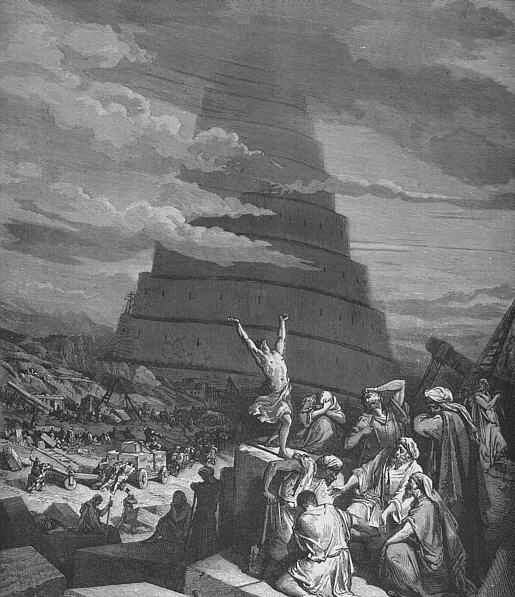
I love Genesis 11, where mankind, in all our pride, decides to build a tower, and it must have been pretty good because it got God’s attention and he didn’t like it. He didn’t like it so much that he created confusion among all the languages spoken, but I bet it was also confusion and dissension among the decision makers, too, to scatter the mighty population.
As the wandering descendants of Abraham began to settle, they often went up against armies and peoples much larger than they were, and God always told them not to worry, he would confuse the armies. He put fear in their hearts, in the confusion, mighty armies collapsed and scattered.
And why am I bringing this up, you might wonder?
This ISIS Army, it seems to me, is already cobbled together. I hear people people talking, people who know, they say ISIS is smart, fights smart. I believe they have some smart leaders, but I am willing to bet that they have some fatal flaws, also. They have overstretched. They are trying to enforce their will by violence and killing off the opposition, which might encourage the appearance of cooperation, but in reality breeds legions of those who will turn on them in a heartbeat.
Yes, we mistakenly dropped weapons which they were able to access. Mistakes happen in war zones all the time, with modern communication we just hear about it a lot sooner, not like 40 years from now when it is declassified and someone writes a book about it. Frankly, it’s not that big a deal.
What I believe is a big deal is their lack of cohesion. Lacking any strategic direct line to important decision makers, I am praying, and what I am praying is this, words from Psalms:
Confuse, O Lord, confound their speech
Disintegrate ISIS from the inside.
Create, Great and Merciful Father, miscommunications, misunderstandings, competing agendas and internal strife among the ISIS force.
All Mighty, All Powerful God, create a massive collapse, let their foot-soldiers drift away, drift home to their mothers and fathers and their families, and leave the Iraqi villages and the Syrian villages in peace.
Dry up the wealth of the Gulf, funneled through corrupt money changers in Kuwait, let it be mishandled, go missing, be stolen, be diverted and find its way to true charitable organizations providing a means of survival to those thousands of refugees who have been displaced.
Oh God! Collapse this abomination, the Islamic State of the Levant and Syria, collapse it utterly from within, strip it of all its power, devastate it like a virulent plague from within!
Oh God, bring good out of this downfall. Teach the remnants who return to their homes to live together in peace, to form peaceful and stable communities and then nations whose lives honor you!
All this is possible for the God who can do all things. Confound their speech, Lord, confuse them utterly, devastate and collapse them utterly from within. You are the one true God, there is no other God.
We are not without resources. We have the mighty fist of prayer.
‘Kuwait In Fight With Drugs, Money-Wash’UN Briefed On Efforts
NEW YORK, Oct 10, (KUNA): A Kuwaiti diplomat has briefed a United Nations commission about the State of Kuwait efforts to combat money laundering and other illegal financial activities as well as menace of narcotics. Ibrahim Faisal Al-Da’ee, the third secretary serving with the permanent Kuwaiti mission at the UN, in an address to the UN Social, Cultural and Humanitarian Affairs Committee (SOCHUM), underscored necessity of taking effective action against crime and boosting coordination at the international and regional levels in this respect. As to combating “corrupt financial activities and funding from illegitimate resources,” the third diplomat noted that the State of Kuwait issued lawinto- decree number 23 in 2012, setting up the public authority for combating corruption and issuing special rules for financial assets’ disclosure, as well as the Ministerial Resolution No. 37 (2013), containing executive regulations for combating money laundering and terrorism funding.
Established On basis of the above mentioned, diplomat Al-Da’ee continued, the national commission for combating money laundering and terrorism was established. Moreover, the Central Bank of Kuwait issued a number of decisions aimed at clamping down on money laundering, in tandem with Kuwait’s endorsement of the UN convention for combating corruption. Regarding the drugs, Kuwait urges for taking necessary precautions to resolve this international problem by means such as encouraging planting of legitimate crops and improving living conditions in rural regions. Also in this respect, he pointed out, Kuwait had signed international conventions concerning such issues. According to Kuwait’s Ministry of Interior, number of drug-related crimes, during 2010-2013, dropped 6.4 percent, drug dealing cases 7.2 percent and narcotics-linked deaths 30 percent. He concluded his address to the international commission, stressing on respect for human and basic rights, through action against crimes, urging for collective global efforts against narcotics.
So . . . now we have legislation and a decree. Does Kuwait have the resources and/or the will to go after those who are funneling the funds to ISIS? Legislations and decrees are great, but even greater is following through; it gives a government credibility.
The Islamic State of Iraq and Syria (ISIS), now threatening Baghdad, was funded for years by wealthy donors in Kuwait, Qatar, and Saudi Arabia, three U.S. allies that have dual agendas in the war on terror.
The extremist group that is threatening the existence of the Iraqi state was built and grown for years with the help of elite donors from American supposed allies in the Persian Gulf region. There, the threat of Iran, Assad, and the Sunni-Shiite sectarian war trumps the U.S. goal of stability and moderation in the region.It’s an ironic twist, especially for donors in Kuwait (who, to be fair, back a wide variety of militias). ISIS has aligned itself with remnants of the Baathist regime once led by Saddam Hussein. Back in 1990, the U.S. attacked Iraq in order to liberate Kuwait from Hussein’s clutches. Now Kuwait is helping the rise of his successors.As ISIS takes over town after town in Iraq, they are acquiring money and supplies including American made vehicles, arms, and ammunition. The group reportedly scored $430 million this week when they looted the main bank in Mosul. They reportedly now have a stream of steady income sources, including from selling oil in the Northern Syrian regions they control, sometimes directly to the Assad regime.
But in the years they were getting started, a key component of ISIS’s support came from wealthy individuals in the Arab Gulf States of Kuwait, Qatar and Saudi Arabia. Sometimes the support came with the tacit nod of approval from those regimes; often, it took advantage of poor money laundering protections in those states, according to officials, experts, and leaders of the Syrian opposition, which is fighting ISIS as well as the regime.
“Everybody knows the money is going through Kuwait and that it’s coming from the Arab Gulf,” said Andrew Tabler, senior fellow at the Washington Institute for Near East Policy. “Kuwait’s banking system and its money changers have long been a huge problem because they are a major conduit for money to extremist groups in Syria and now Iraq.”
Iraqi Prime Minister Nouri al-Maliki has been publicly accusing Saudi Arabia and Qatar of funding ISIS for months. Several reports have detailed how private Gulf funding to various Syrian rebel groups has splintered the Syrian opposition and paved the way for the rise of groups like ISIS and others.
“The U.S. has made the case as strongly as they can to regional countries, including Kuwait. But ultimately when you take a hands off, leading from behind approach to things, people don’t take you seriously and they take matters into their own hands.”
Gulf donors support ISIS, the Syrian branch of al Qaeda called the al Nusrah Front, and other Islamic groups fighting on the ground in Syria because they feel an obligation to protect Sunnis suffering under the atrocities of the Assad regime. Many of these backers don’t trust or like the American backed moderate opposition, which the West has refused to provide significant arms to.
Under significant U.S. pressure, the Arab Gulf governments have belatedly been cracking down on funding to Sunni extremist groups, but Gulf regimes are also under domestic pressure to fight in what many Sunnis see as an unavoidable Shiite-Sunni regional war that is only getting worse by the day.
“ISIS is part of the Sunni forces that are fighting Shia forces in this regional sectarian conflict. They are in an existential battle with both the (Iranian aligned) Maliki government and the Assad regime,” said Tabler. “The U.S. has made the case as strongly as they can to regional countries, including Kuwait. But ultimately when you take a hands off, leading from behind approach to things, people don’t take you seriously and they take matters into their own hands.”
Donors in Kuwait, the Sunni majority Kingdom on Iraq’s border, have taken advantage of Kuwait’s weak financial rules to channel hundreds of millions of dollars to a host of Syrian rebel brigades, according to a December 2013 report by The Brookings Institution, a Washington think tank that receives some funding from the Qatari government.
“Over the last two and a half years, Kuwait has emerged as a financing and organizational hub for charities and individuals supporting Syria’s myriad rebel groups,” the report said. “Today, there is evidence that Kuwaiti donors have backed rebels who have committed atrocities and who are either directly linked to al-Qa’ida or cooperate with its affiliated brigades on the ground.”
Kuwaiti donors collect funds from donors in other Arab Gulf countries and the money often travels through Turkey or Jordan before reaching its Syrian destination, the report said. The governments of Kuwait, Qatar, and Saudi Arabia have passed laws to curb the flow of illicit funds, but many donors still operate out in the open. The Brookings paper argues the U.S. government needs to do more.
“The U.S. Treasury is aware of this activity and has expressed concern about this flow of private financing. But Western diplomats’ and officials’ general response has been a collective shrug,” the report states.
When confronted with the problem, Gulf leaders often justify allowing their Salafi constituents to fund Syrian extremist groups by pointing back to what they see as a failed U.S. policy in Syria and a loss of credibility after President Obama reneged on his pledge to strike Assad after the regime used chemical weapons.
That’s what Prince Bandar bin Sultan, head of Saudi intelligence since 2012 and former Saudi ambassador in Washington, reportedly told Secretary of State John Kerry when Kerry pressed him on Saudi financing of extremist groups earlier this year. Saudi Arabia has retaken a leadership role in past months guiding help to the Syrian armed rebels, displacing Qatar, which was seen as supporting some of the worst of the worst organizations on the ground.
The rise of ISIS, a group that officially broke with al Qaeda core last year, is devastating for the moderate Syrian opposition, which is now fighting a war on two fronts, severely outmanned and outgunned by both extremist groups and the regime. There is increasing evidence that Assad is working with ISIS to squash the Free Syrian Army.
But the Syrian moderate opposition is also wary of confronting the Arab Gulf states about their support for extremist groups. The rebels are still competing for those governments’ favor and they are dependent on other types of support from Arab Gulf countries. So instead, they blame others—the regimes in Tehran and Damascus, for examples—for ISIS’ rise.
“The Iraqi State of Iraq and the [Sham] received support from Iran and the Syrian intelligence,” said Hassan Hachimi, Head of Political Affairs for the United States and Canada for Syrian National Coalition, at the Brookings U.S.-Islamic World Forum in Doha this week.
“There are private individuals in the Gulf that do support extremist groups there,” along with other funding sources, countered Mouaz Moustafa, executive director of the Syrian Emergency Task Force, a Syrian-American organization that supports the opposition “[The extremist groups] are the most well-resourced on the ground… If the United States and the international community better resourced [moderate] battalions… then many of the people will take that option instead of the other one.”
President Obama is laying out his strategy to counter the Islamic State, whose rampages across Iraq and Syria have riveted Americans’ attention on a zone of conflict that many had hoped to forget. Many are urging him to step up military action. But if Obama wants to defeat the jihadis, he will need more than airstrikes—he should follow the money.
For all that ideology, religious belief and perhaps a lust for violence and power might motivate those who fight for the Islamic State (known variously by the acronyms ISIS and ISIL), money is what keeps the group going. As with any state, ISIL has bills to pay and mouths to feed. Even for the world’s richest terrorist organization—which, by all available accounts, ISIL is—money doesn’t grow on trees, and nothing in the world comes for free.
So where does ISIL’s money come from? As part of my research at the RAND Corporation, since late 2006 I have been studying the finances, management and organization of the precursors to the Islamic State—Al Qaeda in Iraq and the Islamic State of Iraq—using their own documents, manuals and ledgers. More recently, Rand has teamed up with scholars from Princeton and Emory universities, as well as analysts from other organizations, to study more than 150 documents produced between 2005 and 2010. Although our work is still not yet done, we can draw a number of conclusions.
The most important thing for U.S. policymakers to remember is that ISIL now possesses the financial means to support a long-term fight—some $2 billion, according to a recent report in the Guardian, citing a British intelligence official. At the same time, ISIL’s preferred fundraising methods and many financial commitments create vulnerabilities. The organization was badly damaged by late 2009, thanks to a combination of coalition and Iraqi forces, as well as intervention by the Iraqi government, and it can be badly damaged again. But without the establishment of a widely accepted, legitimate political order in Iraq, ISIL cannot be eradicated—and will continue to seek out and mete out cash.
ISIL raises most of its money domestically in Iraq and Syria. Its income streams include oil smuggled to other countries in the region, extortion, taxes—especially on non-Muslim minorities—and other essentially criminal activities.
Oil is ISIL’s biggest source of revenue but also presents the biggest problem. ISIL controls about a dozen fields in Syria and Iraq, in addition to a number of refineries, including mobile refineries. Based on media accounts, RAND has estimated the total production capacity of these fields to be more than 150,000 barrels per day, although actual production is estimated to be much lower: The website Iraq Oil Report has reported that exports for the month of August at about 2.4 million barrels per day, for instance.
ISIL smuggles this oil out in tanker trucks—clearly visible from the sky should any drone pass overhead, so the smuggling is not particularly furtive. The group then sells the oil to whoever will buy it—reported in the media to be buyers in Syria, Turkey, the Kurdistan Region of Iraq and possibly in Iran and even Bashar Assad’s regime in Syria, among other countries. Sales take place at rates deeply discounted from world prices. But even so, revenues have been estimated in the media at $1 million, $2 million or even $3 million per day.
We have seen this before. From 2006 to 2009, ISIL’s predecessor, the Islamic State of Iraq, raised perhaps $2 billion through smuggled oil originating in the Baiji refinery in northern Iraq. This ended as a result of a concerted effort by U.S. and Iraqi forces to destroy the group and create the conditions in which the Iraqi government could exercise its law-and-order responsibilities, as well as vastly improved management at Baiji, owned by the Iraqi government.
So where does all of ISIL’s money go?
ISIL historically has paid its members (yes, it maintains payroll sheets) based on a flat monthly rate per person and then additional fixed amounts for each wife, child and dependent unmarried adult woman in the household. In Anbar, Iraq, the rate was $491 per year in 2005 and 2006, and then about $245 per year per dependent; the rate was similar in Mosul in 2007 and 2008. These payments to family are meant to continue if the ISIL member is captured or killed—a primitive form of life insurance. If enough members are captured and killed, however, these costs start to mount.
ISIL also pays rent for its members in some cases—payments that might be bonuses to high-performing members, although we cannot be sure—and medical expenses for some members and their families. In the past, the group has sometimes hired lawyers to help get captured members out of jail. And it runs safe-houses and has to buy equipment. Guidelines published by a predecessor of the group say that expense reimbursements should be filled out in triplicate and explain where each copy goes within the organization. We don’t know for sure whether ISIL today is making money or even breaking even, but at least in Anbar from 2005 to 2006, the money was being spent as fast as it came in.
As a cash-based organization, ISIL relies on couriers not only to deliver messages among its dispersed leadership but also to move money—follow the right courier and you get to the leadership. Because it deals only in cash, ISIL also needs to worry about the honesty of its members. We have seen instances of skimming for personal enrichment, as you might see in any cash-based criminal network.
As a state, albeit a twisted version of one, ISIL also has administrative expenses. It is responsible for making sure electricity and water flow and the roads stay repaired in the regions of Iraq it now controls—including parts of the Anbar, Ninewa Salah-al-Din, Kirkuk and Diyala governorates. Whether the group chooses to or is able to fulfill those responsibilities creates a vulnerability: A discontented population is unlikely to remain passive under ISIL’s leadership.
Even if ISIL is making $3 million per day—at the higher end of the various estimates out there—then it makes slightly more than $1 billion per year. Just to be conservative, in case ISIL is doing more business than we’re aware of, let’s double that to $2 billion per year. Although exact totals are difficult to find, in 2013, before ISIL’s advance, the Iraqi government spent far more than $2 billion per year running the governorates ISIL now controls, including salaries to civil servants, other costs of service provision and investment spending. That means ISIL likely isn’t keeping up the same level of service that the Iraqi government once did. True, ISIL need not maintain that level—it hardly rules with the consent of the governed. But it’s not only a problem that those under its rule can rebel, as happened in 2007 and 2008; with the exception of oil, the group’s continued revenue-raising also depends on there being enough money to skim and extort from the economy, and this requires some minimum level of services and economic activity.
There is little that outside forces can do to halt the extortion and skimming that take place within ISIL territory. Oil smuggling, though, can be disrupted, at least to an extent. Intelligence resources from the United States, Iraq and any other country that takes on ISIL should be focused on identifying middlemen and buyers for the smuggled fuel and using any means necessary to halt those purchases.
It would be counterproductive to destroy oil field infrastructure, since repairs would be expensive and legitimate governments will need those oil revenues when they reestablish control. But mobile refineries should be targeted, and roads and other pathways that tanker trucks use to transport oil to and from oil fields should be made impassable by military means. The refineries and roads can be easily repaired when the time comes, but for now, ISIL should find it very difficult to move oil from fields.
Stopping ISIL will of course require much more than disrupting its funding. It will have to be defeated militarily, and legitimate, trusted governments will have to be established in Iraq and Syria to defeat the group over time. There’s no simple path to achieving this, but as long as ISIL’s coffers remain full, the task will not get any easier.
A reading from today’s Forward Day by Day helps us to cope with the resonating horrors of that monstrous day. We are living in a world where we are more and more inextricably interconnected. Where I am living, I often hear people talk about how “Moslems are killing Christians all over the world!” and my heart breaks, thinking of the wonderful friends I have lived among is so many Moslem countries, their kindness, their hospitality, our long pleasant conversations. I learned so much.
I am glad we believe in a God who knows our hearts. I am thankful for grace, and forgiveness. When we talk about killing, we also need to take account for all the civilians we have killed, trying to bring about peace, trying to eradicate Al Qaeda, Al Shebaab, those who would harm us.
God asks us to love one another. He doesn’t say “Christians, you love just the Christians.” He shows us how to love the Samaritans, the lame, the blind, the mentally ill, the “other”. He tells us, clearly, to love our enemies. The Gospel that speaks the loudest is the gospel of our lives lived to honor him.
THURSDAY, September 11
Acts 15:8-9 [Peter said], “And God, who knows the human heart, testified to them…and in cleansing their hearts by faith he has made no distinction between them and us.”
Thirteen years ago, this day became one of those days that divide time into what life was like before, and after; one of those days when you will remember, always, where you were, what you were doing—this time when you heard the news that airplanes had crashed into the World Trade Center and thousands of people had died.
Job asks, “Does not calamity befall the unrighteous?” (31:3), but we learned, vividly, on September 11, 2001, that the righteous and the innocent suffer too.
Psalm 59:6 exhorts God to “show no mercy to those who are faithless and evil.” The terrorists who flew the planes on 9/11 forced us to confront the power of evil and challenged us to find a way to respond with forgiveness. Perhaps we can learn something about that in Peter’s response to the heated discussions about Jews and Gentiles, about who could be saved, and how: “God, who knows the human heart…has made no distinction between them and us” (Acts 15:8-9).
Then, as now, there were good people and evildoers on all sides, religions, and races. Now, as then, judgment and salvation comes only through the mercy and grace of God.
The New Yorker is an expensive subscription and worth every penny. This article takes an enormously complex situation, breaks it down into components and summarizes the options and their drawbacks. No wonder President Obama is having a problem finding a strategy – there aren’t a lot of winning options out there, and we don’t need to get stuck with another tar baby.
Wars cost money. There is an election coming up. The economy is just now moving past the downswing, and we still have wounded from Iraq and Afghanistan to take care of. Can anything we do make a difference? Will that difference be appreciated or will it add to our reputation as a world bully? All these are factors when formulating a strategy.
At the end of the eighth century, Harun al-Rashid, a caliph of the Abbasid dynasty, built a palace in Raqqa, on the Euphrates River, in what is now Syria. His empire stretched from modern Tunisia to Pakistan. It was an age of Islamic discovery in science, music, and art; Rashid’s court of viziers inspired stories in “One Thousand and One Nights.”
In June, the Islamic State in Iraq and al-Sham (ISIS) declared Raqqa the seat of a new caliphate, presided over by Abu Bakr al-Baghdadi, a fierce preacher who was once an American prisoner in Iraq, and is now in hiding. The city has lost its splendor. Public executions are “a common spectacle” on Fridays in El Naim Square or at the Al Sa’a roundabout, a United Nations human-rights commission reported last month. ISIS fighters mount the dead on crucifixes, “as a warning to local residents.”
ISIS emerged a decade ago as a small Iraqi affiliate of Al Qaeda, one that specialized in suicide bombings and inciting Iraq’s Sunni Muslim minority against the country’s Shiite majority. The network regenerated after 2011 amidst Iraq’s growing violence and the depravities of Syria’s civil war. This year,ISIS has conquered cities, oil fields, and swaths of territory in both Syria and Iraq. The movement draws its strength from Sunni Arab communities bitterly opposed to the Shiite-led government in Baghdad and the Alawite-dominated regime in Damascus, led by Bashar al-Assad.
Defense Secretary Chuck Hagel has called ISIS “as sophisticated and well funded as any group that we have seen . . . beyond anything we have seen.” The group has former military officers who can fly helicopters, spot artillery, and maneuver in battle. ISIS is increasingly a hybrid organization, on the model of Hezbollah—part terrorist network, part guerrilla army, part proto-state.
President Obama has decided that the United States must now attack ISIS, if only from the air. The President vacationed on Martha’s Vineyard, and golfed conspicuously, as his initial aerial campaign in Iraq unfolded. He has been less than forthright about why, after pledging to end America’s costly war in Iraq, he believed a return to battle there was necessary. But in interviews and other forums Obama has offered a casus belli, in three parts.
ISIS has massacred religious minorities, including Christians and Yazidis, and American air strikes can prevent more wanton killing, the President has said. A second imperative is the defense of the Kurdistan Regional Government, a semi-autonomous, oil-endowed American ally in northern Iraq, which a few weeks ago was teetering under pressure from ISIS but has since recovered, with the aid of American air power. The third, and most resonant, reason that the President has given is self-defense: to disrupt ISIS before it tries to attack Americans in the region or inside the United States.
ISIS has beheaded one American journalist, James Foley, and threatened to execute a second. Yet some terrorism specialists point out that ISIS is consumed by the sectarian wars in Syria and Iraq, and has shown no intent to launch attacks in the West, or any ability to do so. Still, ISIS has attracted five hundred British volunteers, many scores of other European passport holders, and even some Americans to its fight; they might eventually turn toward London, Berlin, or New York. Last week, British authorities announced that the threat of a terrorist attack on its home soil was “severe,” given the rising number of British jihadis now among the militants in Iraq and Syria.
The question about President Obama’s resumption of war in Iraq is not whether it can be justified but where it will lead. Air strikes against a well-resourced guerrilla army will do little if they are not accompanied by action on the ground. It would be a catastrophic error for the United States to take on that role. But what other professional force will dislodge the self-proclaimedISIS caliphate and then control the population? American policy assumes that Iraq’s squabbling politicians will rally a Shiite-led army to fight ISIS in the country’s Sunni heartland. On recent evidence, this assessment looks unrealistic.
In Syria, the options are worse. Obama has said repeatedly that he does not believe that Syria’s moderate rebels have the capacity to overthrow Assad or defeat jihadists. Yet the alternatives would allow Syria’s violence to fester at the cost of tens of thousands more civilian lives or would tacitly condone an alliance with the brutal Assad, who has been implicated in war crimes.
Obama and his advisers have at times taken refuge in a self-absolving logic: We can’t force people in other countries to unite around our agenda, so, if they don’t, whatever calamity unfolds is their responsibility. As a retreat from American hubris, this form of realism has appeal. As a contribution to a stable Middle East, it has failed utterly.
It is not yet clear that ISIS will endure as a menace. Fast-moving extremist conquerors sometimes have trouble holding their ground. ISIS has promised to govern as effectively as it intimidates, but its talent lies in extortion and ethnic cleansing, not in sanitation and job creation. It is vulnerable to revolt from within.
The group’s lightning rise is a symptom, however, of deeper instability; a cause of that instability is failed international policy in Iraq and Syria. If the United States is returning to war in the region, one might wish for a more considered vision than Whack-a-Mole against jihadists.
The restoration of human rights in the region first requires a renewed search for a tolerable—and, where possible, tolerant—path to stability. ISIS feasts above all on the suffering of Syria, and that appears to be unending. The war is in its fourth year, with almost two hundred thousand dead and nine million displaced, inside the country and out. The caliphate now seated in Raqqa is the sort of dark fantasy that can spring to life when people feel they are bereft of other plausible sources of security and justice.
“We don’t have a strategy yet,” the President remarked last week, infelicitously, about Syria. He does have a coalition of allies in the region that are willing to challenge ISIS’s ambition, including Jordan, Turkey, Saudi Arabia, and the United Arab Emirates. These countries patronize disenfranchised Sunnis in Iraq and Syria, and some of their support certainly reaches jihadists, includingISIS. Yet they share an interest in reducing Syria’s violence and in promoting regional and local Sunni self-governance that is less threatening and more sustainable than what ISIS has created. Ultimately, Sunnis will need the kind of autonomy that Kurds presently enjoy.
Leading a coalition of this character is hard, uncertain work. George H. W. Bush, the President whose foreign policy Obama seems to admire most, did it successfully in the runup to the Gulf War of 1991, by intensive personal engagement. Obama has more than two years left in the White House. To defeat ISIS, but also to reduce its source of strength, will require the President to risk his credibility on more than just air strikes.
Steve Coll, a staff writer, is the dean of the Graduate School of Journalism at Columbia University, and reports on issues of intelligence and national security in the United States and abroad.




 Here There and Everywhere