Did you know Malaysia Air Flight 17 was full of corpses when it took off from Amsterdam? Did you know that, for some darkly inexplicable reason, on July 17, MH17 moved off the standard flight path that it had taken every time before, and moved north, toward rebel-held areas outside Donetsk? Or that the dispatchers summoned the plane lower just before the crash? Or that the plane had been recently reinsured? Or that the Ukrainian army has air defense systems in the area? Or that it was the result of the Ukrainian military mistaking MH 17 for Putin’s presidential plane, which looks strangely similar?
Did you know that the crash of MH17 was all part of an American conspiracy to provoke a big war with Russia?
Well, it’s all true—at least if you live in Russia, because this is the Malaysia Airlines crash story that you’d be seeing.
As the crisis surrounding the plane crash deepens and as calls for Vladimir Putin to act grow louder, it’s worth noting that they’re not really getting through to Putin’s subjects. The picture of the catastrophe that the Russian people are seeing on their television screens is very different from that on screens in much of the rest of the world, and the discrepancy does not bode well for a sane resolution to this stand-off.
Western media has been vacillating for days between calling Putin a murdererand peppering their coverage with allegedlys, telling the heart-rending tales of the victims, scrounging for anonymous leaks to link the Russians to the downed jet, and punditizing about exit ramps.
But in Russia, television—most of it owned or controlled by the Kremlin—is trying to muddy the water with various experts who insist that there is no way that an SA-11 missile system could possibly have downed a plane flying that high. And, mind you, this is not part of a larger debate of could they, or couldn’t they; this is all of Russian television and state-friendly papers pushing one line: the pro-Russian separatists we’ve been supporting all these months couldn’t have done this. Watching some of these Russian newscasts, one comes away with the impression of a desperate defense attorney scrounging for experts and angles, or a bad kid caught red-handed by the principal, trying to twist his way out of a situation in which he has no chance.
And that’s when they’re not simply peddling conspiracy theories, which have become a kind of symbiotic feedback loop between state TV and the most inventive corners of the Internet. The best of the bunch is, of course, an elaborate one: MH17 is actually MH370, that Malaysia Airlines flight that disappeared into the Indian Ocean. According to this theory, the plane didn’t disappear at all, “it was taken to an American military base, Diego-Garcia.”
Then it was taken to Holland. On the necessary day and hour, it flew out, bound for Malaysia, but inside were not live people, but corpses. The plane was flown not by real pilots; it was on autopilot. Or take-off (a complicated procedure) was executed by live pilots, who then ejected on parachutes. Then the plane flew automatically. In the necessary spot, it was blown up, without even using a surface-to-air missile. Instead the plane was packed with a bomb, just like the CIA did on 9/11.
The theory also notes that the passports of victims at the crash site all look brand new even though there was an explosion and a fire. “That is, the passports were tossed in [after the crash].” And, most damingly, all the victims’ Facebook pages were created in one day and the media is not showing any of the victims’ families, just the crash site. Though this is not true of Western media, Russian television has not featured any of this. “There’s very little talk about the human cost of this catastrophe,” says independent television analyst Arina Borodina, formerly of the prominent Russian dailyKommersant. “Instead we’re seeing these unbelievable versions. For example, that someone had actually been hunting for the president or that some of the locals saw parachutists coming down from a height of 30,000 feet.”
But though it may look unconvincing to us in the West, that is because we have seen and read other things that contradict it. The Russian media space has become so uniform and independent voices so cowed and marginalizedthat there is no counterweight and, when there’s no counterweight, if you repeat a thing often enough, it becomes the truth.
This isn’t an innocent you-say-tomato moment; this is a very problematic development. The result of all this Russian coverage is that Russians’ understanding of what happened is as follows. At best, the crash is an unfortunate accident on the part of the Ukrainian military that the West is trying to pin on Russia, which had nothing to do with it; at worst, it is all part of a nefarious conspiracy to drag Russia into an apocalyptic war with the West. So whereas the West sees the crash as a game-changer, the Russians do not see why a black swan event has to change anything or they want to resist what they see is a provocation. To them, after a few days of watching Russian television, it’s not at all clear what happened nor that their government is somehow responsible for this tragedy. And the more we insist on it, the less likely the Russians are to agree.
Floriana Fossato, a longtime scholar of Russian media, says that this, coupled with the media’s conscious use of the Soviet language of crisis—“traitors,” “fascists,” “fifth columns”—quickly brings to the surface the psychological demons of a society massively traumatized by the 20th century, traumas that society has never adequately addressed. The result, she says, is a kind of collective PTSD-meets-Stockholm Syndrome.
In Russians’ view, “Americans have recreated the situation where they have excuse for intervention,” Fossato says. “No one admits that they are afraid, but they are. They are panicked. And they are right in being afraid because theyknow what happened, and they know there must be an answer to what is going on. And so they lock onto Putin for protection. This is why they don’t turn to Putin and ask him to do something.”
But in addition to the Russian public not clamoring for decisive action from Putin, there is a far more serious problem. As David Remnick noted in hiscolumn on the crash of MH17, Putin has become prisoner to his own propaganda machine, much as he’s become prisoner of the rebels he thought were doing his geopolitical dirty work in Ukraine.
After Putin’s ascent, media became the flexible element that could be readjusted for any twist or turn of the political rudder. “Today, it’s the opposite,” says Gleb Pavlovsky, a political consultant who helped Putin win his first election and was a Kremlin advisor for years afterwards. “It’s almost impossible to turn the rudder of the picture that’s formed on television because it would mean losing the audience they formed in this year” of sword-brandishing and imperialistic conquest.
This audience is now fired up and brandishing its own swords, and the propaganda apparatus, much like the rebels in eastern Ukraine, has rolled on an on, fed by inertia and paranoia, reproducing and magnifying itself with each newscast. The sensationalized newscasts are now neck-and-neck, ratings-wise, with the sitcoms. “It keeps people in a traumatized state,” Pavlovsky says. “It’s notable in media metrics, and in conversations with people. They lose their sanity, they become paranoid and aggressive.”
This has had a noticeable impact on the ruling class, Pavlovsky says, which has to watch this stuff in order to stay au courant. And they become less sane as a result, too, which limits their ability to adequately assess a situation such as this and devise a good way out of it.
“It’s noticeable that the Kremlin is much more tempered than Russian TV but can’t change it,” Pavlovsky says. “It’s fallen into a trap, so it’s now trying to function within the strictures of this picture.” He cites the example of the PR contortions the Kremlin had to use just to announce that it would not send troops into eastern Ukraine. “In this seemingly controlled media, any rational political arguments of the state have to be hidden and packaged in idiotic, jingoistic rhetoric,” Pavlovsky says.
None of this looks very good for the West, which is clearly hoping that MH17 is the thing that will bring Putin to his senses and get him to agree to some kind of off-ramp, or, at least, a deescalation. But that’s hard to do if neither your public nor your political class see it as a game-changer or as anything that should force Russia to end this game.
“Of course it gets in Putin’s way. He has to be the hero of this TV material, he’s not free from it anymore,” says Pavlovsky. “I have a feeling not very comfortable right now.”
July 21, 2014
Posted by intlxpatr |
Political Issues, Relationships, Technical Issue, Transparency, Travel |
Leave a comment
Ripped from the headlines at AOL News as reported on Al Jazeera:
Organizers for the 2022 FIFA World Cup in Qatar are certain that hosting rights to the tournament will not be taken away, despite a FIFA investigation into alleged bribery and corruption, according a report from Al Jazeera.
Qatari officials have denied misconduct, but allegations that the Gulf State bought the World Cup have persisted. Qatar 2022 communications director Nasser Al Khater told Al Jazeera that organizers are not concerned that the World Cup be stripped from the country:
“We are not worried, we are confident that the World Cup will take place in Qatar.”
Al Khater also said that Qatar has held itself to “the highest ethical standards” throughout the entire process.
Qatar was selected to host the 2022 World Cup in December 2010 over bids from the United States, Australia, Japan and South Korea. Since FIFA made its selection, rumors have persisted that Qatar bribed its way to victory, allegations that gained steam in March when The Telegraph reported that Qatari football official Mohamed Bin Hammam had paid millions of dollars to former FIFA vice president Jack Warner.
Since the report was released, pressure has mounted on FIFA to take action, or at least mount a serious investigation. A number of World Cup sponsors called on FIFA to look into the allegations, and politicians from both the United States and Britain have urged FIFA to take action.
FIFA’s ethics committee has been looking into the bribery allegations.
The 2022 World Cup has faced criticism for more than alleged corruption. Roughly 4,000 migrant workers in Qatar will die by time the 2022 World Cup starts if the current pace of worker fatalities remains stable. A number of media outlets, including ESPN and The Guardian, have published in-depth investigations into the country’s poor treatment of migrant workers, many of whom are building infrastructure and stadiums for the World Cup.
FIFA has also admitted that the 2022 World Cup may have to be played in the winter rather than the summer, as Qatar’s summer heat would be potentially dangerous for players.
Though FIFA president Sepp Blatter has said that awarding Qatar the 2022 World Cup was “a mistake,” he also labeled allegations of Qatar 2022 corruption as “racism.”
July 17, 2014
Posted by intlxpatr |
Doha, ExPat Life, Living Conditions, Political Issues, Qatar | corruption, FIFA, migrant workers abuse, Qatar infrastructure, World Cup 2022 |
Leave a comment
Today I got this notice:
Dear Admin,
Myself Majed M Garoup, senior legal Executive. We need to bring a serious concern infront of you regarding an article which you have posted on your blog https://intlxpatr.wordpress.com/. The article which you have posted contains defamatory content about our country. It has some news which is not relevant and also having some wrong statements about the country which is purely illegal. Publishing this kind of half true matters through online is a punishable offense. Before posting any article about a particular country you need to verify those things to us. You need to ask the story from both the parties while publishing such kind of articles. But we haven’t recieved any such calls or mails from your side. Posting such news without proper confirmation from the relevant party is a serious crime.And you are a blogger and don’t have any rights to publish this kind of news on your blog. So this page should get remove imediately from your blog otherwise legal action will be taken against your wordpress blog for posting defamatory content and half true matters on your blog which is spoiling the reputation of our country.
Link to the article : https://intlxpatr.wordpress.com/2014/03/09/imf-says-negative-publicity-will-force-qatar-to-pay-laborers-more/
Majed M Group
Senior Legal Executive.
Majed M Garoub civil.gov@lawyer.com
The post is a reprint of an article on labor abuse in Qatar from a Lebanese paper. I guess he’s feeling a little touchy; Qatar is getting a lot of unwelcome publicity lately for labor abuses. How is that for a country whose labor laws give everyone except household help a day off?
June 27, 2014
Posted by intlxpatr |
Blogging, Political Issues, Qatar, Social Issues, Women's Issues, WordPress, Work Related Issues |
4 Comments
AdventureMan and I have a soft spot for South Africa, not the least of which for the dramatic and radical way they transformed from apartheid government to democratic government. It is not to say South Africa has been without problems – there are still problems. But the manner in which they confronted and dealt with their past and then moved on allows change to happen, change in the heart.
Today’s meditation from Forward Day by Day:
FRIDAY, May 30
Psalm 85:3. You withdrew all your wrath; you turned from your hot anger. (NRSV)
But for the grace of God and the work of extraordinary leaders such as Nelson Mandela and Desmond Tutu, the fall of apartheid in South Africa could have been marked by one of the worst bloodbaths ever seen.
The incendiary ingredients were all present: a repressive minority regime that ruled by violence, fear, and fiat over a majority population denied fundamental human rights and forced to live a subservient existence.
There was upheaval, but the nation never fell into anarchy as it radically changed its government, thanks largely to the Truth and Reconciliation Commission.
Chaired by Tutu, then the Anglican Archbishop of Cape Town, the commission held hearings throughout the country. Victims told their stories of torture, killing, and degradation, sometimes confronting the accused.
The goal was not vengeance or justice but truth-telling to clear a path for healing. Powerful emotions were released. There were tearful confessions and apologies. There was forgiveness. The people of South Africa managed to turn from their hot anger and begin building a new nation.
Can we do the same? Where can we forsake our anger for the liberating power of forgiveness?
May 30, 2014
Posted by intlxpatr |
Bureaucracy, Character, Civility, Community, Counter-terrorism, Cross Cultural, Cultural, Faith, Living Conditions, Political Issues, Relationships, South Africa |
Leave a comment
Today, from Forward Day by Day, we remember Alcuin, advisor to King Charlemagne, who, among other things, told King Charlemagne not to kill people who did not believe as he did.

Today the church remembers Alcuin, Deacon, and Abbot of Tours, 804.
A breath of fresh air swept across Western Europe in what we call the Age of Charlemagne. There was relative peace, security, and prosperity. Learning and the arts revived. The leading spirit of this renaissance was Alcuin of York, the foremost teacher of his day. He revived “letters.” Indeed, he is credited with the invention of the running script we use today. He was a competent theologian, poet, and author. He was a pioneer in conceiving the idea of a university.
After serving for some years as Master of the Cathedral School in York, England, he traveled to Italy to study. There he met Charlemagne and they became fast friends. Alcuin served as royal tutor and as the great king’s chief advisor in religious and educational matters. In 796 he became abbot of the monastery at Tours, France, and there he founded a famous library and school. From there he exercised great influence in correcting misunderstandings of the Christian faith and in discouraging practices which seemed inconsistent with this faith, both in morals and in forms of worship.
We beseech you to shed upon your whole church the bright beams of your light and peace, and help us to follow the good example of your servant Alcuin. Amen.
Almighty God, in a rude and barbarous age you raised up your deacon Alcuin to rekindle the light of learning: Illumine our minds, we pray, that amid the uncertainties and confusions of our own time we may show forth your eternal truth; through Jesus Christ our Lord, who lives and reigns with you and the Holy Spirit, one God, for ever and ever. Amen.
Wikipedia tells us that as early as 797, Alcuin told King Charlemagne not to kill people who did not believe as he did:
In this role as adviser, he tackled the emperor over his policy of forcing pagans to be baptised on pain of death, arguing, “Faith is a free act of the will, not a forced act. We must appeal to the conscience, not compel it by violence. You can force people to be baptised, but you cannot force them to believe.” His arguments seem to have prevailed – Charlemagne abolished the death penalty for paganism in 797.[9]
May 20, 2014
Posted by intlxpatr |
Civility, Cultural, ExPat Life, Faith, Political Issues, Social Issues, Spiritual, Values | Charlemagne |
Leave a comment
She is also charged with adultery, for marrying a Christian man and (gasp) having sex with him. Now pregnant with her second child, Mariam claims she has never been a Muslim, was raised Christian, but the judge is applying new and strict Sharia laws.

As you might guess, I do not usually use Fox News as a news source, but this is an update on a story I am following:
International outrage grows for Sudanese woman sentenced to death for apostasy
Published May 16, 2014FoxNews.com
Meriam Ibrahim and Daniel Wani married in a formal church ceremony in 2011. The couple has an 18-month-old son, Martin, who is with Meriam in jail.
International outrage is mounting over the death sentence a Sudanese judge ordered for the pregnant wife of an American citizen — all because she refuses to renounce her Christian faith.
Meriam Ibrahim, 26, was sentenced Thursday after being convicted of apostasy. The court in Khartoum ruled that Ibrahim must give birth and nurse her baby before being executed, but must receive 100 lashes immediately after having her baby for adultery — for having relations with her Christian husband. Ibrahim, a physician and the daughter of a Christian mother and a Muslim father who abandoned the family as a child, could have spared herself death by hanging simply by renouncing her faith.
“We gave you three days to recant but you insist on not returning to Islam,” Judge Abbas Khalifa told Ibrahim, according to AFP. “I sentence you to be hanged to death.”
But Ibrahim held firm to her beliefs.
“I was never a Muslim,” she answered. “I was raised a Christian from the start.”
Ibrahim was raised in the Christian faith by her mother, an Orthodox Christian from Ethiopia. She is married to Daniel Wani, a Christian from southern Sudan who has U.S. citizenship, according to sources who spoke on condition of anonymity.
“I was never a Muslim. I was raised a Christian from the start.”
– Meriam Ibrahim
The cruel sentence drew condemnation from Amnesty International, the U.S. State Department and U.S. lawmakers.
“The refusal of the government of Sudan to allow religious freedom was one of the reasons for Sudan’s long civil war,” Rep. Chris Smith, R-N.J., chairman of the House congressional panel that oversees U.S. policy in Africa, said in a statement. “The U.S. and the rest of the international community must demand Sudan reverse this sentence immediately.”
Amnesty International called the sentence a “flagrant breach” of international human rights law and the U.S. State Department said it was “deeply disturbed” by the ruling, which will be appealed.
Khalifa refused to hear key testimony and ignored Sudan’s constitutional provisions on freedom of worship and equality among citizens, according to Ibrahim’s attorney Al-Shareef Ali al-Shareef Mohammed.
“The judge has exceeded his mandate when he ruled that Meriam’s marriage was void because her husband was out of her faith,” Mohammed told The Associated Press. “He was thinking more of Islamic Shariah laws than of the country’s laws and its constitution.”
Ibrahim and Wani married in a formal ceremony in 2011 and have an 18-month-old son, Martin, who is with her in jail. The couple operate several businesses, including a farm, south of Khartoum, the country’s capital. Wani fled to the United States as a child to escape the civil war in southern Sudan, but later returned. He is not permitted to have custody of the little boy, because the boy is considered Muslim and cannot be raised by a Christian man.
Sudan’s penal code criminalizes the conversion of Muslims into other religions, which is punishable by death. Muslim women in Sudan are further prohibited from marrying non-Muslims, although Muslim men are permitted to marry outside their faith. Children, by law, must follow their father’s religion.
Islamic Shariah laws were introduced in Sudan in the early 1980s under the rule of autocrat Jaafar Nimeiri, whose decision led to the resumption of an insurgency in the mostly animist and Christian south of Sudan. An earlier round of civil war lasted 17 years, ending in 1972. In 2011, the south seceded to become the world’s newest nation, South Sudan.
Sudanese President Omar Bashir, an Islamist who seized power during a 1989 military coup, said his county will implement Islam more strictly now that the non-Muslim south is gone. A number of Sudanese have been convicted of apostasy in recent years, but they have all escaped execution by recanting their faith. Religious thinker and politican Mahmoud Mohammed Taha — a vocal critic of Nimeiri — was sentenced to death after his conviction of apostasy and was executed at the age of 76 in 1985.
Ibrahim’s case first came to the attention of authorities in August, when members of her father’s family complained that she was born a Muslim but married a Christian man. They claimed her birth name was “Afdal” before she changed it to Meriam. The document produced by relatives to indicate she was given a Muslim name at birth was a fake, Mohammed said.
Ibrahim refused to answer the judge when he referred to her as “Afdal” during Thursday’s hearing.
Ibrahim was initially charged with having illegitimate sex last year, but she remained free pending trial. She was later charged with apostasy and jailed in February after she declared in court that Christianity was the only religion she knew.
The US-based Center for Inquiry is demanding that all charges against Ibrahim be dropped, saying the death sentence is a clear violation of the International Covenant on Civil and Political Rights, which forbids persecution or coercion of religious beliefs and the right to marry.
“Religious belief must never be coerced and free expression must never be punished, through threat of imprisonment, violence, or any other means,” the group wrote in a letter to Sudan’s UN ambassador, H.E. Hassan Hamid Hassan. “This cannot go unanswered, and the world will not stand for it.”
Fox News’ Joshua Rhett Miller and The Associated Press contributed to this report.
May 16, 2014
Posted by intlxpatr |
Character, Circle of Life and Death, Community, Crime, Cultural, ExPat Life, Faith, Family Issues, Health Issues, Law and Order, Living Conditions, Political Issues, Relationships, Social Issues, South Sudan, Sudan, Values, Women's Issues | Freedom of Religion |
4 Comments
From the Kuwait Times:
Sudanese woman may face death for choosing Christianity over Islam
KHARTOUM: A Sudanese court gave a 27- year-old woman until today to abandon her newly adopted Christian faith and return to Islam or face a death sentence, judicial sources said on Monday. Mariam Yahya Ibrahim was charged with apostasy as well as adultery for marrying a Christian man, something prohibited for Muslim women to do and which makes the marriage void. The final ruling will be announced today.
Ibrahim’s case was the first of its kind to be heard in Sudan. Young Sudanese university students have mounted a series of protests near Khartoum University in recent weeks asking for an end to human rights abuses, more freedoms and better social and economic conditions.
The authorities decided on Sunday to close the university indefinitely. Western embassies and Sudanese activists sharply condemned the accusations and called on the Sudanese Islamist-led government to respect freedom of faith. “The details of this case expose the regime’s blatant interference in the personal life of Sudanese citizens,” Sudan Change Now Movement, a youth group, said in a statement.
President Omar Hassan Al-Bashir’s government is facing a huge economic and political challenge after the 2011 secession of South Sudan, which was Sudan’s main source of oil. A decision by Bashir last year to cut subsidies and impose austerity measures prompted violent protests in which dozens were killed and hundreds were injured. — Reuters
May 14, 2014
Posted by intlxpatr |
Africa, Community, Faith, Law and Order, Living Conditions, Marriage, Political Issues, Sudan, Values, Women's Issues | Freedom of Religion, Freedom to marry, Freedom to Worship, Khartoum University, Mariam Yahya Ibrahim, Omar Hassan Al-Bashir, Personal choice, Sudan Change Now Movement |
3 Comments

“Ouch! Ouch, Chimanda! Stop!”
(Oh wait.)
Don’t stop.
It’s me who can’t stop. I read everything Chimamanda Ngozi Adichie writes. I only started reading her by accident, when I was facilitating the Kuwait Book Club I never intended to belong to, and found myself reading so many books by authors I had never heard of. We were reading Half Of a Yellow Sun and all of a sudden, I WAS Nigerian. She can do that. She uses the senses, she uses the thoughts in our head. We are really not so alien, us and the Nigerians I start to think. I have Nigerian friends, from the church. We all get along. We have a good time together.
“Not so fast!” Chimamanda tells me in Americanah, her newest book, which I put off buying until I could find it in paperback. “You are very different! You think differently! And growing up in a country where there are black and white, race becomes an issue that it is not when you are black, and everyone is black, and you are growing up in Nigeria.”
Hmmm. OK. That makes sense. I mean, I thought I was Nigerian because in Half of a Yellow Sun, I was Igbo, living in an academic community in Nigeria, and hmmmm. You’re right, Chimamanda, there were no white people around. Just us Nigerians.
Chimamanda, with her sharp, all-seeing eyes, her sharp ears and her sharp tongue make me cringe as she comes to the USA and comes up against assumptions many have about Africa. Do you even know where, exactly, Nigeria is? Do you know where Ghana is? Most Americans can find Egypt on a map of Africa, and MAYBE South Africa, but the rest is . . . mostly guesswork. Because we send clothing and food aid to African countries, we have the idea that all Africans are poor, but that is not so, and is insulting to the middle-class and upper class Africans who travel elsewhere for leisure – and education.
I don’t know how much of Chimamanda Ngozi Adichie’s book is autobiographical and how much is fiction. I know that her observations are acute, she nails expat friendships, she spotlights our blind spots and hypocricies, and she holds you in her grip because she is no less harsh with herself – if, indeed, her Ifemelu, the main character in Americanah, is reflecting Chimamanda’s own experience. The experiences, coming here, the overwhelming differences in manners and customs, even volume of voice and width of hand expression, are so immediate, so compelling, so well described that they have to have been experiences she herself had, and had the eyes to see. She must have taken notes, because she totally nails the expat experience.
Book ads and book reviews focus on Americanah as a book about being black in America, and it truly is that – as seen from the eyes of a non-American black, as she often reminds us.
She is hard on herself, returning to Nigeria, and quick to note that much of the change is in herself and her changed perspective. While I love the romantic storyline, I was disappointed by the fantasy ending, given how self-disciplined Adichie is at keeping it real in every other facet of the novel. On the other hand, I am still trying to think of an ending that would work for me, and I can’t. While her ending wraps it all up neatly, it’s the one part of the book where her sharpness dulls.
One of the things I liked best about the book was going behind the scenes, being Nigerian, going to school, having coffee, working, going to parties with other Nigerians, chatting with my girlfriends. We’ve done things with nationals of different countries before, but you know as soon as you walk in that your presence changes things. Chimamanda Ngozi Adichie takes me with her and no one knows I am there, observing, learning, figuring out how things are done when it’s “just us” Nigerians.
Here’s why I am a Chimamanda Ngozi Adichie addict. She keeps it real. She has eyes that see, and ears that hear, and a gift for capturing what she sees and hears and a gift for writing it down. She has insight, into herself, into others, into character and motivations. She is sophisticated and unpretentious, she admires and she mocks, but when she mocks, it is as likely to be self-mockery as mockery of another person, class, ethnicity or nation. Reading Adichie, I understand our similarities – and our differences. I believe she would be a prickly friend to have, but I would chose her as a friend.
Awards
● Winner of the 2013 National Book Critics Circle Award for Fiction
● One of The New York Times’s Ten Best Books of the Year
● Winner of the The Chicago Tribune 2013 Heartland Prize for Fiction
● An NPR “Great Reads” Book, a Washington Post Notable Book, a Seattle
Times Best Book, an Entertainment Weekly Top Fiction Book, a Newsday Top 10 Book, and a Goodreads Best of the Year pick.
April 17, 2014
Posted by intlxpatr |
Africa, Beauty, Books, Character, Civility, Community, Cross Cultural, Cultural, Customer Service, ExPat Life, Fiction, Interconnected, Kuwait, Living Conditions, Nigeria, Political Issues, Social Issues, Women's Issues | Chimamanda Ngozi Adichie, Igbo, Nigerian |
4 Comments
Today the church prays for the diocese of Byumba, in Rwanda. There is Rwanda, below, right in the heart of Africa, nestled between the Democratic Republic of the Congo, Uganda, Kenya, Tanzania and Burundi.
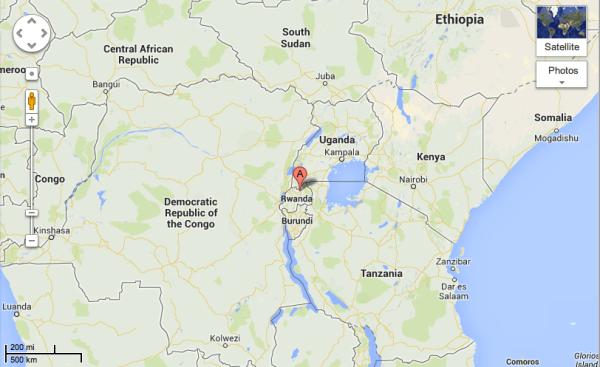 Rwanda was in the news this last week for something very special. Most of our western news stations gave it zero coverage, but you could catch a glimpse online. This, from the Christian Science Monitor: on an amazing event just twenty years after one of the worst genocides in my memory. To me, it is wonderful and inspiring that they forgive one another and love one another to live in peace with one another. It gives me hope for our world.
What to celebrate in Rwanda’s genocide anniversary
The 20th anniversary of the Rwanda genocide should focus as much on how the African nation worked toward reconciliation through forgiveness as on the mass slaughter itself.
This month, Rwanda marks the 20th anniversary of an event that its name is most associated with – the 1994 mass slaughter of the Tutsi minority and many in the majority Hutu. Over 100 days starting April 7, more than 800,000 people were killed, many by neighbors incited to ethnic hatred by a political elite. It is a genocide often cited since then to justify military intervention in similar ongoing atrocities.
But another lesson from Rwanda’s experience deserves to be remembered – an amazing reconciliation of killers and survivors through individual confession and forgiveness in nonjudicial village courts.
This type of reparative justice in an intimate setting could prove useful in countries that will need post-conflict healing, such as Syria, Colombia, andMyanmar (Burma). It might also help prevent a cycle of revenge and retribution in those countries, as it has in Rwanda.
Most of Rwanda’s main perpetrators in the genocide have been tried in regular courts, either in Rwanda, Europe,, or the International Criminal Tribunal for Rwanda, set up by the United Nations. But for hundreds of thousands of others who were charged with killing, the Rwandan criminal-justice system was too weak and its jails too full. Legal trials would have taken decades. The country had to fall back on a form of community-based traditional justice known asgacaca.
Other post-conflict countries in transition, notably South Africa, have relied on a similar process with their truth-and-reconciliation commissions. But the bodies have usually been more formal and national in scope. Rwanda’s gacaca are far more personal, designed to achieve the end result of allowing people who knew each other to resume living in the same community. They also bring together an entire village to witness a confession, attest to its sincerity, encourage forgiveness by the victim, and agree on some reparation, such as helping till a victim’s fields for a time.
It hasn’t worked in every case. Many Tutsis who killed Hutus have not been tried. Many victims could not bear the trauma of hearing how their loved ones had died. And many Hutus disappeared or were able to hide from the truth.
The government under President Paul Kagame, despite its drift toward authoritarian rule, has encouraged the process by outlawing formal use of ethnic identities. “The divisionism of before is gone. All of us now have equal access to opportunities,” a young Rwandan told The Christian Science Monitor.
The gacaca rely on the guilty to listen to the stories of their victims with empathy, admit their acts with repentance, and rethink their self-identity within the community. For the victims who forgive, the process can lift feelings of rage and bitterness. Much of the justice lies in the restoration of relationships as much as in material reparations.
Rwanda is not yet a “post-ethnic” African nation. But the possibility of a future political class inciting Hutus and Tutsis to take up violence now seems slim. More Rwandans have a higher sense of identity.
As the world helps Rwanda mark the 1994 genocide, it should also spread the lessons of this post-genocide reconciliation. Dispute resolution is a common technique in every society, whether in families or courts. But when almost every village in an entire nation goes through it, the lesson is worth repeating elsewhere.
April 11, 2014
Posted by intlxpatr |
Africa, Charity, Circle of Life and Death, Civility, Cultural, Events, Faith, Leadership, Living Conditions, Political Issues, Relationships, Social Issues, Values | Genocide, Rwanda |
Leave a comment
It happened to me. I was working in the best job I ever had, working harder than I had ever worked and loving the work I was doing. Then raise time came, and I got a raise, but I knew it was not as much as the young guy who had started after I started. I liked the young guy; we worked together a lot and we worked together well. Sometimes he disappeared, sometimes for a long time. As it turned out, he suffered from depression, and I ended up doing a lot of his work.
So I confronted my boss, and said it was unfair that he had gotten the larger raise and I the smaller. My boss said “Intlxpatr, you have a husband who makes a lot of money and this young man is just getting started.” It had nothing to do with merit, quality of work, productiveness – it had to do with me being a woman who had a husband who provides for me. I know that to some of you reading this, that makes sense, but to me, even from the time I was a young girl, it makes no sense at all. You pay what the work is worth, regardless of sex. Regardless of nationality. Regardless of marital status. That’s FAIR.
I didn’t quit. The boss moved on and the next boss gave me a giant raise to stay. I loved that job 🙂
WASHINGTON — Democrats’ push for pay equity between men and women is “condescending,” one of the top women in the House Republican leadership argued Tuesday, suggesting that the campaign for equal pay for equal work reflects a lack of understanding of women’s contributions to the workforce.
Rep. Lynn Jenkins (R-Kan.), the GOP conference’s vice chair, made her comments flanked by her fellow leaders in the House at their weekly news conference, and suggested that the campaign for equal pay for equal work reflects a lack of understanding of women’s contributions to the workforce.
“Please allow me to set the record straight. We strongly support equal pay for equal work, and I’m proud that I live in a country where it’s illegal to discriminate in the workplace thanks to the Equal Pay Act of 1963 and the Civil Rights Act of 1964,” said Jenkins. “Some folks don’t understand that women have become an extremely valuable part of the workforce today on their own merit, not because the government mandated it.”
Jenkins went on to belittle Democratic efforts on the issue.
“Many ladies I know feel like they are being used as pawns, and find it condescending [that] Democrats are trying to use this issue as a political distraction from the failures of their economic policy,” Jenkins said.
Senate Minority Leader Mitch McConnell (R-Ky.), speaking on the Senate floor Tuesday morning, appeared to slam the Democrats’ push as cheap political showmanship and accuse Senate Majority Leader Harry Reid (D-Nev.), who had just addressed the issue, of playing games.
“Yesterday, here in the Senate, Republicans were hoping the Democrat Majority Leader would finally work with us to pass a job creation package that contains ideas from many of our members — legislation with provisions several key Democrats support too,” McConnell said. “But that’s not what the Majority Leader chose to do. Instead of focusing on jobs, he launched into another confusing attack on the Left’s latest bizarre obsession. Democrats chose to ignore serious job-creation ideas so they could blow a few kisses to their powerful pals on the left.”
However, shortly after this story was posted, McConnell’s office said his remarks were being misconstrued. Spokesmen pointed to his use of the word “yesterday,” and said that he had been referencing Reid’s Monday speech targeting the billionaire Koch brothers, rather than his procedural motion, also on Monday, to begin work on the Democrats’ Fair Pay Act.
According to many independent assessments, women who do the same job as a man are often paid significantly less, on average earning just 77 cents to a man’s dollar. Even when many of the factors that lead women to make different job choices are controlled for, significant gaps remain.
Jenkins did not address the issue of women getting paid less for the same job, but suggested that women simply tend to choose different jobs.
“When it comes to employment, the fact is many women seek jobs that provide more flexibility for their family over more money, which is the choice that I made as a young working mom,” Jenkins said.
Jenkins’ and McConnell’s opinions notwithstanding, women overwhelmingly backed the Democratic ticket in the last election, running up the largest gender gap in the history of Gallup polling. Women supported President Barack Obama over GOP nominee Mitt Romney by a 12-point margin.
House Majority Leader Eric Cantor (R-Va.) chose his words more carefully than his colleagues at the press event when asked whether there was anything in terms of legislation that Republicans would consider doing to address the gap.
Though Cantor demurred from offering new ideas, he did tweak the White House, noting reports that women working there get paid about 88 cents on the dollar, compared to men.
He said a better idea than passing new laws was trying to enforce the old ones.
“I point to the White House, and say what it is that they’re doing? They’ve got a problem in the White House,” said Cantor. “Let’s put the politics aside.”
He suggested that repealing part of Obamacare would help, and pointed to a bill the House GOP passed last week that would change the definition of full-time work in the law from 30 hours a week to 40.
“If you look to see those most impacted, it’s women. Sixty-three percent of those impacted by the 30-hour workweek rule are women,” Cantor said. “If the Senate Democrats would pick [the bill] up, we could help women right now.”
Under the Affordable Care Act, employers must provide health insurance for full-time workers, currently defined as people employed more than 30 hours per week. Republicans argue that because of that, employers are pushing people — in this case, mostly women — into part-time work, although independent fact-checkers havefound that claim to be false.
This article was updated after a spokesman for McConnell clarified the intended meaning of his remarks.
Michael McAuliff covers Congress and politics for The Huffington Post.
April 8, 2014
Posted by intlxpatr |
Family Issues, Financial Issues, Leadership, Living Conditions, Political Issues, Relationships, Social Issues, Women's Issues, Work Related Issues |
2 Comments





 Here There and Everywhere
