Your Calls – Every One – Reported to the Government
I found this on AOL News/Tech Crunch this morning. Post 9/11, did we know that the Homeland Security legislation would give the government so much power? To gather so much information on individual citizens who are not remotely suspected of committing a crime against the United States seems excessive to me.

Report: NSA Secretly Collecting Phone Records Of All U.S. Verizon Calls
Gregory Ferenstein
The National Security Administration is secretly collecting phone record information for all U.S. calls on the Verizon network. “Under the terms of the blanket order, the numbers of both parties on a call are handed over, as is location data, call duration, unique identifiers, and the time and duration of all calls,” reports The Guardian, which broke the story of the top-secret project after it obtained record of a court order mandating Verizon hand over the information.
The contents of the call are not recorded and it is also not known whether Verizon is the only cell-phone carrier complying with the massive spying project. The court order concerns all calls to, from, and within the United States.
With this so-called “metadata,” the government knows “the identity of every person with whom an individual communicates electronically, how long they spoke, and their location at the time of the communication,” explains the Guardian.
The Senate’s tech-savviest member, Ron Wyden (CrunchGov Grade: A), has been discretely warning citizens of these kinds of secretive government projects. “There is now a significant gap between what most Americans think the law allows and what the government secretly claims the law allows,” wrote Wyden and Senator Mark Udall to embattled Attorney Eric Holder.
The order apparently draws from a 2001 Bush-era provision in the Patriot Act (50 USC section 1861). The revelation dovetails similar exposes on massive government spying projects, including one project to combine federal datasets and look for patterns on anything which could be related to terrorism.
The Lord Laughs at the Wicked
When I start to fret about those in high places who oppress the poor and the workers, whose lives are so far from worrying about a roof over their head and food to eat that they will pass still laws further oppressing the poor and homeless, I take consolation in this psalm.
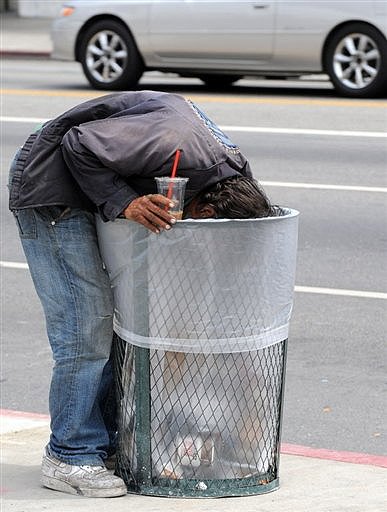
The Pensacola City Council is passing a draconian measure against the homeless. I’ve been so proud of Pensacola, and the citizen response to the homeless, the beds Pensacola provides, the meals the citizens, through a variety of church and social agencies, hand out. Their response is humane, and compassionate.
The homeless are attracted by the moderate climate; they are here in droves. They panhandle at the intersections, they approach you at downtown attractions. They often have dogs. For the most part, they greet people cheerfully or respectfully, and they aren’t aggressive.
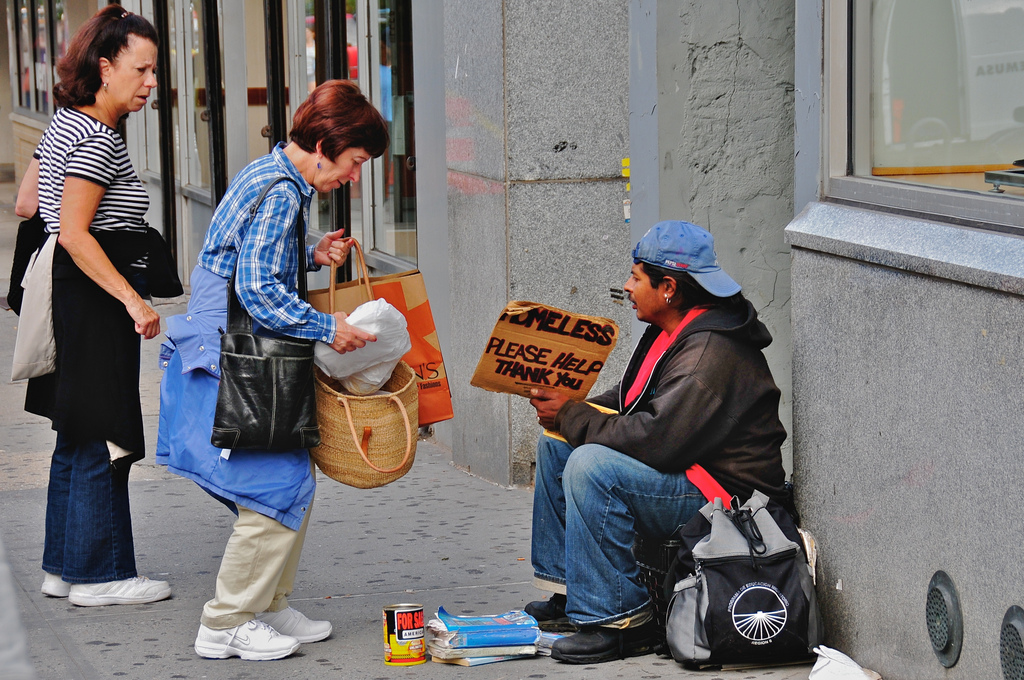
They are, in truth, a kind of plague on Pensacola, but as a traveler, I have brushed my teeth in many a restroom, changed my clothes, even had to rise out a coffee stained outfit before my next flight once – these are things for which the homeless will be charged with an offense against the law. If I were without a place for the night, I might look for a safe public restroom in which to sleep, especially if I had a child with me, as so many women did when I worked with homeless women.
I understand the problem.
But I also understand the desperation of those who have little, and that very little – a public restroom, a safe place to sleep outdoors – are being taken away from them by this statute. It’s heartless, and if there is truly an accounting at the end of our lives, and an afterlife, I fear for those who put additional burdens on the poorest of the poor.
Psalm 37
Of David.
1 Do not fret because of the wicked;
do not be envious of wrongdoers,
2 for they will soon fade like the grass,
and wither like the green herb.
3 Trust in the Lord, and do good;
so you will live in the land, and enjoy security.
4 Take delight in the Lord,
and he will give you the desires of your heart.
5 Commit your way to the Lord;
trust in him, and he will act.
6 He will make your vindication shine like the light,
and the justice of your cause like the noonday.
7 Be still before the Lord, and wait patiently for him;
do not fret over those who prosper in their way,
over those who carry out evil devices.
8 Refrain from anger, and forsake wrath.
Do not fret—it leads only to evil.
9 For the wicked shall be cut off,
but those who wait for the Lord shall inherit the land.
10 Yet a little while, and the wicked will be no more;
though you look diligently for their place, they will not be there.
11 But the meek shall inherit the land,
and delight in abundant prosperity.
12 The wicked plot against the righteous,
and gnash their teeth at them;
13 but the Lord laughs at the wicked,
for he sees that their day is coming.
14 The wicked draw the sword and bend their bows
to bring down the poor and needy,
to kill those who walk uprightly;
15 their sword shall enter their own heart,
and their bows shall be broken.
16 Better is a little that the righteous person has
than the abundance of many wicked.
17 For the arms of the wicked shall be broken,
but the Lord upholds the righteous.
18 The Lord knows the days of the blameless,
and their heritage will abide for ever;
19 they are not put to shame in evil times,
in the days of famine they have abundance.
20 But the wicked perish,
and the enemies of the Lord are like the glory of the pastures;
they vanish—like smoke they vanish away.
21 The wicked borrow, and do not pay back,
but the righteous are generous and keep giving;
22 for those blessed by the Lord shall inherit the land,
but those cursed by him shall be cut off.
23 Our steps* are made firm by the Lord,
when he delights in our* way;
24 though we stumble,* we* shall not fall headlong,
for the Lord holds us* by the hand.
25 I have been young, and now am old,
yet I have not seen the righteous forsaken
or their children begging bread.
26 They are ever giving liberally and lending,
and their children become a blessing.
27 Depart from evil, and do good;
so you shall abide for ever.
28 For the Lord loves justice;
he will not forsake his faithful ones.
The righteous shall be kept safe for ever,
but the children of the wicked shall be cut off.
29 The righteous shall inherit the land,
and live in it for ever.
30 The mouths of the righteous utter wisdom,
and their tongues speak justice.
31 The law of their God is in their hearts;
their steps do not slip.
32 The wicked watch for the righteous,
and seek to kill them.
33 The Lord will not abandon them to their power,
or let them be condemned when they are brought to trial.
34 Wait for the Lord, and keep to his way,
and he will exalt you to inherit the land;
you will look on the destruction of the wicked.
35 I have seen the wicked oppressing,
and towering like a cedar of Lebanon.*
36 Again I* passed by, and they were no more;
though I sought them, they could not be found.
37 Mark the blameless, and behold the upright,
for there is posterity for the peaceable.
38 But transgressors shall be altogether destroyed;
the posterity of the wicked shall be cut off.
39 The salvation of the righteous is from the Lord;
he is their refuge in the time of trouble.
40 The Lord helps them and rescues them;
he rescues them from the wicked, and saves them,
because they take refuge in him.
Bloggers Create Freedom Friday in Oppressed Eritrea
I heard whispers of this on National Public Radio, and found this write up on The International Business Times website. The message is simple – in a country where even a glance can be interpreted as treason, express your non-support of the government by STAYING AT HOME ON FRIDAY, the day Ethiopians usually go out and visit with friends, gather together and mingle. Ghandi would smile; this is civil expression at it’s most civil 🙂
Let the empty streets speak for you. LOL @ a tyrant making staying at home a crime against the government!
Eritrean bloggers outside of Ethiopia started it, smuggling an old Eritrean phone book out of the country and making calls to acquaintances – and strangers – in Eritrea. People didn’t even have to respond. they could just listen . . . then they developed a robo-call to help them enlarge the number they could reach.
Eritrea is considered one of the continent’s most opaque countries. National elections have not been held in the Horn of Africa country since it gained independence in 1993. Torture, arbitrary detention and severe restrictions on freedom of expression remain routine.
President Isaias Afwerki does not tolerate any independent media, the internet is strictly controlled and Reporters without Borders recently named it 179th out of 179 countries for freedom of expression.
It is illegal to criticise the government, prompting the Eritrean diaspora to set up a campaign to reverse the Arab-style call to take to the streets every Friday by emptying the streets in protest.

“We made phone calls from diaspora to Eritrea,” Meron Estefanos toldIBTimes UK. “We have a phone catalogue and called random numbers every Friday, telling them to stay at home and think about problems in our country.”
The phone calls “give them [Eritreans within the country] an opportunity to protest without risking too much”, according to Freedom Friday’s coordinator in the UK Selam Kidane.
The activists turned to a computerised auto-dialer called robocall to spread hundreds of thousands of taped messages to Eritrean phones. “It is time to restore our liberty and dignity” messages were sent automatically.
In another message, the mother of renowned political prisoner Aster Yohannes recalls the fate of her daughter, who was arrested in 2003 and has disappeared.
After two years, the movement is finally gaining momentum inside the country.
“Now they trust us inside the country, we have our team in Eritrea that puts out posters and leaflets late at night,” Estefanos said.
“The plan now that we have their trust is asking them to go out and demonstrate.”
About 1,500 Eritreans leave their country every month, according to the United Nations, paying up to 30,000 euros ($39,500) each to seek a new life free of grinding poverty and repression.
Earlier this year, Amnesty International put the spotlight on Eritrean asylum-seekers who are kidnapped from Sudanese refugee camps by the local Rashaida tribe, sold to Bedouin criminals in Egypt’s Sinai peninsula and severely abused while they are held for ransom.
One thousand refugees are held captive in the Sinai, according to reports. About 7,000 people in total may have been tortured and 4,000 may have died as a result of the people-trafficking in humans from 2009 to October 2012, according to recent data. A total of 3,000 people disappeared from 2007-11.
This is Your Boston Marathon First Victim – SHAME
This is on AOL News – information on the first victim from the first blast in the Boston Marathon. This is your victim, bomber, an eight year old boy. His mother is also hospitalized. Hang your head in shame.

Martin Richard was standing near the finish line, waiting for his father to complete the grueling Boston Marathon on Monday, when an explosion took his life.
He was 8 years old and in the third grade.
Neighbor Jane Sherman told WCVB that Martin was a typical little boy, who loved to ride his bike and play baseball.
Martin’s mother, Denise, was hospitalized with “grievous injuries,” The Times of London reported. She reportedly underwent surgery late Monday for an injury to her brain.
His 6-year-old sister, a first grader whose name was not made public, lost her leg in the blast, WHDH reported.
The status of his father, William, has not been released. A third child was reportedly unharmed in the explosion.
Boston Marathon Winners, lost in the aftermath of the explosions:

This is the face of America – welcoming all nations and all races to compete in the Boston Marathon. The winners were Ethiopian and Kenyan, and we celebrate their victories, year after year. Their nationality doesn’t concern us, their race is irrelevant, their politics are their own – they are all welcome to race, runners from all nations.
BOSTON — The Kenyans finally face a challenge to their dominance of the Boston Marathon, and it’s from their East African neighbors.
Ethiopia’s Lelisa Desisa took the title in the 117th edition of the world’s oldest marathon on Monday, winning a three-way sprint down Boylston Street to finish in 2 hours, 10 minutes, 22 seconds and snap a string of three consecutive Kenyan victories.
“Here we have a relative newcomer,” said Ethiopia’s Gebregziabher Gebremariam, who finished third. “Everything changes.”
In just his second race at the 26.2-mile distance, Desisa finished 5 seconds ahead of Kenya’s Micah Kogo to earn $150,000 and the traditional olive wreath. American Jason Hartmann finished fourth for the second year in a row.
“It was more of a tactical race, the Ethiopian versus the Kenyans. That fight played out very well,” defending champion Wesley Korir, a Kenyan citizen and U.S. resident, said after finishing fifth.
Undoing Public Disclosure, One Small Move at a Time
I am appalled. I have scoured the TV News, have looked through newspapers – not a word! I steam at corruption in Kuwait and Qatar and Saudi Arabia, and then a small NPR Report on yesterday’s news alerts me to a measure, passed in Congress, WITHOUT A WHISPER!
(oh? I was shouting? Sorry. Carried away. Outraged) You can access the NPR station and listen to the entire repulsive report by clicking here.
Congress Repeals Financial Disclosure Requirements For Senior U.S. Officials
by EYDER PERALTA

A tourist takes cover underneath an umbrella while snapping a photo of the U.S. Capitol on March 6, 2013 in Washington, DC.
Chip Somodevilla/Getty Images
Joining the Senate, the House of Representatives approved a measure today that repeals a requirement that top government officials post financial disclosures on the Internet.
The House, like the Senate, acted quietly without a vote. Instead, they sent the measure to the president’s desk by unanimous consent.
The provision was part of the Stop Trading on Congressional Knowledge Act (Stock), which became law in March of 2012. The act was intended to stop members of congress from profiting from nonpublic information.
As NPR’s Tamara Keith reported, at the time, Sen. Joe Lieberman called the law “the most significant congressional ethics reform legislation to pass Congress in at least five years.”
“That law mainly addressed conflict-of-interest policies for members of Congress and their staffs, but it also included a requirement that the financial disclosure forms filed by some 28,000 high-ranking federal employees be posted online.
“While those forms are public records, they must be requested individually from employing agencies. The Stock Act envisions online posting first on agency sites and later in a central, searchable database.
“The posting requirement was delayed three times out of concerns about the potential for identity theft and other crimes against career employees, as well as security risks to the government.”
The Sunlight Foundation, which advocates for a more open government,called today’s repeal an “epic failure.”
The foundation explained that instead of addressing specific security concerns, Congress has acted broadly.
For instance, they note, the president, vice president, members of Congress, congressional candidates and individuals subject to Senate confirmation are still required to make their financial disclosures public. But the change in law now makes the posting of those disclosures on the Internet optional.
Sunlight adds:
“Not only does the change undermine the intent of the original bill to ensure government insiders are not profiting from non-public information (if anyone thinks high level congressional staffers don’t have as much or more insider information than their bosses, they should spend some time on Capitol Hill) but it sets an extraordinarily dangerous precedent suggesting that any risks stem not from information being public but from public information being online.
“Are we going to return to the days when the public can use the Internet to research everything exceptwhat their government is doing? Will Congress, in its twisted wisdom, decide that information is public if journalists, academics, advocates and citizens are forced to dig through file cabinets in basements in Washington, DC to find it? And does anyone think that makes us safer?
“As my colleague Tom Lee noted, ‘This approach is known as ‘security through obscurity.’ Essentially, the idea is that rather than fixing a system’s flaws, you can just make the system opaque or unusable or unpopular enough that those flaws never surface.'”
Update at 5:35 p.m. ET. 30 Seconds:
NPR’s Tamara Keith tells us the House procedure took exactly 30 seconds.
Correction at 5:29 p.m. ET. An earlier version of his post said the House followed the Senate. In fact, the Senate voted Thursday and the House voted today.
Wealth and Inequality in America
Horrifying
START with Sea of Poppies, by Amitav Ghosh

I recently wrote a book review on River of Smoke, by Amitav Ghosh, which held me spellbound, so riveting that I had to order Sea of Poppies, which is actually the first volume of the trilogy. I had heard a review of River of Smoke on NPR and although it was written as the second volume in a trilogy, it can be read as a stand-alond.
Yes. Yes, it can be read as a stand-alone, but it is so much easier, I can state with authority, if you read them in order. Once I started Sea of Poppies, I also discovered an extensive glossary in the back, several pages, a list of the words, annotated with suggested origins, and it adds so much color to an already brilliantly colored novel. Much of both novels uses words from many cultures, and words that have been formed by another culture’s understanding of the words (some hilarious). If you like Captain Jack Sparrow, you’re going to love the polyglot language spoken by ship’s crews from many nations trying to communicate with one another. It can be intimidating, but if you sort of say the words out loud the way they are written at the beginning, you begin to find the rhythm and the gist of the communication, just as if you were a new recruit to the sea-going vessels of the early 1800’s. I loved it because it captured the difficulties encountered trying to say the simplest things, and the clever ways people in all cultures manage to get around it, and make themselves understood.
Sea of Poppies starts in a small Indian village, with one of the very small poppy gardens, planted on an advance from an opium factory representative, thrust upon the small farmer, with the result that most small Indian farmers converted their entire allotment from subsistence foods to poppies. Ghosh walks us through an opium processing factory, which is a little like walking through the circles of hell. We meet many of the characters we will follow in River of Smoke, and learn how this diverse group bonded into one sort of super-family through their adventures – and misadventures – together.
It is an entirely engrossing work. Sea of Poppies was short listed for the Man Booker award, and was listed as a “Best Book of the Year” by the San Francisco Chronicle, Chicago Tribune, Washington Post and The Economist. The theme is the opium trade, leading to the Opium Wars, with China, and is a chilling indictment of how business interests manipulate a population’s perceptions of national interests to justify . . . well, just about anything, in the name of profit.
The theme is woven through human stories so interesting, so textured, so compelling, that you hardly realize you are reading history and learning about the trade, cultures, travel, clothing, traditions, religions, food, and motivations as you avidly turn the pages.
I can hardly wait for the third volume. Get started now, so you’ll be ready for it when it comes out!
Kuwait Independence / Kuwait Liberation Congratulations
LOL, I actually congratulated Kuwaitis about a month ago when I thought I had missed the date and . . . I did! I missed it by a month! I was too soon!
So now it is really here – February 25 – 26. Congratulations, and we wish you well. We wish you resolution to your challenges of leadership and infrastructure issues. If you’ve noticed; it’s not like these are challenges unique to Kuwait; the flip-side of democracy can be logjams and stalemates, and then, suddenly, it can all shift and flow. We wish you some shift and flow after years of logjam.

New Laws To Stop Reports of BAD Food
This is absolutely frightening. We know there are consequences for ignoring humane rules for our meat and food processing. We KNOW the absolute dangers of Mad-Cow Disease; I will never be able to donate blood because I was exposed to the possibility of Mad Cow in the 1980’s. How on earth are we allowing our legislators to pass these BAD laws???

Ag-Gag Laws Help Agribusiness Hide Health Risks in Your Food
By M. Joy Hayes, Ph.D., The Motley Fool
Posted 5:00AM 02/14/13
In 2008, an undercover investigation led by the Humane Society led to the largest beef recall in history — removing meat that may have been tainted with mad cow disease from school cafeterias around the country.
Now there’s a business-backed movement afoot seeking to prohibit investigations like these.
The so-called “ag-gag” laws are designed to prevent anyone other than regulators or law enforcement officers from investigating dangerous or illegal agricultural practices that lead to mad cow disease, salmonella or Listeria poisoning, and other food-borne illnesses.
Ag-gag laws have been proposed by politicians in Arkansas, Indiana, Nebraska, New Hampshire, and Wyoming. And Iowa, Kansas, Missouri, Montana, North Dakota, and Utah already have such laws in place.
Why should this concern consumers? Due to funding limitations, regulators are only able to inspect a small percentage of the food we consume. As a result, we rely a great deal on journalists and activists to conduct additional investigations that prevent dangerous food from making it to market.
“Downer” Cows Dragged to Slaughter and Served to Children
We don’t have to look far to see how laws discouraging undercover investigation can limit consumer access to food safety information.
The 2008 massive beef recall came about from a Humane Society undercover investigation that provided a video of “downer” cows — animals too weak or sick to walk — being dragged to slaughter at Hallmark Meat, a supplier to the National School Lunch Program. This led to a recall because a cow’s inability to stand or walk is a possible indicator of mad cow disease.
Last year, activist group Compassion Over Killing released disturbing video footage from another National School Lunch Program supplier, Central Valley Meat. It shows cows, before slaughter, covered in feces, writhing on the ground in blood, and projectile-vomiting from the stress of being repeatedly struck by a bolt gun (a weapon that pierces the skull to stun or “euthanize” the animals).
Before the footage was released, Central Valley Meat also served as a supplier for McDonald’s (MCD) and Costco (COST). Both have since cut ties with the company.
Keeping You in the Dark
Let’s take a look at how 2013’s ag-gag bills may undermine investigations that expose unsafe and inhumane agricultural practices.
Arkansas’ SB 13 proposes outlawing animal investigations conducted by anyone other than a certified law enforcement officer, thus prohibiting journalists and activists from investigating possible food safety violations regulators may have missed.
Arkansas’ SB 14, would make it illegal for whistleblowers or undercover investigators to gather photographic or recorded sound evidence of illegal or unsafe agricultural practices with the intention to “cause harm to the livestock or poultry operation.” In other words, the proposed law would prohibit whistleblowers from releasing information that would make a company look bad and drive away customers.
Indiana’s SB 373 and Wyoming’s HB 0126 would also prevent whistleblowers from exposing food safety issues by making it illegal to take video or pictures without written consent of the property owner or representative of the property owner.
Nebraska’s LB 204 proposes making it illegal for journalists and activists to pose as employees to conduct undercover investigations. It suggests prohibiting job candidates from misrepresenting themselves during the hiring process when they have an intention of damaging or interfering with the operations of the business. Strikingly, the bill proposes felony charges in cases where the “violation” results in “economic damage” of $10,000 or more. That means that undercover employees who reveal safety issues costing a company more than $10,000 in lost sales could face devastating legal penalties.
New Hampshire’s HB 110 simply calls for requiring people with evidence of animal cruelty to turn it over to law enforcement. While nothing in the bill prohibits outside investigation of animal cruelty, some worry that this law would undermine investigations into animal cruelty by forcing journalists and activists to reveal their sources too early in the investigation.
Agricultural business advocates might argue that these undercover investigations unfairly put businesses’ reputations at risk by allowing individuals who aren’t trained to evaluate agricultural safety practices to gather and disperse misleading information, and that these ag-gag laws simply protect the ability of businesses to guard their reputations from unfair accusations.
After reviewing the behavior prohibited by the proposed ag-gag laws, are you concerned about their potential to undermine consumer safety? Or do you think they represent a legitimate corporate attempt to protect agricultural businesses against potential economic harm?
Motley Fool Contributor M. Joy Hayes, Ph.D., is the Principal at ethics consulting firm Courageous Ethics. She owns shares of McDonald’s. Follow @JoyofEthics on Twitter. The Motley Fool recommends Costco Wholesale and McDonald’s. The Motley Fool owns shares of Costco Wholesale and McDonald’s.
Recent Comments
Kitchen on Isiais: Winding Down intlxpatr on Shampoo Ginger tigerbutterya0c5ff1d… on Shampoo Ginger intlxpatr on British Soldier Kidnapped, Esc… John on British Soldier Kidnapped, Esc… Wikipedia Donate Button

Amazina


Early Voting in Florida


