Doha Debates and Where Are You From?
The Baked Salmon Dijon for last night’s dinner took a little longer to cook because Joe Patti’s cuts the salmon steaks so thick (we cook two, split one and freeze the other for another night), so while I was waiting, I flipped around and found WSRE’s Doha Debate coverage.
Who knew?
I didn’t know I could still watch the debates in Pensacola! This one was about whether or not Egypt should postpone elections in the interest of forming a more representative democracy. The vote was 84% in favor; the two young supporters carried the house. 🙂 This was the March debate and you can hear the entire 48 minutes by clicking here.

The winning female debater used a slogan I had not heard, but I love, because it is graphic and memorable – “we do not want a fast-food democracy that brings only indigestion.” The younger debaters want to scrap the entire constitution and re-write it, claiming the current structure needs to be thoroughly revised in order for democracy to have a chance of success.
I love it that these issues have a forum for debate in Doha.
Following the debate was a cringe-worthy video about asking people where they are from. His point was that when he is asked where he is from, and he answers ‘The Bronx,’ people say “No, where are you REALLY from?’ and the implication is racist. He says it is the same as saying that his color is darker, therefore he is not like us, so he must not be from around here.
I’ve asked that question. Never meant it to be insulting, but I will stop now. Or I will only ask those with a slight accent, maybe. Wherever we have lived, we have been asked that question – but then, in Kuwait and Qatar, most of the work force is not Qattari or Kuwaiti. Even in Germany, however, where we might look a lot like them, we are asked where we are from. It used to be a courteous way of showing interest, or initiating a conversation.
One time in Doha, a local man asked me about my breeding, LOL. I told him I was a product of the American melting pot, and from the earliest settlers to the latest, my family includes just about a little of everything. We were at the veterinarian’s office, and I knew the purity of his dog’s blood lines mattered, and probably his own, but I also felt a little insulted, and I haven’t forgotten it. Doesn’t science teach us that diversity in blood lines is a good thing?
We are in the middle of a heat spell in Pensacola, early this year, and because we haven’t gotten anywhere near the normal rainfall, there are also wildfires. The firefighters are struggling to put out the fires, and also fighting heat exhaustion. AdventureMan is out watering all our new plantings, and our tomatoes, every morning, God bless him, because when the temperatures go high, I just want to stay inside.
The Minority Prayer

I listen to National Public Radio in my car and in my project room. I finally figured out how to stream WUWF, my local station. Until today, unless I wanted to use my wind-up radio, I had to stream KUOW in Seattle, or NPR which I like because it has so much BBC.
I am really delighted to figure out how to stream WUWF, because it has a lot of local news and events I might miss streaming one of the other stations, and I also like hearing who the sponsors are, so I can tell them how much I enjoy National Public Radio.
So today I am listening to Talk of the Nations, a segment on Pakistani-Americans, and this particularly articulate young lawyer mentions ‘the Minority Prayer.
Do you know what that is? I didn’t. But I laughed when he explained it, because we have prayed it so often living overseas . . .
He was talking about when attending a Muslim-American Lawyers National meeting, and how the buzz spread that Osama Bin Laden had been killed, and how they all sent up a quick minority prayer – “Please, Lord, don’t let it be Pakistan where he was found” – and of course, it was Pakistan. He was very wry, and I enjoyed listening to what he had to say. At the same time, I was grinning. I cannot count the number of times we have heard rumors – in Germany, in Kuwait, in Qatar, in Tunisia, in Jordan – and prayed . . . “Please Lord, don’t let it be the USA who did this . . . ”
It’s very much an expat’s prayer.
If you want to listen to the interview yourself, you can find it here.
Dancing on Graves?
I trust that it all happened exactly as it should. Don’t we all believe God is in control?
Friends and family are asking me why I have been silent about the raid, capture and execution of Osama Bin Laden.
9/11 and the celebrations televised around the world were equally horrifying to me. Pointless killing. Pointless celebration.
We don’t celebrate the deaths, not even of those who have caused us harm. It’s not who we are, and it only invites retribution, and keeps the pointless violence, the pointless arguments going.
Jesus told us that it is easy to pray for our friends and family, but that we are to pray for our enemies as well. It’s really really hard. And it is one of the few gates that will open the door to true change, which has to come from the heart.
There is no guarantee that an operation will succeed, no matter how talented, trained and intelligent the operators are. Well done, Navy SEALS. Well done, those who gathered the information, who confirmed the information, and who chose to execute surgically, rather than a bomb which would kill without positive identification. Well done, gathering all the computers and flash drives, hopefully full of information which will give insight into future plans which can be thwarted.
Osama’s death doesn’t bring back the thousands killed in the 9/11 attacks. It does send a message that attackers will be hounded until they pay for their actions. That’s not a pass for dancing; it’s a grim tally in the world of hard-ball politics.
Warden Notice Kuwait
Kuwait City, Kuwait
May 2, 2011
MEMORANDUM
To: All American Wardens
From: Consular Section
Subject: Warden Notice 2011 – 10
Please circulate the following message without additions or omissions
immediately to all American citizens within your area of responsibility.
The U.S. Department of State alerts U.S. citizens traveling and residing abroad
to the enhanced potential for anti-American violence following recent
counter-terrorism activity in Pakistan. Given the uncertainty and volatility of
the current situation, U.S. citizens in areas where recent events could cause
anti-American violence are strongly urged to limit their travel outside of their
homes and hotels and avoid mass gatherings and demonstrations. U.S.
citizens should stay current with media coverage of local events and be aware of
their surroundings at all times. This Travel Alert expires August 1, 2011.
U.S. Embassy operations in affected areas will continue to the extent possible
under the constraints of any evolving security situation. U.S. government
facilities worldwide remain at a heightened state of alert. These facilities
may temporarily close or periodically suspend public services to assess their
security posture. In those instances, U.S. Embassies and Consulates will make
every effort to provide emergency services to U.S. citizens. U.S. citizens
abroad are urged to monitor the local news and maintain contact with the nearest
U.S. Embassy or Consulate.
Media coverage of local events may cause family and friends to become concerned
for their loved ones traveling and residing abroad. We urge U.S. citizens to
keep in regular contact with family and friends. U.S. citizens living or
traveling abroad are encouraged to enroll in the Department of State’s Smart
Traveler Enrollment Program (STEP), to receive the latest travel updates and
information and to obtain updated information on travel and security issues.
U.S. citizens without Internet access may register directly with the appropriate
U.S. Embassy or Consulate. By enrolling, U.S. citizens make it easier for the
U.S. Embassy or Consulate to
contact them in case of emergency.
Travel information is also available at http://www.travel.state.gov. Up-to-date
information on security can also be obtained by calling 1-888-407-4747 toll-free
in the United States and Canada or, for callers outside the United States and
Canada, a regular toll line at 1-202-501-4444.
For information on “What the Department of State Can and Can’t Do in a Crisis,”
please visit the Bureau of Consular Affairs’ website at http://www.travel.state.gov.
For further information on specific countries, U.S. citizens should consult the
Country Specific Information pages, Travel Alerts, and Travel Warnings at
http://www.travel.state.gov as well as the Worldwide Caution. Follow us on Twitter and
the Bureau of Consular Affairs’ page on Facebook as well.
This message may be accessed on the Embassy website, http://kuwait.usembassy.gov
American citizens in Kuwait who would like to receive future Warden Messages
from the Embassy directly by e-mail may sign up for this service by sending an
e-mail to the following address: join-wardenmessagekuwait@mh.databack.com.
American citizens resident and visiting in Kuwait who are not registered with
the Embassy, or whose registration information has changed, are urged to
register as soon as possible. They may now do so on-line at the Department of
State, Bureau of Consular Affairs’ website at https://travelregistration.state.gov/ibrs/home.asp
Please note that the Consular Section is closed for American and most local
holidays. The current holiday schedule for year 2011 will be posted on
http://kuwait.usembassy.gov/holidays.html
Scamese
This was in my newest New Yorker magazine, originally given me by Little Diamond, now I can’t live without my subscription. 🙂 There is the kind of news you get on television, like what they have pictures of, maybe not the most important stuff but visual. Then there is National Public Radio news, and the New York Times, and The New Yorker. The New Yorker also has some of the greatest, funniest covers ever, and great cartoons. This one, as you might imagine, is near and dear to my heart:

Two Saints of the Church
Here is the prayer given for today in the Lectionary:
PRAYER (traditional language)
Loving God, we offer thanks for the ministries of Edward Thomas Demby and Henry Beard Delany, bishops of thy Church who, though limited by segregation, served faithfully to thy honor and glory. Assist us, we pray, to break through the limitations of our own time, that we may minister in obedience to Jesus Christ; who with thee and the Holy Spirit livest and reignest, one God, now and for ever. Amen.
BISHOPS, 1928, 1957
Delany, Henry Beard [Feb. 5, 1858-April 14, 1928] was the second African American bishop in the Episcopal Church, being elected Suffragan Bishop of North Carolina in 1918. He is probably better known as the father of Sadie and Bessy Delany, authors of the popular book, Having Our Say, which chronicled their lives.
Edward Thomas Demby [Feb. 13, 1869-Oct. 14, 1957] was the first African American bishop in the Episcopal Church. He served his first parish in Mason, Tenn. He became “Suffragan Bishop for Colored Work in Arkansas and the Province of the Southwest” in 1918. His career has been covered in a book, Black Bishop.
As we begin to transition from the Lenten season to the great feast of Easter, my heart takes hope from the courage of those who stood in the face of prejudice and exclusion, and focused on doing their jobs and doing them with grace. I think of how hate blinds us. I think of how Catholics and Protestants slaughtered one another, how Mormons were driven West, how Sunnis and Shiites are clashing in Iraq, how Christians and Moslems are battling to the death, and when I am near to losing hope, I try to focus on how earlier conflicts have almost totally disappeared. We are all believers. We believe in the one true God. We squabble like children over his inheritance.
Cutting for Stone by Abraham Verghese

Someone in my book club in Qatar mentioned this book, Cutting for Stone, a while back, and I bought it, but it has sat for months on my to-read shelf (LOL, there are actually several, but one with the most important books, and another with the ‘guilty pleasures,’ the ones I am addicted to and save as a reward for good behavior, like vacuuming.)
When a good friend said she was reading it, and that it was good, I decided to move it up in priority, sort of like taking medicine, read a book that is good for you.
Oh WOW.
First, it is a great, absorbing story. Twin boys are born, totally unexpected, to an Indian Catholic nun and an English surgeon, working in Addis Ababa. How they were conceived is a mystery. The mother dies in childbirth, the father flees in horror, the children are born conjoined at the head and must be separated. The boys are adopted by an Indian couple, doctors at the hospital, and are raised with love and happiness.
That’s just the beginning!
I’ve always wanted to go to Ethiopia and Eritrea. I want to visit Lalibela, and some of the oldest Christian churches in the world. When my father was sick, he had a home health aid from Ethiopia, Esaiahs, who told me about the customs in his church, and how Ethiopian Christianity is very close to Judaism, with men and women separated in the church, and eating pork forbidden.
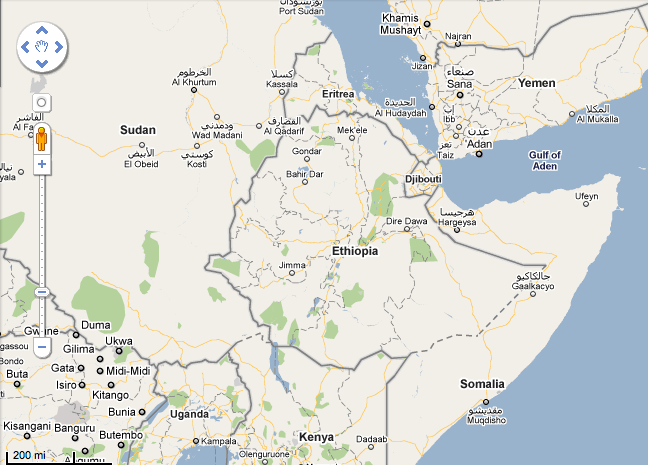
Reading this book, I felt like I had lived there, and I want to go back. The author captures the feelings, the smells, the visuals, the sounds, and if I awoke in a bungalow at the MIssing (Mission) Hospital, I would say “Ah yes! I remember this!”
I kept marking sections of this book that I loved. Here is one:
They parked at Ghosh’s bungalow and walked to the rear or Missing, where the bottlebrush was so laden with flowers that it looked as if it had caught fire. The property edge was marked by the acacias, their flat tops forming a jagged line against the sky. Missing’s far west corner was a promontory looking over a vast valley. That acreage as far as the eye could see belonged to a ras – a duke – who was relative of His Majesty, Haile Selassie.
A brook, hidden by boulders, burbled; sheep grazed under the eye of a boy who sat polishing his teeth with a twig, his staff near by. He squinted at Matron and Ghosh and then waved. Just like in the days of David, he carried a slingshot. It was a goatherd like him, centuries before, who had noticed how frisky his animals became after chewing a particuar red berry. From that serendipitous discovery, the coffee habit and trade spread to Yemen, Amsterdam, the Caribbean, South America, and the world, but it had all begun in Ethiopia, in a field like this.
We live inside the hearts and minds of doctors, some practicing under the worst possible conditions, and learn how they make their decisions and why. Verghese is a compassionate author; while his characters may be flawed, they are forgivable and forgiven.
Another section I loved, the man speaking is Ghosh, the man who adopted the twins with Hema, another doctor:
“My genius was to know long ago that money alone wouldn’t make me happy. Or maybe that’s my excuse for not leaving you a huge fortune! I certainly could have made more money if that had been my goal. But one thing I won’t have is regrets. My VIP patients often regret so many things on their deathbeds. They regret the bitterness they’ll leave in people’s hearts. They realize that no money, no church service, no eulogy, no funeral procession no matter how elaborate, can remove the legacy of a mean spirit.”
Things in Ethiopia get sticky, politically, and one of the twins is forced to flee, implicated in an airplane hijacking only because he was raised with a young woman involved. He is spirited into Eritrea, where he awaits his ride out to Kenya, and he helps the Eritrean rebels when large numbers of wounded are brought into his area. When the time comes to leave, his thoughts will strike a chord in anyone who has ever been an expat:
Two days later I took leave of Solomon. There were dark rings under his eyes and he looked ready to fall over. There was no questioning his purpose or dedication. Solomon said “Go and good luck to you. This isn’t your fight. I’d go if I were in your shoes. Tell the world about us.”
This isn’t your fight. I thought about that as I trekked to the border with two escorts. What did Solomon mean? Did he see me as being on the Ethiopian side, on the side of the occupiers? No, I think he saw me as an expatriate, someone without a stake in this war. Despite being born in the same compound as Genet, despite speaking Amharic like a native, and going to medical school with him, to Solomon I was a ferengi – a foreigner. Perhaps he was right, even though I was loath to admit it. If I were a patriotic Ethiopian, would I not have gone underground and joined the royalists, or others who were trying to topple Sergeant Mengistu? If I cared about my country, shouldn’t I have been willing to die for it?
The book has a lot of observations about coming to America; some of which made me laugh, some which made me groan. Coming back is always a shock to people who have lived abroad for a time, but it is a huge shock to those coming for the first time:
The black suited drivers led their passengers to sleek black cars, but myman led me to a big yellow taxi. In no time we were driving out of Kennedy Airport, heading to the Bronx. We merged at what I thought was a dangerous speed onto a freeway and into the slipstream of racing vehicles. “Marion, jet travel has damaged your eardrums,” I said to myself, because the silence was unreal. In Africa, cars ran not on petrol but on the squawk and blare of their horns. Not so here; the cars were near silent, like a school of fish. All I heard was the whish of rubber on concrete or asphalt.
As I neared the end, I read more slowly, unwilling for this book to end. It is one of the most vivid and moving books I have ever read. AdventureMan has gone online to find the nearest Ethiopian restaurant so we can have some injera and wot.
Where is Determination Square?
Kuwait City, Kuwait
March 7, 2011
To: All American Wardens
From: Consular Section
Subject: Warden Notice 2011 – 6
Please circulate the following message without additions or omissions
immediately to all U.S. citizens within your area of responsibility.
According to the Kuwait Ministry of the Interior, public gatherings may take
place March 8, at Safat and “Determination” Squares in downtown Kuwait City.
The embassy therefore recommends that these areas be avoided.
Spontaneous and/or planned demonstrations take place in Kuwait from time to time
in response to world events or local developments. At times, even
demonstrations intended to be peaceful can turn confrontational and possibly
escalate into violence. Avoid the areas of demonstrations if possible, and
exercise caution if within the vicinity of any demonstrations. Please stay
current with media coverage of local events, be aware of your surroundings and
practice personal security awareness at all times.
For the latest security information, U.S. citizens living and traveling abroad
should regularly monitor the Department of State’s Bureau of Consular Affairs
Internet website, where the current Worldwide Caution, Travel Warnings, Travel
Alerts, as well as the Country Specific Information for Kuwait can be found.
Up-to-date information on security can also be obtained by calling
1-888-407-4747 toll-free in the United States and Canada or, for callers outside
the United States and Canada, a regular toll line at 1-202-501-4444. These
numbers are available from 8:00 a.m. to 8:00 p.m. Eastern Time, Monday through
Friday (except U.S. federal holidays).
If you are a U.S. citizen in need of emergency assistance in Kuwait, you may
reach the U.S. Embassy by calling +965-2259-1001 and requesting the duty
officer.
U.S. citizens living or traveling in Kuwait are encouraged to enroll in the
Department’s Smart Traveler Enrollment Program (STEP) so that they can obtain
updated information on travel and security. U.S. citizens without internet
access may enroll directly with the nearest U.S. Embassy or Consulate. By
enrolling, U.S. citizens make it easier for the Embassy or Consulate to contact
them in case of emergency. For additional information, please refer to “A Safe
Trip Abroad”.
This message may be accessed on the Embassy website, http://kuwait.usembassy.gov
Please note that the Consular Section is closed for U.S. and most local
holidays. The current holiday schedule for 2011 is posted on
http://kuwait.usembassy.gov/holidays.html.
Lord of Death by Eliot Pattison
I didn’t know that much about the Chinese obliteration of Tibetan culture in Tibet. I didn’t know about the systematic destruction of the monasteries, or at least not in detail. I didn’t know about the brutal re-education techniques for the Bhuddist monks. I didn’t know how strong and resistant the peoples of Tibet are to the Chinese incursion.
I’ve learned most of what I know reading Eliot Pattison’s series featuring Shan Tao Yun, a Chinese detective. Or he used to be. In the first book, The Skull Mantra, we meet Inspecter Shan Tao Yun in one of those re-education camps, where he has been tortured and mistreated almost to his physical limits, and the Bhuddist monks teach him new ways of thinking, and those ways help him to see things differently – and to survive.
The Tibetans hate the Chinese, but they make an exception for Inspector Shan Tao Yun, who earns the respect of both Tibetans and Chinese for his unwavering integrity, and his ability to solve the most intricate puzzles. As he does, we learn more about different aspects of life today in Tibet.
The Lord of Death introduces us to the evolving mountain climbing industry developing in Tibet, just across the border with Nepal. Western climbers will see themselves in a very new light reading this book, which involves the murder of the visiting Chinese Minister of Tourism, an American female climber, and former members of a clandestine CIA trained group of Tibetans during WWII.
In every volume, I learn something fascinating. In this book, I learned more about the early struggles of the Chinese Cultural revolution, the corruption of Chinese ideals, and more about Tibetan ways of thinking. I cannot wait for the next book to come out. You can visit his website here: Eliot Pattison.com
King Abdulla Returns to Saudi Arabia, Announces Benefits
Sometimes, there is little to say, the news says it all. Ghadaffi calling his own Libyans “rats” “cockroaches” “cowards” “traitors”, aging, long term leaders announcing increased benefits for citizens . . . These are interesting times. The winds of change are blowing, and no one can tell where those changes will take us . . .
From todays BBC World News:
Saudi King offers benefits as he returns from treatment
The king was greeted by hundreds of well-wishers on his arrival at Riyadh airport
Continue reading the main story
Saudi Arabia’s King Abdullah has announced increased benefits for his citizens, as he returned after months abroad getting medical treatment.
There will be extra funds for housing, studying abroad and social security, according to state television.
King Abdullah has been away from the country for three months, during which time mass protests have changed the political landscape of the Middle East.
There have been few demonstrations in Saudi Arabia.
You can read more at BBC World News/Middle East
Recent Comments
ExpatAlien on What Country am I Living … intlxpatr on Yellowstone: Old Faithful to C… Michelle on Yellowstone: Old Faithful to C… Cathy on No Grown-Ups in Charge intlxpatr on Waiting for Snow Wikipedia Donate Button

Amazina


Early Voting in Florida


 Here There and Everywhere