Nigeria Wants Looted Art Works Back
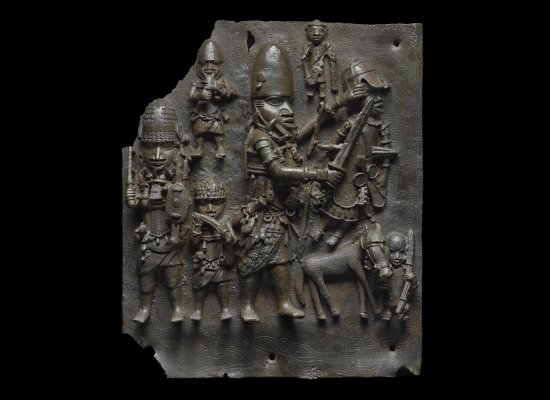
The National Commission for Museums and Monuments, the governmental body in Nigeria that regulates the nation’s museum systems, is demanding the return of 32 artifacts recently acquired by the Museum of Fine Art in Boston. Consisting of various bronze and ivory sculptures looted during the Benin Massacre of 1897, the Director-General of the commission, Yusuf Abdallah Usman, states that the pieces were illegally taken by the British Expedition as spoils of war.


The MFA in Boston acquired the pieces last month as a gift from New York banker and collector Robert Owen Lehman, who purchased the Benin pieces in the 1950s and 1970s. But the pieces were originally looted by British soldiers in the late 1890s, following the Benin massacre of 1897. In a statement made by Usman, the commission stated: “Without mincing words, these artworks are heirlooms of the great people of the Benin Kingdom and Nigeria generally. They form part of the history of the people. The gap created by this senseless exploitation is causing our people, untold anguish, discomfort and disillusionment.”
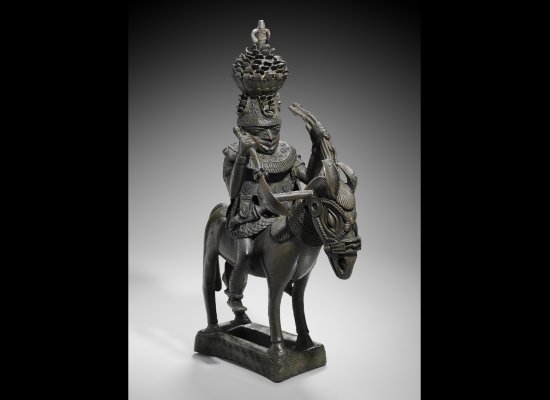
According to Huffington Post blogger and Princeton art history professorChika Okeke-Agulu, the laws governing cultural heritage in the United States are lenient toward museums holding works like those from the Benin Court. Commenting on the ethical imperatives associated with the looted art acquisitions, he has stated that “calls for the resolution of the problem caused by British looters of Benin royal art collection will not go away — especially now that Nigerian/world-citizen voices have learned to harness the popular power of the Internet to demand action.”

Diversity: No Holding Back the Tide
From today’s AOL News/ Huffpost:
So here’s the thing. In the USA, as in many countries, people study their ancestry, their bloodlines. Some people want those bloodlines to make them special, but anyone who has read history in any big-picture kind of way understands that most of history is people coming and going, waves of migration, immigration and emmigration, mostly depending on food supply, but often, too, depending on employment opportunities. Bottom line, most of it is about survival.
Now, blood. When we go to the hospital, or are taken there after an accident, do we ask whose blood it is that we receive when we need a transfusion? Blood is blood. The match to your antibodies and needs may be from another, despised race. Do we really know who our fathers are? Do women raped always admit to being raped? Do women admit to having a relationship outside of marriage? Many a child is born whose parenthood is not what it is claimed to be.
National DNA testing is controversial. Kuwait has been trying to do DNA testing to construct a profile for who is or is not Kuwaiti. 🙂 Do you really want to know?

Minority Birth Rate Now Surpasses Whites In US, Census Shows
By HOPE YEN 05/17/12 03:16 AM ET
WASHINGTON — For the first time, racial and ethnic minorities make up more than half the children born in the U.S., capping decades of heady immigration growth that is now slowing.
New 2011 census estimates highlight sweeping changes in the nation’s racial makeup and the prolonged impact of a weak economy, which is now resulting in fewer Hispanics entering the U.S.
“This is an important landmark,” said Roderick Harrison, a former chief of racial statistics at the Census Bureau who is now a sociologist at Howard University. “This generation is growing up much more accustomed to diversity than its elders.”
The report comes as the Supreme Court prepares to rule on the legality of Arizona’s strict immigration law, with many states weighing similar get-tough measures.
“We remain in a dangerous period where those appealing to anti-immigration elements are fueling a divisiveness and hostility that might take decades to overcome,” Harrison said.
As a whole, the nation’s minority population continues to rise, following a higher-than-expected Hispanic count in the 2010 census. Minorities increased 1.9 percent to 114.1 million, or 36.6 percent of the total U.S. population, lifted by prior waves of immigration that brought in young families and boosted the number of Hispanic women in their prime childbearing years.
But a recent slowdown in the growth of the Hispanic and Asian populations is shifting notions on when the tipping point in U.S. diversity will come – the time when non-Hispanic whites become a minority. After 2010 census results suggested a crossover as early as 2040, demographers now believe the pivotal moment may be pushed back several years when new projections are released in December.
The annual growth rates for Hispanics and Asians fell sharply last year to just over 2 percent, roughly half the rates in 2000 and the lowest in more than a decade. The black growth rate stayed flat at 1 percent.
The immigrants staying put in the U.S. for now include Narcisa Marcelino, 34, a single mother who lives with her two daughters, ages 10 and 5, in Martinsburg, W.Va. After crossing into the U.S. from Mexico in 2000, she followed her brother to the eastern part of the state just outside the Baltimore-Washington region. The Martinsburg area is known for hiring hundreds of migrants annually to work in fruit orchards. Its Hispanic growth climbed from 14 percent to 18 percent between 2000 and 2005 before shrinking last year to 3.3 percent, still above the national average.
Marcelino says she sells food from her home to make ends meet for her family and continues to hope that one day she will get a hearing with immigration officials to stay legally in the U.S. She aspires to open a restaurant and is learning English at a community college so she can help other Spanish-language speakers.
If she is eventually deported, “it wouldn’t be that tragic,” Marcelino said. “But because the children have been born here, this is their country. And there are more opportunities for them here.”
Of the 30 large metropolitan areas showing the fastest Hispanic growth in the previous decade, all showed slower growth in 2011 than in the peak Hispanic growth years of 2005-2006, when the construction boom attracted new migrants to low-wage work. They include Lakeland, Fla.; Charlotte, N.C.; Atlanta; Provo, Utah; Las Vegas; and Phoenix. All but two – Fort Myers, Fla., and Dallas-Fort Worth – also grew more slowly last year than in 2010, hurt by the jobs slump.
Pointing to a longer-term decline in immigration, demographers believe the Hispanic population boom may have peaked.
“The Latino population is very young, which means they will continue to have a lot of births relative to the general population,” said Mark Mather, associate vice president of the Population Reference Bureau. “But we’re seeing a slowdown that is likely the result of multiple factors: declining Latina birth rates combined with lower immigration levels. If both of these trends continue, they will lead to big changes down the road.”
William H. Frey, a demographer at the Brookings Institution who analyzed the census data, noted that government debates over immigration enforcement may now be less pressing, given slowing growth. “The current congressional and Supreme Court interest in reducing immigration – and the concerns especially about low-skilled and undocumented Hispanic immigration – represent issues that could well be behind us,” he said.
Minorities made up roughly 2.02 million, or 50.4 percent of U.S. births in the 12-month period ending July 2011. That compares with 37 percent in 1990.
In all, 348 of the nation’s 3,143 counties, or 1 in 9, have minority populations across all age groups that total more than 50 percent. In a sign of future U.S. race and ethnic change, the number of counties reaching the tipping point increases to more than 690, or nearly 1 in 4, when looking only at the under age 5 population.
The counties in transition include Maricopa (Phoenix), Ariz.; King (Seattle), Wash.; Travis (Austin), Texas; and Palm Beach, Fla., where recent Hispanic births are driving the increased diversity among children. Also high on the list are suburban counties such as Fairfax, Va., just outside the nation’s capital, and Westchester, N.Y., near New York City, where more open spaces are a draw for young families who are increasingly minority.
According to the latest data, the percentage growth of Hispanics slowed from 4.2 percent in 2001 to 2.5 percent last year. Their population growth would have been even lower if it weren’t for their relatively high fertility rates – seven births for every death. The median age of U.S. Hispanics is 27.6 years.
Births actually have been declining for both whites and minorities as many women postponed having children during the economic slump. But the drop since 2008 has been larger for whites, who have a median age of 42. The number of white births fell by 11.4 percent, compared with 3.2 percent for minorities, according to Kenneth Johnson, a sociologist at the University of New Hampshire.
Asian population increases also slowed, from 4.5 percent in 2001 to about 2.2 percent. Hispanics and Asians still are the two fastest-growing minority groups, making up about 16.7 percent and 4.8 percent of the U.S. population, respectively.
Blacks, who comprise about 12.3 percent of the population, have increased at a rate of about 1 percent each year. Whites have increased very little in recent years.
Other findings:
_The migration of black Americans back to the South is slowing. New destinations in the South, including Atlanta, Charlotte, N.C., Raleigh, N.C., and Orlando, Fla., saw sharp drop-offs in black population growth as the prolonged housing bust kept African-Americans locked in place in traditional big cities. Metro areas including New York, Chicago, Los Angeles and San Francisco had reduced declines or gains.
_Nine U.S. counties in five states saw their minority populations across all age groups surpass 50 percent last year. They were Sutter and Yolo in California; Quitman in Georgia; Cumberland in New Jersey; Colfax in New Mexico; and Lynn, Mitchell, Schleicher and Swisher in Texas.
_Maverick County, Texas, had the largest share of minorities at 96.8 percent, followed by Webb County, Texas, and Wade Hampton, Alaska, both at 96 percent.
_Four states – Hawaii, California, New Mexico and Texas – as well as the District of Columbia have minority populations that exceed 50 percent.
The census estimates used local records of births and deaths, tax records of people moving within the U.S., and census statistics on immigrants. The figures for “white” refer to those whites who are not of Hispanic ethnicity.
___
Associated Press writer John Raby in Charleston, W.Va., contributed to this report.
Saudi – Bahrain “Merge?”
Thank you, John Mueller for this article from The Press:
http://www.presstv.ir/detail/2012/05/14/241177/iran-raps-saudi-plans-bahrain-merger/
PressTV – Iran Majlis condemns merger of KSA, Bahrain
The Iranian Majlis (parliament) has condemned the Saudi proposal for merger with Bahrain, saying the “unwise” measure will further destabilize the region and multiply its problems.
The Saudi plans to annex Bahrain “will extend the Bahraini crisis to Saudi Arabia and push the region toward further unrest,” a statement, signed by 190 Iranian lawmakers, read on Monday.
The statement asserted that political force and pressure cannot silence the frustrated Bahraini people who have been holding anti-government demonstrations since mid-February 2011 and calling on the US-backed Al Khalifa family to leave power.
On March 14, 2011, more than 1,000 Saudi troops entered Bahrain to assist the Manama government in suppressing the peaceful popular protests in the Persian Gulf Island.
According to local sources, scores of people have been killed and hundreds have been arrested in the Saudi-backed regime crackdown.
In a report released on April 17, Amnesty International criticized the Bahraini regime for continuing the violation of human rights and the excessive use of force against the anti-regime protesters.
“The authorities are trying to portray the country as being on the road to reform, but we continue to receive reports of torture and use of unnecessary and excessive force against protests. Their reforms have only scratched the surface,” said Hassiba Hadj Sahraoui, Amnesty International’s Middle East and North Africa deputy director.
The Iranian lawmakers concluded by expressing their “all-out support for the brave nation of Bahrain as well as the independence and territorial integrity of the country.”
Saudi Arabia is reportedly seeking to merge with Bahrain in line with plans to unify the six Arab member states of the [Persian] Gulf Cooperation Council ([P]GCC).
The council members, Saudi Arabia, Kuwait, Bahrain, Qatar, the United Arab Emirates and Oman, are expected to meet and discuss closer union among the six countries on Monday.
In December 2011, Saudi King Abdullah called on the council member states to move “beyond the stage of cooperation and into the stage of unity in a single entity.”
However, some members of the council have expressed concern about Saudi Arabia’s possible dominance over the other five countries if the [P]GCC becomes unified.
HMV/HGH/AZ
Saudi Disinformation on Qatar Coup
Thank you, John Mueller, for contributing this fascinating piece on the reported – and then unreported – ‘coup attempt in Qatar’. We were there when this happened the last time. It was bizarre – there was nothing. No increased military or police presence, just the same quiet and relaxed day-by-day. It was all a lie, created to stir the pot, and to create a perception – based on nothing.
BREAKING; Qatar Military Coup “Rumours” Stir Bad Blood With House of Saud
by Finian Cunningham, April 17, 2012
The rumour mill is churning in the Persian Gulf with unconfirmed reports of a failed military coup against the Qatari ruler.
There were even media reports that American military helicopters had whisked the Emir and his wife to a safe unknown destination in the aftermath of the failed putsch, said to be have been attempted by high-ranking officers.
Saudi news channel Al Arabiya reported earlier today a coup bid against Qatari Emir Hamad Bin Khalifa Al Thani. However, by midday, the story appeared to have been removed from Al Arabiya’s English-language website.
Iranian news channel Press TV toned down its early headlines of a coup and later speculated that Saudi-owned Al Arabiya may have been engaging in disinformation to undermine the Qatari regime, indicating a power struggle between the Houses of Saud and Thani.
The FARS semi-official Iranian news channel, however, insisted that sources within the Qatari royal entourage had confirmed earlier this week that there was a foiled coup in Doha.
Not surprisingly, Qatari-owned Al Jazeera news site ran no information on the alleged plot.
Whether the reports of this week’s failed coup turn out to be rumour or something more sinister, there is nevertheless no disguising the fact of underlying bad blood in the Gulf Arab enclave, both between and within the Gulf monarchies.
That may at first seem at odds with the “thick as thieves” appearance of the six states that form the Gulf Co-operation Council: Saudi Arabia, Kuwait, Bahrain, Qatar, United Arab Emirates and Oman. All are Sunni monarchies that have aligned with the US-led NATO powers’ aggressive policy of isolating Shia Iran.
Saudi Arabia and Qatar have emerged in particular as militant allies of US/NATO geopolitics across the Middle East. They played instrumental roles in paving the way for NATO’s aerial bombardment and regime change in Libya; and they have been most strident in denouncing the Syrian government of Bashar Al Assad, calling for his overthrow and arming mercenary forces that are accused of committing atrocities and sabotage.
But herein lies the potential for rivalry and enmity. Saudi Arabia, the world’s largest oil exporter, and Qatar, the number one exporter of liquefied natural gas, are bankrolling mercenaries and jihadis from Iraq, Libya, Lebanon and elsewhere in a bid to be top dog in a fissile region. The region is being inflamed with sectarian tensions precisely because of self-serving Saudi and Qatari power politicking.
The Gulf monarchs have also been funding election campaigns of Islamist parties in Egypt and Tunisia, aligned to the conservative Muslim Brotherhood, in line with Western powers using these same parties to shunt and blunt popular calls for greater democracy.
The rapid growth of Saudi-backed satellite TV channels broadcasting across the region – several of them spouting Saudi theocratic rhetoric – is indicative of a rivalry for influence with Qatar, which originally pioneered the Arab medium with the Al Jazeera station.
While on the surface, Riyadh and Doha may appear joined at the hip in terms of advancing the US-led Western imperialist agenda for hegemony, that service generates tensions between and within the royal houses.
In Qatar, there are reported tensions within the Al Thani ruling family and other powerful clans over what critics of the Emir call “his excessive alignment with US foreign policy and breaking of Arab ranks”. There are also domestic problems of corruption owing to the Al Thanis monopolising Qatar’s lucrative property market.
And despite the apparent alliance with Saudi Arabia, the present Qatari Emir will be mindful that the Saudi rulers have been implicated in previous suspected coup attempts against him in February 2011, 2009, 2002 and 1996.
The present Qatari ruler came to power after he led a coup against his own father in 1995 while the latter was holidaying in Europe. The following year, the Saudi and Bahraini rulers backed a failed counter-coup to reinstall the older Emir.
In 2010, the coup plotters were released from jail by Emir Hamad after a request was made by Saudi King Abdullah.
So in the Arab enclave of the NATO camp, all is not as cosy as it may seem. Washington and the other Western powers no doubt think they have a clever Arab cover from the Gulf autocrats to redraw the Middle East political map according to their imperialist designs. But in all such intrigues of deception and power lust, the band of thieves have to watch their backs.
Finian Cunningham is Global Research’s Middle East and East Africa Correspondent
cunninghamfinian@gmail.com
Qatar’s Balancing Act (from National Post)
Fascinating article on Qatar – thank you, John Mueller, who sends me these great news articles.

From the National Post
Qatar’s balancing act
Fadi Al-Assaad, Reuters Files
Qatar’s Emir, Sheikh Hamad bin Khalifa Al-Thani, has steadily built a reputation for mediation and seeks to be regarded as an “honest broker” in the Middle East.
TwitterEmail
inShare
Peter Goodspeed, National Post · Feb. 25, 2012 | Last Updated: Feb. 25, 2012 5:16 AM ET
The tiny country of Qatar used the slogan “Expect the Amazing” when it successfully bid to host soccer’s 2022 World Cup.
It’s a phrase that could summarize the reign of Emir Sheik Hamad bin Khalifa Al-Thani, who in just 17 years has turned a small Arabian peninsula of salt and sand flats, once one of the poorest countries in the Persian Gulf, into the world’s richest country and possibly the Middle East’s most influential state.
A former British protectorate, which was noted for its declining pearl fishery when it became independent in 1971, Qatar was once described by the Lonely Planet Travel Guide as “possibly the most boring place on Earth.”
Now, according to the World Bank, its 250,000 citizens and 1.5 million foreign workers have the highest per capita income in the world (US$84,000, twice that of the United States) and an economy that outstripped China by growing 15.8% last year.
Since 2006, Qatar has been the world’s largest exporter of liquefied natural gas and the kingdom is transforming its new wealth into worldwide influence.
Qatar recently led the Arab League’s expulsion of Syria and, on Friday, called for the creation of an Arab military force to open humanitarian corridors to protect civilians in Syria.
Last month, it allowed Afghanistan’s Taliban to open an office in Doha to facilitate peace talks with the U.S.
And in the spring, it was the first Arab country to recognize the rebel government in Libya.
The emirate sent six Mirage fighters to Crete to help NATO enforce a no fly zone over Libya.
It also supplied rebels with the fuel, weapons, cash and the training they needed to overthrow dictator Muammar Gaddafi. Qatari special forces provided basic infantry training in the Nafusa Mountains, west of Tripoli and some helped lead the final assault on Col. Gaddafi’s compound in the capital.
They were so proud of their achievement, they hung a Qatari flag from the wreckage of his palace.
“The Qataris have really adopted a kind of adventurous foreign policy in the last couple of years and shown a willingness to send special forces to these kind of areas of conflict,” said Andrew McGregor, senior editor of the Global Terrorism Monitor for the Jamestown Foundation.
“They’ve used their considerable wealth to supply arms and whatever else is needed.
“I would be keeping a close eye on what they are doing [in Syria]. They are rapidly emerging as a real power in the Arab League, despite their size. They are very influential and very wealthy, and they have shown a willingness to be engaged.”
The Emir, Sheikh Hamad bin Khalifa Al-Thani, sometimes referred to disparagingly as the “Arab World’s Henry Kissinger,” has steadily built a reputation for mediation and seeks to be regarded as an “honest broker” in the Middle East.
“Since the mid-1990s, Qatar has pursued an activist foreign policy, using its affluence, unthreatening military position and skills as a mediator to interject itself in conflicts around the Middle East and beyond,” said David Roberts, deputy director of the Royal United Services Institute’s Doha Centre.
In recent years, Sheikh Hamad has carefully inserted himself in conflicts in Libya, Lebanon, Gaza and the West Bank, Sudan, Syria, Yemen and Afghanistan.
In 2008, an agreement negotiated in Doha averted another civil war in Lebanon by establishing a power sharing agreement between the country’s different factions. Around the same time, Qatar helped negotiate a short-lived ceasefire in Yemen, mediated a border dispute between Djibouti and Eritrea, and hosted peace talks between Sudan and rebel groups in Darfur.
A regional actor with international reach, Sheikh Hamad has pursued a foreign policy that is ripe with conflicts and contradictions.
Qatar maintains good relations with Iran, while still offering the U.S. its biggest and most important air base in the Middle East at al-Udeid, a few kilometres outside Doha.
Unlike most Arab states, Qatar has generally had good relations with Israel and allowed the Israelis to maintain a commercial office in Doha until the 2009 Gaza invasion.
At the same time, it has warm relations with Israel’s enemies Hamas and Hezbollah, and provides safe haven to hardline Islamists from all over the Arab world.
Leaders of the Muslim Brotherhood in Egypt and Syria fled to Qatar in the 1960s and 1970s, even though the kingdom’s rulers frown on organized political Islam and ban all political parties.
Qatar “has a reputation for ‘omni-balancing’ between seemingly incompatible policies,” said Kristian Coates Ulrichsen, a Gulf expert at the London School of Economics.
“Qatar’s rise, seemingly from nowhere, is rooted in deeper political, economic and security shifts and, in turn, is reconfiguring the balance of regional power.”
Those changes highlight Sheikh Hamad’s own rise to power and his reign in Qatar, where his family has ruled since the 19th century.
Raised by a maternal uncle’s family, after his mother died young, the Emir attended the Royal Military Academy at Sandhurst, west of London, graduating in 1971, the year Qatar won its independence and when its first natural gas field was discovered.
He was made a lieutenant colonel in Qatar’s army and, after his father deposed an uncle to become emir in 1972, he rapidly rose to become commander-in-chief of its armed forces.
As crown prince, Sheikh Hamad was gradually given the power to run the country day-to-day, while his father cultivated a taste for extravagance and spent most of his time on the French Riviera.
Sheikh Hamad oversaw development of Qatar’s oil and gas industry and carefully planned an economy that provides Qataris with free education, health care, housing and utilities – and no taxes.
But when his father returned home briefly in 1995 and arbitrarily demoted another son from his position as prime minister, Crown Prince Sheikh Hamad staged a bloodless coup. He informed his father by telephone while he was holidaying in Switzerland.
The old emir returned to the Gulf the following year, publicly disowning his son and trying to drum up support for a countercoup, but Sheik Hamad snuffed out the plot by freezing billions of dollars in his father’s overseas bank accounts.
Then, just 44 and the youngest ruler in the Gulf, he set about to reform and redefine Qatar.
Surrounding himself with young, Western-educated advisors, he drew up a longterm plan to develop a post-oil knowledge-based economy.
He has allocated 40% of Qatar’s budget between now and 2016 to massive infrastructure projects, including an $11billion international airport, a $5.5-billion deep-water seaport and a $1-billion transport corridor in Doha, as well as $20billion in new roads.
He has also invited foreign universities to establish Middle East campuses in a $100-billion Education City in Doha.
Without an elected parliament to advise him, the Emir has final say in the disposition of the country’s $70-billion to $100-billion sovereign wealth fund, which has made it a financial powerhouse internationally by investing heavily in everything from German carmakers Porsche and Volk-swagen to the Agricultural Bank of China, Harrods department store in London, a Brazilian bank, Chinese oil refineries, a Spanish soccer team and a French fashion house.
The Emir’s most influential investment was his creation of the 24-hour Arab-language Al Jazeera television network in 1996.
Granted a level of editorial independence unheard of in the Arab world, Al Jazeera is encouraged to report freely and aggressively on everything but Qatari politics, and is the most watched TV network in the Middle East.
The broadcaster was widely regarded as one of the driving forces behind the spread of the Arab Spring.
“Qatar hopes to insert itself as the key mediator between the Muslim world and the West,” Mr. Roberts said.
“Qatar sees its role as a highly specialized interlocutor between the two worlds, making – from the West’s point of view – unpalatable but necessary friendships and alliances with anti-Western leaders.”
Sheikh Hamad Bin Jasem Al-Thani, Qatar’s Prime Minister and a distant cousin of the Emir, likes to say his country is small and has to be proactive to protect its interest and avoid being run over by more powerful neighbours.
“Our policy is to be friendly with everybody,” the Emir said recently in a television interview. “We are looking for peace. It doesn’t mean if two parties turn against each other, we have to go to one party. No, we would like to stick with the two parties.”
– Formerly a British protectorate, Qatar has been ruled by the Al-Thani family since the mid-1800s. The current Emir, Hamad bin Khalifa Al-Thani, overthrew his father in a bloodless coup in 1995.
– Oil and natural gas revenues have enabled Qatar to attain the highest per-capita income in the world (US$84,000 according to a report this year by Global Finance).
– Oil output at current levels should last 57 years, according to the CIA World Factbook.
– It has a zero unemployment rate and zero percentage below the poverty line.
– The mostly flat and desert land is 11,586 square kilometres – only slightly larger than Jasper National Park.
– It has a population of 848,016 – similar to the population of Edmonton.
SOURCE: NATIONAL POST NEWS SERVICES
JONATHON RIVAIT / NATIONAL POST
pgoodspeed@nationalpost.com
Unity in Diversity
As so often happens, when I read Forward Day by Day, an illumination of the daily readings in the Lectionary, I think “Oh! This is meant for me.”
My heart is heavy as the Syrian peoples in Homs and Hama are bombarded, and babies, children, mothers, non-combatants – all are killed, whether they are fighting or not. I remember the shivers as we would pass the headquarters of the Mukhabarat, or secret police, which we called ‘the fingernail factory’ and I am shamed at our shallowness and callowness, as the reality of people tortured and damaged just for the example of it. While I know that the troubles are political, they are following religious lines. Homs and Hama have always resisted the rule of the Alawites, and have suffered horribly, 30 years ago, at the hands of Bassam Al-Assad’s father, who almost leveled Hama. I know, because I visited there shortly afterwards. It was a silent ghostland, a beautiful city, deserted and haunted.
Who is next, Assad? After the cities of Homs and Hama – oh, and don’t forget Deraa – will you start hitting the Christian villages, even though the Syrian Christians are at the very least, neutral, and many support you? The monster of tyranny is not easily sated, and to survive, there must be constant sacrifices to keep the people in fear, or else they won’t be obedient.
This is all heavy on my heart. I lave loved Syria, all of it, not just Damascus. When will we learn to live in peace with one another?

(Image of Hama from WikiMedia)
John 17:20-26. The glory that you have given me I have given them, so that they may be one, as we are one, I in them and you in me.
This verse is taken from the so-called high priestly prayer of Jesus for the unity of the church. What is our understanding of unity in the church? From the outset there was a great diversity of Christian groups. Diversity arose from differing practices and religious customs as well as from the difficulty of interpreting authentically the mystery of the person of Jesus.
What is meant by the unity of all Christians? An imposed uniformity in which everyone must bow their heads and obey without freedom of expression and cultural variations? That would be more harmful than beneficial. That idea persisted for a long time and led to the imposition of strict uniformity in religious practice worldwide. It was pernicious.
Today we realize that there can be unity in diversity. It is important to highlight the diversity of cultures while maintaining unity. The unity that Jesus wanted was based on love, compassion, and mercy—not uniformity.
PRAY for the Diocese of Bukuru – (Jos, Nigeria)
Ps 30, 32 * 42, 43; Ezekiel 39:21-29; Philippians 4:10-20
Malek Jandali Freedom Qashoush Symphony مالك جندلي حرية سيمفونية القاشوش
We have spent many happy hours and days in Syria. We grieve for our Syrian friends, for those living in Homs and Hama, and all those seeking freedom from tyranny.

Canadian Family Found Guilt of Honor Killing
From today’s AOL / Huffington Post: World:
KINGSTON, Ontario — A jury on Sunday found an Afghan father, his wife and their son guilty of killing three teenage sisters and a co-wife in what the judge described as “cold-blooded, shameful murders” resulting from a “twisted concept of honor.”
The jury took 15 hours to find Mohammad Shafia, 58; his wife Tooba Yahya, 42; and their son Hamed, 21, each guilty of four counts of first-degree murder in a case that shocked and riveted Canadians from coast to coast. First-degree murder carries an automatic life sentence with no chance of parole for 25 years.
After the verdict was read, the three defendants again declared their innocence in the killings of sisters Zainab, 19, Sahar 17, and Geeti, 13, as well as Rona Amir Mohammad, 52, Shafia’s childless first wife in a polygamous marriage.
Their bodies were found June 30, 2009, in a car submerged in a canal in Kingston, Ontario, where the family had stopped for the night on their way home to Montreal from Niagara Falls, Ontario.
Prosecutors said the defendants allegedly killed the three teenage sisters because they dishonored the family by defying its disciplinarian rules on dress, dating, socializing and going online. Shafia’s first wife was living with him and his second wife. The polygamous relationship, if revealed, could have resulted in their deportation.
The prosecution alleged it was a case of premeditated murder, staged to look like an accident after it was carried out. Prosecutors said the defendants drowned their victims elsewhere on the site, placed their bodies in the car and pushed it into the canal.
Defense lawyers said the deaths were accidental. They said the Nissan car accidentally plunged into the canal after the eldest daughter, Zainab, took it for a joy ride with her sisters and her father’s first wife. Hamed said he watched the accident, although he didn’t call police from the scene.
After the jury returned the verdicts, Mohammad Shafia, speaking through a translator, said, “We are not criminal, we are not murderer, we didn’t commit the murder and this is unjust.”
His weeping wife, Tooba, also declared the verdict unjust, saying, “I am not a murderer, and I am a mother, a mother.”
Their son, Hamed, speaking in English said, “I did not drown my sisters anywhere.”
But Judge Robert Maranger was unmoved, saying the evidence clearly supported their conviction for “the planned and deliberate murder of four members of your family.”
“It is difficult to conceive of a more despicable, more heinous crime … the apparent reason behind these cold-blooded, shameful murders was that the four completely innocent victims offended your completely twisted concept of honor … that has absolutely no place in any civilized society.”
Hamed’s lawyer, Patrick McCann, said he was disappointed with the verdict, but said his client will appeal and he believes the other two defendants will as well.
But prosecutor Gerard Laarhuis welcomed the verdict.
“This jury found that four strong, vivacious and freedom-loving women were murdered by their own family in the most troubling of circumstances,” Laarhuis said outside court.
“This verdict sends a very clear message about our Canadian values and the core principles in a free and democratic society that all Canadians enjoy and even visitors to Canada enjoy,” he said to cheers of approval from onlookers.
The family had left Afghanistan in 1992 and lived in Pakistan, Australia and Dubai before settling in Canada in 2007. Shafia, a wealthy businessman, married Yahya because his first wife could not have children.
The prosecution painted a picture of a household controlled by a domineering Shafia, with Hamed keeping his sisters in line and doling out discipline when his father was away on frequent business trips to Dubai.
The months leading up to the deaths were not happy ones in the Shafia household, according to evidence presented at trial. Zainab, the oldest daughter, was forbidden to attend school for a year because she had a young Pakistani-Canadian boyfriend, and she fled to a shelter, terrified of her father, the court was told.
The prosecution said her parents found condoms in Sahar’s room as well as photos of her wearing short skirts and hugging her Christian boyfriend, a relationship she had kept secret. Geeti was becoming almost impossible to control: skipping school, failing classes, being sent home for wearing revealing clothes and stealing, while declaring to authority figures that she wanted to be placed in foster care, according to the prosecution.
Shafia’s first wife wrote in a diary that her husband beat her and “made life a torture,” while his second wife called her a servant.
The prosecution presented wire taps and cell phone records from the Shafia family in court to support their honor killing theory. The wiretaps, which capture Shafia spewing vitriol about his dead daughters, calling them treacherous and whores and invoking the devil to defecate on their graves, were a focal point of the trial.
“There can be no betrayal, no treachery, no violation more than this,” Shafia said on one recording. “Even if they hoist me up onto the gallows … nothing is more dear to me than my honor.”
Defense lawyers argued that at no point in the intercepts do the accused say they drowned the victims.
Shafia’s lawyer, Peter Kemp, said after the verdicts that he believes the comments his client made on the wiretaps may have weighed more heavily on the jury’s minds than the physical evidence in the case.
“He wasn’t convicted for what he did,” Kemp said. “He was convicted for what he said.”
Recent Comments
Kitchen on Isiais: Winding Down intlxpatr on Shampoo Ginger tigerbutterya0c5ff1d… on Shampoo Ginger intlxpatr on British Soldier Kidnapped, Esc… John on British Soldier Kidnapped, Esc… Wikipedia Donate Button

Amazina


Early Voting in Florida


