Peninsula Editor Responds to Qatar’s Advisory Council
From today’s Peninsula:
Advisory Council’s opinion surprising
Web posted at: 6/11/2009 6:45:39
Source ::: THE PENINSULA/ BY Khalid Abdul Rahim Al Sayed
Khalid Abdul Rahim Al Sayed
The Emir, His Highness, Sheikh Hamad bin Khalifa Al Thani, declared the media free in the country in 1995 and with the launch of Al Jazeera, we have shown the world that Qatar is a country which allows different opinions to be heard.
We were, therefore, quite surprised by the outcome of a debate in the Advisory Council on Monday, which called for stringent punishment to be given to Qatar-based journalists who write against the ruler, national security, religion and the Constitution.
First of all, all the above subjects are already protected by the Qatari Law. Second, we must remember that there is a provision in the Qatari Constitution which allows its revision at a future date by the next generation. We have a saying in Arabic which roughly translates into English as ‘one generation cannot control another’. By raising this debate, the Advisory Council has made a generalised conclusion without addressing the issue directly.
We find it strange that the Advisory Council, made up of Qatari nationals, has this kind of opinion when His Highness The Emir has given us the freedom to voice our opinion on issues freely and in a fair manner.
We are concerned as a Qatari newspaper that if these restrictions are imposed on Qatari journalists, they will be afraid to report news and events as they see them. Needless to say, the impact on foreign scribes here would be too deterring.
I am an avid reader of local newspapers. None of them has ever written anything objectionable against the four subjects referred to in the Advisory Council debate. The Advisory Council, I am afraid, has failed to address the issue of irresponsible journalism. Other nations will find it strange that a country which advocates media freedom through the establishment of Al Jazeera will condone such practice. If there is any misuse, it shouldn’t be generalised. Doing this would soil Qatar’s image in the world.
Given this backdrop, we urge the authorities concerned in Qatar to come up with a new Media Law that would protect the freedom of our journalists, especially as the old press legislation was enforced years ago, in 1979.
Khalid Abdul Rahim Al Sayed is the Editor-in-Chief of The Peninsula
Joy in Kuwait

You might think it is the inner feminist in me that is rejoicing, and you would be only half right. The Kuwait elections brought me a lot of joy, for many reasons. First, as an equal opportunity woman, you need to know that I believe women are every bit as capable of veniality and stupidity as men, and that not being in power has only meant not having equal opportunity to abuse that power. And then – you take a look at the women who were elected – smart women. Capable women! Not-your-shy-shrinking-violet kind of women! Women who know how to organize, how to delegate, and how to discuss and resolve differences.
FOUR women! Four highly educated women, who inspired droves of supporters not only to vote – but also to campaign.
Across the board, it struck me as a very sober election. It was as if people thought this might be their last chance, and they took their vote very very seriously. In the fifth district, voters crossed tribal lines, broke with rigid alliances.
Here are three conversations that caused me to rejoice.
On election day, my good Kuwaiti friend, a guy about the same age as AdventureMan and I, leaned over and said “My dear, today I voted for a Shiite woman! This is Kuwait! This is the REAL Kuwait, where no-one ever cared, Shiite or Sunni, no-one ever asked, we all worked together. I voted for her because I thought she was the best candidate.”
He’s been educating me on Kuwait ever since we got here. He grew up about a block from the big food court down at Mubarakiyya. I was just glad to know he had voted – he had seemed so dejected, so hopeless after the last election, I wasn’t sure he would even give it one more try. Something inspired him. Something gave him the courage to hope just one more time.
I talked with a young friend who was active in the campaign of a winning candidate. Well, really mostly SHE talked, and I just listened with a big grin on my face. It doesn’t even matter who she campaigned for, this woman was PUMPED! She had committed, she had engaged, she was on the phones and on the campaign lines and her candidate won! I could hear the transformation in her voice – this is the Kuwait of tomorrow.
At an earlier time, she had told me that the decisions were all made by “elderly” people (meaning people over 40, I think, people like me!) and that young people were getting discouraged, waiting for their turn. All that was gone, as I listened to her voice. She knows she can make a difference NOW in Kuwait. I could not stop grinning. I think she is one of the leaders of tomorrow. 🙂
My third Kuwaiti friend said to me “so many of the winners were from good families, but not the big, rich families! This is the first time!” and she said it with sheer amazement. She said “I think we may be on our way to a true democracy!” I was shocked. I never thought I would hear those words, not after the cynicism and discouragement apparent during the last legislature, when many Kuwaits awoke with a shock to the fact that their legislature had been hijacked, their voices stolen. “This is not the real Kuwait” they kept assuring me after the last election, as they watched in shock and horror as the newly elected MP’s postured and promised and promised “grillings” but did nothing for the population who had elected them in terms of basics – housing, roads, electricity/energy, or groundwork for future development.
My joy is in the renewal of their spirit. It’s not my election. But oh, I dance with joy for your joy, Kuwait, and I celebrate your commitment to the future.
PS For our non-Kuwaiti readers – early in the election campaigns, one party announced a religious fatwa (edict) saying that it was forbidden to vote for women. I think it outraged people badly enough to create a huge backlash.
Eliot Pattison: Prayer of the Dragon
As you can see, I am into some serious reading. Not heavy reading, but books like carrots – I am the donkey, plodding way, packing my boxes, sorting, weeding, throwing out – it is time consuming, and it is pitiless work. I need the promise of a great excape at the end of my day to keep me going.
Prayer of the Dragon was a GREAT carrot. I like all of Eliot Pattison’s Inspector Shan Tao Yun series, set in Tibet. In his very first book, we meet Shan as he is still in the Tibetan prison camp, imprisoned for exposing corrupt officials in China. He learns a huge appreciation, in prison, for a different way of thinking, and his treasured companions become the Bhuddist monks with whom he is imprisoned. If you want to read this series, you can read any book as a stand-alone, but it helps to read them in order, starting with The Skull Mantra. The Chinese eventually free Shan; they find him useful – as long as he is not exposing corruption in the Chinese bureaucracy. He is free on parole; he lives with the sword over his head. At any time, if he crosses an important person, he can be sent back to the merciless gulag.

In The Prayer of the Dragon Inspector Shan finds himself involved in a series of murders on the mountainside, in a small mining village. The village headman has a great scam going, skimming the miners take, charging passage on the mountain trails, and keeping his village hidden from the Chinese bureaucracy.
Here is what I learned that surprised me. There appears to be a connection between the American Navaho nation and the native Tibetans. They share some body-prototype similarities, and they share many symbols and earliest legends. An first-nation Navaho and his niece are exploring similarities, and commonalities, when two members of their party are murdered while sleeping. The Navaho is charged, by the headman, with the death, because he survived although he is covered in blood. It doesn’t make sense, but it doesn’t have to. The headman needs a scapegoat, and he chooses the Navaho.
It is a fascinating read. Here is an excerpt from a conversation Inspector Shan has with the local director of Public Security:
“I know your type so well, Shan, ” Bing said. “God, how well I know you. I was responsible for ten barracks of prisoners, like you – pathetic, morose creatures with no vision, only bitterness about the past. They would sit in reeducation classes and copy out slogans from the little red books like robots, praising the Chairman, reading aloud apologies printed in other books, using someone else’s words. Never a one among them with the balls to stand up and say Fuck the Chairman, screw the Party secretaries, and screw the limo drivers who brought them to town.”
“I tried at first,” Shan replied in a weary voice. “They sent me to a special hospital for the criminally insane.”
“Unfortunately,” Bing said soberly, “you are the sanest person I have ever met.”
AdventureMan knows I love these books. “Do you want to go to Tibet?” he asks me, and I say “No, if I went I would want to hang around with Inspector Shan and his gang of monks, not do tourist things allowed by the Chinese.” These are great reads, Pattison is doing a great job of bringing the plight of the Tibetans to the conscience of his readers, depicting, in graphic, horrorific detail how the Chinese are systematically crushing and obliterating every shred of Tibetan culture, while claiming they are not. I think one of the very worst things they have done is taking over the Tibetan monastery system and corrupting it into something it was never meant to be, a cruel, ugly deformity.
I can hardly wait for the next book to come out. I am on the waiting list for The Lord of Death, yet another book about Chinese bureaucratic corruption and the adventures Inspector Shan has in Tibet confronting and evading all its manifestations.
Somali Pirate Code of Conduct
Ever since I was a kid, I found pirates interesting and exotic and adventurous. The truth is probably that those olden day pirates had bad teeth, scurvey – they had lived hard and fast and they probably aged quickly.
Of course, today we have Johnie Depp and the Pirates of the Caribbean series, which makes pirating look mostly like a lot of fun.
So a year or so ago, I wrote a post on the Somali pirates, and got an interesting response. It got me started looking more deeply into what is going on with the pirates there.
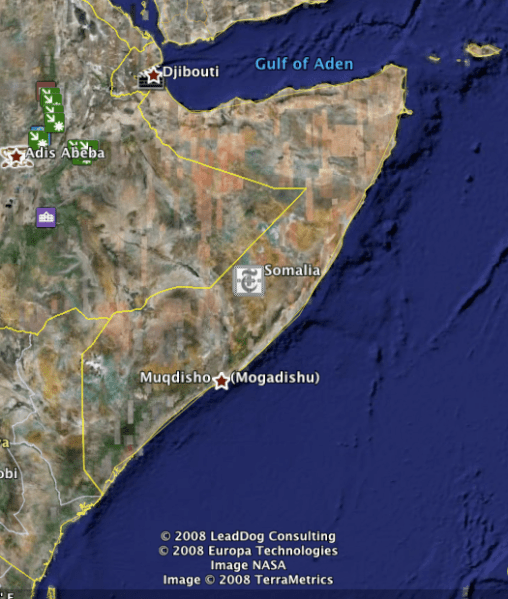
Yesterday, in the paper was an article about the Somali pirate code of conduct – with fines and punishments for infractions. I found a complete article in Newsweek, April 27.
What is bothering me now is that the one pirate captured by the US when it retook the captured US freighter (in the report filed by one BBC reporter) said he was just a frail teenager, a kid, and that the pirates had already agreed to surrender when they were blown out of the water. You could hear her attempting to control her rage.
I know it is a thorn in the side for all shippers and freighters and passenger ships who travel through waters anywhere near to Somalia. And yet . . . I kind of ask myself what the options are? Somalia is a for sure failed-nation. They haven’t been able to cobble together a government for over twenty years. Deadly, long lasting poisons have been dumped along their shoreline – and major industrial nations paid Somalis a pittance to dump their wastes there. Their coastline has been overfished. Families are starving, live is – or was – dismal.
I think it is pretty cool that they developed an enforceable – and enforced – code of conduct.
Here is the article from Newsweek:
It was a hit with the U.S. public, but president Obama’s decision to authorize the Pentagon to kill three Somali pirates who took an American sea captain hostage sent shudders through the world’s shipping and insurance industries. Because the pirates are motivated chiefly by money, maritime experts say, they have—at least until now—taken good care of the crews they hold captive. A document retrieved from a ship hijacked last year contained a “list of written rules” of conduct pirates had to follow, according to a maritime security expert who requested anonymity when discussing sensitive material. The document included a series of “punishments” to be imposed on any hijacker who struck a hostage.
Shipping companies and insurers are far more likely to fork over large ransoms if they have confidence that their personnel and cargo will be released unharmed, and while the scourge of piracy has been disruptive, so far there have been virtually no casualties among innocent people. According to estimates, there were 111 pirate attacks off the Somali coast in 2008; 42 were successful, resulting in the capture of 815 seamen. As of last week, according to one estimate, all but 37 had been released, and two had died—one reportedly of illness. Experts say the rate of attacks has increased sharply this year, and “the more [authorities] shoot, the more the pirates will shoot back,” says Tom Wilson, a Somalia analyst for the British consulting firm Control Risks.
Protecting the 23,000 merchant vessels sailing annually near the Horn of Africa would require a naval fleet of at least 60 ships, according to U.S. government and private experts; the existing international antipiracy task force has about 20. And attacking the Somali coastal villages where the pirates are based could potentially radicalize generations of Somalis. “That would be a 19th-century solution,” says Neil Roberts, a marine insurance expert with Lloyd’s Market Association in London. Industry experts say the only solution to piracy is the creation of a viable Somali government back on dry land.
According to industry officials, ransom demands have ranged as high as $25 million—but in most cases they are negotiated down to about $2 million to $3 million, and insurers then pay out claims to the shipping companies. As hijackings have increased in frequency, pirates have become fussier about how their money gets delivered. Initially, said a shipping-industry source who also asked for anonymity, ransoms were often handed off to shady Somali expats in places like Kenya. After Kenyan authorities cracked down, the pirates began insisting on airdrops via parachute into the ocean near Somali coastal villages, where they have cash-counting machines ready. Until the U.S. opened fire, one of the pirates’ biggest headaches had been dealing with the sheer volume of money they’ve collected. Last year, according to an insurance-industry official, one pirate’s boat capsized because he had overloaded it with cash.
I found this on National Post dated April 30, 2009; it is a copy of what I had read in the newspaper:
MOGADISHU — A mobile tribunal, a system of fines and a code of conduct: the success of Somali pirates’ seajacking business relies on a structure that makes them one of the country’s best-organised armed forces.
A far cry from the image conveyed in films and novels of pirates as unruly swashbucklers, Somalia’s modern-day buccaneers form a paramilitary brotherhood in which a strict and complex system of rules and punishments is enforced.
They are organized in a multitude of small cells dotting the Indian Ocean and Gulf of Aden coastline. The two main land bases are the towns of Eyl, in the breakaway state of Puntland, and Harardhere, further south in Somalia.
“There are hundreds of small cells, linked to each other,” Hasan Shukri, a pirate based in Haradhere, told AFP in a phone interview.
“We talk every morning, exchange information on what is happening at sea and if there has been a hijacking, we make onshore preparations to send out reinforcement and escort the captured ship closer to the coast,” he explained.
Somali piracy started off two decades ago with a more noble goal of deterring illegal fishing, protecting the people’s resources and the nation’s sovereignty at a time when the state was collapsing.
While today’s pirates have morphed into a sophisticated criminal ring with international ramifications, they have been careful to retain as much popular prestige as possible and refrain from the violent methods of the warlords who made Somalia a by-word for lawlessness in the 1990s.
“I have never seen gangs that have rules like these. They avoid many of the things that are all too common with other militias,” said Mohamed Sheikh Issa, an elder in the Eyl region.
“They don’t rape, and they don’t rob the hostages and they don’t kill them. They just wait for the ransom and always try to do it peacefully,” he said.
Somalia’s complex system of clan justice is often rendered obsolete by the armed chaos that has prevailed in the country for two decades, but the pirates have adapted it effectively.
Abdi Garad, an Eyl-based commander who was involved in recent attacks on U.S. ships, explained that the pirates have a mountain hide-out where leaders can confer and where internal differences can be solved.
“We have an impregnable stronghold and when there is a disagreement among us, all the pirate bosses gather there,” he told AFP.
The secretive pirate retreat is a place called Bedey, a few miles from Eyl.
“We have a kind of mobile court that is based in Bedey. Any pirate who commits a crime is charged and punished quickly because we have no jails to detain them,” Mr. Garad said.
Some groups representing different clans farther south in the villages of Hobyo and Haradhere would disagree with Mr. Garad’s claim that Somalia’s pirates all answer to a single authority.
But while differences remain among various groups, the pirates’ first set of rules is precisely aimed at neutralizing rivalries, Mohamed Hidig Dhegey, a pirate from Puntland, explained.
“If any one of us shoots and kills another, he will automatically be executed and his body thrown to the sharks,” he said from the town of Garowe.
“If a pirate injures another, he is immediately discharged and the network is instructed to isolate him. If one aims a gun at another, he loses 5% of his share of the ransom,” Mr. Dhegey said.
Perhaps the most striking disciplinary feature of Somali “piratehood” is the alleged code of conduct pertaining to the treatment of captured crews.
“Anybody who is caught engaging in robbery on the ship will be punished and banished for weeks. Anyone shooting a hostage will immediately be shot,” said Ahmed Ilkacase.
“I was once caught taking a wallet from a hostage. I had to give it back and then 25,000 dollars were removed from my share of the ransom,” he said.
Following the release of the French yacht Le Ponant in April 2008, investigators found a copy of a “good conduct guide” on the deck which forbade sexual assault on women hostages.
As Ilkacase found out for himself, pirates breaking internal rules are punished. Conversely, those displaying the most bravery are rewarded with a bigger share of the ransom, called “saami sare” in Somali.
“The first pirate to board a hijacked ship is entitled to a luxurious car, or a house or a wife. He can also decide to take his bonus share in cash,” he explained.
Foreign military commanders leading the growing fleet of anti-piracy naval missions plying the region in a bid to protect one of the world’s busiest trade routes acknowledge that pirates are very organised.
“They are very well organized, have good communication systems and rules of engagement,” said Vice Admiral Gerard Valin, commander of the French joint forces in the Indian Ocean.
So far, nothing suggests that pirates are motivated by anything other than money and it is unclear whether the only hostage to have died during a hijacking was killed by pirates or the French commandos who freed his ship.
Some acts of mistreatment have been reported during the more than 60 hijackings recorded since the start of 2008, but pirates have generally spared their hostages to focus on speedy ransom negotiations.
With the Robin Hood element of piracy already largely obsolete, observers say the “gentleman kidnapper” spirit could also fast taper off as pirates start to prioritize riskier, high-value targets and face increasingly robust action from navies with enhanced legal elbow room.
They have warned that the much-bandied heroics of a U.S. crew who wrested back control of their ship and had their captain rescued by navy snipers who picked off three pirates could go down as the day pirates decided to leave their manners at home.
I used to read science fiction novels about a diplomat named Retief, I think they were by Keith Laumer. He would find himself in an alien environment with a horrible unsolvable problem and he would find a great solution, where everyone walked away OK. I wish there were a Retief who could negotiate a win/win out of this situation.
Wise Sayings about Governments – LOL for today
Thanks to Kim for a great contribution – my friends, I think you will like these. They sure gave me a grin:
Wise Sayings on Government
1. In my many years I have come to a conclusion that one useless man is a shame, two is a law firm, and three or more is a Congress. — John Adams
2. If you don’t read the newspaper, you are uninformed; if you do read the newspaper, you are misinformed. — Mark Twain
3. Suppose you were an idiot. And suppose you were a member of Congress. But then I repeat myself. — Mark Twain
4. I contend that for a nation to try to tax itself into prosperity is like a man standing in a bucket and trying to lift himself up by the handle. — Winston Churchill
5. A government which robs Peter to pay Paul can always depend on the support of Paul. — George Bernard Shaw
6. A liberal is someone who feels a great debt to his fellow man, which debt he proposes to pay off with your money. – G. Gordon Liddy
7. Democracy must be something more than two wolves and a sheep voting on what to have for dinner. — James Bovard
8. Foreign aid might be defined as a transfer of money from poor people in rich countries to rich people in poor countries. — Douglas Casey
9. Giving money and power to government is like giving whiskey and car keys to teenage boys. — P.J. O’Rourke
10. Government is the great fiction, through which everybody endeavors to live at the expense of everybody else. – Frederic Bastiat
11. Government’s view of the economy could be summed up in a few short phrases: If it moves, tax it. If it keeps moving, regulate it. And if it stops moving, subsidize it. — Ronald Reagan
12. I don’t make jokes. I just watch the government and report the facts. — Will Rogers
13. If you think health care is expensive now, wait until you see what it costs when it’s free. — P.J. O’Rourke
14. In general, the art of government consists of taking as much money as possible from one party of the citizens to give to the other. — Voltaire
15. Just because you do not take an interest in politics doesn’t mean politics won’t take an interest in you. – Pericles (430 B.C.)
16. No man’s life, liberty, or property is safe while the legislature is in session. — Mark Twain
17. Talk is cheap… except when Congress does it. – Anonymous
18. The government is like a baby’s alimentary canal, with a happy appetite at one end and no responsibility at the other. — Ronald Reagan
19. The inherent vice of capitalism is the unequal sharing of the blessings. The inherent blessing of socialism is the equal sharing of misery. — Winston Churchill
20. The only difference between a tax man and a taxidermist is that the taxidermist leaves the skin. — Mark Twain
21. The ultimate result of shielding men from the effects of folly is to fill the world with fools. — Herbert Spencer
22. There is no distinctly native American criminal class…save Congress. — Mark Twain
23. A government big enough to give you everything you want, is strong enough to take everything you have. — Gerald Ford
Warden Notice 2009-5
In the coming days, expect to see political rallies occurring in the evening hours at locations around Kuwait. The rallies are typically peaceful events, but vehicle and pedestrian traffic in and around these venues will be highly congested. Consequently, it would be wise to avoid these areas and never attempt to enter or push through a crowd.
Residents and visitors should expect to see an increase in Ministry of Interior law enforcement operations aimed at ensuring the integrity of the political process. These operations will likely entail the use of helicopters to monitor parts of the city. However, the most visible manifestation of this police presence will likely be an increase in traffic checkpoints. Americans are reminded to cooperate with police and carry their Kuwait Civil Identification or U.S. passport with the visa sheet at all times while in Kuwait.
Kuwait Parliament is Male Territory?
Ghenwah Jabouri
Staff Writer (from today’s Al Watan: you can read the entire article by clicking here)
KUWAIT: Citizens have dynamically noted that they are cynical about women becoming Members of Parliament, stressing that “Parliament is territorial to the male candidate.” Moreover, various opinions state that women are far from ready to steer Kuwait to higher places. However, will the next Parliament, witness women figures finally taking the oath, in spite of the fact that people still do not trust women? After all, the National Assembly in Kuwait, has been male dominant since its establishment in 1962, and has always been subject to scrutiny, enquiry and has been dissolved several times constitutionally and unconstitutionally. Moreover, the rage, bickering and lack of communication between members of Parliament and government officials is becoming more and more frequent, ultimately, infusing citizens with melancholy toward their government.
Will women succeed where men have failed is a question that is highly anticipated, but time can only prove if women are able to persuade voters that they can make that change.
“Kuwait Will Work it Out”
Some ambassadors, in my humble opinion, are just weenies. They go to all the dinners, they shake hands with important people, they mouth polite phrases and the party line, and some barely connect with the country where they are assigned. No one can accuse the current American ambassador to Kuwait, Deborah Jones, of being a weenie. This woman is a lion. And you get the feeling she loves what she is doing, and that she is truly connected with issues and activities in Kuwait.
”Kuwait will work it out”, stresses U.S. ambassador
Dina AlـMallak
Al Watan; you can read the entire article by clicking on the blue type, here.
KUWAIT: “Kuwaiti people are wellـeducated and know themselves well enough …. They don”t need someone coming from outside to fix their machine. We look forward to the lively debate that is to come,” said U.S. Ambassador to Kuwait Deborah Jones on Wednesday.
In a roundtable open discussion with a group of journalists from the Kuwaiti media, U.S. Ambassador Jones underscored the U.S. relations and aims locally and in the region. She also discussed such topics as the local elections, President Barrack Obama”s goals, and the Kuwaiti detainees at Guantanamo Bay. Excerpts:
How does the U.S. administration view the recent political developments in Kuwait?
Jones: Obviously Kuwait is a sovereign country; we take that word, “sovereign,” very seriously. Kuwait is not one of the 50 states. On the other hand, I don”t think that it is a big secret in the world that the United States is a big believer in democracy ـ representative democracy ـ and participatory governance.
The best way to ensure peaceful transition and growth, as countries grow, because governments are organic and we think that democracy ـ representative democracy ـ is what helps countries to grow and develop, and avoid violent transitional episodes.
We have always supported Kuwait”s democratic traditions, which we believe are deeply embedded in your diwaniya tradition and others, such as participatory governance. We describe the process here as being vibrant and a little bit complicated. We support that, given the alternatives. Politics is about building capacity and ensuring that there is growth and access to resources.
When political gridlock leads to stagnation, no one benefits of course. So, democracy is about a couple of things ـ it”s about representative government. It”s also about respectful rule of law and respect for institutions.
We feel pretty confident that Kuwaitis are going to work (it) out. There is a lively debate and you all have an important role to play as a free press, in responsibly reporting on what you hear, and contributing to that democratic dialogue, which is often noisy. I was going to use the word cacophony, which means a clash of sounds. We are used to this in the United States; we are used to having a lot of noise that comes when the various branches of government interact.
You can read the entire article HERE
Kuwaiti Men and the Women’s Vote
What is not to love about Kuwaiti men? Most of the Kuwaiti men I know are strong proponents of the Kuwaiti woman, sometimes, just as in my own country, the men are stronger proponents of women’s rights than the women are. Saw this editorial cartoon last week and intended to publish it, but somewhere, it got lost. No longer.
Kudos on you, Ahmed. Great cartoon!

William Dalrymple: The Age of Kali
Having read and loved In Xanadu: A Quest by William Dalrymple, and having received recommendations by friends who say they read ALL of William Dalrymple, I started on this second book, The Age of Kali. I didn’t like it, not one bit. I am proud to say I read it all the way to the end, because often if I don’t like a book, I will say to myself “I don’t need this!” and toss it, but I didn’t, I stuck with it. I am proud because it isn’t easy to stick with a book you don’t like, and I didn’t like this book.

In Xanadu, Dalrymple was wryly funny, hilariously funny, and most of the humor was directed at himself. In The Age of Kali, there is nothing funny.
The Age of Kali is a series of interviews and adventures in India and Pakistan. The author did these interviews and took notes (some are published in slightly different forms as magazine articles) over a period of ten years and then strung them all together to form this book. There is little or no linkage from one to the other. They are grouped geographically.
Here is what I like and admire – this man achieves the most amazing interviews, many times just by asking the right person at the right time. He insinuates himself, asks easy questions, and then sticks in a hard question. He doesn’t seem to flinch from putting himself in danger, and he doesn’t stand on respect when asking his questions. I admire that he went difficult places, interviewed difficult people, and wrote the interviews up without fawning over the celebrity status of his interviewee.
What I don’t like is that he doesn’t seem to like anybody very much. There are no funny anecdotes. By the end of the first interview, I began to get an impression that he doesn’t like India very much (and I believe that is NOT true, as he lives part-time in Delhi) and that India is not a place I want to visit. He interviews corrupt politicians, descendants of the moghuls, Benazir Bhutto – and her mother, Imran Khan (the cricket player) and many others. In each and every interview, he maintains a distance that tells us he doesn’t like these characters very much.
Here are some quotes from early in the book:
These days Bihar was much more famous for its violence, corruption and endemic caste-warfare. Indeed, things were now so bad that the criminals and the politicians of the state were said to be virtually interchangeable: no fewer than thirty-three of Bihar’s State Assembly MLAs had criminal records, and a figure like Dular Chand Yadav, who had a hundred cases of dacoity and fifty murder cases pending against him, could also be addressed as the Honorable Member for Barth.
As he interviews Bihar politician Laloo Prasad Yadav:
I asked Laloo about his childhood. He proved only too willing to talk about it. He lolled back against the side of the plane, his legs stretched over two seats.
‘My father was a small farmer,’ he began, scratching his balls with the unembarrassed thoroughness of a true yokel.
OK, that was funny. I had to read it aloud to AdventureMan. One of the things that still unnerves me living here is that the men are always touching themselves – something so totally forbidden in my culture as to be simply unthinkable.
In his section about Pakistan:
These people – the Pathans – have never been conquered, at least not since the time of Alexander the Great. They have seen off centuries of invaders – Persians, Arabs, Turks, Moghuls, Sikhs, British, Russians – and they retain the mixture of arrogance and suspicion that this history has produced in their character. History has also left them with a curious political status. Although most Pathans are technically within Pakistan, the writ of Pakistan law does not carry in to the heartland of their territories.
These segregated areas are in effect private tribal states, out of the control of the Pakistan government. They are an inheritance from the days of the Raj: the British were quite happy to let the Pathans act as a buffer zone on the edge of the Empire, and they did not try to extend their authority in to the hills. Where the British led, the modern Pakistani authorities have followed. Beyond the checkpoints on the edge of the Peshawar, tribal law – based on the institutions of the tribal council and the blood feud – rules unchallenged and unchanged since its origins long before the birth of Christ.
When I read this, I think of recent headlines about the problems Pakistan is having maintaining order, fighting the status of “failed-nation”, and the chaotic administration of tribal “justice.” The old ways have endured – but as we learned in Three Cups of Tea, there are villages where villagers are eager to have modern schools, eager to educate their daughters, and they, too, are victims of the fanatics who burn the schools and throw acid on women attending school.
The author is told, time and time again by Indian citizens, that India has entered The Age of Kali, “the lowest possible throw, an epoch of strife, corruption, darkness and disintegration.” The book reflects the darkness, corruption and disintegration the author found. I only wish there were some moments of relief, of lightness, hope or humor to encourage the reader on his/her way, but the documentation of this lowest throw was relentless.
Recent Comments
ExpatAlien on What Country am I Living … intlxpatr on Yellowstone: Old Faithful to C… Michelle on Yellowstone: Old Faithful to C… Cathy on No Grown-Ups in Charge intlxpatr on Waiting for Snow Wikipedia Donate Button

Amazina


Early Voting in Florida


 Here There and Everywhere