Just as the Qatteri Cat monitors traffic in front of our place, I monitor my blog traffic – a lot like Qatteri Cat, sort of lazily, desultory.
Yesterday, I got the most hits – a lot – on MOC bans Porno Film Sites, a post I wrote almost a year ago.
80 hits. That’s a lot for a post almost a year old. Why so much interest? Are there new movements afoot in the Ministry of Communication to ban undesirable content? Are there new technologies available that make that possible?

I knew exactly the kind of photo I wanted to include here, so I googled “saudi censorship image” and found this wonderful blog: Your World Today. I really like his blog.
April 17, 2008
Posted by intlxpatr |
Bureaucracy, Communication, Community, Cross Cultural, ExPat Life, Family Issues, Kuwait, Living Conditions, Political Issues, Relationships, Satire, Saudi Arabia, Social Issues, Technical Issue, Women's Issues | censorship, pornography |
8 Comments
“Dynamic” being a euphemism for “we don’t want to tell you where the torch will be running because we don’t want the embarrassing fiascos of Paris and London repeated here.” You can read the entire story in
The New York Times.
Published: April 9, 2008
SAN FRANCISCO — The Olympic torch arrived at the airport here from Paris in the wee hours Tuesday morning, exited out a side door and was escorted by motorcade to a downtown hotel. There it took a well-deserved break in a room complete with cable TV, room service and views of the city’s popular Union Square shopping district.

The New York Times
“It has very comfortable accommodations,” said Mike McCarron, an airport spokesman, who said the flame — ensconced in a handsome brass lantern and accompanied by several backup flames — was “treated similar to a head of state.”
On Wednesday afternoon, the flame will be under no such bushel as it makes its only appearance in the United States on an increasingly tense international tour en route to Beijing. It will star in a two-and-a-half-hour relay along this city’s waterfront, involving six miles of pavement, 79 runners and untold scores of law enforcement officials.
The precise route remained in flux on Tuesday as the torch extravaganza threatened to become more civic migraine than celebration in the face of potential protests by those upset with China’s human rights record and recent crackdown in Tibet. Mayor Gavin Newsom met with police and relay officials amid concerns that disruptions in London and Paris this week not be repeated here.
“I can only confirm that the route is dynamic,” said Nathan Ballard, a city spokesman.
April 9, 2008
Posted by intlxpatr |
Bureaucracy, Entertainment, Events, News, Political Issues, Words | China, Tibet |
2 Comments
I wish he wouldn’t say things like that. Robert Mueller told BBC News that he thinks we will see the end of Al Qaeda in three years.
To me, that is like waving a red flag in front of a bull. It’s a dare. I wish he would just go about defeating Al Qaeda in three years, and not talk about it until it’s done. Maybe it is superstitious; I prefer action to talk. When you talk about defeating someone, you might just be setting yourself up to eat humble pie.
The head of the FBI has said he believes the West can achieve victory over al-Qaeda within three-and-a-half years.
Robert Mueller described how his organisation is working closely with British intelligence to confront ever-more-complex plots.
Flanked by broad-shouldered security men with tell-tale bulges beneath their suits, the director of the FBI gave a rare public address in London.
As head of one of 16 US intelligence agencies, Mr Mueller is at the forefront of preventing a repeat of the September 11 attacks.
It was a task, he said, which could not be done without strategic partnerships with allies like Britain.
You can read the entire article HERE.
April 8, 2008
Posted by intlxpatr |
Bureaucracy, Communication, Community, Counter-terrorism, Crime, ExPat Life, Morocco, News, Pakistan, Political Issues, Social Issues, Words |
4 Comments
From the New York Times
Peacekeeping in Darfur Hits More Obstacles
By LYDIA POLGREEN
Published: March 24, 2008
ABU SUROUJ, Sudan — As Darfur smolders in the aftermath of a new government offensive, a long-sought peacekeeping force, expected to be the world’s largest, is in danger of failing even as it begins its mission because of bureaucratic delays, stonewalling by Sudan’s government and reluctance from troop-contributing countries to send peacekeeping forces into an active conflict.
The force, a joint mission of the African Union and the United Nations, officially took over from an overstretched and exhausted African Union force in Darfur on Jan. 1. It now has just over 9,000 of an expected 26,000 soldiers and police officers and will not fully deploy until the end of the year, United Nations officials said.
Even the troops that are in place, the old African Union force and two new battalions, lack essential equipment, like sufficient armored personnel carriers and helicopters, to carry out even the most rudimentary of peacekeeping tasks. Some even had to buy their own paint to turn their green helmets United Nations blue, peacekeepers here said.
The peacekeepers’ work is more essential than ever. At least 30,000 people were displaced last month as the government and its allied militias fought to retake territory held by rebel groups fighting in the region, according to United Nations human rights officials.
For weeks after the attacks, many of the displaced were hiding in the bush nearby or living in the open along the volatile border between Sudan and Chad, inaccessible to aid workers. Most wanted to return to their scorched villages and rebuild but did not feel safe from roaming bandits and militias.
A week spent this month with the peacekeeping troops based here at the headquarters of Sector West, a wind-blown outpost at the heart of the recent violence, revealed a force struggling mightily to do better than its much-maligned predecessor, but with little new manpower or equipment.
Despite this, the force is managing to project a greater sense of security for the tens of thousands of vulnerable civilians in the vast territory it covers, mounting night patrols in displaced people’s camps and sending long-range patrols to the areas hardest hit by fighting. But these small gains are fragile, and if more troops do not arrive soon, the force will be written off as being as ineffective and compromised as the one before.
You can read the rest of the article HERE
March 25, 2008
Posted by intlxpatr |
Africa, Bureaucracy, Counter-terrorism, Dharfur, Family Issues, News, Political Issues, Social Issues |
Leave a comment
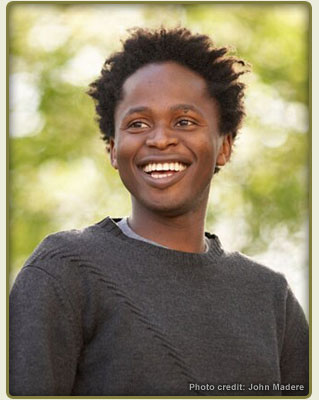

Back when I wrote an update on Dharfur, my blogging friend Chirp recommended a book, A Long Way Gone; Memoirs of a Boy Soldier by Ishmael Beah. I ordered it that very day, and read it this last week.
It is a truly heartbreaking autobiographical book about a young mischievous boy growing up in Sierra Leone, leading a relatively simple and carefree life in his village with his family. It is very African. He talks about the games he and his friends play, his fascination with rap music and the simple joys of the life he is leading.
Then the rebels come. The invade the villages, hopped up on dope, their dead eyes with no pity, raping, killing, chopping off limbs, stealing all the village food and burning the village behind them, often with people locked inside their huts.
Ishmael escapes once with friends, eventually returning to the village to find his entire family gone. Most of the book has to do with what he has to do to survive. Many villages are very afraid of groups of boys, even boys as young as these are – in their early adolescence – and will hurt them. At the very least, most of the villages hurry them along. At one point Ishmael is hiding out in the jungle forest on his own, hiding from lions, giant feral pigs, sleeping up in trees and looking for the rare fruit or grass that he can eat without getting sick.
Finally, after meeting up with some other boys and continuing to try to find his family, a village takes him in, a village run by the state soldiers. As they are attacked by rebels, the boys are forced to make a choice – go out on their own again (where the rebels will also try to recruit them, and if they refuse, will kill them) or agree to be soldiers. These are kids 12, 13, 14 carrying AK 47’s. As part of their training they are given drugs on a regular basis which keep them hopped up, full of energy, and not sleeping for days. The young boys learn to kill without pity. He becomes the very people he was fleeing.
This is a book about redemption. At the center where the boy soldiers are taken, they are constantly told “none of this was your fault.” It is a very African approach, a very human and loving approach to redemption of lives that might have been totally lost to the horrors they have witnessed and inflicted. The author is now nearly 30, and sounds – unlikely as it might be – happy.
Thank you, Chirp, for recommending this wonderful book.
March 25, 2008
Posted by intlxpatr |
Adventure, Africa, Biography, Blogging, Books, Bureaucracy, Character, Community, Family Issues, Living Conditions, Political Issues, Social Issues, Spiritual |
19 Comments
I have a very dear friend who will say “I don’t have a dog in that fight” and that is the way I feel about your upcoming elections. You (Kuwait, Kuwait leadership, Kuwait people) are in our prayers for a fair election, and that you elect good leadership. You know what a mess it has been; it would be nice to elect people who can work with the government to get things done.
So I don’t have a clue who those people would be, but I know YOU do.
Here is what tickles me, what I can’t resist commenting on from this morning’s Kuwait Times:
ELECTION FEVER GRIPS STATE
Tribes, groups move to chose candidates • Eligible voters rise to 361,000 including 200,000 women
Holy Smokes! Almost FORTY THOUSAND more women voters than men voters??? Woooo HOOOOOO, Kuwaiti women!
March 23, 2008
Posted by intlxpatr |
Bureaucracy, Community, ExPat Life, Generational, Kuwait, Leadership, Political Issues, Social Issues, Statistics, Women's Issues |
18 Comments
I have seen opinions, and heard people talking about how Kuwait has more important things to do than to penalize people who are using their mobile phones. They are outraged! Clean up the highways first, they say, give us better schools, enforce the laws already on the books (but leave our cell phones alone!)
I am sorry. I know I am going to get killed for this opinion, but have you ever followed someone driving while talking on a cell phone? Do you watch them wobble out of their lane, try to steer the car with their knee because they have the phone in one hand and they need to adjust the volume of the radio? In countries where mobile phone use has been monitored and statistics kept, they attribute a huge rise in inattentive driving to cell phone use. They have statistics. They can prove that cell phone use is linked to a rise in accidents.
Brave Qatar brought in a team of experts who interviewed seriously injured accident victims. Every single one of them was on a cell phone when involved in the accident.
My rant is this: a 5KD fine? In Kuwait, that is just laughable. A 5 KD fine (about $20 with the dollar diving into the cellar) is not a deterrent. I want to see a sliding scale: start at 50KD for the first incidence, double it for the second, double it again for the third, etc. Make it hurt.
There are too many drivers for the roads, even with the ongoing improvements. The drivers are ill experienced, and careless. Driving in Kuwait is lethal enough without the additional factor of cell phones. If you need to ask directions, pull over. It’s not that hard, you’re smart, you can figure it out.
March 19, 2008
Posted by intlxpatr |
Adventure, Bureaucracy, Community, Crime, Cultural, ExPat Life, Family Issues, Health Issues, Kuwait, Living Conditions, Political Issues, Statistics, Technical Issue |
22 Comments
When my sister Sparkle recommends a book, I have learned to listen. I think I ordered this book about six months ago, but never cared enough to actually read it. After reading a recent Donna Leon (like dessert, I use it as a reward for reading something more challenging) I decided it was time to tackle Qiu Xiaolong.
I believe A Case of Two Cities is the first in the series; I tried very hard to make sure it was. When I first started reading it, it was difficult, but it didn’t take long to adjust. When you read a detective story written in a foreign culture, you have to park your old way of thinking, and quickly adapt to a new way of thinking. First, you have to learn what that new way of thinking is. They don’t just tell you at the beginning of the book “Here are the differences in values – you will notice . . .” no, but Qiu Xiaolong is courteous enough to take us by the hand and lead us gently into the Chinese way of thinking, the Chinese way of getting things done, and the technicalities of Chinese detective work.
As we meet Inspector Chen, a published poet, and a detective, ten pages into the book, a new anti-corruption campaign is starting in Shanghai, and Inspector Chen has been given a special assignment – a qinchai dacheng – as “Emperor’s Special Envoy with an Imperial Sword.” Even though imperial days are long gone, this warrant gives him emergency powers to search and arrest without reporting to anyone – and without a warrant. He is to seek and find Xing, a corrupt businessman who has caused huge loss to the national economy and is in danger of tarnishing the Chinese national image, and Xing’s associates.
Just as in the Donna Leon books about Commissario Guido Brunetti, and the Bowen books about Gabriel duPre, and James Lee Burke’s books about New Orleans, and Cara Black’s books about Aimee LeDuc, the detectives and investigators have to walk a fine line between going after the criminal and overstepping their warrant – stepping on the toes of those also engaged in corruption so entrenched that it has become a way of life. Each of these detectives has to maneuver that treacherously fine line – who determines when corruption has become too much? It usually puts their own lives in danger at some point, as those manipulating the system and making a fortune out of it do not want to be caught, do not want to be exposed, and will go to great lengths to protect their ill-gotten gains.
And just as in the above books, the book is more about the actual process than the crime itself. Inspector Chen must go about his task indirectly, having chats here and there, gathering threads of information with which he tries to weave a plausible tapestry of events.
As I was reading A Case of Two Cities, I kept making AdventureMan take me out for Chinese food! The meetings are often held over food, and the descriptions are mouth-watering.



Best of all, when you read these books, you get a tiny little glimpse into another way of thinking, another way of doing business. We are all human, we all have the same needs, and we differ in how we go about getting those needs met. We differ in the way we think. It helps to enter another way of living, another way of thinking, it helps to visit through these books so that we can increase our own understanding that our way of doing things is not the only way, maybe (gasp!) not even the “right” way! Maybe (crunching those brain cells really hard to output this thought) there is more than one “right” way?
March 15, 2008
Posted by intlxpatr |
Books, Bureaucracy, Character, Community, Cooking, Crime, Cross Cultural, Detective/Mystery, Language, Leadership, Living Conditions, Local Lore, Political Issues, Relationships, Shopping, Social Issues, Travel, Women's Issues | China |
9 Comments
Where is the Kuwaiti detective novel? I follow Guido Brunetti in Donna Leon’s series on Venice, Dave Robicheaux, the James Lee Burke detective in a small town just outside New Orleans, and now, Investigator Chen, who is a chief investigator in China, but where, oh where is the Kuwait detective / mystery? It is just waiting to be written.
In yesterday’s Kuwait Times is an article I would love to link you to, but it isn’t there, not even when I search “female coroner” from the headline on page 3. Did you know Kuwait had a female coroner, a la Kathy Reich’s Temperance Brennan and Patricia Cornwell’s Kay Scarpatta? As you read the article, it makes sense, as the bodies are kept semi-segregated in the morgue, and women work on women (some of the time) and men on men.
I’m impressed. Any time a woman takes on a traditionally men’s job, it takes a whole lot of courage. I imagine the requirements to be a coroner here are similar to other countries – you have to have a medical degree (be a doctor) and then have advanced training in forensics. So when Nawal Boshehri speaks out, I listen. She’s got my attention.
Nawal Boshehri says conditions in the morgue are awful. From a personal point of view, she has been sexually molested by her superior and frozen in her position over false accusations that she has not been going to work or signing in or out. She has asked the minister of interior to look into her complaints.
As an institution, she reports serious issues – labs that lack necessary equipment, to do tests, such as those that measure drugs and alcohol in the bloodstream, outdated machinery, rusty machinery, lack of ventilation (in a morgue! horrors!) and she states they are constantly in fear of getting infections.
She claims that reports have sometimes been manipulated and twisted to give prosecutors the wrong technical information that would sometimes end up setting a guilty person free, and that one time they certified a murder had been insane without him ever having been examined by any mental health professionals. She was once asked to provide a report that made one citizen swap places with the assaulted expatriate, so that the assaulted expatriate would appear to be the guilty party.
She adds that she fears for her life. She says “a senior coroner at the department falsified reports, namely those related to detainees, who underwent police brutality during interrogations. He usually did this as favors to his colleagues to help them get promoted instead of being punished for their brutality.” She added that because she has reported these things, she fears for her own life.
Every nation has corruption. Corruption is chaotic, and when you get serious about rule of law, you still have corruption, but you do your best to root it out. You report it when it happens. I think that Nawal Boshehri has enough confidence in Kuwait’s institutions to go public with her allegations. While it may appear dirty laundry, that she CAN go public is a very positive sign. I can imagine she fears for her life, and yet, she seems to be fighting to retain her job. That’s very brave.
That the Kuwait Times will publish the article on page three, in three columns, that is also very brave, and speaks well of the increasing confidence in a free press.
Wouldn’t this make a great detective novel?
March 11, 2008
Posted by intlxpatr |
Biography, Bureaucracy, Character, Community, Crime, Customer Service, Kuwait, Living Conditions, News, Political Issues, Social Issues, Women's Issues | corruption, morgue, rule of law |
8 Comments
News from BBC
Google Banned From Military Bases
Last Updated: Friday, 7 March 2008, 05:45 GMT
There are concerns that detailed maps may threaten security
The US defence department has banned the giant internet search engine Google from filming inside and making detailed studies of US military bases.
Close-up, ground-level imagery of US military sites posed a “potential threat” to security, it said.
The move follows the discovery of images of the Fort Sam Houston army base in Texas on Google Maps.
A Google spokesman said that where the US military had expressed concerns, images had been removed.
Google has now been barred from filming and conducting detailed studies of bases, following the discovery of detailed, three-dimensional panoramas online – and in particular, views of the Texan base.
It said such detailed mapping could pose a threat.
Google spokesman Larry Yu said the decision by a Google team to enter the Texas base and undertake a detailed survey, had been “a mistake”.
He told the BBC News website that detailed study of such sensitive sites was not Google policy.
You can read the rest of the story HERE
March 7, 2008
Posted by intlxpatr |
Counter-terrorism, GoogleEarth, News, Political Issues |
2 Comments


 Here There and Everywhere