Trial Run: Lessons Learned
We have most everything put away now, a real pain in the neck, but we keep in mind that it is not as much a pain in the neck as losing everything, or having to hack a hole in your own roof to escape a flood which completely ruins a house so you have to rebuild and live somewhere else while you are rebuilding. It’s even a lot easier than having a window or roof or garage breached, and the resulting damage from wind-driven rain, or just sheets of rain.
Today has had higher gusts of wind and frequent showers, and an occasional breakthrough of Pensacola sunshine.
We know how long it takes to put on our window protection – and take it off. We know how long it takes to clear all the potential flying objects out of our backyard. We know a couple vulnerable points, and that it’s going to be expensive to get a fix big enough to give us complete protection. It’s a gamble.
Here is something else I know, very valuable.
I know that I can keep hot coffee and hot water HOT for five days.
This great thermal jug from Qatar had coffee still warm after five days – not hot, but warm.

This little thermos from Starbucks kept coffee very warm, but not hot:

And this is a large thermos/ server I found in Kuwait and used for three years for large groups of ladies. Six years later, it is still working great. I poured boiling water into it on Sunday night, and on Thursday afternoon, it was still almost boiling hot. It was hot enough you can use it to make soup, which is just what you need to be able to do when you have no electricity and need to fix something that can warm you up.

The WINNER!
Shar’a Kaharabaa Today
One of our favorite places in Doha was Shar’a Kaharabaa, Electricity Street. Bombay Silk was there. the old Beirut restaurant was there and several very good and reasonable tailors worked there. All good quilters knew the Mumtaz Tailor, who had every notion in the world, and good prices, and knew where everything could be found in the chaos of his shop. You could always find parking.
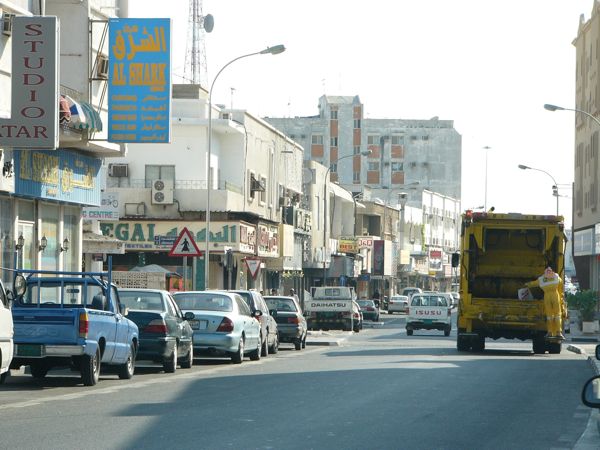

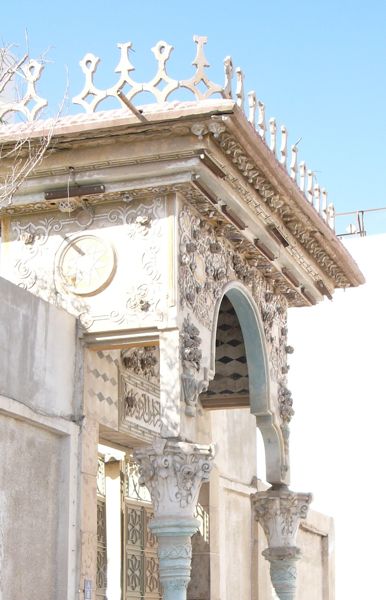
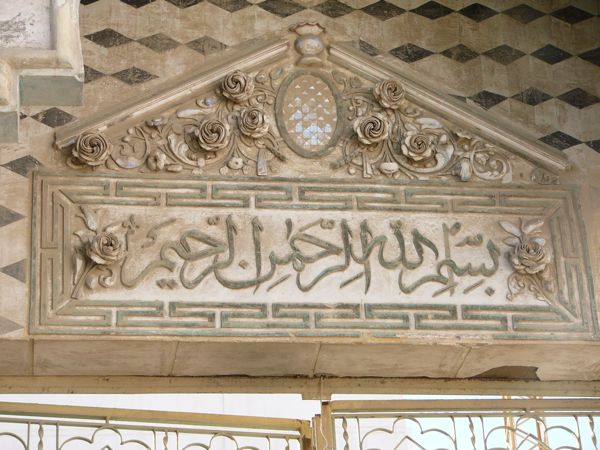
I dared to take a look at Sharia Kharabaa this morning, and I shouldn’t have. It’s that bare spot middle left. Al Rayyan, at the top of the photo, leads to the Souk al Waqif. One day, the old picturesque Sharia Kharabaa is supposed to be a grand walk way to the Souq.

Ramadan in Kuwait and Qatar
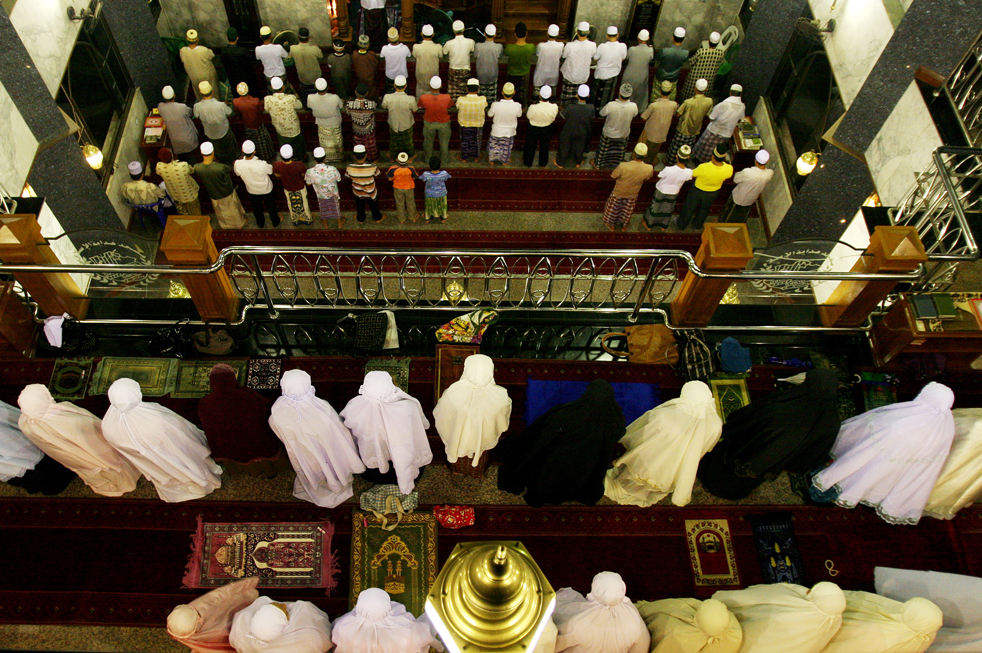
As I was taking a look at today’s weather in Pensacola (why do I bother? It’s pretty much the same every day, in the low nineties and HUMID) I glanced up at my favorites bar and sent up a prayer for my friends observing the Ramadan fast in Kuwait and Qatar:

My friends, I am in awe of your sacrifice. I cannot imagine the hardship, abstaining from water, as well as all food, from sunrise to sundown. May God be with you.
Reading Eight Months on Ghazzah Street by Hilary Mantel
When I told my niece I had become thoroughly engrossed in Hilary Mantel’s Wolf Hall and Bring Up The Bodies, she asked me if I had read her book Eight Months on Ghazzah Street. I hadn’t.

Meanwhile, I had started re-reading George R.R. Martin’s A Storm of Swords, so I’ll be ready when HBO does Season Three, and while there is no redeeming value, I sure enjoy the escape, and like my sister Sparkle, sometimes I forget it isn’t the real world, it’s not history, it’s FICTION. I enjoy every minute.
But now I am reading Eight Months on Ghazzah Street, and from the opening pages – where the main character is living in Zambia – I have been totally engrossed.
Frances and her husband Andy move to Saudi Arabia. It’s 1985, Andy is going to build a Saudi ministry headquarters, but it might well been the late nineties, when we lived there. Her flight into Saudi Arabia whipped me back to those days, and to all the loud-mouthed drinkers who kept the rest of us awake.
Frances goes in with preconceptions, but also with a spirit of adventure, and is quickly stifled by the claustrophobic apartment, the limited social opportunities and the lack of free movement as a woman. The heat is oppressive, the clothing rules arbitrary and annoying, and Frances finds all the cockroaches good company during her long lonely days while her husband works.
Her situation was not mine. I lived on a compound, with bus routes that took women shopping every day, twice many days. We had a pool, and a small store, and a video rental kiosk. I had more options, and I probably had more fun. AdventureMan was good about taking me down to the souks at night; it was exotic and interesting. It was also, as Frances describes it, stultifying. It was oppressive. Sometimes the phone worked just fine. Sometimes your dial-up access to the internet functioned. Even on a compound, where some women did drive, walking on your own invited ogling and comments from non-Western men. Living in a country where your sponsor holds on to your passport, and where you need to ask permission to leave the country, and where laws are enforced sometimes, and sometimes not, and where women cannot drive but 12 year old boys have their own cars – it’s La La Land, it’s crazy-making.
Even though I had options and friends, Hilary Mantel captures the time alone. You spend a lot of time alone. In my case, I got used to it . . . we also had a lot of time on our own in Qatar and in Kuwait, where you are more free, where women can drive, but where you can only go to the malls and souks so many times; even when the heat isn’t enough to knock you over, there really just isn’t that much to do. You learn to amuse yourself, you develop a talent for creating, you learn to like your own company.
Then you get back to the USA and the availability of so many options makes you feel semi-autistic, bombarded by so much stimulation you quail and retreat.
I haven’t even gotten to the meat of the plot; I’m about a third of the way in, and I’m feeling hot and sticky and restless and she has totally taken me back to expat life in Saudi Arabia.
Tribal Affiliations

When we first got to Qatar, and started attending church there, we had a wonderful priest, T. Ian Young, whose Friday morning services (Friday was the Qatari Sunday) were exactly 60 minutes long, and the music was always uplifting. I learned some great children’s songs from him, and he always gave a children’s sermon before sending them out for children’s Sunday School while he gave an adult level sermon to the older attendees, like us.

During the service, Father Ian would pray, including the phrase “from whom every tribe in heaven and earth get their name” (from Ephesians 3:15) and it got my attention, it was my first awareness thinking of myself as from a tribe. I had always heard it as “from whom every family on heaven and earth . . . ” but living in Qatar, where family and tribe were the same, it made sense. It’s just one of those situations where we think of “tribes” as THOSE people, not as us. When you include yourself as a tribal member, things start to look a little different. (Thank you, Father Ian)

So recently AdventureMan has been pointing out local tribal affiliations on people’s cars. People have specialized license plates that tell us of their concern for Florida’s environment, or schools, or support of the arts, etc. People have stickers that show they are from the Auburn tribe, or the Seminole Tribe, or Gator people, or graduated from such-and-such university. They might be from this neighborhood, so says the sticker on their bumper, or they might support the orchestra, or the ballet, or they might belong to this Krewe or that. Once we become aware that we, too, are tribal, and have tribal affiliations, there is no going back.
Saudi – Bahrain “Merge?”
Thank you, John Mueller for this article from The Press:
http://www.presstv.ir/detail/2012/05/14/241177/iran-raps-saudi-plans-bahrain-merger/
PressTV – Iran Majlis condemns merger of KSA, Bahrain
The Iranian Majlis (parliament) has condemned the Saudi proposal for merger with Bahrain, saying the “unwise” measure will further destabilize the region and multiply its problems.
The Saudi plans to annex Bahrain “will extend the Bahraini crisis to Saudi Arabia and push the region toward further unrest,” a statement, signed by 190 Iranian lawmakers, read on Monday.
The statement asserted that political force and pressure cannot silence the frustrated Bahraini people who have been holding anti-government demonstrations since mid-February 2011 and calling on the US-backed Al Khalifa family to leave power.
On March 14, 2011, more than 1,000 Saudi troops entered Bahrain to assist the Manama government in suppressing the peaceful popular protests in the Persian Gulf Island.
According to local sources, scores of people have been killed and hundreds have been arrested in the Saudi-backed regime crackdown.
In a report released on April 17, Amnesty International criticized the Bahraini regime for continuing the violation of human rights and the excessive use of force against the anti-regime protesters.
“The authorities are trying to portray the country as being on the road to reform, but we continue to receive reports of torture and use of unnecessary and excessive force against protests. Their reforms have only scratched the surface,” said Hassiba Hadj Sahraoui, Amnesty International’s Middle East and North Africa deputy director.
The Iranian lawmakers concluded by expressing their “all-out support for the brave nation of Bahrain as well as the independence and territorial integrity of the country.”
Saudi Arabia is reportedly seeking to merge with Bahrain in line with plans to unify the six Arab member states of the [Persian] Gulf Cooperation Council ([P]GCC).
The council members, Saudi Arabia, Kuwait, Bahrain, Qatar, the United Arab Emirates and Oman, are expected to meet and discuss closer union among the six countries on Monday.
In December 2011, Saudi King Abdullah called on the council member states to move “beyond the stage of cooperation and into the stage of unity in a single entity.”
However, some members of the council have expressed concern about Saudi Arabia’s possible dominance over the other five countries if the [P]GCC becomes unified.
HMV/HGH/AZ
Riding Across the Wild West
We just figured this was going to be a rough boring stretch, driving I-10 across West Texas to New Mexico, but, as so often does, magic happened and the day changed totally.
AdventureMan had a little allergy, so I did the driving across the wilds of west Texas. It wasn’t anything like I had expected. I’ve read lots of books set in Texas, and seen movies. I expected No Country For Old Men. What I got was a long empty highway with hardly any fellow travelers, some spectacular scenery, hardly any speed limit at all, and lots of time to think and enjoy the ride. Wooo HOOOO on West Texas!
Turning north at Ft. Stockton, we entered Hackberry Holland country (James Lee Burke) with those long empty landscapes punctuated with endlessly pecking derricks, whirling dust, endless pick-ups and tankers, and not much else. The scenery went from those plateaus and arroyos to Qatar flat and white desert, from Texas wildflowers to succulents. Then, just around Pecos, Texas, as we are in the end stretch toward New Mexico, it turns more golden, like Kuwait, with some elevations. Across the border, I asked AdventureMan (now awake and feeling good again) “where is the red tint we see in all the ‘Visit New Mexico’ brochures?” Within half an hour, the iron-oxide tint shows up and we see the red glow start to appear.
We know we want to visit Carlsbad Caverns, so we spend the night in Carlsbad, and eat at Mi Casita. Here is what the desk clerk told us:
“I can’t eat at Mi Casita because the food is too spicy, but everyone who really loves Mexican food eats there.”
We loved it. I ordered things I don’t usually order, enchiladas and beans and rice, and it was so GOOD.
As we left, we went down to the city park and took pictures of the river, and AdventureMan fed the hissing geese some of his peanut-butter and crackers that we carry along in case we might starve or something ;-).
As soon as I can get these photos transferred from my iPad to my computer, I will put in the photos and this will be a much more interesting entry.
Saudi Disinformation on Qatar Coup
Thank you, John Mueller, for contributing this fascinating piece on the reported – and then unreported – ‘coup attempt in Qatar’. We were there when this happened the last time. It was bizarre – there was nothing. No increased military or police presence, just the same quiet and relaxed day-by-day. It was all a lie, created to stir the pot, and to create a perception – based on nothing.
BREAKING; Qatar Military Coup “Rumours” Stir Bad Blood With House of Saud
by Finian Cunningham, April 17, 2012
The rumour mill is churning in the Persian Gulf with unconfirmed reports of a failed military coup against the Qatari ruler.
There were even media reports that American military helicopters had whisked the Emir and his wife to a safe unknown destination in the aftermath of the failed putsch, said to be have been attempted by high-ranking officers.
Saudi news channel Al Arabiya reported earlier today a coup bid against Qatari Emir Hamad Bin Khalifa Al Thani. However, by midday, the story appeared to have been removed from Al Arabiya’s English-language website.
Iranian news channel Press TV toned down its early headlines of a coup and later speculated that Saudi-owned Al Arabiya may have been engaging in disinformation to undermine the Qatari regime, indicating a power struggle between the Houses of Saud and Thani.
The FARS semi-official Iranian news channel, however, insisted that sources within the Qatari royal entourage had confirmed earlier this week that there was a foiled coup in Doha.
Not surprisingly, Qatari-owned Al Jazeera news site ran no information on the alleged plot.
Whether the reports of this week’s failed coup turn out to be rumour or something more sinister, there is nevertheless no disguising the fact of underlying bad blood in the Gulf Arab enclave, both between and within the Gulf monarchies.
That may at first seem at odds with the “thick as thieves” appearance of the six states that form the Gulf Co-operation Council: Saudi Arabia, Kuwait, Bahrain, Qatar, United Arab Emirates and Oman. All are Sunni monarchies that have aligned with the US-led NATO powers’ aggressive policy of isolating Shia Iran.
Saudi Arabia and Qatar have emerged in particular as militant allies of US/NATO geopolitics across the Middle East. They played instrumental roles in paving the way for NATO’s aerial bombardment and regime change in Libya; and they have been most strident in denouncing the Syrian government of Bashar Al Assad, calling for his overthrow and arming mercenary forces that are accused of committing atrocities and sabotage.
But herein lies the potential for rivalry and enmity. Saudi Arabia, the world’s largest oil exporter, and Qatar, the number one exporter of liquefied natural gas, are bankrolling mercenaries and jihadis from Iraq, Libya, Lebanon and elsewhere in a bid to be top dog in a fissile region. The region is being inflamed with sectarian tensions precisely because of self-serving Saudi and Qatari power politicking.
The Gulf monarchs have also been funding election campaigns of Islamist parties in Egypt and Tunisia, aligned to the conservative Muslim Brotherhood, in line with Western powers using these same parties to shunt and blunt popular calls for greater democracy.
The rapid growth of Saudi-backed satellite TV channels broadcasting across the region – several of them spouting Saudi theocratic rhetoric – is indicative of a rivalry for influence with Qatar, which originally pioneered the Arab medium with the Al Jazeera station.
While on the surface, Riyadh and Doha may appear joined at the hip in terms of advancing the US-led Western imperialist agenda for hegemony, that service generates tensions between and within the royal houses.
In Qatar, there are reported tensions within the Al Thani ruling family and other powerful clans over what critics of the Emir call “his excessive alignment with US foreign policy and breaking of Arab ranks”. There are also domestic problems of corruption owing to the Al Thanis monopolising Qatar’s lucrative property market.
And despite the apparent alliance with Saudi Arabia, the present Qatari Emir will be mindful that the Saudi rulers have been implicated in previous suspected coup attempts against him in February 2011, 2009, 2002 and 1996.
The present Qatari ruler came to power after he led a coup against his own father in 1995 while the latter was holidaying in Europe. The following year, the Saudi and Bahraini rulers backed a failed counter-coup to reinstall the older Emir.
In 2010, the coup plotters were released from jail by Emir Hamad after a request was made by Saudi King Abdullah.
So in the Arab enclave of the NATO camp, all is not as cosy as it may seem. Washington and the other Western powers no doubt think they have a clever Arab cover from the Gulf autocrats to redraw the Middle East political map according to their imperialist designs. But in all such intrigues of deception and power lust, the band of thieves have to watch their backs.
Finian Cunningham is Global Research’s Middle East and East Africa Correspondent
cunninghamfinian@gmail.com
Glimpse of Doha from I <3 Qatar
Thank you, I Love Qatar, for sending this new Glimpse of Doha so we can keep up with some of the changes. 🙂
New Stats on WordPress
When I went to my Stat page today, I found a new presentation – the countries my visitors are from, listed and in color codes on a map:

Pretty cool, hmmm?
While most of my visitors are from the US, I still get a substantial number from Kuwait and Qatar. 🙂
Recent Comments
ExpatAlien on What Country am I Living … intlxpatr on Yellowstone: Old Faithful to C… Michelle on Yellowstone: Old Faithful to C… Cathy on No Grown-Ups in Charge intlxpatr on Waiting for Snow Wikipedia Donate Button

Amazina


Early Voting in Florida


 Here There and Everywhere