Early Morning Walk in Apalachicola
We’ve been married almost 48 years, so AdventureMan and I know how to travel together with minimal friction. We are not alike, but we are flexible (unless, of course, we are tired, or hungry, or need a nap, and then all bets are off.)
We are on holiday. AdventureMan likes to sleep in. I am an early morning creature; I don’t even need an alarm, I just wake up. I can see the fragile pink of the early morning sky and I can’t wait to get outside and take a walk.
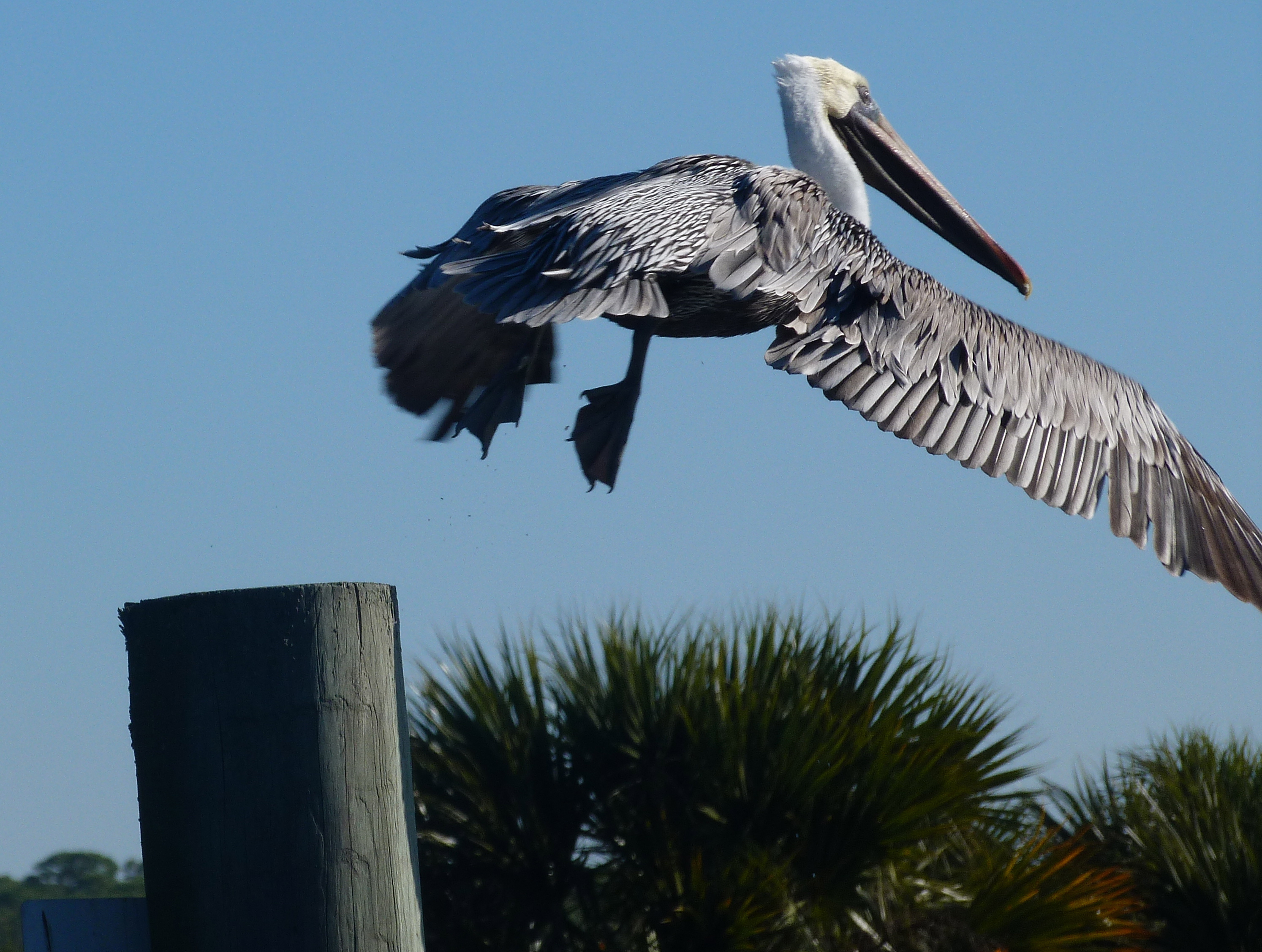
Have I told you lately how much I like pelikans? These ancient birds remind me of pterodactyls, beaky, angular, survivalists.



Colonial mansion, we toured it once.


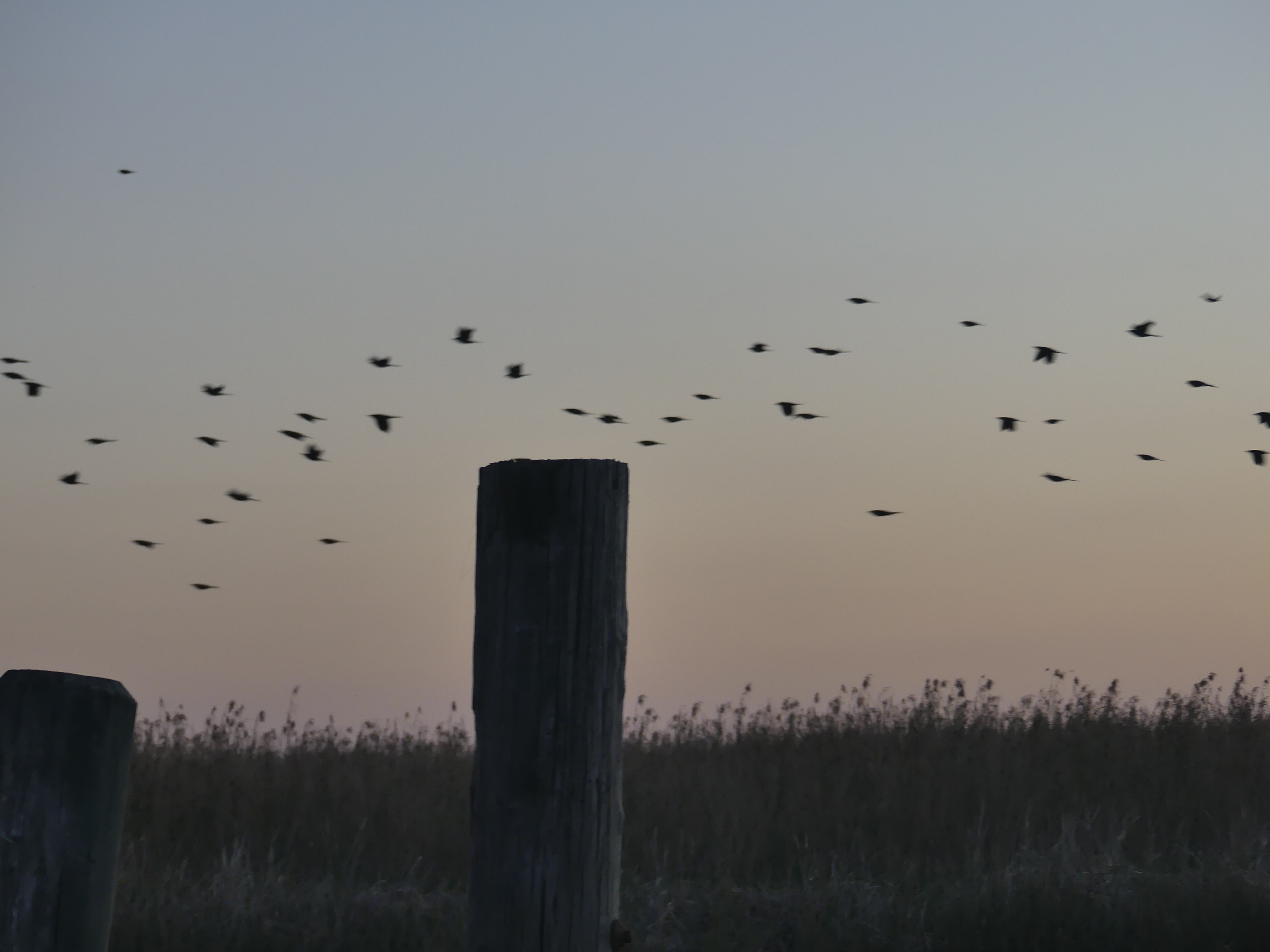
A beautiful sunrise, and bringing a cold but clear and sunny day, great for heading to Saint Mark’s Wildlife Refuge near Wakulla Springs.

Sometimes my camera captures something spectacular and I am humbly in awe; I didn’t make this happen, it just happened.
Time for my coffee 🙂
En Route to Apalachicola
We’ve been so good. We haven’t traveled. We haven’t gathered with our friends, with our book clubs, with our church, well, not very much. We stay masked, most of the time, even with our grandchildren. We’ve had zero colds and zero flu this year, while trying to avoid COVID.
And we needed a break.
How can we do it safely, we asked ourselves. If you are reading this blog, which is a resource for travelers, I am imagining you ask the same questions. How do responsible people travel in this time of COVID?
First, I have to be frank. We are not entirely responsible. I swim at the Y three days a week. If I walk in and there are too many people, especially young people, in there, breathing, I turn around and walk out. I’ve only had to do it twice. Most days I feel safe, and another truth is, I really need to swim for my physical and mental health.
We are also risk takers, always have been, but we try to calculate our risks. So, you’ve been warned, we are not entirely safe all the time. We calculate our risks. We balance our risks.
We really needed a getaway, and we have recently sold a house so we needed a getaway and a celebration.
We usually go to Apalachicola once a year, but we haven’t been for three years now. Apalachicola has a very low rate of transmission, on the COVID map, and the place we stay is more like a residence, and very clean. I call our visits pilgrimages, because we “worship” at the nature parks of St. Marks, St. George Island, and St. Vincent. (I am making a little joke, here.)

We love Panama City beach, and I have a yen for a schnitzle, but when we get to the German restaurant, it has become a seafood restaurant. We decide we want grilled oysters, and we know another really good restaurant, but when we get there it is closed for renovations.
So we stop here:

My husband went in to ask if we can eat there if we are not bikers, and if they have grilled oysters. The very kind waiter said we could eat there, but he would recommend our going to another nearby place if we want oysters.
Dat Cajun Place is near the little Mom-and-Pop hotel we love, the Sunset Inn, but we’ve never eaten there. Today is the day. Another first for us, we are eating in a restaurant . . .

It’a big inside, so although no one is wearing a mask – NO one – we find an isolated table.
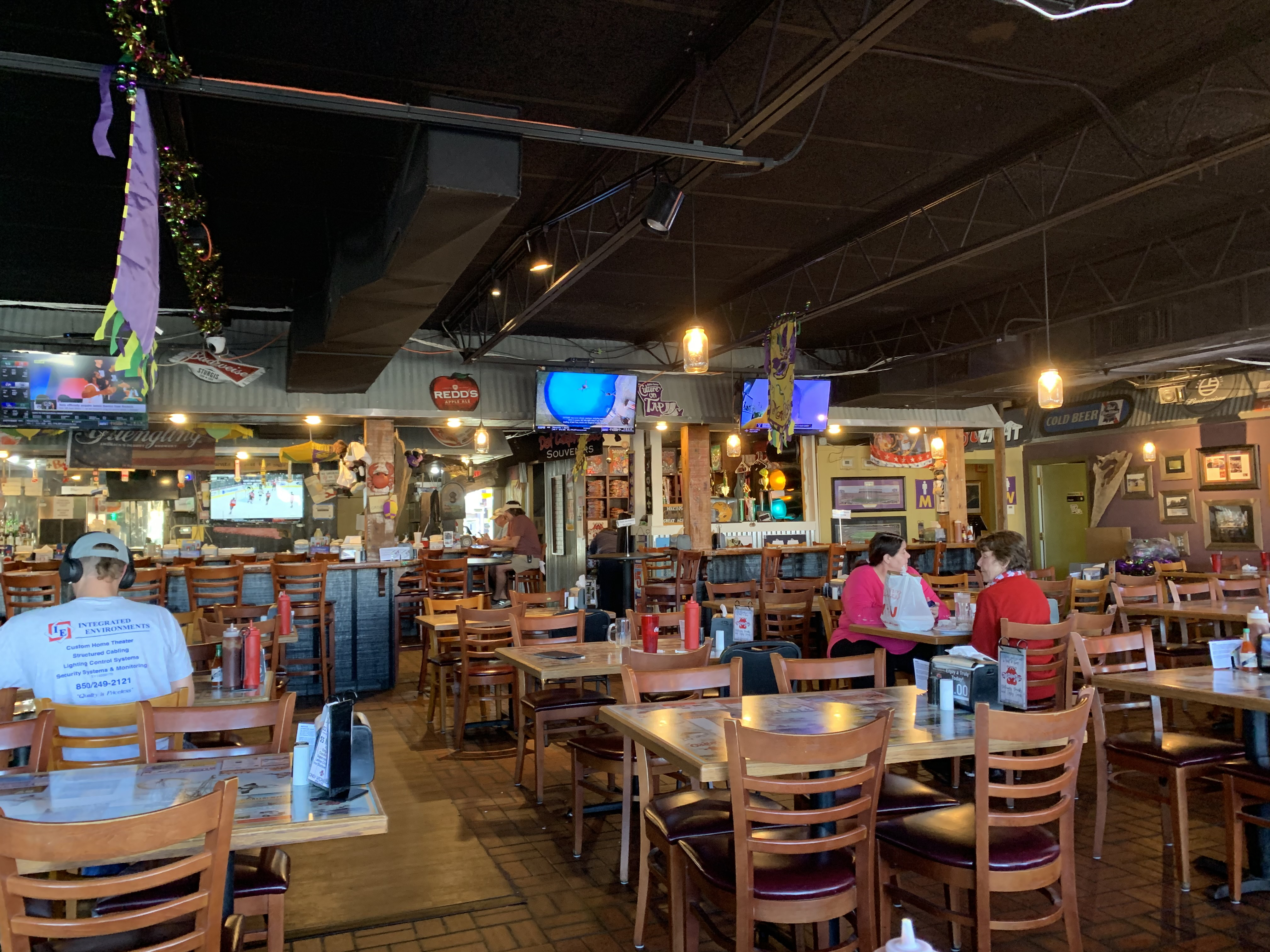
Our waiter did wear a mask. He was very kind, very gracious.
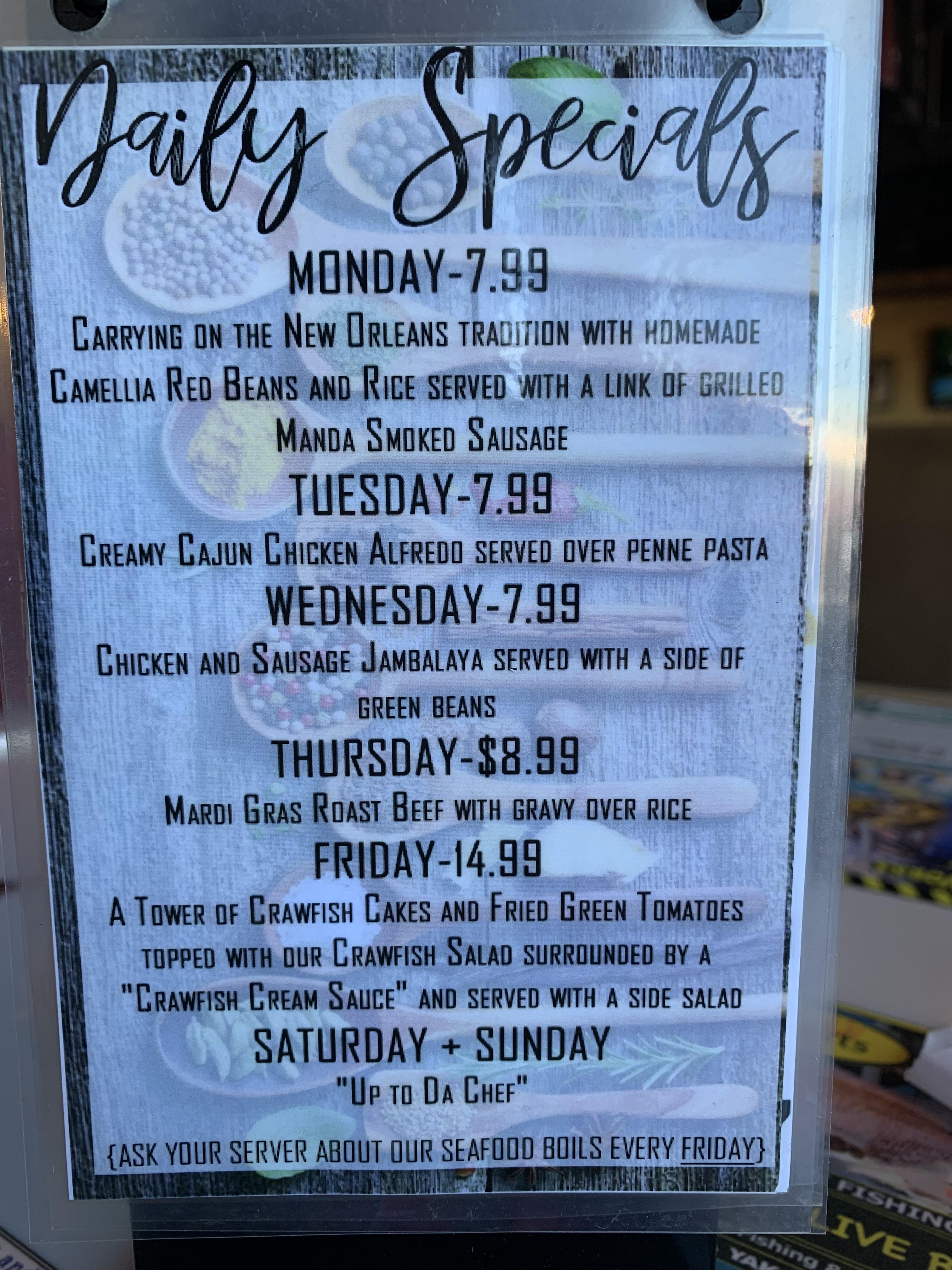
We decided to share a dozen grilled oysters. I adore grilled oysters, and they are so rich that six is always mre than enough for me. AdventureMan could eat more, but he defers to me for his own good health. I barely remembered to take the photo before they were all gone.
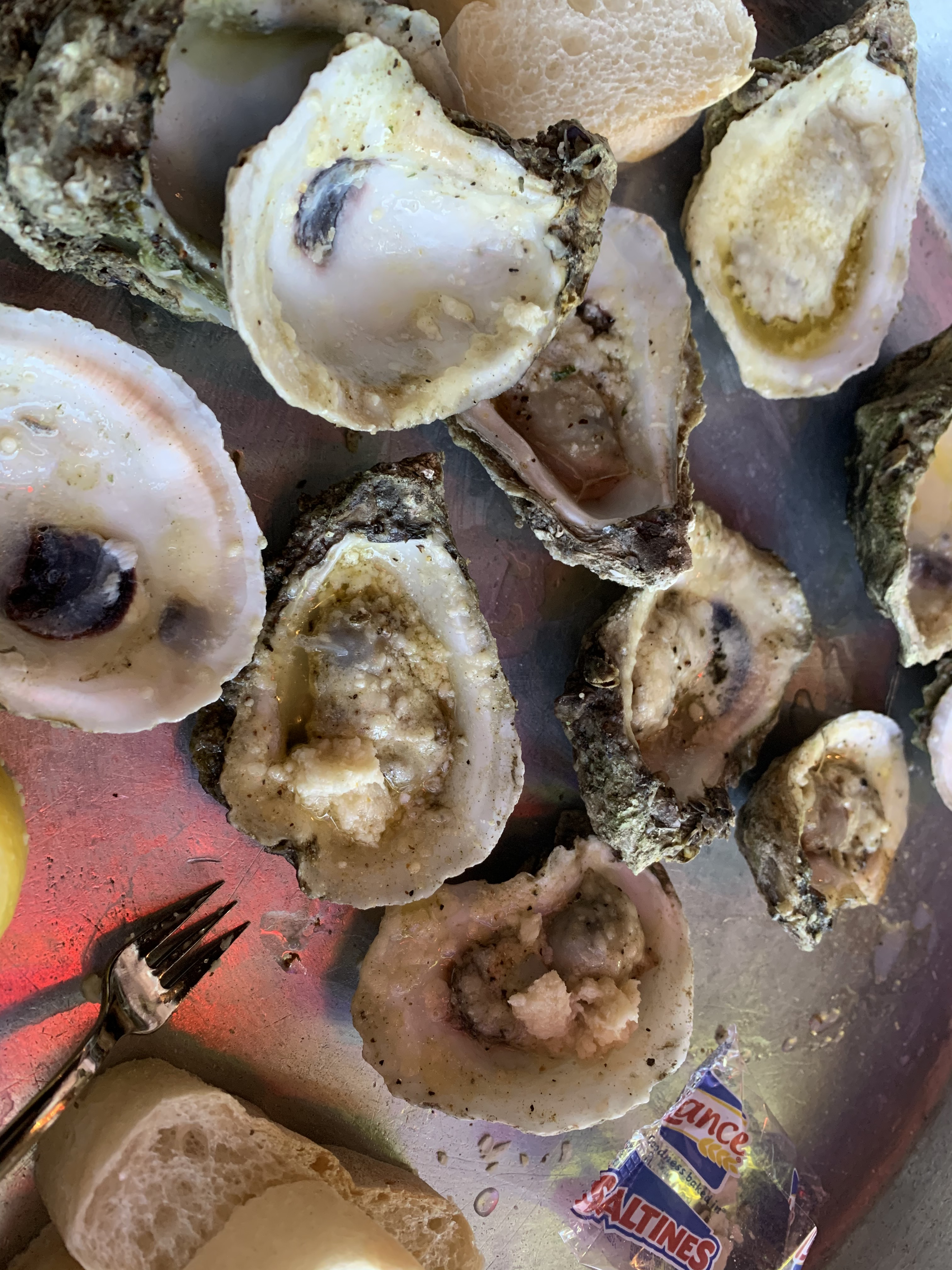
I had two sides; the Cajun Potato Salad and the greens. O M G those greens. Maybe it was really grilled bacon with greens . . . they were spicy and a little vinegar-y and full of bacon and with the oysters and potato salad, my life was complete.

We thought we had asked for jalepenos as a side for the oysters, but we got a big platter of deep fried jalepenos. I would NEVER order deep friend jalepenos, and they were fabulous, served with remoulade, oh heaven.
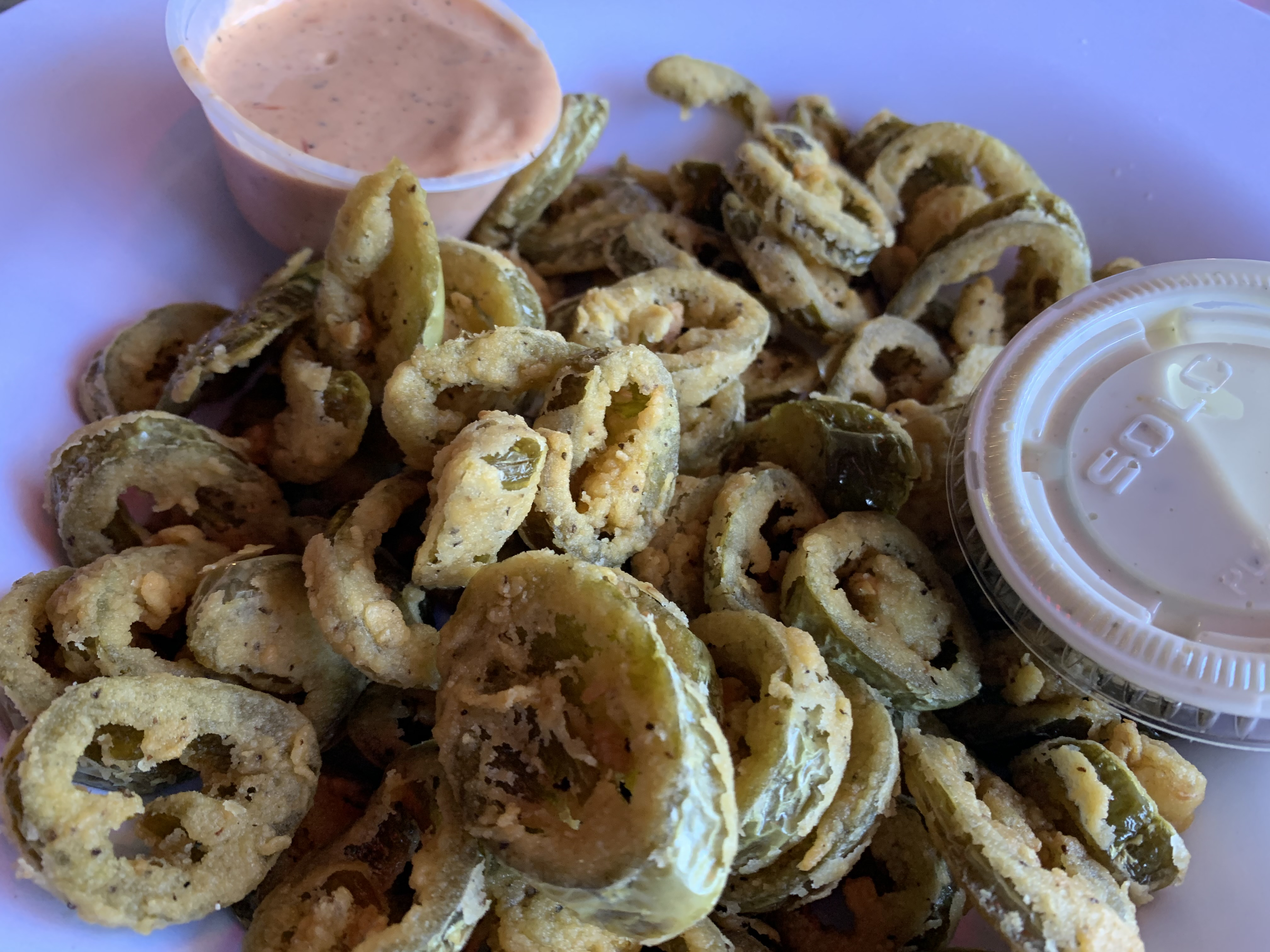
AdventureMan found his own bliss with a gorgeous Oyster Poor Boy, one of the best ever, he claims.

This was a great stop.
Thank you, Dr. Martin Luther King

I love that Google does these special doodles to honor men and women who make a difference. This is their doodle for today, to honor a man who knew how to incite for all the right reasons, and to keep it peaceful. He had a vision. He had the patience to watch his vision unfold. I wish he could be here long enough to see Joe Biden’s cabinet. We’re not there, but we are learning to practice what we say we believe.

“Do You Want to Reserve for Friday night?”
I was so excited. We are headed out, our first trip since February when we took our grandchildren back to New Orleans, as we so often did until March and the advent of COVID. We’ve sold our big house, are comfortably settled in our smaller house, and I am SO ready to resume a more normal life.
I had just finished telling AdventureMan about a restaurant in a hotel we have visited several times, but we’ve never stayed in nor eaten in. The menu looks fabulous! (The Franklin in the Gibson Inn, Apalachicola). He looked at me over his reader glasses, lovingly – and sadly.
“”So do you think everyone will be masked and socially distanced?” he asked me.
“Oh,” I responded. Deflated. Sometimes, for a short while, I can totally forget the new reality of masks and social distancing, and not eating in restaurants.
We decided that as we will be staying in a lovely place with condo conveniences, we can order out. It won’t be the same, but the food will be good, we can store our leftovers in a refrigerator, and we can be safe.
Sigh.

I’m still excited. Apalachicola is beautiful, and the hotel where we stay (The Water Street Hotel) is right on the estuary. There are screened balconies where, even in this chilly weather, we can sit out and watch the heron, and fishing birds, and watch the boats stream by. We can head out to St. Marks, famous for the large flights of migratory birds at this time of the year.
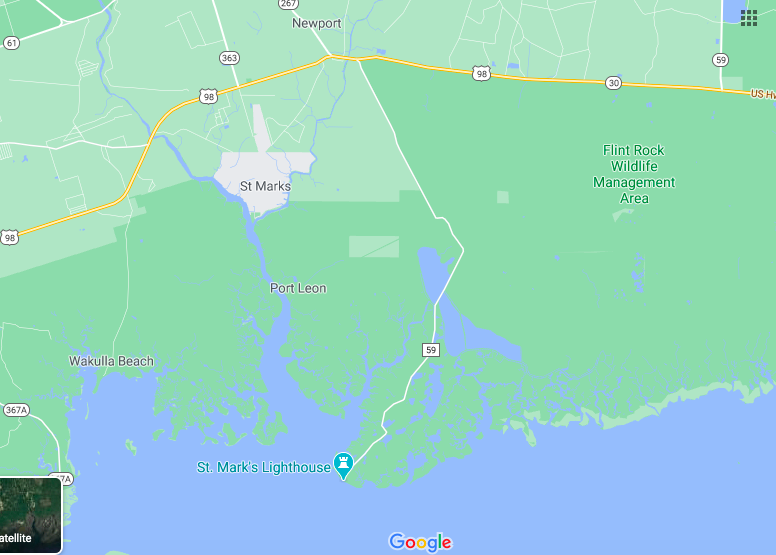
It will be cold. It will also be beautiful, and it will be relatively deserted, safe from those globs of corona virus floating around where human beings breathe. We can walk to our hearts content. I can take pictures.
We like birds. We are enthralled with their beauty. It gives me a happy jolt every time I see, from my little house, a pelican, or a stork, or an eagle, or a red shouldered hawk. No, we are not birders. We like birders, but cannot begin to generate their endless enthusiasm and capability for detailed observation. We just sit back and enjoy the moment.

Apalachicola is a very old Florida town, once famous for it’s timber, and once famous for it’s oysters. The recent hurricane activity has wiped out the tasty Apalachicola oysters, at least for the next few years, and has greatly wiped out the economy of Apalachicola. We look forward to lifting that economy, as best we can, with our visit, and we encourage you to do the same.

I Stand Corrected
Today is the coldest day we have had in Pensacola this winter. As we headed out for early church, the temperature was 30 degrees F., there was frost on our roof and the bird bath had a skin of ice on it. “A good day not to exercise,” I said to myself. After church, I spent a couple hours prepping for dinner and making up my oatmeal mix for a couple weeks to come, as I am running low. (Separate blog entry 🙂 )
I’m an early person. If I am going to get it done, I need to get it done early in the day. By five at night, when I need to be thinking about dinner, I just don’t care. I know, I know, I am a bad woman to admit to such a thing, but trust me, I am legion. I’ve learned to think about dinner early in the day, and to prep.
But it’s Sunday, and it’s cold (yes, yes, I am rationalizing) and I swam three days last week and I have all my prep done so I make an executive decision to give myself a break today. And no sooner had I given myself permission to sit myself down than AccuWeather alerted me to an article about the importance of exercising in cold weather, which I will share with you now:
What you need to know about ‘brown fat’ and exercising in the cold
By Amanda Schmidt, AccuWeather staff writer & Kevin Byrne, AccuWeather staff writer Copied
AccuWeather’s Dexter Henry talked to a veteran fitness instructor and the creator of Fit N’ Play Mama about ways you can stay active this holiday season.
The shift to colder, winter weather often makes us feel lethargic and deters our motivation to go outside.
But before you pull over the blankets or curl up by the fire to watch your favorite show, you should consider the potential benefits of cold-weather workouts.
Aside from helping to ease fears of potential winter weight gain, exercising outdoors in colder weather has numerous health benefits.

New York City native Alec Barab gets in a morning run in the snow on 12th Ave. in Denver’s historic district on Tuesday, April 16, 2013. (AP Photo/Ed Andrieski)
While many avoid the cold, outdoor winter workouts are a great way to take in small doses of sunlight. The sunlight can help to improve mood and help with vitamin D intake, according to the American Heart Association (AHA).
Winter exercise boosts immunity during cold and flu season. A few minutes a day can help prevent simple bacterial and viral infections, according to the Centers for Disease Control and Prevention (CDC).
Shivering, a mechanism to produce heat, also burns a significant amount of calories. Studies have shown that people expend five times more energy when shivering, compared to when they are resting.
CLICK HERE FOR THE FREE ACCUWEATHER APP
Regardless of exercise, studies have shown that being outside in cold weather can transform white fat, specifically belly and thigh fat, into calorie-burning beige or brown fat.
Brown fat’s purpose is to burn calories to generate heat. Brown fat is often referred to as the “good” fat because it helps to burn rather than store calories. It is typically found in areas around the neck and kidneys.
AccuWeather National Weather Reporter Dexter Henry recently sat down with Nataliya Galifianakis, a clinical assistant professor of biology at New York University to learn more about how brown fat is beneficial during the winter.

NYU Clinical Assistant Professor Nataliya Galifianakis explains the effects of exercising in cold weather and how that generates brown fat in the human body. (AccuWeather)
“Brown fat can actually create heat,” Galifianakis told Henry. “Brown fat cells instead of using calories to make energy, it uses calories to produce heat.”
One of the signals for the activation of brown fat is exercise, Galifianakis said.
In addition to making new brown fat because a human body exercises, the generation of brown fat is also increased because someone is exercising in the cold weather, she explained.
“Brown fat could be activated by cold,” Galifianakis said. “Chronic cold exposure activates your brown fat cells.”
A 2014 study, published in the Journal of Clinical Endocrinology and Metabolism, showed people have more genetic markers for brown fat in the winter than during the warmer months. This could signal slightly more calorie burn in the winter as the body insulates itself.
“Browning fat tissue would be an excellent defense against obesity. It would result in the body burning extra calories rather than converting them into additional fat tissue,” study author Dr. Philip A. Kern said in a release.

People run in the snow across the Williamsburg Bridge, Saturday, Jan. 7, 2017, in New York. (AP Photo/Mary Altaffer)
While the cold weather may deter some from outdoor physical activity, working out in the cold has several advantages over warmer weather workouts.
There is no heat and humidity to deal with in colder weather. Winter’s chill might even make you feel awake and invigorated, according to the AHA.
In the cold, your body can regulate its temperature a little better. This means you can often exercise farther or longer; therefore, you can potentially burn even more calories, according to AHA.
Exercising in extreme temperatures, hot or cold, has shown the ability to enhance endurance and mental edge. However, it is important to be aware of the potential risks and proper safety precautions before venturing out.
+++++++++++++++
So me again. I stand corrected. I know I need to go out for a swift walk, and shiver in the cold, burn that brown fat! And here I sit, in my toasty warm house, watching Fareed Zacharia and chatting with you . . . . Most days I exercise early, and it actually gives me more energy; I accomplish more during the day when I exercise early. If I miss that first-thing-in-the-morning slot, it’s a lot harder to get to it later. I’m thinking about it.
An Edmonds Kind of Day in Pensacola

My husband had agreed to go to the Commissary with me today, and asked what time he needed to be up to go with me. “Oh, some time between 0830 and 0900 would be great.” I replied. He paled, his eyes were desperate, but he didn’t say a thing.
And he was up, early, and dressed and ready to go by 0830, which caught me by surprise, I had thought we would leave closer to nine. By quarter of nine, we were out the door and by 1000, we had finished at the commissary. I found everything I needed except radishes; I have a craving for fresh radishes, and the shelves at the commissary were a little bare.
When we reached home, my husband helped bring in all the groceries, then headed for a little bakery he discovered to pick up a sourdough baguette for dinner.

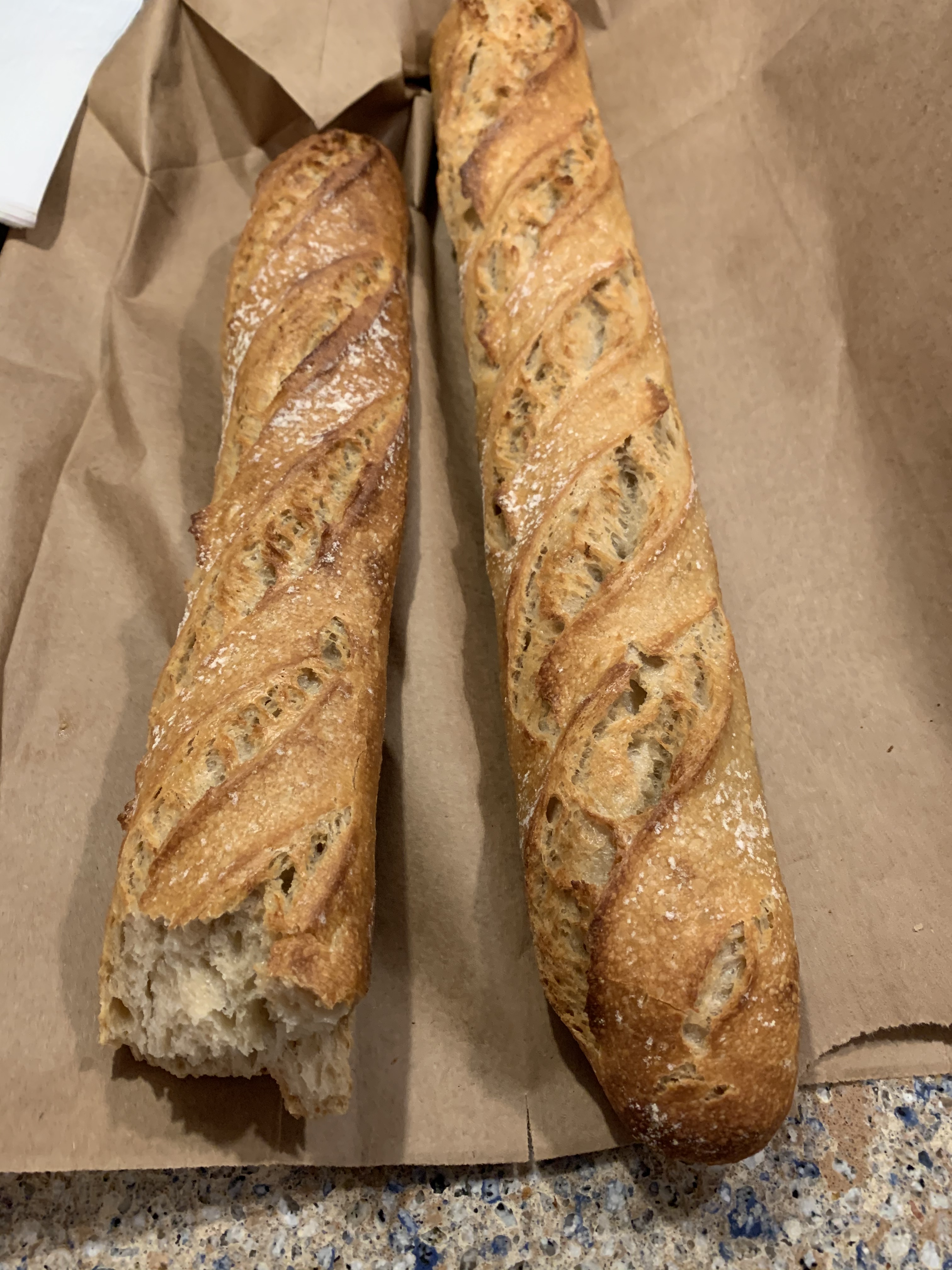

He had made a big pot of Bourride, a fish stew with aoili, the night before and wanted a rustic bread. He found Craft bakery next to a Japanese restaurant we like, and brought home two very crusty sourdough bagettes which we had loved. Today, however, the bakery was closed for the holidays.
“Nevermind,” I consoled him, “I’ve got the groceries put away; let’s go downtown for lunch, and walk through the Palafox market to see if they have any bread we like, and if they don’t, I can pick up a sourdough loaf at Joe Patti’s.” (I love Joe Patti’s sourdough bagette; they really know what they are doing. I also learned you can buy the loaves uncooked in the Joe Patti’s freezer section and bake them up yourself when you get home. Wow!)
As we are walking through the market, he remarks that this is just like Seattle. It’s a cloudy, cool, maybe a little gloomy morning with heavy overhanging clouds, and we are all involved with food – the quick trip to the commissary for basics, then the unfruitful trip to Craft Bakery, and now strolling through the market, which we often do summer Saturdays in Edmonds, Washington, or down in the Pike Place Market. You never know what you will find, but we alway find something delicious. Hand made apple sausages? Beautiful bouquets of flowers running $10 – $30? Fresh Dungeness crab, steamed in the shell?
Today, it is radishes, beautiful huge, delicious crisp radishes, which I love thinly sliced on – yep – a sourdough baguette.

We found all kinds of great vendors, even a bread vendor, but not the bread we were looking for.

The market was in full swing, and has been, we learned, since mid-September.
Strolling on, we headed for 86 Forks, in the old Pot Roast and Pinot location on Palafox, where we found spacious airy seating, and a place we could feel safe eating , no large crowd because we were early.
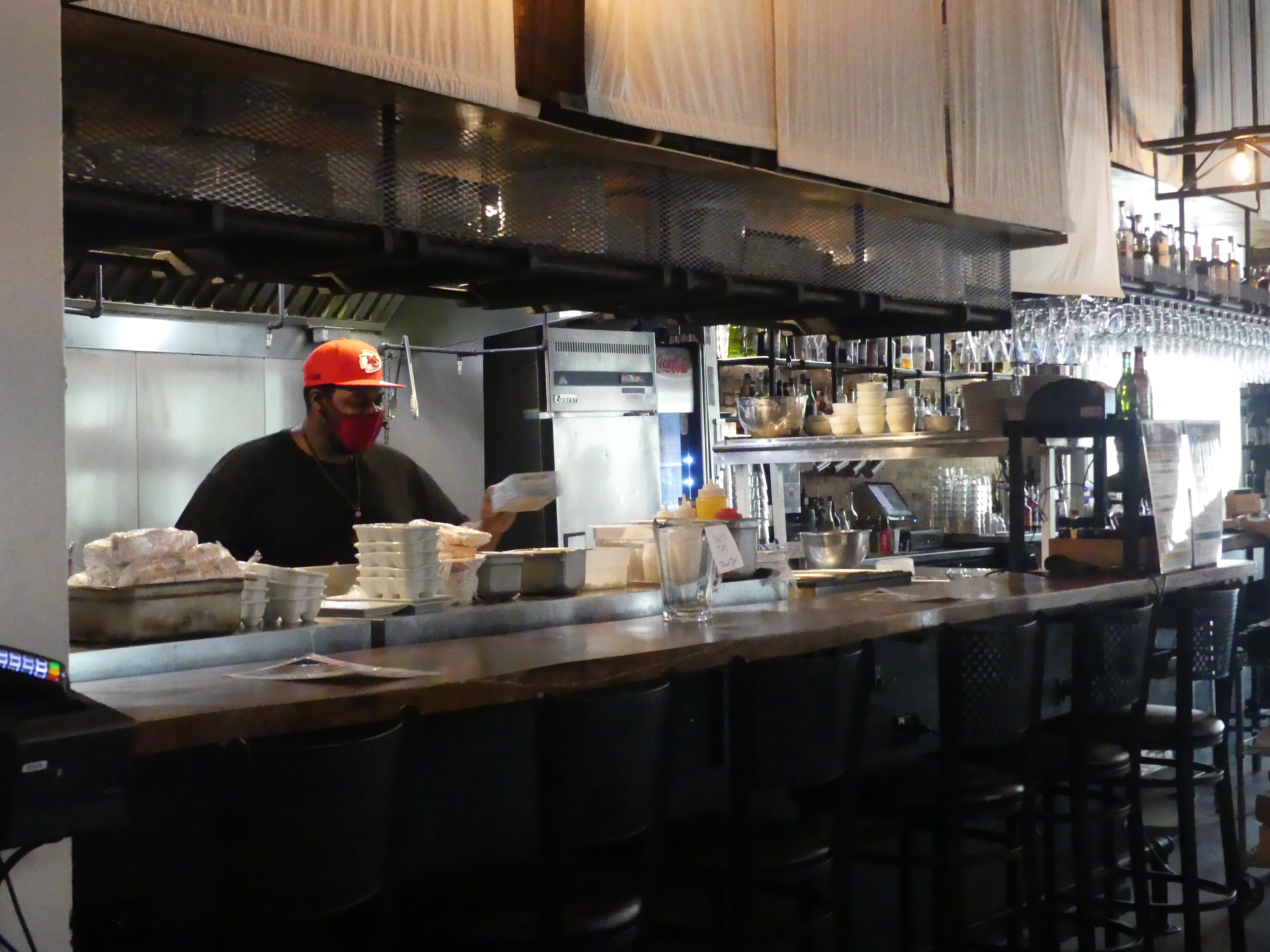
The concept is familiar – if you live in Seattle. You choose a base, in this case a noodle, then you choose a protein, a broth, then you choose up to four flavorings, then you can choose premium add-ons.

I chose the rice noodles with spicy tuna, Thai basil, peanuts, jalepeno slices and cilantro.
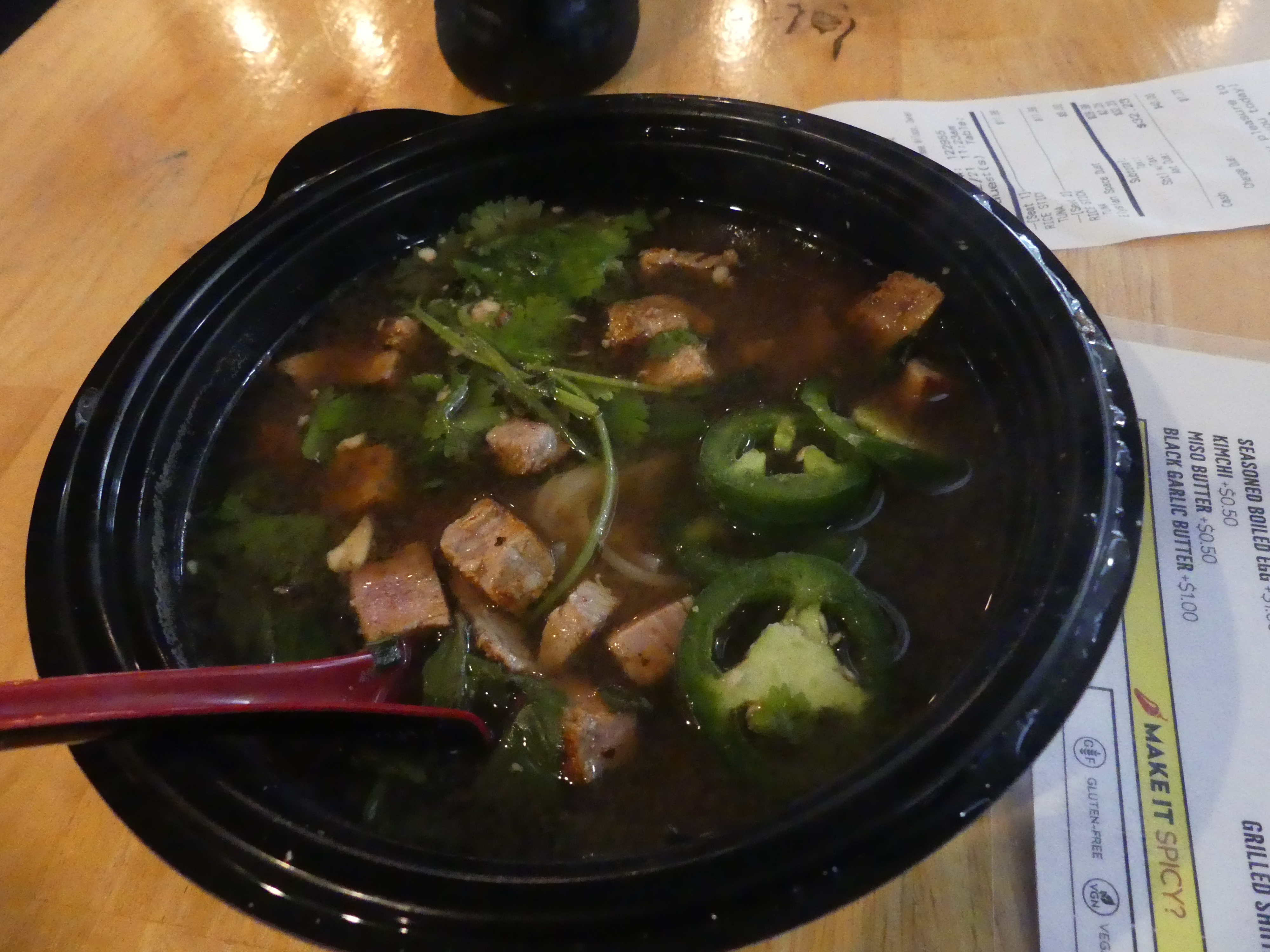
And AdventureMan had the rice noodles, spicy tuna, Napa cabbage, peanuts, green onions and cilantro. We agreed, it was a delicious lunch.

He added Sriracha, that’s what the red is in his noodles.
It was a great lunch, and we left just as others were coming, so it all worked out well. We went by Joe Patti’s, I ran in. The place was packed with beach-goers, buying out Joe Patti’s either to take for a week on the beach or to take back to Alabama, or Georgia, or Mississippi, or Texas . . . the parking lot was a mad house. I was in luck, there were no sourdough baguettes left, nor any other baguettes, but to the side was a sourdough boule, and a boule is just right for two people who intend to finish off last night’s bourride with aioli, and sourdough, and fresh market radishes.

For me, this was a wonderful day. It was cool, and comfortable. We found all kinds of goodies, and had a great walk through the market, both coming and going.
Edmonds, Washington is a beautiful little port city just north of Seattle with a ferry coming in and out to take you over to the Olympic Peninsula. Their slogan – It’s an Edmonds Kind of Day – means it doesn’t get much better. So we had an Edmonds Kind of Day in Pensacola.
Losing Track of Time
How many different ways can we say that this was a year like no other? Christmas morning came, and under the tree was one calendar. I had ordered it from Xanterra, the people who operate the hotels and concessions at many of our National Parks, around June, but I never saw it; as soon as it arrived I handed it over to AdventureMan who hid it. The good thing is that I forget, and by Christmas, I really am surprised.
This time, I was really surprised. It is a beautiful calendar, classic old posters of the national parks. But the dates are just written along the bottom; it is not one of those calendars where you can write down things you have committed to do.
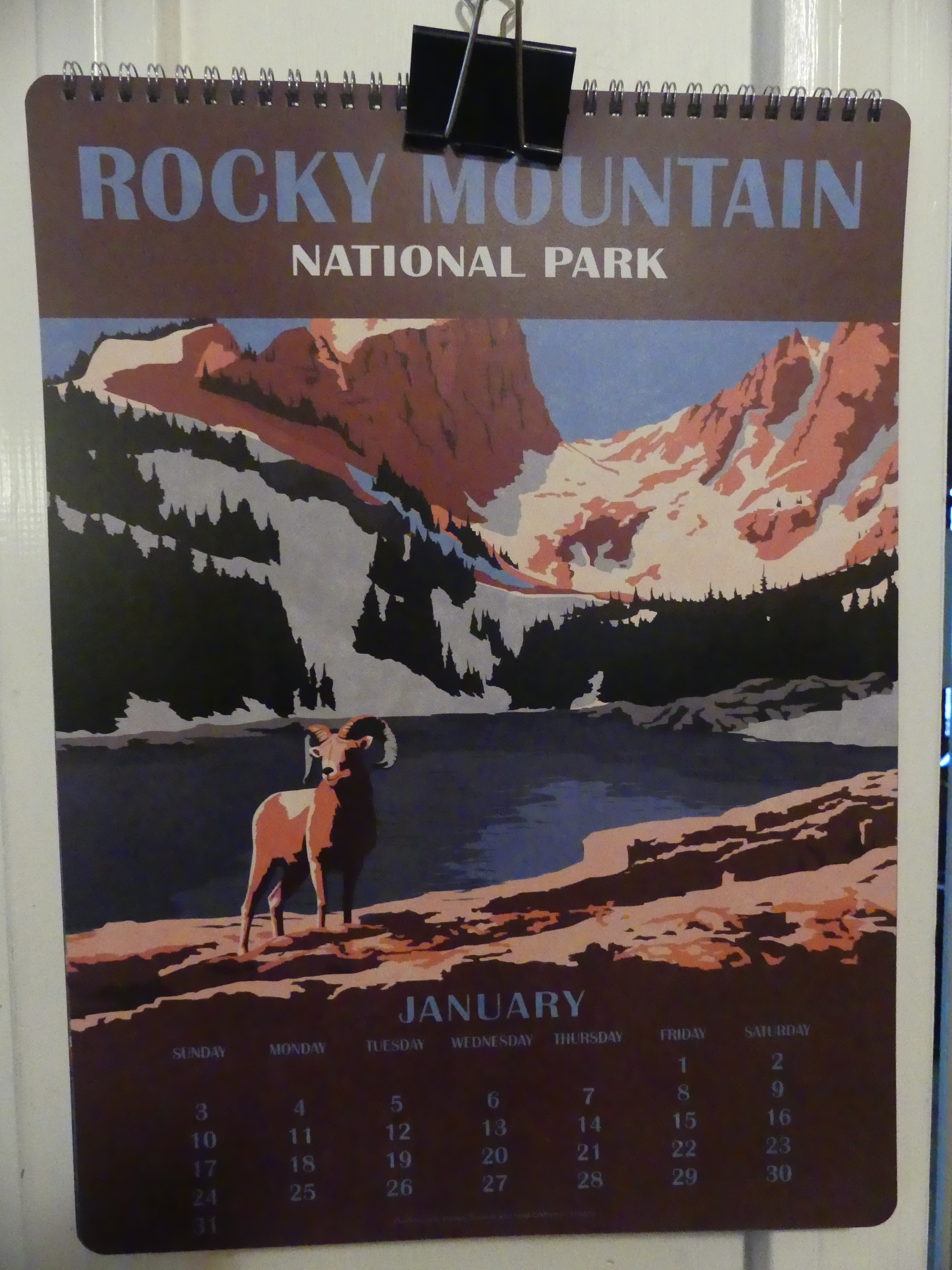
It is really beautiful. And, for me, utterly useless. I have it in my kitchen, but I also have a French one I hurriedly ordered and I don’t much like, but I may replace this beautiful one with the French one because it has spaces to write.
I need calendars to keep me on track. I have great focus. If I am reading a book, or writing an entry for HT&E, or working on a quilt, or organizing a grocery list, I can totally lose track of time. I can’t even blame it on age; I have always been this way. I am almost compulsively on time because I find being late so painful, but one time, I was mortified, I was in the middle of a project and a friend called and asked how I was. I chatted, and she said “weren’t you picking me up today?” and to my horror, even though I had known I was picking her up, even though it was on my calendar, I was so deep into what I was doing that it had flown right out of my mind that I had an obligation.
She was the president of the group, and it was our annual celebration. I dropped everything, dressed madly and ran to the car, forcing myself to drive carefully because I was shaken, and anxious, and utterly mortified. I picked her up, maybe half an hour late, and we got to the restaurant just as others also arrived, only by the grace of God. Some were even later than us, evidently the timing had been unclear, but that is not my excuse. I had it on the calendar. I checked it in the morning. And then I promptly forgot. I still squirm to think about it, and now I use my phone to remind me when I have to do something and I’m afraid I’ll get lost in space again.
I was raised to believe that timeliness is next to Godliness and I have lived many years in a culture where time is more flexible, and “on-time” is relative. So why am I so compulsive most of the time and so fallible on occasion? I probably judge myself more harshly than others would judge me.
I pick up calendars on our travels – and this year there were no travels. After Christmas, I quickly went online to find something I could use, and almost everything I really loved was like the national parks one – beautiful and functionally useless. Finally I found one a travel company had sent me; it has some cool places to visit, and I found a Chihuly calendar with nice big spaces to write; I am using that as my main calendar.


I can only do the best that I can do. Mostly, I am really good about appointments and obligations, but I have to rely on these tools to keep me from doing myself in. Alas, it keeps me humble.
Elizabeth Peratrovich

Sometimes I can get a little paranoid, and today was one of those times. Look at that gorgeous Google doodle for today. I spend a certain amount of time looking at Alaskan legend as a source of art images for my quilting, so when I saw the Google doodle, I thought it was one of those targeted things.
Not so.
As it turns out, it is a doodle honoring an Alaskan Tlingit woman, Elizabeth Peratrovich. I’ve taken the following from Wikipedia (to which I donate, so I am comfortable sharing what they have to say. I love that it is updated to show today’s doodle.) This woman was something special:
Elizabeth Jean Peratrovich (Tlingit name: Kaaxgal.aat; July 4, 1911 – December 1, 1958) was an American civil rights activist and member of the Tlingit nation who worked for equality on behalf of Alaska Natives.[1] In the 1940s, her advocacy was credited as being instrumental in the passing of Alaska’s Anti-Discrimination Act of 1945, the first state or territorial anti-discrimination law enacted in the United States in the 20th century. In 1988, the Alaska Legislature established February 16 as Elizabeth Peratrovich Day “for her courageous, unceasing efforts to eliminate discrimination and bring about equal rights in Alaska” (Alaska Statutes 44.12.065).[2] In March 2019, her obituary was added to The New York Times as part of their “Overlooked No More” series.[3]
Early life and education
Elizabeth Peratrovich, whose name at birth was Kaaxgal.aat[4], was born on July 4, 1911, in Petersburg, Alaska,[5] as a member of the Lukaax̱.ádi clan in the Raven moiety of the Tlingit nation. When she was young, she was adopted by Andrew and Jean Wanamaker (née Williams), who gave her the name “Elizabeth Jean”.[6][7] Andrew was a fisherman and Presbyterian lay minister. The Wanamakers raised Elizabeth in Petersburg, Klawock, and Ketchikan, Alaska. Elizabeth graduated from Ketchikan High School, and then attended Sheldon Jackson College in Sitka, and the Western College of Education in Bellingham, Washington (now part of Western Washington University).[a] In 1931, Elizabeth married Roy Peratrovich (1908-1989), who was also Tlingit, as well as of Serbian ancestry.[9]
Activism
In 1941, while living in Juneau, Alaska, Elizabeth and Roy Peratrovich encountered discrimination in their attempts to secure housing and gain access to public facilities. They petitioned the territorial governor, Ernest Gruening, to prohibit public places from posting the “No dogs or Natives allowed” signs that were common in Alaska during this time.[citation needed]
The Anti-Discrimination Act was proposed by the Alaska Native Brotherhood and the Alaska Native Sisterhood, but the first attempt to pass this legislation failed in 1943.[citation needed] However, in 1945, Roy and Elizabeth Peratrovich became the Presidents of the Alaska Native Brotherhood and the Alaska Native Sisterhood, respectively, and lobbied the territory’s legislators and Governor Gruening to pass the act.[citation needed]
Before the territorial Senate voted on the bill in 1945, Elizabeth Peratrovich, representing the Alaskan Native Sisterhood, was the last to testify, and her impassioned speech was considered decisive.[10] Responding to territorial senator Allen Shattuck of Juneau, who had earlier asked “Who are these people, barely out of savagery, who want to associate with us whites, with 5,000 years of recorded civilization behind us?,” she stated:[11]
I would not have expected that I, who am barely out of savagery, would have to remind gentlemen with five thousand years of recorded civilization behind them, of our Bill of Rights.[12]
Fran Ulmer, who represented Juneau in the Alaska House of Representatives (and who later became lieutenant governor of Alaska), in 1992 said the following about Peratrovich’s testimony:
She talked about herself, her friends, her children, and the cruel treatment that consigned Alaska Natives to a second-class existence. She described to the Senate what it means to be unable to buy a house in a decent neighborhood because Natives aren’t allowed to live there. She described how children feel when they are refused entrance into movie theaters, or see signs in shop windows that read “No dogs or Natives allowed.”[12]
The Senate voted 11-5 for House Resolution 14, providing “…full and equal accommodations, facilities, and privileges to all citizens in places of public accommodations within the jurisdiction of the Territory of Alaska; to provide penalties for violation.”[11] The bill was signed into law by Governor Gruening in 1945, nearly 20 years before the US Congress passed the Civil Rights Act of 1964. Acts of the territorial legislature required final approval from the U.S. Congress, which affirmed it (Bob Bartlett, Alaskan delegate, was known for his efficiency in passing legislation). Alaska thus became the first territory or state to end “Jim Crow” since 18 states banned discrimination in public accommodations in the three decades following the Civil War; not until 1955 would two more states, New Mexico and Montana, follow suit.[13]
The Peratrovich family papers, including correspondence, personal papers, and news clippings related to the civil rights work done by Elizabeth and Roy Peratrovich, are currently held at the Smithsonian National Museum of the American Indian.[14]
Personal facts
On December 15, 1931, Elizabeth married Roy Peratrovich (1908–1989), also a Tlingit, of mixed native and Serbian descent who worked in a cannery.[citation needed] They lived in Klawock, where Roy was elected to four terms as mayor.[citation needed]
Looking for greater opportunities for work and their children, they moved to Juneau, where they found more extensive social and racial discrimination against Alaska Natives. They had three children: daughter Loretta, and sons Roy, Jr. and Frank.[11]
The Peratrovich family later moved to Antigonish, Nova Scotia, Canada, where Roy pursued an economics degree at St. Francis Xavier University.[citation needed] From there they moved to Denver, Colorado, where Roy studied at the University of Denver.[citation needed] In the 1950s, the Peratroviches moved to Oklahoma, and then back to Alaska.[citation needed]
Elizabeth Peratrovich died after battling breast cancer on December 1, 1958, at the age of 47.[15] She is buried at Evergreen Cemetery, Juneau, Alaska, alongside her husband Roy.[citation needed]
Her son, Roy Peratrovich, Jr., became a noted civil engineer in Alaska. He designed the Brotherhood Bridge in Juneau, which carries the Glacier Highway over the Mendenhall River.[16]
Legacy and honors
- On February 6, 1988, the Alaska Legislature established February 16 (the day in 1945 on which the Anti-Discrimination Act was signed) as “Elizabeth Peratrovich Day,” in order to honor her contributions: “for her courageous, unceasing efforts to eliminate discrimination and bring about equal rights in Alaska” (Alaska Statutes 44.12.065).[17]
- The Elizabeth Peratrovich Award was established in her honor by the Alaska Native Sisterhood.[citation needed]
- In 1992, Gallery B of the Alaska House of Representatives chamber in the Alaska State Capitol was renamed in her honor.[12] Of the four galleries located in the respective two chambers, the Peratrovich Gallery is the only one named for someone other than a former legislator (the other House gallery was named for Warren A. Taylor; the Senate galleries were named for former Senators Cliff Groh and Robert H. Ziegler).
- In 2003, a park[18] in downtown Anchorage was named for Elizabeth and Roy Peratrovich. It encompasses the lawn surrounding Anchorage’s former city hall, with a small amphitheater in which concerts and other performances are held.[19]
- In 2009, a documentary about Peratrovich’s groundbreaking civil rights advocacy premiered on October 22 at the Alaska Federation of Natives convention in Anchorage. Entitled For the Rights of All: Ending Jim Crow in Alaska, the film was scheduled to air as a PBS documentary film in November 2009. The film was produced by Blueberry Productions, Inc. and was primarily written by Jeffry Lloyd Silverman of Anchorage.[20]
- In 2017, the theater in Ketchikan’s Southeast Alaska Discovery Center was named in honor of Elizabeth Peratrovich, and a companion exhibit exploring her role in the struggle for Alaska Native civil rights was unveiled.[21]
- In 2018, Elizabeth Peratrovich was chosen by the National Women’s History Project as one of its honorees for Women’s History Month in the United States.[22]
- On October 5, 2019, United States Mint Chief Administrative Officer Patrick Hernandez announced that Peratrovich would appear on the reverse of the 2020 Native American $1 Coin, making her the first Alaska Native to be featured on U.S. currency.[23][24][25]
- In December 2019, a 4-story apartment building called Elizabeth Place, named after Peratrovich, opened in downtown Anchorage.
- In July 2020, a new mural was unveiled in honor of Peratrovich in Petersburg Alaska.[26]
- On December 30, 2020, a Google Doodle in the United States and Canada honored Elizabeth Peratrovich. The Doodle was drawn by Tlingit artist Micheala Goade.[27]
The Feast of St. Stephen, 26 Dec 2020
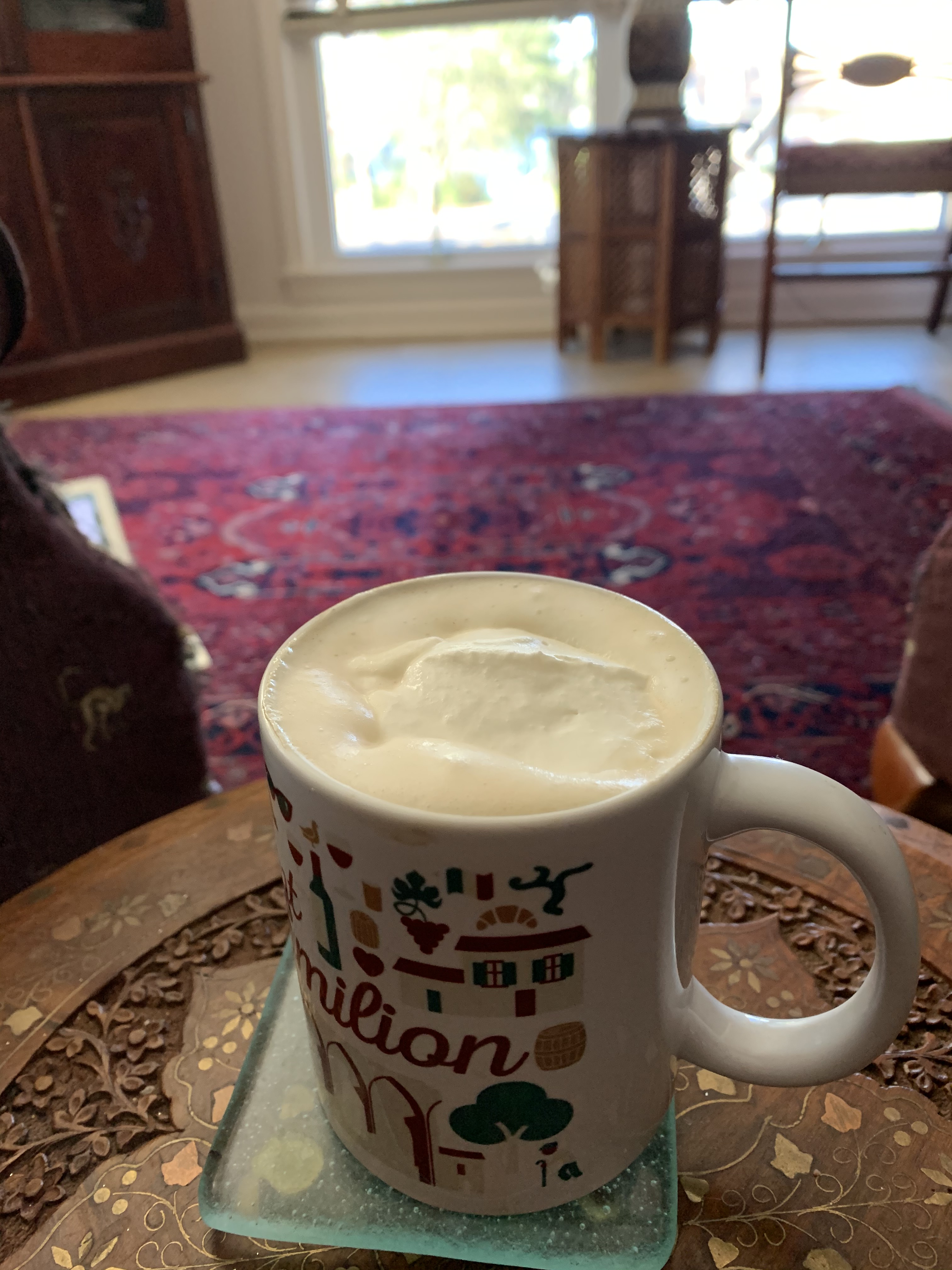
An indulgent morning on the Feast of St. Stephen. Poor kitties, I slept in until 8, but it is such a cold morning, they were also slow to get up and didn’t chide me for my lateness in providing their breakfast. Emile, the outdoor cat, was happy and secure on his heated pad, and did not look miserable, as he has on other cold days.
My breakfast is my normal oat cereal, but with an abundance of strawberries, left over from yesterday’s French roll-ups, and my coffee is topped with leftover creme chantilly, the slightly sweetened whipped cream that accompanies the roll-ups.
It is a gorgeous day, crisp and clear and dry. Ragnar and Uhtred, the indoor cats, are snuggled up with AdventureMan, who snoozes on. He had a great afternoon, Christmas Day, with his new slide viewer and decades of slides from our earliest years, including the month we courted before marrying, LOL. and our brand new baby boy, three years later. They brought back such sweet memories.
I tend to be obsessive about getting things done. From Thanksgiving to Christmas, I have to force myself to slow down and think about the spiritual side of the season, what it’s really all about. I learn that very possibly productivity, getting it done, can become my idol. Lists become my litany. I value myself by how much I can get done. Enough! I need Advent in my life to help me see the quiet, contemplative way.
Christmas Eve, is, for me, the spiritual high point of the year, the culmination of all hopefulness. Today, the day after Christmas, is a day for taking it easy, and that is really, really hard for me. My mind scurries to tasks; the dishwasher needs emptying, I should pack up extra food my my son and his family, maybe today I should paint the spot behind the toilet in the hall bathroom where the old paint shows around the slim modern new toilet.
I calm my mind, I tell myself “not so fast,” there is nothing that needs be done right now, this morning, and besides, the clatter of emptying the dishwasher or painting a spot in the bathroom will only disturb the blissful sleep of AdventureMan and his snuggled, comatose cats. It is a morning to sip my whipped creamy coffee, freshly brewed, to give thanks for this glorious morning, and to write a little here, on a blog which is a gift to myself, a place where I can learn what I am thinking, behind the flurry of compulsive thoughts about doing.
Peace on Earth, Good Will toward all mankind.
Recent Comments
ExpatAlien on What Country am I Living … intlxpatr on Yellowstone: Old Faithful to C… Michelle on Yellowstone: Old Faithful to C… Cathy on No Grown-Ups in Charge intlxpatr on Waiting for Snow Wikipedia Donate Button

Amazina


Early Voting in Florida


 Here There and Everywhere
