The Southwest Inn in Sedona
When you look for a hotel in Sedona, there is a confusing profusion.
“Sedona has been discovered,” my best friend from college tells me. She named her daughter Sedona, and she is one of the reasons Sedona is high on my list of places I want to experience. She had described Sedona in glowing terms, some forty years ago.
It took forever to figure out where we wanted to stay. We don’t like bedbug motels, and neither do we like resorts. We don’t like paying for services we don’t want, and we don’t mind paying for services we do want. We like relatively small, and we like our privacy. We are introverts. We want to experience Sedona.
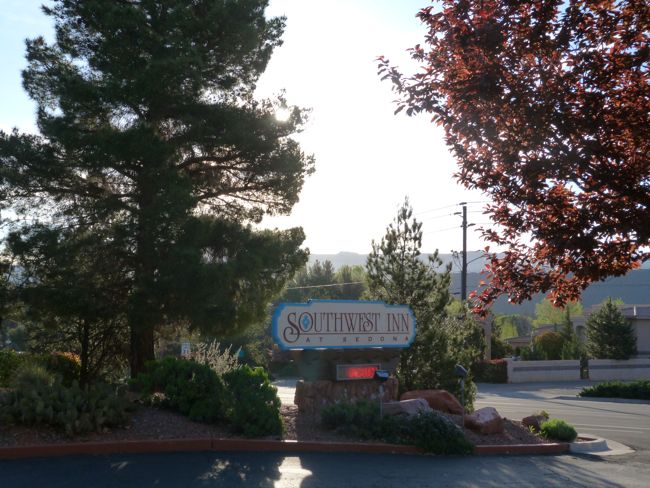
After a lot of research, we chose the Southwest Inn in Sedona, and it worked for us. We had a lovely spacious room with a balcony, very quiet, in a part of town where we were only about five minutes from any where we wanted to go.
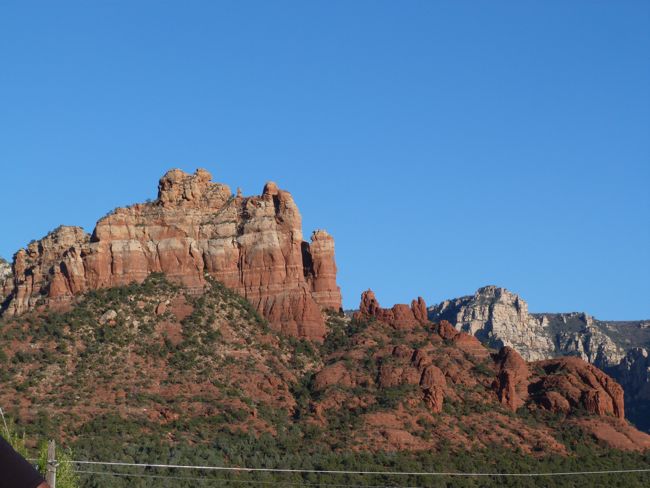
As we drove in, we loved it. There were hummingbirds dive-bombing the tree where we parked, and we watched the as we unpacked the car. We had an upper level in a two level building, so we had to haul our goods up stairs, but I had my FitBit and I needed the credit for stairs; we didn’t mind the stairs. We loved the brown adobe finish, and the private balconies with the views of the red rocks.
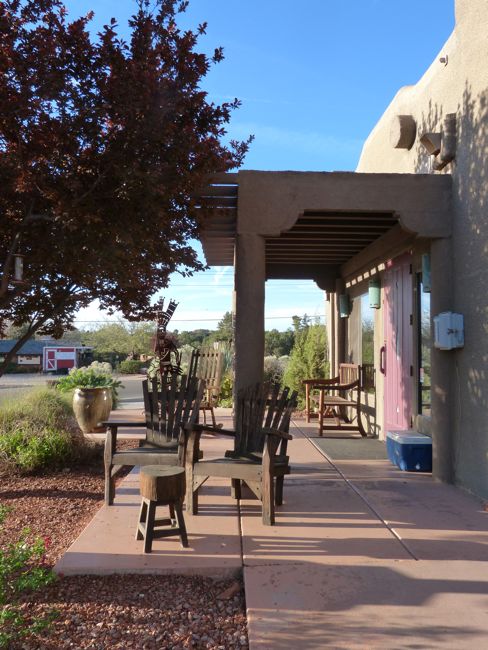

Breakfast was in this cheery, sunny breakfast room at the top of the entry building. They had home-made breakfast burritos, frozen, and two microwaves in which to heat them up, as well as pastries, cereals, fruits, juices, coffee, tea, water – one step up from continental breakfast, and it is included in your room. Many people take their breakfast back to their room to eat out on the balcony.

The hotel had a hot tub and a nice swimming pool and lounging deck, which we never used our entire time in Sedona. We kept intending to, but there was always too much to see and to do!
Our room was fine, spacious enough, good sized bathroom, but I didn’t take a photo and it wasn’t special enough that I can remember a single detail, other than the lovely balcony and the view, and oh, yes, it had one of those Southwest corner fireplaces, very fun. It was fine; it housed us well, and you can spend a lot more in Sedona and get a lot less. We wanted Sedona style, and we felt this fit the bill; it fit in well with local aesthetics, and it was quiet and modest with little luxuries, but without excessive showiness.
We also liked the management, very laid back, and very thoughtful. The room had nice things in it – bathrobes to wear to the pool, a nice coffee maker, the fireplace for cooler evenings. When I needed more shampoo, the man at the desk gave me a big container and asked if I wanted conditioner, too. They had a large, elegant dispenser of cool lemon water in the lobby, as well as coffee and tea all day long. There was a graciousness to it all that I liked, a generosity of spirit. They were very helpful telling us about things we needed to do (join the crowd at the airport vortex to watch the sun go down, for one) and the roads we needed to take. We followed all their advice, and it paid.
Our hotel was full of European hikers, families and people who, like us, look for a good value for the money.
The Arizona Sonora Desert Museum and the Tonto National Forest
There is nothing so lovely as the American Southwest in the Spring. This is a glorious day, and we are on our way to an amazing park, the Arizona Sonoran Desert Museum, with is a huge indoor and outdoor park and museum. It is one of the best stops on our trip.

There is a huge parking lot, and we got there around the time it opens. We were still in the third row away, but the rows go on and on forever, and we wondered why so much parking? As we left, we understood. We had been there about three or four hours, and the parking lot was filling up fast, buses, travelers from every state and many nations, coming to this beautifully thought-through museum.

One of the things we are picking up on is that everywhere we go, there are people our age, physically fit, volunteering. We saw this at the Benson – Rio Grande Valley Park in Texas, where I thought they were the happiest volunteers I had ever seen, and then again, at Tombstone, AZ, participating as characters in the daily dramas. People our age are living their dreams, and we met a lot of really happy people, working for various parks and volunteer agencies.
I volunteer in several areas, and one of my favorite is with the Gulf Coast Citizen Diplomacy Council. The Department of State sends delegates here to meet with counterparts in specialized areas – environment, juvenile justice, fair election processes, women entrepreneurs – it can be anything. You never know what comes next, which I love. Another part of it that I love is introducing our foreign delegates to the volunteer experience, whether it be dishing out hot meals for the homeless or packaging food for the food bank. For most, it is a new experience, and the idea of giving your time voluntarily to work to help others is a revelation. They are so often surprised at how good it feels.
This is what we are coming across again and again. At this museum, there is a volunteer passing out maps, and others selling entrance tickets. There are volunteer rangers, volunteer guides, and volunteers answering questions. They are happy, they are fit and tanned (LOL, yes, this is Arizona!) and they work for free. They are doing what they want to be doing. It is a joyful experience to find all these happy volunteers, and to benefit from their expertise. It is a joy to us; I feel so proud and humble to be a part of this kind of community.
This museum is so first rate. These are the bronze sculptures at the entry:
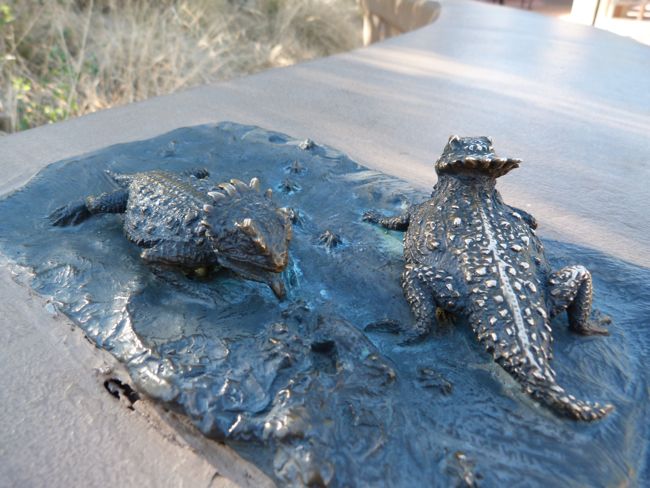

Museum entrance:

There are all kinds of walking trails, and every exhibit is also reachable by wheelchair.
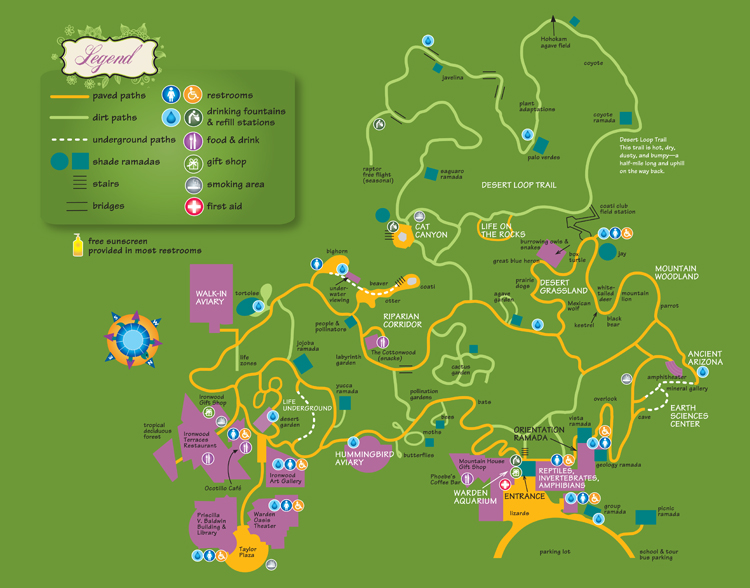
The museum cactus display is gorgeous along the wonderful walking paths:

They have a wildlife display with all kinds of snakes and frogs. This is a poisonous frog:
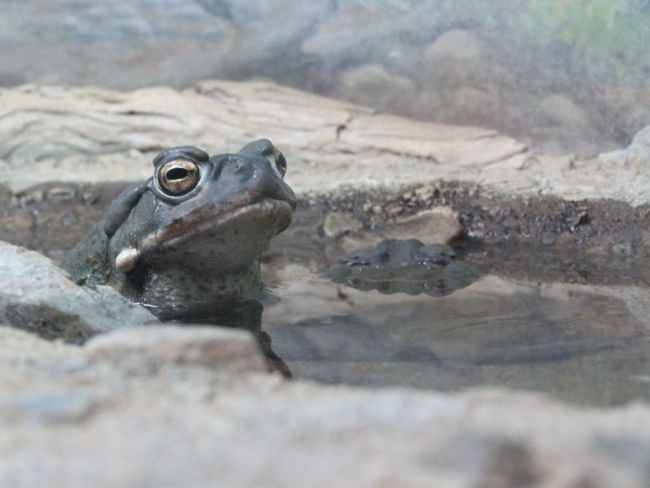
AdventureMan and I separate; he has a mission, he wants to see the Butterfly garden and what is planted there. I take a few trails, and then head for the gift shop. I also have an agenda 🙂
In the wonderful gift shop, where I found unique and really fun gifts for grandchildren, grand-nieces and grand-nephews, I also saw two of Mary Doria Russel’s books about this area, about the legendary Doc Holliday and Wyatt Earp. There were also books and puzzles about bugs and desert creatures, and wonderful edibles, hot sauces, salsas, BBQ rubs. Great gifts.

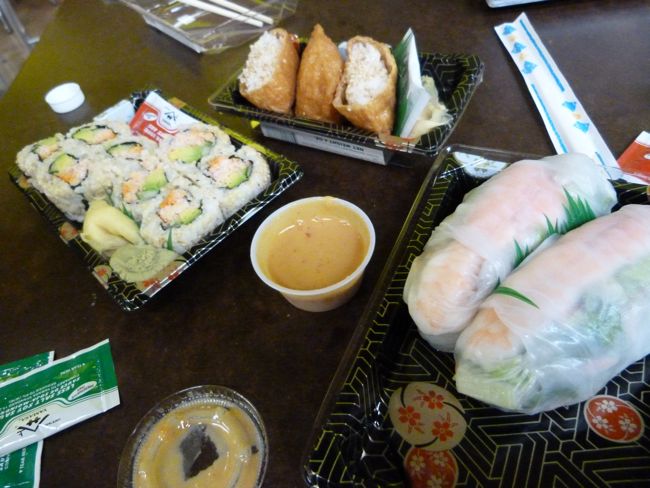
It is a wonderful visit, but even this early in the season, by noon, it is getting very warm. We decide to head on for Sedona, and because we are not so fond of big city traffic, we skirt Phoenix and stop for lunch at one of our favorite places, Whole Foods. What a treat!
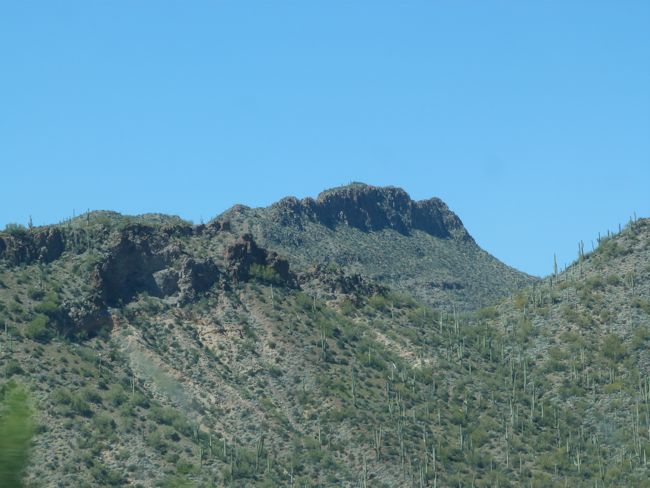
We wanted to take the scenic route to Sedona, so we went through the Tonto National Forest. At the beginning, I started laughing and said to AdventureMan, “It’s a Saguaro Forest!” Later, the Saguaros stopped, and small scrubby pines began, and then taller pines, and taller, thicker pines until we were in a truly dark forest with a lot of trees. Driving was a lot of twisting and turning on this road, and we were glad when we headed out towards Sedons.
We knew we were getting close when we saw the beginning of the famous red rocks. This is the view from our hotel balcony:
Tucson, The Giant Saguaro and the City Mountain Park
We are so excited. This is one of the highlights of the trip, a visit to the Sonoran Desert, home to Saguaro cactus. Those are those huge cacti you see in movies, in commercials and in cartoons, you’d think they are common, you see them so often, but they only grow in a very limited area of the United States and Mexico, and no where else in the world. We want to see them.
I’m not fond of cactus for my own garden; I don’t like prickly dry things, but I am a huge fan of cactus in it’s native environment, where it looks so right. In the midst of aridity, it is green and living, and one of God’s imaginative creations, perfect. The Saguara, and the other cactus, so many of them, are awe-inspiring.
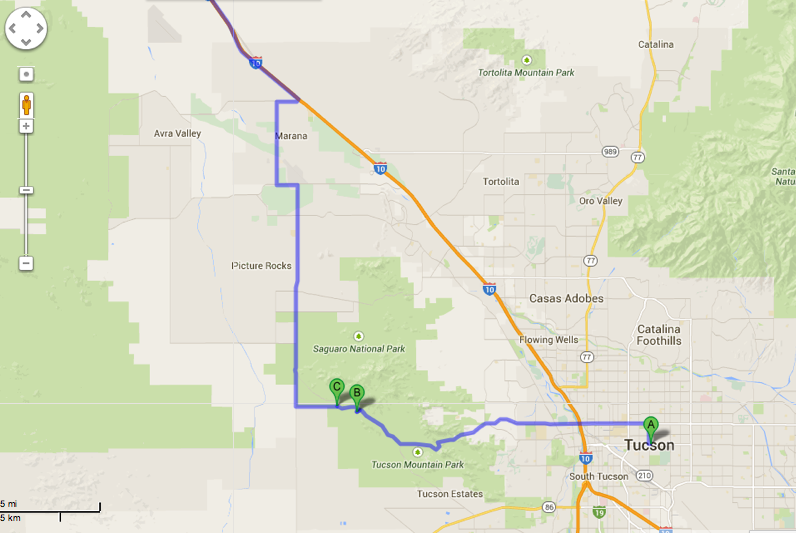

I tried to limit what I posted here, we took so many photos. We could have stayed here for hours. There are hiking trails, and the weather early in the morning is cool, the sky a deep, cloudless blue. The morning light is our friend, and these cactus are amazing. Each one so different, and so interesting.
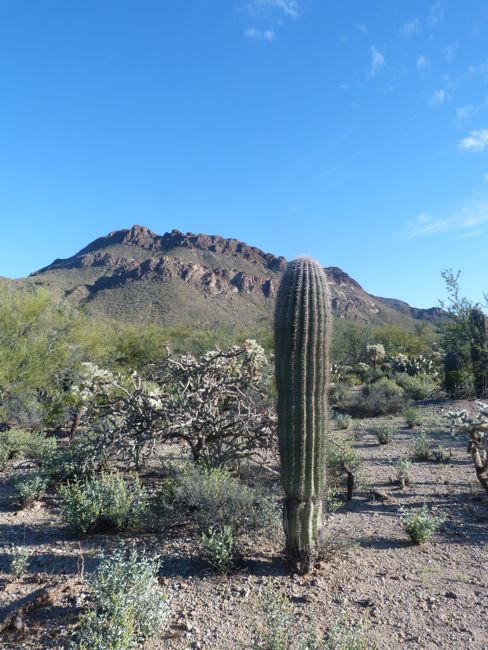
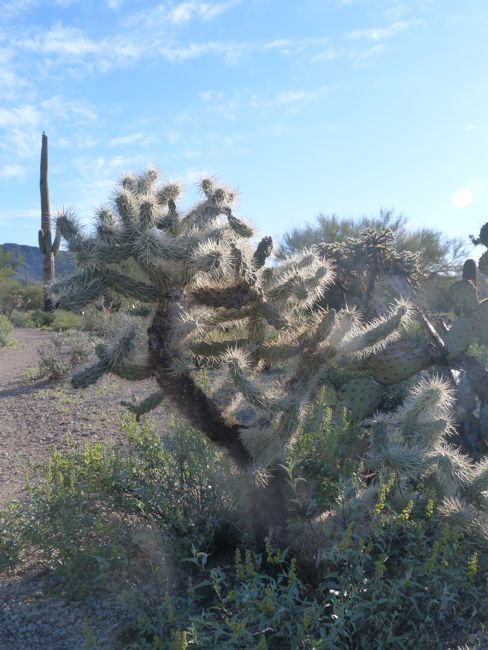
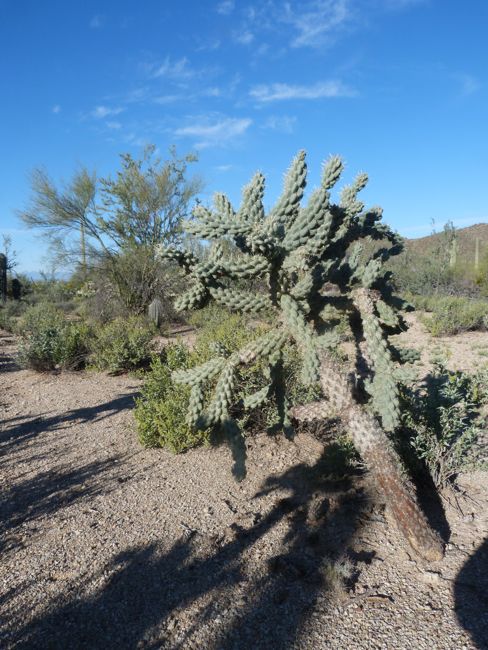
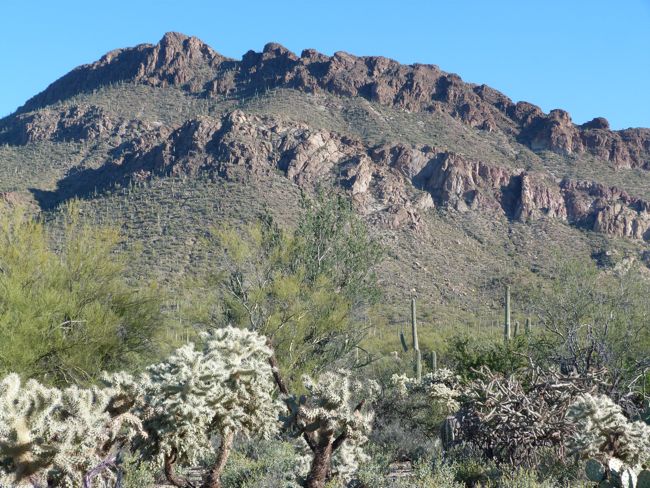
You can see this Saguaro forest stretching up high on the mountain
I called the one the “Praise the Lord Cactus” because to me, he looks like an evangelistic cactus 🙂
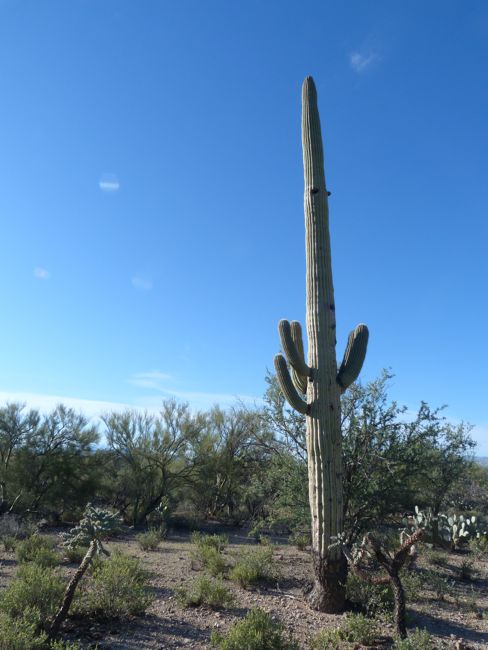
Look how fat they get! And how sometimes they are fatter at the top than at the bottom. In fact, they are often fatter at the top than at the bottom; the bottoms seem more vulnerable, like to rot or damage of all kinds.

It’s Spring, and many of the cacti are blooming!
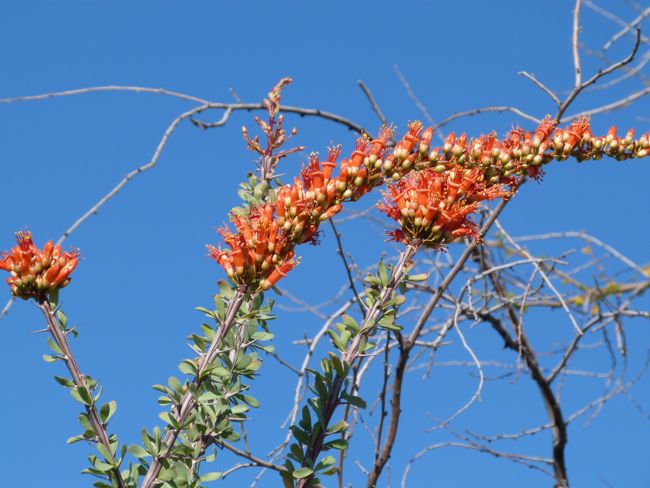
I wanted to do this once in my lifetime; now I think I want to do it more than once in my lifetime 🙂 I want to come again in the Spring, when the temperatures are temperate, and you can see the blooms and experience this beauty without the scorching heat.
The Emily Morgan and The Alamo in San Antonio, TX
This trip is checking off a lot of blocks for us. Not only do we like exploring new venues, we also like experiencing specialty hotels, and since we are going to make a pilgrimage to The Alamo, we want to stay in a nearby hotel.
I checked Trip Advisor, and other resources. I read and read and read. There are some older hotels with character, and their reviews also feature words like “cramped” “musty” and “seen better days.” Then, there is the Emily Morgan.
The Emily Morgan is elegant, and the Emily Morgan looks right over The Alamo.
Why visit the Alamo? Here is what Wikipedia says about the Battle of The Alamo:

The Battle of the Alamo (February 23 – March 6, 1836) was a pivotal event in the Texas Revolution. Following a 13-day siege, Mexican troops under President General Antonio López de Santa Anna launched an assault on the Alamo Mission near San Antonio de Béxar (modern-day San Antonio, Texas, United States), killing all of the Texian defenders. Santa Anna’s cruelty during the battle inspired many Texians—both Texas settlers and adventurers from the United States—to join the Texian Army. Buoyed by a desire for revenge, the Texians defeated the Mexican Army at the Battle of San Jacinto, on April 21, 1836, ending the revolution.
Several months previously, Texians had driven all Mexican troops out of Mexican Texas. About 100 Texians were then garrisoned at the Alamo. The Texian force grew slightly with the arrival of reinforcements led by eventual Alamo co-commanders James Bowie and William B. Travis. On February 23, approximately 1,500 Mexicans marched into San Antonio de Béxar as the first step in a campaign to retake Texas. For the next 10 days the two armies engaged in several skirmishes with minimal casualties. Aware that his garrison could not withstand an attack by such a large force, Travis wrote multiple letters pleading for more men and supplies, but fewer than 100 reinforcements arrived there.
In the early morning hours of March 6, the Mexican Army advanced on the Alamo. After repulsing two attacks, the Texians were unable to fend off a third attack. As Mexican soldiers scaled the walls, most of the Texian soldiers withdrew into interior buildings. Defenders unable to reach these points were slain by the Mexican cavalry as they attempted to escape. Between five and seven Texians may have surrendered; if so, they were quickly executed. Most eyewitness accounts reported between 182 and 257 Texians died, while most historians of the Alamo agree that around 600 Mexicans were killed or wounded. Several noncombatants were sent to Gonzales to spread word of the Texian defeat. The news sparked both a strong rush to join the Texian army and a panic, known as “The Runaway Scrape”, in which the Texian army, most settlers, and the new Republic of Texas government fled from the advancing Mexican Army.
Within Mexico, the battle has often been overshadowed by events from the Mexican–American War of 1846–48. In 19th-century Texas, the Alamo complex gradually became known as a battle site rather than a former mission. The Texas Legislature purchased the land and buildings in the early part of the 20th century and designated the Alamo chapel as an official Texas State Shrine. The Alamo is now “the most popular tourist site in Texas”.[5] The Alamo has been the subject of numerous non-fiction works beginning in 1843. Most Americans, however, are more familiar with the myths spread by many of the movie and television adaptations,[6] including the 1950s Disney miniseries Davy Crockett and John Wayne’s 1960 film The Alamo.
There is a hint in that last sentence, just about every American around our age grew up singing about Davy Crockett, wearing Davy Crockett coonskin caps, and seeing Davy Crockett in the movies. We watched, horrified, as the wicked Santa Ana overpowered the Texans, including – Davy Crockett. Be careful, parents, what your children watch; some of these movies have a lasting impact. So here we are, a million years down the road, going to see the Alamo.
Our GoogleMap app guides us right into the heart of town, where we have to figure out how to be going the right way on Houston street to get to the valet service, because parking is a big problem around the Alamo/Riverwalk site.
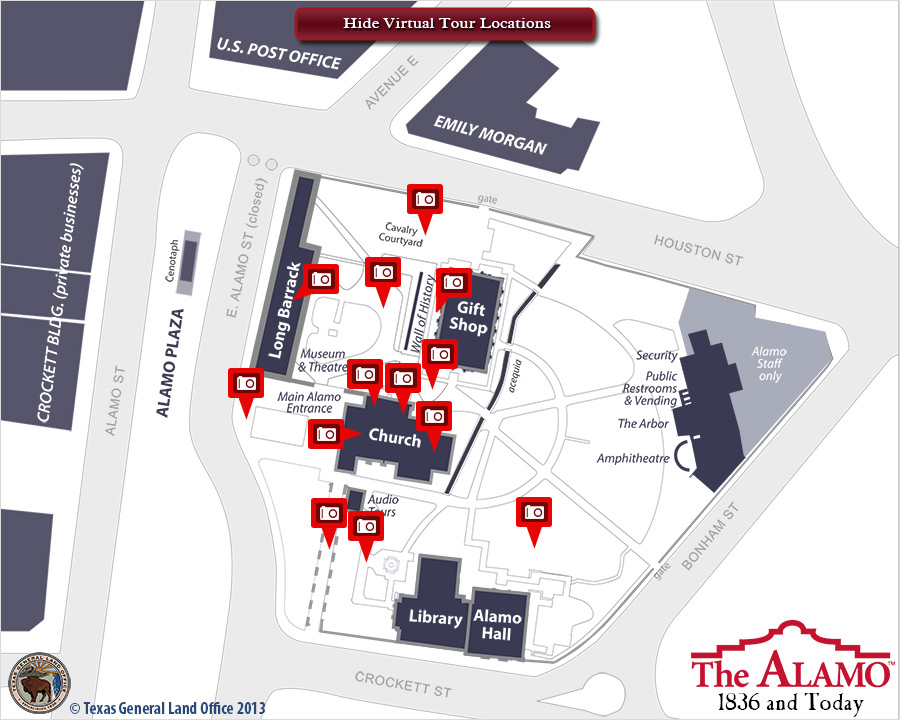
It all turns out to be a lot easier than we thought it was going to be, we get checked in and our bags are taken to our room and it is glorious. It feels like coming home, it’s spacious, with bath robes and a lovely big bathroom and windows from wall to wall overlooking the Alamo:


This is our view of the Alamo:

It had been raining, and after the rain the air was that clean, clear air that almost sparkles. I loved all the sights from our window:

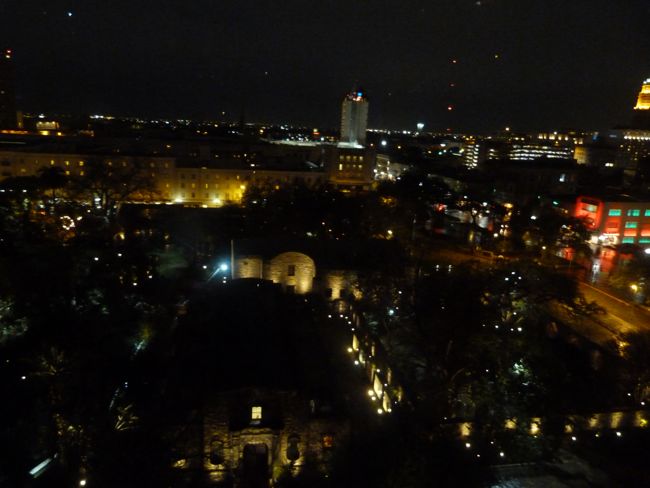
AdventureMan explored the Alamo. I have blisters on my feet from our huge walk around Benson-Rio Grande Valley Park, so I enjoy the big bathtub and a lovely cup of coffee and watch The Alamo from my birds eye perch. Now that we know about the Emily Morgan, we can come back with the grand-kids for a good visit on a sunnier day. 🙂
The Emily Morgan is a hotel you want to come back to. It has this great location by the Alamo, but also right by the San Antonio Riverwalk area, and a lot of great shopping and dining. The Emily Morgan also has special rates for military. 🙂
For those of you who did not grow up with Davy Crockett, you can listen the Ballad of Davy Crockett here:
Homeland Security: Your Tax Dollars At Work
This is a difficult post to write. I’m a patriot. We served our country many years, Cold Warriors. We believe in the United States of America.
What I saw on our southernmost border on the Rio Grande makes me uncomfortable. We have put a lot of money into making sure illegal aliens don’t get through.
I can see a lot of good reasons for good border security. And having said that, what I saw stepped right over the line of “good border security” and teetered precariously on “oppressive.”
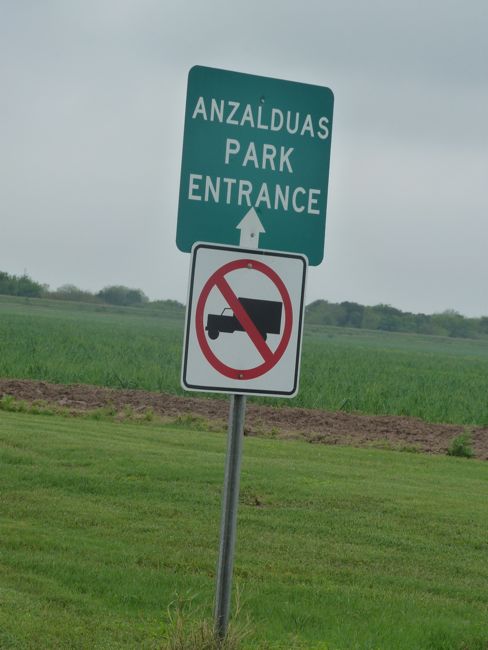
One of the Benson-Rio Grande Valley Park employees told us that if we want to see the Rio Grande, go to (some restaurant that has a view of the Rio Grande) or to this County Park called Anzalduas Park, and he told us how to get there. We drove and drove, couldn’t find it, but there was a cop parked on the road, so we asked him and he told us we were almost there.
As we reached Anzalduas Park (which is right under the Anzalduas Bridge, which goes over into Mexico; no, we didn’t have our passports, so we didn’t cross, maybe next time) and approached the park, it was a very odd park. It’s all excavated out, with a very very bare landscape, and some steep climbs. At the gate are some really heavy duty sliding guard gates. It’s not a very welcoming park.
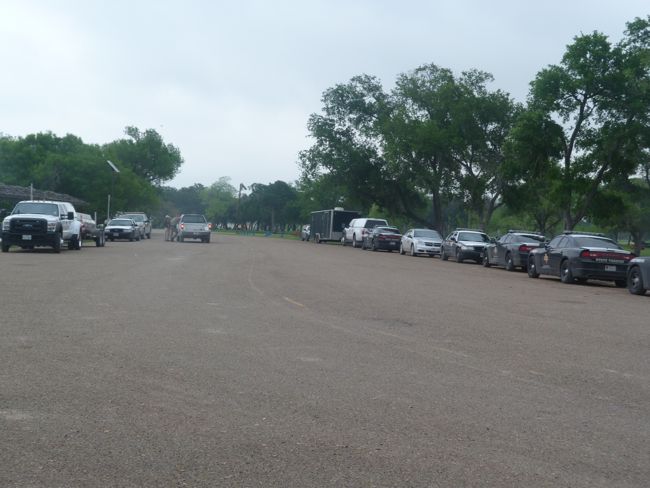
We got down into the park, drove down to the boat landing, and there were about twenty cars parked there, and they were all security vehicles. There was a big party going on, it was a Friday and some families and children were playing and the loudspeaker was all in Spanish. I couldn’t see any Homeland Security guards, only the cars, maybe the guards were sitting inside. Maybe they were at the party 🙂

The Park employee at Benson – Rio GRande Valley Park had told us that on weekends, across the Rio Grande, is a swim club, and the Mexicans are swimming all the time, just feet away from the American side, but there are all these signs saying the waters are dangerous. The waters seemed very calm, but sometimes there are dangers that are not so obvious.

That’s just a lot of cars providing border security in this park.
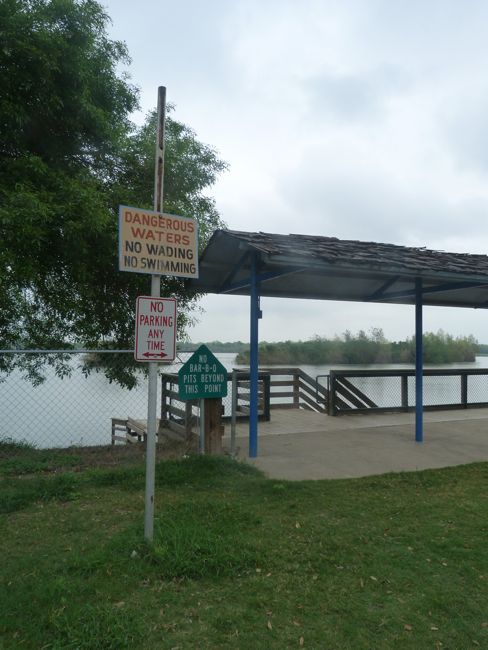

You can see the Mexican side swimming club; just yards across a very narrow Rio Grande:
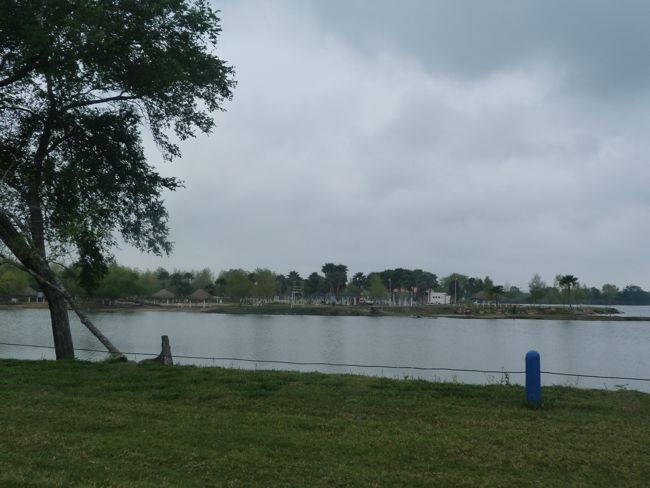
Here is another view of those heavy gates that bar the park in off hours.

We had been told this is a very popular park, full of people all the time. I am glad to hear it, glad that people are not intimidated, and use this beautiful little park for parties and celebrations, just as we use parks all over the USA.
Mission, TX, Delights and Surprises
Mission, TX was full of surprises. It looked small on the map, like a little strip of city, not so much. We are here on a mission, AdventureMan wants to visit the National Butterfly Center (did you know the United States had a National Butterfly Center?) and I wanted to see the Rio Grande.
Mission was big, and modern. Contrary to much of our Texas experience, it has very new roads.
Mission, and McAllen, her next door sister city, are right on the Rio Grande. There is a huge Homeland Security presence in Mission and McAllen. Many of the TripAdvisor reports I had read to find a good hotel seemed to have been written by government workers, so I should have put it together, but I didn’t, and I found the hugeness of the security presence a little overwhelming, and seriously intimidating. I am guessing all the new infrastructure is in support of guarding our borders.
Our hotel was very new, very modern and welcoming. It was all polished surfaces and glossy textiles, clean white linens, totally lovely for a chain hotel. We jumped into our swimsuits to hit the equally lovely pool, only to discover it was really cold, and for an Alaska girl to say a pool is cold, it really has to be cold.
Fitness goals thwarted, we checked at the desk for a local restaurant recommendation. The desk clerk was very helpful, but recommended a chain, and we wanted something more truly local. Fortunately, there is Trip Advisor. In minutes, we found a place that thrilled our hearts. It was a Thursday night date night kind of place for the very married. People were flocking in and ordering platters of BBQ. The Lone Star was our kind of place.

We are not people who like to waste, so AdventureMan had to take about half of his beef brisket back to the hotel, thinking he would have some for breakfast. It was very lean and beautifully smoked. Unfortunately, we discovered we did not have a refrigerator in this lovely hotel, oh AARRGH, and the excess beef went to waste.

I had my favorite, BBQ chicken, and a really good potato salad. Normally, I am not a big potato salad fan, I don’t like too much mayonnaise, and I like flavor. This was really good potato salad, for me, and very tasty.

The entire time we were there, people were flooding in. We really liked the Lone Star BBQ. We do a lot of talking with locals, so we later learned that everyone goes to Lone Star for it’s famous grapefruit pie. Grapefruit pie had not sounded all that tempting to us, but before Homeland Security, Grapefruit was the mainstay of the Mission, TX economy, and Lone Star BBQ specializes in a wonderful, very sweet, Grapefruit Pie.
I have a feeling that in order to make grapefruit into a pie, it’s kind of like rhubarb, you have to use a lot of sugar, a LOT of sugar. I would rather like to try one spoonful of a grapefruit pie, just for a taste, but I am not all that sorry that we passed, only that it is something that Mission was once famous for.
Obesity Linked to Lower Risk for Dementia
From today’s AOL news, surprising and counter-intuitive findings:
Obesity is linked to a whole slew of illnesses like cancer, type 2 diabetes, and heart disease, just to name a few.
However, new research surprisingly finds that obesity can actually reduce your risk of a devastating and fatal condition: dementia.
A study out of the UK found the link after analyzing data from nearly 2 million people over the course of decades.
According to the research by Oxon Epidemiology and the London School of Hygiene and Tropical Medicine, underweight people had a 39 percent higher risk of dementia versus people of average weight. The shocking part is that overweight people had an 18 percent reduction in risk and those who are clinically obese, a 24 percent reduction.
The lead researcher told BBC News, “The controversial side is the observation that overweight and obese people have a lower risk of dementia than people with a normal, healthy body mass index. That’s contrary to most if not all studies that have been done, but if you collect them all together our study overwhelms them in terms of size and precision.”
It is important to note that while this study is certainly controversial, it’s not the be all and end all in determining how weight correlates to risk of dementia. If nothing else, though, it certainly opens the door for further research.
The Nomadic Life: Our Journey to the American SouthWest
We still get restless. AdventureMan still gets calls asking him to come check something out, even goes back to Doha now and then, and I visit family. But we get so restless. We need the stimulation and challenge of other ways of seeing things, other ways of thinking, new sights, new smells, new adventures. There are so many places I have never seen!
Some people are just wired that way. I can remember, even as a young girl, being at the Juneau Airport, smelling that aviation fuel smell, and wishing I were going somewhere. It’s just the way I’m wired. I still love the smell of aviation fuel.
I am so lucky to be married to a man who indulges me. AdventureMan isn’t wired precisely the same; he is better at growing roots than I am, but he still likes to shake things up a little when it’s all same same same, day after day.
We’ve both had to adjust. I grew up in a family where when we were going, say from Germany to Italy for a vacation, we got up early and went, as AdventureMan so colorfully puts it, “balls to the walls” driving 12, 13 hours until we dropped from exhaustion. We were just intent on getting there. AdventureMan’s family traveled in shorter segments. It’s taken us about 40 years to find a happy medium. He has adjusted to sharing the driving with me. I’m a good driver, and I love driving. He goes to sleep, and I can drive for hours, it’s sort of a zen thing.
So off we went. We put over 6,500 on my two year old car, more than doubling the total mileage. It was a wondrous and joyful journey, full of surprises, full of delights, and with a couple days of truly awful driving.

We packed too much. When you are going someplace every couple days, you really don’t need a lot of clothing. I worked out of a large duffel; I would put what I needed for the next day or couple of days in a smaller bag to carry into the hotels.
At our church, we collect toiletries for the homeless population in Pensacola and the recovery population. I came back with a lot of toiletries 🙂
Our first day was to Beaumont, TX. No particular reason to stop in Beaumont, it was just a good place to stop en route to where we were going, which was The National Butterfly Center and the National Birding Center, both of which happen to be in Mission, TX. Mission is right on the border, on the Rio Grande, and I have never seen the Rio Grande before and wanted to see it.
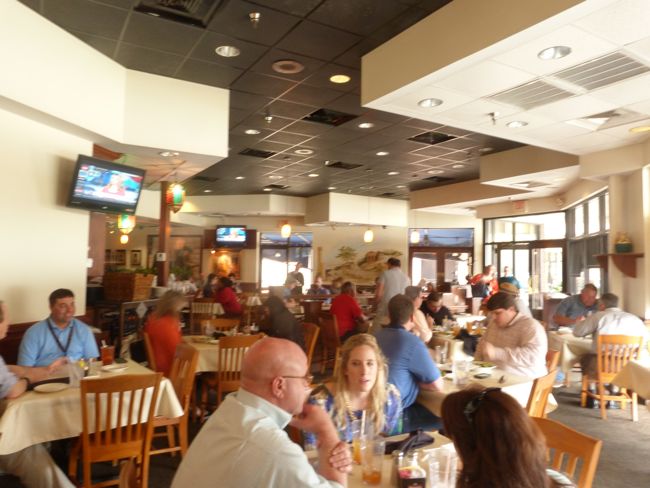
When lunchtime came, we were just passing Baton Rouge, where one of our very favorite restaurants, Al Basha, serves mouthwatering Arabic food. It’s just off I-10, we can see it from the road and what a great way to start our journey. But as we enter, every table is filled!
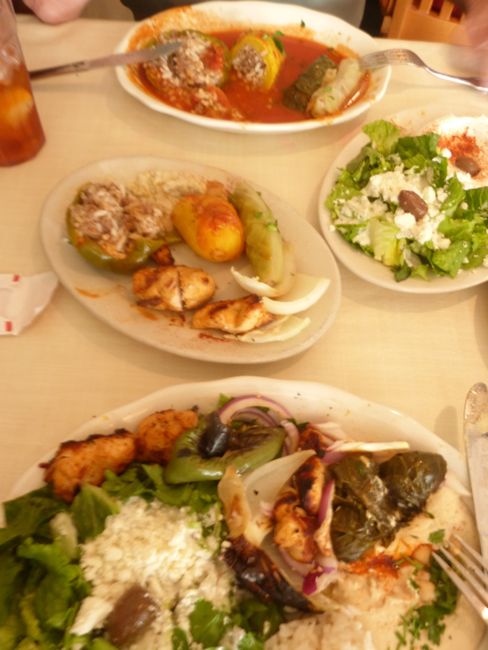
No worries, the waiter hurries over and leads us to a table way in the back, against the wall, which happens to be my favorite place. They have stuffed vegetables on the menu, which AdventureMan orders in a heartbeat, and of course, too much food comes.
We first became acquainted with stuffed vegetables long ago, living in Amman, Jordan, where it was a very common dish, served to family and to guests alike. Later, living in Kuwait, my friends knew how much AdventureMan loved stuffed vegetables and would make extra for him when they were preparing food for family or gatherings. What great memories this lunch brought back!
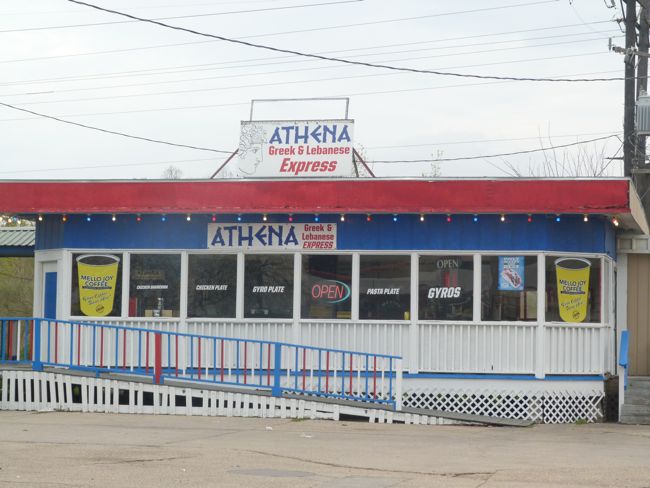
Louisiana is a quirky state, a state we like a lot. At a gas station near Lafayette, we saw three restaurants and an antique shop, including one with Lebanese food.

By the time we got to Beaumont, it was nearly dinner time. Beaumont is an oil refining town, and the hotel was full of men working in the refineries or about to be hired to work in the refineries. It was a very male populated environment. I went to the pool, but there was a large group of men sitting out on the patio by the pool, and I didn’t stay long, I wasn’t comfortable. It reminded me of the Middle East. I don’t like being oogled.
We were still so full from our Al Basha lunch that we found a local supermarket and got salads for dinner. It was a great first day on the road.
Houston Backlog of 6,663 Rape Kits Tested, Resulting in 850 DNA Hits
In the category of ‘you can run, but you can’t hide’ is the fact that hundreds, thousands of rape kits have gone untested in police departments all over the United States. Too expensive, or so they say, to process them all, but the force of public opinion is relentless, and the result is that some of these kits are finally producing results and convictions that, at long last, give the rape victims some satisfaction.
I worked with one of the very first Rape Crisis Lines, back in the beginning when it was all new, in, of course, California. We worked with the victims, but we also worked with emergency workers and with police. It was a team. Most of the police I worked with were merciful and compassionate, but there are other places where the police culture is harsh, and rape victims are not well-treated. There are still those people who believe that somehow a victim asked for it in some way.
I learned some surprising things as I worked with the victims. I learned how strong and how smart victims (they’re not all women) can be. They did what they had to do to stay alive, and they memorized everything they could to be able to tell the police. Many made it a point to leave DNA in the car, or to save the rapist’s DNA. It was less about the physical violation than finding oneself in a position of utter powerlessness, and not knowing if you were going to survive. I didn’t pity the victims; I admired their courage and resilience.
JUAN A. LOZANO, Associated Press
HOUSTON (AP) — Evidence from more than 6,600 rape kits that went untested for years in Houston have turned up 850 hits in the FBI’s nationwide database of DNA profiles, marking a major step in the city’s $6 million effort to address the backlog, officials announced Monday.
Charges have been filed against 29 people, six of whom have been convicted, since the city launched an effort in 2013 to test 6,663 rape kits — some of which dated back nearly three decades. Testing was completed in the fall, and the results have now been uploaded to a database used by investigators nationwide to compare DNA profiles of possible suspects, Mayor Annise Parker said.
“This milestone is of special importance to rape survivors and their families and friends because it means their cases are receiving the attention they should have years ago,” Parker said at a news conference, where she joined local law enforcement officials to announce the results.
Police are continuing to review the matches to see if charges can be filed in other cases. In the cases where prosecutors have won convictions, defendants have received sentences ranging from 2 to 45 years in prison. One case was dismissed after the victim decided not to pursue the case.
Rape kits include biological samples and physical evidence gathered from sexual assault victims that are later processed to see if they match a suspect’s DNA. Testing results are uploaded to the FBI’s Combined DNA Index System, or CODIS.
Harris County District Attorney Devon Anderson said there were some cases where suspects committed other crimes while rape kits that could have identified them sat untested.
“Now that the testing of these kits is complete, we know that it’s up to us to finish the job and to seek justice for these victims. The ball is in our court and we will do our best to put the people who are responsible for these heinous crimes behind bars for as long as possible,” she said.
Experts say Houston’s backlog — and similar backlogs in other U.S. cities — are due in part to the high cost of testing which can run from $500 to $1,000 per kit, though advocates argue that the lack of testing signals that sex crimes haven’t always been law enforcement priorities.
More than 12,000 kits went untested for years in Memphis, Tennessee, which is facing a lawsuit from rape victims as it tries to test the kits. In Detroit, prosecutors discovered more than 11,000 rape kits in an abandoned police warehouse in 2009, and Cleveland prosecutors have sent their entire 4,700-kit backlog for testing.
“This is not a Houston problem. It’s not a Texas problem. It’s a nationwide issue that built up over years and years,” Parker said.
___
Follow Juan A. Lozano on Twitter at http://www.twitter.com/juanlozano70
“Plus ça change, plus c’est la même chose”
Last week, we were in Atlanta, and stayed near a small town called Smyrna. We wondered several times where ancient Smyrna was, guessing Greece or Turkey. We were both right.
Today, the church remembers Polycarp, Bishop and Martyr of Smyrna. It is timely. There is a saying, the more things change, the more they stay the same (“plus ça change, plus c’est la même chose” – Alphonse Kerr) – and today, too, we are seeing people killed for what they believe, when they do not fall into step with the specific style of belief of the crowd. Oh, the things we do in God’s name!
The Liturgical Calendar: The Church Remembers
Today the church remembers Polycarp, Bishop and Martyr of Smyrna, 156.
Polycarp, Bishop of Smyrna in what is now called Turkey, did not seek martyrdom and did not encourage others to do so. When persecution broke out, Polycarp made every honorable effort to protect his flock and himself. He even hid in the country but, eventually, the authorities found him.Since Christians worshiped Jesus Christ, an “unauthorized god,” and since they refused to worship the Roman gods or the “Divine Caesar,” they were considered atheists and subversives.
Recent Comments
ExpatAlien on What Country am I Living … intlxpatr on Yellowstone: Old Faithful to C… Michelle on Yellowstone: Old Faithful to C… Cathy on No Grown-Ups in Charge intlxpatr on Waiting for Snow Wikipedia Donate Button

Amazina


Early Voting in Florida


 Here There and Everywhere