The Law of the Harvest
A small group was huddled, talking about volunteer work, and how people are afraid to commit, when the duties are actually very light, and easily accomplished, then we drifted into giving generously . . .
“It’s called The Law of the Harvest” one of my favorite women popped in as I was trying to explain that when you give, open-handedly, give with your heart, it all comes back to you multiplied.
We all turned to her. “Remember the seeds? You sow the seeds and then it is multiplied?”
Of course! It’s so simple! Why didn’t I think of that?
We’re All Related
We’re all related. My niece, Little Diamond, brought this article to my attention today:
Most Britons descended from male farmers who left Iraq and Syria 10,000 years ago (and were seduced by the local hunter-gatherer women)
Most Britons are direct descendants of farmers who left modern day Iraq and Syria 10,000 years ago, a new study has shown.
After studying the DNA of more than 2,000 men, researchers say they have compelling evidence that four out of five white Europeans can trace their roots to the Near East.
The discovery is shedding light on one of the most important periods of human history – the time when our ancient ancestors abandoned hunting and began to domesticate animals.
You can read the entire fascinating article by clicking HERE
Some people set so much store on pedigree. I bet there are a lot of surprises in our DNA.
Qatar Divorce Rate 12th Highest in the World
Today’s story in The Peninsula examines the increasing number of divorces this year, in relation to the number of marriages.
Not a single expert quoted mentions that perhaps many of these marriages were bad alliances in the first place. One expert continually mentions the problem being women having greater access to divorce.
It is no surprise that women who have access to divorce get out of bad marriages.
She is supposed to stay with a man addicted to pornography?
With a man who cannot complete the sexual act?
With a man with a drug problem?
With a man who is openly gay, and she is to provide cover?
With a man who has a fatal sexually transmitted disease which he neglected to disclose?
With a man who is still emotionally attached to his long-time girlfriend and was forced to marry another woman?
With a man who hits her?
With a man who ignores her and goes off with his friends all the time in preference to spending time with her? (Yes, expectations for marriage are higher now than they used to be. Times change. Expectatons change.)
(These are all stories told to me by local women about failed marriages.)
I’m not a big fan of divorce. I think marriage is serious business, and a lot of hard work. And I strongly believe that women need to have the exact same access to divorce that men have. I don’t see any of the experts citing male behavior as a possible cause of this divorce rate.
Divorce rate to reach new high this year
Web posted at: 12/30/2009 5:38:55
Source ::: The Peninsula / BY SATISH KANADY
DOHA: Qatar’s divorce rate is steadily going up. Crossing last year’s figure of 939 divorces, a total of 982 couples split in the country during the first 11 months of this year.
Going by the latest data released by the Qatar Statistics Authority (QSA), more than 80 divorces take place every month in the country. The 2009 figure is expected to cross the 1,000 mark once the figures for December come in.
According to the QSA, of the 982 divorce cases this year, 655 involved Qatari women. The number of non-Qatari women who split with their spouse during the period was 327.
The months of April, May and June witnessed a large number of divorces. While 127 women got divorced during the month of May, 107 and 101 women got divorced in June and April, respectively.
It may be noted that a recent international study identified Qatar as the country with the 12th highest divorce rate in the world. The country has 0.97 divorces per thousand people, it said.
The total number of divorces in the country in 1999 was 496. However, the number has grown steadily over the past decade and touched 997 in 2007, with a total of 721 Qataris and 276 non-Qataris getting estranged. Though the rate went down in 2008 (939), this year’s figures are expected to break the 2007 record.
The QSA’s figures are disturbing against the backdrop of the fact that the total number of marriages held this year in Qatar until November 2009 was 2,917, against which the number of divorces was 982.
Against the 266 marriages that took place last month, 90 couples got divorced. Of them, 57 included Qatari women. In the month of May, which witnessed the largest number of divorces — 127 — the number of marriages was 323.
Opinions are divided among Qatari social scientists on the data revealed by the QSA. While a section of them sees the divorces as a direct consequence of Qatar’s “culture shock”, others say QSA’s methodology in collecting the data is not foolproof and the figures do not seem realistic.
“The data collected from the courts need not necessarily reflect the exact divorce rate in Qatar. For, there are a large number of cases where the couples re-join after obtaining a divorce from the court”, said a Qatari woman scholar who is doing research on Qatar’s broken families and divorces.
However, Moza Al Malki, a prominent Qatari psychologist, said: “Qatari women’s exposure to the changing world and their growing self-reliant nature are the prime reasons for this social problem.”
Al Kula, a system that encourages women to approach a court if they are not comfortable with their partner, is also contributing to the growing number of divorces, she added.
Stieg Larsson and The Girl With the Dragon Tattoo
I needed some escape time, so I started The Girl With the Dragon Tattoo, a mystery by Stieg Larsson, set in Sweden. I love these detective stories set in other countries; I can learn something as I pass the time reading an exciting mystery. And part of my heritage is Swedish, so I thought this should really be fun.

It wasn’t, at least not at the beginning. At the beginning, I didn’t like any of the characters, and they were always eating sandwiches that sounded awful, like liverwurst and egg. I felt like the characters didn’t have any moral center, like they drifted from day to day without neither conscience nor a plan. The main character, Mikael Blomkvist, is about to go to prison for libel; he printed a story about a major industrialist which turned out to be false, and he protected his source. We don’t really know the whole story, not until the end, which makes it hard to evoke a lot of sympathy for Blomkvist.
He is contacted by another industrialist, and asked to solve a mystery, if possible, about the disappearance, 40 years ago, of his niece, Harriet Vanger. Blomkvist would investigate under the cover of writing an autobiography of his employer and his family. There are members of the family who object. In many ways, it isn’t a very nice family.
Blomkvist gets an assistant, a deeply troubled and flawed young woman, Lisbeth Salander, with a gift for investigation. There is a lot of violence, sexual violence, and mutilation of animals. One of the points I credit Larsson with making is the amount of violence against women in Sweden, which goes on under a seemingly civilized veneer. The truth, as I see it, is that there is violence against women in every society; in some it is better documented than in others. In some, it is better punished that others. It exists in all societies, in all countries.
Another think I ended up liking about the book was that the main character, Blomkvist, who writes financial analysis, takes the press to task for printing what passes for financial news without critically reading and evaluating, which he feels is a responsibility of the press. At one point, as people quail with fear that the stock exchange will drop dramatically, he is interviewed and explains that the stock market is based on perceptions, while the Swedish economy is based on production and services; that while the markets may fail, the economy can still be going strong.
Slowly, the book tightens up. Actually, by the end, I was hooked. The only question in my mind is – did I like it enough to read another?
The book is available, new, from Amazon.com at $6.00 plus shipping.
Qatar National Day Fireworks Spectacular
The problem is, even with the most amazing situation in the world, my wonderful little hand held Lumix can’t begin to capture the awe-inspiring grandeur of the 20 minute Qatar National Day Fireworks spectacular.
Another amazing thing – the fireworks started ON TIME. Suddenly the entire length of the Corniche erupted in white waterfalls. The fireworks were kept relatively close to the ground, and compact, but spread along a couple miles – it was an amazing feat, and the timing was to the second.
Caught in traffic, we decided to try something different. Like the Robert Frost poem, we took a road less travelled by, and it made all the difference. We lucked into a fantastic vantage point.
















I have to add a special thanks here to AdventureMan. He knows how much I love fireworks, and I knew he has to work tomorrow, and still, he took me to see the fireworks. We were stuck in bumper-to-bumper traffic until we took a chance, and by a miracle, found this fantastic, uncrowded vantage point. He love the fireworks as much as I did, but he did it for me, and my heart is full of gratitude. 🙂
Cheaters Leave Digital Tracks
No, not another post about cheetahs – this is about cheaters.
Today in AOL: Sphere
(Dec. 3) — Tiger Woods has long since mastered the use of every club in his golf bag. Yet he, like many Americans, apparently is still learning the hazards of communicating too openly by modern methods such as text messaging.
Woods is certainly not alone. As communication technology continues to evolve, unfaithful partners are finding it easier to keep in touch with their illicit lovers — but it’s also a lot easier to get caught.
The golf champion has said only that “I have let my family down” through unspecified “transgressions.” But one of his alleged mistresses, Jaimee Grubbs, says she still has 300 text messages sent to her by Woods. In one, Grubbs tells RadarOnline.com, Woods says, “Send me something very naughty. … Go to the bathroom and take [a picture].”
Us Weekly magazine has also posted a voice mail Grubbs says is from Woods, warning that his wife has examined his cell phone and may have discovered the former cocktail waitress’ name via caller ID.
“Any electronic means of communication — a cell phone call, an e-mail or a text message — will leave some sort of trail behind,” said Ed Edmister, a private investigator and computer forensic expert at Integrity Security & Investigation Services, which has branches in California and Virginia. “Even if you toss your phone in an incinerator or dump your computer in a lake, there are still records kept by phone and Internet companies. Digital forensics has become a huge field.”
Of course, not every spouse needs to hire a private investigator, or send in a partner’s cell phone to one of the dozens of companies that specialize in recovering deleted text messages and call logs. Sometimes, the evidence is hiding in plain sight.
Take the case of Tony, a 38-year-old Jacksonville, Fla., man who did not want to use his real name for this article. After eight years of marriage, Tony began an affair with a younger woman. “We sent text messages to each other all the time,” Tony said. “I carried my cell phone with me wherever I went.”
After staying out late one night with his mistress, Tony slept in while his wife and two sons ate breakfast together in the kitchen. His cell phone, carelessly left in a coat pocket, chirped to indicate a text message had been received. “My 8-year-old son picked it up and read the message aloud,” Tony recalled. “It said, ‘Good morning, honey. Have a good day.'”
Tony’s wife snatched the phone from her son’s hand, headed into the bedroom and confronted her husband. Six months later, the couple divorced.
“Infidelity is so much easier today,” said Ruth Houston, author of “Is He Cheating on You? 829 Telltale Signs” and a widely cited infidelity expert. “In the past, a potential cheater would go to a bar or a nightclub — very risky stuff when you’re in a marriage. Now you can sit down in your home and click on a mouse and find willing partners.”
Thanks to unreliable self-reporting, trustworthy infidelity statistics are difficult to come by. But a recent study sponsored by the National Science Foundation, and reported in The New York Times, showed marked increases in infidelity among both men and women from 1991 to 2006.
“Infidelity is definitely on the rise because of technology,” Houston said.
Even in innocuous ways, the Internet can bring together aspiring adulterers. After all, the Web is quick to sort users into affinity groups. Two people who meet in a dedicated chat room already have some interest in common, and that can foster a rapid sense of intimacy.
“Women, especially, crave emotional intimacy,” Houston said. “E-mail or chatting can start off innocently, but if there are actual connections, relationships develop quickly.”
In any case, adulterers are slow to grasp that modern communication devices are not nearly as private and secure as many people believe. Just ask South Carolina Gov. Mark Sanford, whose e-mails to his mistress, Maria Belen Chapur, were first made public by The State, a Columbia, S.C., newspaper.
Kwame Kilpatrick, the former mayor of Detroit, suffered a similar turn in the electronic pillory. Some 6,000 text messages from his mistress’ pager were posted online by The Detroit Free Press and helped lead to his conviction on perjury charges.
Those politicians are certainly not the only ones to be caught with their virtual pants down. Digital technology, which has democratized almost everything it touches, is making adultery accessible to the masses.
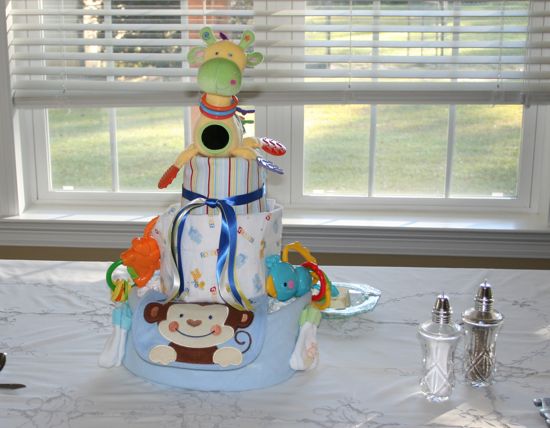
Baby Shower Diaper Cake
I wasn’t there. AdventureMan and I would have loved to be there, but it wasn’t possible. We spent Thanksgiving apart from our son and his wife. We also missed the BABY SHOWER! Her sweet aunts arranged a wonderful shower for them, and sent me a photo of the “diaper cake.” I don’t think this is a real cake . . . but I am not sure entirely what it is. I know only that it is adorable!
Cats Purr Purr-posefully
This study cracks me up. When a cat is catting around you in the morning, it is usually because they are hungry, and they want you to feed them. If you get up and feed them, you have just encouraged them to bother you. YOU train the cat to bother you! The Qatteri Cat knows I won’t get up and feed him until I am ready. With me, he will purr, but he settles down and waits for me to get up – and feed him. LOL, I guess he has me trained, too.
From today’s BBC News:
Cat owners may have suspected as much, but it seems our feline friends have found a way to manipulate us humans.
Researchers at the University of Sussex have discovered that cats use a “soliciting purr” to overpower their owners and garner attention and food.
Unlike regular purring, this sound incorporates a “cry”, with a similar frequency to a human baby’s.
The team said cats have “tapped into” a human bias – producing a sound that humans find very difficult to ignore.
Dr Karen McComb, the lead author of the study that was published in the journal Current Biology, said the research was inspired by her own cat, Pepo.
“He would wake me up in the morning with this insistent purr that was really rather annoying,” Dr McComb told BBC News.
“After a little bit of investigation, I discovered that there are other cat owners who are similarly bombarded early in the morning.”
While miaowing might get a cat expelled from the bedroom, Dr McComb said that this pestering purr often convinced beleaguered pet lovers to get up and fill their cat’s bowl.
To find out why, her team had to train cat owners to make recordings of their own cats’ vocal tactics – recording both their “soliciting purrs” and regular, “non-soliciting” purrs.
“When we played the recordings to human volunteers, even those people with no experience of cats found the soliciting purrs more urgent and less pleasant,” said Dr McComb.
How annoying?
She and her team also asked the volunteers to rate the different purrs – giving them a score based on how urgent and pleasant they perceived them to be.
“We could then relate the scores back to the specific purrs,” explained Dr McComb. “The key thing (that made the purrs more unpleasant and difficult to ignore) was the relative level of this embedded high-frequency sound.”
“When an animal vocalises, the vocal folds (or cords) held across the stream of air snap shut at a particular frequency,” explained Dr McComb. The perceived pitch of that sound depends on the size, length and tension of the vocal folds.
“But cats are able to produce a low frequency purr by activating the muscles of their vocal folds – stimulating them to vibrate,” explained Dr McComb.
Since each of these sounds is produced by a different mechanism, cats are able to embed a high-pitched cry in an otherwise relaxing purr.
“How urgent and unpleasant the purr is seems to depend on how much energy the cat puts into producing that cry,” said Dr McComb.
Previous studies have found similarities between a domestic cat’s cry and the cry of a human baby – a sound that humans are highly sensitive to.
Dr McComb said that the cry occurs at a low level in cats’ normal purring. “But we think that (they) learn to dramatically exaggerate it when it proves effective in generating a response from humans.”
She added that the trait seemed to most often develop in cats that have a one-on-one relationship with their owners.
“Obviously we don’t know what’s going on inside their minds,” said Dr McComb. “But they learn how to do this, and then they do it quite deliberately.”
So how does Dr McComb feel about Pepo now she knows he has been manipulating her all these years?
“He’s been the inspiration for this whole study, so I’ll forgive him – credit where credit’s due.”
Recent Comments
intlxpatr on Shampoo Ginger tigerbutterya0c5ff1d… on Shampoo Ginger intlxpatr on British Soldier Kidnapped, Esc… John on British Soldier Kidnapped, Esc… intlxpatr on British Soldier Kidnapped, Esc… Wikipedia Donate Button

Amazina


Early Voting in Florida


 Here There and Everywhere