Income Tax Blessing
You didn’t think those words could all be used in the same sentence, did you? AdventureMan and I have to pay something called “quarterly estimated taxes” and this year, I guess because our investment income went seriously down, we overpaid our taxes. I know, I know, that doesn’t sound like good news to you, but it sure beats the pit-in-the-stomach of learning that you owe more to Uncle Sam. We overpaid, and we will go ahead and apply it to next year’s taxes and hope that everything works out well next year, too.
We used to talk to my father about ways he could pay less tax on his income and savings. He would look at us and say “But the government was always good to me!” (he worked for the government) “They paid my salary! They pay my retirement! They help pay my medical bills! Why would I not want to pay them taxes?”
It was an extraordinary attitude; I have never forgotten it.
The Thirteenth Tale – Setterfield
After reading some heavier stuff, I needed a break, and waiting on my “read me!” bookshelf has been this book, The Thirteenth Tale, another one of those I pick up at the last minute and stuff into the last remaining centimeter of space in my overstuffed suitcases. Nobody recommended it, it just looked like it might be good.
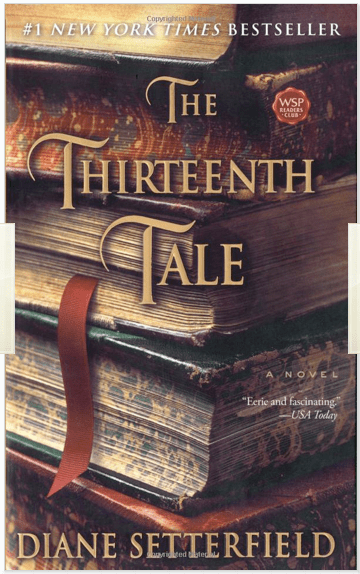
It was good, although now I can’t think of anything so gripping about it. Setterfield took the classic gothic novel – she mentions Jane Eyre frequently – and updates it, makes it modern and personal. It was a good, fun read, had me hurrying through my daily “must-do’s” so I could read more – I like a book like this now and then.
And – the main character, Margaret Lea, loves books. 🙂 She works in her family old-books business, leads a quiet, kind of sad life, haunted by the loss of her own twin early in life. When contacted by famous novelist Vida Winter to write her biography, she is intrigued, and accepts the job offer, which involves going to stay in Vida Winter’s house.
Part of what is fun reading this book is that we are dealing with an “unreliable narrator” with Vida Winter. Sometimes she is lying, sometimes she is lying by omission, and part of the mystery is that Margaret must try to verify what she has been told and try to figure out what has been left out. She has a great adventure in the process.
This is great escape reading. Good for a long plane trip, good for sitting by a sick relative in the hospital, good for using as a carrot (“if I get this done, and this, and this – then I get to go read ‘The Thirteenth Tale!’ “) You can buy it on Amazon.com for around $10 paperback.
Cell Phone Etiquette: What do you think?
AdventureMan and I were having lunch yesterday and I saw a couple at another table, both on their cell phones. So, like they were sharing a meal, but not really sharing time with each other.

I’m not that big of a cell/mobile phone fan, although my son and my sister both have iPhones, which I look at with envy and think one day I will get one. I carry it because I think it would really be a bad thing in Kuwait to be in a car accident, not my fault, with our without a cell phone. I carry it so I can reach my husband in an emergency. But sometimes, yes, my bad, I forget it and don’t even miss it. Sometimes I stick it in my purse and remember two days later that it is still there.
Here is how I see it. If you are with another person – like if you and your best-friend-forever are having lunch, sharing your deep down secrets, how do you feel about them taking a phone call, one that really doesn’t matter? I totally understand if there are emergencies, or even if one of the children wants to ask something, but what about a full-blown conversation? Chat chat chat chat chat as if you don’t exist?
AdventureMan and I used to disagree about this. Now, if he gets a phone call and he thinks it can wait, he doesn’t answer. If he thinks it might be important, he answers but keeps it short. If we are in a large group and it is a crisis call, he will leave the group, and not subject us to be unwilling evesdroppers. I am very comfortable with this. if it is just the two of us and a tricky phone call comes in, I just pull out my Sudoku and work on a puzzle until he is free to rejoin me. It works for us.
I feel the same way about texting. Some people are very good at doing it so subtly that no one else knows; I don’t mind that. If you are in a meeting, however, and there is a speaker, don’t you think the right thing to do is to put away your phone and pay attention to the speaker? If you are with a friend, isn’t it rude to be texting all the time to someone else? What kind of message does that send about how much you value the relationship with me?
If you are texting while you are driving, how much attention are you paying to the road? I see you, half in my lane because you are trying to read the response!
I don’t like being accessible to the world 24/7. I think these mobile phones are supposed to be our servants, not our masters. I like seeing who is calling (if your number doesn’t show your name on my phone, I won’t be answering!) I like getting and sending messages. I just have a feeling there is a time and place for everything. If I have made plans to see you – I want you to pay attention to me!
Am I way out of whack on this?
There is a little voice telling me this is generational, that I am falling a little out of step with the modern way of doing things. So, you tell me. How do you see it?
Kuwait: Our History Runs in our Blood (Mohammed Ali Dashti)
Kuwaitis showing new interest in the past; Traditions, culture wiped out by ‘change’
From today’s Arab Times; you can read the entire interview by clicking here
A born artist makes it his life’s mission to chronicle the past of Kuwait using his artistic skills and his academic erudition. His brush strokes have brought to life scenes from a Kuwait straddling a dying hidebound order and a modern state taking birth. His passion drove him beyond the pale of his canvas to physically revive some lost traditions for posterity.
Read on to find out more about Mohammed Ali Dashti’s enchanting four-decade long mission and some of the precious values from the past which we have now lost and which he fears we may never recover.
Q: You are involved in a rather enchanting profession of recreating the past. What is your goal?
A: When oil was discovered in Kuwait, the state underwent a rapid transformation. The change was very sudden and very fast. In a short span of time, Kuwait leapt from an ancient system to a very modern state. This change wiped out many elements from our traditions and culture.
Until sometime ago, the people of Kuwait were disposing of the antiquated paraphernalia from their homes. But now, there is a sudden interest in these items, and now they are buying them back to preserve the past. It is the only way of holding fast to our roots and knowing how our forefathers, not from a distant past, conducted their lives. Kuwaitis are buying doors and furniture used in the old Kuwaiti homes.
We, as an organization, are working to preserve our history for posterity to learn and know. We produce ancient household items like the Mubkhar (incense stand) with which our grandparents used to scent clothes and fan fragrant smoke around the house.
In the old days, we had no airplanes or cars. The only way we were connected with other places in the region was the sea. Kuwait, owing to its geographical advantages, became a center for shipbuilding. Kuwaitis were experts in making dhows for different purposes. Boats were built in a variety of sizes and designs based on their use. There were cargo ships, fishing boats and vessels for pearl diving. The size of boats ranged from a meter to up to 6 meters. This is another aspect of history that we are trying to preserve and we have been recreating many of the original models our ancestors voyaged in.
We showcase our creations at universities, malls, schools and other places. Thus we have been able to generate interest in our past. We take our craftsmen along and explain to the present generation about Kuwait’s history.
Q: What do you think has created this new interest in the past among Kuwaitis? Can this be read as a reemergence of old traditional values?
A: Our history actually runs in our blood. It is very difficult to detach ourselves from our cultural roots. And so whenever any nation travels too far away from its true origins, at some point of time, it stops and tends to recall the past. History is what gives our existence contextual relevance. And we often try to find it by clawing back into our past, by remembering the way we came through.
Q: You said you make old-model boats. Aren’t you specialized in Warjiyas, the simplistic fishing boats from the past? Which is the biggest boat you have ever built?
A: The biggest boat I have ever built so far is 6 meters long. I make Warjiyas because it is most symbolic of our old fishing traditions. These boats were very famous among the people on Failaka Island. They used it for fishing and it is very easy to construct.
The specialties of Warjiya are: it is wholly made of palm tree to the last detail. The body is built with spines of palm leaf, which are trussed using ropes made our of palm fiber. It is very light and so easy to carry.
Warjiyas sort of became extinct about 60 years ago with the advent of oil and the independence of the state’s economy from fishing and pearl diving. We can’t return to those ancient livelihoods, and so we are now planning to start an annual Warjiya race to keep the tradition alive. The first race will be held in September this year.
Q: Do you have any plans of reviving even the tradition of fishing along with these boats?
A: No, as I said, we can’t actually go backwards to keep our original traditions alive. So, these things can only happen in a token manner. The aim is to keep the future generations aware about how their grandfathers and people before them lived. We don’t have to make our children live a similar life to make them appreciate the ancient way of life.
Q: All over the world there is great demand for antique items. Is what we are seeing in Kuwait a similar trend — a fascination for antique pieces — or is it more than that?
A: No. It is not just a fad in Kuwait. The people really care for the past and there are efforts at all levels to preserve relics from the past or have their duplicated versions. These efforts have been sincerely undertaken by Kuwait National Museum and other private museums in the country, and between them they share a vast treasure of valuable relics and information about Kuwait’s past.
The government is also giving due encouragement to all of us to help us in our endeavors. The ministry of information is doing everything within its means to promote our traditional and cultural heritage in other Gulf countries and beyond.
More-on Bullying
The bullies have always been there – Jodi Picoult in 19 MInutes says that the worst part about being the bully is that nagging insecurity that if you stop trying for even a short time, your popularity will fall. So even the bully is struggling with nagging self-doubts, and those doubts compel his/her behavior – taunting someone “different”, smaller, weaker, more vulnerable, in order to make oneself look bigger. It’s pitiful, but how do we stop it?
This is a tragic article – so tragic I didn’t really want to publish it. It happens in every society, world-wide; the strong – but insecure – pushing around those who are weaker, to make themselves feel better.

April 16, 2009, 9:02 PM
Dude, You’ve Got Problems
by Judith Warner
From The New York Times
Early this month, Carl Joseph Walker-Hoover, an 11-year-old boy from Springfield, Mass., hanged himself after months of incessantly being hounded by his classmates for being “gay.” (He was not; but did, apparently, like to do well in school.)
In March, 2007, 17-year-old Eric Mohat shot himself in the head, after a long-term tormentor told him in class, “Why don’t you go home and shoot yourself; no one will miss you.” Eric liked theater, played the piano and wore bright clothing, a lawyer for his family told ABC news, and so had long been subject to taunts of “gay,” “fag,” “queer” and “homo.”
Teachers and school administrators, the Mohats’ lawsuit now asserts, did nothing.
We should do something to get this insanity under control.
I’m not just talking about combating bullying, which has been a national obsession ever since Columbine, and yet seems to continue unabated. I’m only partly talking about homophobia, which, though virulent, cruel and occasionally fatal among teenagers, is not the whole story behind the fact that words like “fag” and “gay” are now among the most potent and feared weapons in the school bully’s arsenal.
Being called a “fag,” you see, actually has almost nothing to do with being gay.
It’s really about showing any perceived weakness or femininity – by being emotional, seeming incompetent, caring too much about clothing, liking to dance or even having an interest in literature. It’s similar to what being viewed as a “nerd” is, Bennington College psychology professor David Anderegg notes in his 2007 book, “Nerds: Who They Are and Why We Need More of Them”: “‘queer’ in the sense of being ‘odd’ or ‘unusual,’” but also, for middle schoolers in particular, doing “anything that was too much like what a goody-goody would do.”
It’s what being called a “girl” used to be, a generation or two ago.
“To call someone gay or fag is like the lowest thing you can call someone. Because that’s like saying that you’re nothing,” is how one teenage boy put it to C.J. Pascoe, a sociologist at Colorado College, in an interview for her 2007 book, “Dude, You’re a Fag: Masculinity and Sexuality in High School.”
The message to the most vulnerable, to the victims of today’s poisonous boy culture, is being heard loud and clear: to be something other than the narrowest, stupidest sort of guy’s guy, is to be unworthy of even being alive.
It’s weird, isn’t it, that in an age in which the definition of acceptable girlhood has expanded, so that desirable femininity now encompasses school success and athleticism, the bounds of boyhood have remained so tightly constrained? And so staunchly defended: Boys avail themselves most frequently of epithets like “fag” to “police” one another’s behavior and bring it back to being sufficiently masculine when someone steps out of line, Barbara J. Risman, a sociologist at the University of Illinois at Chicago, found while conducting extensive interviews in a southeastern urban middle school in 2003 and 2004. “Boys were showing each other they were tough. They were afraid to do anything that might be called girlie,” she told me this week. “It was just like what I would have found if I had done this research 50 years ago. They were frozen in time.”
Pascoe spent 18 months embedded in a Northern California working-class high school, in a community where factory jobs had gone south after the signing of Nafta, and where men who’d once enjoyed solid union salaries were now cobbling together lesser-paid employment at big-box stores. “These kids experience a loss of masculine privilege on a day-to-day level,” she said. “While they didn’t necessarily ever experience the concrete privilege their fathers and grandfathers experienced, they have the sense that to be a man means something and is incredibly important. These boys don’t know how to be that something. Their pathway to masculinity is unclear. To not be a man is to not be fully human and that’s terrifying.”
That makes sense. But the strange thing is, this isn’t just about insecure boys. There’s a degree to which girls, despite all their advances, appear to be stuck – voluntarily – in a time warp, too, or at least to be walking a very fine line between progress and utter regression. Spending unprecedented amounts of time and money on their hair, their skin and their bodies, at earlier and earlier ages. Essentially accepting the highly sexualized identity imposed on them, long before middle school, by advertisers and pop culture. In high school, they have second-class sexual status, Pascoe found, and by jumping through hoops to be sexually available enough to be cool (and “empowered”) yet not so free as to be labeled a slut, they appear to be complicit in maintaining it.
Why – given the full array of choices our culture ostensibly now allows them – are boys and girls clinging to such lowest-common-denominator ways of being?
The strain of being a teenager, and in particular, a preteen, no doubt accounts for much of it; people tend to be at their worst when they’re feeling most insecure. But there’s more to it than that, I think. Malina Saval, who spent two years observing and interviewing teenage boys and their parents for her new book “The Secret Lives of Boys,” found that parents played a key role in reinforcing the basest sort of gender stereotypes, at least where boys were concerned. “There were a few parents who were sort of alarmist about whether or not their children were going to be gay because of their music choices, the clothes they wore,” she said. Generally, she said, “there was a kind of low-level paranoia if these high-school-age boys weren’t yet seriously involved with a girl.”
It seems it all comes down, as do so many things for today’s parents, to status.
“Parents are so terrified that their kids will miss out on anything,” Anderegg told me. “They want their kids to have sex, be sexy.”
This generation of parents tends to talk a good game about gender, at least in public. Practicing what we preach, in anxious times in particular, is another thing.
Facebook Hurts your Grades?
From CNET News
Yes, researchers at Ohio State University have delved deep into the habit that is Facebook and concluded that those who express their membership regularly do worse in school tests.
In fact, they say, the majority of those who Facebook daily do worse by as much as one whole grade.
Aryn Karpinski, one of the Ohio State education department researchers, was quoted in the Times of London as saying: “Our study shows people who spend more time on Facebook spend less time studying. “Every generation has its distractions, but I think Facebook is a unique phenomenon.”
Ms. Karpinski will be presenting her findings this week at the annual meeting of the American Educational Research Association.
Some 68 percent of the Facebookers among the 219 young things questioned enjoyed a significantly lower GPA than those who eschewed friending and poking.
Easter Sunrise and Noah’s Ark
Today is the most beautiful day in the church year, Easter Sunday. Mary and Mary go to the tomb where Jesus was laid, only to find the 2 ton stone rolled away from the entrance, and angels waiting there, telling the women that Jesus was not there, that he had arisen. If you have been reading this blog for any time at all, you will know that it delights my heart that women were the first to know, and that Jesus, resurrected, appeared first to a woman. In the Bible, she tells the men and they don’t believe her. LLOOLL.
It is a glorious Easter morning:

As part of her Easter greeting today, a friend sent the following, which I love. Since all three traditions, Jewish, Christian and Moslem, celebrate Noah (Noh) I thought I would share it with you.
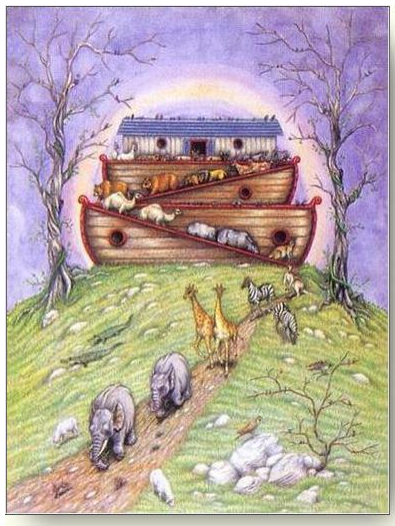
Noah’s Ark
(Everything I need to know, I learned from Noah’s Ark. )
ONE: Don’t miss the boat.
TWO: Remember that we are all in the same boat!
THREE: Plan ahead. It wasn’t raining when Noah built the Ark.
FOUR: Stay fit. When you’re 60 years old, someone may ask you to do something really big.
FIVE: Don’t listen to critics; just get on with the job that needs to be done.
SIX: Build your future on high ground.
SEVEN: For safety’s sake, travel in pairs.
EIGHT: Speed isn’t always an advantage. The snails were on board with the cheetahs.
NINE: When you’re stressed, float awhile.
TEN: Remember, the Ark was built by amateurs; the Titanic by professionals.
ELEVEN: No matter the storm, when you are with God, there’s always a rainbow waiting.
Have a great day, a blessed day, Kuwait.
Diwaniyya Where No Candidates are Welcome
LOL, he is making his point in such a gentle and delightful way!
Staff Writer
From today’s Al Watan

KUWAIT: Kuwait”s newspapers have been covering the opinions of various former MPs and candidates about the elections and their programs, but the real news and discussions are available in one Kuwait”s oldest traditions, the diwaniya.
Diwaniyas are frequently targeted by political hopefuls to discuss various issues of concern. However, not Bu Hamad”s diwaniya, a retired Kuwaiti customs official who worked at the Salmi and Abdali ports.
Bu Hamid says that that politics is no longer a concern of his after so much disappointment, so it is little wonder that in his own diwaniya in Bayan, Bu Hamid has a large poster clearly saying” “Welcome honorable guests and apologies for not receiving any candidates. May God bless Kuwait. Bu Hamid”s Diwaniya.”
One cannot ignore the sign and equally not be intrigued by its curious message.
Asked about the reasons behind his ban of candidates, Bu Hamid said that in the previous election he discussed an issue of traffic safety near his home, which many candidates promised to sort out.
“I had previously asked candidates who became MPs later to set up speed bumps and traffic lights in front of my diwaniya which overlooks the highway in Bayan, which is notorious for traffic accidents.
“None had carried out their promise after they became MPs. They were only seeking their own interests and the interests of their close circle,” he explained.
“They are good for nothing. They are good for nothing,” he declared.
Bu Hamid expressed his amazement at the MPs whom he has voted for since the 1960’s that continually failed to meet the public’s demands. He is now “fed up with them and their tactics,” adding that when candidates need the voters they are available, “but the minute they become MPs they hardly recognize voters or even bother to meet them, as if they don”t remember them.”
He therefore decided to keep away from candidates and their campaigns.
“I will not cast my vote. I will never vote for any candidate. I have been casting my vote since 1960 and I have seen nothing from them.”
Last updated on Monday 6/4/2009
Geraldine Brooks: People of the Book
I love the way Geraldine Brooks writes. I got hooked when I read Nine Parts of Desire and then again when I read Year of Wonders. You can read my review on her award winning March here. So I could hardly wait for People of the Book to come out in paperback, so I could read it. (Those hard cover books hurt too much when they fall over if I fall asleep, and are too heavy and bulky to carry on airplanes.)

Here is what I like about Geraldine Brooks. Her books are not easy to read. They make you uncomfortable. They make you think. They give you another perspective, and that perspective challenges your assumptions.
The heroine, Hannah, is not very likable. She is cold, she makes poor decisions, and she has a very uneasy relationship with her mother. She is, on the other hand, a master of her craft, which is stabilizing and restoration of old books. She is the specialist called in by museums to help preserve masterful works, and to identify forces at work which can cause grave damage to these books.
While this is a work of fiction, it is based on an actual book and some of the history surrounding it. The Sarajevo Haggadah, a Jewish holy book, is a real book. Some of its history is known – including the fact that it was twice saved from destruction by Moslems, one a very brave librarian in Sarajevo who rescued and preserved it risking his own life, the fact that it was saved from destruction during the Italian inquisition by a Catholic priest. From tiny bits of physical evidence, Geraldine Brooks weaves an entire book creating a story how all the individuals and forces that might have been involved in the creation and preservation of this one special book.
People of the Book is a mystery – Hanna goes in and in the process of evaluating and analyzing the book, gathers tiny bits of “evidence” – a tiny grain of salt, a hair, wine stains. As she investigates, lab results come back, filling in missing pieces of how this book might have travelled from Spain of the convivencia (Medieval Spain) to modern day Sarajevo. Slowly, slowly, Brooks reveals to the readers the real (fictional!) people behind the tiny pieces of evidence.
The plot is interesting. What grabbed me from the beginning, however, is that this is a real book-lovers book, written by a woman who loves books. We learn about how books are created, how book conservators know, from looking at the origin of a sheet of paper, where a book was created and about what time period it was created. We learn about different treatments of paper, we learn about inks, we learn how pigments are created, and we learn about illustrations.
I was captivated by all the love of book-creation present in this book. Most of all, I love it that she dedicated this book to the librarians of the world, those unsung heros who devote their lives to the preservation of information. It was definitely worth a read – and, as an exception to most of my rules, it will probably be worth a re-read.
A friend recommended a video of Geraldine Brooks discussing this book at a book-talk at Northeastern University. It is a little long – you will need about 38 minutes of your time if you want to listen to this amazing woman:
Barbara Nadel: The Ottoman Cage
I got the recommendation for this book from Little Diamond; we have a long family tradition of trading books back and forth, my sisters, our children, even my mother; we are all sending books and exchanging suggestions all the time. I know I can count on Little Diamond and Sparkle for particularly good recommendations, and they never disappoint me.
When The Ottoman Cage arrived, I was put off by the cover. “Who’s Likely to Like This?” the cover asked – it seemed like screaming to me – “Fans of Donna Leon and exotic, atmospheric locales”
Remember, I am in a dark time, taxes, turbulence, destabilization. . . I am easily disgruntled when I am vulnerable like this. I don’t want to think I am so predictable. I love reading Donna Leon! So I am predisposed (grumble grumble grumble) NOT to like Barbara Nadel.
I fail miserably. The first five pages I am resisting. By the sixth page, I am ready to stay up all night to read this book (I don’t really, but I did finding myself making more time to read so I could find out what happens next.)
It is like the Donna Leon series in that while the plot is original and interesting, the real focus is on the police inspector, his crew, the relationships with friends and characters, the bureaucracy, and the way systems and institutions function in modern day Turkey.
One particular relationship was of great interest to me, that of Suleyman, who dutifully married his first cousin. They both tried very hard to make it work, but when we meet him, we discover that the marriage has become a painfully dry and desolate place, where each lead their individual lives, with very little of the relationship together.
Another character is detective Cohen, a rare Jew in the police force described as follows:
When one has been known and admired as a prolific womanizer for most of one’s adult life, any change in that situation can come rather hard. Although Cohen had been married since the age of nineteen, he had never let that fact or indeed his rather short stature and dishevelled apearance hold him back from the most ardent pursuit of other women. Jokey charm, of which he possessed copious amounts, had always seen him through. The knowledge that women love a man who can make them laugh had successfully taken him to many bedrooms and had, quite frequently, resulted in his being asked back again. Until this year.
Whether it was because now he was on the ‘wrong’ sied of forty five or just a patch of ill fortune, Cohen didn’t know but the fact was beyond dispute. Women, it seemed, didn’t want him any more. The rbuffs and even in one notable case the cruel sound of mocking laughter were hideously painful for him to bear. Even his long-suffering wife, who had for so many years pleaded with him to leave other women alone and attend to her, had lost interest. He’d tried to find a little comfort in her arms the previous night when he found that he couldn’t sleep, but she, like all the lithe little girls that he still so desired, had just sent him on his way, back to his customary couch, flinging her curses in his unfaithful wake.
It was, Cohen would have been the first to admit, his own fault. Had he bothered to try and be faithful to Estelle he would now, in his middle years, have both a friend and a over with whom he could take comfort as the lines overwhelmed his face and the loose skin around his middle began to sag. His wife was, after all, ageing like himself and, unlike the pretty little tarts he hankered after, unable to point mocking fingers at his inadequacies.
The plot hinges on a dead boy, a beautiful boy, found dead, alone, on a bed in an empty, tasteful but unlived in home. Who is he? Why is he here? Why is he dead?
We meet the gossipy neighbors, we meet the Armenian community, we meet some of the lowest characters you would ever hope to meet, the kind the police deal with every single day. Nothing is simple, one single clue leads slowly, painfully to another. I give credit to Nadel; she relies on good honest police work, chasing down the clues, going through the stacks of old files, interviewing unsavory lowlifes; the things good police really do to solve their cases.
More than the plot, I loved the rich and intricate textures of this mystery novel, I loved the descriptions of the interiors and the interior lives of the characters. Nadel has that in common with the other writers I read serially – Leon, Pattison, Qiu Xiaolon, James Burke and Peter Bowen. It is another rich entry into the genre of the “mystery novel set in exotic, atmospheric locations.”
Definitely worth a read!
Recent Comments
intlxpatr on Shampoo Ginger tigerbutterya0c5ff1d… on Shampoo Ginger intlxpatr on British Soldier Kidnapped, Esc… John on British Soldier Kidnapped, Esc… intlxpatr on British Soldier Kidnapped, Esc… Wikipedia Donate Button

Amazina


Early Voting in Florida


