Saudi Arabian Court Refuses to Charge Saudi Blogger
Raif Badawi: Court refuses to charge Saudi blogger
By Sebastian Usher
Arab affairs editor, BBC News
It is unclear what Mr Badawi’s fate will be now the court has refused to charge him
A court in Saudi Arabia has found that a liberal blogger accused of apostasy has no case to answer.
The court had the power to sentence Raif Badawi to death had it found him guilty.
But it refused to charge him, referring his case back to a lower court.
Mr Badawi, the young co-founder of a website called the Liberal Saudi Network, was arrested last year and accused of insulting Islam and showing disobedience.
His lawyer, Waleed Abu Alkhair, says he became a target for Saudi authorities after declaring 7 May last year a “day for Saudi liberals” – in order to have more open discussion about social and religious issues.
The evidence against him included the fact that he pressed the ‘Like’ button on a Facebook page for Arab Christians”
His wife, Ensaf, has stood by him but told the BBC of the personal cost of the case, with friends and family distancing themselves or even turning against them.
She now lives in Lebanon, but says she has received threatening messages.
“Two or three days after Raif’s hearing, I started to receive phone calls from unknown people, saying ‘we are going to kill your husband’. But I didn’t respond to them.”
This was after a judge in a lower court recommended that Mr Badawi should be tried for apostasy – for which he could have faced the death penalty – if the higher court had backed the charges.
The evidence against him included the fact that he pressed the “Like” button on a Facebook page for Arab Christians.
It is unclear what happens next, but sources close to Mr Badawi say he believes he will now be shuttled between various courts to keep him in prison without attracting the further international criticism that a guilty verdict might bring.
Mr Badawi’s case is not unique. It highlights the constant push and pull between reformist and deeply conservative forces in Saudi Arabia.
A prominent writer, Turki al-Hamad, is currently under a form of house arrest for recent tweets criticising Islamists – he, too, could be charged with apostasy.
Another writer and blogger, Hamza Kashgari, was extradited from Malaysia to Saudi Arabia almost a year ago on similar charges. He has repented in court, but remains in jail.
Saudi Students Flock to US Universities
When I was student teaching in EFL/ESL, my Arab Gulf students often complained that they couldn’t go directly to US universities, that they had to take English classes first.
“How did you do on the TOEFL?” I would ask, and their response would be a combination of anger and sheepishness.
“They all think we are rich. They just want our money. They make us take classes we don’t need, just to make money on us,” they would bitterly complain.
Most of these guys could speak passable English. Their writing skills were almost non-existent. They weren’t ready for real universities, with standards and accountability. The very first thing – and this is cultural, not something that is “right” is being ON TIME.
We don’t even realize what a priority it is in our own culture to be where we are supposed to be at the time we are supposed to be there. To be habitually late is to be morally inferior in some undefined way, lazy, a slacker. It’s custom, it’s cultural, it’s not a universal. But if you’re going to go to school in the United States, you need to respect the need to be on time – especially for things like exams, boarding a flight, when a paper is due, paying a bill by the due date.
We all learn when we confront our own assumptions by knocking up against another culture. I learned a lot about my own erroneous assumptions living in Saudi Arabia. I hope they are learning as much here. I wish these students well. I hope some of the students are Saudi girls; I hope they are driving around Pensacola having a good old time.
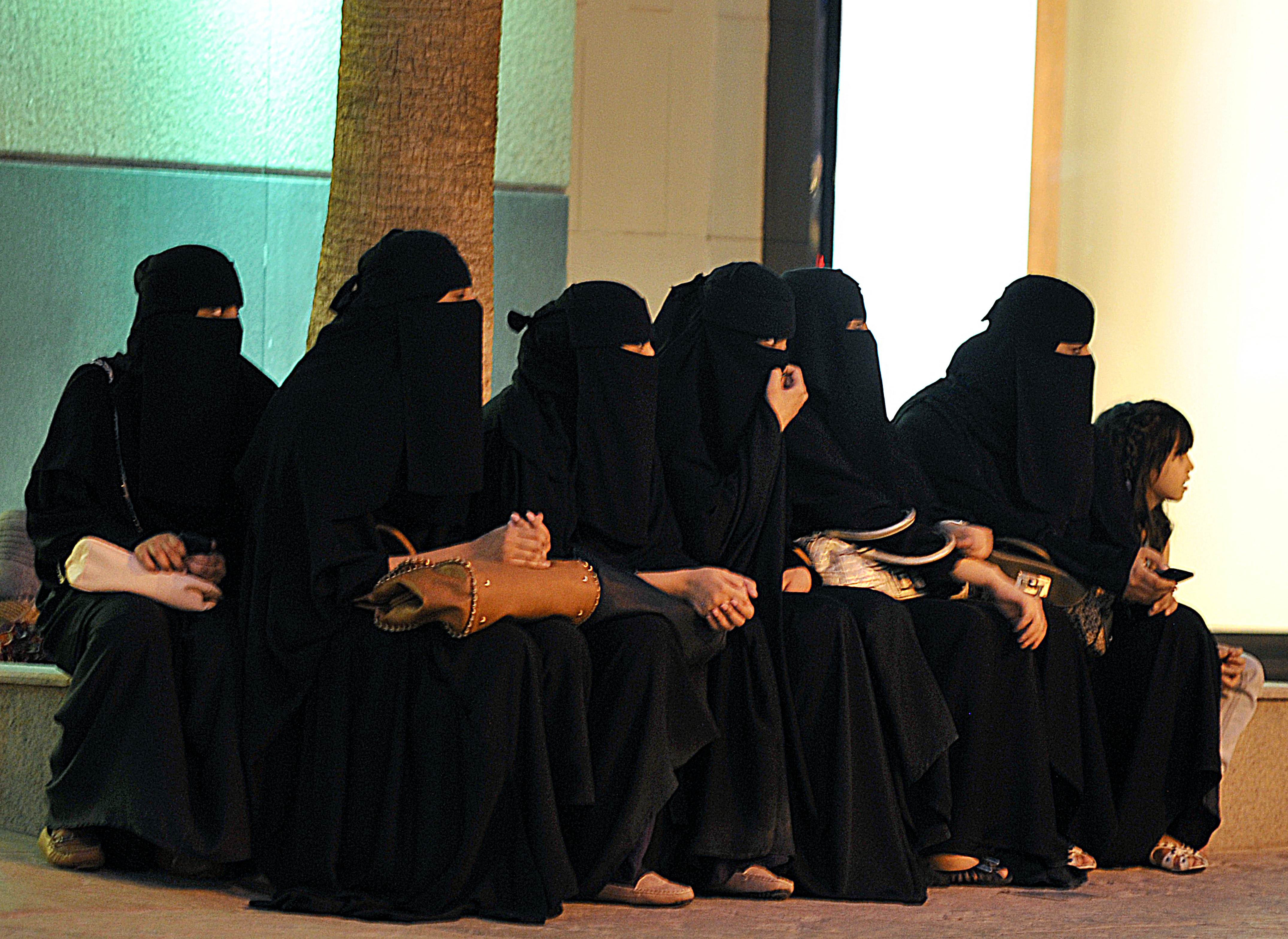
Saudi students flood U.S. colleges for English lessons
Mary Beth Marklein, USA TODAY
FREDERICKSBURG, Va. — That University of South Carolina cap on Meshari Albishi’s head? Just for looks, he says. Its colors match the red of his vest, where a metallic pin displays flags for the United States and Saudi Arabia, his homeland.
For now, his allegiance is to the University of Mary Washington, which Albishi says “is like my second home.”
Technically, Albishi is not a student here, but he has made “a lot of friends,” and has access to the library, workout rooms and other campus facilities. The university has offered him admission, on one condition: Before he can enroll, he must complete a non-credit program, called English for Academic Purposes.
Albishi, 25, is one of thousands of international students arriving each year in the United States to study English as the first step toward a college degree. They come from all over the world, but Saudi Arabia, where the government has poured billions of dollars into a generous scholarship program, is driving the recent surge.
In just seven years, Saudi student enrollments have skyrocketed from 11,116 in 2006, to 71,026 last year, according to the Saudi Arabian Cultural Mission to the United States, the Virginia-based agency that administers the scholarship. Nearly all recipients (95%) start with language training, which can take anywhere from a month to a year or more, officials say.
The infusion of full-paying international students has been a boon for cash-strapped U.S. colleges.
For instance, Western Michigan University in Kalamazoo, which founded its Center for English Language and Culture for International Students 38 years ago, enrolled a record 267 international students last semester, nearly half from Saudi Arabia, says center director Diana Vreeland. The University of Dayton’s language center, established in 2006 with eight students, now enrolls 400.
The Saudi scholarship grew out of a meeting in 2005 between Crown Prince (now King) Abdullah, and President George W. Bush as a way to strengthen ties — and ease tensions — between the two countries in the wake of the 2001 terrorist attacks.
Saudi scholarship students can receive up to a five-year visa. The scholarship covers full tuition, housing and health benefits for students and family members. All that, plus round-trip tickets home once a year. After language training, business and engineering are the top fields of study.
When students are finished, “they come back with a collective experience that can help move the country forward,” says Mody Alkhalaf, the Saudi Arabian mission’s assistant attaché for cultural and social affairs.
Even so, the arrangement doesn’t sit well with skeptics, who argue for stricter visa policies. Fifteen of the 19 hijackers in the Sept. 11 attacks were from Saudi Arabia; and several had entered the USA with student visas.
In 2011, after a Saudi engineering student was charged in a failed plot to bomb U.S. targets, Investor’s Business Daily repeated its concern that a new initiative for Saudi students opened the door for terrorist attacks. “How many will overstay their visas and become sleeper agents?”
Programs for international students have recently come under greater federal scrutiny. In 2010, Congress tightened rules for English-language programs after an investigation found that a for-profit language school in Florida served as a front for the sale of fraudulent student visa applications. Last year, a federal report urged U.S. Immigration and Customs Enforcement to strengthen oversight of the Homeland Security program that oversees compliance with a student-visa system. Recently, immigration officials have raised concerns that some colleges might be mishandling documentation for students accepted into an academic program on the condition that they first complete language studies.
Some schools mention only the academic degree program on federal forms, a practice that is “essentially defrauding the immigration requirements” and potentially “defeating the purpose” of a student tracking system, says Ernestine Fobbs, a spokeswoman for Immigration and Customs Enforcement.
ELS Educational Services, a for-profit company that operates the center housed at the University of Mary Washington, lists language study on its paperwork, says communications director John Nicholson, based in Princeton, N.J.
No language students have continued their academic studies at the University of Mary Washington. But officials say they value the diversity such students bring to campus. Last semester, Arabic studies professor Maysoon Al-Sayed Ahmad organized a regular coffee hour for Saudi and U.S. students. “I wanted American students to change their idea about what they think about the Arab people, so they can become friends,” she says.
Saudi students have similarly had their eyes opened. Until he arrived on campus, “I thought all (Americans) had guns,” says Abdullah Khalid Maghrabi, 19. He stayed indoors for a week before he thought it was safe to go outside. Now, he says, weather is a more pressing concern.
“I don’t know what to wear every morning. In my country, all the seasons are the same — it’s hot.”
French Intercede to Save Mali
Heard yesterday on NPR that France was stepping up to the plate on Mali, found the story on BBC this morning . . . it isn’t easy. It’s like people in the US don’t get news of countries like Mali unless they really seek it out. You can find more stories on Mali and the Tuareg / Al Qaeda alliance tormenting Northern Mali at the BBC link.


The Ansar al Din is imposing in Mali the kind of Islam that the Taliban imposed in Afghanistan – an Islam which forbids music, forbids women to participate in public life, enforced by a group of ignorant, uneducated thugs with weapons. Everything Ansar al Din stands for is contrary to the true nature of Islam.
Go France!
French troops continue operation against Mali Islamists
Mali: Divided nation
French Defence Minister Jean-Yves Le Drian said army units had attacked a column of rebels heading towards the central town of Mopti.
He also revealed that a French pilot had been killed in fighting on Friday.
The French troops deployed on Friday after Mali’s army lost control of a strategically important town.
Mali’s government said its forces had recaptured the town, Konna, after the air strikes, but it was not clear if all Islamist fighters had left the area.
‘Terrorist state’
Armed groups, some linked to al-Qaeda, took control of the whole of northern Mali in April.
They have sought to enforce an extreme interpretation of Islamic law in the area.
Regional and Western governments have expressed growing concern about the security threat from extremists and organised crime.
Mr Le Drian said on Saturday that hundreds of French troops were involved in the military operation in Mali.
The minister said Paris had decided to act urgently to stop the Islamist offensive, which threatened to create “a terrorist state at the doorstep of France and Europe”.
He also revealed that a French pilot was killed in Friday’s fighting – during an air raid to support Mali’s ground troops in the battle for Konna.
“During this intense combat, one of our pilots… was fatally wounded,” the minister said.
Speaking on Friday, French President Francois Hollande said the intervention complied with international law and had been agreed with Malian interim President Dioncounda Traore.
It would last “as long as necessary”, Mr Hollande said.
French officials gave few operational details.
Residents in Mopti, just south of Konna, told the BBC they had seen French troops helping Malian forces prepare for a counter-offensive against the Islamists.
Mr Traore declared a state of emergency across Mali, which he said would remain in place for an initial period of 10 days.
He used a televised address to call on Malians to unite and “free every inch” of the country.
‘Crusader intervention’
The west African bloc Ecowas said it was authorising the immediate deployment of troops to Mali “to help the Malian army defend its territorial integrity”.
UN Secretary-General Ban Ki-moon says the situation in Mali is becoming increasingly volatile
The UN had previously approved plans to send some 3,000 African troops to Mali to recapture the north if no political solution could be found, but that intervention was not expected to happen until September.
French Foreign Minister Laurent Fabius said the aim of the operation was to stop Islamist militants advancing any further.
It was not clear how far the French would go in helping Mali’s government retake territory in the north.
At least seven French hostages are currently being held in the region, and Mr Fabius said France would “do everything” to save them.
A spokesman for al-Qaeda in the Islamic Maghreb (AQIM) said he considered the French operation a “Crusader intervention”, and told France it would be “would be digging the tombs of [its] sons” if the operation continued, according to the Mauritania-based Sahara Media website.
France ruled Mali as a colony until 1960.
This chart is from a Blog called The Moor Next Door:

Saudi Government Informing ‘Responsible Male’ When Women Leave Saudi Arabia
Thank you, John Mueller, for this fascinating article from FRANCE 24:
Electronic tracking: new constraint for Saudi women – FRANCE 24
AFP – Denied the right to travel without consent from their male guardians and banned from driving, women in Saudi Arabia are now monitored by an electronic system that tracks any cross-border movements.
Since last week, Saudi women’s male guardians began receiving text messages on their phones informing them when women under their custody leave the country, even if they are travelling together.
Manal al-Sherif, who became the symbol of a campaign launched last year urging Saudi women to defy a driving ban, began spreading the information on Twitter, after she was alerted by a couple.
The husband, who was travelling with his wife, received a text message from the immigration authorities informing him that his wife had left the international airport in Riyadh.
“The authorities are using technology to monitor women,” said columnist Badriya al-Bishr, who criticised the “state of slavery under which women are held” in the ultra-conservative kingdom.
Women are not allowed to leave the kingdom without permission from their male guardian, who must give his consent by signing what is known as the “yellow sheet” at the airport or border.
The move by the Saudi authorities was swiftly condemned on social network Twitter — a rare bubble of freedom for millions in the kingdom — with critics mocking the decision.
“Hello Taliban, herewith some tips from the Saudi e-government!” read one post.
“Why don’t you cuff your women with tracking ankle bracelets too?” wrote Israa.
“Why don’t we just install a microchip into our women to track them around?” joked another.
“If I need an SMS to let me know my wife is leaving Saudi Arabia, then I’m either married to the wrong woman or need a psychiatrist,” tweeted Hisham.
“This is technology used to serve backwardness in order to keep women imprisoned,” said Bishr, the columnist.
“It would have been better for the government to busy itself with finding a solution for women subjected to domestic violence” than track their movements into and out of the country.
Saudi Arabia applies a strict interpretation of sharia, or Islamic law, and is the only country in the world where women are not allowed to drive.
In June 2011, female activists launched a campaign to defy the ban, with many arrested for doing so and forced to sign a pledge they will never drive again.
No law specifically forbids women in Saudi Arabia from driving, but the interior minister formally banned them after 47 women were arrested and punished after demonstrating in cars in November 1990.
Last year, King Abdullah — a cautious reformer — granted women the right to vote and run in the 2015 municipal elections, a historic first for the country.
In January, the 89-year-old monarch appointed Sheikh Abdullatif Abdel Aziz al-Sheikh, a moderate, to head the notorious religious police commission, which enforces the kingdom’s severe version of sharia law.
Following his appointment, Sheikh banned members of the commission from harassing Saudi women over their behaviour and attire, raising hopes a more lenient force will ease draconian social constraints in the country.
But the kingdom’s “religious establishment” is still to blame for the discrimination of women in Saudi Arabia, says liberal activist Suad Shemmari.
“Saudi women are treated as minors throughout their lives even if they hold high positions,” said Shemmari, who believes “there can never be reform in the kingdom without changing the status of women and treating them” as equals to men.
But that seems a very long way off.
The kingdom enforces strict rules governing mixing between the sexes, while women are forced to wear a veil and a black cloak, or abaya, that covers them from head to toe except for their hands and faces.
The many restrictions on women have led to high rates of female unemployment, officially estimated at around 30 percent.
In October, local media published a justice ministry directive allowing all women lawyers who have a law degree and who have spent at least three years working in a lawyer’s office to plead cases in court.
But the ruling, which was to take effect this month, has not been implemented.
Discover Relaxing Riyadh
I still get ads from Jazeera airlines, although I no longer live in Kuwait and have asked them for three years to take my name off their mailing list. I have unsuccessfully unsubscribed like fifteen times; now I just have it all sent to spam.
But today, as I was looking over the spam to be sure I wasn’t emptying my box of anything important, I saw this:
Discover Relaxing Riyadh – استمتع بعطلتك في الرياض

LOL – Relaxing Riyadh. A group of the ad guys must have been rolling on the floor when they created that one . . . Or maybe they meant that apart from the spine-tingling traffic, there isn’t a whole lot going on in Riyadh, especially on the social scene . . .
Wil Saudi Arabia Curb the Morals Police?
This is a tiny little article in the Qatar Gulf Times:
New curbs on Saudi moral police: reports
AFP/Riyadh
Saudi Arabia will curb the powers of its religious police, a newspaper report said yesterday.
“The new system will set a mechanism for the field work of the committee’s men which hands over some of their specialisations to other state bodies, such as arrests and interrogations,” Al Hayat daily quoted religious police chief Sheikh Abdullatiff Abdel Aziz al-Sheikh as saying.
Agents of the body known as the Commission for the Promotion of Virtue and Prevention of Vice will also be banned from carrying out “searches without prior approval from the governor”, he said.
Okaz daily also reported that the religious police agents will be prohibited from “standing at the entrances of shopping malls to prevent the entry of any person”, referring to attempts by agents to ban women who do not comply with the Islamic dress code and unmarried couples from entering malls.
Sheikh was appointed in January as the new chief of the religious police. Two weeks into his post, he banned volunteers from serving in the commission which enforces the kingdom’s Islamic rules.
In April he went further, prohibiting the religious police from “harassing people” and threatening “decisive measures against violators”.
In June, Sheikh came out strongly against one of his men who ordered a woman to leave a mall because she was wearing nail polish.
The woman had defied the orders as she filmed her argument with the policeman and posted it on YouTube.
Ominous Signs in Libya; Shrines Destroyed
I’ve been watching for news out of Libya, and have been surprised at how little there has been – and then this. This is not a good sign. This is not Libyan; this is outside influence. Similar destructions are going on in Mali; an intolerant branch of Islam beieves saints shrines to be idolatry. From today’s AOL /Huffington Post News:

TRIPOLI, Libya — Attackers bulldozed a Sufi Muslim shrine and mosque in the Libyan capital on Saturday, one day after hardliners razed a similar shrine and library elsewhere in the country.
It was not immediately clear who was behind Saturday’s attack, the third on a Sufi shrine in Tripoli in recent months, although officials have blamed past vandalism on Islamic hardliners, some of whom are followers of the ultraconservative Salafi doctrine.
Libya is a deeply conservative Muslim nation, and Islamists were heavily repressed under longtime dictator Moammar Gadhafi, who was captured and killed in October after an eight-month civil war. Since then, there has been a string of attacks on shrines across the country belonging to Muslim sects.
The campaign appears to be aimed mainly at shrines revered by Sufis, a mystical order whose members often pray over the tombs of revered saints and ask for blessings or intervention to bring success, marriage or other desired outcomes. Hard-line Salafi Muslims deem the practice offensive because they consider worshipping over graves to be idolatry.
Libya’s Grand Mufti, Sheik Sadek al-Ghariani, condemned the vandalism and said it was the government’s responsibility to protect the graves.
“No group outside of the government should use weapons and it is the responsibility of the government to provide security and prevent religious strife and division,” he said in a statement Saturday.
Resident Abdullah Zakaria said he saw the bulldozers destroy the Sufi tombs Saturday morning. Hours later a group of men bulldozed a mosque in the same area that also contained tombs.
Security officials closed the road leading to the shrines and mosque but did not intervene to stop the men from attacking the mosque hours later. Police were seen instead protecting a nearby hotel.
Interim President Mohammed el-Megarif said in a televised speech Saturday called the actions “unacceptable” and vowed the perpetrators would be prosecuted. He also called on citizens and the security services to be more vigilant in preventing disruptive behavior.
Following the civil war, Libya has been largely without a military or police force and has relied on disparate militias to provide security and protect government installations.
Libyan writer Fathi Bin Eissa, a Sufi, said he had hoped the police would investigate who ordered past desecration of the shrines and wanted answers as to why security forces moved to protect the hotel, but did nothing as the mosque was being bulldozed before their eyes.
A security official said the police were ordered only to ensure violence does not break out.
Other attacks have taken place in the past against shrines in the eastern cities of Darna and Benghazi.
More recently, extremists on Friday bulldozed one of Libya’s most important Sufi shrines and Sufi libraries in the city of Zlitan, 90 miles (145 kilometers) southeast of Tripoli.
Security officials say the attackers took advantage of deadly clashes between tribes in Zlitan this week to attack the more than 500-year-old shrine and library.
All officials spoke on condition of anonymity because they were not authorized to release the information.
Olympic Committee OK’s Hijab for Saudi Judo Contestant
From AOL/Huffpost
LONDON — A female judo fighter from Saudi Arabia will be allowed to compete in the Olympics wearing a form of headscarf after a compromise was reached that respects the “cultural sensitivity” of the Muslim kingdom.
Judo officials had previously said they would not let Wojdan Ali Seraj Abdulrahim Shahrkhani compete in a headscarf because it was against the principles of the sport and raised safety concerns.
But an agreement was reached after several days of IOC-brokered talks between the International Judo Federation and the Saudi Olympic Committee that clears the way for her to compete Friday in the heavyweight division.
“They have a solution that works for both parties, all parties involved,'” International Olympic Committee spokesman Mark Adams said. “The athlete will compete.”
The agreement was later formally announced in a joint statement by the judo federation and the Saudi committee.
“Working with the IOC, a proposal was approved by all parties,” the statement said. “The solution agreed guarantees a good balance between safety and cultural considerations.”
Ali Seraj Abdulrahim Shahrkhani, the judoka’s father, declined to describe what changes – if any – will be made to his daughter’s head cover for the competition.
He told The Associated Press his daughter has been training with women at a special facility in London for an hour and a half every day since she arrived with her parents and her brother. Shahrkhani said his daughter, who has a blue belt in judo, is preparing for Friday’s fight in seclusion.
“It’s her first time in competition and it’s the Olympic Games, so she is focused on that,” Shahrkhani said.
Saudi Arabia, which had never sent female athletes to the Olympics before, brought its two first female Olympians to London on condition they adhere to the kingdom’s Islamic traditions, including wearing a headscarf.
Shahrkhani’s participation was thrown into doubt last week when judo officials said a headscarf could be dangerous because of chokeholds and aggressive grabbing techniques.
Without giving precise details, Adams said the headscarf agreement is in line with Asian judo rules and is “safety compliant but allows for cultural sensitivity.'”
“In Asia, judo is a common practice so they asked for something that would be compliant with that, and the judo federations have reached a compromise that both are happy with,” he said.
Asian judo federations have previously allowed Muslim women to wear the headscarf, known as a hijab, during major competitions. Headscarves are allowed in taekwondo, but taekwondo fighters also wear a headguard, which covers the headscarf.
Shahrkhani may be the first judoka to fight at the Olympics who does not hold a black belt in judo, a Japanese martial art. She did not qualify for her Olympic spot like most of the other judo fighters. The IOC extended a special invitation for her to compete as part of negotiations to bring Saudi women to the Olympics for the first time. The other Saudi female athlete to compete in London is 19-year-old Sarah Attar, a California-based 800-meter runner.
Saudi Arabia, Qatar and Brunei had been the only three countries that had never fielded female Olympians in their teams. With all three now including women, these are the first Olympics in which every competing nation – 205 – is represented by female competitors.
“Our aim is that we want to have women from all national Olympic committees competing in the games,” Adams said. “Clearly one of those that is new is Saudi. We want to make sure we give a maximum chance for women from every NOC to take part in the games.”
Reading Eight Months on Ghazzah Street by Hilary Mantel
When I told my niece I had become thoroughly engrossed in Hilary Mantel’s Wolf Hall and Bring Up The Bodies, she asked me if I had read her book Eight Months on Ghazzah Street. I hadn’t.

Meanwhile, I had started re-reading George R.R. Martin’s A Storm of Swords, so I’ll be ready when HBO does Season Three, and while there is no redeeming value, I sure enjoy the escape, and like my sister Sparkle, sometimes I forget it isn’t the real world, it’s not history, it’s FICTION. I enjoy every minute.
But now I am reading Eight Months on Ghazzah Street, and from the opening pages – where the main character is living in Zambia – I have been totally engrossed.
Frances and her husband Andy move to Saudi Arabia. It’s 1985, Andy is going to build a Saudi ministry headquarters, but it might well been the late nineties, when we lived there. Her flight into Saudi Arabia whipped me back to those days, and to all the loud-mouthed drinkers who kept the rest of us awake.
Frances goes in with preconceptions, but also with a spirit of adventure, and is quickly stifled by the claustrophobic apartment, the limited social opportunities and the lack of free movement as a woman. The heat is oppressive, the clothing rules arbitrary and annoying, and Frances finds all the cockroaches good company during her long lonely days while her husband works.
Her situation was not mine. I lived on a compound, with bus routes that took women shopping every day, twice many days. We had a pool, and a small store, and a video rental kiosk. I had more options, and I probably had more fun. AdventureMan was good about taking me down to the souks at night; it was exotic and interesting. It was also, as Frances describes it, stultifying. It was oppressive. Sometimes the phone worked just fine. Sometimes your dial-up access to the internet functioned. Even on a compound, where some women did drive, walking on your own invited ogling and comments from non-Western men. Living in a country where your sponsor holds on to your passport, and where you need to ask permission to leave the country, and where laws are enforced sometimes, and sometimes not, and where women cannot drive but 12 year old boys have their own cars – it’s La La Land, it’s crazy-making.
Even though I had options and friends, Hilary Mantel captures the time alone. You spend a lot of time alone. In my case, I got used to it . . . we also had a lot of time on our own in Qatar and in Kuwait, where you are more free, where women can drive, but where you can only go to the malls and souks so many times; even when the heat isn’t enough to knock you over, there really just isn’t that much to do. You learn to amuse yourself, you develop a talent for creating, you learn to like your own company.
Then you get back to the USA and the availability of so many options makes you feel semi-autistic, bombarded by so much stimulation you quail and retreat.
I haven’t even gotten to the meat of the plot; I’m about a third of the way in, and I’m feeling hot and sticky and restless and she has totally taken me back to expat life in Saudi Arabia.
Timbuktu Sufi Mausoleums Destroyed by Ansar Dine
From today’s Al Watan, Kuwait:
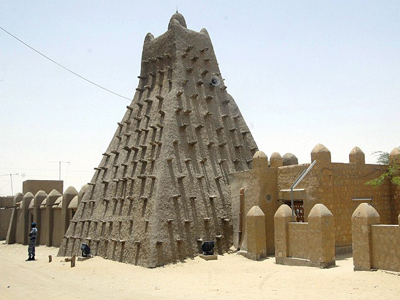
Mali Islamists destroy more holy Timbuktu sites
Monday,02 July 2012
Source : -Reuters
BAMAKO: Militants from the Al-Qaeda-linked Ansar Dine group destroyed mausoleums of Sufi saints with guns and pick-axes in the famed Mali city of Timbuktu for a second day, said witnesses on Sunday, ignoring international calls to halt the attacks.
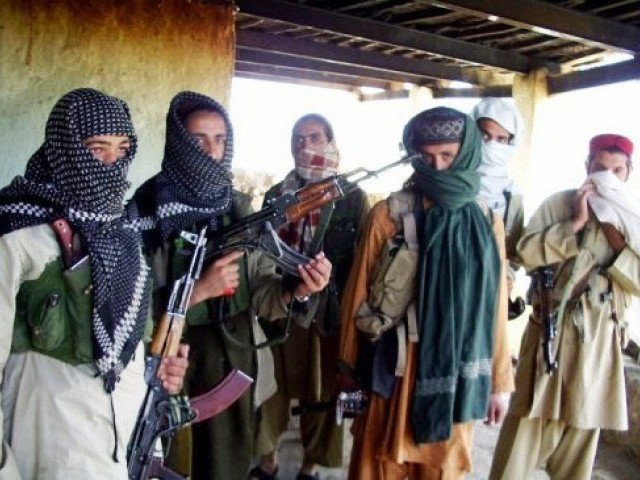
The salafist Ansar Dine backs strict sharia, Islamic law, and considers the centuries-old shrines of the local Sufi version of Islam in Timbuktu to be idolatrous.
Sufi shrines have been attacked by hard-line Salafists in Egypt and Libya in the past year.
The group has threatened to destroy all of the 16 main Sufi mausoleum sites in Timbuktu despite international outcry. UNESCO Director-General Irina Bokova has called for an immediate halt to the attacks.
Local journalist Yaya Tandina told Reuters that about 30 militants armed with Kalashnikovs and pick-axes destroyed three mausoleums of saints on Sunday.
“They had armed men guarding the door. Just like yesterday, the population did not react. They (local people) said we need to let them (the Islamists) do what they want, hoping that someday we will rebuild the tombs,” Tandina said.
Residents said the destruction was halted around midday when some of the militants went to a mosque in the centre of the city, but it was unclear if they would continue.
“We are subject to religion and not to international opinion. Building on graves is contrary to Islam. We are destroying the mausoleums because it is ordained by our religion,” Oumar Ould Hamaha, a spokesman for Ansar Dine, told Reuters by telephone from the northern Mali city on Sunday.
Timbuktu resident Hamed Mohamed said the Islamists destroyed the tombs of saints Sidi Elmety, Mahamane Elmety and Cheick Sidi Amar, all in the west of the city. -Reuters
Recent Comments
ExpatAlien on What Country am I Living … intlxpatr on Yellowstone: Old Faithful to C… Michelle on Yellowstone: Old Faithful to C… Cathy on No Grown-Ups in Charge intlxpatr on Waiting for Snow Wikipedia Donate Button

Amazina


Early Voting in Florida


 Here There and Everywhere