Saudi Arabia Welcomes Friday-Saturday Weekend
From Doha News:
Saudi Arabia’s King Abdullah has issued a royal decree to change the country’s weekend to Friday-Saturday, effective June 29, state news agency SPA reports.
The move, which puts KSA in line with the rest of the GCC countries, was made “for the sake of putting an end to the negative effects and the lost economic opportunities” due to the difference in workdays between the nation and the rest of the world, Riyadh Bureau reports.
It will apply to all government bodies and monetary agencies, including the central bank and stock exchange, SPA said. But schools and educational institutions will maintain the Thursday-Friday weekend until the beginning of the new academic year.
According to Riyadh Bureau:
The change will align banking and business days with most other countries in the region, as well as being closer to the workweek of international financial markets and businesses. Oman was the latest GCC country to shift its weekend to a Friday start last May.
KSA, Qatar’s giant neighbor the west, has been mulling a shift for more than five years, but didn’t move forward previously due to resistance from religious leaders.
New Virus in Middle East Kills 50% Victims
I found this on WeatherUnderground News this morning. What scares me is that there may be more victims, many more, shepherds who work with goats, laborers, people thought to have very bad colds, maybe even pneumonia, who don’t have the kind of money to fly to London to be diagnosed. If one man spread it to two family members, imagine how many people he had contact with on that airplane flying to London.
LONDON, Feb 27 (Reuters) – The emergence of a deadly virus previously unseen in humans that has already killed half those known to be infected requires speedy scientific detective work to figure out its potential.
Experts in virology and infectious diseases say that while they already have unprecedented detail about the genetics and capabilities of the novel coronavirus, or NCoV, what worries them more is what they don’t know.
The virus, which belongs to the same family as viruses that cause the common cold and the one that caused Severe Acute Respiratory Syndrome (SARS), emerged in the Middle East last year and has so far killed seven of the 13 people it is known to have infected worldwide.
Of those, six have been in Saudi Arabia, two in Jordan, and others in Britain and Germany linked to travel in the Middle East or to family clusters.
“What we know really concerns me, but what we don’t know really scares me,” said Michael Osterholm, director of the U.S.-based Center for Infectious Disease Research and Policy and a professor at the University of Minnesota.
Less than a week after identifying NCoV in September last year in a Qatari patient at a London hospital, scientists at Britain’s Health Protection Agency had sequenced part of its genome and mapped out a so-called “phylogenetic tree” – a kind of family tree – of its links.
Swiftly conducted scientific studies by teams in Switzerland, Germany and elsewhere have found that NCoV is well adapted to infecting humans and may be treatable medicines similar to the ones used for SARS, which emerged in China in 2002 and killed a tenth of the 8,000 people it infected.
“Partly because of the way the field has developed post-SARS, we’ve been able to get onto this virus very early,” said Mike Skinner, an expert on coronaviruses from Imperial College London. “We know what it looks like, we know what family it’s from and we have its complete gene sequence.”
Yet there are many unanswered questions.
Spotlight on Saudi Arabia, Jordan
“At the moment we just don’t know whether the virus might actually be quite widespread and it’s just a tiny proportion of people who get really sick, or whether it’s a brand new virus carrying a much greater virulence potential,” said Wendy Barclay, a flu virologist, also at Imperial College London.
To have any success in answering those questions, scientists and health officials in affected countries such as Saudi Arabia and Jordan need to conduct swift and robust epidemiological studies to find out whether the virus is circulating more widely in people but causing milder symptoms.
This would help establish whether the 13 cases seen so far are the most severe and represent “the tip the iceberg”, said Volker Thiel of the Institute of Immunobiology at Kantonal Hospital in Switzerland, who published research this month showing NCoV grows efficiently in human cells.
Scientists and health officials in the Middle East and Arab Peninsular also need to collaborate with colleagues in Europe, where some NCoV cases have been treated and where samples have gone to specialist labs, to try to pin down the virus’ source.
“One Big Virological Blender”
Initial scientific analysis by laboratory scientists at Britain’s Health Protection Agency (HPA) – which helped identify the virus in a Qatari patient in September last year – found that NCoV’s closest relatives are most probably bat viruses.
It is not unusual for viruses to jump from animals to humans and mutate in the process – high profile examples include the human immunodeficiency virus (HIV) that causes AIDS and the H1N1 swine flu which caused a pandemic in 2009 and 2010.
Yet further work by a research team at the Robert Koch Institute at Germany’s University of Bonn now suggests it may have come through an intermediary – possibly goats.
In a detailed case study of a patient from Qatar who was infected with NCoV and treated in Germany, researchers said the man reported owning a camel and a goat farm on which several goats had been ill with fevers before he himself got sick.
Osterholm noted this, saying he would “feel more comfortable if we could trace back all the cases to an animal source”.
If so, it would mean the infections are just occasional cross-overs from animals, he said – a little like the sporadic cases of bird flu that continue to pop up – and would suggest the virus has not yet established a reservoir in humans.
Yet recent evidence from a cluster of cases in a family in Britain strongly suggests NCoV can be passed from one person to another and may not always come from an animal source.
An infection in a British man who had recently travelled to Saudi Arabia and Pakistan, reported on Feb. 11, was swiftly followed by two more British cases in the same family in people who had no recent travel history in the Middle East.
The World Health Orgnisation says the new cases show the virus is “persistent” and HPA scientists said the cluster provided “strong evidence” that NCoV, which like other coronaviruses probably spreads in airborne droplets, can pass from one human to another “in at least some circumstances”.
Despite this, Ian Jones, a professor of virology at Britain’s University of Reading, said he believes “the most likely outcome for the current infections is a dead end” – with the virus petering out and becoming extinct.
Others say they fear that is unlikely.
“There’s nothing in the virology that tells us this thing is going to stop being transmitted,” said Osterholm. “Today the world is one big virological blender. And if it’s sustaining itself (in humans) in the Middle East then it will show up around the rest of the world. It’s just a matter of time.”
“If Her Eyes are Seditious . . . “
Sheik Abdullah Daoud, Saudi Cleric, Says Even Young Girls Should Be Entirely Covered
02/04/13 04:17 PM ET EST AP
RIYADH, Saudi Arabia — A Saudi cleric says even girls who have not yet reached puberty should be covered from head to toe, citing instances of child molestation in the ultraconservative kingdom and elsewhere.
Sheik Abdullah Daoud made the remarks on the satellite channel al-Majd. He says many viewers watching the program had probably come across instances of sexual harassment as children.
He is not affiliated with the government nor considered a senior sheik.
Judge Mohammed al-Jazlani, a senior sheik, said Monday that such talk denigrates Islam and may push non-Muslims to view Islam negatively. He urged Saudis to ignore unofficial fatwas, or edicts.
Separately, a spokesman for Saudi Arabia’s religious police said online that the force can oblige a woman to cover her face “if her eyes are seditious.” He did not elaborate.
Why is no one protecting Saudi Arabia’s child brides?
The support of the Saudi monarchy and its apologists in the west means the barbaric practice of child marriage is unchallenged
Ali al-Ahmed
guardian.co.uk, Tuesday 8 November 2011 05.00 EST
Atgaa, 10, and her sister Reemya, 8, are about to be married to men in their 60s. Atgaa will be her husband’s fourth wife. Their wedding celebrations are scheduled for this week and will take place in the town of Fayaadah Abban in Qasim, Saudi Arabia.
The girls are getting married because their financially struggling father needs the money that their dowries will provide: young girls of this age can fetch as much as $40,000 each.
Many readers might be shocked at this news. How can it be legal? The answer is that Saudi Arabia has no minimum age for marriage, and it is perfectly legal to marry even an hour-old child.
Three Saudi ministries share the blame for allowing and facilitating child marriages. The health ministry is tasked with conducting genetic tests for couples considering marriage. Saudi law requires potential brides and grooms to provide certificates of genetic testing before marriages can officially proceed.
The justice ministry regulates the marriage process and issues licences. And the interior ministry registers families and documents the relationships between family members. It is also the most powerful government agency; it has authority over all other ministries and can direct their activities at will.
As with many pernicious practices, child marriage would not exist without tacit support and approval from the country’s leadership. Far from condemning child marriage, the Saudi monarchy itself has a long history of marrying very young girls.
Sarah, who is now a brilliant Saudi doctor, told me she was barely 12 when the late prince Sultan proposed to her after seeing her walking at a military base where she had lived with her father. Luckily, her father had the wits to claim that she was chronically ill, at which point the proposal was swiftly rescinded.
Camel festivals, held at his time of the year in Saudi Arabia, witness the practice called akheth (“taking”) in which girls aged 14 to 16 are “gifted” to the usually elderly members of the monarchy for a few days or weeks. This practice, reminiscent of the infamous droit du seigneur in medieval Europe, is maintained to this day with the monarchy’s protection.
Saudi Arabia has probably the highest number of child marriages in the Middle East and yet there has been almost no international outrage or objection directed at the practice. I have personally sent two letters to Ann Veneman, the director of United Nations Children’s Fund (Unicef), regarding the Saudi practice and asking her to make her views on the issue public, as she did with Yemen.
Instead, Unicef lauded Saudi efforts to protect child rights and even honoured Prince Naif, whose interior ministry is one of the departments overseeing child marriages. So no wonder the Saudi monarchy feels confident that such a practice can continue.
The US government has been similarly indifferent to the plight of child brides in the kingdom. In April 2009, I wrote to William Burns, the undersecretary of state, regarding the case of Sharooq, 8 – also from Qasim. I never heard back from him.
At a public conference, I asked a former senator, Chuck Hagel (seated next to Prince Turki al-Faisal, a former head of Saudi intelligence), if he personally or the US would accept the friendship and alliance of a family that allows child marriage. The answer was nothing short of shocking: “We cannot decide for other countries what is appropriate or not,” he said.
So far, no UN body, such as Unicef or the human rights council, has issued a single statement condemning child marriages in Saudi Arabia [see footnote]. In fact, not one country has made a statement in the human rights council on this issue, and not a single western government has asked the Saudi monarchy to stop the practice. The ugly tradition of child marriage thus continues with the help of the monarchy and its apologists in the west.
If any governments, especially in the west, are seriously concerned with this barbaric and medieval practice, they should ban the heads of Saudi justice, interior and health ministries from entering their countries. If this action were taken against government leaders facilitating crimes against children we would soon see a resolution of this issue.
Saudi Arabia must be pressured to set a minimum age for marriage and save children like Atgaa and Reemya.
• This footnote was added on 15 November 2011. Unicef would like to make clear that a statement was issued in 2009 by Ann Veneman, then its executive director, expressing deep concern about child marriage in Saudi Arabia.
Kuwait Quilt
There have been some good moments in the course of this nasty cold, good enough to finish my work on a quilt for a baby who is fast making his way into this world, a Kuwaiti baby :-). This is a quilt he can crawl on, snuggle under, take to school for nap time, and then take off to college to put on his wall:

We had some wonderful moments in Kuwait, many of which, for me, were spent in the fabric souks of Kuwait with other quilters from many nations, including Kuwait. Many of those fabrics are quilted into this piece, along with my everlasting gratitude to the friends we had there who made the experience so much the richer for us.
Saudi Arabian Court Refuses to Charge Saudi Blogger
Raif Badawi: Court refuses to charge Saudi blogger
By Sebastian Usher
Arab affairs editor, BBC News
It is unclear what Mr Badawi’s fate will be now the court has refused to charge him
A court in Saudi Arabia has found that a liberal blogger accused of apostasy has no case to answer.
The court had the power to sentence Raif Badawi to death had it found him guilty.
But it refused to charge him, referring his case back to a lower court.
Mr Badawi, the young co-founder of a website called the Liberal Saudi Network, was arrested last year and accused of insulting Islam and showing disobedience.
His lawyer, Waleed Abu Alkhair, says he became a target for Saudi authorities after declaring 7 May last year a “day for Saudi liberals” – in order to have more open discussion about social and religious issues.
The evidence against him included the fact that he pressed the ‘Like’ button on a Facebook page for Arab Christians”
His wife, Ensaf, has stood by him but told the BBC of the personal cost of the case, with friends and family distancing themselves or even turning against them.
She now lives in Lebanon, but says she has received threatening messages.
“Two or three days after Raif’s hearing, I started to receive phone calls from unknown people, saying ‘we are going to kill your husband’. But I didn’t respond to them.”
This was after a judge in a lower court recommended that Mr Badawi should be tried for apostasy – for which he could have faced the death penalty – if the higher court had backed the charges.
The evidence against him included the fact that he pressed the “Like” button on a Facebook page for Arab Christians.
It is unclear what happens next, but sources close to Mr Badawi say he believes he will now be shuttled between various courts to keep him in prison without attracting the further international criticism that a guilty verdict might bring.
Mr Badawi’s case is not unique. It highlights the constant push and pull between reformist and deeply conservative forces in Saudi Arabia.
A prominent writer, Turki al-Hamad, is currently under a form of house arrest for recent tweets criticising Islamists – he, too, could be charged with apostasy.
Another writer and blogger, Hamza Kashgari, was extradited from Malaysia to Saudi Arabia almost a year ago on similar charges. He has repented in court, but remains in jail.
Saudi Students Flock to US Universities
When I was student teaching in EFL/ESL, my Arab Gulf students often complained that they couldn’t go directly to US universities, that they had to take English classes first.
“How did you do on the TOEFL?” I would ask, and their response would be a combination of anger and sheepishness.
“They all think we are rich. They just want our money. They make us take classes we don’t need, just to make money on us,” they would bitterly complain.
Most of these guys could speak passable English. Their writing skills were almost non-existent. They weren’t ready for real universities, with standards and accountability. The very first thing – and this is cultural, not something that is “right” is being ON TIME.
We don’t even realize what a priority it is in our own culture to be where we are supposed to be at the time we are supposed to be there. To be habitually late is to be morally inferior in some undefined way, lazy, a slacker. It’s custom, it’s cultural, it’s not a universal. But if you’re going to go to school in the United States, you need to respect the need to be on time – especially for things like exams, boarding a flight, when a paper is due, paying a bill by the due date.
We all learn when we confront our own assumptions by knocking up against another culture. I learned a lot about my own erroneous assumptions living in Saudi Arabia. I hope they are learning as much here. I wish these students well. I hope some of the students are Saudi girls; I hope they are driving around Pensacola having a good old time.
Saudi students flood U.S. colleges for English lessons
Mary Beth Marklein, USA TODAY
FREDERICKSBURG, Va. — That University of South Carolina cap on Meshari Albishi’s head? Just for looks, he says. Its colors match the red of his vest, where a metallic pin displays flags for the United States and Saudi Arabia, his homeland.
For now, his allegiance is to the University of Mary Washington, which Albishi says “is like my second home.”
Technically, Albishi is not a student here, but he has made “a lot of friends,” and has access to the library, workout rooms and other campus facilities. The university has offered him admission, on one condition: Before he can enroll, he must complete a non-credit program, called English for Academic Purposes.
Albishi, 25, is one of thousands of international students arriving each year in the United States to study English as the first step toward a college degree. They come from all over the world, but Saudi Arabia, where the government has poured billions of dollars into a generous scholarship program, is driving the recent surge.
In just seven years, Saudi student enrollments have skyrocketed from 11,116 in 2006, to 71,026 last year, according to the Saudi Arabian Cultural Mission to the United States, the Virginia-based agency that administers the scholarship. Nearly all recipients (95%) start with language training, which can take anywhere from a month to a year or more, officials say.
The infusion of full-paying international students has been a boon for cash-strapped U.S. colleges.
For instance, Western Michigan University in Kalamazoo, which founded its Center for English Language and Culture for International Students 38 years ago, enrolled a record 267 international students last semester, nearly half from Saudi Arabia, says center director Diana Vreeland. The University of Dayton’s language center, established in 2006 with eight students, now enrolls 400.
The Saudi scholarship grew out of a meeting in 2005 between Crown Prince (now King) Abdullah, and President George W. Bush as a way to strengthen ties — and ease tensions — between the two countries in the wake of the 2001 terrorist attacks.
Saudi scholarship students can receive up to a five-year visa. The scholarship covers full tuition, housing and health benefits for students and family members. All that, plus round-trip tickets home once a year. After language training, business and engineering are the top fields of study.
When students are finished, “they come back with a collective experience that can help move the country forward,” says Mody Alkhalaf, the Saudi Arabian mission’s assistant attaché for cultural and social affairs.
Even so, the arrangement doesn’t sit well with skeptics, who argue for stricter visa policies. Fifteen of the 19 hijackers in the Sept. 11 attacks were from Saudi Arabia; and several had entered the USA with student visas.
In 2011, after a Saudi engineering student was charged in a failed plot to bomb U.S. targets, Investor’s Business Daily repeated its concern that a new initiative for Saudi students opened the door for terrorist attacks. “How many will overstay their visas and become sleeper agents?”
Programs for international students have recently come under greater federal scrutiny. In 2010, Congress tightened rules for English-language programs after an investigation found that a for-profit language school in Florida served as a front for the sale of fraudulent student visa applications. Last year, a federal report urged U.S. Immigration and Customs Enforcement to strengthen oversight of the Homeland Security program that oversees compliance with a student-visa system. Recently, immigration officials have raised concerns that some colleges might be mishandling documentation for students accepted into an academic program on the condition that they first complete language studies.
Some schools mention only the academic degree program on federal forms, a practice that is “essentially defrauding the immigration requirements” and potentially “defeating the purpose” of a student tracking system, says Ernestine Fobbs, a spokeswoman for Immigration and Customs Enforcement.
ELS Educational Services, a for-profit company that operates the center housed at the University of Mary Washington, lists language study on its paperwork, says communications director John Nicholson, based in Princeton, N.J.
No language students have continued their academic studies at the University of Mary Washington. But officials say they value the diversity such students bring to campus. Last semester, Arabic studies professor Maysoon Al-Sayed Ahmad organized a regular coffee hour for Saudi and U.S. students. “I wanted American students to change their idea about what they think about the Arab people, so they can become friends,” she says.
Saudi students have similarly had their eyes opened. Until he arrived on campus, “I thought all (Americans) had guns,” says Abdullah Khalid Maghrabi, 19. He stayed indoors for a week before he thought it was safe to go outside. Now, he says, weather is a more pressing concern.
“I don’t know what to wear every morning. In my country, all the seasons are the same — it’s hot.”
French Intercede to Save Mali
Heard yesterday on NPR that France was stepping up to the plate on Mali, found the story on BBC this morning . . . it isn’t easy. It’s like people in the US don’t get news of countries like Mali unless they really seek it out. You can find more stories on Mali and the Tuareg / Al Qaeda alliance tormenting Northern Mali at the BBC link.


The Ansar al Din is imposing in Mali the kind of Islam that the Taliban imposed in Afghanistan – an Islam which forbids music, forbids women to participate in public life, enforced by a group of ignorant, uneducated thugs with weapons. Everything Ansar al Din stands for is contrary to the true nature of Islam.
Go France!
French troops continue operation against Mali Islamists
Mali: Divided nation
French Defence Minister Jean-Yves Le Drian said army units had attacked a column of rebels heading towards the central town of Mopti.
He also revealed that a French pilot had been killed in fighting on Friday.
The French troops deployed on Friday after Mali’s army lost control of a strategically important town.
Mali’s government said its forces had recaptured the town, Konna, after the air strikes, but it was not clear if all Islamist fighters had left the area.
‘Terrorist state’
Armed groups, some linked to al-Qaeda, took control of the whole of northern Mali in April.
They have sought to enforce an extreme interpretation of Islamic law in the area.
Regional and Western governments have expressed growing concern about the security threat from extremists and organised crime.
Mr Le Drian said on Saturday that hundreds of French troops were involved in the military operation in Mali.
The minister said Paris had decided to act urgently to stop the Islamist offensive, which threatened to create “a terrorist state at the doorstep of France and Europe”.
He also revealed that a French pilot was killed in Friday’s fighting – during an air raid to support Mali’s ground troops in the battle for Konna.
“During this intense combat, one of our pilots… was fatally wounded,” the minister said.
Speaking on Friday, French President Francois Hollande said the intervention complied with international law and had been agreed with Malian interim President Dioncounda Traore.
It would last “as long as necessary”, Mr Hollande said.
French officials gave few operational details.
Residents in Mopti, just south of Konna, told the BBC they had seen French troops helping Malian forces prepare for a counter-offensive against the Islamists.
Mr Traore declared a state of emergency across Mali, which he said would remain in place for an initial period of 10 days.
He used a televised address to call on Malians to unite and “free every inch” of the country.
‘Crusader intervention’
The west African bloc Ecowas said it was authorising the immediate deployment of troops to Mali “to help the Malian army defend its territorial integrity”.
UN Secretary-General Ban Ki-moon says the situation in Mali is becoming increasingly volatile
The UN had previously approved plans to send some 3,000 African troops to Mali to recapture the north if no political solution could be found, but that intervention was not expected to happen until September.
French Foreign Minister Laurent Fabius said the aim of the operation was to stop Islamist militants advancing any further.
It was not clear how far the French would go in helping Mali’s government retake territory in the north.
At least seven French hostages are currently being held in the region, and Mr Fabius said France would “do everything” to save them.
A spokesman for al-Qaeda in the Islamic Maghreb (AQIM) said he considered the French operation a “Crusader intervention”, and told France it would be “would be digging the tombs of [its] sons” if the operation continued, according to the Mauritania-based Sahara Media website.
France ruled Mali as a colony until 1960.
This chart is from a Blog called The Moor Next Door:

Saudi Government Informing ‘Responsible Male’ When Women Leave Saudi Arabia
Thank you, John Mueller, for this fascinating article from FRANCE 24:
Electronic tracking: new constraint for Saudi women – FRANCE 24
AFP – Denied the right to travel without consent from their male guardians and banned from driving, women in Saudi Arabia are now monitored by an electronic system that tracks any cross-border movements.
Since last week, Saudi women’s male guardians began receiving text messages on their phones informing them when women under their custody leave the country, even if they are travelling together.
Manal al-Sherif, who became the symbol of a campaign launched last year urging Saudi women to defy a driving ban, began spreading the information on Twitter, after she was alerted by a couple.
The husband, who was travelling with his wife, received a text message from the immigration authorities informing him that his wife had left the international airport in Riyadh.
“The authorities are using technology to monitor women,” said columnist Badriya al-Bishr, who criticised the “state of slavery under which women are held” in the ultra-conservative kingdom.
Women are not allowed to leave the kingdom without permission from their male guardian, who must give his consent by signing what is known as the “yellow sheet” at the airport or border.
The move by the Saudi authorities was swiftly condemned on social network Twitter — a rare bubble of freedom for millions in the kingdom — with critics mocking the decision.
“Hello Taliban, herewith some tips from the Saudi e-government!” read one post.
“Why don’t you cuff your women with tracking ankle bracelets too?” wrote Israa.
“Why don’t we just install a microchip into our women to track them around?” joked another.
“If I need an SMS to let me know my wife is leaving Saudi Arabia, then I’m either married to the wrong woman or need a psychiatrist,” tweeted Hisham.
“This is technology used to serve backwardness in order to keep women imprisoned,” said Bishr, the columnist.
“It would have been better for the government to busy itself with finding a solution for women subjected to domestic violence” than track their movements into and out of the country.
Saudi Arabia applies a strict interpretation of sharia, or Islamic law, and is the only country in the world where women are not allowed to drive.
In June 2011, female activists launched a campaign to defy the ban, with many arrested for doing so and forced to sign a pledge they will never drive again.
No law specifically forbids women in Saudi Arabia from driving, but the interior minister formally banned them after 47 women were arrested and punished after demonstrating in cars in November 1990.
Last year, King Abdullah — a cautious reformer — granted women the right to vote and run in the 2015 municipal elections, a historic first for the country.
In January, the 89-year-old monarch appointed Sheikh Abdullatif Abdel Aziz al-Sheikh, a moderate, to head the notorious religious police commission, which enforces the kingdom’s severe version of sharia law.
Following his appointment, Sheikh banned members of the commission from harassing Saudi women over their behaviour and attire, raising hopes a more lenient force will ease draconian social constraints in the country.
But the kingdom’s “religious establishment” is still to blame for the discrimination of women in Saudi Arabia, says liberal activist Suad Shemmari.
“Saudi women are treated as minors throughout their lives even if they hold high positions,” said Shemmari, who believes “there can never be reform in the kingdom without changing the status of women and treating them” as equals to men.
But that seems a very long way off.
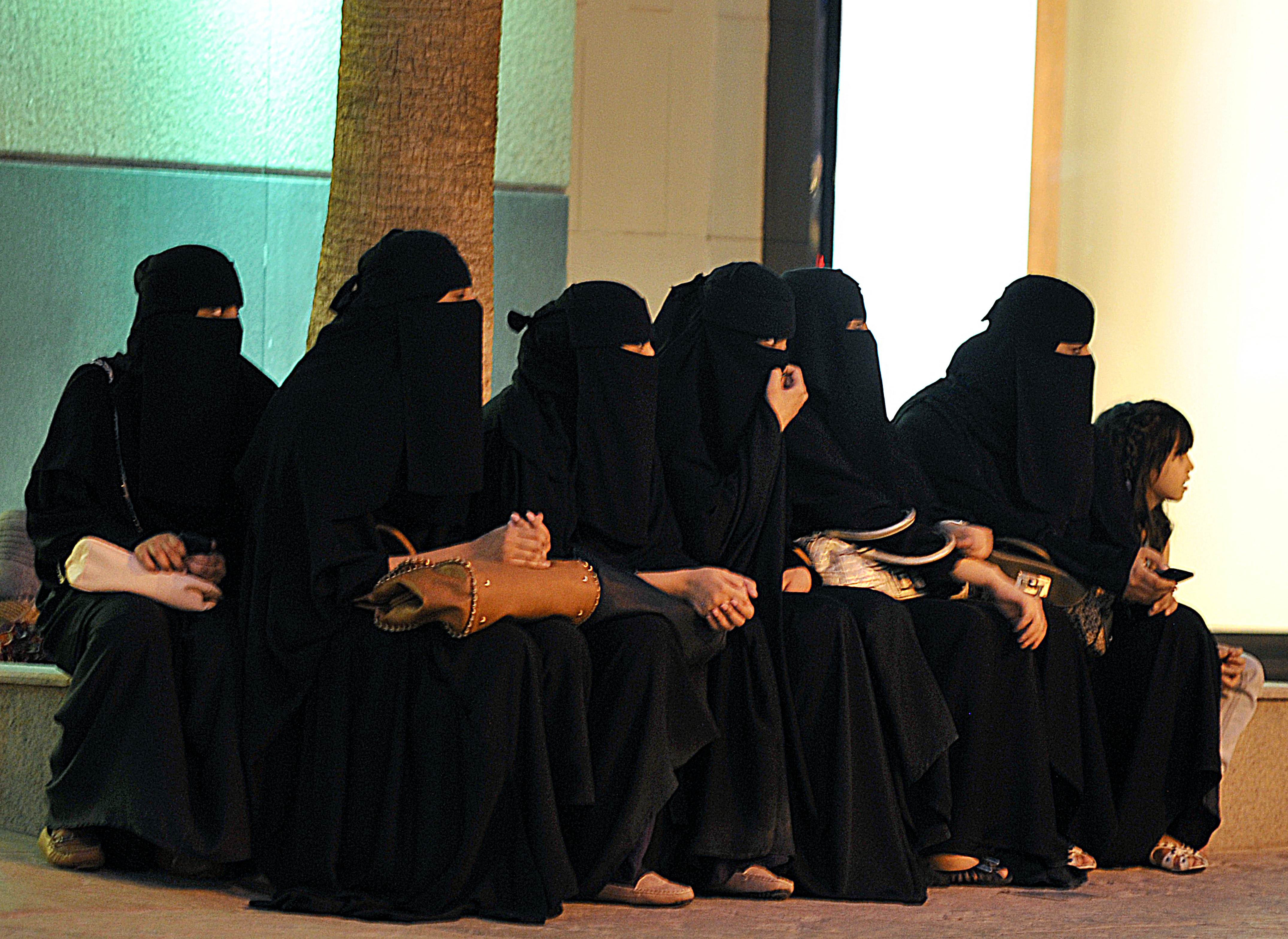
The kingdom enforces strict rules governing mixing between the sexes, while women are forced to wear a veil and a black cloak, or abaya, that covers them from head to toe except for their hands and faces.
The many restrictions on women have led to high rates of female unemployment, officially estimated at around 30 percent.
In October, local media published a justice ministry directive allowing all women lawyers who have a law degree and who have spent at least three years working in a lawyer’s office to plead cases in court.
But the ruling, which was to take effect this month, has not been implemented.
Discover Relaxing Riyadh
I still get ads from Jazeera airlines, although I no longer live in Kuwait and have asked them for three years to take my name off their mailing list. I have unsuccessfully unsubscribed like fifteen times; now I just have it all sent to spam.
But today, as I was looking over the spam to be sure I wasn’t emptying my box of anything important, I saw this:
Discover Relaxing Riyadh – استمتع بعطلتك في الرياض

LOL – Relaxing Riyadh. A group of the ad guys must have been rolling on the floor when they created that one . . . Or maybe they meant that apart from the spine-tingling traffic, there isn’t a whole lot going on in Riyadh, especially on the social scene . . .
Recent Comments
intlxpatr on Shampoo Ginger tigerbutterya0c5ff1d… on Shampoo Ginger intlxpatr on British Soldier Kidnapped, Esc… John on British Soldier Kidnapped, Esc… intlxpatr on British Soldier Kidnapped, Esc… Wikipedia Donate Button

Amazina


Early Voting in Florida


