Non-Profits: Something From Nothing
Here is what I love – people who get an idea, and make the world a better place because they have a vision and make a plan so that the vision can become a reality.
The Gulf Coast Citizens Diplomacy Council
I volunteer for the Gulf Coast Citizens Diplomacy Council. The one in Pensacola was started from nothing by a young woman with a vision, Gina Melancon Gissendanner. Her organization, her Board of Directors, her members and her resources deep within the Pensacola community have welcomed several hundred of the US Department of States International Visitor’s Leadership program delegates, bringing awareness – and dollars – to Pensacola.
When the visitors come into town, they have activities, tours and visits with professional counterparts that give them new strategies and resources to take back with them to their home countries. While here, they meet local people, shop in local stores and dine in local homes.
I love this program. From nothing, this young woman has created an organization with a far-reaching legacy. Thanks to her innovative and relevant programs, the international delegates leave here with happy memories of their time in Pensacola, and they go home and tell their friends and neighbors about their time here.
This weekend, we crossed paths with three more organizations, creating a better world, each in their own way.
The Master Gardeners
“You have to come to the sale at the County Extension Office!” our aqua aerobics friends told us. “It is so much fun, and they have Florida-hardy plants available at really good prices.”
OK! Finding ourselves awake and ready to hit the road early on a Saturday morning, we headed for the County Extension office, and the Master Gardener’s Sale. Now, I may get some of the details in this story wrong, but this is what I think I have been told. . . Several years ago, county extension offices (who answer questions about soil and growing things) found themselves deluged with questions, with too few people to answer them. They started a program – and I believe it is nation wide – training people in all aspects of growing things in the local area.

People who signed up for the training also signed up for a commitment to volunteer, and pass their knowledge along. Slowly, slowly, we have begun to know these people.
The sale was a lot of fun. While gardeners love a challenge, like growing flowers in Florida that aren’t supposed to grow here (like me, I am trying to grow bougainvillea, which isn’t really good at getting through cold winters, but maybe if I find the right protected spot, I can get it going and keep it going until it develops a deep root system and an ability to withstand the minimally cold winters we have in Pensacola) and they also love to share their knowledge.

There was an experienced, knowledgeable and enthusiastic Master gardener about every ten steps at the sale, and we could ask all the questions we ever wanted, and they just loved talking with us and giving all the answers. Free! There was no admission charged, the plants were reasonably prices (and many were very cool plants) and it was just a great place to pass a Saturday morning.
We’ve been told the Spring Sale is THE best sale – we can hardly wait.
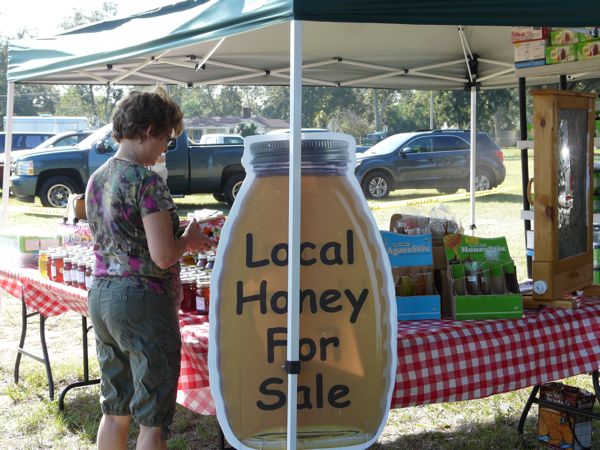
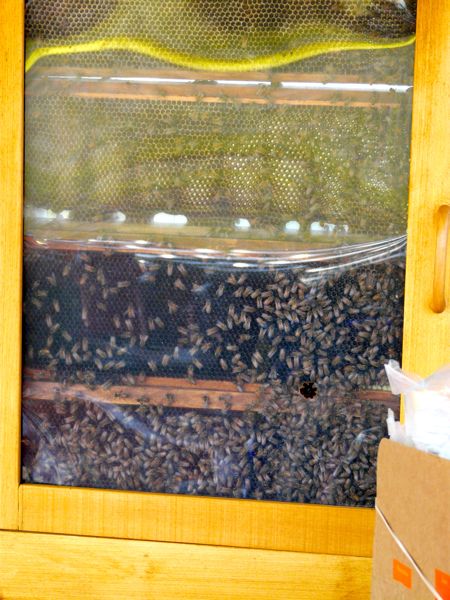

When we left, AdventureMan said “Every one of them seemed so comfortable in their own skin.” I think he is right. I think working in the earth with your hands helps ground you. 🙂
The Master Gardeners are those people you find in Home Depot and Lowes, giving information on gardening in Florida, and at special booths at Arts Fests, in the schools, and working the beds at the County Extension office. They are volunteers. They do this work for the love of making the world a more beautiful place.
The Butterfly House
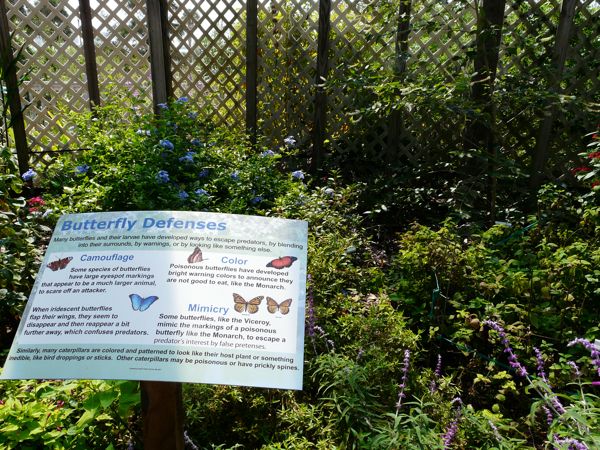
Our next stop was the Monarch Madness festival at the Panhandle Butterfly House in Navarre, where there was also an Arts Fest in progress. The volunteers at the Butterfly House all wore these terrific T-shirts with a caterpiller on the front and Monarch butterfly on the back. They had a great system, too, for getting a lot of people through the butterfly house in an organized and civil way, still giving people a lot of time to ask questions, and with lots of really cool activities for children to do, to help them understand the life cycle of these beautiful and short-lived creatures.





The Manna Food Pantries, Pensacola
I’m lucky. I work on a church committee where the chair brings in representatives from all the major charities in Pensacola to talk with us about what they do. The Manna Food Pantries is, in my humble opinion, a poster-child for how a non-profit should operate. Providing food for those who are hungry, for those going through tough times – and there are more than you might think – is truly part of God’s work for us here on earth. Manna Food Pantries collect and distribute food to the hungry. This morning, we had two Manna vans at the church and people were bringing in their full bags to donate.
It’s been a very tough year in Pensacola. The tough times just go on and on. You can prepare for tough times, save your money, gather your resources, but when tough times linger, sometimes those resources run dry. Manna has been faced with just such a time; resources are drying up, donations were down and the need is greater than ever. Manna hit the front page this week two days in a row, and is getting great coverage on radio, in the churches, in social groups – they are very very good at getting the message out, and the message is clear: We need your continued support, food, money, now more than ever.
They are brilliant at managing their volunteers, and many have been with them for years and years.
All these organizations are only able to exist because people believe in giving of their time and efforts in the hopes of making the world a little better, a little more beautiful, a little more peaceful, a little more hopeful – one person at a time.
Where are you going to put your efforts? What organizations do you support – and why?
The Marital Contract in California?
This guy is hilarious – found this on AOL Huffpost this morning:
A Modest Proposal: Why Can’t Couples Have a Proxy Statement for Their “Merger & Acquisition”?
William Quigley
The recent debates over gay marriage, civil unions and what exactly marriage even means today reminded me of how antiquated our marriage and family laws have become. They don’t take into account how the nature of wealth has vastly changed over the last few decades. I am neither an advocate nor an opponent of marriage but I do believe that the financial obligations we assume when entering into a marriage contract, including the court-ordered redistribution of personal wealth that takes place upon divorce, are not well understood by most of our citizens. Even lawyers I have known have been confused about the differences between spousal versus child support. If Chris Anderson really wanted to investigate the long tail, he should have taken a look at the potential length of California spousal support terms.
California has always been the leader in divorce and alimony law, and I think it is time the state started addressing the profound inequities alimony judgments have created. In short, alimony has evolved into a pension plan for the less successful spouse. In many cases, this pension commitment becomes a lifelong burden for the paying spouse, regardless of who initiated the divorce and under what conditions the marriage dissolved. It promotes unproductive behaviors as well, such as the alimony recipient avoiding employment in order to maximize spousal support. The spousal support payer may reluctantly forgo re-marriage as well, fearing the income of his/her new partner will be combined for the purposes of calculating higher support payments. If the state believes that promoting marriage among the population is a public good (a reasonable belief), then it needs to reduce the severe financial penalties associated with divorce. And since many marriages do end in divorce, it makes sense to acknowledge, upfront, the consequences of that likely outcome.
One marriage-neutral option would be to provide every couple with a simple disclosure form that highlights the financial obligations they are about to assume.
This disclosure form could easily fit on just a single page, with disclosures of the following sort:
1. The State of California recognizes your marriage as a legally binding contract.
2. By entering into marriage in this state, you agree to assume all debts incurred by your spouse during the marriage, whether or not you were aware of these debts when incurred, and whether or not you personally benefited from them in any way.
3. You also agree to provide monetary payments to your spouse in the event your marriage dissolves and you are the higher income earner. The amount and length of these payments will be decided by a court of law.
4. The State can and will use its court and police powers to enforce the financial obligations you are assuming in the event of divorce, including the garnishment of your wages and your incarceration in the state prison system for your failure to comply with court ordered spousal payments
5. If your spouse so chooses, he/she may divorce you at anytime. In so doing, he/she may be legally entitled to receive monetary payments from you for a time period that may extend to the rest of your natural life. These spousal support payments may exceed 50% of your income, could be adjusted upward if you remarry and as a result have more disposable income, and they cannot be eliminated though bankruptcy.
6. The conduct of your spouse, including him/her having one or multiple out-of-wedlock affairs, does not change your legal obligation to provide spousal support.
7. If you are the higher earning spouse, you may be required to pay your lower earning spouse’s divorce related legal bills. This is the case regardless of which spouse initiated the divorce and regardless of the conduct of either spouse during the marriage
8. If you have questions or concerns about what financial obligations you are about to assume, it may be advisable to consult with a family law attorney before signing your marriage contract.
The most important point to highlight when it comes to marriage is that the State of California recognizes it as a legally binding contract. Too often that simple fact is misunderstood or ignored by the couple getting married. In fact, curiously, the one thing the state absolutely does not care about is whether or not a couple is “in love.” There is no requirement to be “in love” to be legally married in the State of California, or any other state for that matter. Only in recent human history — perhaps the last 150 years — has the predominant purpose of marriage been associated with romantic love. It has nearly always been, and remains in much of the world, primarily an efficient method of property redistribution. In the end, the state, and your future divorce lawyer, care only about one thing: the legal enforceability of the marriage contract as it relates to the financial obligations borne by the higher wage earner.
Our society has become accustomed to warning its citizens of potential legal and financial hazards every time they enter into a contract, even those of relatively small consequence. We as a society like to be informed when we are assuming a financial obligation, particularly one that is potentially large and open-ended. Isn’t it odd then that while we require our citizens to initial car rental forms (just in case they didn’t realize that they will be charged $6 a gallon to fill the gas tank), we let 18 year olds get married without so much as a tap on the shoulder about the greatest financial liability they will likely ever assume? Keep in mind that we are talking about state-sanctioned marriage, a legally enforceable contract. Shouldn’t such a contract, with its profound lifelong financial repercussions, only be assumed by those fully informed of its potential consequences? This is why I completely support a marriage financial obligation disclosure form.
Male on Male Sexual Abuse on Law and Order
AdventureMan teases me about my loyalty to the Law and Order Series . . . “Ripped from the headlines!” he will taunt me, when I flip the channel. We often watch separate TV’s when he wants to watch one of his droning military history channels and I want to watch Law and Order re-runs. But tonight’s L&O will tackle a topic no-one talks about – male on male rape and abuse.
I was so naive. I thought it only happened in prisons. While I was living in Qatar, I started hearing horrific stories about young men abducted and taken to the desert, often gang raped. Most of them lived, but had to deal with the aftermath of the violence and humiliation. In Kuwait, it was reported almost weekly in the papers, it was so common. I had a friend whose son was abducted, and walked with her through the horrors of the aftermath. Her greatest fear was that her son would commit suicide. He overcame his abduction, and is happy now, but the path was long, and full of perils along the way.
Male on male rape, like male on female rape, or any kind of rape, is not about sex. It’s about power. It’s about humiliation. It’s bullying taken to the extreme. It’s just wrong.
From AOL TV:
The second episode of ‘Law & Order: SVU’ Season 13 is one for the TV history books. Not only does it feature guest stars Dan Lauria, Mechad Brooks, Carmelo Anthony and Chris Bosh, but it’ll also tackle the taboo issue of male-on-male sexual violence.
In ‘Personal Fouls,’ a basketball coach known as a trusted mentor and figure in the community comes under suspicion of molesting a number of his players.
“This script was very exciting and I think the cast felt honored and excited to be able to talk about this issue because obviously sexual violence is something people are scared to talk about,” series star Mariska Hargitay said at a recent press event on the ‘SVU’ set.
Hargitay’s The Joyful Heart Foundation, Wolf Films, NBC, 1in6 and A Call to Men are partnering in an effort to raise awareness about male-on-male sexual abuse.
“It takes so much courage to come forward and male-on-male sexual violence is even more swept under the carpet,” she said. “The statistics are frightening.”
According to statistics from 1in6, an organization that seeks to help male sexual abuse survivors, 19 million men in the United States are victims of sexual abuse.
“It’s exciting to do a show about it because obviously when things are on TV somehow they’re made OK to talk about and that’s been exciting.”
The partnerships between the organizations hope to spread awareness about the subject. Hargitay said one of the objectives is to “let male survivors know they’re not alone and there are so many people that want to help them.”
“It’s not a shameful secret that you should keep to yourself, that the blame belongs with the perpetrator, not the survivor,” she said.
Wooo Hoooo! Saudi Women to Have Right To Vote!
I found this today on Huffpost World; hey four years is not such a long time compared to forever. Getting the vote makes it more and more illogical for them not to be driving . . . think about it. Does choosing national leaders take less brains than driving? Ummm. . . . well . . . (LOL)
RIYADH, Saudi Arabia — Saudi Arabia’s King Abdullah, considered a reformer by the standards of his own ultraconservative kingdom, decreed on Sunday that women will for the first time have the right to vote and run in local elections due in 2015.
It is a “Saudi Spring” of sorts.
For the nation’s women, it is a giant leap forward, though they remain unable to serve as Cabinet ministers, drive or travel abroad without permission from a male guardian.
Saudi women bear the brunt of their nation’s deeply conservative values, often finding themselves the target of the unwanted attention of the kingdom’s intrusive religious police, who enforce a rigid interpretation of Islamic Shariah law on the streets and public places like shopping malls and university campuses.
In itself, Sunday’s decision to give the women the right to vote and run in municipal elections may not be enough to satisfy the growing ambition of the kingdom’s women who, after years of lavish state spending on education and vocational training, significantly improved their standing but could not secure the same place in society as that of their male compatriots.
That women must wait four more years to exercise their newly acquired right to vote adds insult to injury since Sunday’s announcement was already a long time coming – and the next local elections are in fact scheduled for this Thursday.
“Why not tomorrow?” asked prominent Saudi feminist Wajeha al-Hawaidar. “I think the king doesn’t want to shake the country, but we look around us and we think it is a shame … when we are still pondering how to meet simple women’s rights.”
The announcement by King Abdullah came in an annual speech before his advisory assembly, or Shura Council. It was made after he consulted with the nation’s top religious clerics, whose advice carries great weight in the kingdom.
It is an attempt at “Saudi style” reform, moves that avoid antagonizing the powerful clergy and a conservative segment of the population. Additionally, it seems to be part of the king’s drive to insulate his vast, oil-rich country from the upheavals sweeping other Arab nations, with popular uprisings toppling regimes that once looked as secure as his own.
Fearing unrest at home, the king in March announced a staggering $93 billion package of incentives, jobs and services to ease the hardships experienced by some Saudis. In the meantime, he sent troops to neighbor and close ally Bahrain to help the tiny nation’s Sunni ruling family crush an uprising by majority Shiites pressing for equal rights and far-reaching reforms.
In contrast, King Abdullah in August withdrew the Saudi ambassador from Syria to protest President Bashar Assad’s brutal crackdown on a seven-month uprising that calls for his ouster and the establishment of a democratic government.
“We didn’t ask for politics, we asked for our basic rights. We demanded that we be treated as equal citizens and lift the male guardianship over us,” said Saudi activist Maha al-Qahtani, an Education Ministry employee who defied the ban on women driving earlier this year. “We have many problems that need to be addressed immediately.”
The United States, Saudi Arabia’s closest Western ally, praised the king’s move.
In Washington, National Security Council spokesman Tommy Vietor said it recognized the “significant contributions” women have been making in Saudi Arabia. The move, he continued, would give Saudi women more ways to participate “in the decisions that affect their lives and communities.”
The king, in his own remarks, seemed to acknowledge that the Arab world’s season of change and the yearning for greater social freedoms by a large segment of Saudi society demanded decisive action.
“Balanced modernization, which falls within our Islamic values, is an important demand in an era where there is no place for defeatist or hesitant people,” he said.
“Muslim women in our Islamic history have demonstrated positions that expressed correct opinions and advice,” said the king.
Abdullah became the country’s de facto ruler in 1995 because of the illness of King Fahd and formally ascended to the throne upon Fahd’s death in August 2005.
The king on Sunday also announced that women would be appointed to the Shura Council, a currently all-male body established in 1993 to offer counsel on general policies in the kingdom and to debate economic and social development plans and agreements signed between the kingdom with other nations.
The question of women’s rights in Saudi Arabia is a touchy one. In a country where no social or political force is strong enough to affect change in women’s rights, it is up to the king to do it. Even then, the king must find consensus before he takes a step in that direction.
Prominent columnist Jamal Khashoggi said that giving women the right to vote in local elections and their inclusion in the Shura council means they will be part of the legislative and executive branches of the state. Winning the right to drive and travel without permission from male guardians can only be the next move.
“It will be odd that women who enjoy parliamentary immunity as members of the council are unable to drive their cars or travel without permission,” he said. “The climate is more suited for these changes now – the force of history, moral pressure and the changes taking place around us.”
___
Hendawi reported from Cairo. Associated Press writer Maggie Michael contributed to this report from Cairo.
Uyen Nichole Duong: Mimi and Her Mirror
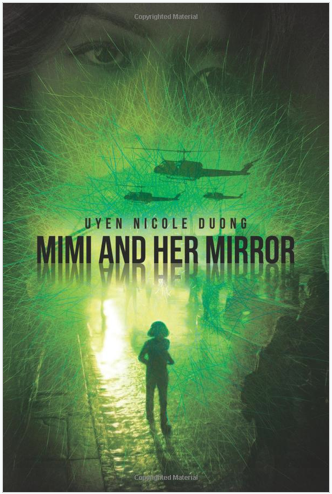
I must be on a streak. I really wanted to like this main character, Mi Chou (Mimi) but I found her obsessive, impulsive, overly emotional, self-absorbed and boastful. Her strongest relationship in the book is with her three way mirror. She specifically claims not to be narcissistic, and I think the story tells us otherwise.
The book is supposed to be fictional, and I truly hope some parts are fictional, but the strengths of the book lie in the ‘coming to America’ experience, which she captures well. She has a strong eye for ironies, hypocrisies and cultural differences. Her beginnings are vague, as is often the case when an immigrant goes through the shell-shock of being cut off from their own culture and grafted into another. I believe the author drew strongly on her own experiences to write this part of the book, and to me, it is the strongest part.
Mi Chau and her family leave Viet Nam during the great evacuation, and are given a spot on the planes that should have gone to someone else. Her entire family, mother, father, sister and brother all escape together, leaving behind a beloved grandmother who refuses to leave. Their entry into the US goes smoothly. They are the first wave of Vietnamese, the lucky ones. They have support, they have jobs. They have lost their own world, and they struggle. All this is part of the normal immigrant experience.
Neither is it abnormal that the children thrive through their struggles, and achieve excellent eduations. What is distracting to me in the book is how Mimi bases her self worth first on her academic excellence, and later in life on what she owns, and on her status. She has accomplished so much, she owns high-status symbols, but she is miserable and her life is empty.
Is it because of her experience as she evacuates out of Vietnam? Is it a character defect? There are no meaningful relationships in her life, she lives an empty and soulless existence, focusing on work and accomplishment and status symbols. Her major problem, as I see it, is an unwillingness to connect, to step out of herself and see through other’s eyes.
It’s an interesting book. There are, in my opinion, better books about the Vietnamese coming-to-America experience, and one is Anne Fadiman’s The Spirit Catches You and You Fall Down about immigrant Hmong, which is rich in cultural teachings, rich in relationships, and I still remember details more than ten years after I first read it. It is only available in Kindle format now, through Amazon, although they may have a used copy from time to time. Way better book than Mimi.

Ann Patchett: The Patron Saint of Liars
I didn’t expect to like this book as much as I did. The main character is odd, a woman who doesn’t really think things through clearly, and somehow doesn’t even really know what she is feeling.
She gets married, and three years later, pregnant, decides “the marriage isn’t working” and leaves her husband, with a note saying only that the marriage isn’t working. We’ve been with her when she met him and fell in love, and she seemed to love him OK, and their lives together seemed to be OK, but somehow, she had to leave. I didn’t understand it when it happens in the book, and I never did understand it. The author tells us that Rose is a private person.
Rose drives from California to Tennesee, to a home for unwed mothers, where she bears a child, whom she keeps. Most of what she does seems to be on automatic pilot. I never really understand what Rose wants, only that she is aware that this isn’t it.
The story is told from three different points of view, and at no time did I have a clear idea of what motivated the main character, Rose. You can’t help but love her husband, Son, and her daughter, and all the women who love Cecilia, and help raise her.
You do get was a rounded picture of people around her, the good sisters running the home for the unwed women, how the women who arrived changed over the years as our culture changed, and how you may not understand how a person’s mind is working but sometimes you can just find a way to accept that she is what she is, and get on with living your life.
I really liked the book, even though I was not taken with the main character. I can’t tell you too much without giving it all away. Read the book and tell me what you think.
Contagion
As we rushed into the house, we both headed immediately to our bathrooms to wash our hands. Twice. And I also washed my face.
Contagion is a very intelligent movie. It is scary, but not in the Friday the 13th kind of scary, or in the Night of the Living Dead kind of scary, although come to think of it, there were some elements in common with the original Night of the Living Dead. No, what makes Contagion scary is that it could happen so easily.

I had no idea that we touch our faces, on the average, of three to five times a minute, more than 3,000 times a day, and that with every surface we touch, we transfer (germs) (bacteria) (things that could make you sick) close to an entry to your body, like your nostrils and your mouth. Once you start thinking about NOT touching your face, you become aware of how often you touch your own face, unaware. Like flipping hair out of your eyes, or covering your mouth when you laugh, or a million other things like that. You become aware of all the things you touch between the time you wash your hands and touch your food. You think about who may have touched your fork, and how well it was washed.
For me, the scariest part of the movie, beyond how quickly the virus mutated and spread, was how quickly civil society broke down when cities were quarantined, when people were concerned food was growing scarce, when people thought they had to fight for survival. The rules for avoiding spreading the virus were not to meet, not to touch, to stay apart. It’s hard to help one another when those rules are in play, but those rules make it easier for those without rules to attack and take what they can.
I liked the music in the movie, too, very edgy.
Before I ever saw this movie, I heard an interview with the author on NPR. She was saying that when they came to her wanting to make this movie, she said “it cannot start in Africa. . . (there were a whole bunch of rules, which were hilarious because they were like every plot for a movie like this ever made) I knew I needed to see this movie, to see how it could be done and still be dramatic, and follow her rules.
There is one hilarious quote. A blogger in this movie gains enormous following. As he is tracking down one of the scientists for information, the scientist says to him:
Blogging is not writing. It’s just graffiti with punctuation.
Excuse me, gotta go wash my hands again.
The Value of the Trivial
“Be sure to use your full name, First, maiden and married, on your quilt labels,” our presenter instructed us.
Oh-oh. I’ve been lucky just to get labels on my quilts, and I haven’t used my maiden name at all.
“Years from now, if someone is trying to track you as a quilter, it will help to have your maiden name to distinguish you from other quilters who may have similar names,” she continued.
OK. So now I will include my maiden name. (For my Moslem friends, it is our custom to take our husband’s names when we marry. Some women don’t, but even now, the majority do. I know, I know, it seems backward to you, it is irrational, it is just the way it is. We also don’t have marriage contracts.)
At lunch with a long-time friend this week, she mentioned she still has her mother’s diaries. I suggested she offer them to a major university near where my friend grew up, to their historical collection, and my friend said “oh, it’s just daily weather, who’s sick, stuff like that.”
Stuff like that is just exactly what historians treasure. When I was at university, I worked for a time in the copying department of the library, and I specialized in the historical collections, many of which were from people who came west. The papers were fascinating – letters home, lists of supplies they asked to have sent West, to-do lists, old photos. The scraps of paper you and I throw away – there in the Northwest collection.
They become valuable, at least for historical research, for writing period fiction, for medical research – because we do throw them away, and so few survive.
Keeping up with this blog has become more problematic. I just don’t have the time in my life I used to have. My life is interesting to me, but now that I am no longer living in exotic locations, I don’t believe I am so interesting to others. My internal debate is whether or not to continue. I would let it go in a heartbeat and not miss the time, but . . . I think I would miss your feedback.
I’m not writing this for you. I’m sort of writing more for my own record-keeping, it’s why I include news articles and scraps of daily life (not my own) and all the oddities and irrationalities that catch my eye. I love having a place to store it all (this blog) and I love your comments, which can sometimes completely turn me around in point of view; you give me perspectives I hadn’t considered.
The point of all this is the ephemeral nature of our daily lives, and the records of our lives. There are things worth keeping.
I wish someone in Kuwait were doing oral histories on the older people who were living there ‘before oil’.
Changes in the Air
“It’s still hot,” I said as we were coming out of the movie, “but can you feel a change in the air? Even though it’s hot, the air is changing, the light is changing – you can feel hints that Fall is coming . . . ”
We had just been to see “The Help,” and if you haven’t seen it yet, you need to make plans to see it soon. It is a really good movie, which will make you laugh, and cry, and remember that it wasn’t so long ago in our country when it took place. (You can read my review of the unforgettable book here.)
The movie is a serious movie, and at the same time, I loved the attention to detail – the hair, the fashions, the manners – all very 50’s, even though it is the 1960’s in Jackson, Mississippi.
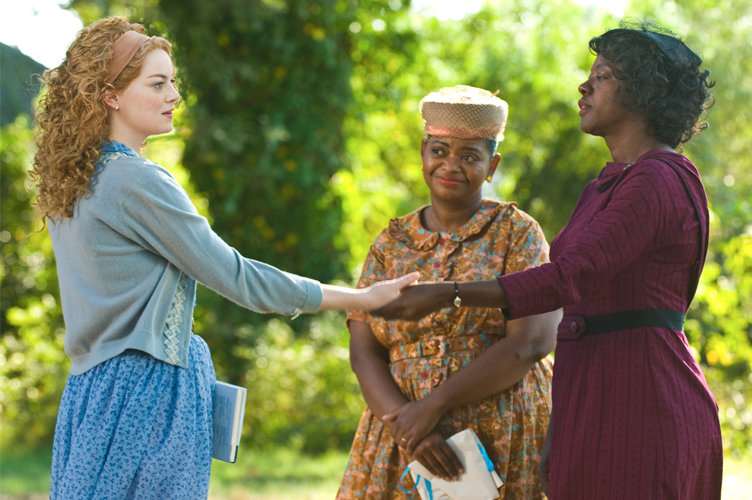
I remember reading this book in Qatar, just after I had moved back there from Kuwait. The Kuwait book club also read White Tiger and Half of a Yellow Sun, all of which had domestic service as at least part of the theme. It’s another one of those cultural things we all have in common – how do we treat the people who work for us? How do they see us? Who is raising our children and teaching them values?
In the Gulf, there are horror stories in the papers of servants who never receive their wages, or who work 16 hours a day, sun-up to sun-down, with never a day off. The families who take good care of their servants never make the papers, but I have seen good and caring relationships, lasting many years, between employers and employees. We’re glad we saw this movie, which sticks closely to the book. For a fuller experience – read the book.
Meanwhile, the temperature early this morning was below 69° F, which means that my tomatoes will begin setting once again and we may have a good crop coming before the cold sets in. I noticed, to my horror, I have a decent crop of weeds trying to establish themselves while it is too hot for me to go out and do battle with them. Some of my tomatoes actually continued producing even during the hottest days of the summer; I’m going to have to plant more of those next year. The golden pear and the red pear tomatoes are producing merrily; the bigger tomatoes have stopped – I hope temporarily.
Recent Comments
ExpatAlien on What Country am I Living … intlxpatr on Yellowstone: Old Faithful to C… Michelle on Yellowstone: Old Faithful to C… Cathy on No Grown-Ups in Charge intlxpatr on Waiting for Snow Wikipedia Donate Button

Amazina


Early Voting in Florida


 Here There and Everywhere