Deb Roy: The Birth of a Word
Come back when you have some time – you’ll need about twenty minutes to watch this TED video about communication. I love this – but then you know I am a word nerd, and I love the way concepts are born and grow.
Computers have aided language analysis and taken it to lengths that were previously inconceivable. First, Deb Roy shows – with videos, graphs and cloud analysis – how his son learned to speak his first word.
He goes from there to what I would call “buzz analysis”, taking program content from cable television and correlating it to comments on public media – blogs, FaceBook, all kinds of public forums. The results are astonishing, and a great tool to understand the national psyche and how we think and process. This is amazing stuff.
Saudi Arabia: Women Driving Will Have Sex, Report Says
I am sorry, but if this were a joke, it would be hilarious. It IS hilarious, or it would be, if it didn’t impact so darkly on the lives of so many women.
So my friends in Saudi Arabia, here is the solution. Let the women drive. Tell the men not to have sex with these driving women, not until they are married. Tell the men that no matter how much the women beg, to keep themselves pure, and not to let these women tempt them away from their purity. Teach the men that it is a CHOICE, and that they can behave themselves honorably, and withhold themselves from these driving women who want to have sex with them.
That’ll teach those women 🙂
From the Huffington Post
Saudi Arabia: Women Driving Will Have Sex, Report Says
RIYADH, Saudi Arabia — A report given to a high-level advisory group in Saudi Arabia claims that allowing women in the kingdom to drive could encourage premarital sex, a rights activist said Saturday.
The ultraconservative stance suggests increasing pressure on King Abdullah to retain the kingdom’s male-only driving rules despite international criticism.
Rights activist Waleed Abu Alkhair said the document by a well-known academic was sent to the all-male Shura Council, which advises the monarchy. The report by Kamal Subhi claims that allowing women to drive will threaten the country’s traditions of virgin brides, he said. The suggestion is that driving will allow greater mixing of genders and could promote sex.
Saudi women have staged several protests defying the driving ban. The king has already promised some reforms, including allowing women to vote in municipal elections in 2015.
There was no official criticism or commentary on the scholar’s views, and it was unclear whether they were solicited by the Shura Council or submitted independently. But social media sites were flooded with speculation that Saudi’s traditional-minded clerics and others will fight hard against social changes suggested by the 87-year-old Abdullah.
Saudi’s ruling family, which oversees Islam’s holiest sites, draws its legitimacy from the backing of the kingdom’s religious establishment, which follows a strict brand of Islam known as Wahhabism. While Abdullah has pushed for some changes on women’s rights, he is cautious not to push too hard against the clerics.
In October, Saudi Arabia named a new heir to the throne, Prince Nayef, who is a former interior minister and considered to hold traditionalist views, although he had led crackdowns against suspected Islamic extremists. His selection appeared to embolden the ultraconservative clerics to challenge any sweeping social reforms.
Prince Nayef was picked following the death of Crown Prince Sultan.
Eating after 8 PM? Higher BMI
I found this today on AOL Healthy Living; bad news for my friends in the Middle East who rise late, dine late and sleep late. You can read the entire article for yourself by clicking on the blue type above.
It seems to me that there needs to be more testing; the group studied was very small.
Sleeping Late, Eating Late Leads to Gaining Weight
A message to night owls: There’s news that your bedtime — and those late-night snacks — may be preventing you from dropping those stubborn extra pounds. A recent study took on an important, and under-examined, aspect of the sleep-weight loss connection: how the timing of sleeping — and of eating — can affect weight. Researchers at Northwestern University examined the effects of sleep timing on diet and body-mass index (BMI), and found that late bedtimes and late mealtimes can lead to less healthful diets and to weight gain.
A group of 52 adults — 25 women and 27 men — spent seven days keeping food logs and having their sleep and waking activity measured by a wrist sensor. The researchers divided participants into two categories of sleepers:
“Normal sleepers” reached the midpoint of their night’s sleep before 5:30 a.m. These sleepers were asleep by shortly after midnight, and woke around 8 a.m. Among the study group, 56 percent were normal sleepers.
“Late sleepers” reached the midpoint of their nightly sleep after 5:30 a.m. They went to sleep in the middle of the night, well after midnight, and woke in the mid-to-late morning. Among the study group, 44 percent were late sleepers.
Researchers tracked the eating habits of these two types of sleepers through the information provided to them from the participants’ food logs. Not surprisingly, “normal sleepers” and “late sleepers” were on very different schedules, in terms of when they ate throughout the day:
Normal sleepers ate breakfast by 9 a.m., lunch at 1 p.m. and dinner at 7 p.m., on average. These sleepers reported being finished with eating for the day by 8:30 p.m.
Late sleepers reported eating their first meal of the day at about noon. They ate again in the middle of the afternoon, and did not eat dinner until after 8 p.m. Late sleepers did not finish their eating for the day until 10 p.m., on average.
What were the consequences for sleeping later and eating later? Researchers found that late sleepers suffered across the board, in terms of the quality and quantity of both their daily sleep and eating:
Late sleepers slept less overall than normal sleepers — an average of more than an hour less per night.
Late sleepers consumed more calories at dinnertime than normal sleepers. They also consumed significantly more calories after 8 p.m.
Late sleepers had poorer quality diets than normal sleepers — they ate more fast food, drank more sugar-laden soda, and ate fewer vegetables.
These habits of late sleepers — sleeping less, going to sleep later in the night, and eating more after 8 p.m. — were all found to be associated with a higher body mass index. Among these habits, eating after 8 p.m. was the strongest predictor of a higher BMI. What does this mean? It’s not just what you eat, but when you eat, that can affect your ability to lose weight. And your sleep habits can have a significant influence on the timing of your eating, as well as on how much you eat.
Qatar: The Richest Fattest Nation on Earth
Thank you, reader John, for passing along this fascinating article from The Atlantic:
Qatar is a tiny country with a big problem.
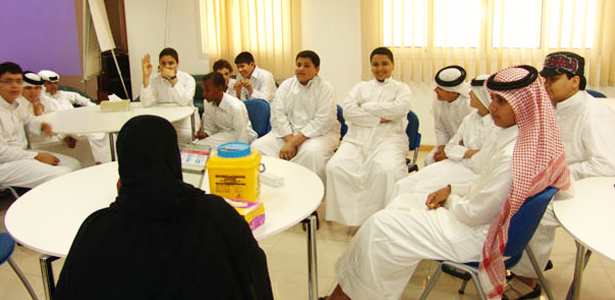
This Connecticut-sized nation, sticking out like a loose tooth in the Persian Gulf, is one of the most obese nations in the world, with residents fatter, on average, than even those of the United States, which often takes the cake in such competitions.
According to recent studies, roughly half of adults and a third of children in Qatar are obese, and almost 17 percent of the native population suffers from diabetes. By comparison, about a third of Americans are obese, and eight percent are diabetic. Qatar also has very high rates of birth defects and genetic disorders — problems that, along with the prevalence of obesity (PDF) and diabetes, have worsened in recent decades, according to local and international health experts.
So what’s going wrong in little Qatar?
Qatar also has very high rates of birth defects and genetic disorders — problems that have worsened in recent decades.
To misappropriate a well-worn phrase: It’s the economy, stupid. In September, Qatar officially became the richest nation in the world, as measured by per capita gross domestic product. It also recently became the world’s biggest exporter of natural gas, and earned the title of fastest growing economy in the world. By international development standards, all this growth has happened virtually overnight, making Qataris’ lifestyles much more unhealthy, and at the same time leading many to hang on resolutely to what’s left of their fleeting tribal traditions — practices that include inter-marriage between close family members and cousins.
“They’re concentrating the gene pool, and at the same time, they’re facing rapid affluence,” said Sharoud Al-Jundi Matthis, the program manager at the Qatar Diabetes Association, a government funded health center in Doha, the capital. As a result of these factors, Qataris are becoming obese, passing on genetic disorders at an alarming rate, and getting diabetes much more often than others around the world. They’re also getting diabetes a decade younger than the average age of onset, which is pushing up rates of related illnesses and complications, like hypertension, blindness, partial paralysis, heart disease, and loss of productivity. “It’s a very, very serious problem facing the future of Qatar,” Matthis said.
It’s a fascinating read, not too long, little more than double what you have already read. You can read the entire article by clicking HERE: The Atlantic
Thank you, John, for the recomendation.
Veteran’s Day: Honor Your Veterans
We will be paying for these last two wars for a long time. Veterans of these wars, many seriously, but not fatally injured by IED’s, traumatized by the activities of war are walking among us. Many of our newest vets have been in the war zones more than once.

AdventureMan is a war vet. Strong and courageous as he is, there are still times he will tear up at some of the things he witnessed in Vietnam. War is an event which resounds throughout the rest of your life.
One of the things we love about living here in Pensacola is that there are a lot of vets here, and there is a culture which honors the Veteran’s sacrifices. When we show our military ID cards in Lowe’s or Home Depot, people say “thank you for your service.” The first time it happened to me, I was caught so by surprise that my eyes leaked tears. Several restaurants are offering active duty and veterans free meals today, reduced prices, and there are many ceremonies honoring Veterans.
The military culture doesn’t like to admit that the warrior life can cause severe problems, mentally, emotionally, with the family, finding a purpose in life after military service, finding relevance in a peaceful society – our men and women come home having seen and experienced sheer horror, and find themselves alien in their own culture. Recovery can be a long, slow process. More of our severely injured vets have survived, but live with brain injuries, lost limbs, and mental wounds.

Welcome them back. Bind their wounds, be patient with their sufferings. War veterans have a high rate of suicide, often related to inability to find a job, so if you are in such a position – hire a veteran. Honor their service, shake their hand, and value their sacrifice.
Law and Order SVU: How Did They Know and When Did They Know It?
What a tragedy. Joe Paterno, fired in disgrace. Joe Paterno, the much admired, the Penn State football coach who embodied integrity, fired, disgraced. “What did he know and when did he know it?” people ask.
What astonishes me is that the situation almost exactly parallels a recent episode of Law and Order SVU about which I recently blogged, in September.
In that episode, a much-admired football coach is reported to be preying on young men in his foundation, young men for whom he gave an opportunity to ‘be someone;’ he trained them, gave them motivation and the possibility of a lot of money, fame and good things for their very poor families. His victims were burdened by a debt of gratitude, combined with the shame of male-on-male sex, which they did not want to become public knowledge. The combination of gratitude and shame kept them silent, until one spoke out. It took a lot of courage, but finally, a big star who had come through this depraved coach’s program went public, appeared before the grand jury, and set the example.
The similarities are eerie. In Law and Order, however, the coach who had preyed on young players in the showers and locker rooms did not bring down a highly regarded top-ranking program director, and a university president.
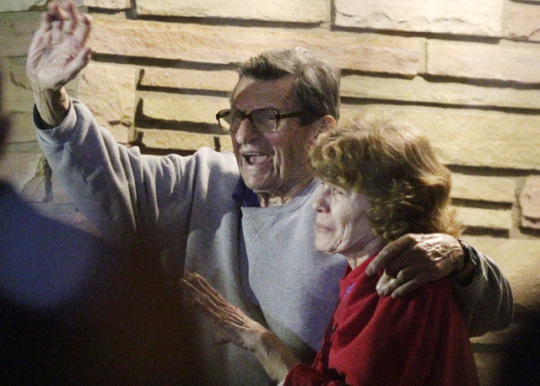
Joe, we are so sorry this has happened to you, and we hope that posterity will recognize that one poor decision is counter-balanced by a lifetime of integrity. We pray that young men victimized by Defensive Coach Jerry Sandusky will come forward, have their voices heard, and be able to move on with their lives, knowing that Sandusky will be punished. We pray for their families, who had no idea what was happening in their sons’ lives. It’s a sad time all the way around.
And thanks be to God, we live in a society where the trustees made the right decision, they fired the men who looked the other way as Sandusky victimized his young men. Thank God, this dirty laundry was not buried away to be forgotten, but brought forward, the perpetrator arrested and shamed publicly. There are times, in this world, when in the interest of the God of football, or the respect of position, when a scandal victimizing the poor and voiceless is shoved under the table, ignored, the victims sent the message that they don’t matter. As bitter as this pill is, I thank God for it, and for the increasing transparency in our society which begins to equalize justice for rich and poor.
Jungle Bell Rock in Kuwait :-)

If you remember, the Qatari Cat is a former street cat, a rescue cat. I wish I could be there to support this wonderful event and the good work that K’s Path in Kuwait is doing. They have some illustrious sponsors, and a host of great volunteers supporting their efforts.
Non-Profits: Something From Nothing
Here is what I love – people who get an idea, and make the world a better place because they have a vision and make a plan so that the vision can become a reality.
The Gulf Coast Citizens Diplomacy Council
I volunteer for the Gulf Coast Citizens Diplomacy Council. The one in Pensacola was started from nothing by a young woman with a vision, Gina Melancon Gissendanner. Her organization, her Board of Directors, her members and her resources deep within the Pensacola community have welcomed several hundred of the US Department of States International Visitor’s Leadership program delegates, bringing awareness – and dollars – to Pensacola.
When the visitors come into town, they have activities, tours and visits with professional counterparts that give them new strategies and resources to take back with them to their home countries. While here, they meet local people, shop in local stores and dine in local homes.
I love this program. From nothing, this young woman has created an organization with a far-reaching legacy. Thanks to her innovative and relevant programs, the international delegates leave here with happy memories of their time in Pensacola, and they go home and tell their friends and neighbors about their time here.
This weekend, we crossed paths with three more organizations, creating a better world, each in their own way.
The Master Gardeners
“You have to come to the sale at the County Extension Office!” our aqua aerobics friends told us. “It is so much fun, and they have Florida-hardy plants available at really good prices.”
OK! Finding ourselves awake and ready to hit the road early on a Saturday morning, we headed for the County Extension office, and the Master Gardener’s Sale. Now, I may get some of the details in this story wrong, but this is what I think I have been told. . . Several years ago, county extension offices (who answer questions about soil and growing things) found themselves deluged with questions, with too few people to answer them. They started a program – and I believe it is nation wide – training people in all aspects of growing things in the local area.

People who signed up for the training also signed up for a commitment to volunteer, and pass their knowledge along. Slowly, slowly, we have begun to know these people.
The sale was a lot of fun. While gardeners love a challenge, like growing flowers in Florida that aren’t supposed to grow here (like me, I am trying to grow bougainvillea, which isn’t really good at getting through cold winters, but maybe if I find the right protected spot, I can get it going and keep it going until it develops a deep root system and an ability to withstand the minimally cold winters we have in Pensacola) and they also love to share their knowledge.

There was an experienced, knowledgeable and enthusiastic Master gardener about every ten steps at the sale, and we could ask all the questions we ever wanted, and they just loved talking with us and giving all the answers. Free! There was no admission charged, the plants were reasonably prices (and many were very cool plants) and it was just a great place to pass a Saturday morning.
We’ve been told the Spring Sale is THE best sale – we can hardly wait.



When we left, AdventureMan said “Every one of them seemed so comfortable in their own skin.” I think he is right. I think working in the earth with your hands helps ground you. 🙂
The Master Gardeners are those people you find in Home Depot and Lowes, giving information on gardening in Florida, and at special booths at Arts Fests, in the schools, and working the beds at the County Extension office. They are volunteers. They do this work for the love of making the world a more beautiful place.
The Butterfly House
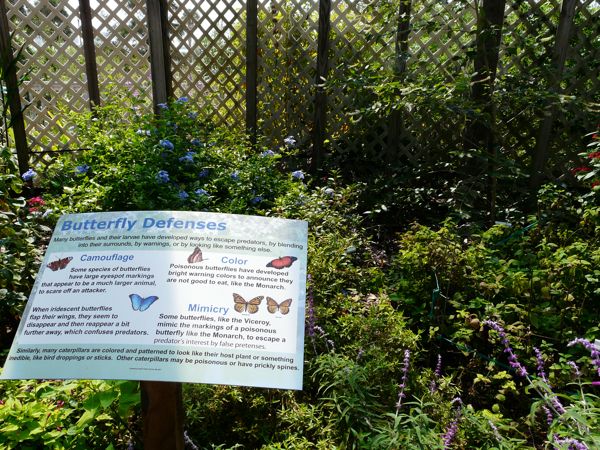
Our next stop was the Monarch Madness festival at the Panhandle Butterfly House in Navarre, where there was also an Arts Fest in progress. The volunteers at the Butterfly House all wore these terrific T-shirts with a caterpiller on the front and Monarch butterfly on the back. They had a great system, too, for getting a lot of people through the butterfly house in an organized and civil way, still giving people a lot of time to ask questions, and with lots of really cool activities for children to do, to help them understand the life cycle of these beautiful and short-lived creatures.





The Manna Food Pantries, Pensacola
I’m lucky. I work on a church committee where the chair brings in representatives from all the major charities in Pensacola to talk with us about what they do. The Manna Food Pantries is, in my humble opinion, a poster-child for how a non-profit should operate. Providing food for those who are hungry, for those going through tough times – and there are more than you might think – is truly part of God’s work for us here on earth. Manna Food Pantries collect and distribute food to the hungry. This morning, we had two Manna vans at the church and people were bringing in their full bags to donate.
It’s been a very tough year in Pensacola. The tough times just go on and on. You can prepare for tough times, save your money, gather your resources, but when tough times linger, sometimes those resources run dry. Manna has been faced with just such a time; resources are drying up, donations were down and the need is greater than ever. Manna hit the front page this week two days in a row, and is getting great coverage on radio, in the churches, in social groups – they are very very good at getting the message out, and the message is clear: We need your continued support, food, money, now more than ever.
They are brilliant at managing their volunteers, and many have been with them for years and years.
All these organizations are only able to exist because people believe in giving of their time and efforts in the hopes of making the world a little better, a little more beautiful, a little more peaceful, a little more hopeful – one person at a time.
Where are you going to put your efforts? What organizations do you support – and why?
The Marital Contract in California?
This guy is hilarious – found this on AOL Huffpost this morning:
A Modest Proposal: Why Can’t Couples Have a Proxy Statement for Their “Merger & Acquisition”?
William Quigley
The recent debates over gay marriage, civil unions and what exactly marriage even means today reminded me of how antiquated our marriage and family laws have become. They don’t take into account how the nature of wealth has vastly changed over the last few decades. I am neither an advocate nor an opponent of marriage but I do believe that the financial obligations we assume when entering into a marriage contract, including the court-ordered redistribution of personal wealth that takes place upon divorce, are not well understood by most of our citizens. Even lawyers I have known have been confused about the differences between spousal versus child support. If Chris Anderson really wanted to investigate the long tail, he should have taken a look at the potential length of California spousal support terms.
California has always been the leader in divorce and alimony law, and I think it is time the state started addressing the profound inequities alimony judgments have created. In short, alimony has evolved into a pension plan for the less successful spouse. In many cases, this pension commitment becomes a lifelong burden for the paying spouse, regardless of who initiated the divorce and under what conditions the marriage dissolved. It promotes unproductive behaviors as well, such as the alimony recipient avoiding employment in order to maximize spousal support. The spousal support payer may reluctantly forgo re-marriage as well, fearing the income of his/her new partner will be combined for the purposes of calculating higher support payments. If the state believes that promoting marriage among the population is a public good (a reasonable belief), then it needs to reduce the severe financial penalties associated with divorce. And since many marriages do end in divorce, it makes sense to acknowledge, upfront, the consequences of that likely outcome.
One marriage-neutral option would be to provide every couple with a simple disclosure form that highlights the financial obligations they are about to assume.
This disclosure form could easily fit on just a single page, with disclosures of the following sort:
1. The State of California recognizes your marriage as a legally binding contract.
2. By entering into marriage in this state, you agree to assume all debts incurred by your spouse during the marriage, whether or not you were aware of these debts when incurred, and whether or not you personally benefited from them in any way.
3. You also agree to provide monetary payments to your spouse in the event your marriage dissolves and you are the higher income earner. The amount and length of these payments will be decided by a court of law.
4. The State can and will use its court and police powers to enforce the financial obligations you are assuming in the event of divorce, including the garnishment of your wages and your incarceration in the state prison system for your failure to comply with court ordered spousal payments
5. If your spouse so chooses, he/she may divorce you at anytime. In so doing, he/she may be legally entitled to receive monetary payments from you for a time period that may extend to the rest of your natural life. These spousal support payments may exceed 50% of your income, could be adjusted upward if you remarry and as a result have more disposable income, and they cannot be eliminated though bankruptcy.
6. The conduct of your spouse, including him/her having one or multiple out-of-wedlock affairs, does not change your legal obligation to provide spousal support.
7. If you are the higher earning spouse, you may be required to pay your lower earning spouse’s divorce related legal bills. This is the case regardless of which spouse initiated the divorce and regardless of the conduct of either spouse during the marriage
8. If you have questions or concerns about what financial obligations you are about to assume, it may be advisable to consult with a family law attorney before signing your marriage contract.
The most important point to highlight when it comes to marriage is that the State of California recognizes it as a legally binding contract. Too often that simple fact is misunderstood or ignored by the couple getting married. In fact, curiously, the one thing the state absolutely does not care about is whether or not a couple is “in love.” There is no requirement to be “in love” to be legally married in the State of California, or any other state for that matter. Only in recent human history — perhaps the last 150 years — has the predominant purpose of marriage been associated with romantic love. It has nearly always been, and remains in much of the world, primarily an efficient method of property redistribution. In the end, the state, and your future divorce lawyer, care only about one thing: the legal enforceability of the marriage contract as it relates to the financial obligations borne by the higher wage earner.
Our society has become accustomed to warning its citizens of potential legal and financial hazards every time they enter into a contract, even those of relatively small consequence. We as a society like to be informed when we are assuming a financial obligation, particularly one that is potentially large and open-ended. Isn’t it odd then that while we require our citizens to initial car rental forms (just in case they didn’t realize that they will be charged $6 a gallon to fill the gas tank), we let 18 year olds get married without so much as a tap on the shoulder about the greatest financial liability they will likely ever assume? Keep in mind that we are talking about state-sanctioned marriage, a legally enforceable contract. Shouldn’t such a contract, with its profound lifelong financial repercussions, only be assumed by those fully informed of its potential consequences? This is why I completely support a marriage financial obligation disclosure form.
Male on Male Sexual Abuse on Law and Order
AdventureMan teases me about my loyalty to the Law and Order Series . . . “Ripped from the headlines!” he will taunt me, when I flip the channel. We often watch separate TV’s when he wants to watch one of his droning military history channels and I want to watch Law and Order re-runs. But tonight’s L&O will tackle a topic no-one talks about – male on male rape and abuse.
I was so naive. I thought it only happened in prisons. While I was living in Qatar, I started hearing horrific stories about young men abducted and taken to the desert, often gang raped. Most of them lived, but had to deal with the aftermath of the violence and humiliation. In Kuwait, it was reported almost weekly in the papers, it was so common. I had a friend whose son was abducted, and walked with her through the horrors of the aftermath. Her greatest fear was that her son would commit suicide. He overcame his abduction, and is happy now, but the path was long, and full of perils along the way.
Male on male rape, like male on female rape, or any kind of rape, is not about sex. It’s about power. It’s about humiliation. It’s bullying taken to the extreme. It’s just wrong.
From AOL TV:
The second episode of ‘Law & Order: SVU’ Season 13 is one for the TV history books. Not only does it feature guest stars Dan Lauria, Mechad Brooks, Carmelo Anthony and Chris Bosh, but it’ll also tackle the taboo issue of male-on-male sexual violence.
In ‘Personal Fouls,’ a basketball coach known as a trusted mentor and figure in the community comes under suspicion of molesting a number of his players.
“This script was very exciting and I think the cast felt honored and excited to be able to talk about this issue because obviously sexual violence is something people are scared to talk about,” series star Mariska Hargitay said at a recent press event on the ‘SVU’ set.
Hargitay’s The Joyful Heart Foundation, Wolf Films, NBC, 1in6 and A Call to Men are partnering in an effort to raise awareness about male-on-male sexual abuse.
“It takes so much courage to come forward and male-on-male sexual violence is even more swept under the carpet,” she said. “The statistics are frightening.”
According to statistics from 1in6, an organization that seeks to help male sexual abuse survivors, 19 million men in the United States are victims of sexual abuse.
“It’s exciting to do a show about it because obviously when things are on TV somehow they’re made OK to talk about and that’s been exciting.”
The partnerships between the organizations hope to spread awareness about the subject. Hargitay said one of the objectives is to “let male survivors know they’re not alone and there are so many people that want to help them.”
“It’s not a shameful secret that you should keep to yourself, that the blame belongs with the perpetrator, not the survivor,” she said.
Recent Comments
intlxpatr on Shampoo Ginger tigerbutterya0c5ff1d… on Shampoo Ginger intlxpatr on British Soldier Kidnapped, Esc… John on British Soldier Kidnapped, Esc… intlxpatr on British Soldier Kidnapped, Esc… Wikipedia Donate Button

Amazina


Early Voting in Florida


