Wooo Hoooo! Saudi Women to Have Right To Vote!
I found this today on Huffpost World; hey four years is not such a long time compared to forever. Getting the vote makes it more and more illogical for them not to be driving . . . think about it. Does choosing national leaders take less brains than driving? Ummm. . . . well . . . (LOL)
RIYADH, Saudi Arabia — Saudi Arabia’s King Abdullah, considered a reformer by the standards of his own ultraconservative kingdom, decreed on Sunday that women will for the first time have the right to vote and run in local elections due in 2015.
It is a “Saudi Spring” of sorts.
For the nation’s women, it is a giant leap forward, though they remain unable to serve as Cabinet ministers, drive or travel abroad without permission from a male guardian.
Saudi women bear the brunt of their nation’s deeply conservative values, often finding themselves the target of the unwanted attention of the kingdom’s intrusive religious police, who enforce a rigid interpretation of Islamic Shariah law on the streets and public places like shopping malls and university campuses.
In itself, Sunday’s decision to give the women the right to vote and run in municipal elections may not be enough to satisfy the growing ambition of the kingdom’s women who, after years of lavish state spending on education and vocational training, significantly improved their standing but could not secure the same place in society as that of their male compatriots.
That women must wait four more years to exercise their newly acquired right to vote adds insult to injury since Sunday’s announcement was already a long time coming – and the next local elections are in fact scheduled for this Thursday.
“Why not tomorrow?” asked prominent Saudi feminist Wajeha al-Hawaidar. “I think the king doesn’t want to shake the country, but we look around us and we think it is a shame … when we are still pondering how to meet simple women’s rights.”
The announcement by King Abdullah came in an annual speech before his advisory assembly, or Shura Council. It was made after he consulted with the nation’s top religious clerics, whose advice carries great weight in the kingdom.
It is an attempt at “Saudi style” reform, moves that avoid antagonizing the powerful clergy and a conservative segment of the population. Additionally, it seems to be part of the king’s drive to insulate his vast, oil-rich country from the upheavals sweeping other Arab nations, with popular uprisings toppling regimes that once looked as secure as his own.
Fearing unrest at home, the king in March announced a staggering $93 billion package of incentives, jobs and services to ease the hardships experienced by some Saudis. In the meantime, he sent troops to neighbor and close ally Bahrain to help the tiny nation’s Sunni ruling family crush an uprising by majority Shiites pressing for equal rights and far-reaching reforms.
In contrast, King Abdullah in August withdrew the Saudi ambassador from Syria to protest President Bashar Assad’s brutal crackdown on a seven-month uprising that calls for his ouster and the establishment of a democratic government.
“We didn’t ask for politics, we asked for our basic rights. We demanded that we be treated as equal citizens and lift the male guardianship over us,” said Saudi activist Maha al-Qahtani, an Education Ministry employee who defied the ban on women driving earlier this year. “We have many problems that need to be addressed immediately.”
The United States, Saudi Arabia’s closest Western ally, praised the king’s move.
In Washington, National Security Council spokesman Tommy Vietor said it recognized the “significant contributions” women have been making in Saudi Arabia. The move, he continued, would give Saudi women more ways to participate “in the decisions that affect their lives and communities.”
The king, in his own remarks, seemed to acknowledge that the Arab world’s season of change and the yearning for greater social freedoms by a large segment of Saudi society demanded decisive action.
“Balanced modernization, which falls within our Islamic values, is an important demand in an era where there is no place for defeatist or hesitant people,” he said.
“Muslim women in our Islamic history have demonstrated positions that expressed correct opinions and advice,” said the king.
Abdullah became the country’s de facto ruler in 1995 because of the illness of King Fahd and formally ascended to the throne upon Fahd’s death in August 2005.
The king on Sunday also announced that women would be appointed to the Shura Council, a currently all-male body established in 1993 to offer counsel on general policies in the kingdom and to debate economic and social development plans and agreements signed between the kingdom with other nations.
The question of women’s rights in Saudi Arabia is a touchy one. In a country where no social or political force is strong enough to affect change in women’s rights, it is up to the king to do it. Even then, the king must find consensus before he takes a step in that direction.
Prominent columnist Jamal Khashoggi said that giving women the right to vote in local elections and their inclusion in the Shura council means they will be part of the legislative and executive branches of the state. Winning the right to drive and travel without permission from male guardians can only be the next move.
“It will be odd that women who enjoy parliamentary immunity as members of the council are unable to drive their cars or travel without permission,” he said. “The climate is more suited for these changes now – the force of history, moral pressure and the changes taking place around us.”
___
Hendawi reported from Cairo. Associated Press writer Maggie Michael contributed to this report from Cairo.
Uyen Nichole Duong: Mimi and Her Mirror
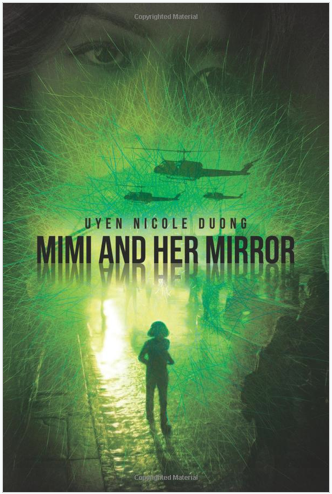
I must be on a streak. I really wanted to like this main character, Mi Chou (Mimi) but I found her obsessive, impulsive, overly emotional, self-absorbed and boastful. Her strongest relationship in the book is with her three way mirror. She specifically claims not to be narcissistic, and I think the story tells us otherwise.
The book is supposed to be fictional, and I truly hope some parts are fictional, but the strengths of the book lie in the ‘coming to America’ experience, which she captures well. She has a strong eye for ironies, hypocrisies and cultural differences. Her beginnings are vague, as is often the case when an immigrant goes through the shell-shock of being cut off from their own culture and grafted into another. I believe the author drew strongly on her own experiences to write this part of the book, and to me, it is the strongest part.
Mi Chau and her family leave Viet Nam during the great evacuation, and are given a spot on the planes that should have gone to someone else. Her entire family, mother, father, sister and brother all escape together, leaving behind a beloved grandmother who refuses to leave. Their entry into the US goes smoothly. They are the first wave of Vietnamese, the lucky ones. They have support, they have jobs. They have lost their own world, and they struggle. All this is part of the normal immigrant experience.
Neither is it abnormal that the children thrive through their struggles, and achieve excellent eduations. What is distracting to me in the book is how Mimi bases her self worth first on her academic excellence, and later in life on what she owns, and on her status. She has accomplished so much, she owns high-status symbols, but she is miserable and her life is empty.
Is it because of her experience as she evacuates out of Vietnam? Is it a character defect? There are no meaningful relationships in her life, she lives an empty and soulless existence, focusing on work and accomplishment and status symbols. Her major problem, as I see it, is an unwillingness to connect, to step out of herself and see through other’s eyes.
It’s an interesting book. There are, in my opinion, better books about the Vietnamese coming-to-America experience, and one is Anne Fadiman’s The Spirit Catches You and You Fall Down about immigrant Hmong, which is rich in cultural teachings, rich in relationships, and I still remember details more than ten years after I first read it. It is only available in Kindle format now, through Amazon, although they may have a used copy from time to time. Way better book than Mimi.

Ann Patchett: The Patron Saint of Liars
I didn’t expect to like this book as much as I did. The main character is odd, a woman who doesn’t really think things through clearly, and somehow doesn’t even really know what she is feeling.
She gets married, and three years later, pregnant, decides “the marriage isn’t working” and leaves her husband, with a note saying only that the marriage isn’t working. We’ve been with her when she met him and fell in love, and she seemed to love him OK, and their lives together seemed to be OK, but somehow, she had to leave. I didn’t understand it when it happens in the book, and I never did understand it. The author tells us that Rose is a private person.
Rose drives from California to Tennesee, to a home for unwed mothers, where she bears a child, whom she keeps. Most of what she does seems to be on automatic pilot. I never really understand what Rose wants, only that she is aware that this isn’t it.
The story is told from three different points of view, and at no time did I have a clear idea of what motivated the main character, Rose. You can’t help but love her husband, Son, and her daughter, and all the women who love Cecilia, and help raise her.
You do get was a rounded picture of people around her, the good sisters running the home for the unwed women, how the women who arrived changed over the years as our culture changed, and how you may not understand how a person’s mind is working but sometimes you can just find a way to accept that she is what she is, and get on with living your life.
I really liked the book, even though I was not taken with the main character. I can’t tell you too much without giving it all away. Read the book and tell me what you think.
Contagion
As we rushed into the house, we both headed immediately to our bathrooms to wash our hands. Twice. And I also washed my face.
Contagion is a very intelligent movie. It is scary, but not in the Friday the 13th kind of scary, or in the Night of the Living Dead kind of scary, although come to think of it, there were some elements in common with the original Night of the Living Dead. No, what makes Contagion scary is that it could happen so easily.

I had no idea that we touch our faces, on the average, of three to five times a minute, more than 3,000 times a day, and that with every surface we touch, we transfer (germs) (bacteria) (things that could make you sick) close to an entry to your body, like your nostrils and your mouth. Once you start thinking about NOT touching your face, you become aware of how often you touch your own face, unaware. Like flipping hair out of your eyes, or covering your mouth when you laugh, or a million other things like that. You become aware of all the things you touch between the time you wash your hands and touch your food. You think about who may have touched your fork, and how well it was washed.
For me, the scariest part of the movie, beyond how quickly the virus mutated and spread, was how quickly civil society broke down when cities were quarantined, when people were concerned food was growing scarce, when people thought they had to fight for survival. The rules for avoiding spreading the virus were not to meet, not to touch, to stay apart. It’s hard to help one another when those rules are in play, but those rules make it easier for those without rules to attack and take what they can.
I liked the music in the movie, too, very edgy.
Before I ever saw this movie, I heard an interview with the author on NPR. She was saying that when they came to her wanting to make this movie, she said “it cannot start in Africa. . . (there were a whole bunch of rules, which were hilarious because they were like every plot for a movie like this ever made) I knew I needed to see this movie, to see how it could be done and still be dramatic, and follow her rules.
There is one hilarious quote. A blogger in this movie gains enormous following. As he is tracking down one of the scientists for information, the scientist says to him:
Blogging is not writing. It’s just graffiti with punctuation.
Excuse me, gotta go wash my hands again.
The Value of the Trivial
“Be sure to use your full name, First, maiden and married, on your quilt labels,” our presenter instructed us.
Oh-oh. I’ve been lucky just to get labels on my quilts, and I haven’t used my maiden name at all.
“Years from now, if someone is trying to track you as a quilter, it will help to have your maiden name to distinguish you from other quilters who may have similar names,” she continued.
OK. So now I will include my maiden name. (For my Moslem friends, it is our custom to take our husband’s names when we marry. Some women don’t, but even now, the majority do. I know, I know, it seems backward to you, it is irrational, it is just the way it is. We also don’t have marriage contracts.)
At lunch with a long-time friend this week, she mentioned she still has her mother’s diaries. I suggested she offer them to a major university near where my friend grew up, to their historical collection, and my friend said “oh, it’s just daily weather, who’s sick, stuff like that.”
Stuff like that is just exactly what historians treasure. When I was at university, I worked for a time in the copying department of the library, and I specialized in the historical collections, many of which were from people who came west. The papers were fascinating – letters home, lists of supplies they asked to have sent West, to-do lists, old photos. The scraps of paper you and I throw away – there in the Northwest collection.
They become valuable, at least for historical research, for writing period fiction, for medical research – because we do throw them away, and so few survive.
Keeping up with this blog has become more problematic. I just don’t have the time in my life I used to have. My life is interesting to me, but now that I am no longer living in exotic locations, I don’t believe I am so interesting to others. My internal debate is whether or not to continue. I would let it go in a heartbeat and not miss the time, but . . . I think I would miss your feedback.
I’m not writing this for you. I’m sort of writing more for my own record-keeping, it’s why I include news articles and scraps of daily life (not my own) and all the oddities and irrationalities that catch my eye. I love having a place to store it all (this blog) and I love your comments, which can sometimes completely turn me around in point of view; you give me perspectives I hadn’t considered.
The point of all this is the ephemeral nature of our daily lives, and the records of our lives. There are things worth keeping.
I wish someone in Kuwait were doing oral histories on the older people who were living there ‘before oil’.
Changes in the Air
“It’s still hot,” I said as we were coming out of the movie, “but can you feel a change in the air? Even though it’s hot, the air is changing, the light is changing – you can feel hints that Fall is coming . . . ”
We had just been to see “The Help,” and if you haven’t seen it yet, you need to make plans to see it soon. It is a really good movie, which will make you laugh, and cry, and remember that it wasn’t so long ago in our country when it took place. (You can read my review of the unforgettable book here.)
The movie is a serious movie, and at the same time, I loved the attention to detail – the hair, the fashions, the manners – all very 50’s, even though it is the 1960’s in Jackson, Mississippi.
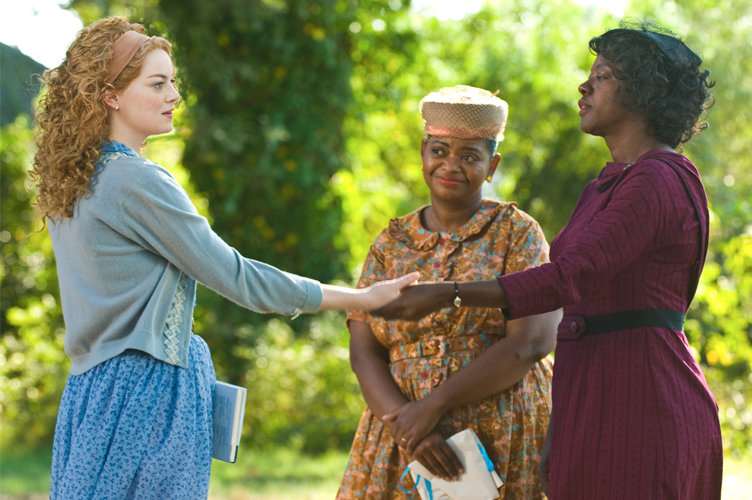
I remember reading this book in Qatar, just after I had moved back there from Kuwait. The Kuwait book club also read White Tiger and Half of a Yellow Sun, all of which had domestic service as at least part of the theme. It’s another one of those cultural things we all have in common – how do we treat the people who work for us? How do they see us? Who is raising our children and teaching them values?
In the Gulf, there are horror stories in the papers of servants who never receive their wages, or who work 16 hours a day, sun-up to sun-down, with never a day off. The families who take good care of their servants never make the papers, but I have seen good and caring relationships, lasting many years, between employers and employees. We’re glad we saw this movie, which sticks closely to the book. For a fuller experience – read the book.
Meanwhile, the temperature early this morning was below 69° F, which means that my tomatoes will begin setting once again and we may have a good crop coming before the cold sets in. I noticed, to my horror, I have a decent crop of weeds trying to establish themselves while it is too hot for me to go out and do battle with them. Some of my tomatoes actually continued producing even during the hottest days of the summer; I’m going to have to plant more of those next year. The golden pear and the red pear tomatoes are producing merrily; the bigger tomatoes have stopped – I hope temporarily.
Arabian Gulf Legacy
In today’s Lectionary, Psalm 107, there is the following verse:
41 but he raises up the needy out of distress,
and makes their families like flocks.
My heart goes back to Qatar, and I think of “my” family there, a family who adopted me, slowly but surely. The woman, who taught me Arabic, has twelve children. “Twelve children!” I used to think, was about ten too many, but I learned so much from this woman, and from her family. Every day she and her husband would sit together. They discussed each child. No child in that family was lost or overlooked; they cared for each and every one. I, too, know each child. I was particularly close to the oldest girls, but there was one young son who hit me on my bottom during my very first visit, hard, as I was bending over to put on my shoes. While everyone else looked on in horror, he just grinned up at me, and I couldn’t help but laugh. I pray for each and every one in this family, and they pray for me. Relationships don’t get much more intimate than that, I think, that we pray for one another, and we have some idea what to pray for.
And while they are not wealthy, they have enough, and they are a happy family. When one has a need, the others sacrifice, and I never hear a grumble of a complaint. Each has an assurance that when their turn comes – as it comes to all of us – their family will be there to assist them.

We said goodbye to our Saudi friends this week, on their way back to the desert kingdom to finish Ramadan and celebrate Eid with their family. They have been such a blessing in our lives here, and we wish them well. They left a lot of last minute things for me, a coffee and tea set with coffee cups, trays for serving drinks, spices, bags – the detritus of a life of moving, there are always things which still have use but for which you have no room in your packing crate. I am starting a lending closet with them; as other families arrive, I will offer them up to new arrivals who need the same pieces for their daily life and entertaining. The spices I will share with one of my co-mother-in-laws who makes a chicken biryani they call Chicken Perlow. It is moister than biryani, but has much the same flavor. Oh yummm.
As our Saudi friends depart, we have new friends arriving and we will have them for dinner tomorrow night. We have met them, one is Algerian, the other is Omani; as the Ramadan fast ended, the Algerian was trying to eat a piece of bruschetta with a knife and form. “You are so French!” I laughed, and told him we eat this with our fingers, which greatly relieved him, as he was standing, and to try to cut a piece of French break with a fork while standing is close to impossible. Both are a lot of fun, and while we will miss our departing Saudi friends, we are looking forward to these new friends.
One thing that pleases me greatly. I asked my Saudi friend how she was received when she went out, as she is fully covered, abaya and scarf and niqab (face covering). She said she had been warned before leaving Saudi Arabia that people would be unkind to her, but never once did she run into this, that people were always kind, “in the hospital, in the Wal-Mart, in the shopping, everywhere.” It just made me so proud to be living in Pensacola.
Answered Prayer: Please Lord, Don’t Let it be a Muslim
In the aftermath of the horrific events in Norway, I was praying along with all my immigrant friends – “Please, Lord, don’t let it be a Muslim.” It wasn’t. Just another hater, this one has blue eyes and blonde hair and seems to be a Christian conservative. This one hates for his own reasons. It doesn’t matter much what those reasons are, does it, to the grieving families whose children were slaughtered, or the grieving nations whose peace is destroyed?
The 32-year-old Norwegian man who allegedly went on a shooting spree on the island of Utoya has been identified as Anders Behring Breivik, according to multiple reports.
The Daily Mail and Sky News were among those to report the suspect’s name. According to witnesses, the gunman was dressed as a police officer and gunned down young people as they ran for their lives at a youth camp.
Police said Friday evening that they’ve linked the youth camp shooting and Oslo bombing. Breivik is believed to have acted alone.
Norwegian TV2 reports that Breivik belongs to “right-wing circles” in Oslo. Swedish news site Expressen adds that he has been known to write to right-wing forums in Norway, is a self-described nationalist and has also written a number of posts critical of Islam.
A Twitter account for Breivik has surfaced, though it only has one post, this quote from philosopher John Stuart Mill: “One person with a belief is equal to the force of 100 000 who have only interests.” The tweet was posted on July 17.
On a Facebook account that Norwegian media outlets have attributed to Breivik, he describes himself as having Christian, conservative views. He says he enjoys hunting, the games World of Warcraft and Modern Warfare 2, and lives in Oslo. He also lists political analysis and stock analysis as interests.
Credit Card Blues
“Because your name and card number are on file with us, it is possible that your card information has been compromised. While we employ the strongest encryption processes, it is possible that a motivated and persistent hacker could access your information. For this reason, we suggest that you inform your credit card company and explore the possibility of closing your current card and starting another.”

I don’t even have a pit in my stomach this time when I get this message. This is our third change in one year on one card. One of the changes was due to our card company shifting its business to another company, but two were due to possible compromises of our information, which had nothing to do with anything we had done except to use our credit card.
In Saturday’s paper, we read that there has been a huge shift in the restaurant business. An owner said that ten years ago cash customers and credit card customers were about 50/50, but now, 90% of all customers use credit cards. (We’re in the 10% who use cash, but it’s because of all our years living overseas.)
The new cards have arrived, and I spent the day going to all the sites that bill me automatically, and monthly, and to my car rental people, and airline reservations people . . . all those automatic charges that would bounce if I didn’t get the correct new number to them. Even as I am sending out all this information, I cannot help but be aware that 1) It is the companies storing my information that make me so vulnerable, and 2) in some cases, there are no alternatives. Credit cards are the accepted way of paying these days.
It’s been a long journey. I remember my first eye-opening experience; I was back from Qatar, re-opening a mobile phone account and I handed the sales person a hundred dollar bill, and she just gaped. “No one ever pays in cash anymore,” she said, “I don’t even know what to do!” As it turned out, they didn’t have change, so I had to charge it, but it went against my grain – we use our cards, but selectively, and pay them off in full every month.
And we only really use one card. We have a couple back ups, but we never use them.
I can’t help but feel that we are all increasingly vulnerable by our reliance on the credit card system. Hackers are the least of the problem – I also worry about those heaps of paragraphs in 2 pt type that we have to ‘read’ and sign, because do you really read them? I know I scan them, but there are words in those agreements designed (I believe) to make you tired of reading, big words, lots of them strung together. They probably have some meaning, but although I am not stupid, reading financial disclosure statements makes my head spin.
What kind of vulnerability do we have to our banks with these cards?
What are our obligations that we don’t even know about?
While we were waiting for our cards, I had three pre-orders with Amazon.com that failed. I wrote to them, suggesting that because I was a good customer, a shareholder, and a faithful buyer with them almost from the very beginning, that maybe they could send them anyway (especially the new Song of Ice and Fire volume by George R.R. Martin, A Dance With Dragons,) but no, they would not. This is not the Amazon.com I used to know, who sent me a coffee cup for being a faithful customer, back in 1997. No, I had to zip up the road to Barnes and Noble, the old fashioned way.
On the other hand, our mail-order-pharmacy people were just great. I had an automatic order and when I explained the problem and that we were waiting for our new cards to arrive, the customer service lady just laughed and said “We’ll send it out and bill you later.” How very very civilized. (ExpressScripts – YAYYYYY)
I used to know my credit card number by heart. We had the same card for almost 20 years. I even memorized my next card, but not this one. I have little faith it will be good for all that long.
Recent Comments
intlxpatr on Shampoo Ginger tigerbutterya0c5ff1d… on Shampoo Ginger intlxpatr on British Soldier Kidnapped, Esc… John on British Soldier Kidnapped, Esc… intlxpatr on British Soldier Kidnapped, Esc… Wikipedia Donate Button

Amazina


Early Voting in Florida


