Jeannette Walls: Half Broke Horses
About a month ago, I picked this up off the stack of “Read Me’s” . . . ummm . . . errr . . . one of the stacks of “Read Me’s.” (If there is some sort of emoticon for mild embarrassment, insert it here; one of my fatal flaws is acquiring book I WANT to read and having more books than I have time to read.)

I think Amazon recommended Half Broke Horses to me, and I didn’t know why. They keep track of what I buy and make recommendations, which over the many years I have been using Amazon.com to buy books has become more and more relevant to the kinds of things I actually buy and read. So I bought Half Broke Horses, and another one recommended by the same author, then put them in the stack. It is only because I had read whatever I put on top of them that I ended up reading.
I casually started reading, without a lot of anticipation. The first chapter starts off in the early early days of our country, in the wilds of West Texas, as a girl and her younger brother and sister are out checking the cows, who suddenly go crazy, even jumping over fences which under almost every circumstance successfully pen them in. The young girl recognized something strange was going on and figured it was a flash flood coming, got her siblings up in the tree and keeps them awake all night, as the flood hits, hoping the tree will hold and not wash away.
What is your first thought, reading that? Mine was – Where are her parents?? No one is out searching for them?
The next day, the flood recedes enough for them to make their way home back to a primitive dwelling hollowed out in the high side of a riverbank, dirt floors, dirt crumbling down on them, dark, small, smokey. Yes, there is a mother and a father, and they love their children, but these are very different times. These are hard times, where there is no grocery store, no nearby doctor, where babies die and children have fatal accidents all the time. Life can be short and brutal. The kids have some schooling, mostly at home, they learn to read and write and add and subtract, so they can keep track of home related business. They also work hard, every child has work around the ranch that needs doing, and work comes first or the family won’t survive.
The heroine, Lily Casey Smith, is a real person, the grandmother of the author, Jeannette Walls. This is called a true-life novel. From all the stories she heard about her grandmother growing up, and from knowing her grandmother, and from all the legends about her grandmother she was able to verify, she built a skeleton, and then filled it in with conversations and even a few events that she had to imagine.
Lily Casey left her family at 15 to ride her horse 25 days across Texas to take a teaching job in a one-room schoolhouse. (My jaw dropped, too!) After several years of teaching, she goes to Chicago to become educated and licensed as a teacher, marries, annuls the marriage, returns home, finds a teaching job, races horses, marries again, has children, has a huge ranch, loses the huge ranch, manages a huge ranch . . . her story is bigger than life, but so is the person of her grandmother, who never falls apart, but looks life in the eye and copes with it. Better than coping, she dominates.
Her major opponents are tough economic times, and dramatic and devastating weather conditions. Rain can fail to fall for months, cattle can die in an unexpected cold snap. At the best of times, you have enough to eat and a roof over your head.
I never wanted the book to end, and, in a sense, it didn’t. Jeannette Walls big best seller, The Glass Castle, takes up with just a little overlap where Half Broke Horses leaves off.
Here is what I loved: I loved the voice of Lily Casey Smith. She’s the kind of woman I want for a friend. She’s smart. She has a sense of how things work in the world. She experiences tragedies, but she doesn’t let them hurt her self-confidence. She can be beaten, but she always gets up again. She’s a problem solver. She never once lets being a woman get in the way of being the person she was born to be. She overcomes. She doesn’t sugar coat; she tells it as she sees it. And you know you can count on what she says to be the truth as she believes it. I truly hated for this book to end.
You can find this book at Amazon.com used under a dollar to new hardcover around $15. It is worth every cent.
Saudi Women Drive Today
From today’s BBC News:
Saudi Arabia women drive cars in protest at ban
Women in Saudi Arabia have been openly driving cars in defiance of an official ban on female drivers in the ultra-conservative kingdom.
The direct action has been organised on social network sites, where women have been posting images and videos of themselves behind the wheel.
The Women2Drive Facebook page said the direct action would continue until a royal decree reversed the ban.
Last month, a woman was arrested after uploading a video of herself driving.
Manal al-Sherif was accused of “besmirching the kingdom’s reputation abroad and stirring up public opinion”, but was released after 10 days having promised not to drive again.
“All that we need is to run our errands without depending on drivers,” said one woman in the first film posted in the early hours of Friday morning.
The film showed the unnamed woman talking as she drove to a supermarket and parking.
We can’t move around without a male”
Maha al-Qahtani
Female driver
“It is not out of love for driving or traffic or the experience. All this is about is that if I wanted to go to work, I can go. If I needed something I can go and get it.
“I think that society is ready to welcome us.”
Another protester said she drove around the streets of Riyadh for 45 minutes “to make a point”.
“I took it directly to the streets of the capital,” said Maha al-Qahtani, a computer specialist at the Ministry of Education.
Religious fatwa
On Twitter, Mrs Qahtani described the route she had taken around the city with her husband, saying: “I decided that the car for today is mine.”
Her husband said she was carrying her essential belongings with her and was “ready to go to prison without fear”, AFP news agency reported.
One woman who asked not to be named told the BBC driving was often considered to be “something really minor”.
The ban is one of a number of restrictions Saudi women face in daily life
“It’s not one of your major rights. But we tell them that even if you give us all the basic and big rights, that you are claiming are more important than driving, we can’t enjoy practising those rights because the mobility is not there.
“We can’t move around without a male.”
The motoring ban is not enforced by law, but is a religious fatwa imposed by conservative Muslim clerics. It is one of a number of severe restrictions on women in the country.
Supporters of the ban say it protects women and relieves them of the obligation to driver, while also preventing them from leaving home unescorted or travelling with an unrelated male.
But the men and women behind the campaign – emboldened by uprisings across the Middle East and Arab world – say they hope the ban will be lifted and that other reforms will follow.
Amnesty International has said the Saudi authorities “must stop treating women as second-class citizens”, describing the ban as “an immense barrier to their freedom of movement”.
The last mass protest against the ban took place in 1980, when a group of 47 women were arrested for driving and severely punished – many subsequently lost their jobs.
The women were angered that female US soldiers based in the kingdom after the war with Kuwait could drive freely while they could not.
Elderly Women Prime Targets for Cons
Found this fascinating article this morning on AOL News/finance There was a time when I worked with transitional homeless people, helping them to find ways to re-enter the mainstream. A percentage of them didn’t want to enter the mainstream, they didn’t like rules, and they were looking for an easier way. One of the paths was by being part of the elder-worker force. I would watch them take a job and then work their way into a position of dominance in an elderly person’s life. Partly, the elderly were lonely, and thrived on the new attention, and interpreted it as caring.
Then would come the sob stories. School starting and not enough money to buy shoes and books for the children. A broken-down car, and funds needed to get it fixed so she can get to her job. Once it starts, it never ends.
The key to prevention is staying engaged with friends, neighbors and family who are paying attention, and can give perspective to this new relationship. The one question I asked is “if there were not money involved, would this relationship exist?”
Elder Abuse: How to Protect Grandma From Con Men and Thieves
By Sheryl Nance-Nash Posted 9:00AM 06/03/11 Retirement, People, MetLife
See full article from DailyFinance: http://srph.it/lXHooJ
Who would pick the pocket of your grandma or grandpa? Apparently, any number of people. Older Americans are losing $2.9 billion annually to elder financial abuse, a 12% increase from the $2.6 billion estimated in 2008, according to The MetLife Study of Elder Financial Abuse: Crimes of Occasion, Desperation, and Predation Against America’s Elders, released Wednesday.
According to the study, 51% of these abusers are strangers, but 34% of the perpetrators were family, friends and neighbors. As for “trusted advisers,” exploitation from the business sector accounted for 12% of reported cases. Medicare and Medicaid fraud accounts for 4% of reported cases. As a subset, the percentage of robberies and crimes classified as “scams perpetrated by strangers” increased from 9% to 28% from 2008 to 2010.
Who’s on the top of the target list? Women. The study, produced by the MetLife (MET) Mature Market Institute in collaboration with the National Committee for the Prevention of Elder Abuse and the Center for Gerontology at Virginia Polytechnic Institute, shows women were nearly twice as likely to be victims of elder financial abuse as men.
Also prime for the picking were people between the ages of 80 and 89 who lived alone and required some help with either health care or home maintenance. Primarily, men were the menace: Nearly 60% of perpetrators were males, mostly between ages 30 and 59.
Predators lie in wait, watching: In the most common scenarios, strangers targeted victims who were out shopping, driving or managing the financial affairs, and often looked for particular flags of vulnerability like handicapped tags on cars, canes or displays of confusion. Crimes included cons, purse snatchings and associated physical assaults.
But that even those closest to an elderly person can give in to temptation or desperation. In cases involving a person known to the victim, trusted helpers like caretakers, handymen, friends, “sweethearts,” children, lawyers and others seized upon opportunities to forge checks, steal credit cards, pilfer bank accounts, transfer assets and generally decimate elders’ finances, the study revealed. The holidays apparently bring out the worst in people: At that time of year, overall dollar losses due to family and friends were higher than any other category.
Married to the Con Job
People can get quite creative with abuse. One unusual method — caregivers secretly marrying their elderly charges, says Susan Slater-Jansen, an attorney at Kurzman Eisenberg Corbin & Lever.
There have been numerous lawsuits over cases in which a caregiver married a mentally incapacitated older patient and the patient’s family didn’t learn about it until after the patient had died. Once a person is dead, it’s too late — in all but three states, you can’t void a marriage if one spouse has died, says Slater-Jansen. To help lower the odds of such a thing happening to your parent, adult children should make sure they receive duplicate monthly statements from all bank and brokerage accounts; install nanny cams; carefully and thoroughly check references for all caregivers; visit parents often, both while the caregiver is there and when they are not; and discuss with your parents the treatment they are receiving from caregivers.
If you discover such a fraudulent marriage has taken place, act quickly to get it annulled.
After the parent dies, heirs can sue to recover money from the “spouse.” More and more, courts have found ways to deny spouses if the marriage was fraudulent, says Slater-Jansen.
“The most flagrant abuse is perpetrated on the elder by the hired caregiver, neighbor, or ‘new’ friend,” warns Karen Maarse Fitzgerald, a principal in her own elder law practice. “A simple power of attorney signed by the elder can give to the “agent” broad and sweeping powers over the elder’s life savings. I have seen bank accounts drained within days, the money and perpetrator vanishing to another country.”
Protection Yourself and Your Relatives
The worst forms of elder abuse go beyond money: There can be physical abuse and sexual violence as well. “The vigilance of friends and family can help protect elders from those who are predatory, which may, unfortunately, include strangers or even other loved ones,” said Sandra Timmermann, Ed.D., director of the MetLife Mature Market Institute, in a prepared statement.
What can the elderly do to protect themselves? Among the guidance offered by the report’s authors:
“Stay active and engage with others; socialize with your family members and friends. Avoid isolation, as it can lead to loneliness, depression, and make you more vulnerable to financial abuse or exploitation.”
“Use direct deposit for Social Security and other payments to prevent mail theft. Sign your own checks whenever possible.”
“Stay organized and keep important papers and legal documents in a safe, secure location.”
“Review your legal documents (i.e., wills, trusts, and power of attorney), as well as other important documents (i.e., insurance policies) at least annually, to make certain they continue to represent your wishes.”
Ted Sarenski, who chairs the American Institute of Certified Public Accountants’ Elder Planning Task Force, would add to that list. His tips:
Subscribe to national and state Do Not Call lists;
Keep Social Security cards in a safe place;
Remove mail promptly from the mailbox;
Shred all confidential and financial information prior to discarding.
“Consider allowing the bank to send a duplicate copy of your bank statement to a trusted family member,” advises attorney Andrew Stoltmann, who has a large client base of seniors. “Usually, most financial elder exploitation cases are only reported or discovered six to 12 months after the initial losses have occurred.”
Elders whose sight is failing are at even greater risk because they may rely upon the very person who is stealing from them to ensure that their financial transactions are in order, says Stoltmann. “An independent pair of eyes that is able to review bank statements every 30 days will be able to catch suspicious activities in the early stages and cut it off. This is crucial.”
Advance Planning Can Help Dodge Dangers
When you are the responsible caregiver, know too, that your prudence can go a long way in preventing financial abuse.
Have some tough conversations. You need to know whether there is a will or a durable power of attorney, and where such documents are. Does your parent have a living will? If so, does it give you clarity about what your loved one’s wishes are? A health care power of attorney would permit a trusted individual make medical decisions if your elderly relative was unable to.
It’s important not to wait until the eleventh hour to have these talks. Ideally, those documents should be drawn up when your relative is of sound mind and body. It’s not a bad idea either, to have a trusted adviser, not only know where the documents are kept, but be able to get to them if needed.
Beware of the appearance on the scene of the “trusted new friend.” If mom and dad have a neighbor, caregiver or other outsider who is suddenly their best pal, running errands, going to the bank, and generally being around all the time when they never were before, it can be a warning sign that someone is taking advantage, warns Sarenski.
“Elder financial abuse invariably results in losses of human rights and dignity,” said Karen A. Roberto, Ph.D., director of the Center for Gerontology, at Virginia Polytechnic Institute. ” Despite growing public awareness from a parade of high-profile financial abuse victims, it remains under reported, under-recognized, and under-prosecuted. The 2010 Passage of the Elder Justice Act may bring more attention and resources to this crime leading to prevention among the expanding older population.”
The bottom line, says Maarse Fitzgerald: “Protect elders from isolation, which allows the perpetrators to take control of our elder’s lives.”
See full article from DailyFinance: http://srph.it/lXHooJ
Scamese
This was in my newest New Yorker magazine, originally given me by Little Diamond, now I can’t live without my subscription. 🙂 There is the kind of news you get on television, like what they have pictures of, maybe not the most important stuff but visual. Then there is National Public Radio news, and the New York Times, and The New Yorker. The New Yorker also has some of the greatest, funniest covers ever, and great cartoons. This one, as you might imagine, is near and dear to my heart:

Two Saints of the Church
Here is the prayer given for today in the Lectionary:
PRAYER (traditional language)
Loving God, we offer thanks for the ministries of Edward Thomas Demby and Henry Beard Delany, bishops of thy Church who, though limited by segregation, served faithfully to thy honor and glory. Assist us, we pray, to break through the limitations of our own time, that we may minister in obedience to Jesus Christ; who with thee and the Holy Spirit livest and reignest, one God, now and for ever. Amen.
BISHOPS, 1928, 1957
Delany, Henry Beard [Feb. 5, 1858-April 14, 1928] was the second African American bishop in the Episcopal Church, being elected Suffragan Bishop of North Carolina in 1918. He is probably better known as the father of Sadie and Bessy Delany, authors of the popular book, Having Our Say, which chronicled their lives.
Edward Thomas Demby [Feb. 13, 1869-Oct. 14, 1957] was the first African American bishop in the Episcopal Church. He served his first parish in Mason, Tenn. He became “Suffragan Bishop for Colored Work in Arkansas and the Province of the Southwest” in 1918. His career has been covered in a book, Black Bishop.
As we begin to transition from the Lenten season to the great feast of Easter, my heart takes hope from the courage of those who stood in the face of prejudice and exclusion, and focused on doing their jobs and doing them with grace. I think of how hate blinds us. I think of how Catholics and Protestants slaughtered one another, how Mormons were driven West, how Sunnis and Shiites are clashing in Iraq, how Christians and Moslems are battling to the death, and when I am near to losing hope, I try to focus on how earlier conflicts have almost totally disappeared. We are all believers. We believe in the one true God. We squabble like children over his inheritance.
Alexander McCall Smith and The Saturday Big Tent Wedding Party

Just back from a wonderful two day trip to Botswana, visiting my dear and beloved friend Precious Ramotswe, who owns the #1 Ladies Detective Agency. For her, I make an exception to the paperback book rule (buy paperbacks because hard covers can hurt you if you fall asleep and they fall over) and get on the pre-publication order list so that Amazon will send me the book as soon as it comes out.
The Saturday Big Tent Wedding Party arrived Wednesday night. My husband was expecting a friend, and when the doorbell rang I thought “oh my, he is really early!” but it was the UPS guy, who had left a book-sized package on my doorstep. I had just finished an easy but fun book (The Map Thief by Heather Terrell) and was at odd ends as to what to read next, and this was an easy answer. As my husband drank Arabic coffee and sweet sweet Arabic tea, and ate delicate Middle Eastern treats downstairs, I got to start The Saturday Big Tent Wedding Party.
You know the books. They aren’t difficult to read, but while you are reading, you are transported to another world. Precious Ramotswe’s Botswana is not a world without problems, but the solutions to the problems are often found in softer gentler ways, ways that would seem counter-intuitive in our culture, but make total sense when you are raised in Botswana. There is a value placed on peaceable interaction, and maintaining relationships, on forgiveness, and going to extra mile. It’s a sweet world, and a great escape.
As usual, there are several intertwining plot lines with ingenious and unexpected solutions. I suspect that is what keeps me glued to this series – I cannot anticipate the solutions. That, and the gentleness of her outlook, the sweetness of life in Botswana, and the dignity and integrity of McCall’s primary characters.
I don’t know how McCall manages to keep the series fresh, but he avoids the formulaic and I find each book a treat. My favorite part of this book is how Mma Potokwane manages to wangle and invitation to Mma Makutsi’s wedding:
Mma Potokwane noticed the other woman’s uncertainty. “Yes,” she continued. “There’s that problem. And then there’s another problem. Problems come in threes, I find, Mma. So the next one – Problem number two, so to speak – is the cooking of food. You know what I find, Mma, it is this: the people doing the cooking never have enough pots. They say they do, but they do not. And right at the last moment they discover that there are not enough pots, or, more likely, the pots they have are too small. A pot may be big enough to cook your meat and pap at home, just for a family, but do not imagine that it will be big enough to cook for a couple of hundred people. You need big, catering-size pots for that.”
She was now warming to her theme. “And the third problem is the food itself. You may think that you have enough for the feast, and you may be right when it comes to the meat. People usually have enough meat – often rather too much, in fact. But they forget that after their guests have eaten a lot of meat, they need something sweet, and often they have made no arrangements for that. A wedding cake? Yes, but there will only be one small piece of that for each guest – usually not enough. So people find themselves wishing that they had had the foresight to get a supply of ordinary cake for the guests to eat with their tea. And where is this cake? Not there, Mma.”
Mma Ramotswe glanced at Mma Makutsi; this was not the way to speak to a nervous bride, she thought. “I’m sure that everything will work out well,” she said reassuringly. “And if there are any problems, they will surely just be small ones – nothing to worry about.”
Mma Potokwane looked doubtful. “I hope so,” she said. “But in my experience, it never works out like that. I think it’s better to be realistic about these things.”
Mma Makutsi picked up her pencil to add something to her list. “You said something about pots, Mma. Where would I be able to get these big, catering-size pots?”
Mma Potokwane examined her fingernails. “Well, we have them at the orphan farm. Each of the house mothers has a very large pot. I’m sure that we could do something . . . ”
Run to your bookstore and buy The Saturday Big Tent Wedding Party!
Cutting for Stone by Abraham Verghese

Someone in my book club in Qatar mentioned this book, Cutting for Stone, a while back, and I bought it, but it has sat for months on my to-read shelf (LOL, there are actually several, but one with the most important books, and another with the ‘guilty pleasures,’ the ones I am addicted to and save as a reward for good behavior, like vacuuming.)
When a good friend said she was reading it, and that it was good, I decided to move it up in priority, sort of like taking medicine, read a book that is good for you.
Oh WOW.
First, it is a great, absorbing story. Twin boys are born, totally unexpected, to an Indian Catholic nun and an English surgeon, working in Addis Ababa. How they were conceived is a mystery. The mother dies in childbirth, the father flees in horror, the children are born conjoined at the head and must be separated. The boys are adopted by an Indian couple, doctors at the hospital, and are raised with love and happiness.
That’s just the beginning!
I’ve always wanted to go to Ethiopia and Eritrea. I want to visit Lalibela, and some of the oldest Christian churches in the world. When my father was sick, he had a home health aid from Ethiopia, Esaiahs, who told me about the customs in his church, and how Ethiopian Christianity is very close to Judaism, with men and women separated in the church, and eating pork forbidden.
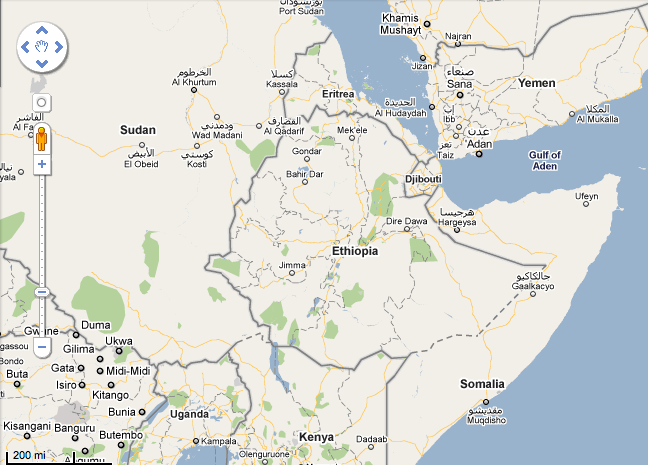
Reading this book, I felt like I had lived there, and I want to go back. The author captures the feelings, the smells, the visuals, the sounds, and if I awoke in a bungalow at the MIssing (Mission) Hospital, I would say “Ah yes! I remember this!”
I kept marking sections of this book that I loved. Here is one:
They parked at Ghosh’s bungalow and walked to the rear or Missing, where the bottlebrush was so laden with flowers that it looked as if it had caught fire. The property edge was marked by the acacias, their flat tops forming a jagged line against the sky. Missing’s far west corner was a promontory looking over a vast valley. That acreage as far as the eye could see belonged to a ras – a duke – who was relative of His Majesty, Haile Selassie.
A brook, hidden by boulders, burbled; sheep grazed under the eye of a boy who sat polishing his teeth with a twig, his staff near by. He squinted at Matron and Ghosh and then waved. Just like in the days of David, he carried a slingshot. It was a goatherd like him, centuries before, who had noticed how frisky his animals became after chewing a particuar red berry. From that serendipitous discovery, the coffee habit and trade spread to Yemen, Amsterdam, the Caribbean, South America, and the world, but it had all begun in Ethiopia, in a field like this.
We live inside the hearts and minds of doctors, some practicing under the worst possible conditions, and learn how they make their decisions and why. Verghese is a compassionate author; while his characters may be flawed, they are forgivable and forgiven.
Another section I loved, the man speaking is Ghosh, the man who adopted the twins with Hema, another doctor:
“My genius was to know long ago that money alone wouldn’t make me happy. Or maybe that’s my excuse for not leaving you a huge fortune! I certainly could have made more money if that had been my goal. But one thing I won’t have is regrets. My VIP patients often regret so many things on their deathbeds. They regret the bitterness they’ll leave in people’s hearts. They realize that no money, no church service, no eulogy, no funeral procession no matter how elaborate, can remove the legacy of a mean spirit.”
Things in Ethiopia get sticky, politically, and one of the twins is forced to flee, implicated in an airplane hijacking only because he was raised with a young woman involved. He is spirited into Eritrea, where he awaits his ride out to Kenya, and he helps the Eritrean rebels when large numbers of wounded are brought into his area. When the time comes to leave, his thoughts will strike a chord in anyone who has ever been an expat:
Two days later I took leave of Solomon. There were dark rings under his eyes and he looked ready to fall over. There was no questioning his purpose or dedication. Solomon said “Go and good luck to you. This isn’t your fight. I’d go if I were in your shoes. Tell the world about us.”
This isn’t your fight. I thought about that as I trekked to the border with two escorts. What did Solomon mean? Did he see me as being on the Ethiopian side, on the side of the occupiers? No, I think he saw me as an expatriate, someone without a stake in this war. Despite being born in the same compound as Genet, despite speaking Amharic like a native, and going to medical school with him, to Solomon I was a ferengi – a foreigner. Perhaps he was right, even though I was loath to admit it. If I were a patriotic Ethiopian, would I not have gone underground and joined the royalists, or others who were trying to topple Sergeant Mengistu? If I cared about my country, shouldn’t I have been willing to die for it?
The book has a lot of observations about coming to America; some of which made me laugh, some which made me groan. Coming back is always a shock to people who have lived abroad for a time, but it is a huge shock to those coming for the first time:
The black suited drivers led their passengers to sleek black cars, but myman led me to a big yellow taxi. In no time we were driving out of Kennedy Airport, heading to the Bronx. We merged at what I thought was a dangerous speed onto a freeway and into the slipstream of racing vehicles. “Marion, jet travel has damaged your eardrums,” I said to myself, because the silence was unreal. In Africa, cars ran not on petrol but on the squawk and blare of their horns. Not so here; the cars were near silent, like a school of fish. All I heard was the whish of rubber on concrete or asphalt.
As I neared the end, I read more slowly, unwilling for this book to end. It is one of the most vivid and moving books I have ever read. AdventureMan has gone online to find the nearest Ethiopian restaurant so we can have some injera and wot.
The Dressmaker by Posie Graeme-Evans
When I wrote up this book for another site, I could not even remember the main character’s name. (Ellen Gowan) I found the book annoying, and most of the time, when a book annoys me, I don’t even tell you about it, I just don’t bother reviewing it at all.

I find the plot thin. I find the characters unmotivated. I find many of the choices of the characters unbelievable. We haven’t been given enough back-story to make the characters truly live.
Ellen has a real streak of bad luck. On her 13th birthday, a well-born young man gets fresh with her and in rural Victorian England, it becomes her problem – her reputation is damaged by a callow young man from a wealthy family. On the same day, an earthquake strikes her village, killing her father, and she and her mother subsequently lose their home.
They take up residence with Ellen’s aunt, her mother’s sister, and it is a happy time, all except for her aunt’s husband, a cruel man who isolates and beats his wife, who can do nothing about it. A wife is property. Her marriage was arranged; she has no where to go if she were to leave. She works hard at keeping her husband happy, so he won’t beat her or take it out on anyone she loves.
When you are dealing with an abusive manipulator, however, there is no pleasing, right? Ellen and her mother are thrown out, but also thrown a lifeline, and take up residence with a dressmaker, where Ellen hones and develops a talent for costume design (meaning evening dress, calling clothes, mourning clothes – wealthy Victorian women had huge wardrobes of ever-changing fashionable clothes.)
Ellen makes some really bad choices – in my opinion. I’m not going to tell you what those choices are, because I don’t want to give you too much of the story, in case you want to read it yourself.
Long story short, she ends up a very successful fashion designer/producer in London, only to face ruinous blackmail because of her past.
OK, here is what I really liked about the book. While I found the characters, descriptions, plotlines and dialogues pretty awful, I loved reading about the fashions, and I found reading about the social status of women – not all that long ago – where women in England had few choices and fewer opportunities – fascinating. I have friends in Kuwait and Qatar who face some of the same limitations. How soon we forget; it wasn’t that long ago that we faced the same challenges, the same limitations.
The freedom to live on our own. The freedom to earn and manage our own money. The rights to our children. All these issues are fresh in The Dressmaker, and too easily taken for granted in our own.
Lord of Death by Eliot Pattison
I didn’t know that much about the Chinese obliteration of Tibetan culture in Tibet. I didn’t know about the systematic destruction of the monasteries, or at least not in detail. I didn’t know about the brutal re-education techniques for the Bhuddist monks. I didn’t know how strong and resistant the peoples of Tibet are to the Chinese incursion.
I’ve learned most of what I know reading Eliot Pattison’s series featuring Shan Tao Yun, a Chinese detective. Or he used to be. In the first book, The Skull Mantra, we meet Inspecter Shan Tao Yun in one of those re-education camps, where he has been tortured and mistreated almost to his physical limits, and the Bhuddist monks teach him new ways of thinking, and those ways help him to see things differently – and to survive.
The Tibetans hate the Chinese, but they make an exception for Inspector Shan Tao Yun, who earns the respect of both Tibetans and Chinese for his unwavering integrity, and his ability to solve the most intricate puzzles. As he does, we learn more about different aspects of life today in Tibet.
The Lord of Death introduces us to the evolving mountain climbing industry developing in Tibet, just across the border with Nepal. Western climbers will see themselves in a very new light reading this book, which involves the murder of the visiting Chinese Minister of Tourism, an American female climber, and former members of a clandestine CIA trained group of Tibetans during WWII.
In every volume, I learn something fascinating. In this book, I learned more about the early struggles of the Chinese Cultural revolution, the corruption of Chinese ideals, and more about Tibetan ways of thinking. I cannot wait for the next book to come out. You can visit his website here: Eliot Pattison.com
Recent Comments
ExpatAlien on What Country am I Living … intlxpatr on Yellowstone: Old Faithful to C… Michelle on Yellowstone: Old Faithful to C… Cathy on No Grown-Ups in Charge intlxpatr on Waiting for Snow Wikipedia Donate Button

Amazina


Early Voting in Florida


 Here There and Everywhere