High Schoolers Find Trumped Up Fish in Sushi
This is a great story; you can read the whole article at The New York Times. High school students, listening to a dad talking about DNA coding, wondered if sushi served in New York was what it was labled. They took samples, examined just one gene, and found that a lot of the fish was marketed as much more select than it really was. Don’t you just love it? These kids have made the news!
Fish Tale Has DNA Hook: Students Find Bad Labels
By JOHN SCHWARTZ
Published: August 21, 2008
Many New York sushi restaurants and seafood markets are playing a game of bait and switch, say two high school students turned high-tech sleuths.
In a tale of teenagers, sushi and science, Kate Stoeckle and Louisa Strauss, who graduated this year from the Trinity School in Manhattan, took on a freelance science project in which they checked 60 samples of seafood using a simplified genetic fingerprinting technique to see whether the fish New Yorkers buy is what they think they are getting.
They found that one-fourth of the fish samples with identifiable DNA were mislabeled. A piece of sushi sold as the luxury treat white tuna turned out to be Mozambique tilapia, a much cheaper fish that is often raised by farming. Roe supposedly from flying fish was actually from smelt. Seven of nine samples that were called red snapper were mislabeled, and they turned out to be anything from Atlantic cod to Acadian redfish, an endangered species.
What may be most impressive about the experiment is the ease with which the students accomplished it. Although the testing technique is at the forefront of research, the fact that anyone can take advantage of it by sending samples off to a laboratory meant the kind of investigative tools once restricted to Ph.D.’s and crime labs can move into the hands of curious diners and amateur scientists everywhere.
Read the entire article HERE.
All in One Day
Life is funny, in Kuwait, you are just getting up, brushing your teeth, getting ready to head for work, knowing tonight is date night and tomorrow you sleep in. I’m in my jammies, lying in bed with my computer, watching old Law and Order’s on TNT (sometimes the Olympics just get boring) and winding down, getting ready to call it a day.
And what a day! My long time Army-wife friend and I went out playing – picked up lunch at Ivar’s and took it over to the park to eat, where we found a whole flock of new friends:

This guy was persistent – after we ate our fish, we threw him the fries:

We looked at a house for sale – great bones, significant view, lousy location:

The day was warm, but there was a persistent wind, and at one point, we drove home from the crowded malls in a driving rain. Everywhere, for the next three hours, people were saying “this is October weather, not August weather!”
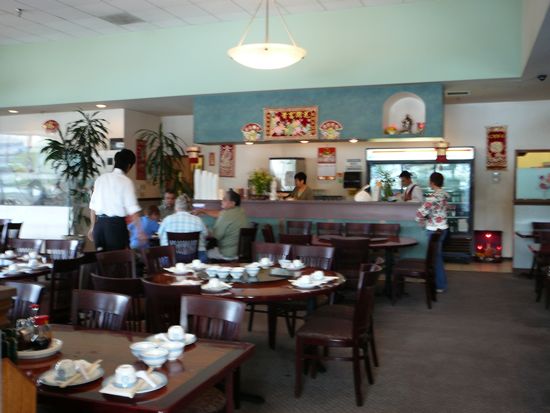
A great night for Chinese food. T&T’s Seafood is SO Chinese that there aren’t that many things on the menu I am comfortable ordering, and I fly close to the edge of the envelope when exploring Chinese food. I ordered Hot and Sour Soup, Green Beans with shaved meat, and Prawns with Honeyed Pecans. I sat with all the other take-out people waiting for their orders – it’s truly that kind of night. Everyone is talking about the weather. They don’t do a lot of delivery in Seattle; mostly you have to go pick it up yourself:

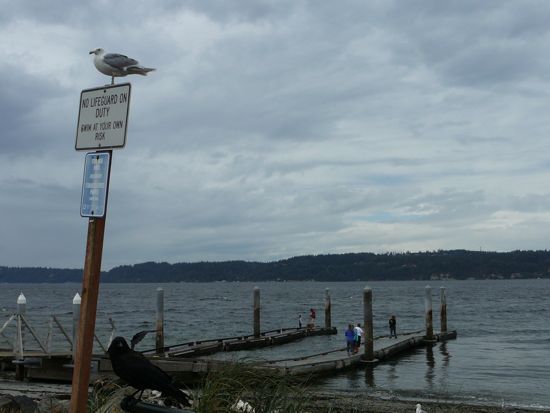
It was pouring when I went in – clearing when I came out:

Heading toward the coast:

After dinner, I drove down to surfside to take a sunset photo with these wonderful clouds:

“Silver Lining of a Down Economy”
I found this in yesterday’s Seattle Times:
Highway crashes kill more than 41,000 in 2007
Traffic deaths in the United States declined last year, reaching the lowest level in more than a decade, the government reported Thursday.
By KEN THOMAS
Associated Press Writer
WASHINGTON —
Traffic deaths in the United States declined last year, reaching the lowest level in more than a decade, the government reported Thursday.
Some 41,059 people were killed in highway crashes, down by more than 1,600 from 2006. It was the fewest number of highway deaths in a year since 1994, when 40,716 people were killed.
The fatality rate of 1.37 deaths for every 100 million miles traveled in 2007 was the lowest on record, the National Highway Traffic Safety Administration said in its report.
“Thanks to safer vehicles, aggressive law enforcement and our efforts, countless families were spared the devastating news that a loved one was not coming home,” said Transportation Secretary Mary Peters.
California had the largest decline, 266 fewer fatalities than the previous year. The largest percentage decreases were in South Dakota and Vermont.
North Carolina’s death toll increased the most in the nation, up 121 over the previous year. The District of Columbia and Alaska had the highest percentage increases.
Motorcycle deaths increased for the 10th straight year. There were 5,154 motorcycle deaths last year, compared with 4,837 in 2006.
Peters, an avid motorcyclist who keeps a scuffed helmet in her office that she credits with saving her from a severe head injury in a 2005 crash, said the rise in motorcycle fatalities was disappointing. The increased deaths have come while the number of registered motorcycles have surpassed 6 million, compared with 3.8 million in 1998, and vehicle miles traveled have risen.
Peters said with higher fuel prices, more people may use motorcycles or scooters that can get 50 to 60 miles per gallon.
Transportation officials said they plan to target motorcycle drivers in a $13 million anti-drunk driving advertising campaign running during the upcoming Labor Day holiday. The department has also discussed new safety and training standards for novice riders, increased training for law enforcement and curbing counterfeit safety-labeling of helmets.
Still, safety officials said they were encouraged by the overall trends.
Fatalities in crashes that involved a driver or motorcycle rider with a blood-alcohol level of 0.08 percent, the legal limit, declined to just under 13,000 deaths in 2007, a 3.7 percent decrease.
Traffic injuries fell for the eighth straight year, to fewer than 2.49 million injuries in 2007, compared with 2.58 million in 2006. And the number of people killed in large-truck crashes fell by more than 4 percent.
Adrian Lund, president of the Insurance Institute for Highway Safety, said the sluggish economy was likely a factor in the declines.
He predicted that the combination of a slowing economy and gas prices approaching $4 a gallon throughout the U.S. could lead to further reductions in highway deaths in 2008. Many states have reported double-digit drops in fatalities during the first part of this year.
“Fewer highway deaths is always the silver lining of a down economy,” Lund said.
From the Arab Times – let’s hope this is also a silver lining:
350 motorists booked for not wearing seat belts, using phone while driving
Kuwait : During a crackdown on reckless motorists and traffic law violators, the Hawalli Traffic Department has Thursday issued 350 citations, reports Arrouiah daily. Upon instructions from Major-General Mahmoud Al-Dousari of the General Traffic Department, the Hawalli traffic police erected surprised checkpoints at entry and exit points throughout Hawalli and issued citations for motorists for not wearing seat belts, talking on the cell phone while driving and not complying with safety regulations. The source added the campaign will continue in various parts of the country to impose security and ensure compliance of traffic rules and regulations.
Hard Times
I noticed it right away, driving home on the Seattle freeway – a significantly reduced number of cars, and NO one is speeding. Seattle has outgrown it’s freeways – even early mornings the roads are packed. Or they were – they aren’t now.
At first, I thought I might be imagining it, but the trip down to the ocean cabin in Oregon and back up and through and into Seattle several times have only driven the point home – there are fewer cars on the road.
The Starbuck’s have fewer customers. This is mid-summer, normally a carefree, free-spending time, but not this summer.
There are also fewer shoppers in the stores – and, in downtown Seattle, many of the shoppers were foreigners, here to take advantage of the bargains provided by the weakened dollar. I have to admit, it’s humbling to be a bargain destination. I know many Kuwaitis headed for the USA this summer, enjoying an improved exchange rate.
Sitting in Barnes and Noble with a friend, we heard a very plummy voice giving directions to friends who were to meet them there.
“We drove through the most amazing rural area,” she trilled, “SO picturesque, you must try to find it, it is called Bothell.”
Bothell picturesque? Bothell rural? Bothell is a bedroom community to Seattle, full of sub-divisions where there used to be farms. I wanted to give her a dirty look, but I remember saying the same things – glowing about the desert and camels or sweet little French villages, and I just figure what goes around comes around and I am just getting a little payback.
It’s also scary seeing how much prices have gone up – eggs! The same problem Kuwait is having – eggs are more expensive. Rice is more expensive. My Mother thinks some merchants are just marking things up because they can, and they can blame it on oil and it’s all just GREED.
I think all this has a lot to do with perception. Right now, people are feeling insecure and are trying not to spend too much money, not knowing what is around the corner. Americans have an irrepressible sends of optimism, and I suspect that a more positive approach will take hold in the next few months. Once it does, markets will rise, people will be spending again . . . and I wonder if the prices will go down, or just keep going up?
Geraldine Brooks: March
Geraldine Brooks knocks my socks off. If she writes a book, fiction or non-fiction, I will buy it and read it. The first one I read by her was Nine Parts Desire: The Hidden World of Islamic Women, and the second most memorable book was her Year of Wonders, a book about how the plague comes to a 17th century English village and how the villagers cope with it – how some survive. She has a knack for keen observations, and for writing so as to place you squarely in the scene she is describing.
So when she came out with a new book extrapolating from the experiences protrayed in Louisa May Alcott’s classic favorite Little Women, why didn’t I rush to buy it? March is described by Publisher’s Weekly as “the Civil War experiences of Mr. March, the absent father in Louisa May Alcott’s Little Women.”

Didn’t you love Little Women when you read it? What’s not to love? Those wonderful sisters, their saintly mother, working together, suffering together, prevailing through sheer grit and determination – we can read that book over and over again, loving it every time.
Geraldine Brooks takes us with Mr. March into the grim realities of the American Civil War, the “war to free the slaves,” the war to keep the United States united, or the war between the states. This is not the idealized world of Little Women, this is not the memory we have of the nice letters he writes home from the field, this is the reality of war and all it’s ugliness. As the book opens, Mr. March is fleeing a massacre, struggling to survive, he is surrounded by the dead and seriously wounded, bullets are flying past him and he has to cross a deep, rushing river. A man grabs him who can’t swim, and he has to push him away to gasp for air. The man drowns, March survives, feeling deep guilt. When he finally finds a group of his men, drying out by the side of the river, he sits down and writes to his girls about the sweet breeze in the air. Not a word about the horrors he has witnessed, not his personal despair about having failed a wounded comrade.
As we experience the horrors of this war with Mr. March, we experience with him the brutality, cruelty, and crudity of all conflict. There are no good guys. There is no “just cause,” just winners and losers, and it’s very hard to tell what they are fighting for. Seeing this war from the point of view of the combatants, we realize that no-one will remain untouched; that this experience will resonate through the rest of their lives.
Geraldine Brooks knows how to grab us and keep us gripped. Every chapter reveals a new facet – how March and Marnee met and married, how they built a life together, how, in their idealism, they lost everything. Most discouraging of all is how, below the surface, they understand themselves and one another and their relationship so little.
I dare you to read this book. It isn’t an easy book, and at the same time, it is a book with timeless qualities, and a book that will get you thinking and keep you thinking for a long time. Isn’t that the definition of a good book?
Summer Sunday at the Pike Place Market
We have a great favorite tradition – hit the early service, 0800 – what my friend calls “speed church”, the one hour service instead of the longer family services – and then head straight for the Pike Place Market. Things get started there slowly on a summer Sunday morning, and we even found a free parking space – totally amazing.
First stop is breakfast at Campagne. We don’t have reservations, but they find a place for us:


The sun breaks forth and the market is teeming with people by the time we are finishing up:


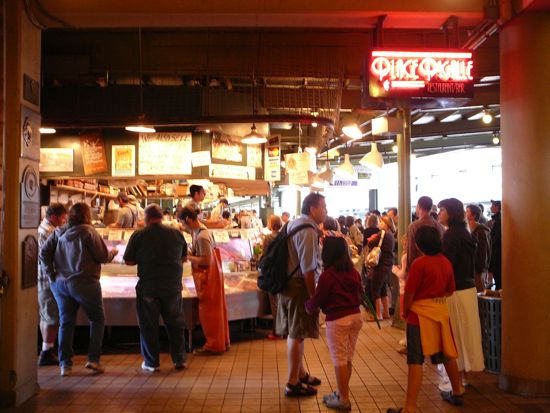

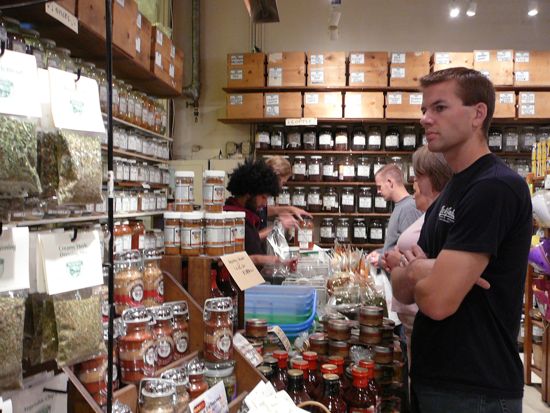

In the 1970’s, the market was a little run-down and shabby, and many business people wanted to raze it and use the space for office buildings. Seattle residents said “NO!” and instead, the market was revitalized. It is one of the major tourist destinations in the city, and a lively spot every day of the week.
A long time ago, before the big Seattle fire, my family lived just up the street from this market.
Your Last Breath
You never know. These people are just like us, renting a vacation house up the road a village or two, right on the ocean. And while they are sleeping, a plane crashes into their vacation house. You never know when you might be taking your last breath.

4 Die After Plane Crashes Into Home
GEARHART, Ore. (Aug. 4) – A small plane crashed into a seaside house in heavy fog early Monday, killing two people aboard and two children in the vacation home it struck, authorities said.
A small plane flying through heavy fog clipped a tree and then slammed into a house in Gearhart, Ore., Monday. Authorities said two people aboard the plane and two children in the seaside vacation home were killed. Here, a deputy fire marshal stands outside what is left of the home.
A third child was unaccounted for after the crash, which apparently occurred soon after the plane took off from nearby Seaside in northwest Oregon.
The single-engine plane clipped a tree and then plowed into the house, followed by explosions. A second, vacant home nearby was heavily damaged.
The pilot and his only passenger were also killed. Their identities were not immediately released.
The four-seat Cessna was owned by Aviation Aventures in Seaside. The company had rented it to the pilot, city officials said.
The impact shook homes a half-mile away in this resort town.
You can read the entire article on AOL News.
Seattle OKs Bag Fee
From the Seattle Post Intelligencer:
City OKs 20-cent fee on plastic, paper bags
Council also outlaws foam food and drink containers
By KATHY MULADY
P-I REPORTER
Move over, baseball caps and T-shirts.
Logo-emblazoned cloth grocery bags could soon become the most popular company freebie in the Puget Sound region.
Seattle became on Monday one of the first major American cities to discourage the use of paper and plastic shopping bags by requiring grocery, drug and convenience stores to charge 20 cents per bag. In a related action, the City Council also banned plastic foam food and drink containers.
Both laws will go into effect Jan. 1.
People can avoid the fees by bringing their own reusable bags when they shop. The city of Seattle will launch a 90-day education effort to help people figure out the best ways to use cloth bags, and remember to take them when they go shopping. The city also plans to provide residents with a couple of free bags.
One of my favorite stores, Trader Joe’s, has been selling reusable bags forever. They now have a display with many sizes and designs to choose from:
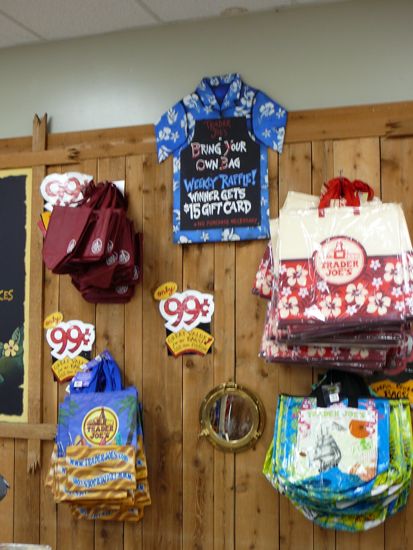
I’m really trying hard. I have a friend who is so conscientious about recycling, she always carries her own bags, and her actions have influenced me greatly. She believes even one person makes a difference, and I believe her – I can see that her behavior has already changed mine! I am trying to carry my own reusable bags now, too.
Especially for my Kuwait/Gulf/Middle East readers, I got a big grin when I saw this in the prepared food section:

A ready-to-go lunch, with felafel, hummous, tabouli and a little bit of flat bread.
Paid Their Dues and Deported
From today’s Kuwait Times:
KUWAIT: The government reached an agreement with Asian workers yesterday to end a three-day strike over pay and conditions, state news agency KUNA said. Three hundred protesters were also deported after being paid their dues, Kuwait Times has learned. Earlier, hundreds of mainly Bangladeshi workers went on strike for a third day, seeking better pay and improved working conditions, with some overturning cars and ransacking offices.
This all started back a couple weeks ago – remember the hospital worker’s strike? The gas station attendant’s strike? And then the Kuwait Times wrote an article that the company had agreed to pay wages and the workers were going back to work.
The next day, the workers said there had never been any agreement, and no one had been paid! They lied, and hoped the problem would go away.
So my question today is – I believe 300 were deported – maybe more. Do you believe they were paid all their wages?
Several citizens were angry these people had chosen to demonstrate, riot, strike, etc and suggested they should take their case to the Kuwait courts. Do they have eyes to see? These are the little guys you see at the street corners, they don’t speak English or Arabic, they don’t have enough to eat, they don’t even have privacy or clothing or their wages. Go to court? How do they go to court?
I have always loved the verse in the Qur’an that talks about paying the laborer for his work before the sweat has dried on his back. I think there are some very guilty employers out there, and some very slimy recruiters, who bring people in with a whiff of hope for a better tomorrow, and then cheat them. It will be on their heads.
Riots and Internet Offenders
From today’s Arab Times:
Kuwait preparing law to punish ‘Internet offenders’: Al-Othman
KUWAIT CITY (AP): Kuwait’s prosecutor general says Internet offenders will no longer be able to escape punishment in this country. Hamed Al-Othman says in an interview with Al-Qabas daily published Sunday he has prepared a bill that criminalizes promoting vice, incitement against the country’s leadership, divulging state secrets, or insulting Islam on the Web. If convicted, offenders would be sentenced to up to one year in jail and/or a fine, but face seven years in prison if their victims are minors. Al-Othman’s office confirmed that he made the comments to Al-Qabas.
The draft Internet crime and data information law recently passed by the Public Prosecution Department will be forwarded to the Council of Ministers for their consideration, adds Al-Othman.
Al-Othman explained the importance of passing such a law at this time, saying “it’s obvious to all who care about protecting our customs and the future generations that such a law is needed to combat the increasing electronic crimes associated with the ever-improving electronic technology. “The law will include 37 articles and punishment for those who fall foul of the law will be either jail sentence or financial fine,” he added.
Protest turns violent in fight over pay
KUWAIT CITY : A riot by about 2,000 workers of Al-Jawhara Company for Stevedor-ing and Cleaning in their camp in Hassawi led to the destruction of six vehicles and injuries to five camp officials, says K. John, the company’s Operations Manager. The manager was speaking to the Arab Times Sunday after the riot was brought under control by policemen. The riot, which began Saturday night, reached its peak by Sunday morning and continued till noon. The workers, John said, were disgruntled over their wages and were demanding a hike, talks over which have been going on for the last couple of weeks. “The recent outbursts in other cleaning companies stoked the angry workers to violence Saturday,” he added.
Meanwhile, late Sunday evening, the Ministry of Social Affairs agreed to almost all demands of workers of cleaning companies who had threatened to go on strike, besides setting a minimum wage of KD 40 for cleaning workers – without any deductions an embassy official said on condition of anonymity. The embassy official added that the ministry has also asked the cleaning companies to pay for health and residency fees of their workers and that companies which violate the rights of workers will face “full force of the law.” The official also said that Bangladeshi officials, who maltreat or exploit their workers, will be referred to the concerned authorities.
A mob of hundreds of Bangladeshi cleaners had attacked their company’s office in Jleeb Al-Shyoukh Saturday evening, and beat up five supervisors who were reportedly exploiting the workers, some cleaners told the Arab Times.
The workers were protesting about their unpaid wages and poor working conditions. All five supervisors are Bangladeshis and are currently being treated at the Farwaniya hospital.
A cleaner said the condition of the two injured officials was critical. However, this could not be independently confirmed.
The cleaners reportedly damaged furniture, computers, printers and other office equipment in the attack that lasted for a few minutes.
According to the workers, no arrests were made and a large police force was deployed at the camp from Saturday evening until late Sunday afternoon.
The timely arrival of police and embassy officials prevented the situation from spiraling out of control, added the cleaners. The workers said that they embarked on indefinite strike from Sunday and that they will not return to work unless all their problems are redressed by the company.
This is the first violent demonstration to grip Kuwait since the strikes of Bangladeshi cleaners began last Sunday.
Some of the problems facing the workers include: underpayment; company is making them pay for the health and residency fees; some cleaners are made to work for more than eight hours without any overtime benefits; company is not allowing workers to take vacation every two years; company is not granting sick leave, among other problems.
About 5,000 Bangladeshi cleaners are employed with this local company and are placed at various government establishments.
Jleeb Al-Shyoukh is home to thousands of Bangladeshi cleaners, who live in squalid camps and a majority of them are paid as low as KD 18 salary.
Another worker told the Arab Times that the problem had been simmering for a long a time and that the five supervisors were warned by them not work against workers’ interests.
He added that the trouble began when some of the workers confronted the supervisors as to why they were deducting their pay and that two supervisors reportedly threatened some cleaners, thereby leading to the showdown.
He said that the officials of the ministry of social affairs and labour rushed to the camp Saturday evening and urged the workers not to resort to violence and that they would put an end to their grievances as soon as possible.
Expressing his views on the company’s alleged apathy, another worker said: “We tried to resolve our problems with the company in an amicable manner, but our appeals fell on deaf ears. The supervisors in question are hand in glove with the company’s managers and used to report every development that took place at the camp.”
“When we decided to go on strike a few days ago, the supervisors quickly informed the company. The company then scuttled our plans by turning up the heat on our representatives. We know it is wrong to take the law in our hands but our situation was worsening by the day.”
The ministry of social affairs and labour has taken tough measures against cleaning companies that violate rights of workers, even as the ministry recently said that it had cancelled the contract of a company whose workers went on strike last Sunday.
On Saturday, senior officials of the ministry managed to convince some 7,000 Bangladeshi cleaners to drop their strike, who had threatened to stop work on Sunday if their demands were not met.
According to the workers, the ministry has agreed to all their demands and that they would be paid KD 40 salary, up from KD 8. It was also reported earlier that the ministry will soon send inspectors to labour camps to take a stock of workers’ living conditions and also to address their grievances.
When asked why the workers were unhappy over the wages, John said the issue is very complex, and the government is partly to be blamed for the current state of affairs. “The workers demand health insurance, which is KD 50 per person, while it is only KD 10 for domestic maids. This makes it very difficult for companies to provide health insurance of its workers.
“The municipality pays just about KD 23 per cleaning worker, and the government can’t expect us to pay more than that. Our workers receive anywhere between KD 20 and KD 70 depending upon their rank and job.
“Tendering rules also need to be reformed by the government. There are many small players who make abysmally low quotes to win tenders and bring down the quality of this sector. This despite the fact that we need to show bank guarantees of very huge sums to win tenders,” John explained.
Stressing the cleaning companies are an asset to the nation and should be treated with due importance, John said “the government has to provide us lands at subsidized rates to help sustain the industry.
“The workers ransacked the rooms in the camp and destroyed some computers. We also suspect that workers from neighboring camps joined in the riot, adding to the ferocity of the violence. The project manager had to be rescued from the camp by the police from the marauding rioters,” he revealed.
When asked what future course of action the company is planning to take, John said a meeting of the Cleaning Companies Association was called Sunday evening, “and the issue was to be discussed to find a solution to this problem that’s getting out of hand.”
“The demands of the workers are not wholly over the board given the inflation rates in the state. If the issue is not resolved many government institutions and private companies will be hit,” John added.
“The workers at Al Jawhara Company do not have any unpaid dues and all their salaries are paid in time,” he concluded.
Also:
KUWAIT: Acting Assistant Undersecretary of the Ministry of Social Affairs and Labour for labour sector Hamad Al-Me’dhadi revealed Sunday that the main reason behind the majority of recent strikes was the demand for salary increase.
He said that the Ministry of Social Affairs and Labour will report to the Cabinet on these strikes coinciding with another report to be submitted by the Ministry of Interior in this regard.
He added that ministry officials met with a representative of the Bangladeshi embassy and informed him that the strike of laborers must be expressed in an orderly manner and according to official channels.
He pointed out that it had been agreed with the Bangladeshi embassy that there should be representatives for all those laborers so that the ministry’s legal researchers and inspectors can listen to the workers demands.
Meanwhile, the issue of continuous strikes by expatriate workers and their rights are on top of the agenda for the Council of Ministers’ meeting on Monday. The meeting will be presided by the Acting Prime Minister and the Defense Minister Sheikh Jaber Al-Mubarak Al-Sabah.
“The Cabinet is ready to sanction erring companies and they may request the National Assembly to pass the new labor law at the beginning of the next parliamentary term,” Source added.
By Francis A. Clifford Cardozo and Valiya Sajjad
Arab Times Staff
Recent Comments
ExpatAlien on What Country am I Living … intlxpatr on Yellowstone: Old Faithful to C… Michelle on Yellowstone: Old Faithful to C… Cathy on No Grown-Ups in Charge intlxpatr on Waiting for Snow Wikipedia Donate Button

Amazina


Early Voting in Florida


 Here There and Everywhere