Culture Shock
AdventureMan and I have discovered we have lived overseas for so long that we suffer from a little culture shock every time we come back to the United States. We come back two or three times a year, so you would think we’d be keeping up on everything, but things change and we fall behind, especially when we are not living here.
Here are some things – like nobody writes checks anymore. I’m not exactly sure what people do. One time, before I had my burner phone, I went in to Verizon to activate an account, and when I went to pay, the woman looked at my $100 bill (most of which was going to activate my account) and her mouth formed a little “o” and after a pause she said “oh, I don’t think we have change for that here.”
I said “there isn’t going to be that much change!” as I think it was going to come to like $89 something, but she laughed and said “but no-one pays with cash anymore!”
I was really embarrassed. “How do they pay?” I asked, and she said “Everyone pays by credit card.” “No problem,” I responded, “I can pay by credit card,” which I did and everything was cool. Then I started watching, and everyone was paying by credit card, maybe a few with debit cards, but usually the debit card machines were malfunctioning, I don’t know why.
We know a lot of the young people don’t have land lines into their homes anymore, and that makes sense to us. We aren’t sure how people connect for television – it seems there are a lot of different ways, so how do you figure out which is the best? And some have phone, cable and internet all bundled together, and you pay one bill . . . again, how do you know which is the most cost effective?
If people don’t write checks anymore, how do they pay their bills? I have been doing some bill paying online, which sure is convenient when you live in Kuwait and have bills to pay in the USA, but is that how normal people pay their bills, like utility bills? Magazine subscriptions? And if you do that, how do you keep track of things for taxes, when you don’t have checks to back you up?
It’s almost overwhelming, trying to figure all these things out.
In some areas, I feel like I am anti-too-much. Like I don’t want a GPS in my rental car – I know the area, and I know how to use a map to figure out where I need to be. I know how to use GoogleMaps! Sometimes the GPS things are just distracting to me. I have a bad feeling that makes me old fashioned.
This morning, my first back in Seattle, it was raining softly. I was glad; a little rain helps keep Seattle green. On the other hand, I had thought I would go for a walk, and the steady light rain was a little too much rain for walking – for me, anyway. There were a lot of Seattle people out walking – they wear rainhats, lightweight rainproof jackets – and shorts!
Gas is running around $4.59 a gallon, in contrast with 80 cents a gallon in Kuwait. 😦
Please Treat as Urgent and Confidential
My good friend Adamu Attah, head of the FILE DEPARTMENT at the African Development Bank wants to give me money! I am printing his letter, exactly as written, because I am thinking my bank friend really needs some grammar, spelling and spacing review. In any case, I am much too busy these days to collect my 40% of 15.5 million dollars.
But it is summertime, and some people have a lot of time on their hands, and if you want to contact my friend Adamu Attah, here is his address:
adamu_attah1@sify.com
Please. Please. Do not send him any money, not for fees, not for deposits, not for anything. This is another of those hoax spams that some people actually respond to. Please, please, don’t be one of them.
FROM THE DESK OF ADAMU ATTAH
THE HEAD OF FILE DEPARTMENT,
AFRICAN
DEVELOPMENT BANK (ADB)
OUAGADOUGOU BURKINA-FASO WEST
AFRICA.
TREAT AS URGENT AND CONFIDENTIAL.
PLANE CRASH WEB
SITE…http://news.bbc.co.uk/1/hi/world/europe/859479.stm
(“remittance of $15.5million u.s.a dollars
confidential is the case”)
compliments of the season
2008,
i am (adamu attah),head of file department & debt recovering in
african development bank ouagadougou burkina-faso in west
africa.
first, i must solicit your confidence in this transaction.this
is by
virtue of its nature as being utterly confidential and top
secret.
however after series of petition was recieved by this present
regime from foreign contractors and inability of the african
development bank (adb)to fulfill their obligation for the payment to
its foreign creditors, in conjunction with the council of ministers,
they mandated us to carry out a careful and comprehensive review of all
overdue payments to foreign contractors and to effect payments
immediately.
during the above mentioned process, we discovered an
abandoned sum of us$15.5 m (fifteen million five hundred thousand us
dollars) in an account that belongs to one of our foreign customer who
died along with his entire family in a plane crash that happened in
(monday 31st july 2000).since we got information about his death, we
have been expecting his next of kin to come over and claim his money
because we cannot release it unless some body applies for it as next of
kin or relation to the deceased as indicated in our banking guidelines
and laws but unfortunately we learnt that all his supposed next of kin
or relation died alongside with him at the plane crash leaving nobody
behind for the claim.
it is therefore upon this discovery that i and
other officials in my
department now decided to make this business
proposal to you and release the money to you as the next of kin or
relation to the deceased for safety and subsequent disbursement since
nobody is coming for it and we don’t want this money to go into the bank
treasury as unclaimed bill.
i agree that 40% of this money will be for
you as a foreign partner, in respect to the provision of a foreign
account,and 50% would be for me, while 10% will be for expenses incure
during the transaction. there after i will visit your country for
disbursement according to the percentage indicated.therefore, to enable
the immediate transfer of this fund to you as arranged, you must apply
first to the bank as relation or next of kin of the deceased indicating
your bank name, your bank account number, your private telephone and fax
number for easy and effective communication and location wherein the
money will be remitted.
upon the receipt of your reply, i will send to
you by email the text of the application to fill and send to the bank. i
will not fail to bring to your notice that this transaction is
hitch-free risk and this transaction will only take us 14 banking days
because as a banker, i know what to do and move the fund into your
account without any delay and thatyou should not entertain any atom of
fear as all required arrangement have been made for the transfer.
you
should contact me as soon as you receive this letter so that i will
send you the text of the application to apply to the bank and the data
information of the deceased .
your’s faithfully,
adamu attah
from (adb) ouagadougou burkina-faso.
Animal Welfare League Seeks Your Help
From a public service ad in today’s Kuwait Times:
Summer is upon us and with this time of year comes the seasonal abandonment of dogs and cats all over Kuwait. As we rush to bring these animals to safety, we need your help in doing so. In addition to having many wonderful dogs and cats up for adoption, we are always in need of shelter volunteers, foster homes, and donations from our wish list:
Wish list:
Clorox
Canned Dog and Cat food
Dog and Cat toys
Tide
String Cheese
Peanut Butter
Frozen Chicken
Large Capacity Garbage Bags
Extra Large capacity Washer / Dryer
Animal Friends League of Kuwait
“Saving One Animal at a Time”
TEL: 700-1622
Email: info@animalfriendskuwait.org
Website: http://www.animalfriendskuwait.org
Ministry Cracking Down on Porn Sites
A little over a year ago, May 18th, 2007, I remarked on an article in the Kuwait Times called MOC Bans Porno Film Sites. I had no idea that even over a year later, that blog entry would continue getting countless hits.
In this morning’s Kuwait Times, it’s like they say – deja vu all over again.
KUWAIT: Communications Minister Abdulhahman Al-Ghunaim has ordered the establishment of a committee to improve Internet services by finding ways to stop the spread of pornographic websites, which contradict local cultural and religious values.
The committee will reportedly be headed by Engineeer Ali Al-Zibin, the ministry’s Assistant Undersecretary of Information Technology, and will include representatives from the Interior, Awqaf, and Information Ministries, as well as Kuwait University.
A Communications Ministry official said that the committee will coordinate with and supervise the country’s Internet service providers in order to formulate a strategy to limit this phenomenon, by strengthening their supervisory role in this field.
It will also work continually updating the country’s systems to ensure that they are on a par with the latest technological developments to put an end to the spread of pornographic sites, in addition to establishing a map for joint coordination between all ministries.
You can live in a country a long time and barely scratch the surface. I honestly try to figure out what is going on, and even so, I get surprised often. I feel so encouraged when I see people tackling a problem, but then, so often, it turns out to be just meeting, just talking – no fixing.
As I have said before – I hate pornography. It isn’t part of my country’s values, either. It is certainly counter to my values. And yet, when I think of spending a country’s resources on trying to fight pornography, which we have had with us since probably the earliest times, I just feel tired. I don’t think you can win a fight against pornography. I think, to eliminate pornography, prostitution, alcohol and drug abuse – you have to change the way people think. Haven’t you noticed? You restrict something, it only makes it more attractive. Look at the countries that brutalize people arrested for possession of pornography – Saudi Arabia and Iran – have they been successful in eliminating access to pornography – on the net, or elsewhere? Where there is a demand, there will be suppliers, or that is how it seems to me. How do we eliminate the demand?
Who accesses and downloads porn the most, do you think? My bet would be on the 15 – 35 year old male, the most technologically savvy group in any population. How long do you think it will take them to break through any barriers you can place? And how many nanoseconds before they spread the “fix” all over the internet?
There is another article today, one on the air conditioning breakdown at Ibn Sina hospital, patients keeling over from the heat and humidity and then sewer-dwelling insects swarming into the children’s ward. How disgusting is that?
Attack the problems you can solve. Put people first. Fix the infrastructure – the roads, the hospitals, government services, licensing, visas. Make Kuwait state-of-the-art in communication accessibility. Kuwait is RICH, Kuwait can do anything. I hate pornography, but I don’t think any nation has the capacity to stop it.
Operation Hope News Flash
Those of you who read regularly know I am a great fan of people who see a need and have the courage to tackle it. One of those people here in Kuwait is Sheryll Mairza, who feeds and clothes the poorest of the poor – mostly laborers who are not paid. With her vision and enthusiasm, she has provided for – literally – thousands in Kuwait. Provided warm clothing in cold winter months, provided meals, provided basic necessities. Her most recent quest is below:
Operation Hope Kuwait would like to promote a used shoe drive to benefit farm-hands working in Abdalli, Kuwait… preferably sports shoes and/or work boots. Last Saturday a small group of dedicated volunteers went to Abdalli to deliver used clothing, which was collected by AGILITY LOGISTICS. While there they noticed that many of the workers had barely any sole left on the shoes they wore.
Currently am hoping a local private school will open its doors to receive donations from August 1 – 10. If you’ll stay in touch with me I can get you the final drop-point details.
Again ~ many thanks for your support! God bless, Sheryll
I don’t know about you, but I tend to buy new athletic shoes often – I like a fresh springy step :-). She probably isn’t looking for your daintiest 4 inch spikes from last season, but shoes with some life and some support left in them. As she gives out further information, I will keep you informed. Meanwhile – gather your old shoes and save them for Operation Hope!
Strange Practices
This is from the Kuwait Crime section of the Arab Times:
And in an unrelated development, Interior Minister Sheikh Jaber Al-Khaled Al-Sabah should look into the alleged immoral practices on Kuwaiti islands, National Assembly Comptroller Dr Mohammed Al-Huwailah told Alam Al-Yawm. Urging the minister to take stringent measures to curb ‘immorality’ in these islands, Al-Huwailah wondered how could some people engage in strange practices under the supposedly watchful eyes of security authorities, particularly the Coast Guard. Asserting he will closely follow up the issue, Al-Huwailah warned the minister’s lenient attitude on the issue will lead to the destruction of Arab and Islamic values. He called for the strict implementation of the law to protect the Kuwaiti society.
I am guessing these strange practices are alien practices? What kind of practices are taking place on Kuwait’s islands?
Today’s Kuwait Times: Monday, 21 July
First, to give credit where credit is due, the Kuwait Times has become better and better during my time here in Kuwait. The grammar is better, they have (most-of-the-time) stopped using “red handed” in every crime report, and the captions under the photos match the photos.
Until today. I think an editor must be on vacation.
Here is the photo:

And here is the caption under the photo: KUWAIT Director of Public Relation and Moral Guidance department COL Adel Al-Hashash receiving Deputy Chairman of Police Sports Association COL Mubarak Al-Mubarak and head of police Karate team to the Arab championship LTC Waleed Ghanem Al-Ghanem over the weekend.
Now down at the bottom of the page is the same caption, with this photo:

Also on page 2 is the following article – please read it closely and tell me if I am reading it correctly – that this will compel women, but not men, to go to the reconciliation committee before filing for divorce? I hate divorce. I am all in favor of family counseling. I am in favor of any law helping families, as long as it applies equally to men and to women:
Family Court will halve divorce rates in Kuwait
Published Date: July 21, 2008
KUWAIT: Judge Faisal Al-Mirshid has revealed that family court should be up and running in Kuwait within one year, predicting that its existence would halve the country’s divorce rates. The Appeal Court head, member of the Higher Judicial Council and chairman of the committee entrusted with establishing the family court said that the court’s establishment would reduce divorce cases by 50 percent because those asking for divorce will first have to go to the reconciliation committee, otherwise their cases will be automatically rejected in all courts.
Al-Mirshid said that a ministerial decision has been issued to establish the family court, and the committee has already begun working on the regulatory legal framework which will control its decision making process, reported Al Jarida.
He explained that the committee has already contacted the Awqaf Ministry’s Secretariat General regarding the allocation of a building to house the family court, which will include several departments and sections, including a shelter for women and children fleeing domestic violence.
He explained that it will also establish a fund to help Kuwaiti families and provide financial aid for divorced Kuwaiti women or those whose husbands are imprisoned.
Al-Mirshid said that there are some impediments to the success of the family courts, including a need to amend the current divorce legislation in order to compel women seeking a divorce to first resort to the reconciliation committee before filing for divorce.
He said the family court law will be applied to followers of the Jaafari Shia sect followers just like other personal affairs legislation, emphasizing that there is no contradiction with the idea of Jaafari courts which call for reconciliation before resorting to court for divorce.
He said that there will also be a fund established to provide expenses for families within the Jaafari rules.
Last, but not least, on the very same page 2 is this intriguing article. So you tell me – what are they saying DID happen?
MoI clarifies erroneous rescue operation
Kuwait: The Ministry of Interior clarified an erroneous report published in some local dailies recently. It referred to a report on the rscue operation of four persons whose boat sank off the Kubbar island.
It said the coast guard acted promptly the minute they received the call, while the delay in rescuing them was actually caused through wrong coordination.
That error resulted in the team having to scour the entire square area around the island in their search for the missing persons.
Help was sought from a helicopter from the US search rescue team to assist in the operations, it added.
Ministry officials also disclosed that the four persons of both sexes were not in any way related to the Al-Sabah family, and that the search operation succeeded in locating them and getting them safely ashore without any casualties.
They said contradictory reports of the rescue operations published in newspapers was due to the fact that the media did not source the correct information from the concerned authorities.
A statement released by the ministry said rescue teams from the fire service department as well as central operations (777) participated in the rescue.
Kuwait’s History – for Children
Thank you, Little Diamond, for your sharp eye spotting this story:
Children”s books about Kuwait”s history translated into English
Al Watan staff
KUWAIT: A new and rare series of stories about Kuwait”s history and
the nature of life in Kuwait in the past can now be found on sale in
Kuwait. The books, written by Dr. Yaqoob Yousef Al-Ghunaim and
translated into English by Dr. Shaban Afifi Abdulaziz, have been
printed by the Center for Study and Research in Kuwait and contain
illustration by artist Suhiala Hussein Al-Jundi.
The stories in the books are written in a simple manner that interests
children and that allows them to learn more about the history of
Kuwait and how Kuwaitis lived in the past. In the stories AlÜGhunaim
discusses traditional Kuwaiti society and the importance of fishing
and the rearing of animals.
The first story entitled Kuwait”s Wall is about a group of children
who ask Abu Abdullah questions about Kuwait”s wall and the reasons
behind its construction.
In the second story, AlÜGhunaim relates in a dramatic style the
stories of old Kuwaiti ships and underlines how society was based on
conservative religious values.
Al-Ghunaim also discusses life in the desert and how people were fond
of hunting gazelles and other wild animals which were commonly found
in the country.
A story about Burqan oil field was also added to the series to show
how the discovery of oil changed the Kuwaiti community.
http://www.alwatan.com.kw/Default.aspx?MgDid=652853&pageId=473
Ministry Conducts Demographics Study
This is from today’s Kuwait Times. I LOVE demographics. I love tagging factors, loading them all into a data base and seeing where the stats fall. You learn so much.
The Ministry of Social Affairs and Labor is studying effective means to rectify the country’s demographic imbalance. The ministry has reportedly reached the conclusion that the blend of different nationalities in Kuwait has proved detrimental to its societal fabric. One Arab nation’s expatriate population in the country has exceeded 300,000, sources say, which puts the states economic and political stability at great risk. Sources said that the matter is complicated and needs all the ministries’ undivided support.
Expatriates, it is felt, bring with them their own modern culture and customs which are alien to the local citizens, most of whom follow archaic customs deeply rooted in tribal practices. Expatriates are also accused of taking the law into their own hands without approaching the concerned authorities whenever they are confronted with a problem. It has also been observed that expatriates belonging to a certain nationality inhabit certain areas in droves, leaving security officials at a loss to change the situation.
As a move towards controlling the situation, the ministry is to form a permanent committee comprising officials from different ministries to scrutinize all the expatriates who arrive at Kuwait.
It will issue a fitness certificate to eligible expatriates on the lines of medical fitness test. Employers will then be able to decide whether to appoint those workers or repatriate them. The ministry also plans to come down heavily on expats who obtain jobs using illegal residence permits.
Hmmm. Rectifying the population imbalance might require giving up expatriate labor. What laborers do you want to give up? The largest number are probably doing low-skill level work – cleaning houses, cleaning the streets . . .Or do you want to give up those who are managing your stores, taking your orders in all the restaurants, cooking, taking care of the office chores?
I can guess which expatriates are bringing in alien modern customs and practices, but unless you are going to give up television, cable, the internet and travel . . . that train has probably left the station.
So which nationality has over 300,000 expats in Kuwait? And which nationalities “inhabit certain areas in droves?”
Who takes the law into their own hands?
Why Women Should Vote
“Courage in women is often mistaken for insanity.”
When I got this in the mail this morning, I had to smile. The woman who sent it to me is now in her 90’s. She was a mentor to me as a young woman, and she was a pistol. She taught me, over and over again, that women can do anything they put their mind to doing – that nothing can hold us back except ourselves. She’s a pistol. I want to be like her when I grow up. 🙂
It is always a shock to me to know that women in the United States have only had the right to vote for less than a hundred years. We take it for granted. We shouldn’t. We should make our vote a mighty force.
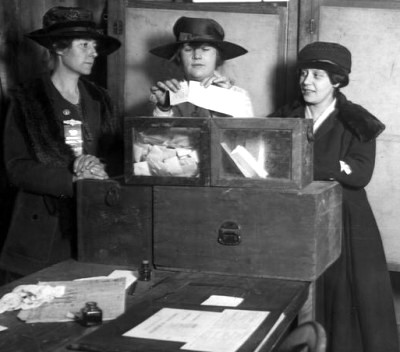
WHY EVERY WOMAN SHOULD VOTE
This is the story of our Grandmothers, and Great-grandmothers, as they
lived only 90 years ago. It was not until 1920 that women were granted
the right to go to the polls and vote.
Thus unfolded the ‘Night of Terror’ on Nov. 15, 1917, when the warden at
the Occoquan Workhouse in Virginia ordered his guards to teach a lesson
to the suffragists imprisoned there because they dared to picket Woodrow
Wilson’s White House for the right to vote. The women were innocent and
defenseless. And by the end of the night they were barely alive. Forty
prison guards wielding clubs and their warden’s blessing went on a
rampage against the 33 women wrongly convicted of ‘obstructing sidewalk
traffic.’
They beat Lucy Burn, chained her hands to the cell bars above her head
and left her hanging for the night, bleeding and gasping for air. They
hurled Dora Lewis into a dark cell, smashed her head against an iron bed
and knocked her out cold. Her cell mate, Alice Cosu, thought Lewis was
dead and suffered a heart attack. Additional affidavits describe the
guards grabbing, dragging, beating, choking, slamming, pinching,
twisting and kicking the women.
For weeks, the women’s only water came from an open pail. Their
food–all of it colorless slop–was infested with worms. When one of the
leaders, Alice Paul, embarked on a hunger strike, they tied her to a
chair, forced a tube down her throat and poured liquid into her until
she vomited. She was tortured like this for weeks until word was
smuggled out to the press.
So, refresh my memory. Some women won’t vote this year because–why,
exactly? We have carpool duties? We have to get to work? Our vote
doesn’t matter? It’s raining?
Last week, I went to a sparsely attended screening of HBO’s new movie
‘Iron Jawed Angels.’ It is a graphic depiction of the battle these women
waged so that I could pull the curtain at the polling booth and have my
say. I am ashamed to say I needed the reminder.
All these years later, voter registration is still my passion. But the
actual act of voting had become less personal for me, more rote.
Frankly, voting often felt more like an obligation than a privilege.
Sometimes it was inconvenient.
My friend Wendy, who is my age and studied women’s history, saw the HBO
movie , too. When she stopped by my desk to talk about it, she looked
angry. She was–with herself. ‘One thought kept coming back to me as I
watched that movie,’ she said. ‘What would those women think of the way
I use–or don’t use–my right to vote? All of us take it for granted
now, not just younger women, but those of us who did seek to learn.’ The
right to vote, she said, had become valuable to her ‘all over again.’
HBO released the movie on video and DVD. I wish all history, social
studies and government teachers would include the movie in their
curriculum. I want it shown on Bunco night, too, and anywhere else women
gather. I realize this isn’t our usual idea of socializing, but we are
not voting in the numbers that we should be, and I think a little shock
therapy is in order.
It is jarring to watch Woodrow Wilson and his cronies try to persuade a
psychiatrist to declare Alice Paul insane so that she could be
permanently institutionalized. And it is inspiring to watch the doctor
refuse. Alice Paul was strong, he said, and brave. That didn’t make her
crazy. The doctor admonished the men: ‘Courage in women is often
mistaken for insanity.’
Please, if you are so inclined, pass this on to all the women you know.
We need to get out and vote and use this right that was fought so hard
for by these very courageous women. Whether you vote democratic,
republican or independent party – remember to vote.
History is being made.
Recent Comments
ExpatAlien on What Country am I Living … intlxpatr on Yellowstone: Old Faithful to C… Michelle on Yellowstone: Old Faithful to C… Cathy on No Grown-Ups in Charge intlxpatr on Waiting for Snow Wikipedia Donate Button

Amazina


Early Voting in Florida


 Here There and Everywhere