Cosmetic Danger: Repeated Usage
Women are always looking for cosmetic magic – I call it “Hope in a Bottle”. We are promised wrinkle-free skin, wonderful large lucious lips that never lose their color, potions that will make blemishes disappear, and fragrances that will get our man. Right.
Just before leaving Seattle, I hit the Lancome center at the local Nordstroms and stocked up. The dear woman there always gives me some little sample sizes to use on my long flights. I was telling my good friend about picking up some “hope in a bottle” and she said “oh, that sounds like something I need to try! Where do you get it?” We had a good laugh about that.
In the AOL section on Money and Finance today is a report about chemicals in your cosmetics. What shocked me is that the US uses many chemicals that the European Union has banned in their cosmetics. The article tells about how loosely the US is monitoring chemical additives in cosmetics – nail polishes, skin cremes, deodorants – chemicals that we are putting on our bodies every day, and no one knows the consequences of long term usage.

The report is from Consumer Reports.org, a highly regarded watchdog of American consumer products. Their magazine reports monthly on cars, appliances, drugs, children’s toys, and deceptive packaging.
What You Should Know About Chemicals in Your Cosmetics
You slather, spray, and paint them on and rub them in. Cosmetics are so much a part of your daily regimen that you probably never think twice about them. If they’re on store shelves, it seems reasonable to figure that they’re safe to use, despite those unpronounceable ingredient lists.
But at least some of what’s in your cosmetics might not be so good for you. One example is the family of chemicals known as phthalates (pronounced THAL-ates), which may be linked to developmental and reproductive health risks. The industry says phthalates are safe, but some companies have dropped them in response to public concern. Essie, OPI, and Sally Hansen, for example, are removing dibutyl phthalate (DBP), which is used to prevent chipping, from nail polishes. Other big-name brands that have reformulated products to remove some phthalates include Avon, Cover Girl, Estée Lauder, L’Oréal, Max Factor, Orly, and Revlon.
Take a Whiff of This
If you’re trying to cut back on phthalates, however, sticking with these brands may not make much of a difference. You’ll find phthalates in too many other personal-care products, including body lotions, hair sprays, perfumes, and deodorants. The chemicals are used to help fragrances linger and take the stiffness out of hair spray, among other reasons. They’re also in detergents, food packaging, pharmaceuticals, and plastic toys. And they have turned up in our bodies.
Although phthalates show up in so many places, they’re often absent from labels because disclosure is not always required. That’s the case with fragrances. We tested eight fragrances and although none of the products included phthalates in its ingredient list, they all contained the chemicals. Some were made by companies that specifically told us their products were free of phthalates, and two even say as much on their Web sites.
Getting your nails done or spritzing on your favorite perfume obviously isn’t going to kill you. But the health effects of regular long-term exposure, even to small amounts, are still unknown.
Makeup wakeup call
Phthalates, a family of chemicals used in cosmetics, may pose significant health risks but:
· They’re found in perfumes, nail polishes, and other products we use every day.
· Scientists say they’re found in our bodies as well.
· In many cases, they’re not listed on labels, so they can be difficult to avoid.
· Some manufacturers are removing them from their products, but the FDA has not restricted their use.
Companies that have eliminated phthalates are no doubt getting the message that people are paying more attention to ingredients. But public concern isn’t the only factor driving the reformulations. Another reason is a European ban. Although the U.S. has outlawed just eight cosmetic ingredients, the European Union has banned more than 1,000. (emphasis mine) For companies that make cosmetics, complying with E.U. rules makes good business sense. It’s more efficient to sell the same product worldwide. It’s also good PR. About 380 U.S. companies have publicly pledged their allegiance to cosmetic safety by signing the Compact for Global Production of Safe Health & Beauty Products, under which they voluntarily pledged to reformulate globally to meet E.U. standards.
The reformulation trend is likely to gain further momentum from the California Safe Cosmetics Act of 2005, which took effect only this year. Manufacturers that sell over $1 million a year in personal-care products in the state must report any products containing a chemical that is either a carcinogen or a reproductive or developmental toxic agent. Among those that must be disclosed are the phthalates DBP and di(2-ethylhexyl) phthalate (DEHP). California plans make this information public, possibly on the Web, so some companies may choose to remove rather than report the ingredients.
Guinea pig nation
Despite the laws, pacts, and reformulations, questions about safety remain. Cosmetic industry critics argue that the Food and Drug Administration has not told companies what “safe” means, leaving them to make their own decisions. In fact, with cosmetics, the government generally takes action only after safety issues crop up.
Take the case of Rio hair relaxers. In December 1994, the FDA warned against two products sold through infomercials after consumers complained about hair loss, scalp irritation, and hair turning green. Rio announced that it would stop sales but there were reports that it continued to take orders. The California Department of Health then stepped in to halt sales and in January 1995, the U.S. Attorney’s Office in Los Angeles filed a seizure action. By then, the FDA had received more than 3,000 complaints. Rio later reformulated and renamed its products.
The Rio case illustrates how holes in the government’s cosmetic regulatory system can hurt consumers. The industry essentially regulates itself. The Cosmetic Ingredient Review panel, made up of physicians and toxicologists and funded by the industry’s leading trade group–the Cosmetic, Toiletry, and Fragrance Association (CTFA)–assesses ingredient safety. Another industry group reviews fragrances and helps create safety standards. But manufacturers aren’t obligated to do anything with this information.
“We’re working on the honor system when it comes to cosmetics safety,” says Jane Houlihan, vice president for research at the Environmental Working Group (EWG), a research and advocacy group. “In the absence of federal standards, we have a huge range of safety in the products we buy every day.”
The FDA has made efforts to improve its ability to spot problems and issue warnings. The agency now has a computerized database, called CAERS, that collects reports of problems such as allergic reactions. Complaints can be sent via the FDA Web site or by calling a district office. But Amy Newburger, a dermatologist at St. Luke’s-Roosevelt Hospital Center in New York City and a former member of the FDA’s General and Plastic Surgery Devices Panel, says her experiences make her wonder about the system’s effectiveness. In one case, she filed a report by phone and on the CAERS system after she and several of her patients got a rash with blisters after using an anti-aging treatment. It wasn’t until a year later, in November 2006, that the FDA sent an e-mail asking her to complete some forms, she says. The FDA responds that it doesn’t provide information or feedback to people who file complaints. It simply routes them to the appropriate office for evaluation. The FDA says it may also send reports to companies.
So what are the risks?
Scientists know very little about how repeated exposure to small amounts of phthalates in cosmetics may affect your health, if at all. But some studies suggest that the chemicals are present in our bodies.
In 2005, the federal Centers for Disease Control and Prevention reported that it had found breakdown chemicals from two of the most common cosmetic phthalates in almost every member of a group of 2,782 people it examined. A separate study published in the journal Environmental Health Perspectives (EHP) in 2005 showed that men who used the most personal-care products, such as after-shave and cologne, had the highest urinary levels of a breakdown product of diethyl phthalate (DEP).
In rodent studies, phthalates have caused testicular injury, liver injury, and liver cancer. We found no such clear hazards in human research. But we did find studies suggesting that phthalates may be associated with other health issues, including the following four examples from one source alone, EHP, which is a leading journal published by the National Institutes of Health. In 2000, EHP published a small study that said elevated blood levels of phthalates were associated with premature breast development in young girls. Another report in 2003 found that men with higher concentrations of two phthalate breakdown products in their urine were more likely to have a low sperm count or low sperm motility. A study published in 2005 said women with higher levels of four phthalate compounds in their urine during pregnancy were likelier to give birth to boys with smaller scrotums. And a 2006 report cited low testosterone levels in male newborns exposed to higher levels of phthalates in breast milk.
Experts in the industry and the government are aware of such reports but say there is no cause for alarm. The FDA, for instance, concluded after a thorough review of the literature that “it’s not clear what effect, if any, phthalates have on health.” And the CTFA, the industry trade group, notes that government and scientific bodies in the U.S. and Canada have examined phthalates without restricting their use in cosmetics. After the 2005 report linking phthalate exposure to smaller scrotum size, in particular, the trade group said, “The sensational and alarming conclusions being drawn from this single study are completely speculative and scientifically unwarranted.”
Even companies that have dropped phthalates from products say they are safe. “This policy is driven by a wish to allay public concern and does not reflect concern with the safe use of the ingredients,” Avon said after announcing that it would cut DBP from its product line. John Bailey, the CTFA’s executive vice president for science, says ingredients like DBP in nail polish are simply not a hazard in such small amounts.
On the other side are some environmental and public-health advocates who say possible carcinogens and reproductive toxins do not belong in cosmetics, no matter how small the amount. “We take issue with the idea that a little bit of poison doesn’t matter, because safer alternatives are available,” says Stacy Malkan, communications director of Health Care Without Harm. “Companies should be making the safest products possible, instead of trying to convince us that a little bit of toxic chemicals are OK.” While the scientific jury is still out, we at ShopSmart believe it makes sense to reduce your exposure to phthalates, especially if you’re nursing, pregnant, or trying to become pregnant.
“Lies, Damn Lies and Statistics”
This week I got a survey from our real estate management firm, asking us how they are doing. As I filled it out, I had to smile. I have structured several surveys myself through the years. It is an art.
The first thing you need to know when you are putting a survey together is what you want the survey results to say. I’m a cynic. You can get a survey to show pretty much what you want it to show by choosing your questions carefully, limiting the ways a survey-taker can respond . . .thus the title. If you have an agenda, you can get the results you want.
Here is what our survey did not ask:
Do we communicate with you regularly and accurately? (Sometimes)
Do you understand what we are trying to communicate? (Sometimes we are laughing too hard to get it the first time)
Could our surveys use some work on grammar and spelling? (Oh YES)
When you submit a work request, do we respond and solve the problem in a timely manner? (Absolutely)
Given that the management, guards and maintenance team are all really nice people, are there ways in which we could improve our performance? (Yep)
If we could improve our performance in ONE way, what would you suggest? (Train the maintenance people well, supervise them closely, use checklists, and hold yourselves accountable for shortcomings.)
Hint: If you really want to structure an honest survey, have opened ended questions.
Before you ever take a survey, look through it and ask yourself “what end are they trying to achieve with this survey?” Many times, it is not the survey that matters at all (like online surveys) but getting your address and/or phone number so they can sell you something.
So I wanted to make sure I used the opening quote accurately, and Googled “damn lies and statistics.” Great results. Got the quote accurately, and got a fascinating article from BBC called How To Understand Statistics. Here is how the article opens:
The world is littered with statistics, and the average person is bombarded with five statistics a day.
1. Statistics can be misleading and sometimes deliberately distorting. There are three kinds of commonly recognised untruths:
Lies, damn lies and statistics.
– Mark Twain
This quote from Mark Twain is accurate; statistics are often used to lie to the public because most people do not understand how statistics work. The aim of this entry is to acquaint the reader with the basics of statistical analysis and to help them determine when someone is trying to pull a fast one.
Think about how stupid the average person is; now realise half of them are dumber than that.
– George Carlin
There are many books which teach statistics, but they are mostly big and heavy mathematical books, which cost a lot of money, and which may require a degree in the subject to understand anyway. For many years there has been a need for a
-
Statistics for Dummies
book and in fact there is one, written by Deborah Rumsey. On the Internet information on how to understand statistics can be found, but the sites mostly cater for medical students who need to examine experimental drug studies, although a great online starting place is RobertNiles.com, which explains how to examine statistics for errors and how to create your own statistics correctly. . . . .
read more here.
12 Rules to Help you Enjoy Life in Kuwait
By Meshary Alruwaih, Staff writer, Kuwait Times with his permission.
(Actually, even better than with his permission – because it never showed up on the online KT, I had to ask him to send it. And because my computer doesn’t read the file he sent, my husband had to run it off, and I am having to enter the whole thing the old fashioned way, by typing. So any garble, any mis-spellings or wierd grammar is mine, not his.
If you haven’t seen this article, I would love to hear your impressions. I found it very matter of fact. What do you think? Is his experience your experience?)
Life in Kuwait can sometimes be pretty boring. No matter how biased one can be in favor of one’s homeland, it’s always beneficial to acknowledge the limitations and deficiencies of it. Such acknowledgements serve as a gate to self-criticism, which is a necesary prerequisite to making recommandations and offering solutions as to how to improve the experience of living here.
This article provides basic recommendations on how to enjoy your life in Kuwait. The lack of development in all aspects of life in Kuwait has meant that people here – Kuwaitis and expats alike – have a harder time and less options for enjoying life than their fellows in other neighboring countries like Bahrain, Qatar and the United Arab Emirates. I mean, as Kuwaitis, we are stuck here, but for the expats, why would you come here if you could be in Dubai or Doha instead?
Returning from the US, I’d been hoping for a myore dynamic government attitude towards turning Kuwait into an open society, business hub, financial centre, and all the other meanlingless promises we have been hearing for so long. Going by their words, Kuwait is supposedly always on the brink of turning into a vibrant, go-ahead society, where different types and varieties of activities and exciting new venues are always just about to evolve.
Having pretty much given up on all those governmental promises, I’ve formulated some suggestions and rules of my own for helping to enjoy life in static Kuwait, apparently frozen in it’s very own time warp, so here they are:
1. Follow Politics. Do not miss political intercourse in Kuwait. All political actors here have their special sense of humour, whether comical lies and promises by ministers, or stupid proposals by MPs. It gets even funnier when people take to the street to protest, you get women dancing, swearing at ministers, and all kinds of amusing slogans.
2. Don’t get involved in the Kuwait stock market. Do not let your life become dependent on colors, today green, tomorrow red. Rational economic and political order is missing in this country, which is reflected in the market. But let’s face it, it’s always fun to watch how people react to instantly making or losing moeny when it’s not your money.
3. You NEED (Wasta) connections. You cannot enjoy your life in Kuwait without having Wasta. You will certainly need to renew your driving license, get a job for your visiting younger brother, extend his visit if he cannot find a job; these simple procedures will turn into pure suffering if you do not know someone who can help facilitate the process.
4. When June comes, get out as fast as possible. It’s oven-hot, and there is neither water nor electricity, do not come back before September.
5. If you do follow rule number four, do NOT use Kuwait Airways. Truly a horrible experience!! (My note – see previous article on Kuwait Airways here.)
6. Friendships? If you are a Kuwaiti, make friends with expats; if you are an expat, make friends with Kuwaitis. The interaction and exchange of views and insights are fun.
7. Visit a diwaniya. At least once a week even if you don’t like it, it’s important. It’s where you achieve Rule #3.
8. Do not watch Kuwaiti football. Do not watch Kuwaiti football league as it is extremely weak and very boring. And definitely do not support Kuwait National team, as you will end up suffering all the ills in the world. The Gulf Football Championship is coming up soon; don’t say I didn’t warn you.
9. Join one of those health clubs or spas. Well, if you can afford them, of course. They are nice and you will enjoy your time there, but they are ridiculously expensive.
10. Movies: forget about cinema in Kuwait. The Kuwait Cinema Company is months behind its counterparts in the west and even those in the region. Get smuggled DVDs from one of those places in Hawally or Salmiya. Sorry, IPR guys!
11. Starbucks: Make peace with Starbucks, you have to like it, they are everywhere, and chances are you will end up in one of them, so accept the fact that Starbucks is a part of your life.
12. Read Kuwait Times – every day! It will keep you up to date on local politics, provide funny stories about not-so-smart criminals, give you material to discuss with your Kuwaiti and non-Kuwaiti friends, and it can easily be found in any Starbucks. Oh, and you get to read my column twice a week!
(Meshary@kuwaittimes.net)
My comment: There’s a fine line between tongue-in-cheek and telling it like it is, and I think the column writers at the Kuwait Times are very brave in their reporting life here as they see it. I disagree with number 4 – when everyone else leaves, it is so much easier to drive here! I haven’t had any major electrical outages. And honestly, there is some major infrastructure work – and planning – that needs to take place here yesterday.
Having said that, I usually do leave for a while in August! It can get HUMID!
Outrage: Rape Reporting from Monrovia and Iran
My energy is back. I felt so blessed – today I started my photo albums. I had it all organized, but just couldn’t make myself DO it. Today was a new day, woke up at a reasonable hour with energy! Alhamdallah!
Back in my workshop, Qatteri Cat helping, BBC on to keep me company . . . and two separate reports come on BBC News (radio). I can sit, or I can share my outrage with you. Here I am . . .
The report from Monrovia is about the continuous rape of children, even infants under one year. They are only now documenting it is happening, and to what extent. Before, it was deny, deny, deny.
Here is a direct quote from the program: “Rape is so entrenched in the society.” They haven’t begun to study WHY it is happening, only documenting that it IS happening. To children, the weakest, least powerful segment of society. And in other African countries, societal studies have shown that there is a belief that having sex with virgins, uncontaminated, can cure AIDS. So ignorant. So selfish. And as the virgins become fewer, the victims get younger. Who would rape an infant? Who would be so desperate and so depraved? It makes me shake, it makes me so angry, this violation of the most innocent.
The second case is about an Iranian woman, Norouzi, who killed a man who was attempting to rape her. Convicted of murder, and given the death penalty, the court said she had used “too much force” in defending herself.
So, in your experience, what happens if you defend yourself but leave your attacker still capable? Your self-defense only makes him/her more angry, more lethal, and raises your probability of ending up dead yourself. Hmmmmm. . . . experience rape and likely death, or kill my attacker?? I know, in a heartbeat, which I would choose.
The family has forgiven her IF she pays the blood money of nearly $63,000 dollars. Pay $63,000 for the SCUM that tried to rape her??
Share my outrage. You can read the entire story on the BBC website, here.
A quote from this newsarticle:
Women’s rights activist and lawyer Sara Irani told The Associated Press news agency she welcomed the resolution of the case.
“Norouzi’s freedom will give new breath to women to find the courage to stand up for their rights and defend themselves,” she said.
In Iran, a married woman who is raped risks the death penalty for adultery if she cannot prove she was violated.
If she kills her attacker, she may also face the death sentence for murder.
You may wonder why I tag this a political issue. Politics is all about power. This woman, and these children are victims because 1) they are physically weaker than their attackers and 2) their attackers don’t believe there will be any repercussions; they believe they are entitled to what they take and that there will be no penalty. It’s about power. It’s political until there are laws strong enough to protect the weak and innocent against their attackers, and those laws are enforced.
Horror Movies: Night of the Living Dead
I used to love horror movies. At university, we would gather together late at night and watch the scariest movies we could find. I slept great. None of them really influenced me, none of them frightened me. Or . . . if they did, I guess I liked it.
And then a friend told me to go see The Night of the Living Dead. The Night of the Living Dead is a horror-genre cult movie, by George Romero. It was a low budget movie, filmed (if I remember correctly) in black and white. It wasn’t a smooth film, it had a lot of the same pseudo-authenticity of The Blair Witch Project, shot years later with hand held cameras.
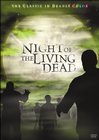
It was a shocking movie. It crossed a lot of boundaries. While compared to the violence of Tarantino, it might appear mild, it was gruesome for its time. Woven through the movie were what we now call “issues.” Black/white issues, marital issues, death taboo issues, subtle incestuous references.
You may never have heard of it, but years after it was made, there were making sequels – Night of the Living Dead 2, Return of the Living Dead, etc. The movie has been re-done, I hear, I have never seen another.
Night of the Living Dead was too real for me. It’s related to Training Joke #2 which really isn’t very funny if you read it closely. it describes a world of “me first” when facing an enemy with whom you cannot reason. It’s supposed to illustrate the benefits of maintaining a low profile when living or working in a country where you may face hostility, but what makes it “funny” is the unexpected treacherousness of one friend to another.
And, as the bear in the training joke, the zombies were not malicious, they were just hungry. You can’t charm them out of their hunger, you can’t intimidate them. They have no compassion, no pity, no feelings whatsoever. Just hunger, a driving hunger, for flesh.
The zombies in Night of the Living Dead were occasionally known by the non-dead humans. Survival was based on recognizing that the zombie was no longer the person they had once known and loved – getting away, or killing the zombie, overcoming the emotions wrapped up in the person the zombie had been before death and re-activation.
One of the things I like about the movie is that they never really adequately explain how this all happened. There is speculation, and there is dealing with the immediate problem, but there is no real resolution as to cause. Just like real life, where we scramble to deal with things, but often, even years later, fail to understand what we were really dealing with.
And I have met a human zombie or two. No, they are not undead, but neither are they really living. About as close to emotion as they come is a curiousity about why feeling people feel as we do, and a mild niggling feeling that they might be missing something. If they are psychopathic, they can appear to be normal, but underneath is a great void. They know who they are. Sometimes, in an effort to feel, they inflict pain, the way a cat will toy with a mouse before killing and eating it. And, just as you can’t blame a cat for being a cat, I think these people are born that way, and can’t take responsibility for what they are – or are not. Scary people. Stay away, far far away.
1906
This was a forward I received today. I don’t know where the statistics come from, so I can’t verify. If true, it is pretty amazing what a difference 100 years can make.
The year is 1906.
One hundred years ago.
What a difference a century makes !
Here are some of the U.S. statistics for the Year 1906
************************************
The average life expectancy in the U.S. was 47
A three-minute call from Denver to New York City cost eleven dollars.
There were only 8,000 cars in the U.S., and only 144 miles of paved roads.
The maximum speed limit in most cities was 10 mph.
Alabama, Mississippi, Iowa , and Tennessee were each more heavily populated than California .
With a mere 1.4 million people, California was only the 21st most populous state in the Union .
The tallest structure in the world was the Eiffel Tower !
The average wage in the US was 22 cents per hour.
The average U.S. worker made between $200 and $400 per year .
A competent accountant could expect to earn $2000 per year,
a dentist $2,500 per year,
a veterinarian between $1,500 and $4,000 per year,
and a mechanical engineer about $5,000 per year.
More than 95 percent of all births in the U.S. took place at HOME
Ninety percent of all U.S. doctors had NO COLLEGE EDUCATION !
Instead, they attended so-called medical schools, many of which were condemned in the press AND the government as “sub-standard.”
Sugar cost four cents a pound.
Eggs were fourteen cents a dozen.
Coffee was fifteen cents a pound.
Most women only washed their hair
once a month,
and used borax
or egg yolks for shampoo.
Canada passed a law that prohibited poor people from
entering into their country for any reason.
The Five leading causes of death in the U.S. were:
1. Pneumonia and influenza
2. Tuberculosis
3. Diarrhea
4. Heart disease
5. Stroke
The American flag had 45 stars. Arizona , Oklahoma, New Mexico, Hawaii, and Alaska hadn’t been admitted to the Union yet.
The population of Las Vegas, Nevada, was only 30 !!!!
Crossword puzzles,
canned beer,
and ice tea
hadn’t been invented yet.
There was no Mother’s Day
or Father’s Day.
Two out of every 10 U.S. adults couldn’t read or write.
Only 6 percent of all Americans had graduated from high school.
Marijuana, heroin, and morphine
were all available over
the counter
at the local corner drugstores.
Pharmacists said,
“Heroin clears the complexion, gives buoyancy to the mind, regulates the stomach and bowels, and is, in fact, a perfect guardian of health.”
Eighteen percent of households in the U.S. had at least one full-time servant or domestic help.
There were about 230 reported murders
in the ENTIRE U.S.A. !
Wherever You Go . . .
There’s an old saying: Wherever you Go, There You Are.

Seattle is a very civic minded city, a very wealthy city with a good base of commerce – a mixed base, a healthy mix of industrial manufacturing, services, information technologies. It’s a creative city, innovative, consistently moving forward. Boeing, Microsoft, Amazon.com, Google . . . it’s a stimulating and exciting place to be.
And throughout Seattle and environs last night were massive electrical outages. Unlike Kuwait, where the air conditioning required to survive the heat cause the rolling outages, most of the outages in Seattle are caused by trees falling on the electrical wires, wiping out coverage in entire areas.
The Public Utilities people have become very good at dealing with the outages and getting people back “online” in a short time. But why would a city with such a foward looking posture not bury the electrical lines?
Seattle has a high quality of life across the board, but it drives me crazy that they don’t bury the lines. My sister says the taxpayers don’t want to expend the additional funds. There seems to be a similar problem supporting the public schools; Seattle has the second largest number in the United States of children attending private schools rather than public schools (heard that on the cable televised Green Seattle meeting last night). In a city that is 80% white, 60% of the children in the public schools are children of color. Something is not right.
The electrical lines issue would be small potatoes if it were simply aesthetics – those lines are really ugly when you are trying to get a good photo. But when you stack up all the overtime hours the electrical workers have to work, all the overtime pay, I would think burying the lines would pay off within a matter of a couple years. Seattle is a city that votes democrat; where is the democracy in not supporting the public schools?
It really bugs me when short-sighted public policies hurt the citizens. Some things are just basic infrastructure – roads, clean water, an honest police force, an honest judiciary, reliable electricity, good schools, trash collection, public transportation, a trustworthy accessible health system, systematic elections – these things should be a no-brainer when it comes to public support. It’s an investment, not a luxury. Without an orderly infrastructure, the system descends into chaos.
Seattle’s Houseboat Sub-Culture
In Seattle, there is an entire sub-culture that lives on houseboats, mostly urban professionals. Unlike many parts of the world, the houseboats in Seattle are truly designed as houses, and have to meet city standards. They can only dock in designated areas, and they are solely for living, they don’t have any means of propulsion. They are not truly boats, but houses floating on the water.
I lived in one for two weeks, many years ago. I never got used to it. I worried about sinking all the time.
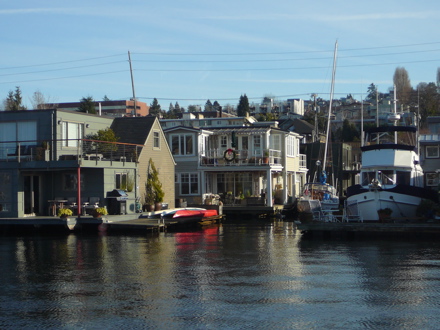

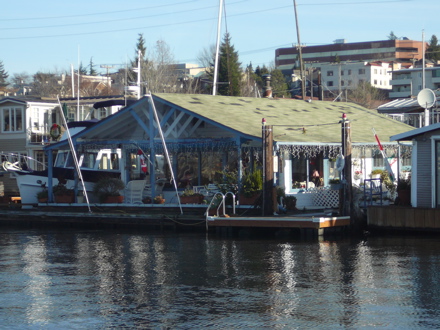
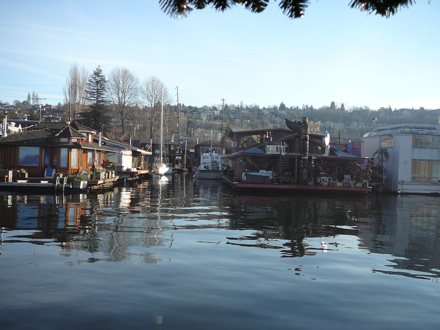
Seattle is quirky. Houseboats, caffeine-addiction, super-technology, fitness addicts, airplanes (home of Boeing) and one of the most literate cities in the United States. Washington state has the highest minimum wage in the nation – $7.93 per hour.
KLM, Bureaucracy and Customer Service
It is so easy to complain when you live overseas. We complain about Wasta, we complain about corruption – and all it takes is another trip out of Kuwait to see that it exists everywhere. Bureaucracies exist to encourage arbitrary decisions, bribes, and meanness to the customer.
But every now and then, you find a brave soul who stands up for right, who uses policy like a rapier against the lazy, and I met one of those this morning.
I am connecting in Amsterdam, and I have thousands and thousands of miles I never use. Mostly I have been booking flights on a relatively short term basis, and when your family needs you is not the time to be trying to dicker over free tickets, etc. So as I entered the business lounge, I asked the very nice woman behind the desk if an upgrade was possible for the next leg of the trip.
Her fingers flew across the keyboard as she checked this, she double checked that, and then said “you would have to pay 150 Euros to upgrade + 25,000 miles”. Piece of Cake. For a 10 hour flight? 150 Euros! Here’s my money.
No no, I had to go downstairs and pay. And downstairs, it is six, when ticketing is supposed to open, but they are very very busy ignoring the customers. They have coffee to get, greetings to exchange, water to distribute, computers to boot – no, no, ticketing open at 6:00 does NOT mean they are ready to serve the customer at six, only that they are in the general area at around six.
And they were not happy to have a customer. The counter lady gave me the same information as the lady upstairs – 150 Euros + miles, and then she took my ticket to the ticketing lady behind her, who gave it a glance and said no, it was impossible, my card was KLM and the ticket was on a Northwest flight. I said “You are partners! This card is supposed to work on all the partner airlines” and she said “no, the regulations say that your class of ticket cannot be upgraded on Northwest.”
I don’t usually let things get under my skin, but the sheer blatancy of her desire to get rid of me annoyed me. I said that this was not right, and not fair, and she shrugged her shoulders and smiled.
Smiled! Whew! I could almost feel the fire coming out of my ears and eyes!
Back upstairs in the lounge, I checked in with the same lady who had helped me before and told her what the ticketing bureaucrat had said. I was calm, but also very angry. So was she. “That’s just WRONG” she said, and got on the phone. 45 minutes later, she was still at it. She would verify all her information, call ticketing, and the ticketing lady would still say “No!”
Finally, I signed up for a shower, and washed away all the frustration while the dear lady in the business lounge continued to get people involved. By the time I came back out, fresh and sweet and clean, she gleamed in triumph! “You have your ticket!” she said, her voice triumphant!
So downstairs I headed once more to pay. The ticketing lady was totally snippy to me, taking her time, shaking her head in disgust, until I asked her name and wrote it down. Suddenly, she was all sweetness and light, and like magic, my new improved boarding pass appeared.
Al hamd’allah.
But here is what bugs me. I’ve worked many many jobs that required keeping customers happy. I am really good at it. I take pride in it. In the long run, I believe, good will pays the biggest dividends. And when I can make something good happen for someone, it’s like something good happens for me, too . . .
So what possible reason would people in roles where they interface with the public have for being rude? unhelpful? snippy? to take visible joy in saying no?
I can imagine that being an airline counter service agent at this time of the year, with all the delays and confusions, and abuse they have to take could be dis-spiriting. I can sympathize that they have to deal with people who all want special treatment. I’m just another person asking for an upgrade. But at the same time, doesn’t it make them feel worse to be rude and unhelpful?
Do you deal with the public? Are you ever rude? What pushes your buttons, what can make you rude to a customer? And as a customer, how do you handle a rude employee?
The Oldest Mosque in America
My niece, Little Diamond, writes about The Oldest Mosque in America here. Fourth and fifth generations of Moslems in Iowa!
Recent Comments
intlxpatr on Shampoo Ginger tigerbutterya0c5ff1d… on Shampoo Ginger intlxpatr on British Soldier Kidnapped, Esc… John on British Soldier Kidnapped, Esc… intlxpatr on British Soldier Kidnapped, Esc… Wikipedia Donate Button

Amazina


Early Voting in Florida


