Halal?
From Kuwait Times, 9 June 2007
Bull Goes on Rampage
A number of citizens and expatriates were frightened after a raging bull escaped from a slaughterhouse and rushed to the streets of Jleeb al-Shayoukh. Meanwhile, passersby reported the matter to the Farwaniya police and the police moved to the spot and shot the bull. The bull was then transferred to the slaughterhouse.
My comment / question: To be halal, doesn’t an animal have to be slaughtered in a certain way, having it’s throat slit while hearing verses of the Qu’ran, without fear?
Isn’t a bull that has been shot on the street like carrion?
How could they transfer this bull to the slaughterhouse? How can this bull be made into meat?
Light a Candle Against Child Abuse
A good friend sent me this link: Light a Million Candles.com which is against child abuse. The don’t ask your address or for any donations – just that you light a candle and support their cause.
Pope Reinstates Islam Department
According to Catholic belief, the Pope, the head of the Catholic church, is infallible. When he downgraded the Council for Interreligious dialogue, and merged it with another office last year, many people thought he had made a big mistake.
So the re-instating of this department can be seen as an admission of the mistake.
I think this is a brave move. For the head of a religion larger than most nations to make a mistake, and then acknowledge the mistake, and even better – to correct a mistake – that takes a lot of moral courage. Bravo, Pope!
Here is the story, from BBC News:
Pope reinstates Islam department
The Pope has been repairing damaged relations with Muslims
Pope Benedict XVI has reversed a controversial decision he took a year ago to downgrade the Vatican department which deals with the Islamic world.
The Council for Interreligious Dialogue will be restored to its former position as a department in its own right.
It is not clear if the department’s former head, British archbishop Michael Fitzgerald, will also be reinstated.
His removal was seen as a sign the Pope was more interested in improving ties with other Christian denominations.
The BBC’s David Willey in Rome says that by reversing his decision, which was interpreted negatively in the Muslim world, the Pope has tacitly admitted that this was a mistake.
Relations between the Vatican and Muslims have deteriorated over the past year, particularly over remarks made by the pontiff during a visit to Germany last September, in which, some thought, he appeared to equate Islam with violence.
The Pope insisted his words had been taken out of context and that he meant no offence to the Muslim religion.
Merger reversal
In a rare about face, Vatican Secretary of State Cardinal Tarcisio Bertone told the Italian newspaper, La Stampa, that the Council for Interreligious Dialogue would again become “a dicastery in its own right”.
You can read the rest of the article here.
The Great American Library
Today there is an article in the news about a small library in Vermont that actually sits on the border and is used by both Americans and Canadians. The US government is considering changing that, as they think the unguarded entry to the US is being used by bad people.
Maybe. I don’t know. Post 9/11, the Department of Homeland Security can say or do just about anything in the name of National Security, limit or modify our consititutional rights, behave in ways contrary to everything we believe in, and no one seems to be able to stop them.
And that is not the point. The point is that at one time in our history, an industrialist, Andrew Carnegie, donated money to build libraries throughout the United States, Canada and even Scotland, over 2,000 libraries in all.
In almost every town in America, you will find a library, where you can borrow, free of charge, books on any subject.
When I was a little girl, where I lived was so safe that my mother would put me on the bus with my basket family library books and send me to the library, call the librarian to tell her I was coming, and I could spend hours there, and no-one had to worry about my safety. My Dad would pick me up on his way home from work, and I would have a basket of fresh books – the librarian would pick out books for my Mom.
One day, the desk person was sick, and the librarian let me sit at the desk, checking books ou to library patrons. I must have been six or seven years old, and could barely get on the high chair behind the library desk.
Here is what was so cool. I could read at a very early age, and my nine or ten had worked my way through most of the children’s section, and started choosing books from the adult section. The first time, the librarian called my Mom and asked if it was OK, and my Mom said “if she thinks she can read it, check it out to her.” My library card was annotated to inform all the desk people that I could read whatever I wanted, even from the adult section. Woooo Hoooooooo!
My husband has similar stories, growing up in his home town. He loved the library as I did, and one day, rode his bike to the library and then fell asleep there, hidden from view. The librarian closed the library and he woke up alone and very scared. These were pre mobil phones – I know, I know, it’s hard to believe. His family came looking for him and found his bike, called the librarian, who lived nearby, and she let him out.
We still love libraries. It’s an amazing thing, to be able to walk into a treasury of books, pick up a couple hundred dollars worth, and walk out with just your signature as pledge. The newest books on every subject are available, either in the library itself or through their inter-library loan system. Now, too, most of the libraries have a computer section, where you can check your e-mail or do research online – totally free.
Libraries are staffed mainly by females, I don’t know why, it seems to be seen as a female job. But what power these women have! They are the guardians of so much knowledge! Children and adults come to them and ask all kinds of questions, and they know where to look for the answers!
Isn’t learning how to access knowledge one of the true great secrets in life? So these librarians, the guardians of knowledge, are like Superman, holding the front lines against ignorance, promoting access to new ideas and new ways of doing things, combating the forces of darkness and superstition.
Librarians were a powerful force in my life, and in my husband’s. Has there been a powerful figure in your life who made a difference in how you saw the world, in choices you have made?
Anya Seaton and Avalon
Avalon, by Anya Seaton, is an amazing book, a book I almost didn’t read, but once I picked it up, I could hardly stop reading until I had reached the end. It took me to a whole new world.
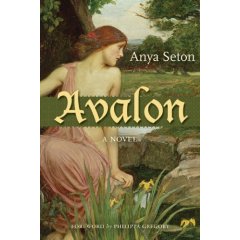
It opens in England, around the turn of the first millenium, when people had names like Aethelred and Aelfrhryth which is enough to make me NOT want to read the book. But I read another book by Anya Seaton, Katherine, and I really liked it. It, too, took place in very early English history, and had such an authentic feel. It wasn’t like you pick up the book and all the lords and ladies are in gorgeous clothes, Seaton captures the primitive life many lived in “castles”, freezing cold most of the winter, no plumbing – many of the poorest laborers in Kuwait live better, in terms of food, a roof over their head, toilet facilities – that these early nobles. And the life of villagers was even more basic, a true scrabble for survival, and under filthy conditions, not a lot of time of opportunity for bathing, so people had quite an odor most of the time.
Avalon begins with a chance meeting of a young man and a young woman, a tragedy, and a journey. Their story, as first one love and the other doesn’t, then the other does and misses the opportunity – takes us from the southernmost part of England to Iceland, to Ireland, to Greenland and to the new world, all in the space of these two intertwined lives. They never marry, and yet the book, and their relationship, is a romance.
As you can see, once I got into the book, I couldn’t put it down until the last page. These people are so real, so genuine and so human – and Seaton makes you care about them. She manages to throw in enough detail that I could almost swear I visited these places – a thousand years ago. I have spun wool to buy necessities for our sod house in Iceland, I have embroidered tapestries in the Bower of my husband’s castle, I have sent my son off to settle with his Irish bride in the new world – yes, I think I have done.
The political situation in England at this time is chaotic, with Vikings raiding their coastal cities, and deep up the rivers into the interior, feuding over who will wear the crown, and problems with the capabilities of rulers to rule. There is a constant friction between the church and state, for land, for power, for wealth. The majority of the novel takes place during the reign of – I am not kidding – Ethelred the Unready.
At the very end, I found to my astonishment, that this book also concerned the ramifications of a big lie, just as my previous book reviewed. This is a total co-incidence, something that surprised me, and this book ends in a totally different way, as the main character comes to grips with her deception, owns up to it, willing to suffer the consequences.
Is this what I want? Merwyn thought, and at once came the answer. Yes, it is. There would be boring days ahead, but never again the depressions and miseries of before . . . She felt cleansed, peaceful, and there was much gratitude. . .
That totally cracked me up, but this is a romance of a different nature, a very real romance, with the real kinds of choices that real-life romances entail, and the real life consequences. The hand of God is a major player here, and the beliefs of the characters shape events in a way consistent with the times. Dreams are taken very seriously, and the power of curses, and sorceries, which I never give two thoughts in my daily life in the 21st century.
The main characters have their own nobility, based on their choices, their growth, and their coming to terms with their lives and situations. I learned a lot reading Avalon, and I also had a great time while learning.
All in all, a fascinating read.
Labyrinth by Kate Mosse
When I saw this book at the Barnes and Noble, I thought “isn’t Kate Moss a fashion model?” but that is a different Kate Moss, a Moss without the ‘e’ at the end.
This book was a New York Times bestseller, but then so was the Da Vinci Code, which I thought badly written and sometimes incoherent. The premise was interesting, but it was done years ago by French authors Michael Baigent, Richard Leigh and Henry Lincoln. Holy Blood, Holy Grail hypothesizes (and pulls together a load of hypothetical evidence to support) that the mystical grail is really a symbolic representation of the blood of Christ, that Jesus was not crucified but instead left Jerusalem with his wife Mary Magdeleine and went to France, and started a family there which eventually became the early French royal line.
I remember telling my son this story, as we travelled through the southern areas of France, and him saying in his smart-mouth-teenager way “only the French would be so arrogant as to believe the blood of God was flowing in their veins!”
We spent a lot of time travelling in France. We love France. So when I discovered that Labyrinth was about the beginning of the French crusade against the Cathars, I was delighted. We know this history. We know this area – it is one of the most beautiful areas of France. We know Carcassone, which in its renovation by Viollet-le-Duc is like Disney-does-fortified-city. It’s formidable, but it’s not entirely authentic.
Who are the Cathars? The Cathars were a break-away sect who were called by others ‘bons hommes’ or ‘bons Chretiens’ (good-Christians), but, pre-Luther, they saw many flaws in the way the Catholic church has become more political than spiritual.
They valued inner faith above outward display. They needed no consecrated buildings, no superstitious rituals, no humiliating obeisance designed to keep ordinary men apart from God. They did not worship images, nor prostrate themselves before idols or instruments of torture. For the ‘Bons Chretiens’ the power of God lay in the word. They needed only books and prayers, words spoken and read aloud. Salvations was nothing to do with alms or relics or Sabbath prayers spoken in a language only the priests understood. . . In their eyes, all were equal in the Grace of the Holy Father – Jew or Saracen, man and woman, the beasts of the fields and the birds of the air. There would be no hell, no final day of judgement, because through God’s grace all would be saved, although many would be destined to live life many times over before they regained God’s kingdom.
They believed the earth was created as a trap, by Satan, and that our lives here keep us apart from the glory of God. They believed we keep coming back, until we purify ourselves spiritually, and that in the end, if we get it right, we end up back where we came from, with God. And they believed we all have the right to read the bible, and to talk directly with God, without the necessity of a priest to interpret or to direct.
But this Crusade, the Fourth Crusade, is little known. This Crusade, declared by the Pope to wipe out the Cathar heresy (sometimes known as Bogomilism or Albigencian heresy) was really the tool of the nobility that was then France, less than half of the France of today, to grab the rich, lush southern lands of the Pays d’Oc. The Fourth Crusade was an opportunity for knights to increase their holdings. And it doubled the size of France.
The Labyrinth takes you inside the walls. The main character is not Cathar, but it didn’t matter – this war wasn’t really about wiping out the Cathars as much as subjugating an independant land and making it part of France. You may have heard one famous quote from this Crusade – as the Crusaders were attacking Besiers, the Abbot of Citeaux was asked how the soldiers could tell the good Catholics from the heritics. “Tuez-les tous. Dieu reconnaitra les sien,” he replied – Kill them all. God will know his own.
The book is lightweight, an easy read. The heroine, Alice, seems to have lived before, as Alais, and has memories she has never lived. You jump back and forth between today, and the time of the Crusade, in the early 1200s. Some of the plot mechanisms don’t make a lot of sense, but you do get a real sense of life in a fortified town during the 1200’s, and of the injustice done to this beautiful area in France. For a book I am lukewarm about in retrospect, I read it avidly, and enjoyed the read.
What I like about this book is that it brings to life a time in history that few pay any attention to. Somewhere in the book, it says that “history is written by the victors.” We see France today, and we know little about the struggle that united these diverse areas into one nation. This book illuminates a slice of time, a grave injustice, and a sense that religion is too often a tool for political ends.
Like the heroine, the big church in Carcassone, where the trials and tortures of the ‘heretics’ took place sends a cold chill up my spine, I can hear the screams of the tortured. I love churches, and I can’t go into this one. It feels unholy. Did you know that the origination of the Inquisition was not in Spain, as most people believe, but in this area of France? And it was aimed, first, at the Cathars.
All in all, not a bad book. Though light in plot, it is heavy in content, a book you will remember and think about in terms of issues, if not the main characters.
MOC Bans Porno Film Sites
Today’s Kuwait Times:
Internet Porno Film Sites
The Ministry of Communication has closed down all new sites that advertise pornographic films. The ministry of Communication represented by Undersecretary Eng. Abdulaziz Al-Osaimi and his counterpart at the Ministry of Information achieved this new step. This move was done in order to have control over the sites, which are being followed by the Ministry of Information. Al-Osaimi has assigned administration director Nassar Al-Kandari to work on closing those sites from the Internet and ensuring that companies do not use other systems to re-open it. The ministry succeeded in coordinating with local internet companies to close all porno sites, but lately the ministry realized that there are new sites marketing through drama films to porno films.
My comments:
I truly hate porn. I hate it because it creates a fantasy world that real women can barely compete with. I bet if men spent half the time and attention on their wives and families that they spend on porn, there wouldn’t be so much divorce. And guys – those women are PAID. They’re ACTING. Most of them would rather be doing anything but what they are doing, but they do it for the MONEY. It’s about as real as the World Wide Wrestling Federation Matches, it’s all staging and airbrushing and making money off YOUR fantasies.
Rant over – reality strikes. How do you ban pornography?
First, how do you define pornography? When I was a student in political science, we spent a week of class time trying to come up with a definition that everyone could buy into. We never succeeded.
There is some pretty powerful erotic literature, erotic art out there, stuff I don’t find pornographic in the least. So what are the guidelines?
Second, WHO defines pornography?
Third, how on earth will the Ministry of Communication and the Ministry of Information keep up with all the new porn sites that keep popping up? These sites make people a LOT of money, they have the money to pay ingenious high tech guys to keep devising new ways to get their product to market.
And last, who is the poor porno-guy who has to watch all this garbage and enforce the ban?
And – is your internet phone still working? 😉
The Truth about Angels
A friend sent me this piece in the morning e-mail. I hadn’t seen it before, and I loved it. Hope you do, too.
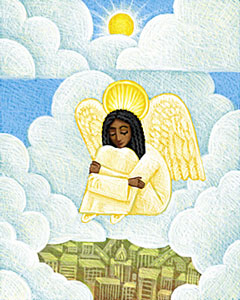
I only know the names of two angels. Hark and Harold.
Gregory, 5
Everybody’s got it all wrong. Angels don’t wear halos anymore. I
forget why, but scientists are working on it.
Olive, 9
It’s not easy to become an angel! First, you die. Then you go to
heaven, then there’s still the flight training to go through. And
then you got to agree to wear those angel clothes.
Matthew, 9
Angels work for God and watch over kids when God has to go do
something else.
Mitchell, 7
My guardian angel helps me with math, but he’s not much good for
science.
Henry, 8
Angels don’t eat, but they drink milk from holy cows.
Jack, 6
Angels talk all the way while they’re flying you up to heaven. The
basic message is where you went wrong before you got dead.
Daniel, 9
When an angel gets mad, he takes a deep breath and counts to ten. And
when he lets out his breath, somewhere there’s a tornado.
Reagan, 10
Angels have a lot to do and they keep very busy. If you lose a tooth,
an angel comes in through your window and leaves money under your
pillow. Then when it gets cold, angels go north for the winter.
Sara, 6
Angels live in cloud houses made by God and his son, who’s a very
good carpenter.
Jared , 8
All angels are girls because they gotta wear dresses and boys didn’t
go for it.
Antonio, 9
My angel is my grandma who died last year. She got a big head start
on helping me while she was still down here on earth.
Katelynn, 9
Some of the angels are in charge of helping heal sick animals and
pets. And if they don’t make the animals get better, they help the
kid get over it.
Vicki, 8
What I don’t get about angels is why, when someone is in love, they
shoot arrows at them.
Sarah, 7
(Image courtesy fotosearch.
Readings for Today
You will notice to the right, in my Blogroll, is an entry for The Lectionary. The Lectionary readings are scheduled so that every three years you read completely through the Bible. Actually, my sect, which is Episcopalian (the American version of Anglican, although the two have been closer at some times than others) shares the same readings with many other Christians, we also have some books/chapters in our Bible that most of the main-line Protestant bibles don’t have.
Today’s gospel reading is one of the hardest ones. You look at it and you read it and it SOUNDS so simple:
Luke 6:27-38
27 ‘But I say to you that listen, Love your enemies, do good to those who hate you,
28bless those who curse you, pray for those who abuse you.
29If anyone strikes you on the cheek, offer the other also; and from anyone who takes away your coat do not withhold even your shirt.
30Give to everyone who begs from you; and if anyone takes away your goods, do not ask for them again.
31Do to others as you would have them do to you.
32 ‘If you love those who love you, what credit is that to you? For even sinners love those who love them.
33If you do good to those who do good to you, what credit is that to you? For even sinners do the same.
34If you lend to those from whom you hope to receive, what credit is that to you? Even sinners lend to sinners, to receive as much again.
35But love your enemies, do good, and lend, expecting nothing in return.* Your reward will be great, and you will be children of the Most High; for he is kind to the ungrateful and the wicked. 36Be merciful, just as your Father is merciful.
37 ‘Do not judge, and you will not be judged; do not condemn, and you will not be condemned. Forgive, and you will be forgiven;
38give, and it will be given to you. A good measure, pressed down, shaken together, running over, will be put into your lap; for the measure you give will be the measure you get back.’
There is nothing easy about loving your enemy. One priest, as I was anguishing through this passage, told me “You don’t have to LIKE them, but you MUST love them.” That helped, but still, loving your enemy is probably the hardest thing on earth to do. And “Do not judge”????? Holy smokes, we judge one another on a daily basis, and usually not to their credit.
Give, even if you think the begger may be lying?
And then, the hardest one of all – “Forgive, and you will be forgiven.” So like, if I don’t forgive . . . I don’t get forgiveness? Like I have to give up my grudges, the chip on my shoulder? I have to forgive the unforgivable, the personal insults, the slights, the jerk who cuts me off on the road? I have to forgive my neighbor? I have to forgive my friend? My husband? George Bush? Osama bin Laden? I have to forgive to receive forgiveness??
But, at the last, the reward – that no matter how hard it is, if you follow these rules, abundant life will be poured in your lap.
You can follow the daily readings by clicking on the Lectionary, in the blogroll, and scrolling down to the current week. Click on the week and it will take you to the daily readings, which include the Psalms, the Old Testament, the New Testament and the Gospel. The reading above, from Luke, is today’s Gospel reading.
April 30 Blogging Silence

April 30 provides an opportunity for all bloggers to honor the victims of violence in this world by remaining silent. I will be honoring this moritoriumm, and will neither blog nor comment tomorrow.
It’s such a small thing. I wish I were doing more.
Recent Comments
Kitchen on Isiais: Winding Down intlxpatr on Shampoo Ginger tigerbutterya0c5ff1d… on Shampoo Ginger intlxpatr on British Soldier Kidnapped, Esc… John on British Soldier Kidnapped, Esc… Wikipedia Donate Button

Amazina


Early Voting in Florida


