
Putting Pensacola Weather in Perspective
I know, I know, you all are tired of hearing me gripe and groan about heat and humidity. I just had a humbling experience. I finished my Lectionary Readings and went to Weather Underground to see how the weather is shaping up for today and caught a glimpse of Kuwait weather. I have it marked as a favorite so I can see how my friends there are doing.
113°F in Kuwait City.
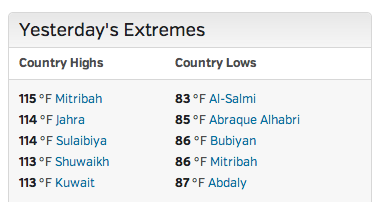
At the other extreme is my old hometown, Juneau, Alaska. This is the forecast for today, and the next week or so:

You know, today it’s supposed to be less than 90°F in Pensacola, and the humidity feels lighter today – so far. We are expecting a thunderstorm, and yesterday, the temperature dropped ten 15 degrees at noon as a thunderstorm rolled in – how cool is that? We have those beautiful white sand beaches and a surf as warm as bathwater – 84°F – Pensacola in the heat of August is looking a lot better 🙂
Review Prompts Sharp Increase in Saudi Arabia MERS Cases
Saudi Arabia Review Finds Higher Number Of MERS Cases
 | By ADAM SCHRECK
DUBAI, United Arab Emirates (AP) — Saudi Arabia, which is grappling to contain the spread of a frequently deadly respiratory virus, announced Tuesday that a review of the illness led authorities to sharply revise upward the number of confirmed infections and deaths from the disease.
The surprise disclosure followed the unexpected firing of the kingdom’s deputy health minister, heightening concerns about the country’s ability to halt the spread of the Middle Eastern respiratory virus. He was the second senior Saudi health official to lose his job in less than two months.
A report by the official Saudi Press Agency said authorities have registered a total of 688 confirmed infections and 282 deaths as a result of MERS since the virus was first identified in 2012. Of those infected, 53 were reported to still be receiving treatment.
The Saudi Health Ministry’s most recent tally of cases listed 575 cases and 190 deaths, meaning that over 100 cases had previously gone unreported.
MERS belongs to a family of viruses known as coronaviruses that include both the common cold and SARS, or severe acute respiratory syndrome, which killed some 800 people in a global outbreak in 2003. MERS often starts with flu-like symptoms but can lead to pneumonia, breathing problems and in severe cases, kidney failure and death.
Dr. Tariq Madany, who heads the country’s medical advisory council, said the revised toll was the result of a “full review” of previous cases undertaken to better understand the virus’ spread.
“The ministry is committed to providing all the data concerning the coronavirus and putting polices in place to protect public health,” the agency quoted Madany as saying. “Though the review showed confirmed cases that needed to be added, we are still witnessing a decline in the number of newly registered cases in the past few weeks.”
Acting Health Minister Adel Faqih on Monday issued an order removing his deputy, Ziad Memish, according to a brief statement on the ministry’s website. It did not give a reason for the move.
King Abdullah sacked the previous health minister in April following a spike in reported infections.
Not everyone who contracts the virus that causes MERS gets sick, while others show only mild symptoms before they recover. There is no commercially available vaccine.
Saudi Arabia has been the epicenter for the disease. The virus has since spread to other parts of the world, including the wider Middle East, and parts of Europe, Asia and the United States.
Scientists believe camels may play a role in primary infections but are unsure exactly how the disease spreads to humans. The disease can spread between people, but typically only if they are in close contact with one another. Many of those infected have been health care workers.
The World Health Organization last month said MERS does not yet constitute a global health emergency despite a recent spike in infections, though it continues to monitor the spread of the virus.
___
Associated Press writer Ahmed Hammad in Cairo contributed to this report.
Worst Places in the World to Work
From AOL Huffpost Business:
Where are the worst places on the planet to be a worker?
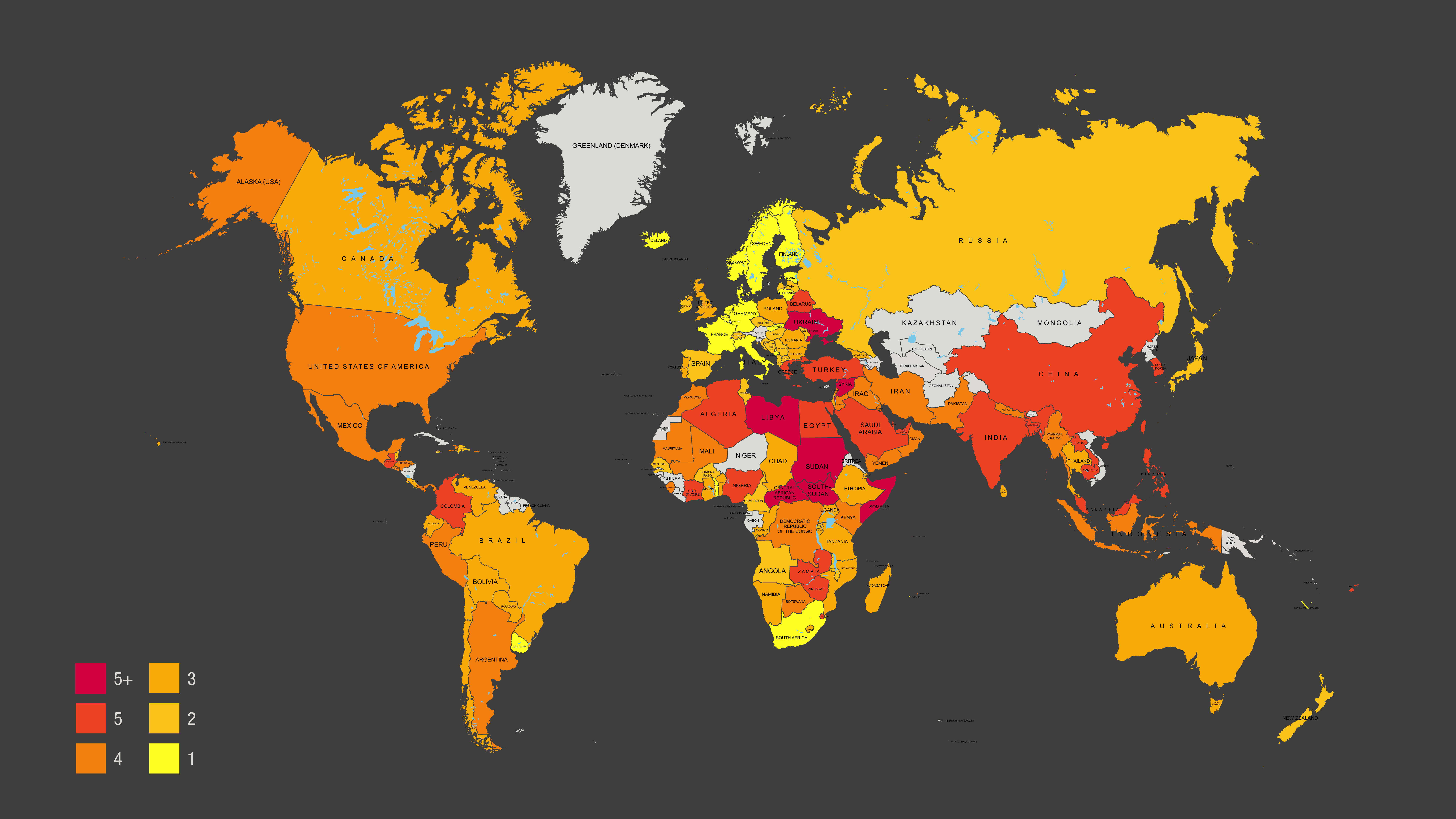
A new report by the International Trade Union Confederation, an umbrella organization of unions around the world, sheds light on the state of workers’ rights across 139 countries. For its 2014 Global Rights Index, the ITUC evaluated 97 different workers’ rights metrics like the ability to join unions, access to legal protections and due process, and freedom from violent conditions. The group ranks each country on a scale of 1 (the best protections) to 5 (the worst protections).
The study found that in at least 35 countries, workers have been arrested or imprisoned “as a tactic to resist demands for democratic rights, decent wages, safer working conditions and secure jobs.” In a minimum of nine countries, murder and disappearance are regularly used to intimidate workers.
Denmark was the only country in the world to achieve a perfect score, meaning that the nation abides by all 97 indicators of workers’ rights.
The U.S., embarrassingly, scored a 4, indicating “systematic violations” and “serious efforts to crush the collective voice of workers.”
“Countries such as Denmark and Uruguay led the way through their strong labour laws, but perhaps surprisingly, the likes of Greece, the United States and Hong Kong, lagged behind,” wrote ITUC general secretary Sharan Burrow in a statement about the report. “A country’s level of development proved to be a poor indicator of whether it respected basic rights to bargain collectively, strike for decent conditions, or simply join a union at all.”
Here’s a look at the world rankings. Darker shades represent worse protects for workers. A score of 5+ means that active conflicts, like those in Syria or Sudan, block any legal protections for workers.
Alzheimers and Cancer: Does One Decrease the Liklihood of the Other?
A study published today on AOL Health News has an intriguing find – that there is a negative correlation between Alzheimers and cancers. You can read the entire study by clicking on the type above. Below is a quote from the study:Ei
“Benito-Leon said that scientists need to better understand the link between Alzheimer’s disease, which causes abnormal cell death, and cancer, which causes abnormal cell growth.”
It refers also to a study published last year on
Skin Cancer May Be Linked to Lower Alzheimer’s Risk, Study Says
A new study finds a link between non-melanoma skin cancer and a decreased risk for Alzheimer’s disease.
From an earlier study on AOL EveryDay Health:
WEDNESDAY, May 15, 2013 — A new study found an association between a history of non-melanoma skin cancer and a reduced risk for Alzheimer’s disease. The observational study, published in the journal Neurology, analyzed a cohort of 1,102 participants of the Einstein Aging Study at Albert Einstein College of Medicine’s Institute of Aging in the Bronx, N.Y.
The researchers report that study participants with a history of non-melanoma skin cancer were close to 80 percent less likely to develop Alzheimer’s disease than people who did not have skin cancer.Among the 141 participants who had non-melanoma skin cancer, only two developed Alzheimer’s disease. But the researchers say they’re still unsure why this link may exist.
“Our goal is really to identify risk factors and genetic factors for Alzheimer’s,” said Richard Lipton, MD, of Albert Einstein College of Medicine, a fellow of the American Academy of Neurology, and lead author of the study. “One explanation is that there is a biological link, and another explanation is there’s a link between risk factors. Really what we need to do is sort out the reasons for these associations.”
Researchers followed participants for an average of 3.7 years. The average age of study participants was 79. At the start of the study, none of the subjects were reported to have dementia, though 109 people had a history of skin cancer. During the study, 32 additional people developed skin cancer, while 126 of the subjects developed dementia. Out of the subjects with dementia, 100 of them had Alzheimer’s-related dementia.
“In neurodegenerative disease, specific cell populations have a tendency to die,” said Dr. Lipton. “In cancer, cells tend to divide out of control. Good health requires a balance between cell death and cell division. Skin cancer may reflect a predisposition to cell division, which protects against Alzheimer’s disease.”
But Lipton also said that subjects in the study with a history of skin cancer may also have lived a more active life, engaging in outdoor activities such as running, playing tennis, or swimming. “We know that physical activity and cognitive activity can prevent against Alzheimer’s,” he said. Therefore, more physical activity would also likely mean more time spent under the sun and in the great outdoors.
Some experts, such as Ahmedin Jemal, PhD, vice president of Surveillance & Health Research at the American Cancer Society, speculates that these findings simply reflect how healthy lifestyle choices can reduce Alzheimer’s risk. “Those people who develop skin cancer are more likely to be physically active and if those people are physically active, they are more likely to eat healthy food, such as fruit and vegetables,” he said.
Dr. Jemal also said there’s research suggesting that high levels of vitamin D can also protect a person from developing Alzheimer’s disease. “For our body to synthesis vitamin D we need sunlight,” he said. One study published earlier this year in the Journal of Alzheimer’s Disease, suggests that high levels of vitamin D may jump-start certain genes in the immune system that are able to help dissolve amyloid plaques in the brain. These plaques are found to cause Alzheimer’s disease.
But Lipton recognizes there are limits to his study. While the researchers did adjust their findings for age, gender, education, and race, they did not base any analysis on diet or vitamin D levels. He added that his team is seeking funding to analyze blood samples of study participants, which may be able to detect certain nutrition-based biomarkers, which may help to better understand the study findings.
Heather Snyder, PhD, director medical and scientific operations at the Alzheimer’s Association finds the study’s findings compelling, but she’s also skeptical, since the number of skin cancer incidences in the study pool is relatively small. However, she said the study points to the value of further research.
“[The study] really underscores the need to understand the biology of these disease mechanisms,” said Dr. Snyder. “If we highlight what mechanisms might be connected in disease processes, if we can understand these disease processes, then we can develop therapies.”
Puzzle

This happens.
A very average day, nothing spectacular posted. All of a sudden, a spike in stats so obvious . . . but my WordPress doesn’t say where it is coming from, Stat Counter doesn’t say where it is coming from or what it is about. I am stumped!
Update: They are all coming from Germany. Spammers? Hackers? Did I write something about Germany? (That’s just me puzzling out loud . . )
Atlanta #1 For Sex Trafficking
I’ve always loved statistics. You can use statistics, shuffle them, re-arrange them and they can help you see the same old things in new ways (or they can be used to point you in the wrong direction entirely, admittedly). Tracking the money, Atlanta is ranked #1 primarily because of the number of conventions Atlanta attracts. Conventions attract sex traffickers. They plan, they co-ordinate, they follow the conventions.
Which U.S. City Ranks No. 1 in Sex Trafficking?
A new federal study looked at the sex economies of several major U.S. cities.
Posted by Brian Slupski , March 13, 2014 at 05:57 PM
By Deb Belt
A study of sex trafficking around the United States ranked the metro Atlanta area No. 1, in part because of the many conventions held in the city.
The report, conducted by Washington D.C.’s Urban Institute for the U.S. Justice Department, looked at the sex trade in eight major American cities and found that Atlanta had the largest sex trade between 2003 and 2007.
“Atlanta went from $232 million to $290 million over that five year span,” Meredith Dank, the lead author for the report, told WSB Radio. As a comparison, $290 million is more than the revenue generated by metro Atlanta’s illegal drug and gun trade combined.
Atlanta’s revenue also was far above any other city studied, with Miami second at $200 million. Denver’s sex trade was worth $40 million, San Diego’s $97 million and Dallas’ $99 million. Seattle came in at $112 million and Washington, D.C. at $103 million.
Why is Atlanta No. 1? Dank says the many events and conventions bring people to town with lots of time and money. Some escorts charge more than $1,000 per hour.
One pimp the researchers spoke with in Atlanta made, on average, about $33,000 a week, according to the WSB story.
According to FBI statistics, Atlanta ranks among the top 14 cities in the United States for domestic minor sex trafficking. And some 300 girls across Atlanta are lured into trafficking every month.
Trending on Patch is a category showcasing popular stories from across Patch’s network of 900 local news sites.
Two Interesting Map Views
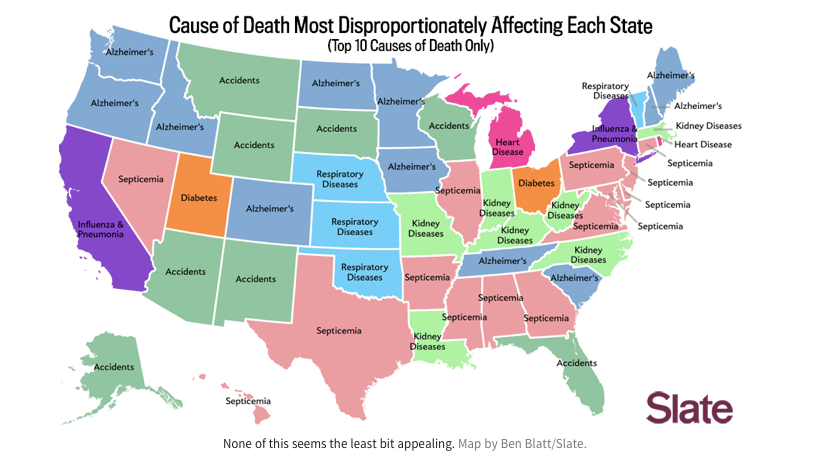
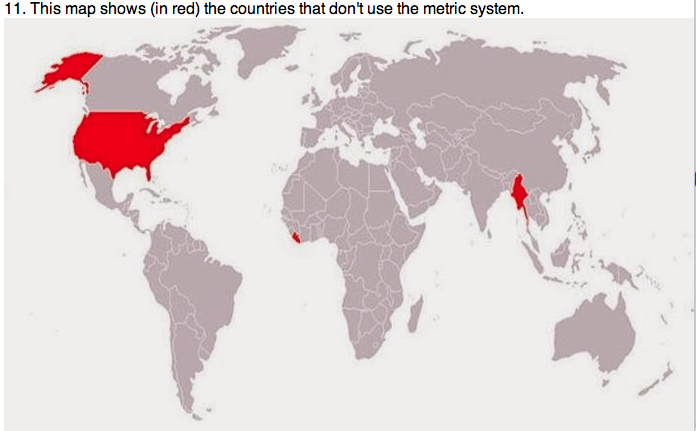
My friend Grammy sent me a fascinating e-mail with all kinds of maps. They were all fascinating, but I will only share two with you – two very sad maps for the USA:

Rape Goes Unpunished in US Military
This is disgusting. We’ve all known it’s true. The warrior culture protects those cowards who impose themselves sexually on both men and women. God willing, things will change. It’s already started, with the relieving of those in power who have imposed themselves on women who came forward with their complaints. Let there be more, until this culture is wiped clean of their disgrace.
Rape isn’t about sex. It’s about power. Rape is a personal violation.
It’s time for the good men and women in the military to police this up, to stop the outrage. Expose those bullies and cowards who prey on others.
Military Sex Abuse Investigation: Documents Reveal Chaotic Punishment Record
AP
by RICHARD LARDNER and YURI KAGEYAMA
TOKYO (AP) — At U.S. military bases in Japan, most service members found culpable in sex crimes in recent years did not go to prison, according to internal Department of Defense documents. Instead, in a review of hundreds of cases filed in America’s largest overseas military installation, offenders were fined, demoted, restricted to their bases or removed from the military.
In about 30 cases, a letter of reprimand was the only punishment.
More than 1,000 records, obtained by The Associated Press through the Freedom of Information Act, describe hundreds of cases in graphic detail, painting a disturbing picture of how senior American officers prosecute and punish troops accused of sex crimes. The handling of allegations verged on the chaotic, with seemingly strong cases often reduced to lesser charges. In two rape cases, commanders overruled recommendations to court-martial and dropped the charges instead.
Even when military authorities agreed a crime had been committed, the suspect was unlikely to serve time. Of 244 service members whose punishments were detailed in the records, only a third of them were incarcerated.
The analysis of the reported sex crimes, filed between 2005 and early 2013, shows a pattern of random and inconsistent judgments:
—The Marines were far more likely than other branches to send offenders to prison, with 53 prison sentences out of 270 cases. By contrast, of the Navy’s 203 cases, more than 70 were court-martialed or punished in some way. Only 15 were sentenced to time behind bars.
—The Air Force was the most lenient. Of 124 sex crimes, the only punishment for 21 offenders was a letter of reprimand.
—Victims increasingly declined to cooperate with investigators or recanted, a sign they may have been losing confidence in the system. In 2006, the Naval Criminal Investigative Service, which handles the Navy and Marine Corps, reported 13 such cases; in 2012, it was 28.
In two cases, both adjudicated by the 1st Marine Aircraft Wing, the accusers said they were sexually abused after nights of heavy drinking, and both had some evidence to support their cases. One suspect was sentenced to six years in prison, but the other was confined to his base for 30 days instead of getting jail time.
Taken together, the cases illustrate how far military leaders have to go to reverse a spiraling number of sexual assault reports. The records also may give weight to members of Congress pushing to strip senior officers of their authority to decide whether serious crimes, including sexual assault cases, go to trial.
“How many more rapes do we have to endure to wait and see what reforms are needed?” asked Sen. Kirsten Gillibrand, D-N.Y., chair of the Senate Armed Services personnel subcommittee. She leads a vocal group of lawmakers from both political parties who argue that further reforms to the military’s legal system are needed.
Air Force Col. Alan Metzler, deputy director of the Defense Department’s Sexual Assault Prevention and Response Office, said the department “has been very transparent that we do have a problem.” He said a raft of changes in military law is creating a culture where victims trust that their allegations will be taken seriously and perpetrators will be punished.
The number of sexual assault cases taken to courts-martial has grown steadily — from 42 percent in 2009 to 68 percent in 2012, according to DOD figures. In 2012, of the 238 service members convicted, 74 percent served time.
That trend is not reflected in the Japan cases. Out of 473 sexual assault allegations within Navy and Marine Corps units, just 116, or 24 percent, ended up in courts-martial. In the Navy, one case in 2012 led to court-martial, compared to 13 in which commanders used non-judicial penalties instead.
The authority to decide how to prosecute serious criminal allegations would be taken away from senior officers under a bill crafted by Gillibrand that is expected to come before the Senate this week. The bill would place that responsibility with the trial counsel who has prosecutorial experience.
Senior U.S. military leaders oppose the plan.
“Taking the commander out of the loop never solved any problem,” said Sen. Lindsey Graham, R-S.C., the personnel subcommittee’s top Republican. “It would dismantle the military justice system beyond sexual assaults. It would take commanders off the hook for their responsibility to fix this problem.”
Gillibrand and her supporters argue that the cultural shift the military needs won’t happen if commanders retain their current role in the legal system.
“Skippers have had this authority since the days of John Paul Jones and sexual assaults still occur,” said Lory Manning, a retired Navy captain and senior fellow at the Women in the Military Project. “And this is where we are.”
___
Lardner reported from Washington. Associated Press writer Leon Drouin-Keith in Bangkok and AP researcher Rhonda Shafner in New York contributed to this report.
Recent Comments
ExpatAlien on What Country am I Living … intlxpatr on Yellowstone: Old Faithful to C… Michelle on Yellowstone: Old Faithful to C… Cathy on No Grown-Ups in Charge intlxpatr on Waiting for Snow Wikipedia Donate Button

Amazina


Early Voting in Florida


 Here There and Everywhere