Teach Your Teen to Negotiate
I found this article on the National Public Radio Health Page; with the title Why a Teen Who Talks Back may have a Bright Future. It has to do with teaching your teen to talk problems through confidently; researchers found teens who could express themselves confidently had a greater likelihood of turning down offers of illegal drugs or behaviors.

It is interesting to me, too, that the Dutch who had the courage to shelter the Jews during the Holocaust were those who had learned to think independently as teenagers.
If you’re the parent of a teenager, you likely find yourself routinely embroiled in disputes with your child. Those disputes are the symbol of teen developmental separation from parents.
It’s a vital part of growing up, but it can be extraordinarily wearing on parents. Now researchers suggest that those spats can be tamed and, in the process, provide a lifelong benefit to children.
Researchers from the University of Virginia recently published their findings in the journal Child Development. Psychologist Joseph P. Allen headed the study.
Allen says almost all parents and teenagers argue. But it’s the quality of the arguments that makes all the difference.
“We tell parents to think of those arguments not as nuisance but as a critical training ground,” he says. Such arguments, he says, are actually mini life lessons in how to disagree — a necessary skill later on in life with partners, friends and colleagues on the job.
Teens should be rewarded when arguing calmly and persuasively and not when they indulge in yelling, whining, threats or insults, he says.
In Allen’s study, 157 13-year-olds were videotaped describing their biggest disagreement with their parents. The most common arguments were over grades, chores, money and friends. The tape was then played for both parent and teen.
“Parents reacted in a whole variety of ways. Some of them laughed uncomfortably; some rolled their eyes; and a number of them dove right in and said, ‘OK, let’s talk about this,'” he says.
It was the parents who said wanted to talk who were on the right track, says Allen. “We found that what a teen learned in handling these kinds of disagreements with their parents was exactly what they took into their peer world,” with all its pressures to conform to risky behavior like drugs and alcohol.
Allen interviewed the teens again at ages 15 and 16. “The teens who learned to be calm and confident and persuasive with their parents acted the same way when they were with their peers,” he says. They were able to confidently disagree, saying ‘no’ when offered alcohol or drugs. In fact, they were 40 percent more likely to say ‘no’ than kids who didn’t argue with their parents.
For other kids, it was an entirely different story. “They would back down right away,” says Allen, saying they felt it pointless to argue with their parents. This kind of passivity was taken directly into peer groups, where these teens were more likely to acquiesce when offered drugs or alcohol. “These were the teens we worried about,” he says.
Bottom line: Effective arguing acted as something of an inoculation against negative peer pressure. Kids who felt confident to express themselves to their parents also felt confident being honest with their friends.
So, ironically the best thing parents can do is help their teenager argue more effectively. For this, Allen offers one word: listen.
In the study, when parents listened to their kids, their kids listened back. They didn’t necessarily always agree, he says. But if one or the other made a good point, they would acknowledge that point. “They weren’t just trying to fight each other at every step and wear each other down. They were really trying to persuade the other person.”
Acceptable argument might go something like this: ‘How about if my curfew’s a half hour later but I agree that I’ll text you or I’ll agree that I’ll stay in certain places and you’ll know where I’ll be; or how about I prove to you I can handle it for three weeks before we make a final decision about it.”
Again, parents won’t necessarily agree. But “they’ll get across the message that they take their kids point of view seriously and honestly consider what they have to say,” Allen says.
Child psychologist Richard Weissbourd says the findings bolster earlier research that finds that “parents who really respect their kids’ thinking and their kids’ input are much more likely to have kids who end up being independent thinkers and who are able to resist peer groups.”
Weissbourd points to one dramatic study that analyzed parental relationships of Dutch citizens who ended up protecting Jews during World War II. They were parents who encouraged independent thinking, even if it differed from their own.
So the next time your teenager huffs and puffs and starts to argue, you might just step back for a minute, take a breath yourself, and try to listen. It may be one of the best lessons you teach your child.
2011 List of the 25 Worst Passwords
Found this on aol.finance.com where you can read the entire article.
SplashData compiled its list — released Monday — from files containing millions of stolen passwords posted online by hackers.
1. password
2. 123456
3. 12345678
4. qwerty
5. abc123
6. monkey
7. 1234567
8. letmein
9. trustno1
10. dragon
11. baseball
12. 111111
13. iloveyou
14. master
15. sunshine
16. ashley
17. bailey
18. passwOrd
19. shadow
20. 123123
21. 654321
22. superman
23. qazwsx
24. michael
25. football
Qatar: The Richest Fattest Nation on Earth
Thank you, reader John, for passing along this fascinating article from The Atlantic:
Qatar is a tiny country with a big problem.
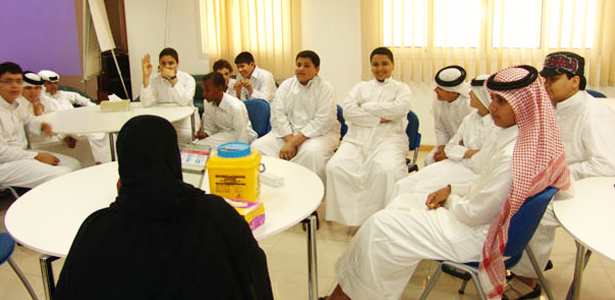
This Connecticut-sized nation, sticking out like a loose tooth in the Persian Gulf, is one of the most obese nations in the world, with residents fatter, on average, than even those of the United States, which often takes the cake in such competitions.
According to recent studies, roughly half of adults and a third of children in Qatar are obese, and almost 17 percent of the native population suffers from diabetes. By comparison, about a third of Americans are obese, and eight percent are diabetic. Qatar also has very high rates of birth defects and genetic disorders — problems that, along with the prevalence of obesity (PDF) and diabetes, have worsened in recent decades, according to local and international health experts.
So what’s going wrong in little Qatar?
Qatar also has very high rates of birth defects and genetic disorders — problems that have worsened in recent decades.
To misappropriate a well-worn phrase: It’s the economy, stupid. In September, Qatar officially became the richest nation in the world, as measured by per capita gross domestic product. It also recently became the world’s biggest exporter of natural gas, and earned the title of fastest growing economy in the world. By international development standards, all this growth has happened virtually overnight, making Qataris’ lifestyles much more unhealthy, and at the same time leading many to hang on resolutely to what’s left of their fleeting tribal traditions — practices that include inter-marriage between close family members and cousins.
“They’re concentrating the gene pool, and at the same time, they’re facing rapid affluence,” said Sharoud Al-Jundi Matthis, the program manager at the Qatar Diabetes Association, a government funded health center in Doha, the capital. As a result of these factors, Qataris are becoming obese, passing on genetic disorders at an alarming rate, and getting diabetes much more often than others around the world. They’re also getting diabetes a decade younger than the average age of onset, which is pushing up rates of related illnesses and complications, like hypertension, blindness, partial paralysis, heart disease, and loss of productivity. “It’s a very, very serious problem facing the future of Qatar,” Matthis said.
It’s a fascinating read, not too long, little more than double what you have already read. You can read the entire article by clicking HERE: The Atlantic
Thank you, John, for the recomendation.
Contagion
As we rushed into the house, we both headed immediately to our bathrooms to wash our hands. Twice. And I also washed my face.
Contagion is a very intelligent movie. It is scary, but not in the Friday the 13th kind of scary, or in the Night of the Living Dead kind of scary, although come to think of it, there were some elements in common with the original Night of the Living Dead. No, what makes Contagion scary is that it could happen so easily.

I had no idea that we touch our faces, on the average, of three to five times a minute, more than 3,000 times a day, and that with every surface we touch, we transfer (germs) (bacteria) (things that could make you sick) close to an entry to your body, like your nostrils and your mouth. Once you start thinking about NOT touching your face, you become aware of how often you touch your own face, unaware. Like flipping hair out of your eyes, or covering your mouth when you laugh, or a million other things like that. You become aware of all the things you touch between the time you wash your hands and touch your food. You think about who may have touched your fork, and how well it was washed.
For me, the scariest part of the movie, beyond how quickly the virus mutated and spread, was how quickly civil society broke down when cities were quarantined, when people were concerned food was growing scarce, when people thought they had to fight for survival. The rules for avoiding spreading the virus were not to meet, not to touch, to stay apart. It’s hard to help one another when those rules are in play, but those rules make it easier for those without rules to attack and take what they can.
I liked the music in the movie, too, very edgy.
Before I ever saw this movie, I heard an interview with the author on NPR. She was saying that when they came to her wanting to make this movie, she said “it cannot start in Africa. . . (there were a whole bunch of rules, which were hilarious because they were like every plot for a movie like this ever made) I knew I needed to see this movie, to see how it could be done and still be dramatic, and follow her rules.
There is one hilarious quote. A blogger in this movie gains enormous following. As he is tracking down one of the scientists for information, the scientist says to him:
Blogging is not writing. It’s just graffiti with punctuation.
Excuse me, gotta go wash my hands again.
Neighbors Key to Survival
“Americans don’t know their neighbors” my dinner guest said, in response to my asking him what surprises him most in his visit to this country. “In my country, we all know our neighbors. It’s important to know your neighbors.”
I agreed, and quoted him this article supporting his view that I heard on National Public Radio, one of those ideas I hear so often on NPR because they cover news other news sources ignore.
Below is just a portion of the story, which you can read in whole by clicking on this blue type. Even better, if you want, you can listed to the story yourself by clicking on the “Listen to the Story: All things Considered” button on this same page.

When Hurricane Katrina struck in 2005, one victim was political scientist Daniel Aldrich. He had just moved to New Orleans. Late one August night, there was a knock on the door.
“It was a neighbor who knew that we had no idea of the realities of the Gulf Coast life,” said Aldrich, who is now a political scientist at Purdue University in Indiana. He “knocked on our door very late at night, around midnight on Saturday night, and said, ‘Look, you’ve got small kids — you should really leave.’ ”
The knock on the door was to prove prophetic. It changed the course of Aldrich’s research and, in turn, is changing the way many experts now think about disaster preparedness.
Officials in New Orleans that Saturday night had not yet ordered an evacuation, but Aldrich trusted the neighbor who knocked on his door. He bundled his family into a car and drove to Houston.
“Without that information we never would’ve left,” Aldrich said. I think we would’ve been trapped.”
In fact, by the time people were told to leave, it was too late and thousands of people got stuck.
Because of his own experience in Katrina, Aldrich started thinking about how neighbors help one another during disasters. He decided to visit disaster sites around the world, looking for data.
Aldrich’s findings show that ambulances and firetrucks and government aid are not the principal ways most people survive during — and recover after — a disaster. His data suggest that while official help is useful — in clearing the water and getting the power back on in a place such as New Orleans after Katrina, for example — government interventions cannot bring neighborhoods back, and most emergency responders take far too long to get to the scene of a disaster to save many lives. Rather, it is the personal ties among members of a community that determine survival during a disaster, and recovery in its aftermath.
When Aldrich visited villages in India hit by the giant 2004 tsunami, he found that villagers who fared best after the disaster weren’t those with the most money, or the most power. They were people who knew lots of other people — the most socially connected individuals. In other words, if you want to predict who will do well after a disaster, you look for faces that keep showing up at all the weddings and funerals.
“Those individuals who had been more involved in local festivals, funerals and weddings, those were individuals who were tied into the community, they knew who to go to, they knew how to find someone who could help them get aid,” Aldrich says.
My visiting guest was from Lebanon, where neighbors have relied on one another for years as civil unrest rocks the country.
“I am guessing we move more often than your family and friends,” I ventured. “You are right, it is harder to establish long-lasting neighborly relations here where people come and go more often.”
Actually, we have settled in a fairly established neighborhood, where many people around us have lived for years and years, some all their lives. But we have only been here a year, and it takes time to build strong neighborly relations. But we are aware that connecting with our neighbors and staying connected is important in a part of the country vulnerable to life-threatening hurricanes and other natural emergencies.
You can listen to the entire report in 6 minutes and 3 seconds here.
HIV Epidemic Emerging in Middle East and North Africa
Recently published on National Public Radio is a study showing that governments are quietly gathering statistics on the rising tide of HIV infections in the Middle East and North Africa, but they don’t want those statistics published:
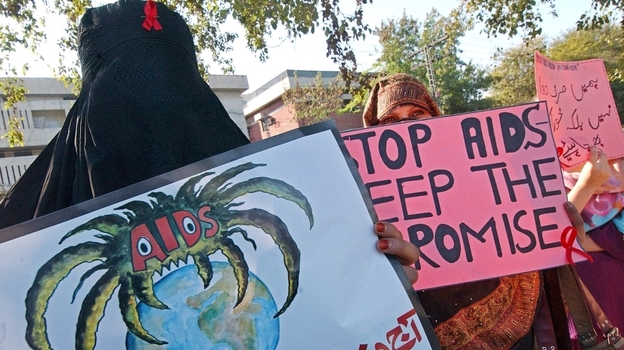
HIV epidemics are emerging among men who have sex with men in the Middle East and North Africa, researchers say. It’s a region where HIV/AIDS isn’t well understood, or studied.
More than 5 percent of men who have sex with men are infected by HIV in countries including Egypt, Iran, Lebanon, Morocco, Sudan and Tunisia, according to a recent study in PLoS Medicine. In one group of men in Pakistan, the rate of infection was about 28 percent. (For reference, in 2008, rates of HIV infection among men who have sex with men in the U.S. ranged from 16 percent among white men up to 28 percent of black men, according to the CDC.)
Risky behavior, low condom use, injectable drug use and male sex workers are some of the factors that could cause HIV rates to rise in the region, the researchers say. On average, the men who have sex with men group had between four and 14 sexual partners within the past six months, with consistent condom use falling below 25 percent.
Lack of HIV surveillance and low access to treatment and prevention are a concern for researchers, who believe the window of opportunity to prevent the epidemic from spreading across the region is growing smaller.
Shots had a chance to speak with one of the study’s authors, Dr. Laith Abu-Raddad, assistant professor of public health at the Weill Cornell Medical College in Qatar, to discuss the challenges of researching such a taboo topic.
What made you decide to pursue this study?
There are some political and community leaders who believe that our region is not affected by the epidemic. While others, such as HIV activists, believe that men having sex with men behavior is hidden, so HIV data must be hidden. They have called it the “HIV epidemic behind the veil.” It occurred to me that these are very contrasting views, and the truth must be out there somewhere.
I started this work eight years ago, to get every piece of evidence that we have on HIV. Turns out that there are more data than we think. The regions are not hiding the data, it’s just a sensitive issue. These issues aren’t discussed like in the western media. But it doesn’t mean that the government isn’t dealing with it. Governments do have programs such as active non-government organizations, NGOs, working with groups that are infected.
What surprised you about the findings?
Certain countries did surprise us with the work they’ve done. In Iran, they target the population of drug users. When Iran discovered HIV among drug users, they created programs that offered drug users access to treatment, and gave them free clean needles and syringes.
Many governments don’t want to provide HIV treatment or counseling directly. They support NGOs financially and logistically to help treat communities affected. It’s a way for them to protect people without raising sensitive issues of sexual and drug use behaviors that are often controversial.
What challenges did you face while gathering evidence?
There were some governments that gave us their data on the condition that we didn’t publish it. They want to deal with this issue, but they see no reason to raise it to the public. There were governments who did not want to release data. I can’t tell you which countries, since we have long-standing relationships with them. But we managed to convince some of them that the data would be used purely for scientific research and not used against them by the media.
What do you hope to accomplish from this study?
To raise awareness among policy makers. Hopefully, governments will make changes to policy. Surprisingly, the No. 1 barrier is poor research capacity in this region. If we don’t have the scientific data, we can’t have effective policy. We need to have an effective surveillance program, so we can help prevent further HIV transmission.
This part of the world is seen as not addressing the epidemic. Countries like Iran, Morocco and Egypt are developing programs and working with NGOs. But other countries haven’t yet improved their services to the public. But we hope they will.
As Bad as the Rest of Us
I laughed out loud while listening to my NPR station, WUWF in Pensacola. The interview was on Talk of the Nation, Science Friday, and if you click on the blue type, it will take you to the 12 minute interview. I laughed because he starts out telling us that we’re all pretty much the same, and that people who live longer have some tiny genetic differences.
I think of how hard we work to live long and prosper, how we try to control our fat foods, our salt, how we try to exercise more and to live faith-filled lives, all of which have been shown to correlate with longer lives. Only 7% of the long-lived people studied claimed a spiritual foundation. One 95 year old woman continued to be a heavy smoker. A good portion of the long-lived women did not have children. Men who survived to a ripe old age, they tell us, tend to be in much better shape than the women.
My grandmother lived to 105, and I have always wondered if I would be one of those who also lived long. Author Nir Barzilai discusses his study of people who live long lives and tells us that counter to popular wisdom, most of them had the same bad habits the rest of us had – many smoked, right up into their old age, drank, and ate sugary and fatty foods.
“We humans age at different rates,” the author states, and those who live long have good genetics – particularly a high HDL, the good cholesterol.
Now they are studying the particulars of the genes to further unlock the secrets to longevity.
AdventureMan and I love these Toyota commercials about older people and social networking 🙂
Statistics Anomaly
Yesterday, I had over two thousand hits on the blog, after a year of sliding statistics, which I attribute to being less interesting now that I no longer live in exotic locations, post the Kuwait sunrise (I used to have a loyal clientele of Kuwaiti students off at university who loved seeing the sunrise in Kuwait every day), and that blogging is not so new and exciting. I’m not blogging as conscientiously as I used to – I don’t have the time I used to have.
This morning, as I check the blog, I can see I have almost as many hits by nine this morning as I had yesterday. It makes me smile – here is what the most hit-upon posts are:

Ramadan is coming! Ramadan Mubarak, Ramadan Kareem to all those waiting so eagerly for Ramadan to begin.
Last night we had a big dinner for my Mom’s birthday, and got to hear a shred of conversation I wanted to share with you. I was sitting next to an old family friend, famous for asking questions that will start a conversation that could last the rest of the evening, and across the table was Little Diamond, my niece, actually now Professor Diamond. 🙂 If we were German, we would call her Professor Doctor Diamond 🙂
Our friend asked her what had surprised her the most about teaching on the college level and she answered that as she is teaching her culture classes, she brought up plural marriages, and it was simply a non-issue. She said there are a couple of shows, Sister-Wives and Big Love, and all the kids have seen them and know what plural marriage is all about – at least in the United States. She said it was a big change, that plural marriage used to be a hot topic, but now, not-so-much. It was fascinating.
Men, Porsches and Peacocks
Women! If you want to get married, stay away from the guys who drive the flashy cars!
I found this hilarious study on AOL Health News:
Are Men Who Flaunt Flashy Cars Not the ‘Marrying Kind?’
Conspicuous spending often driven by desire to have flings, researchers say.
By Mary Elizabeth Dallas, HealthDay News
SATURDAY, June 18 (HealthDay News) — Men who drive Porsches or flaunt other flashy possessions are usually not the “marrying kind,” a new study suggests.
Researchers from Rice University, the University of Texas-San Antonio (UTSA), and the University of Minnesota found that conspicuous spending by men is often driven by the desire to have uncommitted romantic flings. They also pointed out that although flashy spending may get a woman’s attention, she won’t be picking out china patterns any time soon.
“This research suggests that conspicuous products, such as Porsches, can serve the same function for some men that large and brilliant feathers serve for peacocks,” study author Jill Sundie, an assistant professor of marketing at UTSA, said in a news release from Rice University.
Just as peacocks flaunt their brightly colored tails to attract potential mates, certain men show off flashy products, like brightly colored sports cars, to draw the attention of women, the study found. The researchers also indicated that the men who pursued this strategy were only interested in short-term sexual relationships with women.
Mileage Makes Me Smile
We just got back from our road trip. This time we took my little Rav4 since I barely put 5,000 miles on it this last year. We put 2255 miles on it, and (Ta DA!) we got an amazing 28.814945436888241 miles per gallon during the trip, even counting all the in-town travel we did in Pittsburgh (yes, photos and write-up to follow, first we have to get unpacked and I have to get some laundry started.)
Back a long long time ago, when I was in 6th grade, my parents took us out of school for a road trip, and my teacher gave me several assignments I had to do while I was gone those two weeks. One assignment was to keep track of the mileage, the gas consumption, and to figure the miles per gallon. (I also had to keep a daily journal, and to see how many different state license plates I could find while we travelled.) I’m such a geek, keeping track of gas mileage has fascinated me ever since. Cars do so many things better than they every used to. Nearly 29 mpg makes me smile.
Travel over the Memorial Day weekend also made us smile. We expected horrendous traffic and found calm, rational driving everywhere we went, even through the larger cities. . . it was heaven.
I love road trips. I get time with my husband, I have him all to myself and as we drive along every now and then he will start talking and – after all these years – I will learn something new about my husband. Someone makes the bed I sleep in and irons the sheets. Someone fixes my meals, and I get to eat what I want. I get to see new things and take a few photos. This trip we got to spend time with a very special group of friends we grew close to in Doha . . . What’s not to love?
Recent Comments
ExpatAlien on What Country am I Living … intlxpatr on Yellowstone: Old Faithful to C… Michelle on Yellowstone: Old Faithful to C… Cathy on No Grown-Ups in Charge intlxpatr on Waiting for Snow Wikipedia Donate Button

Amazina


Early Voting in Florida


 Here There and Everywhere