Laugh and Live Longer?
Found this fascinating article today in AOL News/HuffPost.
Do those who laugh the most live the longest?
Possibly so, according to a new study in the journal Aging.
Researchers from Albert Einstein College of Medicine and Yeshiva University found that people who possess certain personality traits based in genetics may live longer lives — particularly those who are optimistic, laugh a lot and are easygoing.
The study was based on an analysis of 243 people with an average age of 97.6. These people were part of a bigger study, called the Longevity Genes Project at Albert Einstein College of Medicine, which examines 500 Ashkenazi Jews ages 95 and older (Ashkenazi Jews are genetically homogenous, researchers said), as well as 700 of their offspring.
“When I started working with centenarians, I thought we’d find that they survived so long in part because they were mean and ornery,” study researcher Dr. Nir Barzilai, M.D., director of Einstein’s Institute for Aging Research, said in a statement.
“But when we assessed the personalities of these 243 centenarians, we found qualities that clearly reflect a positive attitude towards life,” he said. “Most were outgoing, optimistic and easygoing. They considered laughter an important part of life and had a large social network. They expressed emotions openly rather than bottling them up.”
The researchers also found that the study participants scored lower on tests for neurotic personality and scored higher on tests for conscientiousness, compared with comparable scores for the U.S. population.
Last year, a study in the journal Proceedings of the National Academy of Sciences showed that older people who are happy have a 35 percent lower risk of dying over a five-year period than unhappy people. That study included 3,853 people ages 52 to 79.
“The happiness could be a marker of some other aspect of people’s lives which is particularly important for health,” study researcher Andrew Steptoe, a professor at University College, London, told The Telegraph. “For example, happiness is quite strongly linked to good social relationships, and maybe it is things like that that are accounting for the link between happiness and health.”
Saturday Stat Anomaly
I’m sitting here in my office, organizing some photos and verbiage into another entry to be time-shifted and I notice my stat page looks very strange. Like, it’s Saturday. It’s pretty steady, and the lowest day of the week. What I see is this:

It keeps blogging fun. Every now and then something weird happens, and there is nothing I know that can explain it. Someone has shared a minor article I wrote over a year ago, and in one hour, it’s sent my stats totally out of whack.
Florida Ranks #1 in the Nation for Identity Theft and Fraud; Pensacola #10 Beauty-Obsessed City in US

Just yesterday, I gasped when I learned that Time Magazine ranked Pensacola of all the cities in the USA, #10 in “Obsession with Beauty” as measured by internet access to sites for buying make-up and cosmetics at sites like Sephora and Ulta. New York and Miami didn’t make the list.
Then I understood. We don’t have a Sephora in Pensacola. We don’t have an Ulta. To get specialized make-ups like Urban Decay, you go online, to Sephora. Yep. Guilty. But it must take a lot of Pensacolians buying a lot of make-up online to make us #10 of all the beauty-obsessed cities in the USA.
Phthalates Risk Factor for Diabetes
A Swedish study, posted on AOL Everyday Health News, indicates we heighten our risk of diabetes with repeated exposures to phthalates common in items we use every day of our lives . . .
HealthDay News
Common Plastics Chemical Might Boost Diabetes Risk
Phthalates, found in soaps, lotions and food packaging, may disrupt insulin production, researchers say.
By Steven Reinberg, HealthDay News
THURSDAY, April 12, 2012 (HealthDay News) — High blood levels of chemicals called phthalates, which are found in soaps, lotions, plastics and toys, may double the risk for type 2 diabetes among older adults, Swedish researchers say.
“Our study supports the hypothesis that certain environmental chemicals can contribute to the development of diabetes,” said lead researcher Monica Lind, an associate professor of environmental medicine in the section for occupational and environmental medicine at Uppsala University.
“Most people come into daily contact with phthalates as they are used as softening agents in everyday plastics and as carriers of perfumes in cosmetics and self-care products,” she added.
The study’s implications “must be to cut down on plastics and choose self-care products without perfumes,” Lind said.
But the research does not prove cause and effect. To find out whether phthalates (pronounced THAL ates) truly are risk factors for diabetes, further studies are needed that show similar associations, she said.
“Experimental studies are also needed regarding what biological mechanisms might underlie these connections,” Lind stressed.
The report was published online April 12 and in the June print edition of Diabetes Care.
For the study, Lind’s team collected data on more than 1,000 Swedish men and women, age 70, who took part in the Prospective Investigation of the Vasculature in Uppsala Seniors Study.
The researchers measured the participants’ blood sugar, insulin levels and levels of toxins from the breakdown of phthalates.
As expected, they found diabetes was more common among those who were overweight and had high cholesterol.
And they also found an association between blood levels of some phthalates and diabetes. That association remained even after taking into account obesity, cholesterol, smoking and exercise.
For people with high phthalate levels, the risk of developing diabetes was about double compared to those with lower levels, the investigators found.
Some phthalates were also linked to disrupted insulin production, the researchers said. Insulin is a hormone that helps deliver blood sugar into the body’s cells for energy. Without insulin, or with too little of the hormone, too much sugar stays in the blood, setting the stage for diabetes.
“Even at relatively low levels of phthalate in the blood, the risk of getting diabetes begins to rise,” Lind added.
Other studies have linked these chemicals with breast growth in boys and reproductive problems in men, possibly caused by estrogen disruption.
Phthalates are used in hundreds of products, such as toys, vinyl flooring and wall coverings, detergents, lubricating oils, food packaging, pharmaceuticals, blood bags and tubing, according to information from the U.S. Food and Drug Administration. Personal care products, such as nail polish, hair sprays and shampoos, also contain phthalates.
At present, “the FDA does not have compelling evidence that phthalates, as used in cosmetics, pose a safety risk,” according to the FDA website.
In the United States, companies are not required to test the long-term health effects of chemicals before using them in consumer products. Lind said this means the dangers of hazardous chemicals aren’t known until they are already widely used.
Lind said the health effects of chemicals should be tested before they reach the consumer market similar to the way drugs get tested before being approved.
“We are looking at a tip of an iceberg,” she said in terms of a possible health crisis. “We are just scratching the very top of the iceberg.”
The way the system is designed, if phthalates were banned, they would be replaced by other chemicals about which even less is known, Lind said.
According to the Environmental Working Group, a group trying to rid hazardous chemicals from consumer products, there is no practical way to choose phthalate-free products. Sometimes the print on ingredient labels is too small to read, and different names are often used for the same plasticizing chemicals. And some products lack ingredient labels even though they’re required by federal regulations.
That said, some of the names to look for in cosmetics, self-care products, solid air fresheners, and scented candles are: mono-methyl phthalate (MMP), mono-ethyl phthalate (MEP) and mono-isobutyl phthalate (MiBP), which are types of the chemicals dimethylphthalate (DMP), diethyl phthalate (DEP) and di-isobutyl phthalate (DiBP). DMP is also used in ink and as a softening agent in plastics.
New Stats on WordPress
When I went to my Stat page today, I found a new presentation – the countries my visitors are from, listed and in color codes on a map:

Pretty cool, hmmm?
While most of my visitors are from the US, I still get a substantial number from Kuwait and Qatar. 🙂
Teach Your Teen to Negotiate
I found this article on the National Public Radio Health Page; with the title Why a Teen Who Talks Back may have a Bright Future. It has to do with teaching your teen to talk problems through confidently; researchers found teens who could express themselves confidently had a greater likelihood of turning down offers of illegal drugs or behaviors.

It is interesting to me, too, that the Dutch who had the courage to shelter the Jews during the Holocaust were those who had learned to think independently as teenagers.
If you’re the parent of a teenager, you likely find yourself routinely embroiled in disputes with your child. Those disputes are the symbol of teen developmental separation from parents.
It’s a vital part of growing up, but it can be extraordinarily wearing on parents. Now researchers suggest that those spats can be tamed and, in the process, provide a lifelong benefit to children.
Researchers from the University of Virginia recently published their findings in the journal Child Development. Psychologist Joseph P. Allen headed the study.
Allen says almost all parents and teenagers argue. But it’s the quality of the arguments that makes all the difference.
“We tell parents to think of those arguments not as nuisance but as a critical training ground,” he says. Such arguments, he says, are actually mini life lessons in how to disagree — a necessary skill later on in life with partners, friends and colleagues on the job.
Teens should be rewarded when arguing calmly and persuasively and not when they indulge in yelling, whining, threats or insults, he says.
In Allen’s study, 157 13-year-olds were videotaped describing their biggest disagreement with their parents. The most common arguments were over grades, chores, money and friends. The tape was then played for both parent and teen.
“Parents reacted in a whole variety of ways. Some of them laughed uncomfortably; some rolled their eyes; and a number of them dove right in and said, ‘OK, let’s talk about this,'” he says.
It was the parents who said wanted to talk who were on the right track, says Allen. “We found that what a teen learned in handling these kinds of disagreements with their parents was exactly what they took into their peer world,” with all its pressures to conform to risky behavior like drugs and alcohol.
Allen interviewed the teens again at ages 15 and 16. “The teens who learned to be calm and confident and persuasive with their parents acted the same way when they were with their peers,” he says. They were able to confidently disagree, saying ‘no’ when offered alcohol or drugs. In fact, they were 40 percent more likely to say ‘no’ than kids who didn’t argue with their parents.
For other kids, it was an entirely different story. “They would back down right away,” says Allen, saying they felt it pointless to argue with their parents. This kind of passivity was taken directly into peer groups, where these teens were more likely to acquiesce when offered drugs or alcohol. “These were the teens we worried about,” he says.
Bottom line: Effective arguing acted as something of an inoculation against negative peer pressure. Kids who felt confident to express themselves to their parents also felt confident being honest with their friends.
So, ironically the best thing parents can do is help their teenager argue more effectively. For this, Allen offers one word: listen.
In the study, when parents listened to their kids, their kids listened back. They didn’t necessarily always agree, he says. But if one or the other made a good point, they would acknowledge that point. “They weren’t just trying to fight each other at every step and wear each other down. They were really trying to persuade the other person.”
Acceptable argument might go something like this: ‘How about if my curfew’s a half hour later but I agree that I’ll text you or I’ll agree that I’ll stay in certain places and you’ll know where I’ll be; or how about I prove to you I can handle it for three weeks before we make a final decision about it.”
Again, parents won’t necessarily agree. But “they’ll get across the message that they take their kids point of view seriously and honestly consider what they have to say,” Allen says.
Child psychologist Richard Weissbourd says the findings bolster earlier research that finds that “parents who really respect their kids’ thinking and their kids’ input are much more likely to have kids who end up being independent thinkers and who are able to resist peer groups.”
Weissbourd points to one dramatic study that analyzed parental relationships of Dutch citizens who ended up protecting Jews during World War II. They were parents who encouraged independent thinking, even if it differed from their own.
So the next time your teenager huffs and puffs and starts to argue, you might just step back for a minute, take a breath yourself, and try to listen. It may be one of the best lessons you teach your child.
2011 List of the 25 Worst Passwords
Found this on aol.finance.com where you can read the entire article.
SplashData compiled its list — released Monday — from files containing millions of stolen passwords posted online by hackers.
1. password
2. 123456
3. 12345678
4. qwerty
5. abc123
6. monkey
7. 1234567
8. letmein
9. trustno1
10. dragon
11. baseball
12. 111111
13. iloveyou
14. master
15. sunshine
16. ashley
17. bailey
18. passwOrd
19. shadow
20. 123123
21. 654321
22. superman
23. qazwsx
24. michael
25. football
Qatar: The Richest Fattest Nation on Earth
Thank you, reader John, for passing along this fascinating article from The Atlantic:
Qatar is a tiny country with a big problem.
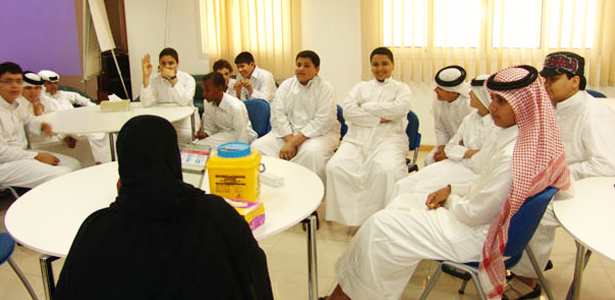
This Connecticut-sized nation, sticking out like a loose tooth in the Persian Gulf, is one of the most obese nations in the world, with residents fatter, on average, than even those of the United States, which often takes the cake in such competitions.
According to recent studies, roughly half of adults and a third of children in Qatar are obese, and almost 17 percent of the native population suffers from diabetes. By comparison, about a third of Americans are obese, and eight percent are diabetic. Qatar also has very high rates of birth defects and genetic disorders — problems that, along with the prevalence of obesity (PDF) and diabetes, have worsened in recent decades, according to local and international health experts.
So what’s going wrong in little Qatar?
Qatar also has very high rates of birth defects and genetic disorders — problems that have worsened in recent decades.
To misappropriate a well-worn phrase: It’s the economy, stupid. In September, Qatar officially became the richest nation in the world, as measured by per capita gross domestic product. It also recently became the world’s biggest exporter of natural gas, and earned the title of fastest growing economy in the world. By international development standards, all this growth has happened virtually overnight, making Qataris’ lifestyles much more unhealthy, and at the same time leading many to hang on resolutely to what’s left of their fleeting tribal traditions — practices that include inter-marriage between close family members and cousins.
“They’re concentrating the gene pool, and at the same time, they’re facing rapid affluence,” said Sharoud Al-Jundi Matthis, the program manager at the Qatar Diabetes Association, a government funded health center in Doha, the capital. As a result of these factors, Qataris are becoming obese, passing on genetic disorders at an alarming rate, and getting diabetes much more often than others around the world. They’re also getting diabetes a decade younger than the average age of onset, which is pushing up rates of related illnesses and complications, like hypertension, blindness, partial paralysis, heart disease, and loss of productivity. “It’s a very, very serious problem facing the future of Qatar,” Matthis said.
It’s a fascinating read, not too long, little more than double what you have already read. You can read the entire article by clicking HERE: The Atlantic
Thank you, John, for the recomendation.
Contagion
As we rushed into the house, we both headed immediately to our bathrooms to wash our hands. Twice. And I also washed my face.
Contagion is a very intelligent movie. It is scary, but not in the Friday the 13th kind of scary, or in the Night of the Living Dead kind of scary, although come to think of it, there were some elements in common with the original Night of the Living Dead. No, what makes Contagion scary is that it could happen so easily.
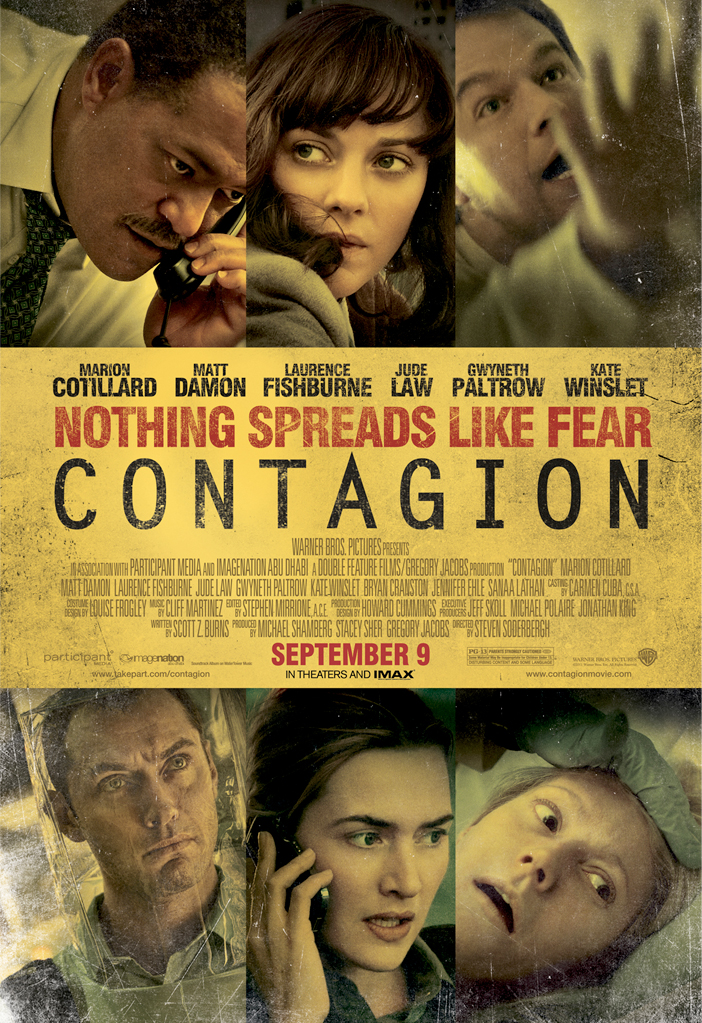
I had no idea that we touch our faces, on the average, of three to five times a minute, more than 3,000 times a day, and that with every surface we touch, we transfer (germs) (bacteria) (things that could make you sick) close to an entry to your body, like your nostrils and your mouth. Once you start thinking about NOT touching your face, you become aware of how often you touch your own face, unaware. Like flipping hair out of your eyes, or covering your mouth when you laugh, or a million other things like that. You become aware of all the things you touch between the time you wash your hands and touch your food. You think about who may have touched your fork, and how well it was washed.
For me, the scariest part of the movie, beyond how quickly the virus mutated and spread, was how quickly civil society broke down when cities were quarantined, when people were concerned food was growing scarce, when people thought they had to fight for survival. The rules for avoiding spreading the virus were not to meet, not to touch, to stay apart. It’s hard to help one another when those rules are in play, but those rules make it easier for those without rules to attack and take what they can.
I liked the music in the movie, too, very edgy.
Before I ever saw this movie, I heard an interview with the author on NPR. She was saying that when they came to her wanting to make this movie, she said “it cannot start in Africa. . . (there were a whole bunch of rules, which were hilarious because they were like every plot for a movie like this ever made) I knew I needed to see this movie, to see how it could be done and still be dramatic, and follow her rules.
There is one hilarious quote. A blogger in this movie gains enormous following. As he is tracking down one of the scientists for information, the scientist says to him:
Blogging is not writing. It’s just graffiti with punctuation.
Excuse me, gotta go wash my hands again.
Recent Comments
intlxpatr on Shampoo Ginger tigerbutterya0c5ff1d… on Shampoo Ginger intlxpatr on British Soldier Kidnapped, Esc… John on British Soldier Kidnapped, Esc… intlxpatr on British Soldier Kidnapped, Esc… Wikipedia Donate Button

Amazina


Early Voting in Florida


