Rare Hybrid Eclipse Visible This Weekend
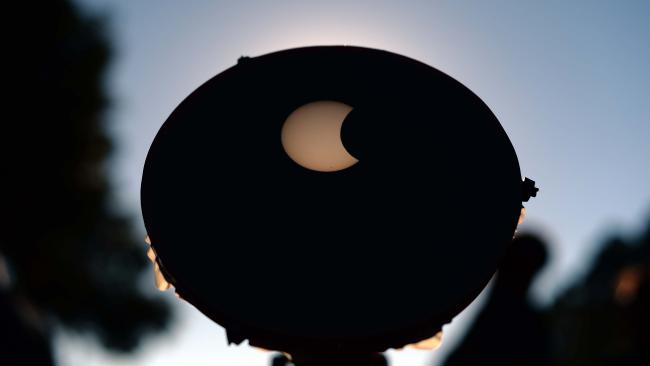
The cosmos have saved a special treat for the final eclipse of 2013.
On Sunday, Nov. 3, a “hybrid” solar eclipse will be visible from the eastern coast of North America to Europe all the way to parts of Africa and the Middle East, according to an EarthSky.com report. The eclipse will begin over North America at sunrise and will move east through sunset on Sunday evening.
This eclipse is known as a hybrid because it will start as an annular eclipse before the Moon’s orbit gets close enough to Earth to become a total eclipse, reports Universe Today. Of the nearly 12,000 solar eclipses that have occurred since 1999 BC, fewer than five percent are hybrid eclipses, the report also states.
You can see an animated image of the eclipse’s shadow below.

Credit: NASA/Goddard Space Flight Center
According to the Washington Post, Washington, D.C. residents can expect to see the annular eclipse begin at 6:38 a.m. and will last for about 30 minutes. Areas to the east can expect the eclipse to last a few more minutes, and they will see slightly more of the sun’s area covered by the annular eclipse.
As for the solar eclipse, only the easternmost points of North America will briefly see it, which excludes all of the United States.
Also, remember to turn back your clocks on Saturday night with Daylight Saving Time ending early Sunday morning, before the eclipse begins, to ensure you don’t miss the celestial event.
This will be 2013’s fifth eclipse overall and the second solar eclipse of the year, Universe Today says.
MRSA Link to Pigs

From Nature.com News:
People living near pig farms or agricultural fields fertilized with pig manure are more likely to become infected with methicillin-resistant Staphylococcus aureus (MRSA) bacteria, according to a paper published today in JAMA Internal Medicine1.
Previous research has found that livestock workers are at high risk of carrying MRSA, compared to the general population2. But it has been unclear whether the spreading of MRSA through livestock puts the public at risk of infection.
The study examined the incidence of infections in Pennsylvania, where manure from pig farms is often spread on crop fields to comply with state regulations for manure disposal. Researchers reviewed electronic health-care records from patients who sought care from the Pennsylvania-based Geisinger Health System (which helped to fund the study) in 2005–10.
The team analysed cases of two different types of MRSA — community-associated MRSA (CA-MRSA), which affected 1,539 patients, and health-care-associated MRSA (HA-MRSA), which affected 1,335 patients. (The two categories refer to where patients acquire the infection as well as the bacteria’s genetic lineages, but the distinction has grown fuzzier as more patients bring MRSA in and out of the hospital.)
Then the researchers examined whether infected people lived near pig farms or agricultural land where pig manure was spread. They found that people who had the highest exposure to manure — calculated on the basis of how close they lived to farms, how large the farms were and how much manure was used — were 38% more likely to get CA-MRSA and 30% more likely to get HA-MRSA.
The researchers also analysed 200 skin, blood, and sputum samples isolated from patients in the same health-care system in 2012. The MRSA strains found in those samples are commonly found in humans. Researchers did not find any evidence of bacteria belonging to clonal complex 398 (CC398), a MRSA strain classically associated with livestock and found in farms and farmworkers in many previous studies.
However, there is little information about which MRSA strains are most common on US farms, so the absence of CC398 is not a sign that MRSA is not being transmitted from livestock to humans. “We’ve done studies in Iowa, we haven’t always found CC398. That’s not too shocking,” says Tara Smith, a microbiologist at Kent State University in Ohio, who was not involved in the study.
Many researchers think that widespread use of antibiotics to encourage growth in farm animals fuels the proliferation of MRSA and other drug-resistant bacteria. The latest findings suggest that manure is helping antibiotic resistance to spread, says Joan Casey, an environmental-health scientist at the Johns Hopkins Bloomberg School of Public Health in Baltimore, Maryland, and a co-author of the study.
“We’ve certainly described a connection we think is plausible,” she says. “We haven’t described every step in the path.”
“It’s a pretty interesting and provocative observation,” says Robert Daum, a paediatrician and the principal investigator of the MRSA Research Center at the University of Chicago in Illinois. He adds that he would like to see similar studies done in different geographic regions, and research to find out whether the MRSA strains carried in pig manure are the same as the MRSA strains found in nearby human infections.
Casey is at work on a follow-up genetics study to identify the most common MRSA strains in the region.
Nature doi:10.1038/nature.2013.13752
References
Casey, J. A., Curriero, F. C., Cosgrove S. E., Nachman, K. E. & Schwartz, B. S. JAMA Intern. Med. http://dx.doi.org/10.1001/jamainternmed/2013.10408 (2013).
Show context
Smith, T. C. et al. PLoS ONE 8, e63704 (2013).
My Travel Must-Have
I don’t like large handbags. I am small; a large bag is disproportionate. At the same time, I wanted a bag big enough to stick my computer in without looking like a briefcase. I wanted to be able to take my computer to Alaska with me.
I looked and looked, searching for the right bag. I looked in Pensacola, I looked online, I looked in Seattle. It had to be the right size, a nice heavy leather, a sturdy leather carry strap, and a neutral color as I was only taking one bag. Finally, at the very last minute I found this wonderful bag, and the computer fit beautifully, leaving room for my camera and wallet – what more do I need, right?

Then, me being me, the night before leaving for Alaska I decided I really did not need to carry a full sized computer, that the iPad had enough capacity and besides, it had books and Sudoku on it. But I still liked the purse; I stuck a nightshirt inside in case my luggage got lost, it has a side zip pocket for tickets, car rental brochures and car keys, and with everything inside, it was still roomy and not too heavy. It is wonderful boarding airplanes with just a purse!
By the end of the trip, I was in love. It is a great bag, goes everywhere, can be filled or used with little, it is versatile. I love this bag!
Get Ready For the Harvest Moon

From Weather Underground News where you can read the entire article by clicking on the blue type:
Get ready for the Harvest Moon. Depending on where you live on the planet, it’s either Wednesday or Thursday of this week.
“In traditional skylore, the Harvest Moon is the full moon closest to the autumnal equinox,” EarthSky reports, “and depending on the year, [it] can come anywhere from two weeks before to two weeks after the autumnal equinox.” For 2013, that changing of the seasons happens on September 22 — just a few days from now.
Unlike the Blue Moon we covered back in August, the Harvest Moon behaves differently than a typical full moon. “Throughout the year, the moon rises, on average, about 50 minutes later each day,” according to NASA Science News. “But near the autumnal equinox … the day-to-day difference in the local time of moonrise is only 30 minutes.” Why does that matter? Simply put, agriculture.
“In the days before electric lights, farmers depended on bright moonlight to extend the workday beyond sunset,” wrote NASA’s Dr. Tony Phillips. “It was the only way they could gather their ripening crops in time for market. The full moon closest to the autumnal equinox became the Harvest Moon, and it was always a welcome sight.”
So my question is this – the Harvest Moon is what we call it, because it gave farmers extra time to bring in the harvest. What do other cultures call it?
Departing Homer for Kodiak and Chenega Bay
Did I mention departures can be ephemeral?
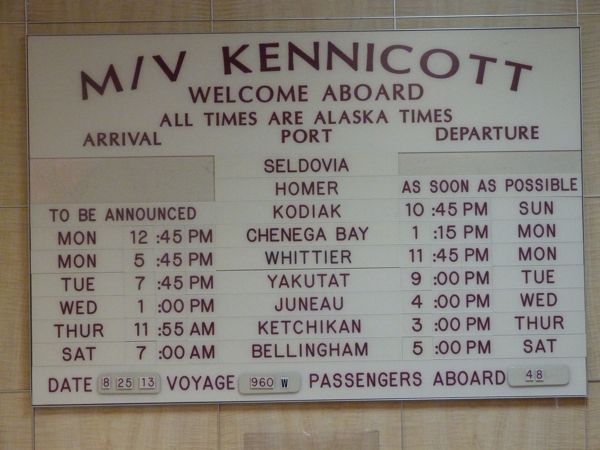
“As soon as possible” can take a long long time when you are boarding cars, motorcycles, even a grown-up tricycle, container vans, campers, R/vs of all shapes and sizes, trucks, and today we learn how it is done. This is truly a marvel of engineering. It must also take some amazing system to keep straight where every vehicle needs to go because they are getting off at different stops, so all the ones getting off at the same stop need to be stored together. Watching all this happen is amazing.
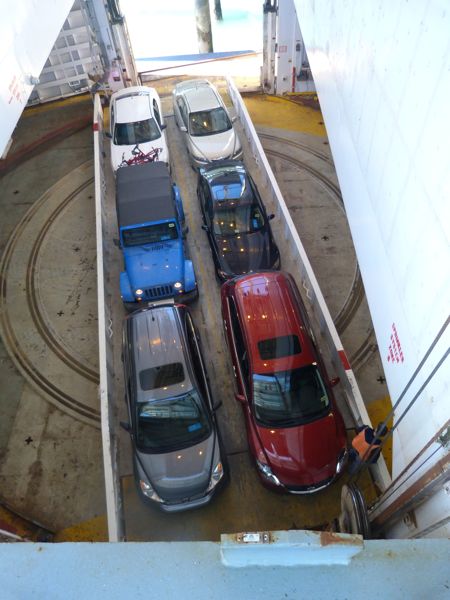
They have this turntable. Cars drive on, we think a maximum of six. The turntable also handles a maximum of one large container truck.
Cars drive on the elevated turntable:
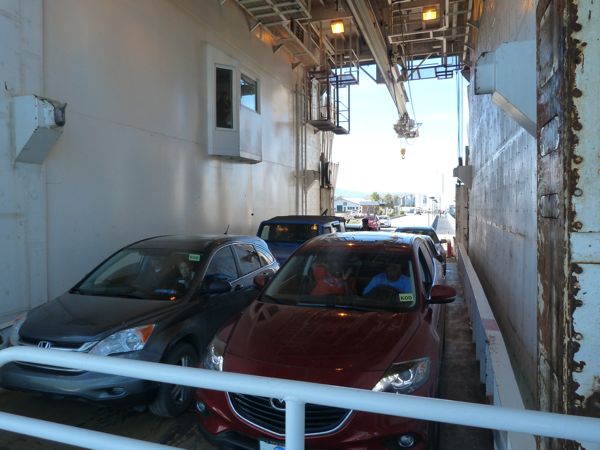
Turntable begins to lower:

Cars reach main deck:

Turntable begins to turn:
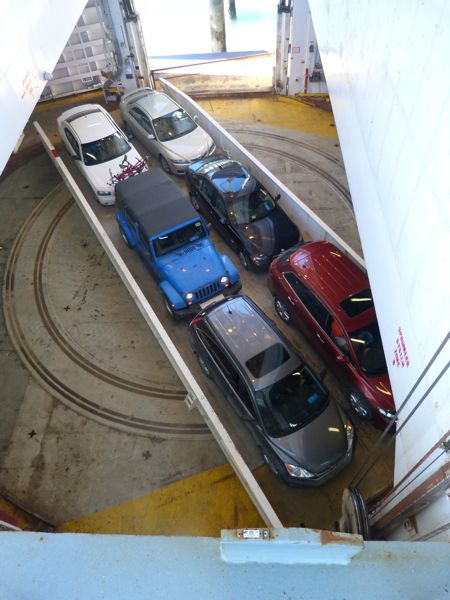
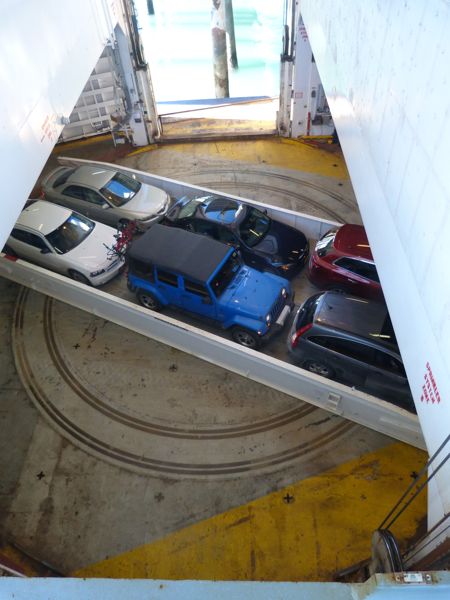
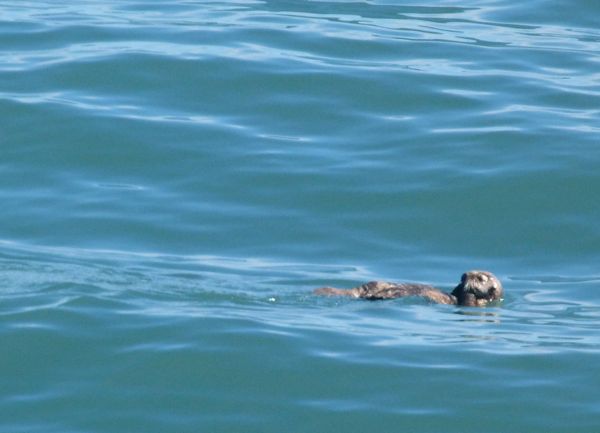
A friendly otter kept us entertained while we waited for all the vehicles to board.
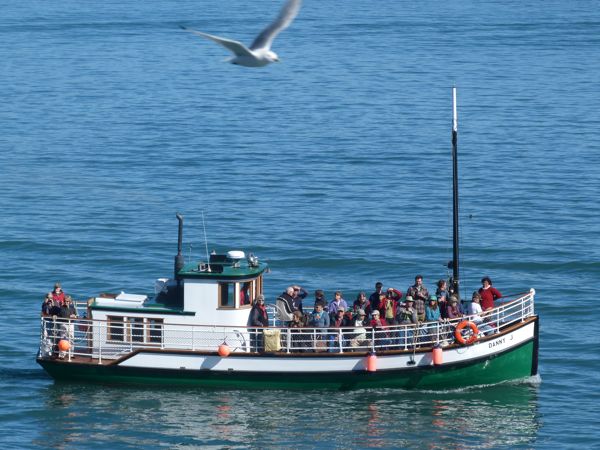
We were told this is one of the Homer small ferries to Kachemak National Park or to Seldovia:
It is another gorgeous day in Homer, and even early in the morning, fishermen and women are on the beach:

It’s a beautiful departure, and somewhere between Homer and Kodiak, we run into a heavy mist near sunset:
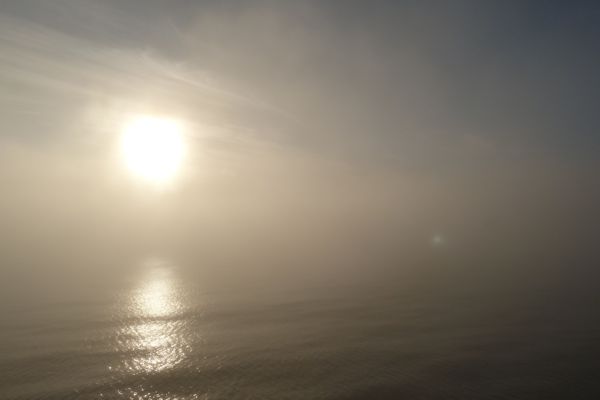
We departed late and will be getting into Kodiak late, so late we sleep right through it. Before we know it, we are departed from Kodiak and en route to Chenega Bay and Whittier.
Sinkholes in Florida
Dont you just love Google? Today I asked Google to find “images sinkholes Florida” hoping I could find some graphic which would show me how often they occur in parts of the state, which is very very long. There it was.

It is not something I ever worried about until the neighborhood we bought a house in near Tampa suddenly had a rash of sinkhole damage and property values plummeted. I was lucky, not only was I not in the “band” of sinkholes, but my house sold very quickly, at the same price we had paid. I breathed a sigh of relief and moved on.
You never know where a sinkhole will suddenly appear, but as the graphic above demonstrates, some places are likelier than others.
Here is an article from today’s AOL Weather News:
ORLANDO, Fla. (AP) – Sections of a building at a resort near Orlando’s theme park district collapsed into a sinkhole late Sunday, forcing the evacuation of 105 guests in the structure and also dozens of visitors staying in two adjacent three-story buildings.

Watch out for those blue zones!
Sinkholes are as much a part of the Florida landscape as palm trees and alligators. Florida has more of them than any state in the nation. Earlier this year, a man near Tampa died when a sinkhole opened up underneath his bedroom.
PHOTOS ON SKYE: Astonishing Sinkholes Around the World
Experts say sinkholes aren’t occurring at a greater rate than usual but that the high-profile nature of recent one in populated areas has drawn attention to them. There also has been a rise in sinkhole claims in Florida, but insurance officials believe some of those claims are questionable. Here are some answers about why sinkholes form and their costs.
WHY ARE THERE SINKHOLES IN FLORIDA?
Florida’s peninsula is made up of porous carbonate rocks such as limestone that store and help move groundwater. Dirt, sand and clay sit on top of the carbonate rock. Over time, these rocks can dissolve from an acid created from oxygen in water, creating a void underneath the limestone roof. When the dirt, clay or sand gets too heavy for the limestone roof, it can collapse and form a sinkhole. Sinkholes are caused naturally but they can be triggered by outside events.
WHAT TRIGGERS SINKHOLES?
Although sinkholes are formed naturally, they can be triggered by heavy rainfall, drought followed by heavy rainfall, tropical storms and human activity. The most common actions by humans that cause sinkholes are heavy pumping of groundwater to spray on oranges and strawberries during freezes to keep them from being damaged, well drilling, excavating, creating landfills, leaking broken water lines and pounding or blasting from construction.
WHERE ARE SINKHOLES MOST COMMON IN FLORIDA?
Three counties in the Tampa region are known as “sinkhole alley.” Two-thirds of thesinkhole damage claims reported to the state Office of Insurance Regulation from 2006 to 2010 came from Hernando, Hillsborough and Pasco counties. Sinkholes are less common in South Florida, home to the state’s two most populous counties – Broward and Miami-Dade.
HOW MANY SINKHOLES OCCUR IN FLORIDA?
The state Office of Insurance Regulation says reported claims from sinkholes have risen in recent years. More than 2,300 claims were reported in Florida in 2006 but that figure jumped to almost 6,700 claims in 2010. There is no geological explanation for the rise and state insurance officials believe many claims are questionable. There must be structural damage to a home for a policyholder to claim a loss from a sinkhole, but insurance officials say claims are often paid without that proof.
HOW MUCH DAMAGE DO SINKHOLES DO?
The state Office of Insurance Regulation says sinkhole claims in Florida cost insurers $1.4 billion from 2006 to 2010.
Air Rage and the Boeing 767
As soon as I got on the plane, I could see the dramatic potential. The planes charge for baggage, unless you have elite status. More and more people are using carry-ons, and there is an exact size. The flight attendants are quick to tell people to put the bags in the ovehead compartment wheels first, and most passengers are already trained to put them in that way. So what happens when you board your flight and your optimal sized bag does NOT fit?
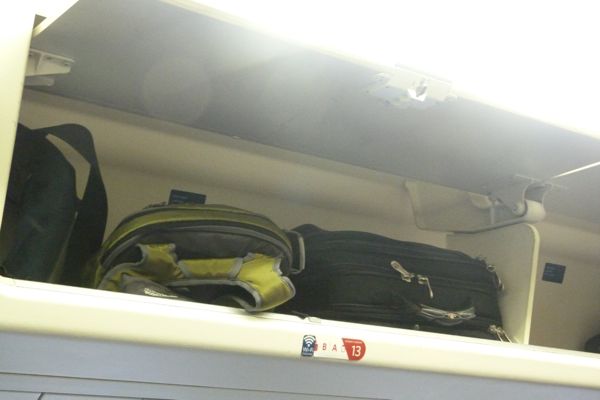
What I saw happen is that the first passengers to board put their suitcases in sideways. Then, as people board for whom there is no room in the overhead containers, they have to move their bags to places where there is room. Chaos, as people try to pass one another going opposite directions in the aisles, carrying luggage too big for the overhead cabinet.

Boeing is a Seattle company, and I’ve always had a lot of loyalty to Boeing. I cannot understand, not for a heartbeat, taking away that extra two or three inches that allowed bags to go in wheels first. It’s dumb, it makes passengers angry and resentful. It makes you hate the airlines.
Perseid Meteor Showers Climax Sunday and Monday Nights
Truly, some of the best moments in life are free. The smell of salt in the air near the sea, pine needles underfoot walking through a forest – and watching meteor showers in a light-free area – an isolated beach, a desert, or out on a boat 🙂
Written by
USA Today and staff reports
Get outside this weekend and check out the shooting stars of summer.
The year’s best celestial fireworks show is on tap in the wee hours of Sunday and Monday as the annual Perseid meteor shower takes center stage in the night sky.
Sky watchers may see as many as 50 to 100 meteors an hour as it peaks in the early morning hours before dawn. But if you don’t want to stay up so late, don’t fret. The reliable shower is known to produce some brilliant meteors between 10 p.m. and midnight, too.
Summer is a perfect time to watch meteors. Plunking down on a blanket or sitting in the dark in a reclining lawn chair works fine. Temperatures in the Pensacola area during the evening are forecast for the mid-70s and there is a chance of an occasional thunderstorm. All you have to do is lie flat on your back and enjoy the show.
The key to seeing meteors is finding a fairly dark sky unspoiled by artificial lighting. If heading to the country or finding a dark beach is not in the cards, the backyard will work fine as an observing platform as long as outside lights are kept off.
Perseids are known for fireballs, brilliant trails of light produced as tiny grains of comet dust slam into the upper atmosphere at nearly 134,000 mph. The shower’s cosmic dust grains — about one-fifth of an inch across — burn nicely as they zip overhead. Those dust grains come courtesy of Comet Swift-Tuttle, which circles the sun once every 133 years and leaves behind a debris trail. (Comets are basically dirty snowballs that develop tails when they approach the sun and start to melt.
“The Perseids are the good ones,” said meteorite expert Bill Cooke of NASA’s Marshall Space Flight Center in Huntsville, Ala.
The Perseids are named after the constellation Perseus, the hero of Greek mythology born from a shower of heavenly gold. As Perseus rises in the northeast sky after midnight, the meteors appear to emanate near the constellation.
You will have to stay up late to see the Perseids at their peak. The best viewing comes from midnight to dawn, particularly after the half-full moon sets both nights after midnight, said Astronomy magazine’s Michael Bakich.
“There will be a dozen ‘Ooh’ moments in that hour,” Bakich said. “Ones when everyone will say, ‘Did you see that?’ ”
Though the shooting stars seem to come from the constellation Perseus, don’t look there to see them, Bakich advises. Instead, look about one-third of the sky down and away from the constellation to spot meteors streaking across the sky.
“That makes them easier to pick out,” he said.
The Shrink-Wrapped Pensacola Specialty Pawn Shop Car
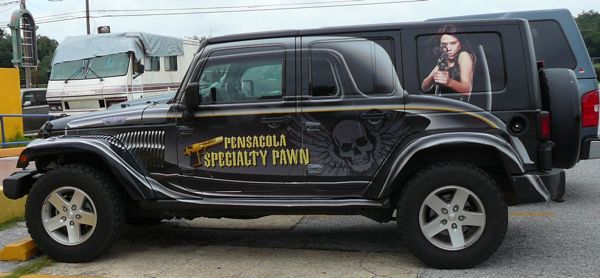
How cool is this? We saw this car at Taco Rock and loved the optical illusion. We also loved it that the car makes a memorable impression; you’ll think of it and you will think Pensacola Specialty Pawn. It’s an effective ad if you remember who the ad is for 🙂
When we walked inside, AdventureMan asked “Whose car is that with the mobster paint job?” and a guy picking up a take-out order grinned and said it was his. He told us it was a shrink-wrap technique – it’s temporary! When you get tired of it and want to try something else, it just peels off and you put something else on. I think that is so totally cool.
Recent Comments
ExpatAlien on What Country am I Living … intlxpatr on Yellowstone: Old Faithful to C… Michelle on Yellowstone: Old Faithful to C… Cathy on No Grown-Ups in Charge intlxpatr on Waiting for Snow Wikipedia Donate Button

Amazina


Early Voting in Florida


 Here There and Everywhere