Air Rage and the Boeing 767
As soon as I got on the plane, I could see the dramatic potential. The planes charge for baggage, unless you have elite status. More and more people are using carry-ons, and there is an exact size. The flight attendants are quick to tell people to put the bags in the ovehead compartment wheels first, and most passengers are already trained to put them in that way. So what happens when you board your flight and your optimal sized bag does NOT fit?
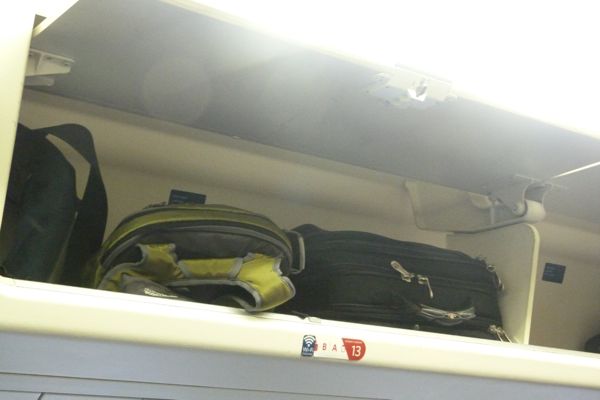
What I saw happen is that the first passengers to board put their suitcases in sideways. Then, as people board for whom there is no room in the overhead containers, they have to move their bags to places where there is room. Chaos, as people try to pass one another going opposite directions in the aisles, carrying luggage too big for the overhead cabinet.

Boeing is a Seattle company, and I’ve always had a lot of loyalty to Boeing. I cannot understand, not for a heartbeat, taking away that extra two or three inches that allowed bags to go in wheels first. It’s dumb, it makes passengers angry and resentful. It makes you hate the airlines.
Perseid Meteor Showers Climax Sunday and Monday Nights
Truly, some of the best moments in life are free. The smell of salt in the air near the sea, pine needles underfoot walking through a forest – and watching meteor showers in a light-free area – an isolated beach, a desert, or out on a boat 🙂
Written by
USA Today and staff reports
Get outside this weekend and check out the shooting stars of summer.
The year’s best celestial fireworks show is on tap in the wee hours of Sunday and Monday as the annual Perseid meteor shower takes center stage in the night sky.
Sky watchers may see as many as 50 to 100 meteors an hour as it peaks in the early morning hours before dawn. But if you don’t want to stay up so late, don’t fret. The reliable shower is known to produce some brilliant meteors between 10 p.m. and midnight, too.
Summer is a perfect time to watch meteors. Plunking down on a blanket or sitting in the dark in a reclining lawn chair works fine. Temperatures in the Pensacola area during the evening are forecast for the mid-70s and there is a chance of an occasional thunderstorm. All you have to do is lie flat on your back and enjoy the show.
The key to seeing meteors is finding a fairly dark sky unspoiled by artificial lighting. If heading to the country or finding a dark beach is not in the cards, the backyard will work fine as an observing platform as long as outside lights are kept off.
Perseids are known for fireballs, brilliant trails of light produced as tiny grains of comet dust slam into the upper atmosphere at nearly 134,000 mph. The shower’s cosmic dust grains — about one-fifth of an inch across — burn nicely as they zip overhead. Those dust grains come courtesy of Comet Swift-Tuttle, which circles the sun once every 133 years and leaves behind a debris trail. (Comets are basically dirty snowballs that develop tails when they approach the sun and start to melt.
“The Perseids are the good ones,” said meteorite expert Bill Cooke of NASA’s Marshall Space Flight Center in Huntsville, Ala.
The Perseids are named after the constellation Perseus, the hero of Greek mythology born from a shower of heavenly gold. As Perseus rises in the northeast sky after midnight, the meteors appear to emanate near the constellation.
You will have to stay up late to see the Perseids at their peak. The best viewing comes from midnight to dawn, particularly after the half-full moon sets both nights after midnight, said Astronomy magazine’s Michael Bakich.
“There will be a dozen ‘Ooh’ moments in that hour,” Bakich said. “Ones when everyone will say, ‘Did you see that?’ ”
Though the shooting stars seem to come from the constellation Perseus, don’t look there to see them, Bakich advises. Instead, look about one-third of the sky down and away from the constellation to spot meteors streaking across the sky.
“That makes them easier to pick out,” he said.
The Shrink-Wrapped Pensacola Specialty Pawn Shop Car

How cool is this? We saw this car at Taco Rock and loved the optical illusion. We also loved it that the car makes a memorable impression; you’ll think of it and you will think Pensacola Specialty Pawn. It’s an effective ad if you remember who the ad is for 🙂
When we walked inside, AdventureMan asked “Whose car is that with the mobster paint job?” and a guy picking up a take-out order grinned and said it was his. He told us it was a shrink-wrap technique – it’s temporary! When you get tired of it and want to try something else, it just peels off and you put something else on. I think that is so totally cool.
Ramadan: Tuesday? Wednesday? Thursday? Depends on where you live
This is from the Huffington Post via AOL. Ramadan has started in the USA, but the rest of the world . . . not so clear.
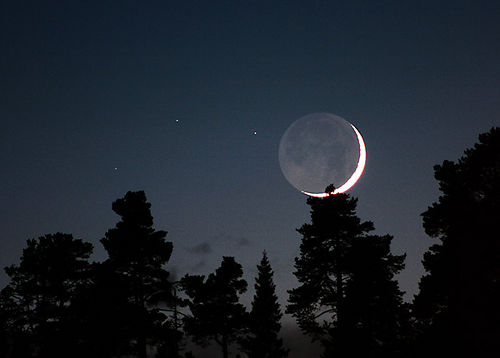
Is Ramadan Tuesday or Wednesday? How about Thursday?
Because of disagreements over when the lunar-based Islamic fasting month begins, Muslims will start their fasting on different days this year.
In the United States, the Fiqh Council of North America, a prominent group of Islamic scholars affiliated with the Islamic Society of North America, has declared the first fasting day of Ramadan to be Tuesday. It used astronomical calculations and a sighting of the new moon in California. Many mosques, such as the Islamic Society of Boston Cultural Center, have also encouraged their congregants to use Tuesday as the first fasting day.
But with the vast majority of the world’s Muslims living outside the U.S., and many of America’s Muslims having immigrated from or having family in other countries, the Ramadan calendars used in places such as the Middle East and South Asia have swayed some Americans to change their observation dates.
In several Middle Eastern countries, including Saudi Arabia and United Arab Emirates, Islamic leaders said Monday that the new moon had not been sighted, meaning that Ramadan fasting could not begin until Wednesday. Ramadan technically begins at nighttime, when the crescent moon is sighted, and the first day of fasting begins at dawn the following morning. Islamic leaders in Malaysia have also said the fast won’t start until Wednesday. To blame in some areas for the lack of a visible moon: cloudy skies and bad weather.
In Pakistan, news sources are reporting that the fast could begin either Wednesday or Thursday. The story is similar in India, which is home to 177 million Muslims. TheWall Street Journal reported Tuesday that monsoons had prevented moon-sighting committees from declaring the beginning of Ramadan.
Syed Tariq Bukhari, a member of the moon sighting committee at Old Delhi’s Jama Masjid, one of India’s largest mosques, said India lags behind the Middle East because of its geographical position and, this year, because of the monsoon.According to his committee, if the new moon is spotted either by a moon sighting committee, a reliable Islamic witnesses — a Muslim man with a beard — or a large number of people Tuesday evening, then Ramadan will begin in India on Wednesday.
If not, then Thursday will mark the start of the fast.
Regardless of differing dates abroad, American Islamic scholars are keeping with using Tuesday as the first fast, Fiqh Council of North America officials say in a statement on their website.
“There is a big chance of divergence. The Fiqh Council will stick to its criteria and decision no matter what reports come from abroad. Ramadan in North America will definitely begin on Tuesday, July 9, 2013.”
Gulf Power and Customer Energy Use Monitoring
I love this! Yes, I am a nerd, yes, I get excited about geeky things, but after my first year in Pensacola, paying electrical bills in the $400’s because I like to be cool, I have learned a few tricks about spending less, like turning the a/c up when leaving the house, it really makes a difference.
And now, we monitor our energy use on a DAILY basis. I love it! When you log into your Gulf Power account, you can see your energy usage calculated against the daily temperatures, with a range of your estimated end-of-month bill. No more bad surprises!
I think I inherited a small bit of my father’s engineer mentality; I love being able to manage my energy use 🙂

Thank you, Gulf Power, for making it possible.
BBC Secret Life of Cats Article: Hilarious Site With Mobile Cat Web Cams
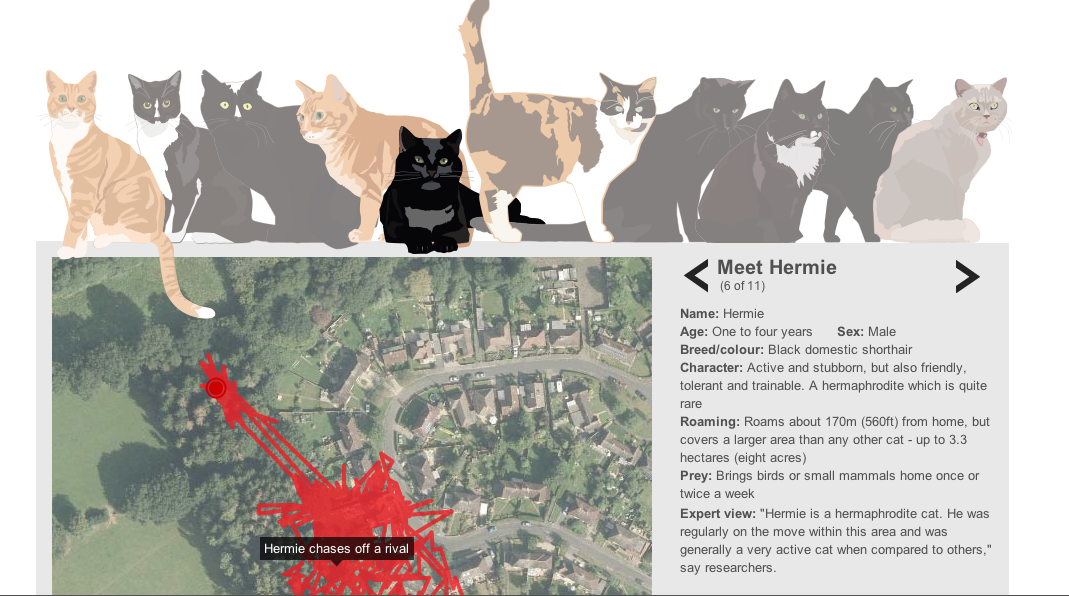
First, you have to go to this BBC Science Website, where cats in a Surrey village were tracked by the Royal Veterinary College to see where they would go during 24 hour periods. You click on each cat to see the route they followed – some are amazing – and then you can click on a video to have a glimpse of cat life, usually including the underside of a cat chin. It is fascinating and hilarious.
Anesthesia Linked to Dementia Risk in Seniors
It may not be dementia. It may be a reaction to a medication in the elderly that LOOKS like dementia.
My father was 87, and doing pretty well for a man 87. He still walked on his own, using a walker when he had to, and very rarely, a wheelchair if we were going a long ways. He went into the hospital for a minor surgery. The tube inserted in his hand for the anesthetic became infected. Dad was acting weird, he was having hallucinations, and my sister rightly identified that Dad had a reaction to the diuretic drug Lasix; when they switched him to an alternative, the raving and hallucinations stopped.
He was transferred to a rehabilitation unit, where for two days, they put him back on Lasix. Poor communication between hospital and the rehab facility, plus standardization of drug regimens – they switched him without telling him, or us. Once again, he went loony tunes, and at the same time, his right hand began to swell until it looked like a lobster claw. He kept saying it hurt, and it was big and red, and the rehab people kept saying it would get better.
Dad was rushed to another hospital, one the rehab clinic worked with, and the doctors told us he had a ‘cascade of problems’ and which were the primary three we wanted them to work with?
Get him off the Lasix, first thing, we all agreed, and find a way to have it annotated on any record that he is never to have Lasix. (It did no good; the next hospitalization, back at the first hospital, they gave him Lasix again, which made him crazy and masked all the other symptoms.)
Long story short, there were a cascade of hospital mistakes – not one hospital, two hospitals and the rehab clinic – where miscommunications, inattentions and shortage of trained personnel resulted in a cascade of issues that led to my father’s death later that year. The other lesson learned is that if you go into a hospital, make sure you have a good support system, someone with you who will bravely ask questions, and remind someone if an inappropriate medication is prescribed. You need a family member with you for protection against inattention, mistakes, miscommunications and personnel shortages.
It’s not like there’s anyone to bring a lawsuit against; they were all doing the best they could, but Dad was old. My bet is that he might have lived another couple years, at the very least, had he not gone in for that first non-essential minor surgery. To me, the moral of the story is if you want to live a long life, stay away from hospitals.

Anesthesia Linked to Increased Dementia Risk in Seniors
Exposure to anesthesia has been linked to a 35 percent increase of dementia in patients over age 65, according to a new study.
By Jeffrey Kopman, Everyday Health Staff Writer
FRIDAY, May 31, 2013 — Caregivers and seniors struggling with the dilemmas of elder care have another risk to weigh against potential rewards — senior patients exposed to general anesthesia face an increased risk of dementia, according to research presented at Euroanaesthesia, the annual congress of the European Society of Anaesthesiology (ESA).
Researchers reviewed the medical information of 9,294 French patients over the age of 65. The patients were interviewed several times over a ten year period to determine their cognitive status.
After two years, 33 percent of participants had been exposed to anesthesia. Most of the exposed patients (19 percent overall) were exposed to general anesthesia — a medically induced coma. The rest were exposed to local/locoregional — any technique to relieve pain in the body — anesthesia.
In total, 632 participants developed dementia eight years after the study began. A majority of these patients, 512, were diagnosed with probable or possible Alzheimer’s disease. The remainder had non-Alzheimer’s dementia.
The gap between dementia related to general anesthesia (22 percent) and non-dementia patients (19 percent) was associated with a 35 percent increased risk of developing dementia. This risk was linked to at least one general anesthesia.
“Elderly patients are at an increased risk for complications following anesthesia and surgery,” said Jeffrey H. Silverstein, MD, MS, and vice chair for research at the Department of Anesthesiology at Mount Sinai in New York City. “[They] are particularly prone to postoperative delirium, which is a loss of orientation and attention. Anesthesiologists have been evaluating higher cognitive functions (for example, memory and executive processing) and found that a substantial number have decreases in one or more of these areas after a surgical procedure.”
Researchers hope this study will lead to more awareness for surgeons.
“Recognition of postoperative cognitive dysfunction (POCD) is essential in the perioperative management of elderly patients,” said study author Dr. Francois Sztark, INSERM and University of Bordeaux, France, in a press release. “A long-term follow-up of these patients should be planned.”
Elderly Care: Risk vs. Reward
Senior citizens and their caregivers might be willing to accept an increased risk of dementia if it means getting necessary anesthesia for an important medical procedure. Dementia is a relatively common occurrence in old age: One in three seniors has Alzheimer’s disease or dementia by the time of their death.
But surgery at old age can also carry more severe, and less common, health risks. In fact, simply surviving surgery can be difficult for elderly patients, especially those over the age of 80.
While the numbers vary depending on procedure, researchers have found that mortality risk tied to elective major surgeries increases with age. The risk more than doubles for patients over 80 compared to patients ages 65 to 69.
But other surgery complications are even more common in seniors.
“The major risk for elderly patients following surgery is pneumonia,” said Dr. Silverstein. “Cardiac complications are next most common.”
However, Dr. Silverstein still feels that if surgery is deemed necessary, patients should not fear the risks.
“In theory, only necessary surgery is done,” he said. “Knowing how [patients] reacted to anesthesia and surgery in the past may give them some idea of their postoperative course.”
Last Updated: 05/31/2013
Round-Up Herbicide Tied to Serious Health Deterioration
Shocking news for everyone with grounds and gardens – we’ve all been using this, not knowing its long term impact on our environment – and on us.

Roundup, An Herbicide, Could Be Linked To Parkinson’s, Cancer And Other Health Issues, Study Shows

The peer-reviewed report, published last week in the scientific journal Entropy, said evidence indicates that residues of “glyphosate,” the chief ingredient in Roundup weed killer, which is sprayed over millions of acres of crops, has been found in food.
Those residues enhance the damaging effects of other food-borne chemical residues and toxins in the environment to disrupt normal body functions and induce disease, according to the report, authored by Stephanie Seneff, a research scientist at the Massachusetts Institute of Technology, and Anthony Samsel, a retired science consultant from Arthur D. Little, Inc. Samsel is a former private environmental government contractor as well as a member of the Union of Concerned Scientists.
“Negative impact on the body is insidious and manifests slowly over time as inflammation damages cellular systems throughout the body,” the study says.
We “have hit upon something very important that needs to be taken seriously and further investigated,” Seneff said.
Environmentalists, consumer groups and plant scientists from several countries have warned that heavy use of glyphosate is causing problems for plants, people and animals.
The EPA is conducting a standard registration review of glyphosate and has set a deadline of 2015 for determining if glyphosate use should be limited. The study is among many comments submitted to the agency.
Monsanto is the developer of both Roundup herbicide and a suite of crops that are genetically altered to withstand being sprayed with the Roundup weed killer.
These biotech crops, including corn, soybeans, canola and sugarbeets, are planted on millions of acres in the United States annually. Farmers like them because they can spray Roundup weed killer directly on the crops to kill weeds in the fields without harming the crops.
Roundup is also popularly used on lawns, gardens and golf courses.
Monsanto and other leading industry experts have said for years that glyphosate is proven safe, and has a less damaging impact on the environment than other commonly used chemicals.
Jerry Steiner, Monsanto’s executive vice president of sustainability, reiterated that in a recent interview when questioned about the study.
“We are very confident in the long track record that glyphosate has. It has been very, very extensively studied,” he said.
Of the more than two dozen top herbicides on the market, glyphosate is the most popular. In 2007, as much as 185 million pounds of glyphosate was used by U.S. farmers, double the amount used six years ago, according to Environmental Protection Agency (EPA) data.
Recent Comments
intlxpatr on Shampoo Ginger tigerbutterya0c5ff1d… on Shampoo Ginger intlxpatr on British Soldier Kidnapped, Esc… John on British Soldier Kidnapped, Esc… intlxpatr on British Soldier Kidnapped, Esc… Wikipedia Donate Button

Amazina


Early Voting in Florida


