The Death of Bees by Lisa O’Donnell
Death of Bees was another powerful recommendation by National Public Radio.

I believe in a greater power, in a God who sends things my way and that I am meant to be paying attention. Several books have been recommended to me lately which I didn’t choose, or might have avoided had I known how painfully they dealt with poor parenting and children in the depths of horrific poverty.
Here is what the lead into the book says:
Today Is Christmas Eve,
Today is my birthday,
Today I am fifteen,
Today I buried my parents
in the back yard.
Neither of them were beloved.
Oh my goodness! I am sucked in immediately. And immediately I am overcome by the grinding nature of poverty, the enormous amount of energy it takes just to be fed, to have a roof over your head, to function in the bureaucracy that seeks to ameliorate the burdens of poverty.
I am horrified by the lives of innocent children in the hands of people who should never have responsibility for anyone, even themselves, their decision making skills are so non-existent. There are parents who have no idea what self-sacrifice GOOD parenting requires, who raise children who are often trying to survive their own parents.
The Death of Bees has redemption. It has two sisters who love one another and are smarter than the average child. It has a neighbor who notices, not in a snoopy or intrusive way, but in a kind, helping and ultimately sacrificial way. It has moments of black humor, when the neighbor’s dog keeps digging at the parental graves in the backyard and bringing bones inside just at the worst moments.
Ultimately, it is a tale of survival, in spite of the parents, in spite of the system, in spite of betrayals by family and friends. There is a glimmer of hope that life may be different for these sisters, if they can survive their upbringing and overcome their childhood.
Now, go read the book 🙂
Amitav Ghosh and River of Smoke

The National Public Radio website recommended this book as one of the best historical fiction reads, and I had never heard of it, so I ordered it. I ordered it in spite of the little voice I had in my head reminding me that this was the second in a trilogy, that the first is Sea of Poppies. I was too eager. I wanted to jump right in, and the review said it could be read stand-alone. I had read Ghosh’s Glass Palace a couple years ago for book club, loved it, and was eager to read this one.
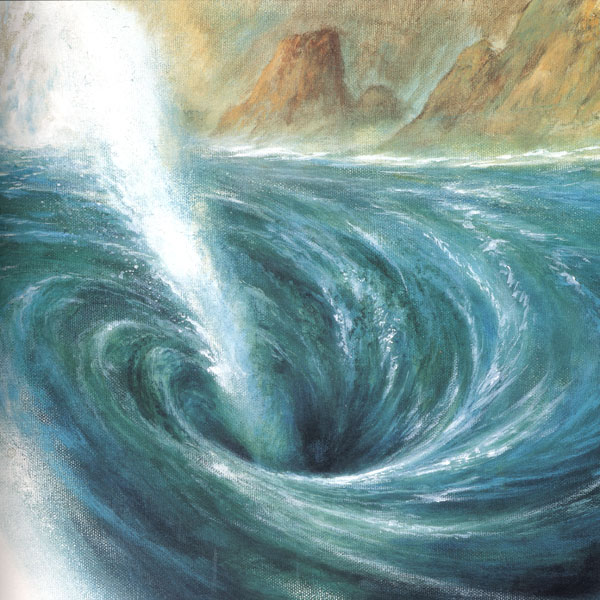
With a raging cold and no possible way I can be around humanity, it was a good time to start. Just picking up the book, it has a dense feel. Once you start, it is like being suddenly in a whirlpool, drowning in new words, characters who have more than one name and more than one identity, whirling between England, Mauritius, Hindustan, Gujerat, Hong Kong, Macau and China, whirling between cultures and professions and trades, but oh, what a ride.
It would have been helpful to be reading River of Smoke on an iPad, where I could poke at a new word and it would give me the meaning, but in truth, you can guess a lot of the meaning of the vocabulary from the context. The seafarers all speak a language sort of like Jack Sparrow, a pidgen language filled with simplified grammar and with words from many nations and cultures. It forces you to slow down. It’s worth it. It would also be nice if you could poke on a place-name and have Google Earth show you where it is. There used to be a website called Google Books, and you could put in a book and it would show you the places in which actions in the book took place; that would be particularly handy reading this book, provide context in place-relations.
But reading slowly is it’s own reward. This book has depth, depth of character, depth of textures and senses, and depth of morality. I love a book like this where you can smell the smoke drifting over the water, where you can smell the sewer and bloated animal corpses floating outside the foreign hongs of the Canton traders, you can feel the textures of the textiles and see their colors, you can taste the exquisiteness of Macau cuisine and you can hike in a Hong Kong not yet settled by anyone, Chinese or foreign.
The scope of time covered by the major part of the story is short, although there are years of back-stories for several characters. The period is 1837-8, during which the Chinese Emperor decides to put teeth in the long established edict against opium trade to China. The edict had been in place, but not enforced, and China watched her citizens sink into opium addiction and lowered productivity. The traders were making fortunes – shiploads of money. Opium was grown in India and shipped from there to China.
When the ban against shipping opium into China is announced, many traders believe it is just another attempt to attain greater bribes on the part of the mandarins, and decline to obey. There is great debate, and while it is lively in the book, it is based on documents from that era, many of the arguments word for word. Traders stood to loose a great deal of money, in truth, it would ruin most of them to lose their shipments.
There is a side story I also like, that of the botanical trade between China and England, and the importation of many of the garden plants we take for granted today, which were unknown until sent from China. Camellia – one of which is the plant for tea, did you know that? Roses, azaleas, orchids – many many familiar plants would be missing from our gardens were it not for their introduction during this period.
Ghosh gives us disparate characters of many cultures and upbringings, and slowly weaves them together, each one tangential to all the others, some closely interwoven. It is a fascinating read, and I can’t wait for the next volume. I may have to go back and read Sea of Poppies while I am waiting.
US Sex Trafficking Ring Raided
From BBC News; this is not a “victimless” crime:
Twelve arrested in US raid on Latin sex-trafficking ring
Mr Morton said the case should be a ‘wake-up call’
Another 44 people have been detained. Eleven women from Central America and Mexico, most in their 20s, were freed.
The women were reportedly forced to have sex with up to 30 men a day, charging $30 (£19) for each act.
The gang is thought to have been smuggling women since 2008, moving them to different cities every week in the south-eastern US.
The US authorities have indicted eight men and four women. Most of the other detainees are said to be clients.
The sex-trafficking ring served mostly ethnic Latino immigrants in larger cities and rural communities of Florida, Georgia and the Carolinas, the authorities said.
One of the indicted, a Mexican citizen, is accused of having threatened to send one woman back to Mexico if she did not have sex with at least 25 men a day.
Immigration and Customs Enforcement Director John Morton said 967 arrests in connection with people trafficking and sex tourism were made last year alone.
“To those who would believe that sex trafficking doesn’t happen in America, reflect on this case and think again,” Mr Morton said at a news briefing.
Most of the 44 detainees were reportedly non-Americans and would face court action. Those who were illegal in the country would be deported, said Mr Morton.
The scale of human trafficking in the US is hard to gauge, but the National Human Trafficking Resource Center hotline, operated by Polaris Project since December 2007, has received more than 57,000 calls from every state in the union.
Incidences of sex and labour trafficking have been reported in all 50 states in the US, and the District of Columbia, in the two years leading up to 2012.
John the Baptist Illuminated
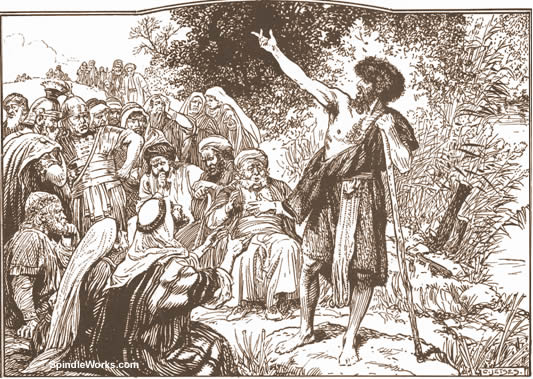
Today’s Gospel reading in The Lectionary is the very first chapter of Mark, featuring John the Baptist. As I read it, I had a memory flash of sitting in the Anglican Church in Kuwait, hearing a reading on John the Baptist’s Feast Day, a new reading I had never heard before, and it was beautiful, read in the rich, plummy tones of British English by their Ambassador. At the end, he said it was from the Quran.
John the Baptist in the Quran?
I was so ignorant about so many things. I still have so much to learn.
Here is today’s reading from Mark:
Mark 1:1-8
1The beginning of the good news* of Jesus Christ, the Son of God.*
2 As it is written in the prophet Isaiah,*
‘See, I am sending my messenger ahead of you,*
who will prepare your way;
3 the voice of one crying out in the wilderness:
“Prepare the way of the Lord,
make his paths straight” ’,
4John the baptizer appeared* in the wilderness, proclaiming a baptism of repentance for the forgiveness of sins. 5And people from the whole Judean countryside and all the people of Jerusalem were going out to him, and were baptized by him in the river Jordan, confessing their sins. 6Now John was clothed with camel’s hair, with a leather belt around his waist, and he ate locusts and wild honey. 7He proclaimed, ‘The one who is more powerful than I is coming after me; I am not worthy to stoop down and untie the thong of his sandals. 8I have baptized you with* water; but he will baptize you with* the Holy Spirit.’
This is from an Islamic website, Soundvision, one which uses many sources to illuminate the teachings of the Quran and the Bible:
The birth of Prophet John is miraculous because he is the offspring of a barren mother and an elderly father. His father, it should be noted, was also a Prophet named Zecheriah.
“‘Zecheriah, We bring you the good news of the birth of a son whose name shall be John, one whose namesake We never created before.’ He said: ‘My Lord! How can I have a boy when my wife is barren and I have reached an extremely old age?’ He answered: ‘So shall it be.’ Your Lord says: ‘It is easy for Me’, and then added: ‘For beyond doubt, I created you earlier when you were nothing’ (Quran 19:7-9).
“Zecheriah exclaimed: ‘My Lord! How shall I have a son when old age has overtaken me and my wife is barren?’ He said: ‘Thus shall it be; Allah does what He wills'”(Quran 3:40).
With the birth of John, Allah granted Zecheriah his desire for an heir.
“And We bestowed favor upon Zecheriah, when he cried to his Lord: ‘Lord! Leave me not solitary [without any issue]. You are the best Inheritor.’ So We accepted his prayer and bestowed upon him John, and We made his wife fit (to bear a child). Verily they hastened in doing good works and called upon Us with longing and fear, and humbled themselves to Us” (Quran 21:89-90).
The beautiful qualities of John
Allah did not just miraculously grant Zecheriah a son. He made this child a blessing for his parents and beautiful in character. Prophet John is described in the Quran as chaste and righteous.
“Then Zecheriah prayed to his Lord: ‘O Lord! Grant me from Yourself out of Your grace the gift of a goodly offspring, for indeed You alone heed all Prayers. As he stood praying in the sanctuary, the angels called out to him: ‘Allah gives you good tidings of John, who shall confirm a command of Allah, shall be outstanding among men, utterly chaste, and a Prophet from among the righteous” (Quran 3:38-39).
“‘O John! Hold fast the Book with all your strength. We had bestowed wisdom upon him while he was still a child; and We also endowed him with tenderness and purity; and he was exceedingly pious and cherishing to his parents. Never was he insolent or rebellious. Peace be upon him, the day he was born, and the day he will die, and the day he will be raised up alive. (Quran 19: 12-15).
Part of a line of honored Prophets
Finally, as mentioned above, Prophet John is one of the Prophets Muslims must believe in. He is one of the 25 mentioned in the Quran.
“And We bestowed upon Abraham (offspring) Isaac and Jacob and each of them did We guide to the right way as We had earlier guided Noah to the right way; and (of his descendants We guided) David and Solomon, Job, Joseph, Moses and Aaron. Thus do We reward those who do good. (And of his descendants We guided) Zecheriah, John, Jesus and Elias: each one of them was of the righteous.” (Quran 6:84-85).
Vitamin D Fights Auto-Immune Diseases
When we were living in Qatar, there was a study published in the Qatar Gulf Times about the increasing problem of Vitamin D deficiency among women who are covered. It suggested that just ten minutes a day, uncovered, in full sunshine, could help relieve this common deficiency.
Part of the problem may be a lack of private area where a covered woman will feel comfortable being outside, uncovered, free from prying eyes. Another problem is cultural, where whiter skin is valued more highly than darker skin, or freckled skin.
What cost beauty? There are long term ramifications of Vitamin D deficiency, and the consequences can be dire. The cure is so easy . . .
By Diana Rodriguez
Medically reviewed by Lindsey Marcellin, MD, MPH
Your body needs a wide range of nutrients so that each cell performs the way it’s supposed to and all your body functions run smoothly. One important source that’s been getting a lot of buzz? Vitamin D — this essential vitamin helps build strong bones and much more.
Now researchers are discovering that vitamin D may be a powerful tool in understanding, and perhaps even preventing, certain health problems, including a group of conditions that currently has no cure — autoimmune diseases.
Autoimmune diseases occur when your immune system turns against your own body instead of fighting harmful invaders like bacteria and viruses. Autoimmune diseases affect different areas of the body. For instance, psoriasis is an autoimmune disease that affects the skin, while Graves’ disease is an autoimmune disease that affects the thyroid gland.
Little is known about how and why autoimmune diseases occur, what can be done to prevent them, and how to reduce your autoimmune disease risk. But that could be about to change.
The Scoop on Vitamin D’s Benefits
One recent study discovered that people who are deficient in vitamin D, which comes from both food sources and sunlight, have an increased autoimmune disease risk. The study also found that vitamin D can affect how your genes function by binding to them in particular spots. These binding locations may help researchers better understand genes that trigger diseases related to vitamin D.
We know that vitamin D plays a role in protecting the immune system. And researchers found that not getting enough vitamin D increases your risk for rheumatoid arthritis, multiple sclerosis, and type 1 diabetes, among other autoimmune diseases. Unfortunately, researchers can’t yet pinpoint exactly how and why this is the case, or how getting enough vitamin D may help to ward off the onset of autoimmune disease symptoms.
5 Ways to Up Your Daily Dose of D
It’s clear that much more research needs to be done to better understand both autoimmune diseases and the impact of vitamin D on reducing autoimmune disease risk. But we already know that not getting enough vitamin D can be devastating to bones, leading to osteoporosis and fractures.
For overall good health, it’s essential to meet vitamin D requirements, up to 600 international units, or IU, each day. If your doctor tests your blood vitamin D level and finds a low level, you may be advised to get higher amounts. Where can you find this bone-building, immune-boosting vitamin? Here are some simple ways to get the recommended daily intake of vitamin D:
Feed on fish. Specifically, canned pink salmon, mackerel, and sardines offer the highest amounts of vitamin D.
Choose fortified beverages. Both soy and cow’s milk are available fortified with vitamin D. Some brands of orange juice also come with an added dose of D.
Eat egg yolks. Though they’re sometimes a concern because of cholesterol, egg yolks are a good source of vitamin D.
Start your day with cereal. Dry cereals and instant oatmeal that have been fortified with vitamin D are a great way to start your day.
Keep it simple with a supplement. Vitamin D supplements can make it easy to get all you need each day — just take one pill.
Exposure to the sun also helps your body to produce vitamin D. Relaxing in the sun for a brief period of time (just 5 to 10 minutes) a few days per week without sunscreen can help your body create enough vitamin D to ward off a deficiency. Just remember to guard against the potential damage of the sun — keep your exposure limited to reap the vitamin D benefits without harming your skin.
Wikipedia Campaign

So many times when I go to look for information (much of which I share with you on this blog) the first and most comprehensive place to pop up with the information I need is Wikipedia. Today, when I was gathering information on school shootings, I saw, for the second time (the first time was a couple years ago) a banner asking me to donate to keep Wikipedia going.
I did. And I hope you will, too, if you use Wikipedia.
If you donate, you will get one of the nicest thank-you letters you will ever receive. I used to write these letters. I know how hard it is to strike just the right tone. I applaud the people at Wikipedia who wrote this one. (What is the goal of a fund-raiser’s thank you? To be sure you donate again the next time 🙂 )
Dear Donor,
Thank you for donating to the Wikimedia Foundation. You are wonderful!
It’s easy to ignore our fundraising banners, and I’m really glad you didn’t. This is how Wikipedia pays its bills — people like you giving us money, so we can keep the site freely available for everyone around the world.
People tell me they donate to Wikipedia because they find it useful, and they trust it because even though it’s not perfect, they know it’s written for them. Wikipedia isn’t meant to advance somebody’s PR agenda or push a particular ideology, or to persuade you to believe something that’s not true. We aim to tell the truth, and we can do that because of you. The fact that you fund the site keeps us independent and able to deliver what you need and want from Wikipedia. Exactly as it should be.
You should know: your donation isn’t just covering your own costs. The average donor is paying for his or her own use of Wikipedia, plus the costs of hundreds of other people. Your donation keeps Wikipedia available for an ambitious kid in Bangalore who’s teaching herself computer programming. A middle-aged homemaker in Vienna who’s just been diagnosed with Parkinson’s disease. A novelist researching 1850s Britain. A 10-year-old in San Salvador who’s just discovered Carl Sagan.
On behalf of those people, and the half-billion other readers of Wikipedia and its sister sites and projects, I thank you for joining us in our effort to make the sum of all human knowledge available for everyone. Your donation makes the world a better place. Thank you.
Most people don’t know Wikipedia’s run by a non-profit. Please consider sharing this e-mail with a few of your friends to encourage them to donate too. And if you’re interested, you should try adding some new information to Wikipedia. If you see a typo or other small mistake, please fix it, and if you find something missing, please add it. There are resources that can help you get started. Don’t worry about making a mistake: that’s normal when people first start editing and if it happens, other Wikipedians will be happy to fix it for you.
I appreciate your trust in us, and I promise you we’ll use your money well.
Thanks,
Sue
By Secret Ballot
I hear people talking back and forth; feeling one another out. Most assume their friends will vote Republican; it’s Republican country up here in the westernmost part of Florida. Yards are littered with Romney – Ryan signs, with a few timid Obama signs here and here in a yard or on a car fender.

My Dad taught us, when we were very young, that the only appropriate answer when asked how one would vote is “I am voting by secret ballot.” He taught us how precious the right is to cast your vote and to know that no one can intimidate you into voting for someone else, because we vote by secret ballot. No husband can command his wife, no father can command his family, no minister can command his church. We each vote our individual conscience.
So we have the luxury of worrying whether we will vote the right candidates into office. We can only do the best we can with the information we have. I don’t want opinions, I want to see where a candidate stands on the issues that are important to me. And, in the end, I trust in the Lord:
Psalm 20
Now this I know:
The Lord gives victory to his anointed.
He answers him from his heavenly sanctuary
with the victorious power of his right hand.
7 Some trust in chariots and some in horses,
but we trust in the name of the Lord our God.
8 They are brought to their knees and fall,
but we rise up and stand firm.
9 Lord, give victory to the king!
Answer us when we call!
When I hear people moaning in the locker room, or jeering in the parking lot, I walk right by. It’s not my problem. I vote my conscience, and I leave the outcome in the Lord’s hands.
Daily Readings on Gossip
I grew up in a culture that thrives on gossip and speculation. Today’s reading from The Lectionary reminds me to gurd my tongue; never to repeat a conversation, unless not to repeat it would be a sin, as in murder or abuse.
Sirach 19:4-17
4 One who trusts others too quickly has a shallow mind,
and one who sins does wrong to himself.
5 One who rejoices in wickedness* will be condemned,*
6 but one who hates gossip has less evil.
7 Never repeat a conversation,
and you will lose nothing at all.
8 With friend or foe do not report it,
and unless it would be a sin for you, do not reveal it;
9 for someone may have heard you and watched you,
and in time will hate you.
10 Have you heard something? Let it die with you.
Be brave, it will not make you burst!
11 Having heard something, the fool suffers birth-pangs
like a woman in labour with a child.
12 Like an arrow stuck in a person’s thigh,
so is gossip inside a fool.
13 Question a friend; perhaps he did not do it;
or if he did, so that he may not do it again.
14 Question a neighbour; perhaps he did not say it;
or if he said it, so that he may not repeat it.
15 Question a friend, for often it is slander;
so do not believe everything you hear.
16 A person may make a slip without intending it.
Who has not sinned with his tongue?
17 Question your neighbour before you threaten him;
and let the law of the Most High take its course.*
Your Vote – The Power of We (Blog Action Day 2012)
This year, in the United States we are going through a vicious process, that of choosing one candidate over another for political office. Many people are so put-off by the mechanics of the process that they opt out of the choosing altogether. Others are just too busy to vote, beset by the needs of family, job, car pool, church, social activities, etc. in spite of the ease with which one can ask for and receive an absentee ballot.
You need only live in a country where people have no meaningful vote to quickly learn the value of your vote. Your vote may be just one, but in a democracy, where just one vote can turn an election – your vote counts. Together, with other voters of your persuasion, your vote counts.
There has never been a country where women have the vote and men don’t. Sadly, the opposite is true; there are still countries where women are not considered fully qualified to vote. Less than 100 years ago, our own country was one of them. Yes, it’s true, we didn’t get the vote until 1920. I reprint the following from a post I wrote several years ago, a post I have never forgotten, because it was so shocking to me when I read the price these women paid that I might freely vote today.
“The doctor admonished the men: ‘Courage in women is often
mistaken for insanity.’”
We may have different preferences for who gets elected; that doesn’t matter to me. What matters to me is the power of we – that we care enough about our country and its policies to exercise our right as citizens, to get out there and vote.
This is reblogged from July 17, 2008:
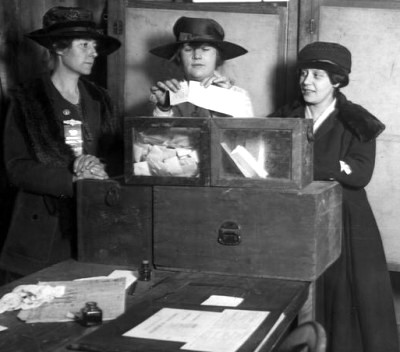
WHY EVERY WOMAN SHOULD VOTE
This is the story of our Grandmothers, and Great-grandmothers, as they
lived only 90 years ago. It was not until 1920 that women were granted
the right to go to the polls and vote.
Thus unfolded the ‘Night of Terror’ on Nov. 15, 1917, when the warden at
the Occoquan Workhouse in Virginia ordered his guards to teach a lesson
to the suffragists imprisoned there because they dared to picket Woodrow
Wilson’s White House for the right to vote. The women were innocent and
defenseless. And by the end of the night they were barely alive. Forty
prison guards wielding clubs and their warden’s blessing went on a
rampage against the 33 women wrongly convicted of ‘obstructing sidewalk
traffic.’
They beat Lucy Burn, chained her hands to the cell bars above her head
and left her hanging for the night, bleeding and gasping for air. They
hurled Dora Lewis into a dark cell, smashed her head against an iron bed
and knocked her out cold. Her cell mate, Alice Cosu, thought Lewis was
dead and suffered a heart attack. Additional affidavits describe the
guards grabbing, dragging, beating, choking, slamming, pinching,
twisting and kicking the women.
For weeks, the women’s only water came from an open pail. Their
food–all of it colorless slop–was infested with worms. When one of the
leaders, Alice Paul, embarked on a hunger strike, they tied her to a
chair, forced a tube down her throat and poured liquid into her until
she vomited. She was tortured like this for weeks until word was
smuggled out to the press.
So, refresh my memory. Some women won’t vote this year because–why,
exactly? We have carpool duties? We have to get to work? Our vote
doesn’t matter? It’s raining?
Last week, I went to a sparsely attended screening of HBO’s new movie
‘Iron Jawed Angels.’ It is a graphic depiction of the battle these women
waged so that I could pull the curtain at the polling booth and have my
say. I am ashamed to say I needed the reminder.
All these years later, voter registration is still my passion. But the
actual act of voting had become less personal for me, more rote.
Frankly, voting often felt more like an obligation than a privilege.
Sometimes it was inconvenient.
My friend Wendy, who is my age and studied women’s history, saw the HBO
movie , too. When she stopped by my desk to talk about it, she looked
angry. She was–with herself. ‘One thought kept coming back to me as I
watched that movie,’ she said. ‘What would those women think of the way
I use–or don’t use–my right to vote? All of us take it for granted
now, not just younger women, but those of us who did seek to learn.’ The
right to vote, she said, had become valuable to her ‘all over again.’
HBO released the movie on video and DVD. I wish all history, social
studies and government teachers would include the movie in their
curriculum. I want it shown on Bunco night, too, and anywhere else women
gather. I realize this isn’t our usual idea of socializing, but we are
not voting in the numbers that we should be, and I think a little shock
therapy is in order.
It is jarring to watch Woodrow Wilson and his cronies try to persuade a
psychiatrist to declare Alice Paul insane so that she could be
permanently institutionalized. And it is inspiring to watch the doctor
refuse. Alice Paul was strong, he said, and brave. That didn’t make her
crazy. The doctor admonished the men: ‘Courage in women is often
mistaken for insanity.’
Please, if you are so inclined, pass this on to all the women you know.
We need to get out and vote and use this right that was fought so hard
for by these very courageous women. Whether you vote democratic,
republican or independent party – remember to vote.
History is being made.
Recent Comments
ExpatAlien on What Country am I Living … intlxpatr on Yellowstone: Old Faithful to C… Michelle on Yellowstone: Old Faithful to C… Cathy on No Grown-Ups in Charge intlxpatr on Waiting for Snow Wikipedia Donate Button

Amazina


Early Voting in Florida


 Here There and Everywhere