Women’s Rights a Threat to Society?
Society changes. Cable television has had a huge influence, travel to other countries changes perceptions, education gives a wider perspective, The genie is out of the bottle; women are equal people. No woman should need someone else’s permission to travel, work, or to use contraception.
Egypt’s Muslim Brotherhood: Women’s Rights Could Destroy Society, Countries Should ‘Reject And Condemn’ UN Declaration
Reuters | Posted: 03/14/2013 5:40 pm EDT


By Michelle Nichols
UNITED NATIONS, March 14 (Reuters) – Egypt’s ruling Muslim Brotherhood warns that a U.N. declaration on women’s rights could destroy society by allowing a woman to travel, work and use contraception without her husband’s approval and letting her control family spending.
The Islamist party of President Mohamed Mursi outlined 10 reasons why Muslim countries should “reject and condemn” the declaration, which the U.N. Commission on the Status of Women is racing to negotiate a consensus deal on by Friday.
The Brotherhood, which was elected to power in June, posted the statement on its website, http://www.ikhwanweb.com, on Thursday.
Egypt has joined Iran, Russia and the Vatican – dubbed an “unholy alliance” by some diplomats – in threatening to derail the women’s rights declaration by objecting to language on sexual, reproductive and gay rights.
The Muslim Brotherhood said the declaration would give “wives full rights to file legal complaints against husbands accusing them of rape or sexual harassment, obliging competent authorities to deal husbands punishments similar to those prescribed for raping or sexually harassing a stranger.”
U.S. Ambassador Susan Rice last week touted at the commission – a global policy-making body created in 1946 for the advancement of women – progress made by the United States in reducing the rate of violence against women by their partners.
“All 50 states in our union now have laws that treat date rape or spousal rape as just as much of a crime as rape by a stranger,” Rice said. “We cannot live in truly free societies, if women and girls are not free to reach their full potential.”
The contrasting views show the gap that needs to be breached in negotiations on the declaration, which this year is focused on urging an end to violence against women and girls. The commission failed to agree a declaration last year on a theme of empowering rural women due to similar disagreements.
WORLD IS WATCHING
Egypt has proposed an amendment, diplomats say, that would allow countries to avoid implementing the declaration if it clashed with national laws, religious or cultural values. But some diplomats say this would undermine the entire declaration.
The Muslim Brotherhood warned the declaration would give girls sexual freedom, legalize abortion, provide teenagers with contraceptives, give equality to women in marriage and require men and women to share duties such as child care and chores.
It said the declaration would allow “equal rights to homosexuals, and provide protection and respect for prostitutes” and “equal rights to adulterous wives and illegitimate sons resulting from adulterous relationships.”
A coalition of Arab human rights groups – from Egypt, Lebanon, the Palestinian Territories, Jordan and Tunisia – called on countries at the Commission on the Status of Women on Thursday to stop using religion, culture, and tradition to justify abuse of women.
“The current positions taken by some Arab governments at this meeting is clearly not representative of civil society views, aspirations or best practices regarding the elimination and prevention of violence against women and girls within our countries,” said the statement issued by the Coalition for Sexual and Bodily Rights in Muslim Societies.
Michelle Bachelet, a former president of Chile and head of U.N. Women, which supports the commission, said the commission was unable to reach a deal a decade ago when it last focused on the theme of women’s rights and ending violence against women.
“Ten years later, we simply cannot allow disagreement or indecision to block progress for the world’s women,” Bachelet told the opening session of the commission last week. “The world is watching … the violence needs to stop.” (Editing by Mohammad Zargham)
Strangers in America; No American Friends
This article is so sad, and I have also seen it the other way around, hoardes of American students abroad, hanging out with other Americans, then other ex-pats, and lastly, the local inhabitants. It IS hard. The differences can seem overwhelming. (That is my very first blog entry, and it had to do with the risks you expose yourself to when you open yourself to a cross cultural relationship 🙂 ) Overcoming those differences makes life so much richer.
Thank you, Professor John Mueller, for forwarding this fascinating article:
Strangers in a Strange Land
March 4, 2013 – 3:00am
By
Elizabeth Redden
In interviews with 40 international students at four research universities, Chris R. Glass was struck by the relative absence of Americans from his subjects’ stories. The interviewees, half undergraduate and half graduate students, described close relationships with their international peers, including those coming from countries other than their own. But while they frequently characterized their American classmates as friendly or helpful, only rarely did they seem to play a significant role in their lives.
“Only one student has described a significant relationship with a U.S. peer and that student was from Western Europe and that peer was her boyfriend,” said Glass, an assistant professor of educational foundations and leadership at Old Dominion University. “That to me is a striking omission from the stories that they’re telling.”
As the number of international students at U.S. colleges continues to rise — and as the mix of international students has shifted in favor of undergraduates — there are increasing concerns as to how well they’re being integrated into campus life. There have been periodic reports of racist incidents and – overt discrimination aside – there is the question of disconnection raised by Glass’s research. Another study authored by Elisabeth Gareis, a communication studies scholar at Baruch College, found that nearly 40 percent of international students reported having no close American friends. In explanation, many of the students cited “internal factors” such as limited language proficiency or shyness, but they also described a perceived lack of interest on the part of American students.
At the recent Association of International Education Administrators annual conference, a roundtable session on the integration of international students (co-moderated by this Inside Higher Edreporter) drew a standing-room only crowd, as attendees discussed the difficulties they’ve encountered in encouraging and equipping American and international students to (productively) interact. Domestic students are not necessarily cross-culturally competent – a point made lucidly when one audience member described the tendency of American study abroad students to request compatriots as roommates. At the same time, international students may not always be interested in initiating contact. An audience member from a Midwestern institution shared his observation that a fair number of students from China – a rapidly growing and by far the biggest group of international undergraduates on U.S. campuses – seem to be more interested in interacting with one another than with their American classmates.
Yet, even those students who are interested may find social structures on campus to be exclusionary or mystifying or both. On American campuses dominated by fraternity and sorority life, or obsession over intercollegiate athletics, or where everyone seems to have gone to the same high school, international students may feel foreign in ways that go beyond their nationality. “The lack of interaction is as much due to individual attributes as it is to social context,” said Glass, who is conducting his qualitative research in collaboration with Rachawan Wongtrirat, the assistant director of Old Dominion’s international initiatives office. Given the natural tendency of people to gravitate toward others who are like them (what social psychologists call the “similarity-attraction effect”), “are universities creating contexts where these interactions can happen?” he asked.
In interviews with Inside Higher Ed, researchers and professionals in international education spoke about the challenges in this regard and their efforts to create opportunities for meaningful interactions between domestic and international students through programming. It seems that many universities have a long way to go in living up to the promise presented by increasing numbers of international undergraduates – the promise being increased opportunities for sustained and meaningful cross-cultural interactions in classrooms, dorm rooms, and so forth.
‘Encounters With Difference That Make a Difference’
“It’s a combination of factors that have made this issue so salient,” said Larry A. Braskamp, the president of the Global Perspective Institute and a professor emeritus at Loyola University Chicago. “One is there are just a lot more international students on campus now, particularly at institutions that have not historically had a lot. The second is that everybody is interested in global learning: we know we need to prepare students to be more globally competent. And the third is that these students represent on some campuses a fairly significant contribution to the bottom line. Most of these students pay full tuition and as a result a lot of institutions see them as one way to balance the budget. So they have to make sure that the retention rate is high; they have to develop a good reputation so that other students will come.”
In Braskamp’s research, he’s found that entering American freshmen do not tend to think complexly, are not comfortable amidst difference and do not typically have friends who are unlike them. “We’ve said, O.K., the implication of all this is we need to create ‘encounters with difference that make a difference,’ ” he said. “I’ve thought of it as students being on a journey: they start with rather simplistic views of themselves, of their social interactions and the ways in which they understand the world around them. So in some ways what we need to do in college is increasingly provide them opportunities for encounters to get them to rethink who they are, how they think, and how they relate to others. In many ways, international students coming on campus is an opportunity for students, faculty members, and international administrators to take advantage of that difference and that diversity. But it’s really hard work.”
Such encounters can be curricular, co-curricular or informal: in fact, Braskamp’s research suggests that informal encounters such as discussion of current events with other students may be the most impactful. Still, he emphasized that there’s much more that can be done in the classroom to facilitate such encounters. In a sample of about 48,000 undergraduates at more than 140 four-year colleges, he found that about one-third report never having taken a course that “focuses on significant global/international issues or problems” or that “included opportunities for intensive dialogue among students with different backgrounds and beliefs.”
As one audience member at the AIEA conference said, unless faculty members are on board, all the student services programs in the world won’t be enough: “Students really look to their professors to give them direction and advice and deepen their conversations, so if faculty were taught to embrace these conversations about ‘difference’ and ‘other’ and ‘cross-cultural competencies’ and international challenges in engineering, then those conversations would take on meaning for the students,” she said. Participants in the session described the value of professional development programs such as Duke University’s Intercultural Skills Development Program for faculty and staff.
Case Western Reserve University is another institution that has begun to offer training designed to help professors better serve international students and integrate them into the classroom: according to Molly Watkins, the university’s director of international affairs, the first two trainings focused on Chinese students and attracted 60 to 70 faculty members each. “There’s obviously a need,” Watkins said.
Opportunities for Meaningful Interaction
At the AIEA session, audience members discussed co-curricular strategies such as peer mentoring or “buddy” programs, living-learning communities and other residence life initiatives, and more robust orientations for international students. Many universities have some iteration of one or all of the above: Mount Holyoke College, for example, has a new “Global Partners” program that pairs returning study abroad students with new international students and holds “re-orientation” events for international students during the academic year. The University of Iowa is launching a new required online orientation program that will begin in the summer before the students arrive and continue with five to eight small-group sessions throughout the fall semester.
The University of Arkansas at Fayetteville, which had 611 international undergraduates last fall, has a host of programs with alliterative names like Campus Cousins, Friendship Families and Global Greeks, which pair international students with American students, local families and fraternity or sorority members, respectively. Wesleyan University is “trying to capitalize on the idea of roommates,” hosting a dinner for first-year international students and their roommates at the beginning of the fall semester, according to Alice Hadler, the associate dean for international student affairs and an instructor of English. St. Norbert College, a Roman Catholic institution in Wisconsin, has a living-learning community with 25 international and domestic students (international students are the resident advisers) and a 10-member interfaith group consisting of Muslim students from Saudi Arabia and domestic Christian students. Initiatives such as these reach only a small number of students, concedes Marcy O’Malley, St. Norbert’s director of international programming, but, she said, “What I’ve seen work is one-on-one.”
“Instead of superficial contact with a lot of people, do more meaningful contact with a smaller number, and let them be your ambassadors to the larger student body,” she said.
Christopher J. Viers, the associate vice president for international services at Indiana University at Bloomington, has used theInternational Student Barometer to survey students about their experiences, and cited the surprising finding that international students rate their relationships with American students as those that are most important to them (as compared to relationships with other students from their home country or international students in general). “In looking at the feedback that came in we thought very critically about what we could do to help facilitate opportunities for international and domestic students to interact in meaningful ways to hopefully have conversations and potentially build relationships,” Viers said.
In talking with colleagues across the country, Viers said he’s come to the conclusion that “too often our programming is limited to the one-time, big, annual event.” This event, which often takes the form of an international student fair or show, can be good in celebrating international students’ contributions to campus and perhaps can help a domestic student learn a bit about another culture or cultures, but, he said, “opportunities for meaningful transformative learning are pretty limited.” As such, he continued, “We work hard to provide the big annual event that helps to showcase the contributions of our students and the diversity of the population with the excitement and food and entertainment, but not a week goes by when we’re not putting together, hand-in-hand with students, small, highly interactive opportunities for domestic and international students to get together. We run a weekly noon concert series, for example, where students from our Jacobs School of Music perform classical music or folk music from their home country and then there’s a free lunch that’s provided. That regularly gets people who have an interest in music together.”
“It’s absolutely essential as colleges are putting in place plans to actively grow international enrollment that appropriate levels of service and support are put in place, and then the students have responsibilities as well,” Viers said. “So much of just about anything in life in terms of what you gain from an experience has much to do with what you put into it yourself. This is where at times perhaps those of us in the field of international education are not vocal about some of the very real, very significant additional hurdles and challenges that students from other countries face while they’re here: the enormous pressures that they’re under to succeed academically and to move as quickly as possible though a program. It’s very expensive to come to the U.S. to pursue an undergraduate degree. There are often major expectations from family members and others; there’s a lot of pressure to succeed and do well.” And then there are the extra academic challenges inherent in pursuing a degree in a non-native language. Is it any wonder that not every student will want to come out for mixers and “cultural coffee hours”?
“I think that sometimes we underestimate that pressure, and apply a different kind of meaning to the experience that we perceive a student is having,” Viers said.
Seafood Platter Deli AKA Gulf Coast Seafood Deli on 9 Mile Road
“We’re going to drive ‘all the way’ out there,” AdventureMan tells me and we laugh, because ‘all the way’ is such a relative term. When we lived in Kuwait and in Qatar, we would drive a minimum 30 minutes to get to a restaurant, any restaurant, not only because of distances but also because of traffic, horrendous traffic, in the evenings. While the Seafood Platter Deli is 13 miles away, it takes us less than 20 minutes to get there. Welcome to Pensacola 🙂


This is a very unusual restaurant. It is so old-timey Gulf Seacoast, and at the same time, I thought as we entered “My Moslem friends would love this!”
Many of my Moslem friends think Americans are unbelievers. They think we don’t talk about God. They don’t know we pray – sometimes without ceasing. Just as I was astounded as I learned things about Islam and Moslem culture living in the Middle East, they were also astounded learning things about us, like that we take care of our families. Think about it – most of what many people in the world know about Americans comes from the impact of cable TV. They watch American TV and they think they understand American culture. Horrifying thought, isn’t it?
So how amazing is it to walk into a restaurant where, as you stand at the counter to order, and you look at the big menu on the wall, there is a stand, with a bible on it. And there is paper, and a pencil, and a sign saying “Prayer requests.” I don’t know about your restaurant experiences, but this is unique in my experience – in America. In the Middle East, there are all kinds of restaurants with Qu’ranic verses on the walls, and the sounds of religious services piped into the restaurant. People talk about God all the time. It’s a whole different world; and my Moslem friends would feel right at home in the Seafood Platter Deli.

Of course, in Saudi Arabia, we would rush to buy our pre-sunset felafels, and then sit and munch, listening to all the souk grates coming down as shops closed for the Mahgrib prayer. Everything closed, five times a day, in Saudi Arabia, for prayer.
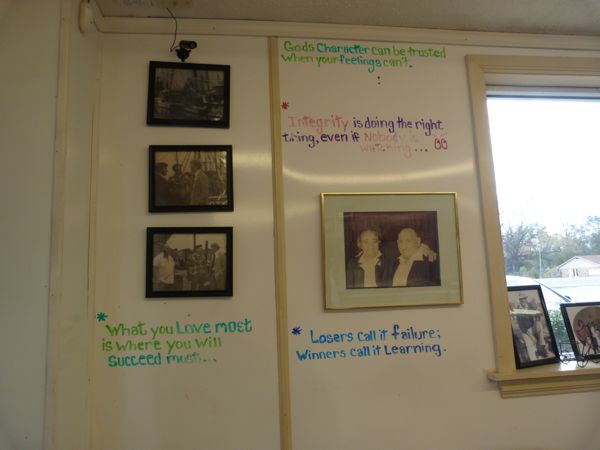
At the Gulf Coast Seafood Deli / Seafood Platter Deli (I don’t know what the real name is, and both names appear when you Google it) there are scriptures on the wall. When you sit down, the little basket holding condiments tells you to “count your blessings.”

The interior dining room (as opposed to the deli section, and the counter where you order food when you come in) is wall-to-wall sea mural, family friendly, Fish and sea life everywhere. There are also families who pray when their meal is delivered to the table, before they eat. The wait-staff is patient, and personal. You get the impression they truly want you to have a good experience at this restaurant.
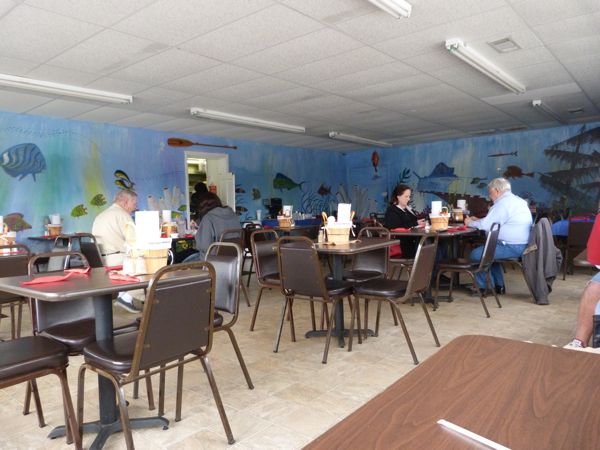
We were hungry. We are mildly disgruntled to see piping hot food delivered to tables around us who arrived after we did, but not very. Even though we are hungry, we know that our ordering our food grilled or blackened slows things up in the kitchen, where the majority of the meals are fried. It is really really hard for people like us to watch other customers thoroughly enjoying their fried shrimp, fried catfish, fried grouper, fried scallops, etc. They look SO delicious. Every now and then, maybe once every couple months, we slip up and eat something deep fried, just because yes, yes, it tastes so good, and we know it is like the WORST thing for us. What a pity that deliciousness can be so lethal.
Ah! There it is! Our meals! We tuck right in and then I remember “Oh no! I haven’t taken any pictures!” AdventureMan is used to this, and bless his heart, he stops eating so I can shoot what is left of his grilled scallops, so tasty and delicious, so fresh!
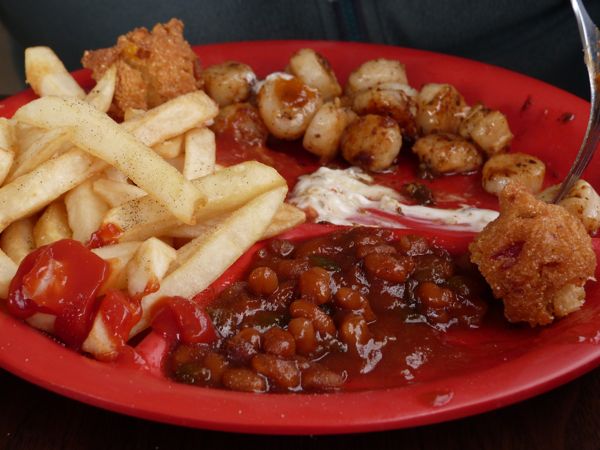
I had so much salmon on my platter that I had salmon and steamed vegetables for dinner, too! The salmon was copious, lightly blackened, seared on the outside, moist on the inside, just the way I love it. It was some of the best salmon I have had in Pensacola (not exactly salmon country, but that little Alaska girl still lives in my heart and I can’t resist salmon when I see it on the menu.)

There’s another thing we loved about the Seafood Platter Deli – remember Dembo’s Smokehouse? We love restaurants that honor their heritage, and the Seafood Platter Deli has this wonderful wall:
Last, but not least, the food was so good, and so plentiful, that we couldn’t eat it all and ended up taking some home. We also took home some dessert, one dessert, $1.99 for a goodly portion of Vanilla Wafer pudding, that old-fashioned kind, maybe Banana pudding. It was so GOOD, we wish we’d gotten two. 🙂
Gulf Coast Seafood Deli / Seafood Platter Deli
Address: 2250 W Nine Mile Rd, Pensacola, FL 32534
Phone:(850) 969-3299
We love this place, and look forward to driving ‘all the way out there’ for more fabulous Gulf seafood.
Kuwait Independence / Kuwait Liberation Congratulations
LOL, I actually congratulated Kuwaitis about a month ago when I thought I had missed the date and . . . I did! I missed it by a month! I was too soon!
So now it is really here – February 25 – 26. Congratulations, and we wish you well. We wish you resolution to your challenges of leadership and infrastructure issues. If you’ve noticed; it’s not like these are challenges unique to Kuwait; the flip-side of democracy can be logjams and stalemates, and then, suddenly, it can all shift and flow. We wish you some shift and flow after years of logjam.

The Orphanmaster by Jean Zimmerman
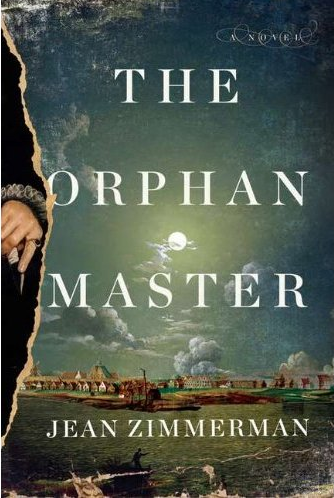
The Orphanmaster is another National Public Radio recommendation for people who like historical fiction, which I really do. I remember being a kid, and yawning my way through history, memorizing dates, it all seemed so irrelevant. Discovering historical fiction was like a light going on in a dark room for me – clever authors have found ways to illuminate events otherwise beyond my comprehension or worse – events I have a hard time making myself care about.
Suddenly, the times are right now and relevant when the right author handles it, and it isn’t always easy to get it right. I have a few very favorite authors – Philippa Gregory, Zoe Oldenberg, Sharon Kay Penman, Jean Plaidy, Edward Rutherford – authors who do a lot of research before they ever sit down to write a novel, and from whom you can learn a lot. They get the nature of the dialogue right, they get the customs, traditions and mind-sets right, and they get it right when a person is born ahead of his or her time in terms of the challenges they face.
I couldn’t put Orphanmaster down. It has to do with an era in American history which barely gets a paragraph in many history books, when the Dutch had a colony on what is now Manhattan Island, and trading posts up what is now the Hudson, into what is now New York. It was New Amsterdam, and many of the street names in modern day New York reflect their Dutch origins.
The Orphanmaster‘s main character is not the Orphanmaster. He is a supporting character to the main character to a girl orphaned at 15, daughter of a Dutch man and wife who were not rich, but who did all right. They had a business, they traded, Blandine learned many things before they died, leaving her an orphan. She was determined to be what would now be an “emancipated minor,” but until she turned 16, she was semi-legally under the responsibility of the Orphanmaster, who sort of kept hands off and sort of watched out for Blandine. She lives on her own and is a successful trader, in her early twenties. She is also a very clean housekeeper, and has plans to grow her trading business, and has a serious suitor she intends to marry.

Orphans start disappearing, and we discover a monster, a witiga, is on the loose. Blandine, and her new friend Drummond, are intrigued and disturbed by the disappearance of orphans, and the bloody, ritualistic mutilations of the orphans by the legendary Witiga.
It’s well written. You want to keep reading and keep reading because you want to know how it ends and how they are able to solve the problem.
It’s not one of the best books I’ve ever read for one reason – the author had the main characters talk as if they were modern people, using modern language, like ‘stuff.’ There was great openness between Blandine and her male friends. Blandine made all her own decisions, made her own arrangements and had full freedom, going where she wanted, doing what she wanted. The author explains it as part of the Dutch system, where some women had a lot of freedom, but I have a really hard time believing in a Dutch colony in the late 1600’s that any woman had the freedom Blandine had. There are parts of the novel where I am reading fast because I want to know what happens next and I get stopped up because Blandine says or does – or even THINKS – in a way that is very modern, and I just can’t buy it.
We are who we are. There are many smart women. Most women through the centuries have had to learn to maneuver in whatever societal constrictions they have been allowed. I suspect there were a lot of societal restrictions in New Amsterdam, and Blandine’s freedom to take off with only her male servant, to run off and live with a man not her husband (even though they are both escaping death sentences), to live an unescorted life . . . I just have a hard time buying it. I know how restricted women are even to day. Four hundred years ago, women were more restricted, and worse, we bought into it. We didn’t have a lot of choices.
So I like this book, and I think there is a lot of information that is true of the settlement of New Amsterdam, I loved the geography and the physical descriptions, I loved the maps included, I loved the descriptions of food and living conditions. I do not buy the heroine, not for one minute. I do not believe, in that historical context, she would have been possible.
Al Qaeda in Maghreb Spends Last Night in Timbuktu Destroying Ancient Manuscripts
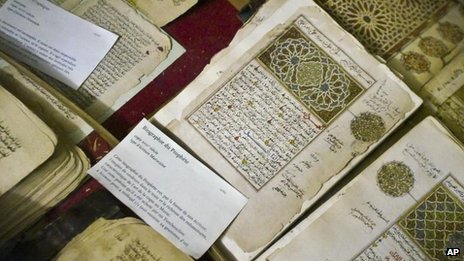
Ignorant militants destroy ancient Islamic documents and writings; from yesterday’s BBC News:
A group of jihadis came knocking at the gate late on Wednesday night last week. But the Ahmed Baba centre in the Malian city of Timbuktu is not the kind of library that would accept visitors after dark.
The Islamist militants tricked the guard and said they were coming to secure the place. But once inside, they ransacked the centre’s reading room.
When historian Abdoulaye Cisse arrived early in the morning, the pile of ashes was still warm.
“They probably spent most of the night in there,” he said.
Dozens of empty handcrafted boxes still litter the floor of the hallway. Ashes haven’t been removed yet either.
A few people come in and out surveying the irreparable damage and lament the remains of a cultural trove kept in Timbuktu for centuries.
Treasure trove of African history
At least 2,000 manuscripts were stored in this centre that was opened in 2009, funded by the South African government.
The project was meant to catalogue and preserve the city’s historical documents, many of which continue to be held by families or smaller libraries.
Another 28,000 were due to be transferred to the Ahmed Baba premises but were instead sent to the capital after al-Qaeda militants arrived in the city last year.
Each box is tagged with a reference number and if the search is properly done, these tags should reveal the full extent of the damage.
It could also reveal how many were simply stolen.
“These fighters know too well how much these papers are valued, it’s a huge wealth that will be impossible to replace,” Mr Cisse told the BBC.
The Institute’s manuscripts date back to the 13th century (file image)
“When I surveyed the reading room, I found about 30 left so I brought them home to secure them,” he said.
The offending texts ranged from history to geography and astronomy, medicine and Islamic law; writings dating back in some cases as far as the 13th Century.
In the reading room, shelves were emptied and the desk equipped with a magnifying glass vandalised.
Named after a saint of the ancient city who wrote many manuscripts himself, the Ahmed Baba centre stands out for its modernity but was designed to echo the famous Timbuktu style of dry-mud walls.
The Islamist militants prepared to flee last week knowing that an assault by the French-led forces on their positions here was imminent.
But in their haste, they took the time to commit one last act of vengeance.
They had sparked worldwide condemnation last year when they destroyed sacred tombs and shrines designated as Unesco World Heritage sites on the pretext that they violated principles of Islamic law.
Timbuktu was a centre of Islamic learning from the 13th to the 17th Centuries
700,000 manuscripts had survived in public libraries and private collections
Books on religion, law, literature and science
Elhadj Djitteye, who used to guide visitors in town, reckons that the fighters linked to al-Qaeda carried out the attack on the library in response to the French military intervention ordered earlier in January by President Francois Hollande.
Noting that the jihadis hadn’t touched the manuscripts in 10 months of occupation, Mr Djitteye sadly comments that they “hit Timbuktu straight at its heart”.
The militants’ destructive parting gesture left many residents feeling that another part of their celebrated city’s history had just been erased.
The people of Timbuktu have been anxious to return to some kind of normal life since the French and Malian troops entered they city and were hailed as “liberators”.
Reminders of the extremists, like the black banners proclaiming sharia at the city gates, are being removed.
But in just under a year, the Islamist militants have inflicted lasting damage on Mali’s most renowned cultural centre. The scars left by Timbuktu’s occupation are likely to take much longer to heal.
• Timbuktu was a centre of Islamic learning from the 13th to the 17th Centuries
700,000 manuscripts survive in public libraries and private collections, books on religion, law, literature and science
• Added to Unesco world heritage list in 1988 for its three mosques and 16 cemeteries and mausoleums
• They played a major role in spreading Islam in West Africa; the oldest dates from 1329
• Islamists destroyed mausoleums after seizing the city
The Death of Bees by Lisa O’Donnell
Death of Bees was another powerful recommendation by National Public Radio.

I believe in a greater power, in a God who sends things my way and that I am meant to be paying attention. Several books have been recommended to me lately which I didn’t choose, or might have avoided had I known how painfully they dealt with poor parenting and children in the depths of horrific poverty.
Here is what the lead into the book says:
Today Is Christmas Eve,
Today is my birthday,
Today I am fifteen,
Today I buried my parents
in the back yard.
Neither of them were beloved.
Oh my goodness! I am sucked in immediately. And immediately I am overcome by the grinding nature of poverty, the enormous amount of energy it takes just to be fed, to have a roof over your head, to function in the bureaucracy that seeks to ameliorate the burdens of poverty.
I am horrified by the lives of innocent children in the hands of people who should never have responsibility for anyone, even themselves, their decision making skills are so non-existent. There are parents who have no idea what self-sacrifice GOOD parenting requires, who raise children who are often trying to survive their own parents.
The Death of Bees has redemption. It has two sisters who love one another and are smarter than the average child. It has a neighbor who notices, not in a snoopy or intrusive way, but in a kind, helping and ultimately sacrificial way. It has moments of black humor, when the neighbor’s dog keeps digging at the parental graves in the backyard and bringing bones inside just at the worst moments.
Ultimately, it is a tale of survival, in spite of the parents, in spite of the system, in spite of betrayals by family and friends. There is a glimmer of hope that life may be different for these sisters, if they can survive their upbringing and overcome their childhood.
Now, go read the book 🙂
Amitav Ghosh and River of Smoke

The National Public Radio website recommended this book as one of the best historical fiction reads, and I had never heard of it, so I ordered it. I ordered it in spite of the little voice I had in my head reminding me that this was the second in a trilogy, that the first is Sea of Poppies. I was too eager. I wanted to jump right in, and the review said it could be read stand-alone. I had read Ghosh’s Glass Palace a couple years ago for book club, loved it, and was eager to read this one.
With a raging cold and no possible way I can be around humanity, it was a good time to start. Just picking up the book, it has a dense feel. Once you start, it is like being suddenly in a whirlpool, drowning in new words, characters who have more than one name and more than one identity, whirling between England, Mauritius, Hindustan, Gujerat, Hong Kong, Macau and China, whirling between cultures and professions and trades, but oh, what a ride.

It would have been helpful to be reading River of Smoke on an iPad, where I could poke at a new word and it would give me the meaning, but in truth, you can guess a lot of the meaning of the vocabulary from the context. The seafarers all speak a language sort of like Jack Sparrow, a pidgen language filled with simplified grammar and with words from many nations and cultures. It forces you to slow down. It’s worth it. It would also be nice if you could poke on a place-name and have Google Earth show you where it is. There used to be a website called Google Books, and you could put in a book and it would show you the places in which actions in the book took place; that would be particularly handy reading this book, provide context in place-relations.
But reading slowly is it’s own reward. This book has depth, depth of character, depth of textures and senses, and depth of morality. I love a book like this where you can smell the smoke drifting over the water, where you can smell the sewer and bloated animal corpses floating outside the foreign hongs of the Canton traders, you can feel the textures of the textiles and see their colors, you can taste the exquisiteness of Macau cuisine and you can hike in a Hong Kong not yet settled by anyone, Chinese or foreign.
The scope of time covered by the major part of the story is short, although there are years of back-stories for several characters. The period is 1837-8, during which the Chinese Emperor decides to put teeth in the long established edict against opium trade to China. The edict had been in place, but not enforced, and China watched her citizens sink into opium addiction and lowered productivity. The traders were making fortunes – shiploads of money. Opium was grown in India and shipped from there to China.
When the ban against shipping opium into China is announced, many traders believe it is just another attempt to attain greater bribes on the part of the mandarins, and decline to obey. There is great debate, and while it is lively in the book, it is based on documents from that era, many of the arguments word for word. Traders stood to loose a great deal of money, in truth, it would ruin most of them to lose their shipments.
There is a side story I also like, that of the botanical trade between China and England, and the importation of many of the garden plants we take for granted today, which were unknown until sent from China. Camellia – one of which is the plant for tea, did you know that? Roses, azaleas, orchids – many many familiar plants would be missing from our gardens were it not for their introduction during this period.
Ghosh gives us disparate characters of many cultures and upbringings, and slowly weaves them together, each one tangential to all the others, some closely interwoven. It is a fascinating read, and I can’t wait for the next volume. I may have to go back and read Sea of Poppies while I am waiting.
US Sex Trafficking Ring Raided
From BBC News; this is not a “victimless” crime:
Twelve arrested in US raid on Latin sex-trafficking ring
Mr Morton said the case should be a ‘wake-up call’
Another 44 people have been detained. Eleven women from Central America and Mexico, most in their 20s, were freed.
The women were reportedly forced to have sex with up to 30 men a day, charging $30 (£19) for each act.
The gang is thought to have been smuggling women since 2008, moving them to different cities every week in the south-eastern US.
The US authorities have indicted eight men and four women. Most of the other detainees are said to be clients.
The sex-trafficking ring served mostly ethnic Latino immigrants in larger cities and rural communities of Florida, Georgia and the Carolinas, the authorities said.
One of the indicted, a Mexican citizen, is accused of having threatened to send one woman back to Mexico if she did not have sex with at least 25 men a day.
Immigration and Customs Enforcement Director John Morton said 967 arrests in connection with people trafficking and sex tourism were made last year alone.
“To those who would believe that sex trafficking doesn’t happen in America, reflect on this case and think again,” Mr Morton said at a news briefing.
Most of the 44 detainees were reportedly non-Americans and would face court action. Those who were illegal in the country would be deported, said Mr Morton.
The scale of human trafficking in the US is hard to gauge, but the National Human Trafficking Resource Center hotline, operated by Polaris Project since December 2007, has received more than 57,000 calls from every state in the union.
Incidences of sex and labour trafficking have been reported in all 50 states in the US, and the District of Columbia, in the two years leading up to 2012.
John the Baptist Illuminated
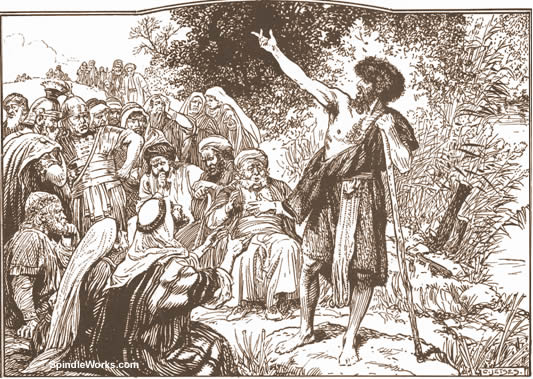
Today’s Gospel reading in The Lectionary is the very first chapter of Mark, featuring John the Baptist. As I read it, I had a memory flash of sitting in the Anglican Church in Kuwait, hearing a reading on John the Baptist’s Feast Day, a new reading I had never heard before, and it was beautiful, read in the rich, plummy tones of British English by their Ambassador. At the end, he said it was from the Quran.
John the Baptist in the Quran?
I was so ignorant about so many things. I still have so much to learn.
Here is today’s reading from Mark:
Mark 1:1-8
1The beginning of the good news* of Jesus Christ, the Son of God.*
2 As it is written in the prophet Isaiah,*
‘See, I am sending my messenger ahead of you,*
who will prepare your way;
3 the voice of one crying out in the wilderness:
“Prepare the way of the Lord,
make his paths straight” ’,
4John the baptizer appeared* in the wilderness, proclaiming a baptism of repentance for the forgiveness of sins. 5And people from the whole Judean countryside and all the people of Jerusalem were going out to him, and were baptized by him in the river Jordan, confessing their sins. 6Now John was clothed with camel’s hair, with a leather belt around his waist, and he ate locusts and wild honey. 7He proclaimed, ‘The one who is more powerful than I is coming after me; I am not worthy to stoop down and untie the thong of his sandals. 8I have baptized you with* water; but he will baptize you with* the Holy Spirit.’
This is from an Islamic website, Soundvision, one which uses many sources to illuminate the teachings of the Quran and the Bible:
The birth of Prophet John is miraculous because he is the offspring of a barren mother and an elderly father. His father, it should be noted, was also a Prophet named Zecheriah.
“‘Zecheriah, We bring you the good news of the birth of a son whose name shall be John, one whose namesake We never created before.’ He said: ‘My Lord! How can I have a boy when my wife is barren and I have reached an extremely old age?’ He answered: ‘So shall it be.’ Your Lord says: ‘It is easy for Me’, and then added: ‘For beyond doubt, I created you earlier when you were nothing’ (Quran 19:7-9).
“Zecheriah exclaimed: ‘My Lord! How shall I have a son when old age has overtaken me and my wife is barren?’ He said: ‘Thus shall it be; Allah does what He wills'”(Quran 3:40).
With the birth of John, Allah granted Zecheriah his desire for an heir.
“And We bestowed favor upon Zecheriah, when he cried to his Lord: ‘Lord! Leave me not solitary [without any issue]. You are the best Inheritor.’ So We accepted his prayer and bestowed upon him John, and We made his wife fit (to bear a child). Verily they hastened in doing good works and called upon Us with longing and fear, and humbled themselves to Us” (Quran 21:89-90).
The beautiful qualities of John
Allah did not just miraculously grant Zecheriah a son. He made this child a blessing for his parents and beautiful in character. Prophet John is described in the Quran as chaste and righteous.
“Then Zecheriah prayed to his Lord: ‘O Lord! Grant me from Yourself out of Your grace the gift of a goodly offspring, for indeed You alone heed all Prayers. As he stood praying in the sanctuary, the angels called out to him: ‘Allah gives you good tidings of John, who shall confirm a command of Allah, shall be outstanding among men, utterly chaste, and a Prophet from among the righteous” (Quran 3:38-39).
“‘O John! Hold fast the Book with all your strength. We had bestowed wisdom upon him while he was still a child; and We also endowed him with tenderness and purity; and he was exceedingly pious and cherishing to his parents. Never was he insolent or rebellious. Peace be upon him, the day he was born, and the day he will die, and the day he will be raised up alive. (Quran 19: 12-15).
Part of a line of honored Prophets
Finally, as mentioned above, Prophet John is one of the Prophets Muslims must believe in. He is one of the 25 mentioned in the Quran.
“And We bestowed upon Abraham (offspring) Isaac and Jacob and each of them did We guide to the right way as We had earlier guided Noah to the right way; and (of his descendants We guided) David and Solomon, Job, Joseph, Moses and Aaron. Thus do We reward those who do good. (And of his descendants We guided) Zecheriah, John, Jesus and Elias: each one of them was of the righteous.” (Quran 6:84-85).
Recent Comments
intlxpatr on Shampoo Ginger tigerbutterya0c5ff1d… on Shampoo Ginger intlxpatr on British Soldier Kidnapped, Esc… John on British Soldier Kidnapped, Esc… intlxpatr on British Soldier Kidnapped, Esc… Wikipedia Donate Button

Amazina


Early Voting in Florida


