Sweet and Clear

The morning dawned sweet and clear, it is 50°F / 10°C and there is no dust! No dust! If there is one thing a dust storm is good for, it is that it makes us truly appreciate how sweet it is when there is NO dust storm.
Looking at the forecast for the rest of the week, it is soon approaching 90°F – March is the great transition between winter and summer. It happens too fast for me, I wish for a few more weeks of the temperate weather, when we can go out and walk and breathe the cool air (when it is not a dust storm.)
People are already talking about putting away their winter clothing.
More Dust 5 March 2008

This is what the morning looks like. There is dust in the air, there is dust on my windows. This dust is not like sand blowing around; there isn’t anything accumulating on the roads, at least from what I can see. The temperature has dropped once again, and it is 57°F / 14°C at 0630 with “heavy blowing widespread dust”.
New Crop Palm Trees
Sitting over a long lunch, a friend asked me if I could remember my earliest impressions of Kuwait, and all I could remember was that the traffic speeds scared the hell out of me. Then, yesterday morning, we were driving on 40 and my memory was jogged; I remember moving here from Qatar and thinking how GREEN Kuwait is.
Qatar is impeccably clean. Street crews are out all the time, insuring that the highways are immaculate. There are beautiful flowers and wide boulevards. But when you leave Qatar, you realize your eyes are starved for green. I remember landing here the first time, and seeing pockets of green, even in very desert-like areas. I love the way the government has planted trees, especially palm trees. Your mind may not always register them, but it makes for a nicer environment.
I noticed recently a new crop of palm tree antennas. I think this is a total hoot. A generation ago, everyone in this area was buying Eiffel tower replicas for their roofs to bring in TV signals; now the communication towers are being disguised – and I love it. I blogged about this a while back but this time, I am going to challenge YOU – take your camera and open your eyes. When you see a disguised communications tower, shoot it.
How do you recognize them? They are taller than any real palm tree you have ever seen. They have no dead leaves and nothing on the trunk. They tend to be near hotels, but I also see them occasionally in a residential district.
You can blog it, or you can send it to me as a JPEG attachment and I will publish them. Be sure to tell us where it is taken. Here is the one I saw at the Hilton:
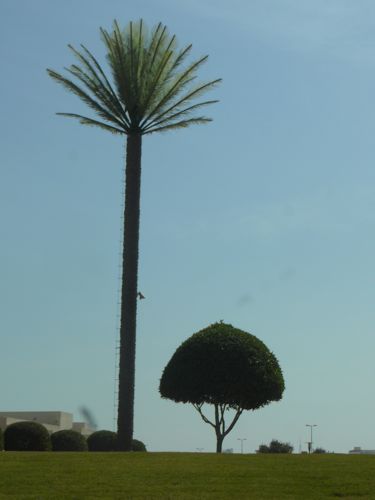
Here is the previous entry on Palm-Tree-Antennas.
And bravo to whoever came up with this idea – it is clever and it is a great disguise for those communication towers. Gives me a grin whenever I see them.
No sunrise today; the dust is rolling in and the sun can barely be seen. The temperature at 0830 is 66°F/19°C.
First Sunrise in March
Sunrise is starting to look a lot like summer – not so many clouds to make it more dramatic. We still have some clarity, the sky is still more blue and less hazy, but every sign is there that the cold winter is over and summer is well on its way. It is 48°F / 9°C, and there isn’t a cloud in the sky, only that wicked, poisonous haze hanging over the horizon.
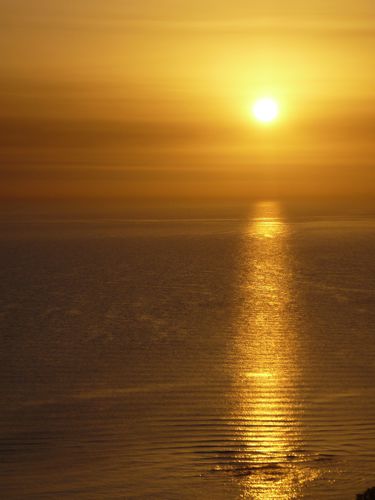
Back to Work Sunrise
Last night, in the middle of the night, I thought I heard raindrops on the window. I was too drowsy to get up and look, but this morning I can see the pavement is damp and small almost-puddles, so I think we had a small shower, at least where I live.
The sky looks like it might turn blue, well above the horizon, but the horizon is thick and threatening – it almost reminds me of Fires of Kuwait, the award winning show at the Kuwait Science Center about the teams who put out the fires set by Saddam Hussein’s retreating forces as they tried to inflict one final devastation on the Kuwait economy. I can’t imagine what it must have been like here while the wells were being capped, and I wonder if anyone is keeping statistics on the history of health issues of those who were here during that terrible time.
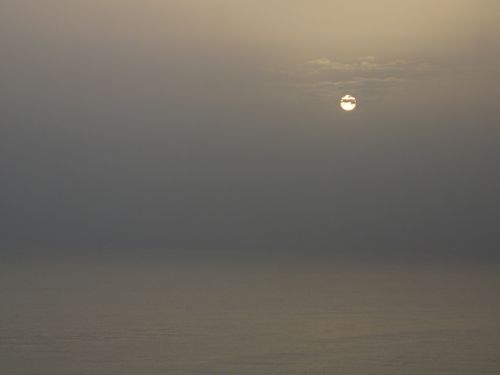
It is 55°F / 13°C at 0700; Weather Underground: Kuwait shows no precipitation, so maybe I imagined it.
History of Architecture in Old Kuwait City (3)
I am quoting so much from Saleh Abdulghani Al-Mutawa. Architect, that you may think you don’t need to run out and buy the book but I assure you, I am only sharing with you a few of the gems I found within. The author has done so much research with such loving attention that the book is full of treasure, every page offers something worthy.
The Year of Demolish
It is a sad memorial in Kuwait’s history. In Rajab 1289 A.H. (i.e. in the middle of the nineteenth century), heavy rains accompanied by severe winds hit the old Kuwait city, and demolished most of the mud houses. Sea waves went high and hit and wrecked ships. It was a disaster for Kuwaitis.
A second natural disaster took place in Kuwait on 30 November 1954 when heavy rains fell and demolished houses and forced 18,000 Kuwaitis to seek refuge in newly built schools. Houses built of mud and a little cement were severely affected, while houses built of rock were not affected.
My Kuwait friends – tonight, instead of going out in your cars, stay home! Sit with your grandparents and ask them about the house they grew up in. Ask them about the meals they cooked. Ask them about the heavy rains, so heavy that they could destroy houses and force 18,000 Kuwaitis to abandon their homes and go stay in schools. These are amazing stories – learn your stories from your grandparents . . . and then come tell us all the stories in your own blogs. If you don’t have a blog, or if you want to share here, you are welcome.
Some of my Kuwait friends ask why I care more about these things than the Kuwaitis. First – my Kuwaiti friends care. In my country, we call these people “the silent majority.” Every now and then the majority energizes and asserts itself. Kuwaitis care. Change is happening, it happens slowly. Keep the faith.
Second – I live here. I may not be Kuwaiti, but I care about the places where I live. If God has placed me here, I trust that he has his reasons, and it is my obligation to him to learn as much as I can and to serve – wherever he may place me. He placed me in Kuwait.
Tomorrow I will print my very favorite part of this book – where it describes family living. Meanwhile, run out and buy your own copy. There is so much I am not covering. This book is a part of your heritage.
History of Architecture in Old Kuwait City (2)
I love this book. It is such a treasure. For those of you who have ever wondered about the construction of old Gulf dwellings, this book is a MUST have – so much detail, so much to help us understand what we are seeing.
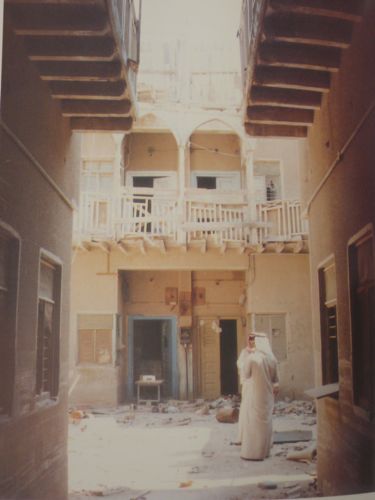
More from author Saleh Abdulghani Al-Mutawa, Architect:
House design and location specified unity existing in the Kuwaiti society. In old times, the poor livednear the rich, where no differences between them. The only difference was that the houses of the rich were vast. Ordinary Kuwaiti house, occupied by the majority of Kuwaitis, consisted of a vast courtyard, surrounded by many rooms, and a hallway secured privacy to the family by separating the house from the street. In that architectural design, the courtyard ventilated the house to find it cool at night and after sunset. This was due to the exchange of radiation between the floor of the courtyard and the outer space. At night the house became cool and sleep was comfortable. During summer, the majority of Kuwaitis prefer to sleep in the courtyard or on the roof. Usually, there is a room on the roof used to store mattresses in or sometimes for napping. A small bath is usually located beside that room. . .
Walls were built of rock and mud, and decorated internally with white gypsum. Ceilings consisted of rows of jandal (trunks), basajeel (bamboo) and manqour (straw mats), covered with a 30cm or a 40cm layer of mud. In winter, when rain was heavy, that layer should be attended to and maintained by adding more mud. Houses of the rich used gypsum for protection. When wood was used in fixing the ceilings, thejandal was only 4 m long, and for the wide rooms they used square pieces of wood of 6m. The floor was covered with mud, then with tiles which was imported from neighboring countries. To let the water flow from the roofs, they used the wooded marazims (gutters) which extended from the roofs to the outside. In the houses there were wells for supplying the underground water, and there were pools to store water in.
As regards the houses of the rich, they were divided into a number of courtyards, each serving a certain purpose. There was a courtyard used to include a Diwaniya for male guests, consisting of a large room annexed with other buildings needed to accomodate the servants or for other purposes.
The other courtyard was located for family female members, including a number of rooms and bathrooms. A third courtyard was used as a kitchen, including the kitchen, storage room for fuel and a store room for the different kinds of food. There were more courtyards for the animals: goats, cows, horses. Kuwaiti houses also had a “baqadeer” (wind tower) which was a natural air-conditioner, not one Kuwaiti house was without it.
Liberation Day Sunrise
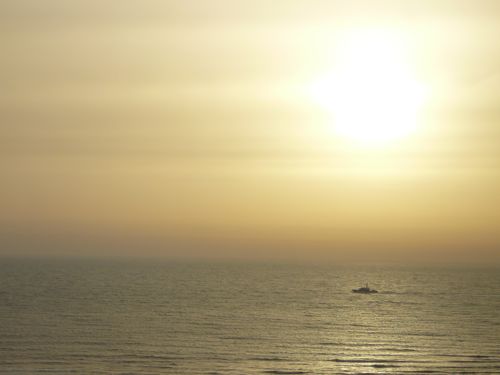
It is already 61°F / 16°C at 0800 in the morning – looks like another fabulous February spring day ahead . . . but maybe a little grey. It was grey at sunrise, grey an hour later, and grey even now. Do you think it might burn off?
Drama Queen Sunrise
Drama drama drama – there was a thick band of something on the horizon today, and then gorgeous fluffy clouds above. The sun couldn’t even fight it’s way through the sludge of the thick band, but finally, it began to rise above:
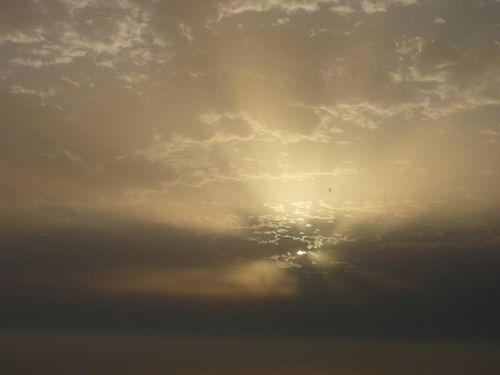
It is a warm 54°F/12°C early this morning and going up to 77°F/25°C at its peak today. Just warm enough – nor warmer, please!
Tired Sunrise
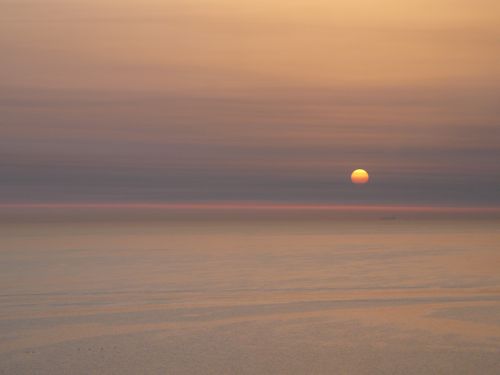
When I got up this morning I walked out to see how the sunrise was looking – and just had to laugh. You know how there are some mornings you wish you didn’t have to get out of bed? I think the sun was having that kind of morning, looks like he is struggling a little – it was just a tired sunrise this morning:
Recent Comments
intlxpatr on Shampoo Ginger tigerbutterya0c5ff1d… on Shampoo Ginger intlxpatr on British Soldier Kidnapped, Esc… John on British Soldier Kidnapped, Esc… intlxpatr on British Soldier Kidnapped, Esc… Wikipedia Donate Button

Amazina


Early Voting in Florida


 Here There and Everywhere