Child Marriage Increases Due to Financial Crisis
I have mixed feelings about child marriage. On one hand, girls are so immature in their teen years, and their bodies are not fully formed for child bearing. On the other hand, they are physically mature, and the hormones are raging.
A good friend married off her daughter at fifteen. She was actually “married” by contract at fourteen, but the families waited for the official marriage until she was fifteen. I was heartsick, but the girl herself was delighted. She liked the man she was marrying. She had no fears, no concerns. She started having babies – and she continued going to school, through university. I know it can work; I have seen it.
On the other hand, selling off a thirteen year old to a man she has never met, especially an OLD man, fills me with disgust. It’s a whole different situation.
Neither is it such a good thing, in our own culture, to have fourteen year old girls raising their babies with no husband around to be a father to the child. We all have some problems to face working out mating.
This is an excerpt from an article I found on Huffpost for International Women’s Day. You can read the whole article here.

Child Marriage On Rise As Global Crises Increase, New Study Says
Jessica Prois
Jessica.Prois@huffingtonpost.com
Half of all girls living in the world’s 51 least-developed countries have been married before the age of 18, according to the U.N. The World Vision study, released to coincide with International Women’s Day on March 8, found that such marriages are on the rise due to an increase in global poverty and crises. Researchers highlighted that parents living in areas prone to political instability or natural disasters are more likely to marry off their daughters at a young age, largely due to fear from these crises. Children living in these areas, such as South Sudan or Somalia, are also more likely to be forced into child marriage, the study said.
Erica Hall, Child Rights Policy director at World Vision, explained that the root causes of child marriage — poverty and gender inequality — are being exacerbated.
“Worldwide, there are increases in security issues and increases in natural disasters linked to global warming,” Hall said. She cited the recent humanitarian crisis in the Sahel region of North Africa and Somalia due to drought and political unrest as an example in which many girls often quit school and are sent to work as domestic workers or are married, to reduce the burden on their families.
For Bangladeshi families such as Humaiya’s, drought and lack of food are the primary reasons to discharge a young girl from her home. One of the most unjust impacts of this is education inequality. World Vision’s research in Bangaldesh revealed that girls who were unable to attend school due to disruptions from natural disasters were more likely to marry early.
Humaiya speaks out about child rights issues such as early marriage and became an advocate through World Vision, which introduced Humaiya to HuffPost. She said she knows that her ongoing education in Bangladesh is rare. Some 66 percent of girls in Bangladesh are married before age 18, according to World Vision. Humaiya works to educate her peers in her village and speaks to government leaders, asking them to do more to stem child marriage and provide greater education opportunities.
But Humaiya told The Huffington Post that she has seen many of her friends married off, and described how disconnected she feels from the girls she has been friends with for five or more years.
“Now they are good cooks,” she said. “They are like my mother, even though we are the same age. I don’t know how to manage a family, but they know.”
She explained that her mother was 16 when she was forced to get married, and lost a son by the time she was 18 years old.
In Bangladesh, the law is that girls can’t marry until they’re 18 and boys can’t marry until they’re 21. But the rules are not implemented, Hall said.
“The law is not the problem,” she pointed out. “You have to have political will to do that and capacity and understanding among law enforcement. The goal is to get governments to enforce these things, and — this is such an NGO word — but it has to be a holistic approach.”
Hall pointed out that requiring marriage registration and working on a grassroots community level is key to creating systemic change. She cited examples such as the Grandmother’s Project in southern Senegal, a nonprofit partner of World Vision that focuses on reducing early marriage, female genital mutilation and early pregnancy by creating an intergenerational dialogue about how to shift the gender-role paradigm.
“That’s been successful — you know how grandmothers are — in getting an idea like that across that it doesn’t have to be part of the tradition,” Hall said.
World Vision also works with religious leaders to address the practice of child marriage.
“There is a strong foundation in religion that children should be protected and they don’t want girls dying in childbirth and these leaders say, ‘This is a tenet of our faith and this is why we are going to start speaking out against it,'” Hall explained.
The issue of child marriage has gained momentum outside of the NGO world as well. Former Secretary of State Hillary Clinton announced last October a public-private initiative that focuses on ending child marriage by increasing education opportunities, providing training among officials and tracking every country’s legal minimum age of marriage — in particular in Humaiya’s home country of Bangladesh.
START with Sea of Poppies, by Amitav Ghosh
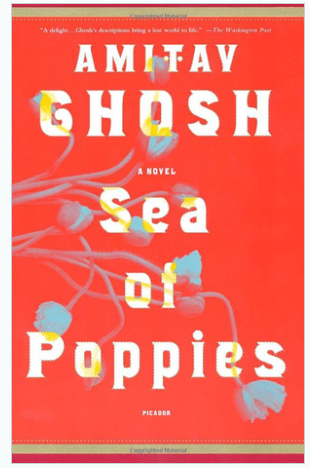
I recently wrote a book review on River of Smoke, by Amitav Ghosh, which held me spellbound, so riveting that I had to order Sea of Poppies, which is actually the first volume of the trilogy. I had heard a review of River of Smoke on NPR and although it was written as the second volume in a trilogy, it can be read as a stand-alond.
Yes. Yes, it can be read as a stand-alone, but it is so much easier, I can state with authority, if you read them in order. Once I started Sea of Poppies, I also discovered an extensive glossary in the back, several pages, a list of the words, annotated with suggested origins, and it adds so much color to an already brilliantly colored novel. Much of both novels uses words from many cultures, and words that have been formed by another culture’s understanding of the words (some hilarious). If you like Captain Jack Sparrow, you’re going to love the polyglot language spoken by ship’s crews from many nations trying to communicate with one another. It can be intimidating, but if you sort of say the words out loud the way they are written at the beginning, you begin to find the rhythm and the gist of the communication, just as if you were a new recruit to the sea-going vessels of the early 1800’s. I loved it because it captured the difficulties encountered trying to say the simplest things, and the clever ways people in all cultures manage to get around it, and make themselves understood.
Sea of Poppies starts in a small Indian village, with one of the very small poppy gardens, planted on an advance from an opium factory representative, thrust upon the small farmer, with the result that most small Indian farmers converted their entire allotment from subsistence foods to poppies. Ghosh walks us through an opium processing factory, which is a little like walking through the circles of hell. We meet many of the characters we will follow in River of Smoke, and learn how this diverse group bonded into one sort of super-family through their adventures – and misadventures – together.
It is an entirely engrossing work. Sea of Poppies was short listed for the Man Booker award, and was listed as a “Best Book of the Year” by the San Francisco Chronicle, Chicago Tribune, Washington Post and The Economist. The theme is the opium trade, leading to the Opium Wars, with China, and is a chilling indictment of how business interests manipulate a population’s perceptions of national interests to justify . . . well, just about anything, in the name of profit.
The theme is woven through human stories so interesting, so textured, so compelling, that you hardly realize you are reading history and learning about the trade, cultures, travel, clothing, traditions, religions, food, and motivations as you avidly turn the pages.
I can hardly wait for the third volume. Get started now, so you’ll be ready for it when it comes out!
Stay With A Violent Man, You End up Dead
No, no, this was not Rihanna and Chris Brown, it just sort of SEEMED familiar, like their story. Bottom line, Law and Order SVU is saying, if a guy hits you, abuses you, it is not likely to get better. You stay, you risk, at the very least, continued and increasing damage at best, increasing violence toward those you hold dear, even brothers, sisters, mothers, fathers and CHILDREN to the self-centeredness of the violent abuser, and ultimately, many abuse victims end up dead. It’s not a story about Rihanna and Chris; it’s a story about every woman who stacks up economic realities against a violent outcome and chooses to stay.

‘Law & Order: SVU’ Tackles The Chris Brown-Rihanna Story Of Abuse, Reconciliation
It’s a staple of the “Law & Order” franchise to rip stories straight from the headlines. For the latest episode of “Law & Order: Special Victims Unit,” the case was one that is very familiar to music fans, and remains as controversial today as it was when the story first broke in 2009. Using obvious counterparts, “SVU” tackled the Chris Brown and Rihanna story.
Brown assaulted Rihanna in 2009 before the Grammy Awards. The two have since reconciled and have remained linked romantically off and on since then. In the “SVU” episode they were Micha and Caleb. Just like Rihanna, Micha was assaulted by Caleb. The case went to trial, but the two reconciled. But “SVU” took their story further down a dark path.
In this fiction, Caleb finally went too far and killed Micha. “Shocked fans gathered in Manhattan tonight to mourn the death of rising talent, Micha Green, whose body was discovered a few hours ago in Bermuda,” a reporter said in the aftermath of hear death.
Did they take it too far? E! wondered that very thing, while Hollywood Life worried that the ending could hit too close to home for the real couple, writing, “Overall, the show took some liberties … but pretty much wrapped things up exactly as they are: Chris is a violent man and Rihanna accepts a bad man in her life. How sad!”
Maldives Rape Victim Sentenced to 100 Lashes for PreMarital Sex
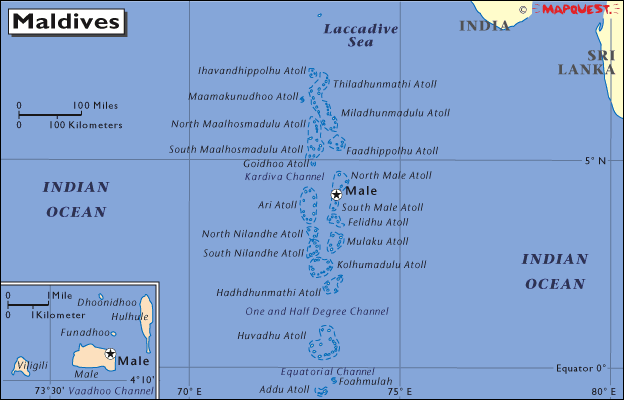
Where are the Maldives Islands?
Raped by her stepfather, impregnated against her will, her stepfather killed the baby, and now, sentenced by Sharia law to 100 lashes for pre-marital sex. How can this be justice? (This is from BBC News)
Maldives girl to get 100 lashes for pre-marital sex
By Olivia Lang
BBC News
A 15-year-old rape victim has been sentenced to 100 lashes for engaging in premarital sex, court officials said.
The charges against the girl were brought against her last year after police investigated accusations that her stepfather had raped her and killed their baby. He is still to face trial.
Prosecutors said her conviction did not relate to the rape case.
Amnesty International condemned the punishment as “cruel, degrading and inhumane”.
The government said it did not agree with the punishment and that it would look into changing the law.
Baby death
Zaima Nasheed, a spokesperson for the juvenile court, said the girl was also ordered to remain under house arrest at a children’s home for eight months.
She defended the punishment, saying the girl had willingly committed an act outside of the law.
Officials said she would receive the punishment when she turns 18, unless she requested it earlier.
The case was sent for prosecution after police were called to investigate a dead baby buried on the island of Feydhoo in Shaviyani Atoll, in the north of the country.
Her stepfather was accused of raping her and impregnating her before killing the baby. The girl’s mother also faces charges for failing to report the abuse to the authorities.
The legal system of the Maldives, an Islamic archipelago with a population of some 400,000, has elements of Islamic law (Sharia) as well as English common law.
Ahmed Faiz, a researcher with Amnesty International, said flogging was “cruel, degrading and inhumane” and urged the authorities to abolish it.
“We are very surprised that the government is not doing anything to stop this punishment – to remove it altogether from the statute books.”
“This is not the only case. It is happening frequently – only last month there was another girl who was sexually abused and sentenced to lashes.”
He said he did not know when the punishment was last carried out as people were not willing to discuss it openly.
Putting TEETH into Anti-Rape Solutions :-)
Thank you, Hayfa, you always find the most amazing articles. What I love about this one is that if everything is where it is supposed to be, nobody gets hurt. Only invasive behavior results in . . . .lets hope excruciating pain 🙂 It also gives an attacker something else to focus on. This invention is a public service.
Rape-aXe: The Anti-Rape Condom
This is so brilliant! An anti-rape female condom invented by Sonette Ehlers.… A South African woman working as a blood technician with the South African Blood Transfusion Service, during which time she met and treated many rape victims. The device, known as The Rape-aXe, is a latex sheath embedded with shafts of sharp, inward-facing microscopic barbs that would be worn by a woman in her vagina like a tampon. If an attacker were to attempt vaginal rape, their penis would enter the latex sheath and be snagged by the barbs, causing the attacker pain during withdrawal and (ideally) giving the victim time to escape. The condom would remain attached to the attacker’s body when he withdrew and could only be removed surgically, which would alert hospital staff and police. This device could assist in the identification and prosecution of rapists.

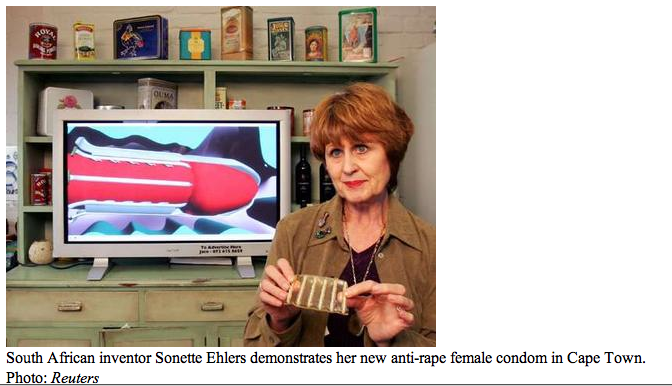
A medieval device built on hatred of men? Or a cheap, easy-to-use invention that could free millions of South African women from fear of rape, in a country with the world’s worst sexual assault record?
Dubbed the “rape trap”, trademarked “Rapex”, the condom-like device bristling with internal hooks designed to snare rapists has re-ignited controversy over South Africa’s alarming rape rate, even before plans for its production were announced in Western Capethis week.
Some say the inventor, Sonette Ehlers, a former medical technician, deserves a medal, others that she needs help.
The device, concealed inside a woman’s body, hooks onto a rapist during penetration and must be surgically removed.
Ms Ehlers said the rape trap would be so painful for a rapist that it would disable him immediately, enabling his victim to escape; but would cause no long-term physical damage and could not injure the woman.
Some women’s activists call the device regressive, putting the onus on women to address a male problem.
Charlene Smith, an anti-rape campaigner, said it “goes back to the concept of chastity belts” and would incite injured rapists to kill their victims.
“We don’t need these nut-case devices by people hoping to make a lot of money out of other women’s fear,” Ms Smith said.
But Ms Ehlers contends that South Africa’s rape problem is so severe women cannot wait for male attitudes to improve.
“I don’t hate men. I love men. I have not got revenge in mind. All I am doing is giving women their power back,” Ms Ehlers said. “I don’t even hate rapists. But I hate the deed with a passion.”
The United Nations says South Africahas the world’s highest per capita rate of reported rapes – 119 per 100,000 people. Analysts say the total, including unreported rapes, could be nine times higher.
Ms Ehlers sees her invention as particularly attractive to poorer black women, because they often walk long distances through unsafe areas to and from work. She foresees women inserting the device as part of a daily security routine.
She said a majority of women surveyed said they were willing to use the device, which will go into production next year and sell for one rand (20 cents).
Ms Ehlers said she was inspired after meeting a traumatised rape victim who told her, “If only I had teeth down there.”
Relationship Anxiety Hard on Your Immune System
Relationship Anxiety Is Hard On The Immune System, Study Says
Katherine Bindley
katie.bindley@huffingtonpost.com
This is from AOL News/Huffpost:
Relationship anxiety is known to be tough on a person’s mental well-being, but a new study suggests that fear of rejection — and worry that someone doesn’t love you enough — can also serve as chronic stressors that tax the immune system.
In a study of 85 couples who’d been married for an average of 12 years, a team of researchers led by Lisa Jaremka with Ohio State University College of Medicine examined the level of anxiety participants had about close relationships, as well as samples of their blood and saliva.
They found that the levels of cortisol — a hormone associated with stress — were on average 11 percent higher in people with higher levels of attachment anxiety than those who were less anxious. In addition, the more anxious people had between 11 percent and 20 percent fewer T-cells, which help the body to fight off disease.
“The thing that was surprising was the magnitude of the difference, especially in the immune cells that we saw,” Jaremka told The Huffington Post. “Some of the differences in the immune cell numbers, between the higher and the less high anxious attached people, were on the magnitude of what you’d see between obese and non-obese people.”
Attachment styles are believed to be derived from the type of caregiving people experienced in childhood, but the effects extend to, and impact, relationships in adulthood.
Most people are bound to have some level of concern and stress during the ups and downs of a relationship, Jaremka explained to HuffPost. But those with higher levels of attachment anxiety are hypersensitive to signs that a person they’re close to will leave them on a regular basis. They’re also more likely to seek reassurance and interpret their partner’s behaviors in a negative way.
Because the team did not include study participants who fell on the very high end of the anxiously attached spectrum, it’s possible that the effects of relationship anxiety could be even greater than the study suggests. Incidentally, while more women in the study suffered from higher levels of attachment anxiety, the researchers saw the same elevated levels of cortisol and lower T-cells in the men who were anxious.
Previous research had already established that relationship anxiety can have negative effects on a person’s physical health, but less was known about how exactly the anxiety and the health effects related to one another.
According to the Wall Street Journal, it’s believed that about 20 percent of the population falls on the anxious side of the anxiously attached spectrum. Another 25 percent fall into the avoidant category, which means those people may not get close to their partner out of fear that it could lead to a loss of autonomy.
Experts told the Journal that emotional opposites are often initially attracted to one another, but they may eventually face obstacles if they exacerbate one other’s attachment tendencies. For example, an anxious person might push for more affection and attention. This behavior might make an avoidant partner pull further away, in turn, making the anxious person even more insecure.
Despite the negative effects that attachment styles can have on a person’s relationships and physical health, Jaremka explained these traits are not inalterable.
“Anybody that is experiencing something that feels like high levels of attachment anxiety would think, ‘Oh great I’m doomed, but I think it’s important to acknowledge the fact that just because you are highly anxiously attached now doesn’t mean you have to be that way forever,” Jaremka told HuffPost. “We do know based on research that people can change and people can be very anxiously attached in one relationship and not at all in a different relationship.”
So what kind of relationship can serve as an antidote to pre-existing anxiety? One with a secure partner.
“If they are a very caring and loving and responsive partner, who attends to your needs when you need them, who is there for you when you’re stressed…Those relationships seem to be the types of relationships that people are able to feel secure in and are able to overcome anxieties in, if they have them,” Jaremka said.
The study, titled “Attachment Anxiety Is Linked to Alterations in Cortisol Production and Cellular Immunity,” is slated to be published in the journal Psychological Science.
New Study Shows Taking Folic Acid Cuts Autism Risk 40%
I heard this yesterday on NPR and found this article today on the Huffpost/AOL News. The critical factor is that a woman needs to be taking folic acid supplements BEFORE she gets pregnant:
With autism now affecting one in 88 children in the U.S., many parents are searching for any step they can take to help lower their child’s risk of developing the disorder. A new Norwegian study joins a small but growing body of research that suggests a simple, low-cost option already exists: Taking folic acid during the earliest stages of pregnancy could lower a child’s odds of developing autism by nearly 40 percent.
“This is a relatively inexpensive way that parents can take action to possibly prevent risk of tube birth defects and autism,” Alycia Halladay, senior director for environmental and clinical Sciences for the advocacy group Autism Speaks, told The Huffington Post. Halladay did not work on the new study, which was published online in the Journal of the American Medical Association on Tuesday.
Researchers analyzed a sample of more than 85,000 children born in Norway between 2002 and 2008 to study the effect of taking a folic acid supplement — typically between 200 and 400 micrograms per day — from one month before a woman got pregnant to two months after. Some .10 percent of children whose moms took folic acid supplements were diagnosed with autism, compared to .21 percent of those whose moms did not — which is equal to 39 percent lower odds.
The study does not establish a cause and effect relationship between the vitamin and subsequent autism, and its authors do not know why folic acid may have a protective effect. Study researcher Pal Suren of the Norwegian Institute of Public Health told HuffPost that folic acid is critical to the synthesis of DNA, which could play some role in the connection. Folic acid may also affect how certain genes are turned on and off in the body, he hypothesized, saying it was “not biologically implausible” that folic acid supplementation has certain epigenetic effects.
The new study also raises questions about how much folic acid may be needed to lower autism risk, as well as what form it must come in.
“We do not know how other dosages would have affected the risk of autism, or whether it matters if folic acid is taken as single tablets or as part of a prenatal multivitamin supplement,” Suren said.
The researchers took steps to ensure that the decreased risk was not just because women who took folic acid were also engaged in other healthy behaviors. To control for that, they looked at fish oil use (assuming women who took fish oil were also likely to be healthy in other ways) and found no link between lower autism risk.
Since the early 1990s, groups like the Centers for Disease Control and Prevention and the U.S. Public Health Service have recommended that all women of childbearing age take 400 micrograms of folic acid daily to help prevent neural tube defects — birth defects of the brain and spinal cord including spina bifida and anencephaly. Since folic acid was added to the grain supply in 1998, the U.S. has seen a 26 percent decrease in those neural tube disorders, according to figures compiled by the March of Dimes.
The possibility of a link between folic acid consumption and lower autism risk is far more preliminary. A 2011, California-based study in the journal Epidemiology found that mothers of children with autism were less likely to have taken a prenatal vitamin in the three months before pregnancy or in the first month after getting pregnant, suggesting that so-called “periconceptional” use of prenatal vitamins may reduce autism risk. In the U.S., prenatal vitamins typically include between 400 and 800 micrograms of folic acid.
But folic acid is by no means a magic pill, experts caution. The fact that rates of autism diagnosis have skyrocketed in the past several decades despite more and more women taking folic acid shows how complex the origins of autism are. The exact causes of the disorder, which is characterized by social and communication difficulties and repetitive behaviors, are still unknown.
“This is one way that risk may be reduced, but this isn’t the only way,” said Halladay. “It’s an inexpensive way to potentially reduce the risk of autism, but there are a number of risk factors — genetics and other environmental factors — that solidly contribute to risk.”
“If Her Eyes are Seditious . . . “
Sheik Abdullah Daoud, Saudi Cleric, Says Even Young Girls Should Be Entirely Covered
02/04/13 04:17 PM ET EST AP
RIYADH, Saudi Arabia — A Saudi cleric says even girls who have not yet reached puberty should be covered from head to toe, citing instances of child molestation in the ultraconservative kingdom and elsewhere.
Sheik Abdullah Daoud made the remarks on the satellite channel al-Majd. He says many viewers watching the program had probably come across instances of sexual harassment as children.
He is not affiliated with the government nor considered a senior sheik.
Judge Mohammed al-Jazlani, a senior sheik, said Monday that such talk denigrates Islam and may push non-Muslims to view Islam negatively. He urged Saudis to ignore unofficial fatwas, or edicts.
Separately, a spokesman for Saudi Arabia’s religious police said online that the force can oblige a woman to cover her face “if her eyes are seditious.” He did not elaborate.
Why is no one protecting Saudi Arabia’s child brides?
The support of the Saudi monarchy and its apologists in the west means the barbaric practice of child marriage is unchallenged
Ali al-Ahmed
guardian.co.uk, Tuesday 8 November 2011 05.00 EST
Atgaa, 10, and her sister Reemya, 8, are about to be married to men in their 60s. Atgaa will be her husband’s fourth wife. Their wedding celebrations are scheduled for this week and will take place in the town of Fayaadah Abban in Qasim, Saudi Arabia.
The girls are getting married because their financially struggling father needs the money that their dowries will provide: young girls of this age can fetch as much as $40,000 each.
Many readers might be shocked at this news. How can it be legal? The answer is that Saudi Arabia has no minimum age for marriage, and it is perfectly legal to marry even an hour-old child.
Three Saudi ministries share the blame for allowing and facilitating child marriages. The health ministry is tasked with conducting genetic tests for couples considering marriage. Saudi law requires potential brides and grooms to provide certificates of genetic testing before marriages can officially proceed.
The justice ministry regulates the marriage process and issues licences. And the interior ministry registers families and documents the relationships between family members. It is also the most powerful government agency; it has authority over all other ministries and can direct their activities at will.
As with many pernicious practices, child marriage would not exist without tacit support and approval from the country’s leadership. Far from condemning child marriage, the Saudi monarchy itself has a long history of marrying very young girls.
Sarah, who is now a brilliant Saudi doctor, told me she was barely 12 when the late prince Sultan proposed to her after seeing her walking at a military base where she had lived with her father. Luckily, her father had the wits to claim that she was chronically ill, at which point the proposal was swiftly rescinded.
Camel festivals, held at his time of the year in Saudi Arabia, witness the practice called akheth (“taking”) in which girls aged 14 to 16 are “gifted” to the usually elderly members of the monarchy for a few days or weeks. This practice, reminiscent of the infamous droit du seigneur in medieval Europe, is maintained to this day with the monarchy’s protection.
Saudi Arabia has probably the highest number of child marriages in the Middle East and yet there has been almost no international outrage or objection directed at the practice. I have personally sent two letters to Ann Veneman, the director of United Nations Children’s Fund (Unicef), regarding the Saudi practice and asking her to make her views on the issue public, as she did with Yemen.
Instead, Unicef lauded Saudi efforts to protect child rights and even honoured Prince Naif, whose interior ministry is one of the departments overseeing child marriages. So no wonder the Saudi monarchy feels confident that such a practice can continue.
The US government has been similarly indifferent to the plight of child brides in the kingdom. In April 2009, I wrote to William Burns, the undersecretary of state, regarding the case of Sharooq, 8 – also from Qasim. I never heard back from him.
At a public conference, I asked a former senator, Chuck Hagel (seated next to Prince Turki al-Faisal, a former head of Saudi intelligence), if he personally or the US would accept the friendship and alliance of a family that allows child marriage. The answer was nothing short of shocking: “We cannot decide for other countries what is appropriate or not,” he said.
So far, no UN body, such as Unicef or the human rights council, has issued a single statement condemning child marriages in Saudi Arabia [see footnote]. In fact, not one country has made a statement in the human rights council on this issue, and not a single western government has asked the Saudi monarchy to stop the practice. The ugly tradition of child marriage thus continues with the help of the monarchy and its apologists in the west.
If any governments, especially in the west, are seriously concerned with this barbaric and medieval practice, they should ban the heads of Saudi justice, interior and health ministries from entering their countries. If this action were taken against government leaders facilitating crimes against children we would soon see a resolution of this issue.
Saudi Arabia must be pressured to set a minimum age for marriage and save children like Atgaa and Reemya.
• This footnote was added on 15 November 2011. Unicef would like to make clear that a statement was issued in 2009 by Ann Veneman, then its executive director, expressing deep concern about child marriage in Saudi Arabia.
The Orphanmaster by Jean Zimmerman
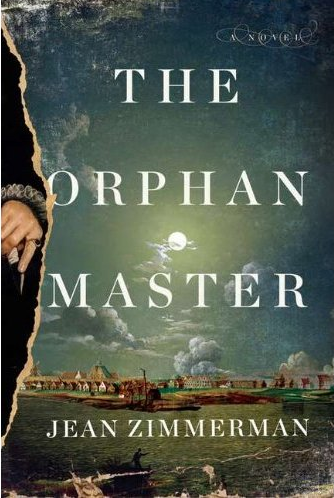
The Orphanmaster is another National Public Radio recommendation for people who like historical fiction, which I really do. I remember being a kid, and yawning my way through history, memorizing dates, it all seemed so irrelevant. Discovering historical fiction was like a light going on in a dark room for me – clever authors have found ways to illuminate events otherwise beyond my comprehension or worse – events I have a hard time making myself care about.
Suddenly, the times are right now and relevant when the right author handles it, and it isn’t always easy to get it right. I have a few very favorite authors – Philippa Gregory, Zoe Oldenberg, Sharon Kay Penman, Jean Plaidy, Edward Rutherford – authors who do a lot of research before they ever sit down to write a novel, and from whom you can learn a lot. They get the nature of the dialogue right, they get the customs, traditions and mind-sets right, and they get it right when a person is born ahead of his or her time in terms of the challenges they face.
I couldn’t put Orphanmaster down. It has to do with an era in American history which barely gets a paragraph in many history books, when the Dutch had a colony on what is now Manhattan Island, and trading posts up what is now the Hudson, into what is now New York. It was New Amsterdam, and many of the street names in modern day New York reflect their Dutch origins.
The Orphanmaster‘s main character is not the Orphanmaster. He is a supporting character to the main character to a girl orphaned at 15, daughter of a Dutch man and wife who were not rich, but who did all right. They had a business, they traded, Blandine learned many things before they died, leaving her an orphan. She was determined to be what would now be an “emancipated minor,” but until she turned 16, she was semi-legally under the responsibility of the Orphanmaster, who sort of kept hands off and sort of watched out for Blandine. She lives on her own and is a successful trader, in her early twenties. She is also a very clean housekeeper, and has plans to grow her trading business, and has a serious suitor she intends to marry.

Orphans start disappearing, and we discover a monster, a witiga, is on the loose. Blandine, and her new friend Drummond, are intrigued and disturbed by the disappearance of orphans, and the bloody, ritualistic mutilations of the orphans by the legendary Witiga.
It’s well written. You want to keep reading and keep reading because you want to know how it ends and how they are able to solve the problem.
It’s not one of the best books I’ve ever read for one reason – the author had the main characters talk as if they were modern people, using modern language, like ‘stuff.’ There was great openness between Blandine and her male friends. Blandine made all her own decisions, made her own arrangements and had full freedom, going where she wanted, doing what she wanted. The author explains it as part of the Dutch system, where some women had a lot of freedom, but I have a really hard time believing in a Dutch colony in the late 1600’s that any woman had the freedom Blandine had. There are parts of the novel where I am reading fast because I want to know what happens next and I get stopped up because Blandine says or does – or even THINKS – in a way that is very modern, and I just can’t buy it.
We are who we are. There are many smart women. Most women through the centuries have had to learn to maneuver in whatever societal constrictions they have been allowed. I suspect there were a lot of societal restrictions in New Amsterdam, and Blandine’s freedom to take off with only her male servant, to run off and live with a man not her husband (even though they are both escaping death sentences), to live an unescorted life . . . I just have a hard time buying it. I know how restricted women are even to day. Four hundred years ago, women were more restricted, and worse, we bought into it. We didn’t have a lot of choices.
So I like this book, and I think there is a lot of information that is true of the settlement of New Amsterdam, I loved the geography and the physical descriptions, I loved the maps included, I loved the descriptions of food and living conditions. I do not buy the heroine, not for one minute. I do not believe, in that historical context, she would have been possible.
New Mexico Bill Would Criminalize Abortions After Rape As ‘Tampering With Evidence’
And Republicans wonder why they have problems getting elected, why they are accused of war on women. This proposed law is not a whole lot different than Morocco’s law that the rapist can escape prosecution by marrying the rape victim. Like let’s just go back a couple centuries where women have no rights, and a rape victim is considered damaged property. So a rape victim who has an abortion is prosecuted for destroying evidence???’
New Mexico is an interesting state, historically Republican but trending Democrat. No wonder . . .
New Mexico Bill Would Criminalize Abortions After Rape As ‘Tampering With Evidence’
Laura Bassett
lbassett@huffingtonpost.com
A Republican lawmaker in New Mexico introduced a bill on Wednesday that would legally require victims of rape to carry their pregnancies to term in order to use the fetus as evidence for a sexual assault trial.
House Bill 206, introduced by state Rep. Cathrynn Brown (R), would charge a rape victim who ended her pregnancy with a third-degree felony for “tampering with evidence.”
“Tampering with evidence shall include procuring or facilitating an abortion, or compelling or coercing another to obtain an abortion, of a fetus that is the result of criminal sexual penetration or incest with the intent to destroy evidence of the crime,” the bill says.
Third-degree felonies in New Mexico carry a sentence of up to three years in prison.
Pat Davis of ProgressNow New Mexico, a progressive nonprofit opposing the bill, called it “blatantly unconstitutional” on Thursday.
“The bill turns victims of rape and incest into felons and forces them to become incubators of evidence for the state,” he said. “According to Republican philosophy, victims who are ‘legitimately raped’ will now have to carry the fetus to term in order to prove their case.“
The bill is unlikely to pass, as Democrats have a majority in both chambers of New Mexico’s state legislature.
UPDATE: 12:25 p.m. — Brown said in a statement Thursday that she introduced the bill with the goal of punishing the person who commits incest or rape and then procures or facilitates an abortion to destroy the evidence of the crime.
“New Mexico needs to strengthen its laws to deter sex offenders,” said Brown. “By adding this law in New Mexico, we can help to protect women across our state.”
Recent Comments
Kitchen on Isiais: Winding Down intlxpatr on Shampoo Ginger tigerbutterya0c5ff1d… on Shampoo Ginger intlxpatr on British Soldier Kidnapped, Esc… John on British Soldier Kidnapped, Esc… Wikipedia Donate Button

Amazina


Early Voting in Florida


