Kuwait Machine Gun?
From yesterday’s Kuwait Times.
Three Shot at by Teenagers
Two Kuwaiti citizens and a bedoon man were transferred to Jahra hospital after three teenagers shot them using a machine gun and ran away. The victims stressed they did not know why the assailants, who were travelling in a Japanese car, shot at them. The case is under investigation.
My comment: My husband, when I told him about this story, says that most people don’t know the difference between a machine gun and an automatic weapon, which can fire a series of shots in rapid succession. Somehow, the distinction fails to reassure me. Teenagers – children – with automatic weapons?? Where are these weapons coming from? How did they get their hands on them?
There has been a big to-do over Muna Al-Fuzai’s tongue-in-cheek article about Kuwait and subsequent defense of what she said.
Guys: Stop talking and listen for a change. Yes, Kuwait is a wonderful place, she is not saying differently. She is Kuwaiti and she loves Kuwait. She has a right to say what she sees and hears, and she has taken a courageous and controversial stand. You don’t have to agree with her, and she still has a right to her opinion. Did you notice? Her column is OPINION.
You are also entitled to your opinion.
First – Take a deep breath. Ask your mother, your wife, your sister, your maid – how safe she feels taking a taxi alone at night – if that is even an option. Ask her if she is careful where she walks. Ask her about her experiences with the police. Ask her if she will go to any ATM, or only “safe” ones.
As I see it, Kuwait has a huge bachelor population, and few options for these bachelors. Women here know to travel in groups, to be watchful, and to be wary. There is a problem.
And it’s not women, it is also children. It’s unthinkable.
Couple this with weak regard for the law and weak enforcement of the law, and you will see that there is a problem.
And where did these kids get automatic weapons? ? ? These problems are all connected to weak law enforcement, lack of respect for the law and a sense of entitlement. Entitled to take an automatic and shoot people? ? Entitled to TAKE sex from someone smaller and weaker than you? ?
It’s not just lack of respect for the law, it’s the law of the jungle.
Some Misery Unavoidable
Accepting the bad times could make for a happy marriage
From BBC Health News
The key to a happy relationship could be accepting that some miserable times are unavoidable, experts say.
Therapists from California State University, Northridge and Virginia Tech say accepting these problems is better than striving for perfection.
And they blame cultural fairytales and modern love stories for perpetuating the myth that enjoying a perfect relationship is possible.
The report was published in the Journal of Marital and Family Therapy.
The authors, Dr Diane Gehart and Dr Eric McCollum say it is a “myth that, with enough effort we can achieve a state without suffering.”
And they say healthcare professionals may not be helping the situation.
“The field of mental health perpetuates this myth with the very concept of “mental health,” which implies a state without suffering,” they say.
Potentially damaging
But this belief can eventually cause people to believe that with enough effort they can eliminate suffering.
And experts say this is an unrealistic aim in relationships, and striving to achieve it can lead people to feel they have failed.
Jan Parker of the Association of Family Therapy said: “The authors are right to point out that the pursuit of relationship nirvana can be potentially damaging.”
She said it was important to explore what people mean by a happy and healthy relationship, because nobody’s life or relationship can be in a permanent state of happiness – there will always be more difficult times.
She said couples need to build strengths, such as understanding, in their relationships to help them cope in these hard times and appreciate the good times.
Mrs Nadine Field, a consultant psychologist, said it was a “fantasy” that any relationship could be perfect and that striving for such an impossible state could lead to bitter disappointment.
She said this disappointment could then cause people to focus on the negative aspects of a relationship, and lead to more disappointment and resentment.
She said: “People need to try to understand their partners through communication, rather than demanding perfection of them.”
Read the rest of the article here.
Competitive Family Values
Even within national cultures, there are family cultures. You don’t really think about it when you are a kid, you think all families are like your family. It isn’t until you get older that you understand just how unique – even quirky – your own family is.
In our family, we were bred to be competitive. We started early, with simple card games and board games. We swam on swimming teams, we competed for grades. Doing well, doing our best was expected of us.
And then, we turned around and did it to our own children!
We used to have big family reunions in a small town along the Oregon beach. We stayed in an old complex, where there were two large units that shared a deck, and then several small cabins. The very social parts of the family shared the two large units – my mom and dad, and her brother and his wife – and the rest of us had the cabins, one to each family, althought the kids roamed from cabin to cabin – our children have always had the freedom of belonging to one great tribe!
Daytimes would be full of adventures – not everyone doing the same thing, but smaller groups having dodge-boat competitions, groups going on shopping expeditions to nearby towns, hiking in the parks, having some beach time – jumping the amazingly high waves in the amazingly cold Pacific ocean.
Around 5, people would start to gather on the big deck in preparation for dinner. Dinner might come out of the kitchens, or we might order food in, but once dinner was out of the way, the BIG competitions would begin.
Every year there was a huge hearts tournament, and a Liar’s Dice tournement. The family took these very seriously, from oldest to youngest, everyone entered, everyone competed. We took it so seriously that we had trophies that would be engraved with the winner’s names and passed along from year to year. We took it so seriously that sometimes there would be injured feelings when someone lost. Everyone wanted to be the winner, and in a family full of people used to winning, feelings ran high.
Giving up needing to win all the time has been seriously hard. There are still times when I am in a situation where I feel the adrenelin start pumping and I have to stop myself and say “Do you want to win this battle or do you want to win the war?” i.e., like chess, sometimes you have to sacrifice a pawn to achieve a greater victory down the road. Do I need to win every arguement at the cost of losing a friend? Do I need to win at the cost of my community?
I also think needing to win takes its toll in one’s health – when I allow myself NOT to need to win all the time, I feel calmer, more serene, and happier. I can’t help but think that being calm, serene and happy are probably good things to be in terms of health. Competition gets your heart beating faster, pumping through the veins, but can also take it’s toll in bad eating, bad sleeping and bad exercise habits.
My parents did a good thing encouraging us to be our best, to seek personal excellence and to strive for personal achievements; I honor them for that. When it comes to winning, however, I want to stop and count the cost before I proceed full steam ahead.
What does your family value? What attributes did they encourage you to develop?
Palestinian Embroidery
There is a richness in the textile heritage of this region, the clothing, the embellishments, the techniques . . . influences from Africa, from India, from Europe all meeting and blending in the most spectacular ways. This is textile heaven!
Today I was trying to find an example of a traditional Jordanian head-dress so I could show Little Diamond but instead I found this blog Arabesque Rhapsody and her beautiful article on everyday Palestinian embroidery. When you look at these women, wearing dresses that took hours, days and months to create, it is a feast for the eyes.
Creepy Leading Men
Eeeeeeewwwwww! I just half watched an Academy Award special on BBC. What caught my attention was interviews with Peter O’Toole and Clint Eastwood. Can’t remember a word they said – and both these guys did some amazing and memorable movies – but I watched in horrified fascination because they look so awful. Their faces have been lifted a time or two too often, and their faces don’t move when they talk. Clint Eastwood, in his 70’s, has no lines at all around his eyes, just this smooth white skin that makes him look like he has a mask on.
I remember seeing a movie with Michael Douglas a couple years ago, with some hot flash-in-the-pan, and he was wearing MAKE-UP. It was so bad you could SEE the make up.
It’s like Aerosmith performing in Dubai – isn’t he like 60 or 70 years old? Great that he has the energy, but isn’t it time to move on? Keith Richards looks like the portrait of Dorian Gray . . .
and then there is Robert Redford, who just let age happen, and looks natural and graceful.
Is it just me? I like the natural look on men. I think grey hair is handsome. I love those little crinkles around the eyes (on men, not on ME!! Yep, totally hypocritical.) Men with facelifts, men with bronzer, blusher, mascara and eyeliner give me the creeps.
Anya Seaton and Avalon
Avalon, by Anya Seaton, is an amazing book, a book I almost didn’t read, but once I picked it up, I could hardly stop reading until I had reached the end. It took me to a whole new world.
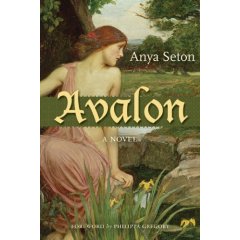
It opens in England, around the turn of the first millenium, when people had names like Aethelred and Aelfrhryth which is enough to make me NOT want to read the book. But I read another book by Anya Seaton, Katherine, and I really liked it. It, too, took place in very early English history, and had such an authentic feel. It wasn’t like you pick up the book and all the lords and ladies are in gorgeous clothes, Seaton captures the primitive life many lived in “castles”, freezing cold most of the winter, no plumbing – many of the poorest laborers in Kuwait live better, in terms of food, a roof over their head, toilet facilities – that these early nobles. And the life of villagers was even more basic, a true scrabble for survival, and under filthy conditions, not a lot of time of opportunity for bathing, so people had quite an odor most of the time.
Avalon begins with a chance meeting of a young man and a young woman, a tragedy, and a journey. Their story, as first one love and the other doesn’t, then the other does and misses the opportunity – takes us from the southernmost part of England to Iceland, to Ireland, to Greenland and to the new world, all in the space of these two intertwined lives. They never marry, and yet the book, and their relationship, is a romance.
As you can see, once I got into the book, I couldn’t put it down until the last page. These people are so real, so genuine and so human – and Seaton makes you care about them. She manages to throw in enough detail that I could almost swear I visited these places – a thousand years ago. I have spun wool to buy necessities for our sod house in Iceland, I have embroidered tapestries in the Bower of my husband’s castle, I have sent my son off to settle with his Irish bride in the new world – yes, I think I have done.
The political situation in England at this time is chaotic, with Vikings raiding their coastal cities, and deep up the rivers into the interior, feuding over who will wear the crown, and problems with the capabilities of rulers to rule. There is a constant friction between the church and state, for land, for power, for wealth. The majority of the novel takes place during the reign of – I am not kidding – Ethelred the Unready.
At the very end, I found to my astonishment, that this book also concerned the ramifications of a big lie, just as my previous book reviewed. This is a total co-incidence, something that surprised me, and this book ends in a totally different way, as the main character comes to grips with her deception, owns up to it, willing to suffer the consequences.
Is this what I want? Merwyn thought, and at once came the answer. Yes, it is. There would be boring days ahead, but never again the depressions and miseries of before . . . She felt cleansed, peaceful, and there was much gratitude. . .
That totally cracked me up, but this is a romance of a different nature, a very real romance, with the real kinds of choices that real-life romances entail, and the real life consequences. The hand of God is a major player here, and the beliefs of the characters shape events in a way consistent with the times. Dreams are taken very seriously, and the power of curses, and sorceries, which I never give two thoughts in my daily life in the 21st century.
The main characters have their own nobility, based on their choices, their growth, and their coming to terms with their lives and situations. I learned a lot reading Avalon, and I also had a great time while learning.
All in all, a fascinating read.
The Memory Keeper’s Daughter
Rember the post Lying Hurts The Liar? In The Memory Keeper’s Daughter, the whole plot revolves around a huge lie, and the toll that protecting that lie takes on the lives of everyone it touches.
in the middle of a huge snowstorm, Dr. David Henry’s wife goes into premature labor and he is forced to deliver her in his nearby clinic because he can’t get to the hospital in the snowstorm. To his surprise, he delivers twins. The boy is fine and healthy, the baby girl clearly has Down’s Syndrome. It is the 1960’s.
He hands the baby to the nurse, and tells her to take the baby to a home for Down’s syndrome children and adults. When his wife, Norah, regains consciousness, he tells her she had twins, but that the girl was born dead.
Meanwhile, Caroline, the spinster nurse, takes the baby to the home, but when she sees the lack of caring in the “care” of the patients, she makes an instant decision to walk away. She keeps the baby. She never goes back to the clinic. She drives away and creates a new life for herself and the baby, a joyful life, the life she was waiting for.
To protect his secret, Dr. Henry maintains a distance between himself and his grieving wife. Norah never gets over the loss of her daughter, and she never gets over the change in her relationship with her husband. She knows something is not right, and no matter what she does, she can’t fix it. For a while she drinks. Later she pulls herself together, gets a job, ends up taking over the business (a travel agency) because she has thrown herself into her work.
The son, the healthy baby, grows up in a family where things are not right. His mother loves him, but is distracted by her grief. His father loves him, but is distracted by the energy it takes to protect his terrible secret. It is a family, but a family whose connections to one another are damaged by the tragic secret.
The discarded daughter, meanwhile, grows up surrounded by love and a family who makes a life out of creating opportunities for Down’s Syndrome children.
Late in the book, there is both some resolution and redemption. Things work out, but I find myself thinking of all the wasted years, years of unhappiness and loss, years of happiness sacrificed, brought about by one great big lie. When you read the book, you understand his reasons, and you know how easily, given the times, you and I might have made the same decision.
I think the doctor would have been happier had he risked telling his wife. He often wanted to. He didn’t.
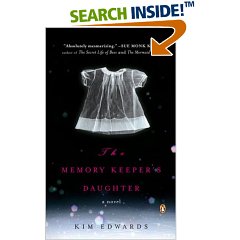
Available for $8.40 + shipping at amazon.com
Hats off to Saudi Women
Last week in the May 10th Kuwait Times, Dr. Sami Alrabaa wrote a fascinating article on Saudi Women, Saudi Arabia and some shifts in press coverage in Saudi Arabia.
This is how the article starts:
Anti-Woman Culture
More and more Saudi women are speaking out against preachers in their country. Fatma Al-Faqih, a columnist at the daily Saudi Al-Watan accuses preachers (April 17) of “denigrating women” and “inciting discrimination against women.” “Day in day out, our preachers flood us with accusations against women and beg men to defend the virtues of society that women corrupt,” Al-Faqih writes. This “anti-woman culture”, Al-Faqih continues, causes women to feel mentally and psychologically inferior, “like a quarrelsome child who must be constantly supervised, intimidated, and punished into performing her duties.”
It is also unprecedented that the Saudi print media are allowing women to air their indignation and frustration. Al-Faqih also writes, “Women are good Muslims as men are. But our preachers insist on producing a distorted picture of women, which has nothing to do with true Islam. The Prophet Mohammed (PBUH) never discriminated against women. He respected them. He valued their opinions and occasionally sought their advice. He treated them as full-fledged human beings. Our preachers however, depict women as spoilt minors who have got to be constantly instructed to behave themselves. They cannot be trusted.”
Al-Faqih also wonders, “Where is it written in the holy Quran and Hadeeth that women are not allowed to drive their own cars? Where is it stated that women are forbidden to travel alone, leave their houses, or travel alone with the family’s chauffeur? Where is it stated that women are forbidden to have a passport without permission from their male closest relatives, forbidden to go to school or university without permission, forbidden to take a job without permission, forbidden to open a bank account without permission, forbidden to name their own children without their men’s approval?”
Further, Al-Faqih complains, “Where is that divine law which does not allow women to sue their husbands for divorce? Where is it written that women’s voice is a sexual organ and hence she is not allowed to speak in public and express her concerns? Where is that sacred law that does not allow women to keep their own children after divorce? Where is it written in Islam that women are not allowed to vote or run for office?”
Al-Faqih concludes, “Are we in Saudi Arabia a special brand of Muslims? In other Muslim countries, women have become presidents (in Bangladesh for example), prime ministers (in Turkey and Pakistan), ministers in Egypt, Syria, Morocco, Kuwait and other Arab countries. In all Muslim countries, women have the right to vote and run for office. No, we are not a special brand of Muslims. It is our preachers who interpret Islam their own way.”
You can read the rest of the article by clicking HERE.
My comment: When I lived in Saudi Arabia, my eyes were opened. My Saudi Arabian women friends were SO smart, and they really knew their Quran. They also knew hadith, and they knew the weight of each hadith, which were strong and which were weak. They didn’t just memorize suura; they thought about them, they discussed them and analyzed them.
Through them, I understoon Islam in a whole new way, and understood the revolutionary thinking of the Prophet, who was kind to women, took council from women, and treated women fairly. In an age when female babies were routinely killed, he stood against the tide of tradition, and forbid the killing of female babies, and insisted on rights of inheiritance for females (and this in the 7th century).
And no one found it more ironic than the Saudi women that Saudi Arabia has become a worldwide symbol for repression of female rights. My Saudi sisters claim that in the birthplace of Islam, Islam has become distorted, a weapon used against women.
My Saudi women friends often told me I was not required to wear a scarf. My embassy told me the same thing, that it was a voluntary sign of submission to Islam. The embassy also told me to carry a scarf, and if accosted by the mutawa,(religious police, the “The Committee for the Promotion of Virtue and the Defense Against Vice” or something like that) to put it on until he was out of view, and then to take it off again, that the scarf was not mandatory. The mutawa felt differently, and would boom out in loud, offended voices: “MADAME, COVER YOUR HAIR!”
I would comply. But the unfairness never failed to rouse my ire. Excuse me? My hair might cause YOU to have a lustful thought? You control YOURSELF and your thoughts, and let ME worry about my morality.
So my scarf – errr hat – is off to these Saudi women who have the bravery to write these well thought out position papers to the Saudi papers.
The interesting thing to me is that the Saudi press is printing the women’s complaints now. . . perhaps, insh’allah, some changes are in the air.
And a muse – So when a Saudi woman comes to Kuwait, for example, or to France – is she allowed to drive? We know it is illegal for her to drive in Saudi Arabia, but is it also immoral for her to drive in Saudi Arabia? Or is it immoral for her to drive anywhere? So like is it immoral for all us women to be driving anywhere?
Mother’s Day from a Child’s Eyes
More than one friend sent this to me, and thank you ALL!
GOD MADE MOMS
Answers given by 2nd grade school children to the following questions:
Why did God make mothers?
1. She’s the only one who knows where the scotch tape is.
2. Mostly to clean the house.
3. To help us out of there when we were getting born.
How did God make mothers?
1. He used dirt, just like for the rest of us.
2. Magic plus super powers and a lot of stirring.
3. God made my Mom just the same like he made me. He just used bigger parts.
What ingredients are mothers made of ?
1. God makes mothers out of clouds and angel hair and everything nice in the world and one dab of mean.
2. They had to get their start from men’s bones. Then they mostly use string, I think.
Why did God give you your mother and not some other mom?
1. We’re related.
2. God knew she likes me a lot more than other people’s moms like me.
What kind of little girl was your mom?
1. My Mom has always been my mom and none of that other stuff.
2. I don’t know because I wasn’t there, but my guess would be pretty bossy.
3. They say she used to be nice.
What did mom need to know about dad before she married him?
1. His last name.
2. She had to know his background. Like is he a crook? Does he get drunk on beer?
3. Does he make at least $800 a year? Did he say NO to drugs and YES to chores?
Why did your mom marry your dad?
1. My dad makes the best spaghetti in the world. And my Mom eats a lot.
2. She got too old to do anything else with him.
3. My grandma says that Mom didn’t have her thinking cap on.
Who’s the boss at your house?
1. Mom doesn’t want to be boss, but she has to because dad’s such a goof ball.
2. Mom. You can tell by room inspection. She sees the stuff under the bed.
3. I guess Mom is, but only because she has a lot more to do than dad.
What’s the difference between moms & dads?
1. Moms work at work and work at home and dads just go to work at work.
2. Moms know how to talk to teachers without scaring them.
3. Dads are taller & stronger, but moms have all the real power ’cause that’s who you got to ask if you want to sleep over at your friend’s.
4. Moms have magic, they make you feel better without medicine.
What does your mom do in her spare time?
1. Mothers don’t do spare time.
2. To hear her tell it, she pays bills all day long.
What would it take to make your mom perfect?
1. On the inside she’s already perfect. Outside, I think some kind of plastic surgery.
2. Diet. You know, her hair. I’d diet, maybe blue.
If you could change one thing about your mom, what would it be?
1. She has this weird thing about me keeping my room clean. I’d get rid of that.
2. I’d make my mom smarter. Then she would know it was my sister who did it and not me.
3. I would like for her to get rid of those invisible eyes on the back of her head.
Recent Comments
ExpatAlien on What Country am I Living … intlxpatr on Yellowstone: Old Faithful to C… Michelle on Yellowstone: Old Faithful to C… Cathy on No Grown-Ups in Charge intlxpatr on Waiting for Snow Wikipedia Donate Button

Amazina


Early Voting in Florida


 Here There and Everywhere