Testosterone Factor
A transsexual is being interviewed on National Public Radio, born with female organs but male genes, he/she is being transformed in body back to male, While undergoing all the treatments, he/she was given a massive dose of testosterone. The interviewer asks if he/she noticed any difference before/after testosterone.
The guest laughed. S/he said an emphatic “Yes!” and went on to say that before testosterone, she was always attracted to women and would think like “let’s sit down and get to know each other over a cup of coffee or go to a movie or something” and after testosterone is was like s/he couldn’t stop thinking about sex, sex, sex and when s/he would see a woman, any woman, the first thought would be graphically sexual. S/he says she sees women totally differently now. (ROFL)
“We Don’t Judge You By Our Standards”
It’s never a good thing when a sentence starts with “we don’t judge you by our standards.” You know that whatever comes next isn’t going to be good.
It was our favorite time during Arabic studies. We were sitting around in the majlis room, sprawled against the cushions. We had finished all the lessons of the day, practiced new verbs, done all the dialogues to death, and we had a few minutes left before classes ended. Our teachers were really special women, and during these last minutes it was always question time, when we could ask them anything, anything, and they would answer, even if sometimes to laugh and tell us it was none of our business. We had so many questions!
“When we go downtown, ” I had started, “we have a good time. We laugh and we talk and chat among ourselves as we shop. But when we see local women shopping, we see you in groups, but you aren’t laughing or chatting. Is there some prohibition against it?”
There was a long silence. I really liked this teacher, and she really liked me. I knew, as the silence dragged on, she was seeking for a way to be kind. Finally, she spoke.
“You know, we understand you have other ways, not our ways. We don’t judge you by our standards. . .” and she gave a little sigh.
“In our culture, for a woman to laugh out loud in public . . .it would be taken as lack of self control. People could criticize. It could keep a young woman from making a good marriage.”
You could hear the collective gasp. Although it was said with great kindness, it was a serious blow.
When you are first learning a new language, and a new culture, it can be intimidating, but mostly, if it is well taught, it is fun, exciting, and stimulating to be mastering a new skill. The women at this language center went to a lot of trouble to insure that we were entertained while we were learning. They taught us Ramadan customs, they prepared an Iftar supper for us, they brought in all their jewelry and produced a bride. They henna’d our hands, and poured us tiny cups of qa’wa and chai with milk and spices. They took us on field trips. They treated us like sisters, or daughters. They were so kind, and babied us along as we struggled with the new language.
I give this teacher a lot of credit. She could have finessed the question, but she didn’t. She considered her answer, she knew it could offend us. And she chose to answer us honestly, trusting we would deal with it.
I had a physical reaction. I wanted so badly to “get” Arabic, to understand all the customs . . . but to give up laughter? I went through all the stages of grief, staying longest with denial and anger. I thought of all the times I headed for the souks in a gaggle of laughing women, and I felt ignorant, and ashamed, and also angry. It was a real struggle for me, a blow to my pride, an embarrassment. I felt sick to my stomach, and stayed depressed for a couple weeks. I didn’t want to change. I didn’t want to have to give up laughter.
And then one day, somehow, it stopped mattering so much. Time did its work. Life went on. The teacher kept teaching, we kept learning. I no longer go downtown in groups of more than three, and we keep our voices down. We’re still our loud, noisy selves most of the time, among ourselves, but in public – we don’t want to be thought of as women who lack self-control.
The Golden Crown
I was folding the laundry, and I could hear my Dad scolding my Mom in the next room.
“Those health care workers are for me! They’re not supposed to be ironing, or vacuuming, or helping you, they are supposed to be helping ME!”
She had just finished asking him for a check, so I could take her out to buy a couple new pair of pants. Back in the house now, he is busy retaking lost territory and asserting who’s the boss.
In the car, she weeps.
“What am I going to do?” she asks me.
Inspiration strikes.
“Mom, remember the golden crown you wore at the rehersal dinner, the night before the wedding? I saw it on the top shelf of the linen closet when I was putting things away.”
She looks at me like I am out of my mind.
“Mom, when he talks to you that way, don’t talk back. Just go get the crown and put it on. Don’t say anything, just wear the crown.”
She starts to giggle. Good. Got her laughing.
“Why would I wear a crown?” she demands.
“Because it will drive Dad crazy. Eventually, he will have to ask you why you are wearing the crown, and you can just tell him it reminds you of a time when you were treated with respect, and you were happy.”
At this point, we both dissolve in giggles. I don’t think she will ever put the crown on – she has her own ways of dealing with Dad. But at least she remembers that things have not always been this way, and she can hold her head high.
My husband reminds me that one day, we too will be facing the challenges of being, we hope, very old. He says we will probably be nasty and angry, too at losing control over our lives, at losing independance. Having that kind of input is one of the benefits of having been married to the same person for a long time. Hope someone gives me a golden crown.
Tash Ma Tash takes on Muttawa?
I love NPR. Today, in a Ramadan special, they discussed the 16th season of the Saudi Arabia soap Tash ma Tash. I remember it got a lot of attention a couple years ago. NPR says that this year, they are taking on the Committee for the Promotion of Virtue and Supression of Vice. There is a village where the morals police have determined that women should not be riding their donkeys on the same trails the men are, or that perhaps they should be fully enclosed in some kind of bubble, or maybe a special underground tunnel should be built solely for the use of women to keep them from view of the men.
Is anyone following this? National Public Radio also said that this year the topic was too hot for the official Saudi channel to handle, so it is being shown on MBC. I am not there – can you tell me how it is working?
Cousin Time
We met up at the nearby Barnes and Noble; he got stuck at the office and called to say he would be late. Leaving me to wander in a Barnes and Noble is like leaving an alcoholic alone in a room with an open bottle of Jim Bean . . . I had a bagfull of books by the time he got there.
As we were discussing the problems of dealing with aging parents, I told him about the bank manager I met with earlier who had looked me in the eye and said “it’s an epidemic. People are living longer, but while not demented enough to be declared incompetant, they are making bad decisions.” My Dad, while wheelchair bound, has a phone and a computer, and could, if he chooses, do a lot of damage to himself and my mom.
My cousin and I have always been on track, from the time we were very young. He and I scored one point apart on our SATs, we researched the same family issues, we have kids the same age – and he was the first one I called when we had a concern about a family matter.
He leaned across the table and grinned. “The problem with dealing with paranoid people is that it forces the loved ones to do exactly what the paranoid is accusing them of doing!” We both laughed. He is exactly right – we have to go behind and see what checks are being written, we have to listen at doors to hear who he is talking to and what he is saying, and the very worst – we have to talk about him behind his back.
If you looked at my father, if you talked with him for a short time, you would think him very smart, and even charming. And he is all that.
If you are with him a little longer, however, he will start talking about dreams he has been having – vivid, very wierd dreams, very scary dreams. Because he doesn’t hear very well, he might accuse you of saying something you didn’t say, and get very angry with you. He is not quite tracking. He gets angry. If he weren’t so weak, he might be violent.
My cousin and I have other family members who have lived long enough to enter into dementia. It haunts us to think we might end up the same way.
The Fraud Syndrome
When I finally got to graduate school, I was in shock. There was me, one other woman, and a classroom full of men. It might sound like heaven, but it was testosterone-city. We were studying national security affairs, a sub-group of International Relations, and most of my classmates were in different branches of the military.
My professor, a former military intelligence colonel, was knowledgable, and good at presenting his lessons. He was very professional, very businesslike. Not exactly cold, but neither was he collegial.
In any graduate courses, there is a whole new vocabulary to master. I felt like I had grabbed onto a train that was leaving the station; I was holding on for dear life. I read all my assignments, made sure I copies all my notes, and . . . never said a word in class for the first two weeks. I was too scared. All the guys were blah blah blah and I just hoped they wouldn’t figure out that I barely had a clue.
One of my fellow students came up to me on break. He was nice. He asked if I had seen a recent article in the paper on The Fraud Syndrome, and I said “no” that I hadn’t. He just happened to have a copy of it with him, which he gave to me.
Here is what Wikipedia has to say about the Fraud Syndrome:
The Impostor Syndrome, or Impostor Phenomenon, sometimes called Fraud Syndrome, is not an officially recognized psychological disorder, but has been the subject of a number of books and articles by psychologists and educators. Individuals experiencing this syndrome seem unable to internalize their accomplishments. Regardless of what level of success they may have achieved in their chosen field of work or study, or what external proof they may have of their competence, they remain convinced internally that they do not deserve the success they have achieved and are really frauds. Proofs of success are dismissed as luck, timing, or otherwise having deceived others into thinking they were more intelligent and competent than they believe themselves to be. This syndrome is thought to be particularly common among women, particularly women who are successful in careers typically associated with men, and among academics.
When time came to take our first test, I studied and studied. I knew I wasn’t getting any credit for participating in class, so I really needed a good grade on the test. I did my best. I hoped to pass.
When the professor gave us back our tests, he put the scale on the board. The lowest grade was a C-. I had passed! Even if I got the C-, I had passed! Then he started talking about all the mistakes, including one really bad one – a person who had used a quote, and the quote was not accurate.
My heart fell. I had quoted George Kennan on deterrence, quote marks and everything. I thought I had it word perfect, but I must have screwed it up. I was so embarrassed.
One paper, he said, had no red marks on it. He said he has never had a paper before on which he didn’t make a single correction, that this was a first in his history of teaching. I barely paid attention – I had passed, even if I blew the Kennan quote.
Yeh – the paper with NO red marks was mine. I thought there must have been some mistake, but the professor held me after class, and told me that for my next homework, he wanted me to speak up in class. And he congratulated me on the test. Only one guy guessed it was my paper with no corrections – the same guy who had told me about the fraud syndrome. Through our two years in grad school, we became good friends, and would share notes with one another if one of us had to be out of town on assignments.
It was October. I remember there was fog on the road, and a great big full round white moon glowing through the fog on my drive home. I had so much adreneline pumping through me that I howled “Wooooooooo Hoooooooooo!” at the moon that night.
“I Didn’t Teach You That!”
“I didn’t teach you that!” I exclaimed, mentally reviewing everything we had learned together in the last two years. This girl was SMART. If she learned this from me, I had to think carefully when I taught it – she was smart, and she remembers things.
We had just finished critiqueing a presentation she was about to make, in English, on quitting smoking. She had prepared puppets, and a dialogue, and oh! She did a great job! We were sitting in a restaurant, in a private room, where we could eat and still have fun without worrying about embarrassing ourselves.
“No, khalti, no, you didn’t teach us that in words. But that is what you DID,” she responded.
Hunh? Hmmmm. I had to think about that. While I was thinking, she continued.
“When we would say we wanted to do something, you would say ‘OK, what does your week look like? How would Monday after schoool work?’ and we would DO it. You didn’t just talk about things, you did them. When you start a project, you finish it. This is the most important thing I learned from you.”
There are some things you can’t teach; it’s just words. There are things you teach and you have no idea you are teaching. I have to admit, I got choked up.
And I have no idea where this smart young woman is going to go with her life, but I can’t wait to see.
From the Sacred to the Profane
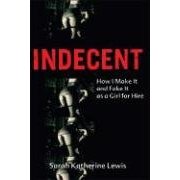
You won’t find this in the Kuwait Times – a book review in yesterday’s paper by Kimberly Marlowe Harnett on a book called Indecent: How I Make it and Fake it as a Girl for Hire by Sarah Katherine Lewis, a sex worker (the cleaned up job title for those who offer sex for hire). This reviewer got my attention. She wrote this:
“When Lewis’ customers are not utterly repulsive, they are profoundly pathetic, paying serious money to women who loathe them and who perform canned routines with an eye on the clock.”
The book’s author says conventional jobs pay less.
Tradition of Aunthood
We have a tradition of aunthood in my family. I remember my aunts with so much admiration and fondness. They took me to art museums, taught me about having lunch out with the ladies, taught me about civic commitment and good works, set examples for us with family celebrations, dinners, and even contests. We had an annual dinner on Christmas at which we each, no matter how young, had to come up with a poem for someone whose name we had drawn at the feast of Thanksgiving. Oh, the laughter! And each of us had our first exposure, at that time, of having to speak publicly, as we read our poems.
And now, my sisters and I get to be aunts in our turn, helping to raise, and now mentor, one another’s children – children? Young adults!
As my son and I were IM’ing the other day, I came up with a dream team – all our young people in the next generation. My superheroes.
LawNOrderMan: He wanted to be Superman when he was young, and put away the bad guys – now he is a felony prosecutor.
AmbassadorGirl – she speaks several languages fluently, gets published with regularity and loves living in Beirut and Damascus.
GlobalGuy – he holds nations accountable by exposing them, in graphic detail, to the rest of the world.
BrethalyzerLady – She manages a state-wide program and instructing others how to install alcohol detecting devices which disable cars.
BioGenius – Fearless explorer of the human body on a molecular level
EnviroGirl – Working to make the world a better, cleaner place.
Can you feel my pride in this next generation? Not that we are willing to pass the torch yet, but we feel such joy in seeing these young people achieve their full potential. WooooHoooooooo!
“Ill be there for you”
We Go Back a Long Time
I was a freshman at a big university, back home after years of living overseas. Never have I felt so alien as trying to figure out how I was going to survive in my own culture. I was really homesick. I missed my old life.
My first day in French 203 a group of laughing, talking girls walked in, one girl, a blue-eyed blonde, the center of it all. I hated her immediately, mostly for being so happy when I was so alone and so miserable. The semester dragged on.
The next quarter, there she was again, in French Literature. She walked in, saw me, and came and sat down next to me as if we were old friends. “What’s with that?” I thought, but there were a lot of students, and I guess I was a familiar face. I still didn’t like her. I didn’t like anybody very much.
But as the semester progressed, her smart-mouth sotto-voce remarks got me cracking up. I couldn’t help liking her in spite of all my determination not to. She was smart, and funny, and for some reason seemed to like me, even at a time when I wasn’t making much effort to be likable.
The third quarter, there we were once again, in Sociology. By this time, we knew that something was up in the grand scheme of things – This was a huge university, and you don’t end up in the same classes with anyone. We started meeting for coffee before class, after class, sometimes – skipping class! We became good friends. We never had another class together.
We graduated, and bought season tickets to the Symphony together. We would meet for a quick dinner, someplace cheap – we weren’t earning a lot. We would catch up on the latest boyfriend, the latest heartache, one another’s families. We each had our own busy life, but we made time for each other.
We married in the same year. We had our first babies within months of one another. No matter where I was in the world, we would write, we sent tapes, and I would visit whenever I was back in town. She also visited me, once with her husband (now ex) and many times with her children.
Our fathers are the same age. She called me night before last, my good friend, all these years. She knows Dad is in the hospital and I am coming back, she calls my mother and takes her to dinner sometimes, my family includes her in the family circle.
“No matter what you’re going through,” she said, “I’ll be there for you.”
All these years. She always has.
Recent Comments
ExpatAlien on What Country am I Living … intlxpatr on Yellowstone: Old Faithful to C… Michelle on Yellowstone: Old Faithful to C… Cathy on No Grown-Ups in Charge intlxpatr on Waiting for Snow Wikipedia Donate Button

Amazina


Early Voting in Florida


 Here There and Everywhere