Cousin Time
We met up at the nearby Barnes and Noble; he got stuck at the office and called to say he would be late. Leaving me to wander in a Barnes and Noble is like leaving an alcoholic alone in a room with an open bottle of Jim Bean . . . I had a bagfull of books by the time he got there.
As we were discussing the problems of dealing with aging parents, I told him about the bank manager I met with earlier who had looked me in the eye and said “it’s an epidemic. People are living longer, but while not demented enough to be declared incompetant, they are making bad decisions.” My Dad, while wheelchair bound, has a phone and a computer, and could, if he chooses, do a lot of damage to himself and my mom.
My cousin and I have always been on track, from the time we were very young. He and I scored one point apart on our SATs, we researched the same family issues, we have kids the same age – and he was the first one I called when we had a concern about a family matter.
He leaned across the table and grinned. “The problem with dealing with paranoid people is that it forces the loved ones to do exactly what the paranoid is accusing them of doing!” We both laughed. He is exactly right – we have to go behind and see what checks are being written, we have to listen at doors to hear who he is talking to and what he is saying, and the very worst – we have to talk about him behind his back.
If you looked at my father, if you talked with him for a short time, you would think him very smart, and even charming. And he is all that.
If you are with him a little longer, however, he will start talking about dreams he has been having – vivid, very wierd dreams, very scary dreams. Because he doesn’t hear very well, he might accuse you of saying something you didn’t say, and get very angry with you. He is not quite tracking. He gets angry. If he weren’t so weak, he might be violent.
My cousin and I have other family members who have lived long enough to enter into dementia. It haunts us to think we might end up the same way.
The Fraud Syndrome
When I finally got to graduate school, I was in shock. There was me, one other woman, and a classroom full of men. It might sound like heaven, but it was testosterone-city. We were studying national security affairs, a sub-group of International Relations, and most of my classmates were in different branches of the military.
My professor, a former military intelligence colonel, was knowledgable, and good at presenting his lessons. He was very professional, very businesslike. Not exactly cold, but neither was he collegial.
In any graduate courses, there is a whole new vocabulary to master. I felt like I had grabbed onto a train that was leaving the station; I was holding on for dear life. I read all my assignments, made sure I copies all my notes, and . . . never said a word in class for the first two weeks. I was too scared. All the guys were blah blah blah and I just hoped they wouldn’t figure out that I barely had a clue.
One of my fellow students came up to me on break. He was nice. He asked if I had seen a recent article in the paper on The Fraud Syndrome, and I said “no” that I hadn’t. He just happened to have a copy of it with him, which he gave to me.
Here is what Wikipedia has to say about the Fraud Syndrome:
The Impostor Syndrome, or Impostor Phenomenon, sometimes called Fraud Syndrome, is not an officially recognized psychological disorder, but has been the subject of a number of books and articles by psychologists and educators. Individuals experiencing this syndrome seem unable to internalize their accomplishments. Regardless of what level of success they may have achieved in their chosen field of work or study, or what external proof they may have of their competence, they remain convinced internally that they do not deserve the success they have achieved and are really frauds. Proofs of success are dismissed as luck, timing, or otherwise having deceived others into thinking they were more intelligent and competent than they believe themselves to be. This syndrome is thought to be particularly common among women, particularly women who are successful in careers typically associated with men, and among academics.
When time came to take our first test, I studied and studied. I knew I wasn’t getting any credit for participating in class, so I really needed a good grade on the test. I did my best. I hoped to pass.
When the professor gave us back our tests, he put the scale on the board. The lowest grade was a C-. I had passed! Even if I got the C-, I had passed! Then he started talking about all the mistakes, including one really bad one – a person who had used a quote, and the quote was not accurate.
My heart fell. I had quoted George Kennan on deterrence, quote marks and everything. I thought I had it word perfect, but I must have screwed it up. I was so embarrassed.
One paper, he said, had no red marks on it. He said he has never had a paper before on which he didn’t make a single correction, that this was a first in his history of teaching. I barely paid attention – I had passed, even if I blew the Kennan quote.
Yeh – the paper with NO red marks was mine. I thought there must have been some mistake, but the professor held me after class, and told me that for my next homework, he wanted me to speak up in class. And he congratulated me on the test. Only one guy guessed it was my paper with no corrections – the same guy who had told me about the fraud syndrome. Through our two years in grad school, we became good friends, and would share notes with one another if one of us had to be out of town on assignments.
It was October. I remember there was fog on the road, and a great big full round white moon glowing through the fog on my drive home. I had so much adreneline pumping through me that I howled “Wooooooooo Hoooooooooo!” at the moon that night.
“I Didn’t Teach You That!”
“I didn’t teach you that!” I exclaimed, mentally reviewing everything we had learned together in the last two years. This girl was SMART. If she learned this from me, I had to think carefully when I taught it – she was smart, and she remembers things.
We had just finished critiqueing a presentation she was about to make, in English, on quitting smoking. She had prepared puppets, and a dialogue, and oh! She did a great job! We were sitting in a restaurant, in a private room, where we could eat and still have fun without worrying about embarrassing ourselves.
“No, khalti, no, you didn’t teach us that in words. But that is what you DID,” she responded.
Hunh? Hmmmm. I had to think about that. While I was thinking, she continued.
“When we would say we wanted to do something, you would say ‘OK, what does your week look like? How would Monday after schoool work?’ and we would DO it. You didn’t just talk about things, you did them. When you start a project, you finish it. This is the most important thing I learned from you.”
There are some things you can’t teach; it’s just words. There are things you teach and you have no idea you are teaching. I have to admit, I got choked up.
And I have no idea where this smart young woman is going to go with her life, but I can’t wait to see.
From the Sacred to the Profane
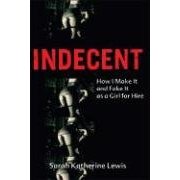
You won’t find this in the Kuwait Times – a book review in yesterday’s paper by Kimberly Marlowe Harnett on a book called Indecent: How I Make it and Fake it as a Girl for Hire by Sarah Katherine Lewis, a sex worker (the cleaned up job title for those who offer sex for hire). This reviewer got my attention. She wrote this:
“When Lewis’ customers are not utterly repulsive, they are profoundly pathetic, paying serious money to women who loathe them and who perform canned routines with an eye on the clock.”
The book’s author says conventional jobs pay less.
Tradition of Aunthood
We have a tradition of aunthood in my family. I remember my aunts with so much admiration and fondness. They took me to art museums, taught me about having lunch out with the ladies, taught me about civic commitment and good works, set examples for us with family celebrations, dinners, and even contests. We had an annual dinner on Christmas at which we each, no matter how young, had to come up with a poem for someone whose name we had drawn at the feast of Thanksgiving. Oh, the laughter! And each of us had our first exposure, at that time, of having to speak publicly, as we read our poems.
And now, my sisters and I get to be aunts in our turn, helping to raise, and now mentor, one another’s children – children? Young adults!
As my son and I were IM’ing the other day, I came up with a dream team – all our young people in the next generation. My superheroes.
LawNOrderMan: He wanted to be Superman when he was young, and put away the bad guys – now he is a felony prosecutor.
AmbassadorGirl – she speaks several languages fluently, gets published with regularity and loves living in Beirut and Damascus.
GlobalGuy – he holds nations accountable by exposing them, in graphic detail, to the rest of the world.
BrethalyzerLady – She manages a state-wide program and instructing others how to install alcohol detecting devices which disable cars.
BioGenius – Fearless explorer of the human body on a molecular level
EnviroGirl – Working to make the world a better, cleaner place.
Can you feel my pride in this next generation? Not that we are willing to pass the torch yet, but we feel such joy in seeing these young people achieve their full potential. WooooHoooooooo!
“Ill be there for you”
We Go Back a Long Time
I was a freshman at a big university, back home after years of living overseas. Never have I felt so alien as trying to figure out how I was going to survive in my own culture. I was really homesick. I missed my old life.
My first day in French 203 a group of laughing, talking girls walked in, one girl, a blue-eyed blonde, the center of it all. I hated her immediately, mostly for being so happy when I was so alone and so miserable. The semester dragged on.
The next quarter, there she was again, in French Literature. She walked in, saw me, and came and sat down next to me as if we were old friends. “What’s with that?” I thought, but there were a lot of students, and I guess I was a familiar face. I still didn’t like her. I didn’t like anybody very much.
But as the semester progressed, her smart-mouth sotto-voce remarks got me cracking up. I couldn’t help liking her in spite of all my determination not to. She was smart, and funny, and for some reason seemed to like me, even at a time when I wasn’t making much effort to be likable.
The third quarter, there we were once again, in Sociology. By this time, we knew that something was up in the grand scheme of things – This was a huge university, and you don’t end up in the same classes with anyone. We started meeting for coffee before class, after class, sometimes – skipping class! We became good friends. We never had another class together.
We graduated, and bought season tickets to the Symphony together. We would meet for a quick dinner, someplace cheap – we weren’t earning a lot. We would catch up on the latest boyfriend, the latest heartache, one another’s families. We each had our own busy life, but we made time for each other.
We married in the same year. We had our first babies within months of one another. No matter where I was in the world, we would write, we sent tapes, and I would visit whenever I was back in town. She also visited me, once with her husband (now ex) and many times with her children.
Our fathers are the same age. She called me night before last, my good friend, all these years. She knows Dad is in the hospital and I am coming back, she calls my mother and takes her to dinner sometimes, my family includes her in the family circle.
“No matter what you’re going through,” she said, “I’ll be there for you.”
All these years. She always has.
The World is Not Enough
Whew! I just got back from a week in 12th century France, courtesy of my friend Zoe Olderbourg. (slaps a flea biting her arm) I bought this book, The World is Not Enough, a while back, and have tried to read it several times, but couldn’t get into it. This time, man, I got into it and couldn’t put it down!
We enter at the wedding of Alis to Ansiau, she (slapping the flea on my neck) the 14 year old daughter of Joceran of Puiseaux, Ansiau the son of Ansiau the Elder, castellan of Linnieres, who knows he is dying and wants to see his line continue before he goes.
“The two of them, standing there, were moved, as two children must be who have just been washed, dressed, lectured and left at teh altar by their parents in front of all the guests, their brothers, their sisters, their uncles, their playmates. They were so little alike. He was a boy and she a girl.”
Alis and Ansiau marry and fall quickly in love. (checking the bedding for fleas) They hunt, they go to tournements, Ansiau goes off on Crusade to the Holy Land – twice. Alis runs the daily life of the castle, has twenty pregnancies, 12 children who live. Ansiau has a mid-life crisis. In their late 50’s, we leave them, scratching one another’s flea bites and looking off into the sunset.
Reading this book, you are totally immersed in the daily life of the nobility. The nobility, as it turns out, are the original credit-crazy spenders – they borrowed against their inheiritance, they borrowed against their lands, they borrowed against their doweries. They were constantly short funds, and constantly mortgaging their future for a few baubles today.
The “castle” had a great hall downstairs, where most of the men slept and where cows and horses and chickens and sheep were brought if it got too cold in the stables in the winter, and up a laddar, one great room where there was one big bed for the king and queen and whoever else they invited to sleep there, and a couple other beds, mostly shared by four or five people. This was where ladies slept, and hung out, and embroidered, and (scratching at a fleabite on the ankle) exchanged gossip.
It was a fascinating visit into a world with no running water, no heat, no air conditioning, where babies died at birth as often as not. It was a world where people caught smallpox, and the lucky ones, those who survived, lived the rest of their lives with pock marks like craters on their faces. It was a world where the nobility didn’t read, and there were no books except in the monasteries. Only priests were authorized to read and explain scripture. It was a world where wolves and bear still roamed the forests of France.
The book is set near Troyes and Langres, in the Champagne area of France. Zoe Oldenburg captures the poverty and brutality suffered by the majority of people, rich and poor alike, without sacrificing the human joys and kindnesses which brightened the world, and made life worth living. The book is so realistic and richly detailed that you will be looking for flea bites when you finish!
“I’m Not Japanese Anymore”
she said, and we dissolved into gales of giggles. We struggled to regain control over ourselves. She was the Japanese ambassador’s wife, my dear friend, and we would hide out and have coffee together whenever our busy schedules would allow. We always sought out the quietest time of day, the most remote tables, so we could have complete and utter privacy as we shared our week, our worries about our kids, our lives.

Our topic was a recurring one in our conversations – that once you have left your native country and lived elsewhere, you aren’t the same anymore. Your eyes change, and you see things differently, your taste buds change and the unfamiliar becomes familiar. Unacceptable color combinations become acceptable, the cacaphonous and discordant become music to your ears. Once you have lived in a foreign country, you can never be truly the person you were before you left.
“I’m not so patient with ceremony any more,” she continued, and we dissolved into laugher again, because her life was full of endless ceremonial events. The great blessing in all this for both of us, is that we are both married to men who are at the same time traditional and ceremonial, and secret iconoclasts. Every now and then we could even get together, all four of us, and share an evening of relaxation and laughter, mostly laughing at ourselves and the difference between how others perceived us, and how we really are.
We treasure these friends. They are the kind that could call us late in the day and say “We are unexpectedly free tonight – can you meet us?” and if there was any way we could, we would. They were our playmates; when we were together we were free to be totally ourselves.
Sometimes in life we are handed roles to play, and if we are honorable people, we play them as best we can. The secret is to keep a very clear idea of where the role ends and we begin. We show respect where respect is due, we carry out the rituals that give richness and tradition to our lives, and heritage to our children.
But glory and honors are transient. Roles and job titles come and go. Good friends and those who keep your worst secrets – they are worth more than gold and diamonds.
Chicken Nuggets and Big Macs
Brava, Chicken Nuggets, you have taken what was apparently meant to be an insult, and turned it into a badge of honor. And well you should.
Kuwaiti has been a major trading crossroad for centuries. It would follow that there has been a lot of mixing, as traders pass through, people travel to foreign lands, historically, as well as now. As genetic testing becomes more acceptable, we are all bound to discover that we are much more mixed, and much more alike, than we ever knew. And, there are bound to be surprises, as men and women don’t always fertilize within acceptable societal boundaries.
When you walk around, you see Kuwaitis with the faces of India, Iran, Iraq, Africa, even possibly faces from the earliest adventures of Alexander the Greek. This is a good thing, the intermingling of cultures and bloodlines build strength, resilience and flexibility.
There is a wonderful book you will enjoy reading –
-
Third Culture Kids
by David C. Pollock and Ruth E. Van Reken. While the focus is on young people raised outside their own culture – diplomat kids, oil kids, missionary kids, international business kids – the findings apply to all those who learn to function in more than one culture. You learn that feeling alien and weird is NORMAL for TCK’s during adolescence, and well into their 20’s and even their 30’s.
At some point, however, you realize that every culture you understand, every additional language you master, every new experience brings a whole new tool chest to your life, new perspectives and additional ways of thinking through life problems.
You, dear ones, are the hope of tomorrow. You are international citizens, having a larger world view because of your mixed upbringing. You have MORE THAN double the advantages (culture 1 + culture 2) you have the additional advantage of the (C1xC2) blend. (Hearing strains of “We are Nuggets; hear us roar in numbers too big to ignore . . !”)
. . . . So. . . if you are (golden, delicious, juicy) little chicken nuggets, what are the men of mixed Kuwaiti and western heritage – Big Macs?? Burger Kings?? (cracking myself up)
AIDS in Kuwait
In yesterday’s Kuwait Times is a letter to the editor from a young medical student who had done training in the Kuwait infectious disease hospital. He writes that the hospital is not to tell ANYONE a patient has HIV, not even the spouse. The spouse is only told when the patient dies. The cause of death on the death certificate is never “AIDS”. When asked, the doctor in charge said “in a Muslim country having AIDS will damage the person’s reputation, and we just can’t have that,” adding that it was a sensitive issue, and the best way to deal with it was denial.
The writer goes on to say that it was not just this doctor’s policy, but the policy of the entire hospital. It goes on to say that legislation was proposed to ensure that before marriage, blood tests would be taken to insure they are clear of infectious diseases, but this legislation was shot down by more fundamentally religious members of Parliament.
My Saudi Arabian women friends once told me that a Muslim could never say a bad thing about another Muslim except in two cases – one case is if you are asked about a person’s suitability for marriage, and the second is about a person’s suitablility for a business partnership, and in these cases you must speak frankly. Isn’t having a family member with an infectious blood disease one of those cases? Or a proposed husband?
Wouldn’t you want to know if your proposed husband had a serious infectious disease? Or your current husband/wife? Aren’t there precautions that need to be taken as far as exposure to blood of HIV/AIDs infected persons? Aren’t family members, firefighters and traffic police running a risk with accident victims?
Recent Comments
intlxpatr on Shampoo Ginger tigerbutterya0c5ff1d… on Shampoo Ginger intlxpatr on British Soldier Kidnapped, Esc… John on British Soldier Kidnapped, Esc… intlxpatr on British Soldier Kidnapped, Esc… Wikipedia Donate Button

Amazina


Early Voting in Florida


 Here There and Everywhere