Germy Mistakes I Never Thought Of . . .
This caught my attention on AOL Health News this morning. Ewwwww!
5 Germy Mistakes You’re Making Everyday
By Glamour Jan 11th 2011 2:45PM
You wash your hands frequently, do your best to avoid coughing strangers, and generally consider yourself to be a germ-avoiding pro. Still you may be surprised at five little things you’re doing that may be leaving you susceptible to harmful bacteria and viruses.
1. Fruit peels: You buy lots of fruit to eat — bonus points! But, when it comes to fruit you peel (think: bananas, oranges), do you ever wash them first? If you grab that banana, peel it, then handle the fruit as you eat it, you’re potentially putting harmful bacteria right in your mouth. Think of all the people who handled that banana: the banana farmer in another part of the world, the guy at the grocery store who stocked the bunch, 19 customers who picked over it to get to the greener bunch they wanted, the checker at the market, the bagger — and then you!
2. The handles/railings in your house: Did your roommate have a cold this week? Sure, you kept your distance and washed your hands frequently, but did you think to wipe down the stair rails and doorknobs? Using a little hot soapy water or a light bleach solution (like Clorox Anywhere Spray) on frequently touched surfaces can keep you extra protected.
3. Your shoes: Do you keep your shoes on in your house? Yes, this is a controversial issue — those who like to keep their shoes on, thankyouverymuch, may take offense to rhetoric about removing shoes at the door. But, there has been a mounting amount of research in the past years indicating that what we track in on the bottom of our souls could be making us sick — from chemicals lingering on sidewalks and roads to the microbes you picked up in the public restroom. In fact, some health experts consider taking shoes off in your home as a way that anyone can improve their health. Even the super-doc Dr. Mehmet Oz suggested this year that it was on his top-5 list of things he’d recommend people do. So take those shoes off, darlings!
4. Touching your face: We all do it — a scratch here, a nose rub there. But every time we’re touching our face (especially our nose, mouth and eyes), we’re giving germs a free ride into our bods. Even if you can be a teensy bit more aware of when you touch your face throughout the day, you can reduce your germ exposure. No, don’t be compulsive about it, but if you avoid rubbing your eyes now and then, you’re doing your body a good service.
5. The water glass in the bathroom: When’s the last time you sent it for a run in the dishwasher? How about now? Frequently used items like glasses — especially when shared or left out on a countertop where droplets can accumulate from various sources — can be a breeding ground for germs. Wash those glasses frequently, and don’t share them!
Hard Freeze in Pensacola
At least the sun is shining . . .
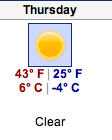
It was actually only 23 degrees when I got up this morning . . . brrrrrrrr!
. . . And He Doesn’t Even Know My Name . . .
Barrister Peter Williams wants to send me all this money . . . and he doesn’t even know my name???
ATTENTION BENEFICIARY,
WE THE MONEY GRAM URGENT REMMITTING OFFICE HAVE SENT YOUR FULL COMPENSATION PAYMENT OF 900.000.00 USD TO YOU THROUGH MONEY GRAM YOU WILL BE RECEIVING 10.000.00 USD PER DAY. NOW WE HAVE SEND THE FIRST PAYMENT TO YOU. SO CONTACT OUR DIRECTOR Dr.Robert Nnamdi AND ASK HIM TO GIVE YOU THE MONEY GRAM PAYMENT INFORMATION SO THAT YOU CAN BE ABLE TO PICK UP YOUR FUNDS THROUGH MONEY GRAM WITHOUT ANY PROBLEM.
HERE IS THE CONTACT INFORMATION OF MONEY GRAM
DIRECTOR GENERAL…Dr.Robert Nnamdi
EMAIL ADRESS … (money.gram2@globomail.com)
PHONE NUMBER +229-989-178-09
THEN CONTACT HIM WITH YOUR FULL INFORMATION.
YOURE NAME: _____________________
YOURE COUNTRY: ______________________
YOURE PHONE NUMBER: ____________________
YOURE ADDRESS: _____________________________
YOURE CITY: _____________________________________
YOURE AGE: _________________________________________
YOURE SEX: ______________________________________________
CALL OR EMAIL HIM NOW SO THAT HE CAN PROVIDE THE MONEY GRAM INFORMATION TO YOU AS URGENT AS YOU CAN.
THANKS AND GOD
Barr. Peter Williams
House Rules by Jodi Picoult
I got it all done – two days before Christmas. Wooo HOOOO, I get the reward, a new book! One I had been eager to read, House Rules by Jodi Picoult. (You can read reviews of other Picoult books by doing a blog search, enter Jodi Picoult in my blog’s search window.)

What I really like about Jodi Picoult is that she writes about really tough situations and exposes our ignorance and ambivalence to us. In this book, she writes about a single mother who is raising two sons, one of whom has Asperger’s Syndrome. He is extremely bright, but lives in a world where he is bombarded by too much sensation. He cannot block out sensory input that we learn to ignore, and some of it – noise, colors – in his case, the color orange – or any change in routine can cause him to spin out of control. Imagine a two year old having a tantrum in a grocery store . . . now imagine an eighteen year old young man having the same tantrum. It helps you see what the Mom is dealing with.
Dad left when the second son was born. “It’s too hard,” he said, and left her to cope with all of it.
She gets child support, while her husband is raising his new family a continent away. She free lances as an advice columnist, and edits from her home to supplement the bare bones family existence. She learns to cope with Jacob’s needs, and she advocates for him fiercely, to be mainstreamed in the school system AND to have some special supports to soothe him when he becomes over-stimulated.
Jacob isn’t a burden, although his need for routine – certain colors for different days of the week, including meals – can be burdensome. Jacob is also very very bright, and obsessed with crime scene forensics. He loves setting up “crime scenes” for his mom to solve and the one bright spot in his daily life is the Crime Busters show which comes on every day at 4:30.
And then, suddenly, a life which is already wobbling turns upside down. Jacob is implicated in the murder of his tutor, a young woman Jacob loved working with, who helped him develop an understanding of how people interact and behave. Those who know Jacob understand his quirks and eccentricities are due to his wiring, but Jacob looks very odd, very threatening and even violent to the outside observer – a nightmare client as a defendant.
It is a GREAT read. Picoult keeps her secrets up to the very end; the book is tightly wired and we are given clues all along the way. The edition I read had both a reader’s guide and an interview with the author at the end. It is NOT cheating to read those first! It gives you good guidance on what the author is trying to say, and what may be significant, while not appearing particularly so.
It gave me a great appreciation for parent’s of children outside the realm of ‘normal.’ It gave me an appreciation for the work and persistence and dedication it takes to try to get a more level playing field for their children.
It the book Jacob has some self-awareness, and compares Asperger’s Syndrome to seasonings, and he believes we all have a dose of Asperger’s Syndrome in our wiring, but that some children get a little extra.
‘Lost Boy’ Casts Vote for Independence
I found this today on NPR News and it delights me for a number of reasons. For one thing, I didn’t know David Eggars (you remember him from Zeitoun) had helped with the writing of ‘What Is The What?’. Second, who knew that any of these kids would survive? Survive, write a book, thrive, go back to the Sudan, give to the country – and vote. Every now and then in this sad world you hear a good story. This is one.
January 10, 2011
During Sudan’s civil war, in which some 2 million people died, Valentino Achak Deng fled to Ethiopia on foot. Separated from his family for 17 years, Deng is one of Sudan’s so-called Lost Boys, children who were orphaned or separated from their families during the brutal war.
Now, voting is under way in Southern Sudan in a referendum that is expected to split Africa’s largest country. Among those voting this week are the Lost Boys, including Deng, whose life became a best-selling novel in America and who has returned to his homeland to build a school.
After a peace agreement between north and south, Deng returned to Juba, the capital of Southern Sudan, in 2006. He says when he got there, the place was still a wreck.
“On some of these roads, you could see old war tanks. On some of these roads, in some neighborhoods you could see the bones and skulls of dead people,” he recalls now, driving around Juba.
Now, as Southern Sudan appears headed for independence, Deng is optimistic — and Juba looks a lot better. Paved roads, now lined with hotels and restaurants, arrived for the first time in 2007.
Juba is a booming city, one of incredible contrast: Barefoot women selling piles of gravel by the side of the road sit next to a Toyota dealership.
Peace is spurring investment and consumer demand. Juba’s growth is driven by Southern Sudan’s oil revenue as well aid from foreign governments and nongovernmental organizations.
Deng grew up in a tiny village called Marial Bai. In the 1980s, northern bombers and Arab militias came.
“They bombed Marial Bai, destroyed it, killed everything, burned crops and livestock,” he says.
Deng was there when the fighting came. He says he “ran away with the rest.” He was 9 years old.
Deng joined thousands of Lost Boys, who spent months trekking across Sudan to refugee camps in Ethiopia. His experience is captured in What Is the What, a novel by Dave Eggers, which reads like a modern-day story of Job.
The boys, some naked, march across an unforgiving landscape, facing Arab horsemen, bombing raids, lions and crocodiles.
Deng eventually resettled in the U.S., where he attended college and was mentored and sponsored by ordinary Americans.
In 2007, he returned to start a high school in Marial Bai, where there was none.
“We have 250 students. Our annual budget now stands at about $200,000 because the school is free,” he says.
The school is funded by Deng’s private foundation. He says most donations come from Americans touched by his story and the plight of Southern Sudan.
Deng, now 32, has just cast his vote for independence. He says that for a Sudanese child of war, his life’s journey is almost inconceivable.
“I never imagined I would be the person I am right now,” he says.
Somalia’s al-Shabab bans mixed-sex handshakes
From BBC News
Somalia’s al-Shabab bans mixed-sex handshakes
SOMALIA – FAILED STATE
Men and women have been banned from shaking hands in a district of Somalia controlled by the Islamist group al-Shabab.
Under the ban imposed in the southern town of Jowhar, men and women who are not related are also barred from walking together or chatting in public.
It is the first time such social restrictions have been introduced.
The al-Shabab administration said those who disobeyed the new rules would be punished according to Sharia law.
The BBC’s Mohamed Moalimuu in Mogadishu says the penalty would probably be a public flogging.
The militant group has already banned music in areas that it controls, which include most of central and southern Somalia.
Somalia has not had a stable government since 1991.
The UN-backed government only controls parts of Mogadishu and a few other areas.
Shopping Styles: Predatory, Social or Desperation?
As AdventureMan once said, I am not entirely sure I agree with what I am about to say. Feel free to jump in.
Today I was mopping the floors, washing the floors and vacuuming the carpets. This is not – way not – something I like to do, but something I do because long ago somewhere in my tiny little brain, a seed was planted that a dirty floor was a shameful thing. I remember once thinking “people could eat off my floor; there must be a whole meal here!” when I left it unwashed for a few days. In my last three incarnations, in Kuwait and in Qatar, I was blessed with wonderful women who came in and took care of my floors for me, also the dusting, and the laundry, and the windows, and all the things I now do. It takes a surprising chunk of time out of my day. 😦
Oh! Yes. The shopping.
I just wanted you to know that I am not cleaning my house willingly or joyfully, but dutifully. I have discovered, however, that mindless physical activity frees the mind, and you never know where a free mind will go.
I have a friend coming to visit, and this friend and I have had so much fun together, through the years, exchanging books, going out on double dates with our husbands to wonderful places in France and Germany, and . . . shopping.
Finding a person who shops the way you do is a real blessing. I say I am not much of a shopper, but we all have to shop sometimes. Mostly, I shop alone, I am a predator. I am looking for specific game, and I want the juiciest prey at the best price. Most of my friends are like me – we don’t hunt in packs, because when you shop in packs a group mentality surfaces, and you get home with things you never would have bought.
I do shop with other solitary predators from time to time; this is how you know them. You don’t shop together. You shop the same stores, sometimes just the same mall, meeting up to compare items and to go on to the next stop. Most of my predatory shoppers friends know their own style, know their own preferences, and few ask me what I think, nor do I ask them. We do exclaim gleefully over our purchases.
In the military, in Germay, there would be shopping tours to take you to places. Sometimes I took them, most times I didn’t. It depended on whether or not you had to stay together. I saw people buy some truly appalling things because it had a particular name or a particularly low price. The fact that it was obviously inferior did not even seem to strike their consciousness, once the herd shopping mentality kicked in. If the tour were going to a village, and people were on their own and then met up, I would do that. I went to Paris on such a trip; leaving
Germany at midnight, leaving the tour at six in the morning for croissants and coffee at La Duree at its original location on Rue Royale arranging to meet up with them later.
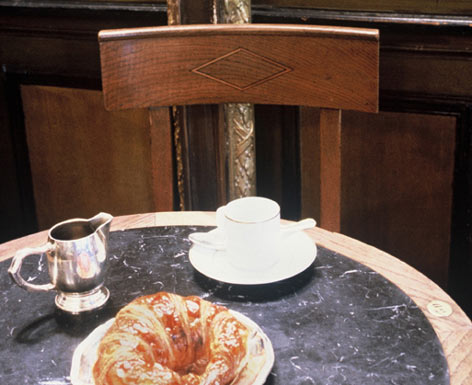
The Musee D’Orsay had just opened, and I was dying to see the exhibit. I spent the morning there, leaving as the hoardes started arriving, had a little lunch of Vietnamese salad rolls on the Left Bank, and strolled over the bridge to the shopping areas around Rue Royale. I found three great outfits at Galleries Lafayette, grabbed a salad from their gorgeous food court, and met up with my group at six to depart. I was home by midnight. 🙂 I would have liked a friend, but I didn’t know anyone, once again I was new, and Paris is so easy that just 12 hours there was a piece of cake.
Social shoppers find us solitary predators very strange. They live in a different world than we do. They consult. Their shopping goals are not so much the goods as the experience. They enjoy the company, and they like having someone to help them make their purchasing decisions. They often meet up for shopping and lunch, and some even shop to kill time. (What luxury! In my whole life, I have never had time to kill; I always have projects, and lists of things that need doing!)
I have been one other kind of shopper, though, and that is a desperation shopper. It was when I was a young mother. Shopping was for survival. I never knew when the baby would start to cry, need to be nursed, or need a change. When I had a babysitter, I was always aware of how little time I had and how much I had to get done. Once a month, I would go to the commissary, about twenty miles away, to buy a month’s worth of diapers, meat (we ate more meat then), canned goods and paper goods.
I see the same desperation in the elderly here in Florida; shopping takes energy and you never know when your energy will desert you. As you can see, I am still thinking about my experience at the Navy Commissary, and I now I can empathize. I might be grumpy and aggressive, too, when I reach a stage where I remember having energy, and now I don’t know where it has gone. I may even scowl at cheerful, energetic people because I wish I still were . . .
We’re all wired so differently. There may be some shopping styles to which I am oblivious. Can you think of any?
A Reliable Wife by Robert Goolrick
You know how wonderful it is when you start a book, and immediately you are hooked? This is not that kind of book. This is a book you start reading and you think “Why am I reading this? I don’t like ANY of the characters!”
And yet, somehow, I kept reading. And slowly, slowly, the hook was set, I could not stop reading.
Actually, I read the book several months ago, and I am still thinking about it. That’s a good book. 🙂
We meet one of the main characters as he stands waiting for a train to arrive, carrying his bride-to-be. As we stand waiting with the man, we discover that he is not very likable. We also learn that winters in his part of the country are long and hard, and very strange things happen to people cooped up together during these long, hard winters. It is a very bleak beginnning.
Then we are riding in the train with a woman who is answering an ad placed by the first man who was advertising for a wife. We get a few clues that she is misrepresenting herself, but . . . isn’t a little misrepresentation part of the mating process? Do we really show all our less attractive features to the person to whom we want to be married? And does she know what she is getting in for with this rather cold and distant man?
Do you really want to read this book?
It gets better. So much better. People are complicated, and they lead complicated lives. Sometimes evil leads only downward, and to more evil, and from time to time, there is a gleam of hope and the slim promise of redemption. It gives a clear slice of time from the early 1900’s, and a much earlier time in America. For anyone with the illusions that life in that turn-of-the-century America was a better, simpler, more moral time, this book is a reality check.
Nothing in the beginning of this book is quite what it seems, and yet every word is finely crafted to give a clue as to where the book is going. Will you be able to figure it out before you get there?
(I did not.)
There are so many good books out there. This one is slow to start, but builds steadily to an unforgettable ending. It is worth a read.
The Gauntlet
Today dawned clear and beautiful after a day of rain yesterday. It’s a good thing, today I ‘run the gauntlet,’ i.e. I make my run to the military facilities.
It’s across town. Across town in Pensacola is a piece of cake – it’s not like trying to get across Doha, or across Kuwait City; you’re not stuck forever on the ring roads with the arrogant and the rude and the inconsiderate-at-best or even worse – the oblivious.
No, it’s a mere fifteen minutes of sedate driving. I go to the hospital pharmacy, and IF they have the medication I have prescribed, they will fill it – for free. I fill my tank; gas is cheaper and there is no tax. I pop by the Navy Exchange to pick up my expensive hope-in-a-bottle, which is cheaper there. No tax. And now . . . sigh . . . it is time to go to the commissary.
I don’t go that often. While I can find most things there, it can be hit or miss. Prices are better, and there are no taxes, but it isn’t Publix. When you go to check out, everyone waits in one long snakey line, and one at a time, as a cashier becomes available, they check you out. It isn’t that bad. As a process, it goes fairly quickly.
Although the prices are pretty good and there is no tax, you are obligated to tip the bag people who bag and carry out your groceries, and there is a surcharge added onto your bill to cover commissary operation costs. I still think overall we save money.
No, the reason I dread the commissary is the other customers. These are military people and former military people, these are MY people! And they are rude! The aisles are crowded with scowling, aggressive people. The older they are, the worse they are! You think of older people being kindly and polite, but something is wrong with this picture at the commissary, where so many are pushy and rude and look at you like ‘get out of my way!’ I try to stay out of their way, but there are so many of them!
Actually, I try to stem the tide of ill-will by being particularly polite and cheerful. I’m not sure it does much good. Sometimes cheerfulness only seems to make cross and crabby people crosser and crabbier.
On the way to the car, I was chatting with the bagger, and he told me this year was fairly mellow, not like last year.
“What happened last year?” I had to ask.
“Oh, last year they put turkeys on sale,” he responded as he loaded the bags into the back of the car. “Even though you were only allowed to buy two, some people were cheating and buying more, and a couple fist-fights broke out.”
Fist fights? In the commissary? Over turkeys? And who has room in their freezers for more than one turkey?
I resolve not to make another trip to the commissary until I absolutely have to.
96% Decrease in Honeybees
This isn’t good. A new study shows a dramatic, continuing drop in honeybees, those honeybees which cross pollinate many of our food sources. This is an excerpt from AOL News and by clicking on the blue type, you can read the entire article.

Study: US Bumblebee Population in Sharp Decline
The population of bumblebees in the United States is in a kind of free fall, dropping 96 percent over the past two decades, according to a new study that has scientists alarmed.
Four species of bumblebees are in a rapid decline, possibly because of increased fungal infections and inbreeding. Researchers called the findings of the study, published in the Proceedings of the National Academy of Sciences, “disturbing” and said they were in line with findings in Europe.
“Disturbing reports of bumblebee population declines in Europe have recently spilled over into North America, fueling environmental and economic concerns of global decline,” the authors wrote.
The bumblebee population in the United States is in a steep decline.
The bumblebee is wild, but it pollinates commercial crops from tomatoes to coffee, and its disappearance could have a dire effect on food sources. “People need to know that wild bees are an enormously important ecosystem service, just like honeybees,” Sydney Cameron, the head author of the study and a professor at the University of Illinois, told AOL News by phone today.
To find and count the bees, teams of researchers across the United States visited fields of flowers where hives had historically been found and gently scooped up the insects in butterfly nets.
The disappearing bees have scientists somewhat perplexed. They think a disease-causing pathogen, Nosema bombi, as well as a “lack of genetic diversity” could be plaguing the insects, but they haven’t been able to prove it yet. Cameron said the Nosema bombi pathogen seems to make it difficult for queen bees to survive the winter so they can reproduce.
Honeybees in the United States are also in trouble. They are suffering from a phenomenon called “colony collapse,” a disorder that seems to kill massive numbers of a hive’s worker bees. Scientists aren’t entirely sure what’s causing the disorder, but they suspect a virus may be to blame.
Recent Comments
intlxpatr on Shampoo Ginger tigerbutterya0c5ff1d… on Shampoo Ginger intlxpatr on British Soldier Kidnapped, Esc… John on British Soldier Kidnapped, Esc… intlxpatr on British Soldier Kidnapped, Esc… Wikipedia Donate Button

Amazina


Early Voting in Florida


 Here There and Everywhere