The Most Beautiful Baby Ever (Photographer makes the difference!)
There is a woman in Pensacola who has studied how to photograph babies. The photos she did of our grandbaby made tears come to my eyes:


She takes wonderful, joyous photographs of babies and families. She welcomes your visits and comments to her blog:
Operation Hope: Kuwait
From: Sheryll Mairza [mailto:sheryllmairza@live.com]
Sent: Thursday, February 25, 2010 8:01 AM
To: Operation Hope
Subject: Yard Sale Announcement
Dear Friends – near and far,
I invite you to attend the Operation HOPE – Kuwait Spring Yard Sale on Saturday, March 6, 2010 at Rumaithiya, Block 9, Street 92, House 23 from 8 – 11 am. Lots of nearly new treasures will be found including living room furnishings, kitchen table/chairs, appliances-large and small, kitchen ware, toys, baby furnishings, children’s clothing, shoes, ladies hand bags, and much, much more! Mark your calendar to support the work OH – Kuwait endeavors to do. Please pass this invitation on to everyone in your Kuwait email address book ~ we need your support! If you live outside Kuwait would you please forward this email on to those who DO live in Kuwait as you are our best means of advertising!
PS: If you have items you wish to donate, please bring them by before March 4th.
I thank you for your support!!
Blessings,
Sheryll Mairza
Operation HOPE – Kuwait
To Kuwait: Happy Liberation and Independence Days Celebrations
Wishing all my Kuwait friends all the blessings of liberty, and independence.
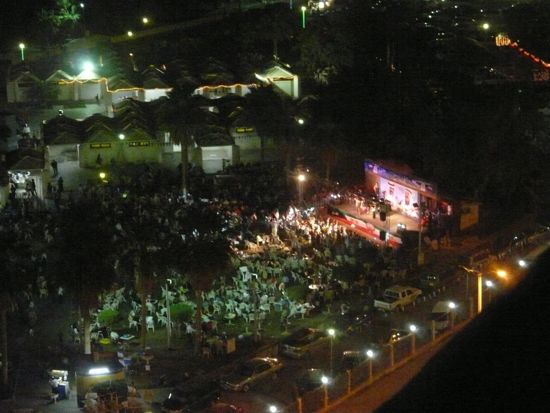

I always remember February in Kuwait as being one of the nicest months of the year – so how is it this year? My friends in Doha tell me they are having a heat wave!
Bayou Sunset
You know me and water. I love the sun coming up over water. I love the sun going down over water.
On the Bayou, when the sun starts going down, the air gets all pink. I can’t even capture it with the camera. I see it, but the camera does not see it.

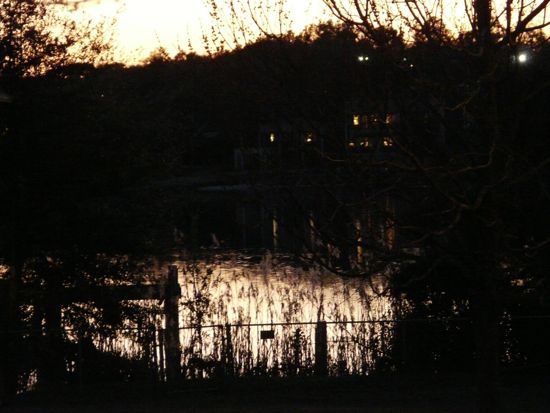
It has to do with a magical quality of light; I will probably be trying to capture it to my dying day.
Thanks Mom: Bread and Eggs / Pain Perdu
Sometimes when my daughter in law is nursing, she gets very hungry. So while she is feeding the baby, I spoon or fork-feed her. It is a wonderful time for me, to be able to nurture and nourish this dear woman who loves our son and bears and nurtures his child. This morning, it was Pain Perdu with little slices of cantaloupe. (I had to look up ‘cantaloupe’ twice. I had no idea spelling cantaloupe was so difficult!)
Thanks, Mom. Bread and Eggs was a big hit. (I also notice that the majority of entries under Pain Perdu look more like what we call French Toast than bread and eggs.)
When I was little, we always loved it when our Dad went away on a trip because he hated eggs, and when he left, Mom would make Bread and Eggs, something they used to make in her family to use up bread which may have gone stale and hard.
It is delicious, but you would not want to eat it often. You start by melting butter – I used about half a stick of butter – and sautéing small bread cubes at a moderately high temperature. Throw in some fresh chopped parsley, or cilantro, keep stirring until the bread cubes are browned. It will smell delicious!
Meanwhile, mix four eggs with a little non-fat half and half, and when the cubes are browned, turn down the heat to moderately low and pour in the eggs. Let them cook for a good minute before you stir things around, and I even use a pancake flipper to flip entire portions while the top is still liquid, so the bread cubes get entirely encased.
Serve when fully cooked.
Change of Plans
When we were planning this trip, it all sounded so simple . . . greet the grandbaby, buy a house, quick, fly to Seattle, fly back to Pensacola, kiss the grandbaby and fly to Doha to pack.
Not quite the way it turned out. When we got here, the grandbaby was 11 days overdue. We got to be here for the birth. While our son and his wife labored, we went out with the world’s most wonderful real estate lady and actually, we did find a house.
Three years ago, we found a house. When I talked with the mortgage people, I said “We just finished paying off a mortgage with you; isn’t there some kind of short-cut you could do with me?” and they did something called “fast track” with me, and it was so easy I can’t even remember the paperwork; I think I filled it out on my computer – online – and that was it. My son handled the closing. It was so easy.
Things have really changed. This will be our third mortgage with the same company, but you would think we are potential deadbeats. We have high credit scores, an impeccable payment record – I would think they would want to have us as customers! It’s like pulling teeth. Papers don’t get to us. Additional verifications are required. Appraisers actually enter the house and verify square footage.
Between chasing paper and soothing the newborn, my life has been very full. It doesn’t sound very exciting, when I tell you about it, but here is the truth – I know I am exactly where I am supposed to be right now. It’s an amazing feeling.
Today, I spent a lot of time with the baby. At some point, I realized I wasn’t going to make it to Seattle this trip, and it’s OK. I can go to Seattle later. For right now, I have enough on my plate.
I had forgotten, too, how chaotic life with a newborn can be. His needs take precedence, and sometimes we all run around trying to guess what those needs might be, simple as they are . . . clean diaper? swaddling / soothing to sleep? Mother’s milk? Today was a really good day, where he took the diaper changes with grace, dropped right off to sleep after every meal, and was keenly alert for maybe a half hour after feeding before napping. He loves patterns and fabrics. I am having SO MUCH FUN!
A part of our life is ending, the nomadic part. AdventureMan and I have had a lot of fun, once our son got through college and law school, we were on our own again, living in Europe, living in Saudi Arabia, Kuwait and Qatar – we have had a great adventure. We travelled to Botswana, Namibia, Zambia (several times), South Africa, Kenya, Tanzania and spent a wonderful week on Mnemba Island off the coast of Zanzibar. We have wonderful friends, mostly from churches and interest groups. I would think, knowing us, that we would be sad leaving all this, but instead, we are racing toward our new future, being more settled, being near our son and his family, and his wife’s great big family. 🙂
For one thing, the world has changed. With e-mail and VOIP phones and people who jump on a plane at the drop of a hat, we expect to stay in touch with those we love and treasure. We expect they will come see us. It’s kind of fun settling in a place with white sandy beaches that everyone wants to come visit. 🙂 Cooler than Kuwait and Qatar in the summer time, too! Nice warm winters, well, not this winter, brrrrrrrrrrrr!
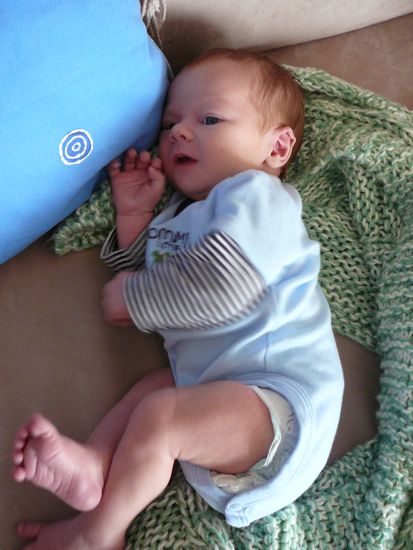
Thought you might want to see a photo of my little darling grandson:
One in Four American Mortgages ‘Underwater’
Underwater Mortgages Hit 11.3 Million
Posted: February 23, 2010 at 7:25 pm
There is a reason that 702 American banks, nearly one in ten, were on the FDIC “problem list” as of the end of 2009. A large number of small and mid-sized banks are burdened with home and commercial mortgages that are in default and may even go into foreclosure.
New data from First American CoreLogic shows why the solution to the problem banks face is so difficult to find. Eleven million, three hundreds thousand homes had underwater mortgages as of the fourth quarter of last year. That number represent 24% of all residential homes loans in America.The mortgage numbers are much worse when homes with equity of less than 5% are included. First American reports that ”an additional 2.3 million mortgages were approaching negative equity at the end of last year, meaning they had less than five percent equity.” That means that three out of ten homes have virtually no financial value to their owners.
The pressure that the home value trouble puts on banks is clear. The aggregate dollar value of negative equity was $801 billion at the end of last year, up $55 billion from $746 billion in Q3 2009. People who believe there is no hope of their homes ever having any economic value are more likely to default on mortgages, especially in an environment where unemployed and under-employed people make up 17% of the total available workforce nationwide. Many homeowners are as concerned about their employment future as they are about the value of their houses.
Problem home loans are concentrated in the regions where real estate values have fallen the most–Arizona, Florida, Nevada, Michigan, and California. First American says that “among the top five states, the average negative equity share was 42 percent, compared to 15 percent for the remaining 45 states.” In other words, the odds are relatively high that some of the home owners in those states will never sell their houses for more than the amount of their mortgages. That creates a vicious cycle in which high numbers of people with underwater loans default in the states where real estate values have dropped the most. There is no easy way to create a foundation under home prices.
The FDIC has closed 20 banks this year, Five of those were in the five states where mortgage equity problems are at their worst. The agency closed 15 banks in December. Of those, five were in Arizona, Florida, Nevada, Michigan, or California. The bank failure and mortgage failure problems area inextricably linked.
The First American numbers do not leave much hope for a home price rebound this year. It is too hard to sell a house with an underwater mortgage because the bank has to be paid the balance of the loan in cash at closing. Many people do not even try make home payments or cannot afford to under those circumstances. The Mortgage Bankers Association reported that a record 15% of American mortgage holders are either in foreclosure or at least one payment behind.
The difficulties that face small and mid-sized banks, which ultimately are a problem for the FDIC, are to a large extent still a fallout of the deteriorating real estate sector. The underwater mortgage problem is still growing and that almost certainly means bank closings will be high again this year as well.
Douglas A. McIntyre
Warrior Woman Does Not Buy a New Car
It’s a beautiful day in Pensacola, I had baby duty all morning, but the afternoon is mine. I’ve been wanting to buy a new car; I could buy it and have it waiting for me when I come back. I know the car I want, the model, the color, everything I want – and do not want. The only thing that holds me back is that I hate the whole car buying process. I remember Saturn – nice car, pretty colors, drove well and you walk in and there is one price, and that is the price for everyone. I don’t know what happened. They stopped making Saturns.
So first, I just decided to see if I could find the place. I found it. Then I decided to drive around the lot and see what they had. I did that. Then I decided just to walk into the lobby and see if they had anything like price sheets there, although I had already done my research online. There was a nice young man waiting outside just for me, and he took me on a test drive. Here is what is really cool. Have you ever driven a car so new that it had one mile on the odometer?
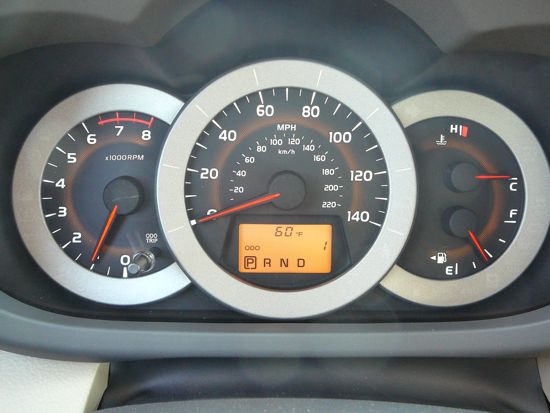
I love the car. I had one like it before. This particular car had some features I didn’t care about and don’t want to pay for.
I know what I want. I know what I want to pay. He showed me figures. I told him what I wanted and what I was willing to pay. He printed out a bunch of stuff so he could explain to me why the car he wanted to sell me was going to cost more. I told him what I wanted and what I was willing to pay for it. He had to go talk to his manager. He came back with more figures. I told him what I wanted and what I was willing to pay for it. He went to get his manager.
I told him what I wanted and what I was willing to pay for it. He said he couldn’t sell me the car at that price, so I smiled and shook everybody’s hands and thanked them for their time and I left, after more discussion. I think they were shocked I walked out. I was shocked too.
And delighted.
“But you still don’t have the car!” my son reminded me.
I know I don’t have the car. It’s OK. I have time. I don’t know if this makes sense to you, but I just feel so good! I didn’t buy a car I didn’t want! I stuck by my guns! I know what I want (and what I don’t want and don’t want to pay for) and what I am willing to pay, and I believe with all my heart I am going to find my car at my price (it’s a reasonable price.) I am so proud of myself for not being talked into buying the car I didn’t want at the price I didn’t want to pay!
Happiness Wards Off Heart Disease
From a new study found on BBC News comes information that making yourself happy and staying happy can also make you healthier . . .
Happiness wards off heart disease, study suggests
Being happy and staying positive may help ward off heart disease, a study suggests.
US researchers monitored the health of 1,700 people over 10 years, finding the most anxious and depressed were at the highest risk of the disease.
They could not categorically prove happiness was protective, but said people should try to enjoy themselves.
But experts suggested the findings may be of limited use as an individual’s approach to life was often ingrained.
At the start of the study, which was published in the European Heart Journal, participants were assessed for emotions ranging from hostility and anxiousness to joy, enthusiasm and contentment.
They were given a rating on a five-point scale to score their level of positive emotions.
By the end of the analysis, some 145 had developed heart disease – fewer than one in 10.
But for each rise in the happiness scale there was a 22% lower risk of developing heart disease.
The team believes happier people may have better sleeping patterns, be less liable to suffer stress and be more able to move on from upsetting experiences – all of which can put physical strain on the body.
Lead researcher Dr Karina Davidson admitted more research was needed into the link, but said she would still recommend that people try to develop a more positive outlook.
She said all too often people just waited for their “two weeks of vacation to have fun” when instead they should seek enjoyment each day.
“If you enjoy reading novels, but never get around to it, commit to getting 15 minutes or so of reading in.
“If walking or listening to music improves you mood, get those activities in your schedule.
“Essentially spending a few minutes each day truly relaxed and enjoying yourself is certainly good for your mental health and may improve your physical health as well.”
It is not the first study to suggest there is a link between happiness and health.
But Ellen Mason, of the British Heart Foundation, suggested such an association may be of limited value anyway.
“We know that improving your mood isn’t always easy – so we don’t know if it’s possible to change our natural levels of positivity.”
Cardiologist Iain Simpson, of the British Cardiovascular Society, added: “Things like reducing cholesterol and diabetes are more important when it comes to reducing heart disease.
“But at the end of the day it heart disease is still the biggest killer in the UK so anything you can do to help should not be ignored.”
Recent Comments
intlxpatr on Shampoo Ginger tigerbutterya0c5ff1d… on Shampoo Ginger intlxpatr on British Soldier Kidnapped, Esc… John on British Soldier Kidnapped, Esc… intlxpatr on British Soldier Kidnapped, Esc… Wikipedia Donate Button

Amazina


Early Voting in Florida


 Here There and Everywhere