Do We Want a Bonehead Military?
Interesting article from AP today about a military unit no longer creating, practicing, working with drones, at the direction of the current leadership.
A strong military relies on capability. Capability relies on adaptation, mastering new strategies (and equipment), as well as intent, and will. You can only go so far on physical strength; today’s military challenges require mental agility and a big picture of the kinds of ways wars will be fought in the future.
We have recently witnessed The Mouse that Roared, a small, smart country that has stymied a giant for six months. When you don’t listen to your most experienced advisors, this kind of situation happens. When you fire your most capable leaders because they have the courage to disagree with you, and you don’t like people disagreeing with you, these things happen.
Lawmakers ask Army to explain why it told a military unit to stop specializing in drone warfare

BY KONSTANTIN TOROPIN AND BEN FINLEY
Updated Wed, September 2, 2026 at 9:10 AM CDT
19
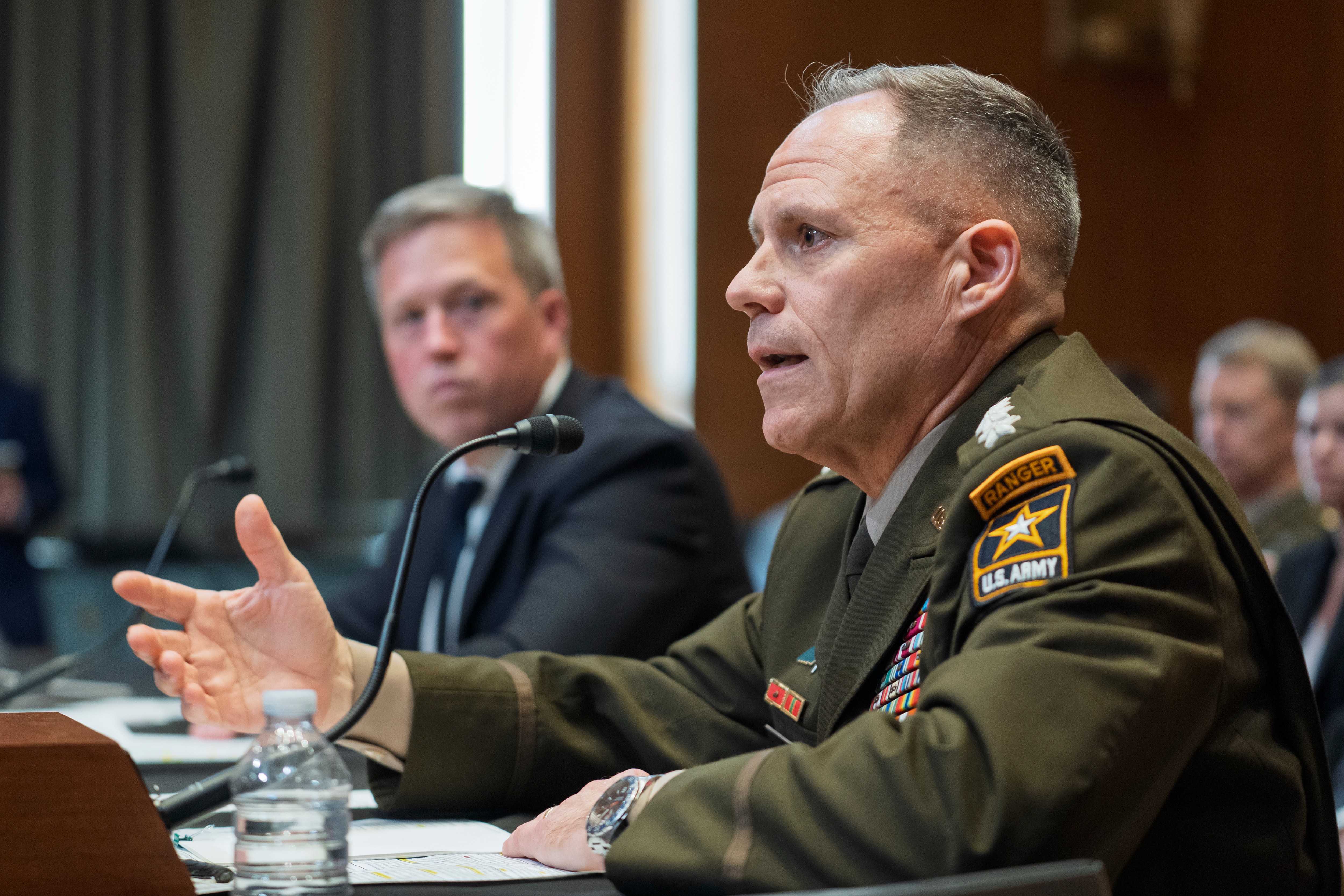
WASHINGTON (AP) — A bipartisan group of U.S. lawmakers is pressing the Army to explain why it told a unit based in Europe to stop specializing in drone warfare, an order that comes as the world’s battlefields rapidly evolveand military tactics increasingly rely on uncrewed systems to fight.
The 173rd Airborne Brigade was building its own drones and practicing the kind of warfare that Ukraine has pioneered against Russia and that Iran has fought against the U.S. — warfare that has killed and wounded American troops. The brigade of 600 soldiers was set up in November to be deployed anywhere that drones were needed.
“We have deep concerns that eliminating this specialized drone unit will limit our ability to learn from allies, particularly the Ukrainian Armed Forces, and hinder our efforts to modernize drone warfare at the speed necessary to compete on the modern battlefield,” the lawmakers said in a letter shared with The Associated Press.
It requests a briefing from the Army to explain its decision and was sent Tuesday to departing Army Secretary Dan Driscoll and Gen. Christopher LaNeve, the Army’s acting chief of staff. It was signed by Democratic Sen. Jeanne Shaheen of New Hampshire, Republican Sen. Thom Tillis of North Carolina, independent Sen. Angus King of Maine and Republican Rep. Mike Turner of Ohio.
“This specialized unit was a prudent response in a moment when the character of warfare is changing faster than a conventional formation’s ability to adapt,” the lawmakers say.
They said they were particularly keen to understand the data, analysis and process behind the change after less than a year of the drone unit being active. They also want to know if the decision was based on guidance from Pentagon leadership or made internally by the Army.
LaNeve, who is filling in as the Army’s top uniformed officer, recently ordered the battalion to refocus on its core mission of being an airborne infantry unit. The move followed Defense Secretary Pete Hegseth’s sudden ousting of the Army’s prior chief of staff, Gen. Randy George.
Integrating drones into the Army’s tactics was a major focus for George. Last year, he and Driscoll had rolled out what they called the Army Transformation Initiative, which pushed to add “modernized (unmanned aircraft systems) into formations.”
George, who became Army chief of staff under President Joe Biden, regularly spoke about the need to accelerate development of new drone systems and get them in the hands of regular soldiers, not just specialized units. Driscoll supported such efforts and focused on cutting the red tape for military contractors to quickly develop more drones.
After George was ousted by Hegseth without explanation in April, he was replaced by LaNeve. This week, Driscoll submitted his own resignation and later said on social media that Wednesday would be his final full day on the job. A reason for his departure was not publicly revealed, but he was an ally of George, and his tensions with Hegseth have been widely reported.
“We are supportive of the transformative initiatives the Army has taken under Secretary Driscoll’s leadership in this area and would like to see that momentum maintained even as uniformed leadership changes,” the lawmakers wrote.
___
Toropin reported from Nuremberg, Germany.
One Compassionate Captain Changed Lives
From today’s Lectionary readings:
DAVID PENDLETON OAKERHATER
DEACON AND MISSIONARY (1 SEP 1931)
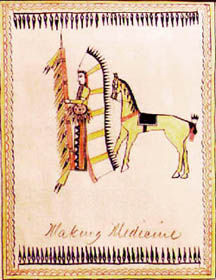
David P. Oakerhater (born around 1850) was a warrior and leader of the Cheyenne Indians of Oklahoma, and led a corps of fighters against the United States government in a dispute over Indian land rights. In 1875 he and 27 other military leaders were taken prisoner by the U S Army and sent to a military post in Florida. There, thanks to the efforts of a concerned Army captain, they learned English, were encouraged to earn money by giving art and archery lessons to visitors, and encountered the Christian faith. David and three others were moved to become Christians and to go north to study for the ministry. David was baptized in Syracuse, New York, in 1878, and ordained to the diaconate in 1881. He returned to Oklahoma and there founded schools and missions, and continued to work among his people until his death on 31 August 1931. When he first returned to Oklahoma in 1881, he said:
You all know me. You remember when I led you out to war I went first, and what I told you was true. Now I have been away to the East and I have learned about another captain, the Lord Jesus Christ, and he is my leader. He goes first, and all He tells me is true. I come back to my people to tell you to go with me now in this new road, a war that makes all for peace.
by James Kiefer
Note: the “military post in Florida” is Castillo de San Marcos in St. Augustine, now a National Monument. Should you visit, you can learn more about his imprisonment there.
Intlxpatr: One brave captain, unnamed, had compassion on a group of indigenous Americans and encouraged them to earn with their skills. He treated them with respect and won their respect in return. Such gentility influenced them to adopt and spread the Christian faith to others. One unnamed captain, reaching out his hand in loving charity, produced more influence than government policies.
Recent Comments
intlxpatr on Shampoo Ginger tigerbutterya0c5ff1d… on Shampoo Ginger intlxpatr on British Soldier Kidnapped, Esc… John on British Soldier Kidnapped, Esc… intlxpatr on British Soldier Kidnapped, Esc… Wikipedia Donate Button

Amazina


Early Voting in Florida


