Do We Want a Bonehead Military?
Interesting article from AP today about a military unit no longer creating, practicing, working with drones, at the direction of the current leadership.
A strong military relies on capability. Capability relies on adaptation, mastering new strategies (and equipment), as well as intent, and will. You can only go so far on physical strength; today’s military challenges require mental agility and a big picture of the kinds of ways wars will be fought in the future.
We have recently witnessed The Mouse that Roared, a small, smart country that has stymied a giant for six months. When you don’t listen to your most experienced advisors, this kind of situation happens. When you fire your most capable leaders because they have the courage to disagree with you, and you don’t like people disagreeing with you, these things happen.
Lawmakers ask Army to explain why it told a military unit to stop specializing in drone warfare

BY KONSTANTIN TOROPIN AND BEN FINLEY
Updated Wed, September 2, 2026 at 9:10 AM CDT
19
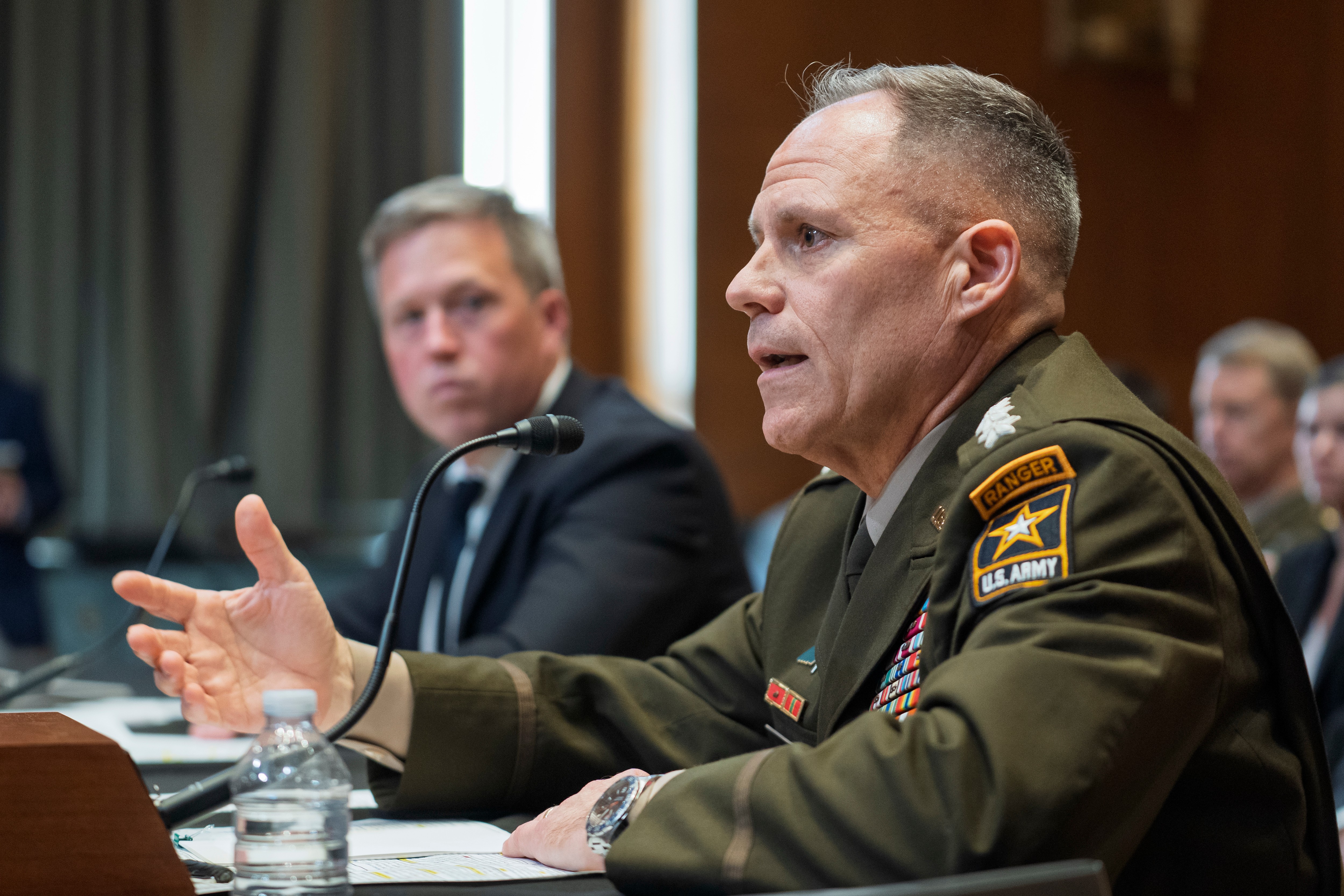
WASHINGTON (AP) — A bipartisan group of U.S. lawmakers is pressing the Army to explain why it told a unit based in Europe to stop specializing in drone warfare, an order that comes as the world’s battlefields rapidly evolveand military tactics increasingly rely on uncrewed systems to fight.
The 173rd Airborne Brigade was building its own drones and practicing the kind of warfare that Ukraine has pioneered against Russia and that Iran has fought against the U.S. — warfare that has killed and wounded American troops. The brigade of 600 soldiers was set up in November to be deployed anywhere that drones were needed.
“We have deep concerns that eliminating this specialized drone unit will limit our ability to learn from allies, particularly the Ukrainian Armed Forces, and hinder our efforts to modernize drone warfare at the speed necessary to compete on the modern battlefield,” the lawmakers said in a letter shared with The Associated Press.
It requests a briefing from the Army to explain its decision and was sent Tuesday to departing Army Secretary Dan Driscoll and Gen. Christopher LaNeve, the Army’s acting chief of staff. It was signed by Democratic Sen. Jeanne Shaheen of New Hampshire, Republican Sen. Thom Tillis of North Carolina, independent Sen. Angus King of Maine and Republican Rep. Mike Turner of Ohio.
“This specialized unit was a prudent response in a moment when the character of warfare is changing faster than a conventional formation’s ability to adapt,” the lawmakers say.
They said they were particularly keen to understand the data, analysis and process behind the change after less than a year of the drone unit being active. They also want to know if the decision was based on guidance from Pentagon leadership or made internally by the Army.
LaNeve, who is filling in as the Army’s top uniformed officer, recently ordered the battalion to refocus on its core mission of being an airborne infantry unit. The move followed Defense Secretary Pete Hegseth’s sudden ousting of the Army’s prior chief of staff, Gen. Randy George.
Integrating drones into the Army’s tactics was a major focus for George. Last year, he and Driscoll had rolled out what they called the Army Transformation Initiative, which pushed to add “modernized (unmanned aircraft systems) into formations.”
George, who became Army chief of staff under President Joe Biden, regularly spoke about the need to accelerate development of new drone systems and get them in the hands of regular soldiers, not just specialized units. Driscoll supported such efforts and focused on cutting the red tape for military contractors to quickly develop more drones.
After George was ousted by Hegseth without explanation in April, he was replaced by LaNeve. This week, Driscoll submitted his own resignation and later said on social media that Wednesday would be his final full day on the job. A reason for his departure was not publicly revealed, but he was an ally of George, and his tensions with Hegseth have been widely reported.
“We are supportive of the transformative initiatives the Army has taken under Secretary Driscoll’s leadership in this area and would like to see that momentum maintained even as uniformed leadership changes,” the lawmakers wrote.
___
Toropin reported from Nuremberg, Germany.
The Strait of Hormuz, 17 August 2026
Traffic through the Strait of Hormuz has effectively ground to a halt as a fragile U.S.-Iran ceasefire expires and recent tanker attacks deter operators. Daily transits have plummeted to just 3 to 4 commercial crossings—down roughly 90% from pre-crisis levels—leaving a massive backlog of thousands of idling vessels waiting offshore.
Current Traffic Status
- Daily Transits: Only 3 to 4 verified ship crossings occurred over the last 24 hours, compared to pre-conflict averages of 60 to 135 daily.
- Vessel Backlog: Approximately 3,200 ships—including roughly 800 oil tankers and cargo carriers—remain backed up and idling west of the waterway.
- Oil Shipments: Commercial crude oil and major petroleum product shipments are virtually non-existent as operators adopt a strict wait-and-see stance.


“You Watch, Gas Prices Will Drop Like a Rock!”
I filled my tank this morning with gas about 60 cents cheaper than last week.
I am very puzzled; gas prices fell “like a rock” the day after Trump said that as soon as peace was achieved, prices would drop like a rock. So quickly! I’ve seen prices go up overnight, but I have never seen prices go down so quickly!
We have a Memo of Understanding, not a peace treaty. We have identified areas of discussion (undisclosed) that the US will negociate with Iran over. We are in a poor position for negotiating.
From Wikipedia: Donald Trump announced the withdrawal of the United States from the Iran nuclear deal, formally known as the Joint Comprehensive Plan of Action (JCPOA), on May 8, 2018.
Which Iranians? Are they all on board? Are they the leaders of the country?
How will this treaty be any better than the Obama treaty Trump withdrew from in 2018?
How much will this cost the American taxpayers?
Who has made money off of this war? Who has been hurt?
How much has this war cost the world? How has it damaged our Trump-punched alliances?
I filled my tank because I know our strategic reserves are nearing depletion. I filled my tank because I don’t believe the truce will hold – it hasn’t held so far – and I filled my tank because I believe it is more wires and mirrors, trying to fool us into thinking things are better than they are.
Even Fox News?

From Robert Reich’s post of March 29, Trump’s ratings continue to tank. The relevance? Most presidents get a bump with a war, people tend to back their leader. Then again, when most country leaders start a war, they consult with allies, and give their population a clue about what is about to happen and why. Failing to do that results in lack of enthusiasm by former friends, treated rudely, and a population treated as irrelevant to the needs and goals of the leader.
Meanwhile, Trump’s polls continue to tank. In the new Reuters/Ipsos poll, only 36 percent approve of his performance while 62 percent disapprove, a new record low for Trump. In the latest Quinnipiac poll, 38 percent approve of him; 56 percent disapprove. Even the latest Fox News poll shows Trump approval at only 41 percent; disapproval at 59 percent; and fully 58 percent of Americans opposing U.S. military action in Iran.
Iranians “We Do Not Want an Islamic State”
I found this reference on Global Voices: Kuwait:
#Several bloggers including Schrr have reported[Fa] that today in Sadeghyeh in Tehran,while security forces wanted to arrest a young girl,many people came to help her.Here is a video film about this event where people chanted “we do not want Islamic State”.
The video is a little chaotic, but I love it that bloggers/U-Tubers can share all this news quickly and efficiently.
Recent Comments
Kitchen on Isiais: Winding Down intlxpatr on Shampoo Ginger tigerbutterya0c5ff1d… on Shampoo Ginger intlxpatr on British Soldier Kidnapped, Esc… John on British Soldier Kidnapped, Esc… Wikipedia Donate Button

Amazina


Early Voting in Florida


