Amitav Ghosh and River of Smoke

The National Public Radio website recommended this book as one of the best historical fiction reads, and I had never heard of it, so I ordered it. I ordered it in spite of the little voice I had in my head reminding me that this was the second in a trilogy, that the first is Sea of Poppies. I was too eager. I wanted to jump right in, and the review said it could be read stand-alone. I had read Ghosh’s Glass Palace a couple years ago for book club, loved it, and was eager to read this one.
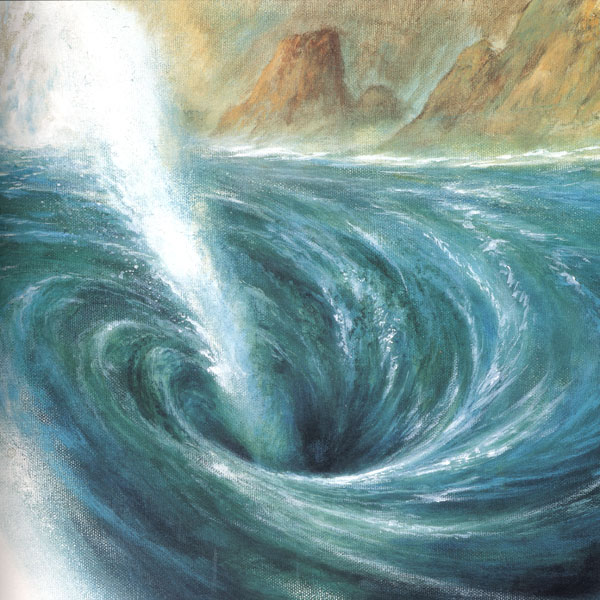
With a raging cold and no possible way I can be around humanity, it was a good time to start. Just picking up the book, it has a dense feel. Once you start, it is like being suddenly in a whirlpool, drowning in new words, characters who have more than one name and more than one identity, whirling between England, Mauritius, Hindustan, Gujerat, Hong Kong, Macau and China, whirling between cultures and professions and trades, but oh, what a ride.
It would have been helpful to be reading River of Smoke on an iPad, where I could poke at a new word and it would give me the meaning, but in truth, you can guess a lot of the meaning of the vocabulary from the context. The seafarers all speak a language sort of like Jack Sparrow, a pidgen language filled with simplified grammar and with words from many nations and cultures. It forces you to slow down. It’s worth it. It would also be nice if you could poke on a place-name and have Google Earth show you where it is. There used to be a website called Google Books, and you could put in a book and it would show you the places in which actions in the book took place; that would be particularly handy reading this book, provide context in place-relations.
But reading slowly is it’s own reward. This book has depth, depth of character, depth of textures and senses, and depth of morality. I love a book like this where you can smell the smoke drifting over the water, where you can smell the sewer and bloated animal corpses floating outside the foreign hongs of the Canton traders, you can feel the textures of the textiles and see their colors, you can taste the exquisiteness of Macau cuisine and you can hike in a Hong Kong not yet settled by anyone, Chinese or foreign.
The scope of time covered by the major part of the story is short, although there are years of back-stories for several characters. The period is 1837-8, during which the Chinese Emperor decides to put teeth in the long established edict against opium trade to China. The edict had been in place, but not enforced, and China watched her citizens sink into opium addiction and lowered productivity. The traders were making fortunes – shiploads of money. Opium was grown in India and shipped from there to China.
When the ban against shipping opium into China is announced, many traders believe it is just another attempt to attain greater bribes on the part of the mandarins, and decline to obey. There is great debate, and while it is lively in the book, it is based on documents from that era, many of the arguments word for word. Traders stood to loose a great deal of money, in truth, it would ruin most of them to lose their shipments.
There is a side story I also like, that of the botanical trade between China and England, and the importation of many of the garden plants we take for granted today, which were unknown until sent from China. Camellia – one of which is the plant for tea, did you know that? Roses, azaleas, orchids – many many familiar plants would be missing from our gardens were it not for their introduction during this period.
Ghosh gives us disparate characters of many cultures and upbringings, and slowly weaves them together, each one tangential to all the others, some closely interwoven. It is a fascinating read, and I can’t wait for the next volume. I may have to go back and read Sea of Poppies while I am waiting.
Fresh Market Opens In Pensacola
People have been excited ever since the announcement was made that Fresh Markets was opening a store in Pensacola. Although it is one of the smaller Fresh Markets, if there is anything carried by Fresh Market that is not in Pensacola, and you want it, they can bring it in for you. 🙂
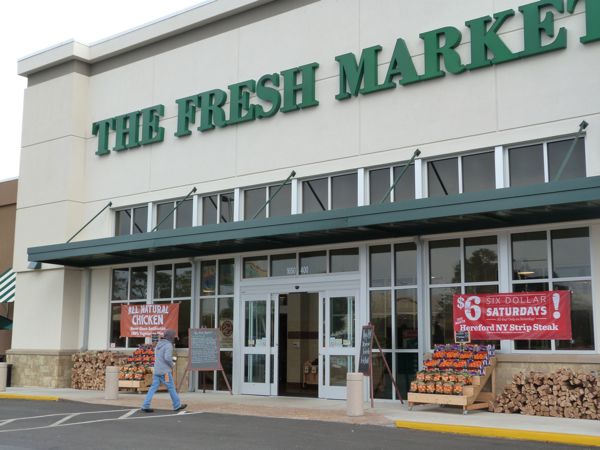

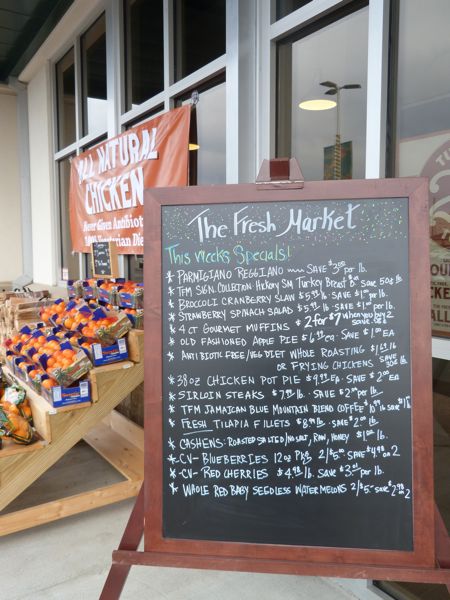
It’s a wonderful shopping experience. Think about it – we live like kings, better than the nobility of medieval Europe. We have indoor plumbing (if you’ve ever had to use an outhouse in a cold country like Alaska, you will have a greater appreciation for indoor plumbing all your life), we have hot water, we have heat and air conditioning, we have more than enough clothing for any season. We live so high on the hog as to be wasteful and oblivious to our own wastefulness. Oops, I digress.
We have access to abundant fresh food. Even without Fresh Market, we have markets with clean, fresh vegetables, fresh sanitary meats and poultry, and goods in – and out – of season.
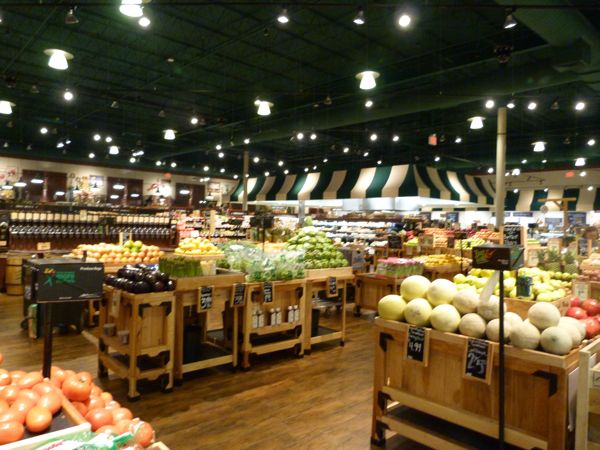
What is the height of luxury? Service. Beautiful displays. People who know their product and talk about it lovingly. It’s kind of like Disney does groceries; it’s a lot of fantasy, and probably a level of goods that goes beyond need into just-a-little-over-the-top, but isn’t it the nature of being a human to be looking for something novel and just a little better than the product you loved last week?
Fresh Market is a little like the Food Market at Herrod’s or Selfridges in London, all these little boutique-y spaces, with people who seem to love what they are doing and are happy to be of service. Publix does it well; Fresh Market takes it to a whole new level.
The Flower Market:

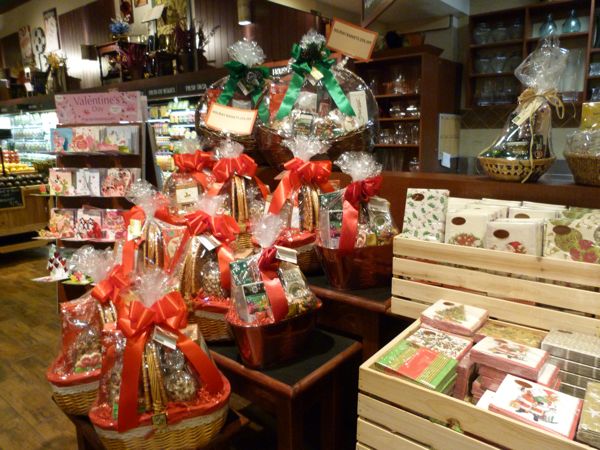
Gift Baskets:
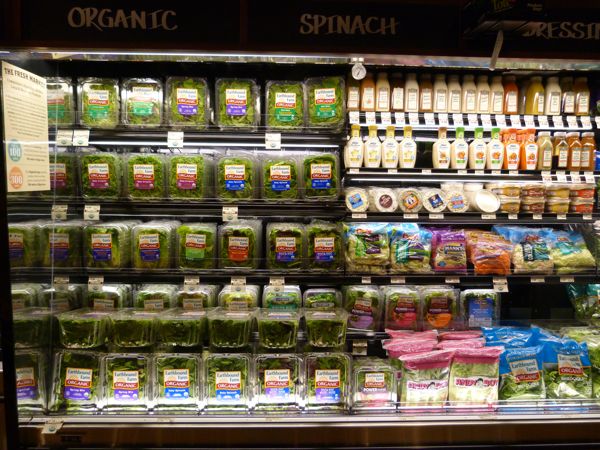
Fresh Veg Displays (artichokes!)

What catches the eyes:


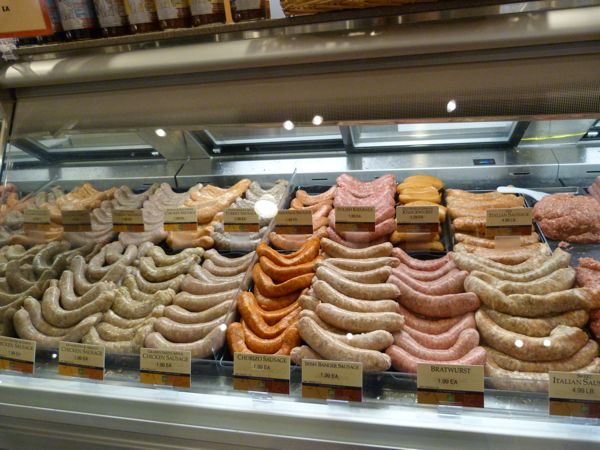
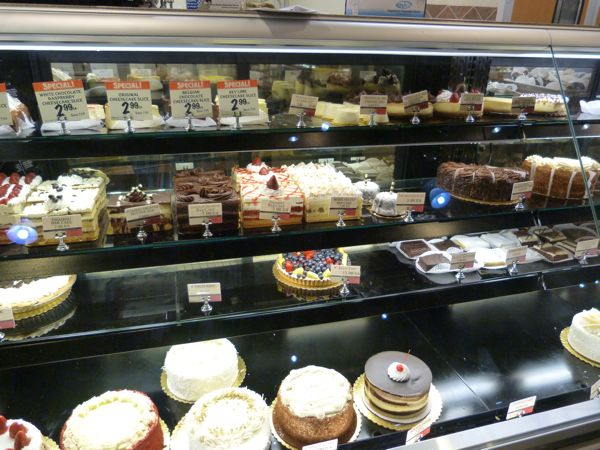
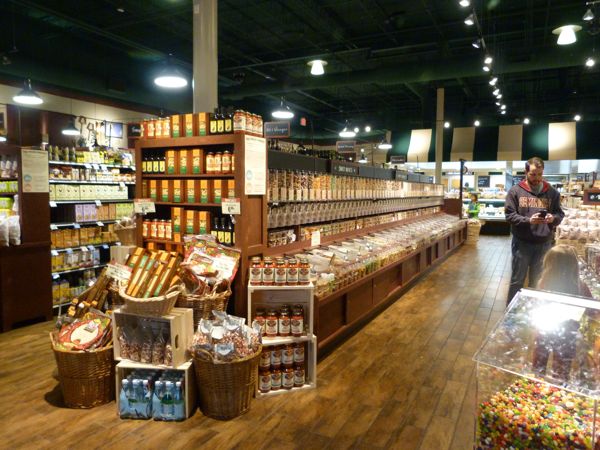
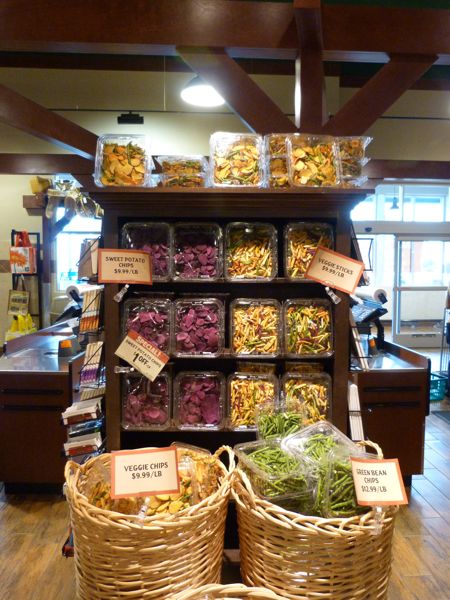
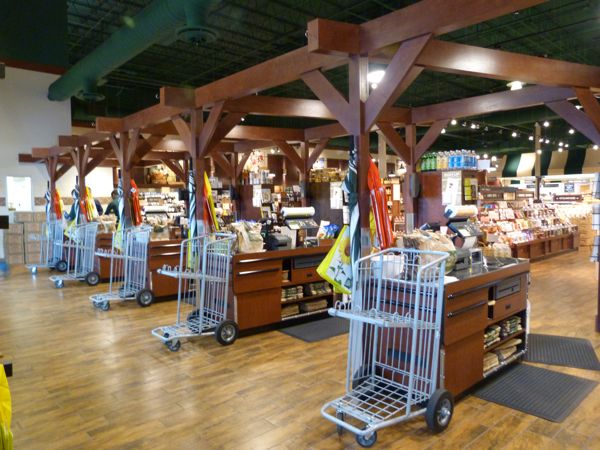
There is a very large section dedicated to quick foods – sandwiches made to order, prepared soups, salads, pizzas, cheeses, cold cuts, and deli items with lots of salads. We particularly loved the seafood display, and AdventureMan was mesmerized by the dessert selections.
All in all, Fresh Market makes grocery shopping less of a chore and more of a little vacation. For the best experience, get there on a week-day, or at opening – 0900 – on the week-end, so you don’t have to fight for parking in a crowded parking lot shared with the new Marshall’s, Ulta, Stein Mart, etc.
Birding at St. Mark’s National Wildlife Refuge

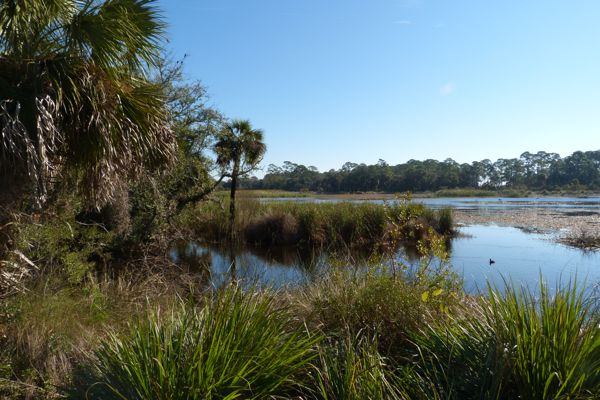
Some mornings, I am astonished at how wonderful it is to live in a place where we have the luxury to set aside wide tracts of lands to preserve our natural heritage. St. Mark’s National Wildlife Refuge evokes that response in me. It’s even more astonishing that because a couple years ago I bought a lifetime Senior Pass, getting into the national parks is free – for the rest of my life. What a great country we live in. 🙂
It is a cold and frosty morning as we load up to head out to St. Marks for some serious bird watching and photographing. Serious, that is, for AdventureMan, who actually does birding trips with other serious birders. I am a bird-appreciator, as in I know what a cardinal is, and a blue jay. I can pretty well recognize a buzzard. Hey, show me a painting and I can probably tell you who painted it, but birds . . . not so much.

I love being outdoors in Florida on a wonderful clear cool day with fabulous conditions for taking photos. I love just wandering along some of the birding trails and seeing what we can see. It’s an amazing place; in some of the areas where we stopped to wander, it reminded me of places we like to go in Africa, of Zambia, of Namibia, of Botswana . . . some of the habitat is so alike, I can almost hear those tectonic plates creaking apart, drifting, and wonder how much of the flora is directly related to African flora.
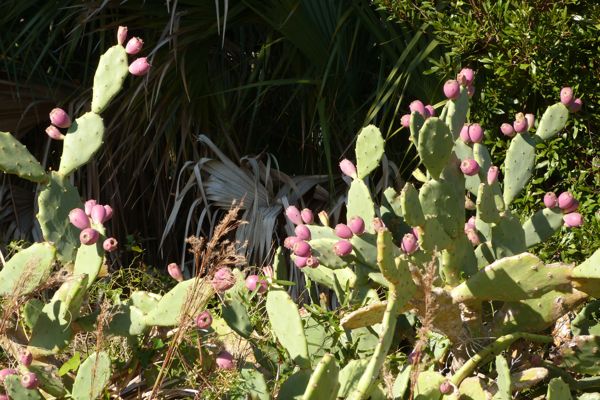
We had these in Tunisia; we called them Prickly Pear, and the Tunisians used them for borders to separate their lands. They also made jam with the prickly pears, and they skinned the leaves and fried up the meat from inside the thick prickly pear leaves. I think what a great border they would make in Pensacola, but a very unfriendly border. Good for keeping away thieves and burglers, but not very attractive, and not very welcoming . . . but very very African:
Some fishermen, probably setting some crab traps near the shore:
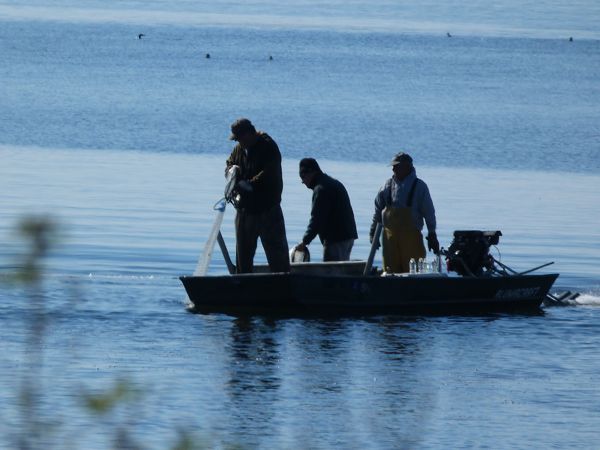
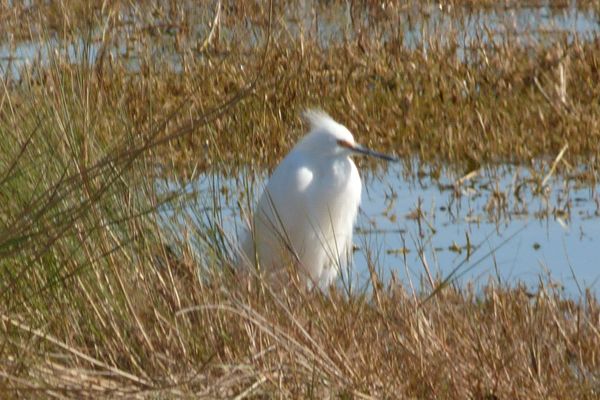

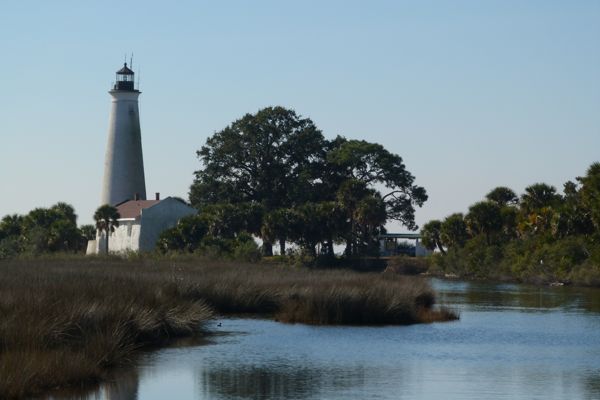
The St. Mark’s lighthouse:


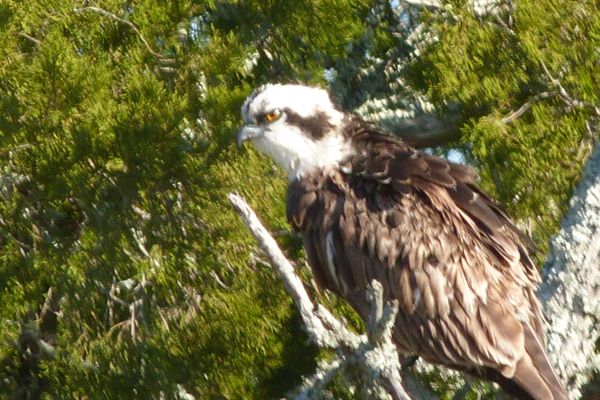



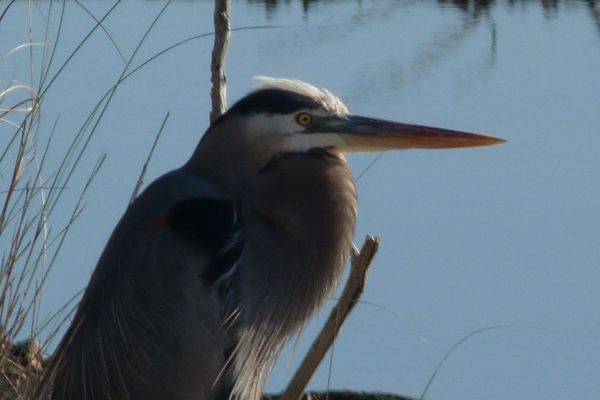
Every now and then you have a lucky moment, and I happened to shoot this heron just as he had a wiggling sparkly fish in his beak, just before he swallowed it. I admit it, I wasn’t trying. If I had been trying, I could never have gotten it just at the right moment:


Some very clever park person went around and made all the deer crossing signs into Rudolph signs, LOL!

The park is full of very serious-faced people carrying HUGE lenses on cameras attached to seriously sturdy tripods, lenses meant to capture the details of the pinfeathers, cameras to document a rare sighting. These people don’t talk about ducks, they talk about Merganzers and Koots, and the rarely seen such-and-such, and I just listen and keep my mouth shut while my head spins.
For me, it’s enough to see these wonderful creatures, free of fear, safe in their migrations. It’s enough to have a cool day, a great day for walking, and NO mosquitos. It’s a great day for my kind of birding, which is very non-serious to be sure.
Horrifying Parenting

After our boat trip, we took a walk to the diving platform to watch the manatees. When we lived in the Tampa/St. Pete/Safety Harbor area, we saw Manatees all the time, and it was heart breaking. They are big, stupid, clumsy animals who do no harm. They love to congregate where there is warm water on a cold winter’s night. Sadly, these slow moving sea cows are often hit and damaged by boaters; the blades of the motors scarring the manatees, often wounding them fatally. They have no defense against the casual, callous cruelty of the oblivious boater.
Here, in Wakulla Springs, they are safe. The only boats allowed in the Springs areas have caged blades; they cannot hurt the manatees.
No, only people can hurt them.
As we were watching the manatee, there was a family there. I try not to judge parents; parenting is hard. I will just make some observations. It was 40 degrees F – not that far from freezing – and the two little girls were dressed in beach clothes and their feet were bare. They were running on the diving platform, while Mom was trying to take photos of the manatees with her iPhone, and dad was trying to keep the little ones rounded up. On the second level, two stories above the ground, one little girl, maybe four years old, runs out to the edge of the diving platform and her dad snatches her back, just in time, as mom continues trying to film the manatees. All this is their business, although I fear for little girls who are raised carelessly, it is not my business.
Then, the older little girl reached down in her pockets and pulled out handsfull of breadcrumbs, which she spread into the water WHILE HER PARENTS WATCHED. Did you not see the signs? Did you not hear the guides? We are not to feed the manatees anything! Bread and breadcrumbs are not a part of their diet! Parents, what are you using for brains? ? ?
No. I did not say anything; I don’t look for trouble. I write it in this blog, and then, God willing, I let it go.
Wakulla Springs Boat Trip
At Wakulla Springs, everything is separate. Like the entrance fee goes to the State. The Wakulla Lodge is run by some corporation with a state contract, I am guessing, and the Wakulla Boat Rides are another separately run concession. If you are staying at the Lodge, or booked for the lunch buffet at the Lodge, you get into the Edward Ball Wakulla Springs State Park for free, instead of paying the $6/vehicle entrance fee.
The boat trip is half the fun. On hot days in the park, you can swim right in the same spring as the manatees, but on chilly winter days – take the boat trip. We took the boat trip twice, it is so much fun, and because we love the late afternoon light. I will share my photos of some of what we saw on the hour long trip below; warning you that trying to get a shot of an underwater manatee is not such an easy thing to do. You may have to use a little imagination to see the manatee 🙂 but I swear, it is there.
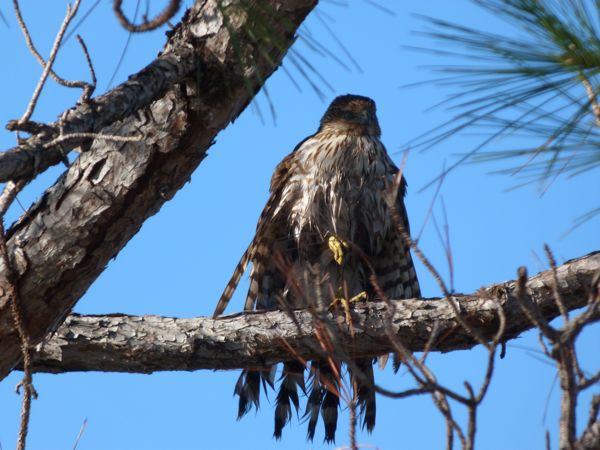
These are leathery buzzards, wintering in Wakulla Springs:

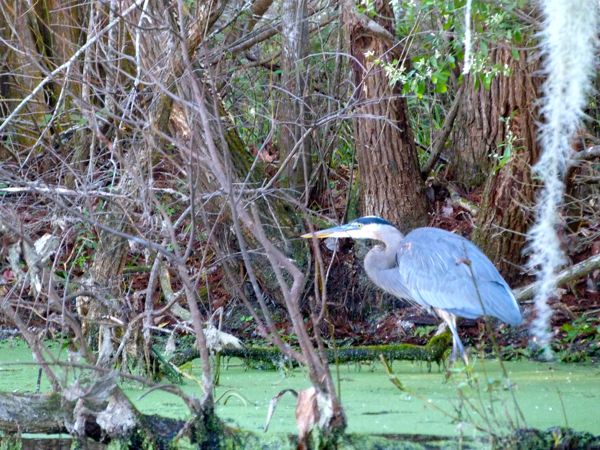
Great Blue Heron:
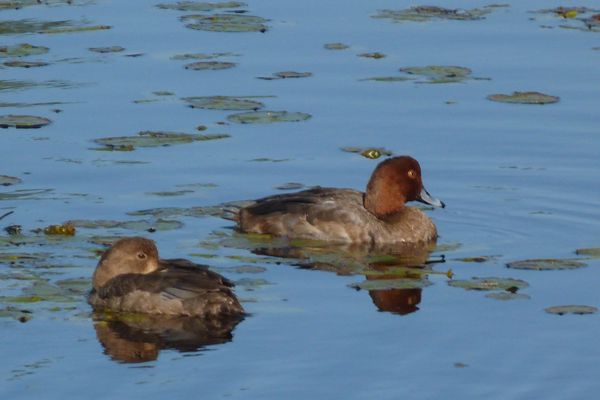
Little ducks called Koots:

Sunning Gator:

Close up of Gator skin:

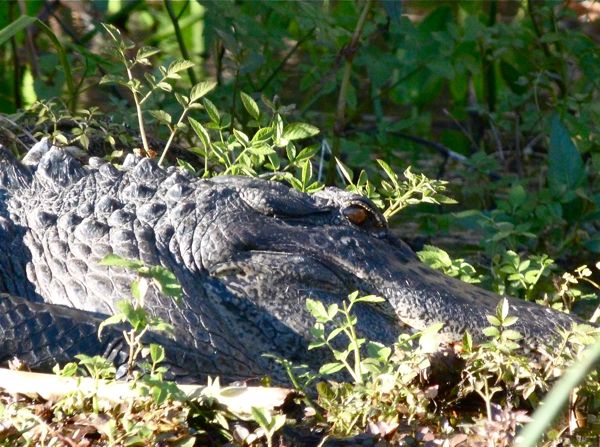
Close up Gator head – he was so cold he didn’t even care about the boat being near, he just wanted to soak up as much sun as he could before it set:
Wakulla Springs Cypress:

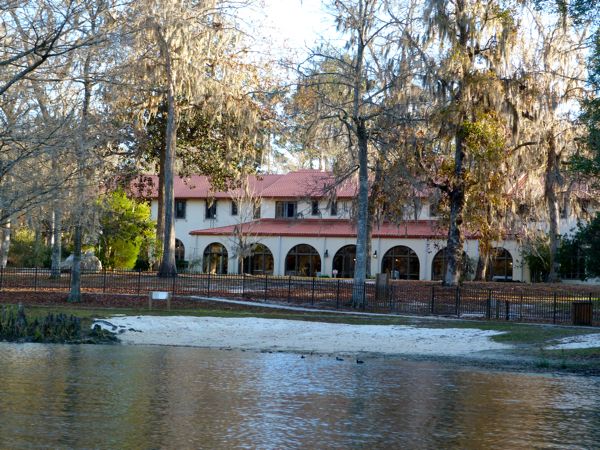
The Wakulla Springs Lodge from the Springs:
Old fashioned swimming platform:

Buzzards roosting:

Turtle soaking up some sun:

Anhinga drying out his wings:

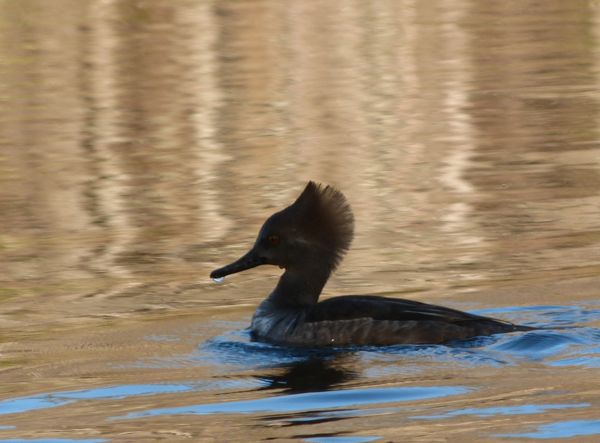
Merganzer Duck – don’t you love his helmeted head?
OK, there it is, the Manatee, otherwise known as a sea cow, a siren, and a sea slug – about the size of a small whale or a very large shark:

The Black Bean in Wakulla Springs and Tallahassee, FL

So we’ve arrived in Wakulla, to be received rudely at the hotel, turned away until the 3:00 pm check-in, the restaurant closed as we were trying to check in, and there is a part of every human being that wonders if this is going to be the story of our trip.
And then, to save the day, we find The Black Bean.
We drove to the nearby crossroads, where I saw a sign to a restaurant to which we did not go, but we turned left, up 363 and saw an all-day breakfast buffet place with a sign saying “Pork Fat is Where It’s At” (no, no, it’s true, how could I make that up?) and I am praying “Please Lord, find us someplace else, please Lord” and we keep going. AdventureMan says “should I turn around?” and I see a sign just a little up and say “let’s go up there and turn around if it’s nothing.”
As we get closer, we see a big sign for Jerry’s Bait Shop and my heart sinks. But as we turn in to turn around, we see the sign for The Black Bean Cuban Food, and my prayer is answered. Yes!
As it turns out, this is not the REAL Black Bean, which is in Tallahassee, but this is the Black Bean Express, their outpost, for people on the run, going down to St. Marks to go birding, heading out in their boats, etc. The menu is almost the same, just a few things less.
We both ordered the same thing, which we never do, but the Habanero Pork BBQ just sounded so good, and oh, man, it was. It was SO good. We didn’t know how much sandwich there was going to be, we could have shared one, but no, we didn’t know, and we ordered the fabulous black bean soup, too, and we couldn’t eat it all.


This is one of the owners, who fixed these fabulous sandwiches. He told us about their breakfasts, so we decided to come back the next day, but when we came back the next day, they were not open and we saw on the sign that the breakfast is only Friday, Saturday and Sunday at the Black Bean Express.
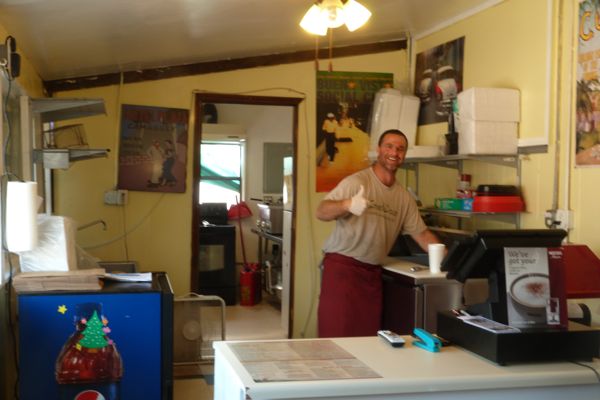
We went back around lunch and had their grilled chicken wrap, which – smarter now – we split, and we also split a red beans. You can read more about them HERE. We met the other owner (the are married to one another) and as we ate, we decided that rather than enjoy another perfectly uninteresting dinner at the Lodge, we would bet another sandwich, and split it for dinner along with some trail mix and water we already had with us.
The Black Bean saved the day. The food was so good; we even stopped for breakfast on our way out toward Tallahassee, having the biscuit sandwiches. I never knew Cuban food could be SO good, so tasty. It was fast, convenient, close to the Lodge, and very tasty. Let’s see, pay a lot more money for uninspired food at Wakulla Lodge, or pick up something at The Black Bean . . . . ? I don’t have to give it two seconds thought! Life is too short! It’s a Wakulla Red R! (Michelin Red R’s are given for good local foods at reasonable prices)
In the adjoining bait shop; a huge box full of live crickets, eeeeeeek!

And a guard dog, Zorah:

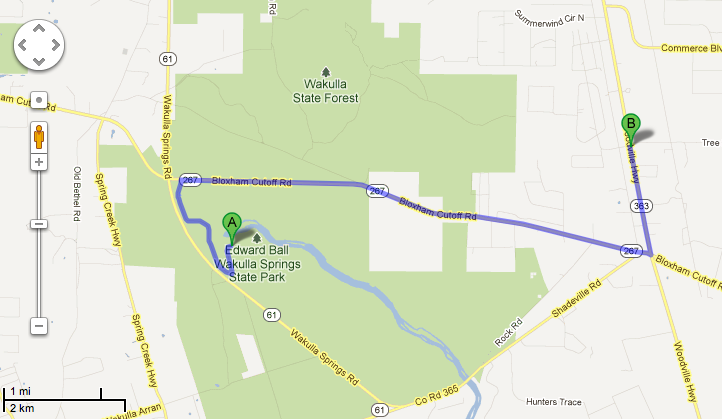
Here is how to get to The Black Bean Express, in Wakulla Springs. There is another, larger Black Bean in Tallahassee:
Wakulla Springs Lodge: Attitude Matters
AdventureMan and I just had a grand adventure, a trip to Edward Ball Wakulla Springs State Park, where we stayed at the Wakulla Springs Lodge for a couple nights.
I think we mentioned we lived in Florida before, a while back, at which time we came to dislike the commercial Florida intensely – think DisneyWorld and Orlando and schlock-filled shops with T-shirts “3 for $10!” It’s not that I dislike Disney, I grew up with Disney, and Bambi and Peter Pan and Sleeping Beauty and Cinderella. They’re a lot of fun.
But have you been to DisneyWorld recently? Have you paid those prices? And if you want to park there, or stay there, or eat there – it is horrendous! Advertised as family friendly, but a death-knell on a family budget.
There is so much MORE to Florida, some wonderful places. Wakulla Springs is one of our favorites, and not far from another favorite, Appalachicola, home of world famous oysters, fresh out of the Gulf (Gulf of Mexico, :-), for my other Gulf friends) We used to stay at Wakulla Springs while we were living in Kuwait and Qatar, and traveling to the USA to catch some time with our son, at FSU in Tallahassee.
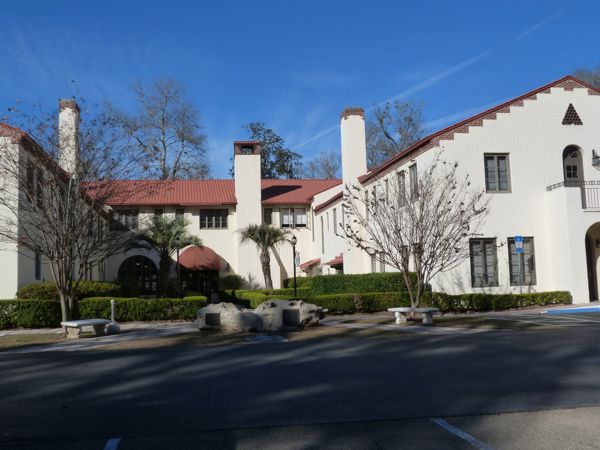
After our drive down, we show up at the counter . . . and the receptionist barely looks at us. She doesn’t get up. She doesn’t have a name tag on; she is wearing a FAMU sweatsuit. We give our names, and she doesn’t say anything to us, just dials a number and talks to someone and then, finally, looks at us and says “we don’t have anything ready. Check-in isn’t until 3:00 o’clock.”
Welcome to Wakulla Springs Lodge. I was speechless. I couldn’t imagine how someone could be so rude! So unwelcoming! We are guests, here to spend our money, and this is how our time in Wakulla begins?
It’s all about attitude. I could feel my temper rising. On the other hand, what good would it do to get angry? Am I going to make a difference in how this young woman welcomes her customer, or am I going to make her day worse than it already is? Sometimes it’s just poor training. Sometimes someone is just having a bad day. Sometimes it’s disgust with corporate management, and this may have been a little of all of the above.
We decided to go to lunch, and the doors closed just as we got there. Wakulla Springs is on a different time zone, and the restaurant is closed!
We were so happy to be going, and now we are having second thoughts. We decide we had better go find something to eat – have you noticed it is easier to be down or angry when you are hungry? Really, really hungry? 😉 We drove to the crossroads that had a few eating places, about half of them closed. There was one I thought “oh please, please, don’t let that be the only one open” and encouraged AdventureMan to drive on, just a little further.
What we discovered will be the next entry 🙂
This is the Wakulla Lodge fireplace:

Edward Ball brought in artisans from Italy to paint the beamed ceiling in the lobby; it is truly lovely:

Later, I sat in the lobby with a cup of coffee, waiting for my boat trip, and a wedding party came in to rehearse for the big day. The mother of the groom had to walk away, trying to staunch the tears, as the pianist practiced “Here Comes the Bride.” I had to cry a little along with her; I LOVE weddings 🙂

The lobby is spacious and light and beautiful. There is a gift shop and ice cream bar at one end of the lobby, and a restaurant at the other end:

These boat trips last about an hour and tell you a lot about the history and wildlife of Wakulla Springs. They are a lot of fun:

The first night, we had a truly indifferent meal in the Wakulla Lodge Restaurant, made bearable by the cheerful and professional waitress, Brittany, who had to tell us that they were totally out of their famous navy bean soup, and also out of the salad we wanted to order.
“We’ve been inundated!” she cried. “The lunch crowd wiped us out!” She was so cheerfully honest we couldn’t help but be cheerful right back. That’s the magic in good customer service.
While the meal was mediocre, Brittany sparkled as she served, and turned what might have been a real downer into just a less-than-memorable meal, we’ve had a few of those now and then, no big deal. With a lesser waitress, it might have been horrible.
All in all, customer service was notable in its imbalance at Wakulla Springs Lodge. Brittany, in the Dining Room, was a star. JJ, a part-timer at the desk, was another star. Our bathroom floor in our room was not clean, but the staff was gracious and eager to please. The ice-cream bar attendant was overworked and grouchy. (Honestly! How can you serve ice cream and be a grouch???)
There is so much potential at Wakulla Springs Lodge. They have this fabulous location, a huge spring where water pumps out thousands of gallons per day, where manatees and wildlife congregate, where movies have been filmed, where serious birders come to “twitch” (check off birds seen), with these fun boat trips, natural attractions, lovely sized rooms, and it just needs some polish to be a seriously first-class destination.
Pensacola Zoo Lights
Yesterday was a strange day in Pensacola. When we got up, it was already a humid seventy three degrees, and the sky had threatening clouds of an odd color. We hit the pool, and when we came out, it felt cooler. The skies broke forth several times with pounding rains, and then . . . the clouds disappeared, and by five, we had clear skies, no clouds, falling temperatures and a chilly breeze.
It was a great night to go see the Pensacola Zoo Lights. This is probably something AdventureMan and I wouldn’t do if it were just the two of us, but our son had asked if we could pick up our grandson and take care of him for a couple hours and the Zoo Lights seemed like just the thing. I call them Pensacola Zoo Lights, but the Zoo is actually in Gulf Breeze, it is the Gulf Breeze Zoo Lights. As we picked up Q, we were glad we all had jackets and long pants – it was COLD!
Zoo lights is a lot of fun. The place was packed with families and children, but not so packed you couldn’t visit some of the paths without interruption. The main population of children and families was around the train station, where there was also, conveniently, a little play ground for people waiting for the train.
Lots and lots of lights:


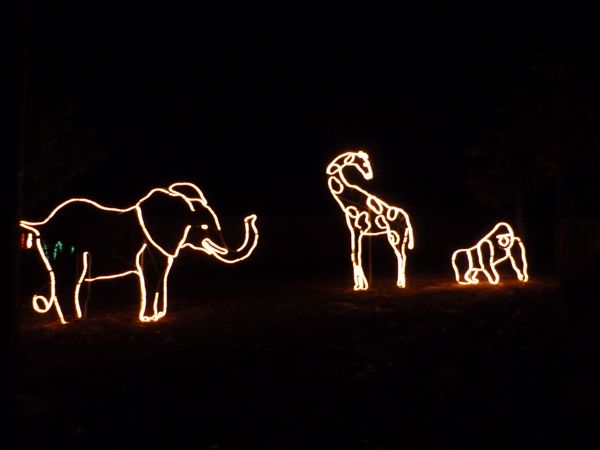
Q’s favorite light, LOL!
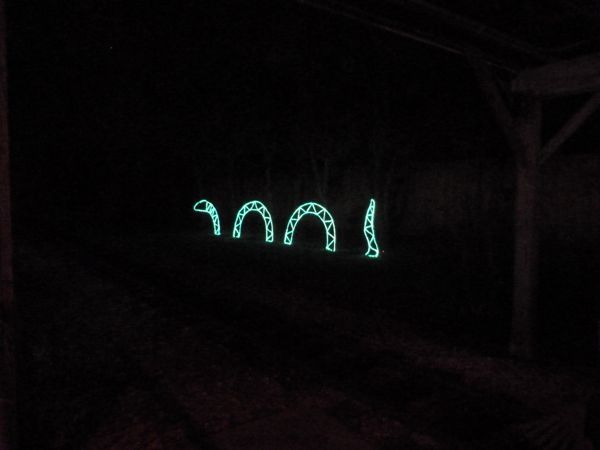


A tribute to the local Blue Angels Team 🙂


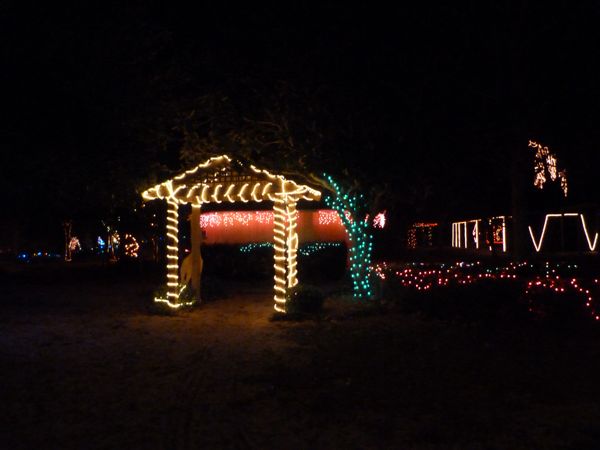


Near the angel was a place where something like soap was coming out of a tube, it looked a little like snow. Every now and then a great gust of wind would blow and the soap would flurry everywhere, and then it truly did look a little like snow and the children would scream with joy and chase after the snow-soap flakes.


This is worth a trip at this time of the year, with children. Here are the directions from the Gulf Breeze Zoo website:
DRIVING DIRECTIONS
Enter the following address into your GPS navigation system:
Gulf Breeze Zoo
5701 Gulf Breeze Parkway
Gulf Breeze, FL 32563
From TALLAHASEE and points EAST:
I-10 West to Exit 31. Take Rt. 87 South to Hwy. 98 West, towards Gulf Breeze.
Go 5 miles. Zoo is on the left.
From PANAMA CITY and points EAST:
Hwy. 98 West to Gulf Breeze. Zoo is on the left.
From MOBILE, AL and points WEST:
I-10 East to I-110 South through Pensacola, FL. Take Hwy. 98 East to Gulf Breeze. Zoo is on the right.
From MONTGOMERY, AL and points NORTH:
I-65 South to Exit 93. Take US 84 East to Rt. 41 South. Turn onto Rt. 87 South to Hwy. 98 West, towards Gulf Breeze. Go 5 miles. Zoo is on the left.
Qatar National Day 2012
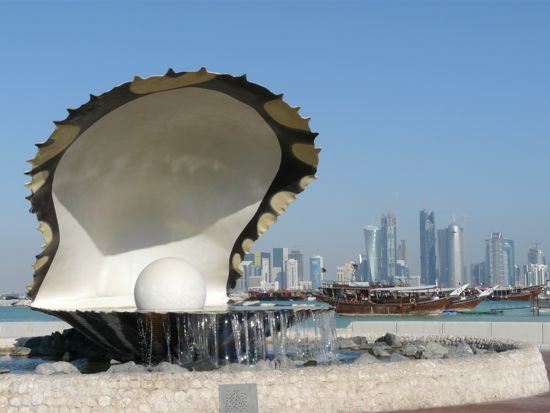
Congratulations to all our Qatari friends and greetings on your National Day, December 18, 2012. One of my new favorite sources of information out of Doha, the Doha News, has published a great article, Everything You Need to Know About Qatar’s National Day 2012, which you can access by clicking on the blue type.
Sorry for laughing, but this year they have forbidden people to decorate their cars and some of the displays common on National Day. Good luck with that!
National Day in Qatar might be a lot of fun, if it weren’t for the crowds, and the grid-locked streets. If you want to watch the fireworks – and they are truly fabulous, the Amir and his supporters spare no expense, it is truly bread and circus time in Qatar – you just have to grit your teeth and buy into getting through all the traffic to a viewing site.
We found a great – and relatively remote – site from which to watch, us and our 300 closest Qatari friends, over at the Marriott marina; it was a great view, and only maybe two hours trying to get home afterwards, LOL, fighting our way through the party-SUVs with their foam sprays and their decor, and young Qatari males dancing on the top of the SUVs, yes, they did, I am not kidding.
Recent Comments
intlxpatr on Shampoo Ginger tigerbutterya0c5ff1d… on Shampoo Ginger intlxpatr on British Soldier Kidnapped, Esc… John on British Soldier Kidnapped, Esc… intlxpatr on British Soldier Kidnapped, Esc… Wikipedia Donate Button

Amazina


Early Voting in Florida


