The Qatari Cat Gets a New Knee
******* WARNING ********* WARNING **********
If you are squeamish at all, do not read this blog post or look at the last photo, which is graphic.
****** END WARNING *********************
Qatari Cat Before

The Qatari Cat is home now, quiet and relaxed, stretched out in his favorite area. The Vet told us, as he scratched his head, that they would really like to keep him for another day, but he wasn’t acting normally. He’s all groaning and moaning and biting anything around him. They were at their wit’s end, and hated to see him so unhappy. Did we want to leave him or did we think he might be better at home?
We didn’t hesitate.
“We’ll take him home,” we said, knowing home is a quiet, safe place where the Qatari Cat can calm down and focus on healing.
Who knew? Who knew cats could bust their anterior crucial ligament? Who knew that it doesn’t repair itself, and that it would put stress on the other leg and that one would eventually tear, too?
We are learning all the time. In the old days, cats didn’t live long enough to get diabetes, to need a knee replacement. Cats went outdoors and had fatal run ins with cars, or racoons, or bad dogs, or mean people, or poisons. We’ve had five other cats in our lives together, and the Qatari Cat is the one we expected would not live so long, a tiny little street-cat with an infection when adopted.
We’ve kept him indoors (except for the rare instances, in Qatar, when he escaped, but not for long). Once, when he escaped, he climbed a tree. It was a very skinny tree, and as the wind blew and he got frightened, he kept climbing higher, until he was swaying back and forth, back and forth, and yowling at the top of his voice in pure panic.
Good thing he had that set of lungs, so I could find him. It took me another hour to talk him down out of that tree. “Qatari Cat” I said, over and over, “You are OK. You can come down,” and I would pat the tree. Over and over – you have to keep it simple for a scared cat. At long last, we locked eyes, he turned around and slowly edged his way down the tree, head first. I think that was a very scary thing for him, but he trusted me, and he came down. When he would hesitate, I would pat the tree and say “Qatari Cat, come.” He still comes when I call him and pat.
While we were still living in Qatar, he jumped from somewhere and developed a limp. From time to time, especially when the weather is cold, the limp, always the same leg, would become more pronounced. Recently, as he was trying to make a sharp turn, he screeeeeeched in pain, and after that, he had a serious limp.
The vet showed us his x-rays; his knee was totally torn. We waited until we were back from Alaska, so we could be here exactly for his reason – the Qatari Cat does best at home. He also does well at We Tuck ‘Em Inn, but he does not do well when he can smell fear and when he is fearful. When he is fearful, he is a fearful and awesome creature, spitting, hissing, biting and twisting. He instills fear in the most stalwart heart.
When we first saw him, at the vet’s office, (they were SO glad to get rid of him) he was growling and snarling, and he settled down in the car, a little, growling only now and then.
As soon as we got him home, we opened the carrier door and left him alone. Then the moaning began in earnest. He wanted to come out, but when he would turn to get in leaving position, his leg hurt, his wound hurt – a LOT, and he would let out a long, low, pitiful GROOOO-AAAAAAAA-AAAANNNNNNNNN. We had to leave him be. We had to let him do it himself.

AdventureMan had a special treat for him, canned catfood with SALMON. It helped him move himself out of the carrier:

And this is what his leg looks like. The instructions say it should heal in 10 to 14 days. We’re hoping he feels a lot better before then.

All to Ourselves: Mendenhall Glacier
It’s one of those wonderful mornings, we are still on Pensacola time and wide awake. LO, why not, we hit the sack the night before around seven, unable to stay awake another minute. Quick breakfast in the lobby – we brought our own home-mix cereal, but there is milk and fruit we can add, grab a quick cup of coffee, then out to the glacier. When you say ‘the glacier’ you mean the Mendenhall. People havre been coming for years to visit this glacier.
When I was a kid, it was bigger, farther out, and there were only little trails to take out to get closer. Now, it is built up – a place to watch bear catch salmon as they swim up the stream to spawn, and several built up places where tourists can view the glacier, nice paths to walk on. Normally, there are bus loads of people, and I mean that literally. This morning – holy smokes – we are the only car in the parking lot at almost seven ayem.
There are blue places in the sky between white fluffy clouds. There is sunlight filtering through, lighting up the glacier, and making the icebergs glisten.

While AdventureMan shoots shots of Alaskan terns for his birding friends, I shoot icebergs. We listen to the silence, the utter peace of being alone out in this majestic location.


We spend about an hour, hiking around the various viewpoints, feeling so luxurious, the luxury of sheer privacy. As we leave, the buses start arriving. We take the Mendenhall Loop around the lake to Tongass National Forest campgrounds, to see the glacier from another viewpoint.

As we near Skater’s Cabin, full of old memories of my Mom tying up my ice skates and giving us hot chocolate out of a thermos, our old friend calls. We used to go out fishing and berry picking with them on their big former Coast Guard boat, Dad would go hunting with her husband. She is now 90, and she is on the phone inviting us to dinner the next night.
We are so honored. We don’t want to put her out, we don’t want her to have to fix dinner, but we always have such wonderful conversations with us (she asks us things like ‘tell me what it is like grocery shopping in Tunis?’) and we get her to tell tales of life in early Juneau, so we accept.
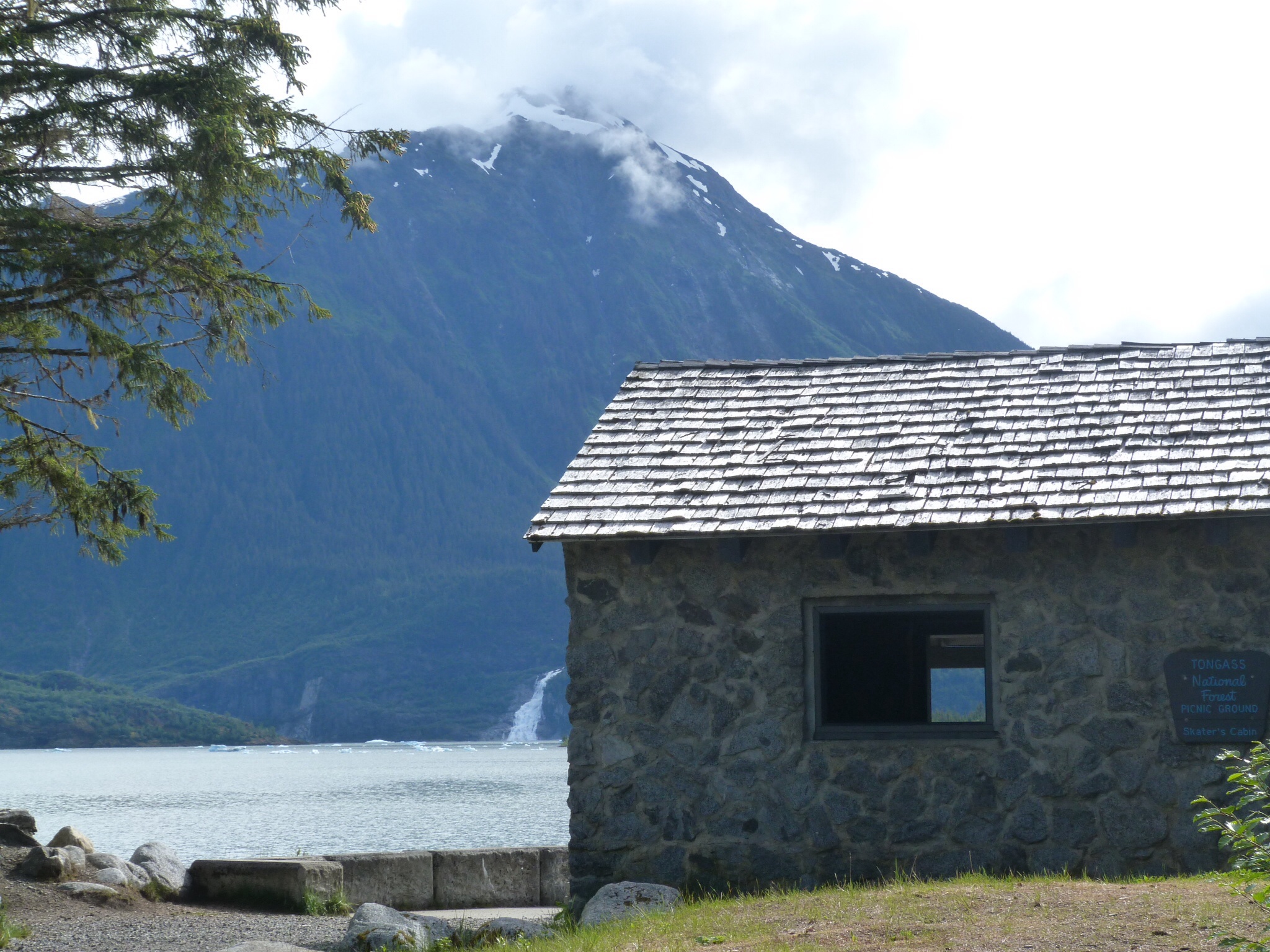
It’s been a wonderful morning. We know just where we want to have lunch, a place we haven’t tried before. And tonight is the opening parade for Celebration 2014!
41 Years on the Road Less Taken
We’ve had an unconventional road, AdventureMan and I, with all our moves, and most of our lives spent outside our own country. We celebrate 41 years this weekend, and AdventureMan asked me where I wanted to go.
“How about Alaska?” I joked, since we have a trip planned there, and we will be going to lots of fun places. He’s used to my answers, my non-sequitors. He asked me if I wanted a diamond, and I laughed and said, “no, just let me buy houses.” We’ve done well.
“No! To eat on our anniversary!” AdventureMan protests, knowing I can draw a celebration out for days or even weeks.
He named off a couple really nice restaurants and I said “I want to go out to Nine Mile Road.”
He just laughed. We both love this little seafood restaurant he discovered, the Seafood Platter Deli, sometimes called the Gulf Coast Seafood Deli. It is unique, the food is fantastic, it’s this genuine little place not like any other place I have ever been. It has a podium by the huge chalkboard menu on the wall, and on the podium is a book where clients write their prayer requests. Every morning, before they open the restaurant, the staff prays together.
I am awed by this. It blows me away. We live in such earthly times; few people are really focused on practicing their faith. We are all so tempted by the bread and circuses offered by our consumer-driven culture.
The last time we were there, they had added new doors to the kitchen. No, I wouldn’t want them in my house, but for a seafood restaurant? They are perfect, somebody went to a lot of trouble to make these doors.

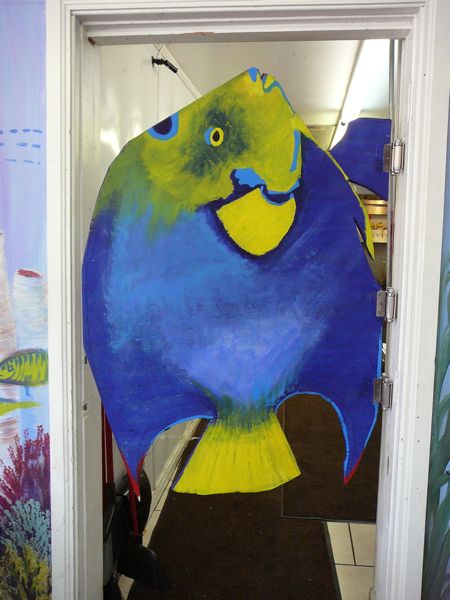
“I was hoping you would want to go there,” AdventureMan admitted, and we grinned. There’s a reason we’ve been married this long; we take the road less travelled – together.

Study Highlights Health Risks Specific to Women
This was fascinating to me because most of the research on aging has been done on males. Most medicinal dosages are based on male tests, and males respond differently to medications than females. Here are some results from a study done on only females. From AOL EveryDay Health:

For most of medical history, scientific research had largely been conducted on white men, which makes it pretty difficult to know how to treat conditions that affect other populations, particularly women. Take menopause: For years, doctors prescribed long-term use of hormones estrogen and progestin to help women manage symptoms during and after menopause because it helped women feel better. But in 1991, researchers wanted a definitive answer as to whether hormones used to ease menopause’s symptoms were helping women more than they were hurting them. So, the National Institutes of Health launched the largest study ever focused exclusively on women to answer that question.
Dubbed the Women’s Health Initiative (WHI), the research project recruited 68,132 postmenopausal women to participate. They were divided into groups, some taking just estrogen, some taking estrogen and progestin, and some taking placebos. After over a decade of observation, the researchers stopped the trials early, in 2002 and 2004, because it was so clear that hormones posed serious health risks to the women. However, researchers have continued to follow up with these women in the years since, and have also tested other health interventions on the group, including low-fat diets and taking vitamin D and calcium. In 1998, an observational component of the WHI launched, with another 93,676 participants, to study even more aspects of women’s health. Much of the data collected over the years is now accessible to other researchers, too.
This has created a glut of women-specific health information that has paid off in big ways. In fact, the findings from the WHI have prompted a net economic return of $37.1 billion dollars, or $140 for each dollar that was spent on the trial itself, according to a new paper published in the Annals of Internal Medicine. That’s because the results have led to better treatment and care for millions of women, decreasing healthcare spending and increasing quality of life.
Here are some of the most important WHI findings:
1. You probably shouldn’t take hormones for longer than you have to. Long-term use of estrogen and progestin increases the risk of breast cancer, heart attack, stroke, and blood clots, though it decreased the risk of hip fractures and colon cancer in the main WHI trial. While these results have caused doctors to largely stop prescribing long-term hormone replacement, individuals are encouraged to make a personal decision based on their own risk factors. For example, if a woman has a very low family history of breast cancer and cardiovascular disease, but a high risk of colon cancer and osteoporosis, she may choose to take the hormones, which are thought to be safe when prescribed for just a short time around menopause, to manage symptoms. They may also extend the life expectancy for women who have had hysterectomies, the data revealed, so be sure to talk to your doctor about your specific needs.
2. Low-fat diets are good, but not enough to reduce your risk of some cancers or cardiovascular disease. The researchers asked some of the participants to eat a low-fat diet, and then compared how this affected their risk of various diseases. They found that a low-fat diet alone was not enough to significantly impact women’s risk of cardiovascular disease, breast cancer, orcolorectal cancer, according to the results published in JAMA. The researchers concluded that more dramatic lifestyle changes, including increased exercise, might be necessary to affect risk of developing these diseases.
3. Taking vitamin D and calcium may not be worth it. Some of the women in the study were given calcium and vitamin D supplements, while others were not. The results showed that the supplements did increase the bone density in the hip, but they didn’t significantly decrease the number of hip fractures the women experienced. Nor did taking the supplements lower the risk of colorectal cancer, according to the paper published in the New England Journal of Medicine. They did, however, increase the risk of kidney stones.
4. Ditch diet soda. Post-menopausal women who reported drinking two or more diet sodas per day had a higher risk of heart attack, stroke, and other heart problems, research from the WHI showed. While the researchers couldn’t show a direct connection, there are plenty of other reasons to avoid fake sugar.
5. If you’re at high risk for melanoma, aspirin might help. Researchers analyzed the data from the WHI observational study, and found that women who took aspirin regularly had a 20 percent lower risk of melanoma than women who did not. The correlation was strong — the longer the women took the drug, the lower their risk. Aspirin comes with its own benefits (preventing subsequent heart problems) and harms (increased risk of bleeding), so talk to your doctor before adding it to your routine.
Thursdays: My Day to Figure Things Out
“What will you be doing today?” asks AdventureMan as he heads out the door to the Extension Office gardens to work, helping get everything ready for the Great Spring Sale coming up the first weekend in May.
“Not much!” I grin in return.
I have always loved Thursdays, even when I was young. Thursday was always the day before Friday, a day to anticipate without feeling rushed. I am a planner. Planning takes time. You can’t plan well when you are rushed, you need quiet, uninterrupted TIME. (Have you noticed how precious time is, and we spend it like nothing?)
This week was a normal week – full. Monday we kept the grandkids because their school was closed;
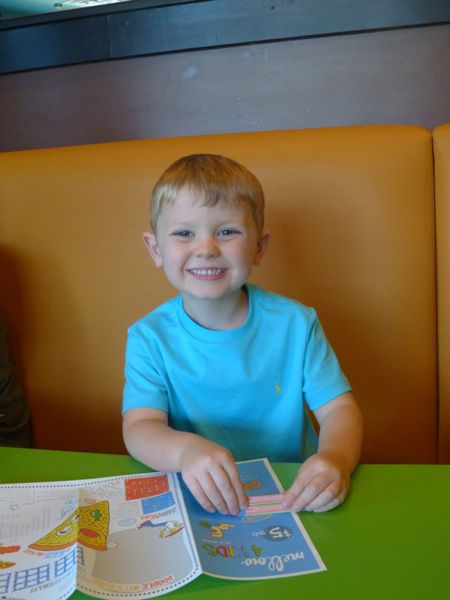
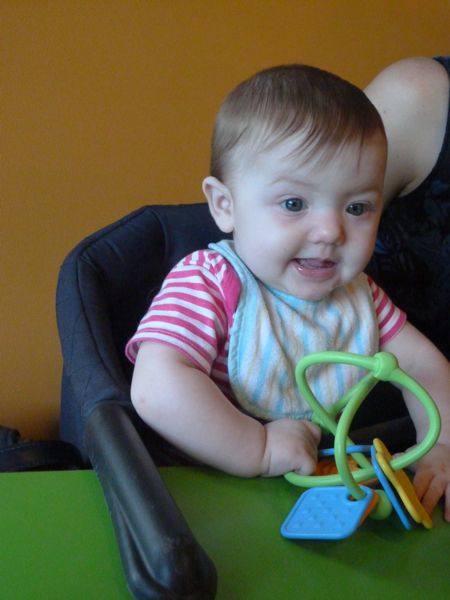
Tuesday I volunteer, Wednesday I have a bible study . . . Fridays I have water aerobics and a trip to the commissary or whatever I need to do to prepare for the weekend, which tomorrow means commissary because we have guests again on Sunday. Dinners require planning, more so now that I don’t have people who help me get it all on the table, off the table, coffee and dessert served, leftovers into the refrigerator and dishes into the dishwasher or washed up. It used to be so easy. (sigh)
But today is my day. I can catch up, I can upload those photos, I can print them off for my upcoming visit to see my Mom for Mother’s Day, I can plan the menu for Sunday, check the pantry and freezer to see what I will need to pick up. I can catalog some photos, I can finish quilting one of the charity quilts. Today is sheer luxury, time!
I can even catch up with the blog a little 🙂
Alzheimers and Cancer: Does One Decrease the Liklihood of the Other?
A study published today on AOL Health News has an intriguing find – that there is a negative correlation between Alzheimers and cancers. You can read the entire study by clicking on the type above. Below is a quote from the study:Ei
“Benito-Leon said that scientists need to better understand the link between Alzheimer’s disease, which causes abnormal cell death, and cancer, which causes abnormal cell growth.”
It refers also to a study published last year on
Skin Cancer May Be Linked to Lower Alzheimer’s Risk, Study Says
A new study finds a link between non-melanoma skin cancer and a decreased risk for Alzheimer’s disease.
From an earlier study on AOL EveryDay Health:
WEDNESDAY, May 15, 2013 — A new study found an association between a history of non-melanoma skin cancer and a reduced risk for Alzheimer’s disease. The observational study, published in the journal Neurology, analyzed a cohort of 1,102 participants of the Einstein Aging Study at Albert Einstein College of Medicine’s Institute of Aging in the Bronx, N.Y.
The researchers report that study participants with a history of non-melanoma skin cancer were close to 80 percent less likely to develop Alzheimer’s disease than people who did not have skin cancer.Among the 141 participants who had non-melanoma skin cancer, only two developed Alzheimer’s disease. But the researchers say they’re still unsure why this link may exist.
“Our goal is really to identify risk factors and genetic factors for Alzheimer’s,” said Richard Lipton, MD, of Albert Einstein College of Medicine, a fellow of the American Academy of Neurology, and lead author of the study. “One explanation is that there is a biological link, and another explanation is there’s a link between risk factors. Really what we need to do is sort out the reasons for these associations.”
Researchers followed participants for an average of 3.7 years. The average age of study participants was 79. At the start of the study, none of the subjects were reported to have dementia, though 109 people had a history of skin cancer. During the study, 32 additional people developed skin cancer, while 126 of the subjects developed dementia. Out of the subjects with dementia, 100 of them had Alzheimer’s-related dementia.
“In neurodegenerative disease, specific cell populations have a tendency to die,” said Dr. Lipton. “In cancer, cells tend to divide out of control. Good health requires a balance between cell death and cell division. Skin cancer may reflect a predisposition to cell division, which protects against Alzheimer’s disease.”
But Lipton also said that subjects in the study with a history of skin cancer may also have lived a more active life, engaging in outdoor activities such as running, playing tennis, or swimming. “We know that physical activity and cognitive activity can prevent against Alzheimer’s,” he said. Therefore, more physical activity would also likely mean more time spent under the sun and in the great outdoors.
Some experts, such as Ahmedin Jemal, PhD, vice president of Surveillance & Health Research at the American Cancer Society, speculates that these findings simply reflect how healthy lifestyle choices can reduce Alzheimer’s risk. “Those people who develop skin cancer are more likely to be physically active and if those people are physically active, they are more likely to eat healthy food, such as fruit and vegetables,” he said.
Dr. Jemal also said there’s research suggesting that high levels of vitamin D can also protect a person from developing Alzheimer’s disease. “For our body to synthesis vitamin D we need sunlight,” he said. One study published earlier this year in the Journal of Alzheimer’s Disease, suggests that high levels of vitamin D may jump-start certain genes in the immune system that are able to help dissolve amyloid plaques in the brain. These plaques are found to cause Alzheimer’s disease.
But Lipton recognizes there are limits to his study. While the researchers did adjust their findings for age, gender, education, and race, they did not base any analysis on diet or vitamin D levels. He added that his team is seeking funding to analyze blood samples of study participants, which may be able to detect certain nutrition-based biomarkers, which may help to better understand the study findings.
Heather Snyder, PhD, director medical and scientific operations at the Alzheimer’s Association finds the study’s findings compelling, but she’s also skeptical, since the number of skin cancer incidences in the study pool is relatively small. However, she said the study points to the value of further research.
“[The study] really underscores the need to understand the biology of these disease mechanisms,” said Dr. Snyder. “If we highlight what mechanisms might be connected in disease processes, if we can understand these disease processes, then we can develop therapies.”
The Clothes Dryer

I was talking to my Mom last night, asking her how her mother coped with having twins. She was trying to remember if her mother even had a washing machine, and thought not. She was only four, but she remembers a woman who came in and did ironing every day, and she thought maybe she also did all the laundry.
Imagine. Imagine doing diapers for twins by hand, in a wash tub with a wash board. It gives me shudders, but women worked harder in those days, life was physical. They also died a lot younger. Hmmm . . . having said that, my grandmother lived to 105.
Clothes dryers came much later. Even today, most women in the world hang their clothes to dry, some even lucky enough to have special racks or lines for that purpose, others hang them over shrubs and bushes and fences surrounding their homes.
Today’s meditation from Forward Day by Day caught my attention; in Germany the last time I lived there, I did without a dryer, hanging my clothes on racks, and I did just fine. I had the time, I had the space and it was just a different pace of life.
Mark 8:34. If any want to become my followers, let them deny themselves and take up their cross and follow me.
A few years ago, a young husband and wife started an intentional community in rural Ohio. They share the house with others committed to simple living, to daily prayer and worship, and to issues of justice, especially around hunger and care of the earth. The farm not only yields enough to feed the members of the house and volunteers, but also supplies thousands of pounds of food each year to the local pantries.
I was struck by one story about their common life. They decided to get rid of the clothes dryer. After all, it’s not a vital machine, they determined. They could use a clothesline and conserve energy and money. Hanging clothes to dry would be an exercise in patience, in slowing down, as well as in planning and coordinating the wash with others in the house.
This small sacrifice provides powerful insight into the faithful witness of this group of people. I don’t know if God wants me to give up my clothes dryer (please, God, I hope not). But I do believe God calls us to sacrifice, to make hard decisions, to give up important things, so that we can take up the cross and follow Jesus.
Love That Technology, But Sometimes it Takes Me a While . . .
Another way of saying “I’m slow, but I’m slow . . . ”
As I was sitting in a meeting, I watched one of our delegates take a photo and then she zoomed in by doing that finger thing that works on my iPad.
“She must be using an Android or a Samsung” I thought to myself, as I have often wished my iPhone had a zoom feature.
And it dawned on me . . .
after owning my phone for three years . . .
and wishing I could zoom . . .
that the delegate’s phone looked a lot like my iPhone.
So I tried it. And it worked.
So the good news is that I can zoom photos on my iPhone. The bad news is that it took me so long to figure that out!
The Creole Nature Trail

In the next to the last episode of True Detective, at the very beginning of the episode, you see this sign, old and beaten, alongside a narrow country road.
And here is one reason AdventureMan and I have been married over 40 years. He looked at me, and I looked at him, and we knew where our next mini-adventure would take us. The Creole Nature Trail is mere hours away, in a part of Louisiana we love.
Even better, this is so cool, you can download an app for The Creole Nature Trail, free, and using your geo-tracking capabilities in your smart phone, it can tell you about each stop along the 180+ miles of natural wilderness along the trail. I love technology.
True Detectives was atmospheric; the atmosphere was so thick it was like it was a character in the series. The cameras loved the bayous, and the shacks, and the run-down bars; the cameras loved the trees and the semi-swampy lowlands – and they made Woody and Matthew run through them often, LOL. The end comes in a fortification that looks a whole lot like our own Fort Pickens, but is one of what must be several colonial forts, some abandoned, some maintained, along the Gulf coastline.
The Creole Nature Trail is just past the area we know from our visit to the James Lee Burke sites around New Iberia, one of our favorite trips. We know it will be wild, and beautiful, and in some places, a little bit bleak. We know to take insect repellant, as they have world famous mosquitoes in Louisiana. This photo is from our trip to Avery Island, where they make the world’s most famous Tabasco Sauce.

I’m just thankful to be married to a man who is up for the same adventures I’m up for 🙂
My New Closest Friend: FitBit One
My sister was bouncing around as I stayed at her house in August, and showed me the reason: she was wearing a FitBit. It is tiny, it clips right on to your clothing, and it syncs with your computer – or your smart phone – and helps you see your daily activity level.

You remember the 10,000 Steps program? I wrote about it in 2008? The FitBit counts your steps. It tells you how many flights of stairs you have gone up. (We bought a two story house on purpose, and today my FitBit tells me I am a CHAMP on the stairs. I guess it doesn’t know that going up and down the stairs is just what you do when you have a two story house, but hey, I get credit!) It is so much better than the pedometer, it counts better. It can also monitor my sleep, if I figure it out.
My sister loved this device; claims it keeps her motivated to keep moving, and all the latest studies show that we really, really need to keep moving. It is, literally, a matter of life or death. You move it – or you lose it.
I finally got one. I was kind of reluctant to have this little fitness nanny prodding me all the time, but actually, it is turning out to be more fun than annoying.
Thanks, Sis. Great recommendation.
Recent Comments
Kitchen on Isiais: Winding Down intlxpatr on Shampoo Ginger tigerbutterya0c5ff1d… on Shampoo Ginger intlxpatr on British Soldier Kidnapped, Esc… John on British Soldier Kidnapped, Esc… Wikipedia Donate Button

Amazina


Early Voting in Florida


