The Hidden Dangers in Baking, Roasting, Grilling, Broiling
This is especially bad news for me; I love broiling and roasting to concentrate flavors. I love those crispy pieces of grilled foods . . . the latest from Bottom Line Publications.
How it’s cooked may increase your risk for chronic illness.
Some of the most serious chronic health problems in the US, including Alzheimer’s disease, cancer, diabetes and kidney and heart disease, have been linked to what we eat—processed foods, fast food, red meat, etc. What may surprise you is that the increased health risks from these foods may be due in large part to how they are cooked.
Dry-heat cooking, such as grilling, broiling, frying and even baking and roasting, greatly increases levels of advanced glycation end-products (AGEs), also known as glycotoxins. Small amounts of these chemical compounds are naturally present in all foods, but their levels rise dramatically when foods are subjected to dry heat, which frequently occurs both in home cooking and in commercial food preparation.
The danger: AGEs are oxidants that produce free radicals, damage DNA, trigger inflammation throughout the body and accelerate the aging process. They also make cholesterol more likely to cling to artery walls, the underlying cause of most heart attacks. Some researchers now believe that AGEs can be linked to most chronic diseases.
A NEW THREAT
A century ago, people mainly ate fresh, homemade foods, such as grains, vegetables, legumes and fruits, with relatively small amounts of meat. The processed food industry was still in its infancy.
However, in the following decades, meat portions grew larger, and Americans acquired a strong desire for the intense flavors, aromas and colors in commercially prepared “browned” foods, such as crackers, chips, cookies, grilled and broiled meats, french fries, pizza, etc. During this time, the rates of heart disease, diabetes and other chronic diseases started to rise. This wasn’t a coincidence—the rich taste, smell and appearance of these foods primarily come from AGEs.
Our bodies can neutralize the small amounts of AGEs that are naturally found in foods (and that we produce as a by-product of metabolism). But our defense mechanisms are overwhelmed with the high amounts that are now very common in the typical American diet.
HOW MUCH IS TOO MUCH?
AGEs are measured in kilounits (kU). We recommend consuming no more than 5,000 kU to 8,000 kU per day (see box for examples of kU levels in some common foods). Recent studies have shown that the average American typically consumes more than 15,000 kU daily, and many people eat well over 20,000 kU daily.
Reducing dietary AGEs may be especially important for people with diabetes because high blood sugar levels cause more AGEs to form. It’s also crucial for people with kidney disease because they are less able to remove AGEs from the body. AGEs also are elevated in patients with heart disease, obesity and dementia.
Researchers can measure the amounts of AGEs in the blood, but doctors don’t commonly use this test because it’s not currently available for commercial use. What your doctor can do is measure levels of C-reactive protein (CRP), a marker for inflammation. If your level is high (above 3 mg/dL), you may have excessive AGEs in your blood. If you eat a lot of grilled, broiled and roasted meats, for example, and/or heat-treated processed foods, this also means your AGE levels are likely too high.
AN “AGE-LESS” DIET
Our studies have shown that people who make simple dietary changes can reduce their levels of AGEs by more than 50% in four months. The reduction is accompanied by a similar decrease in CRP levels. Helpful strategies…
Eat less animal protein. Animal protein, especially red meat, is among the main sources of AGEs—and the levels can multiply tenfold when the meat is grilled, broiled, baked or roasted. Helpful: Eat beef no more than three times a week.
Because animal fat also contributes to AGE intake, eat lean meats. They have fewer AGEs than higher-fat meats. Animal fats such as butter also are higher in AGEs than plant fats such as olive oil.
Best approach: Fill three-quarters of your plate with plant foods, such as vegetables, whole grains, legumes and fruits, and leave no more than one-quarter of the plate for animal foods, such as meats and cheeses.
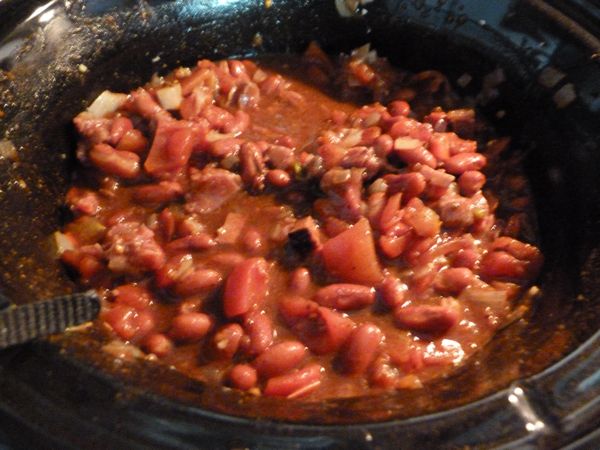
Soups and stews are tasty ways to serve small portions of meat. Also enjoy more meatless meals, such as vegetarian chili or veggie burgers. Nonfat milk and yogurt are low in AGEs and are a good way to add protein to meals and snacks.
Avoid dry-heat cooking, such as grilling, broiling, baking, roasting and frying. High, dry heat greatly increases AGEs. Example: A piece of raw meat might have 500 kU to 700 kU of AGEs. But after the meat is broiled, the level can rise to 5,000 kU to 8,000 kU.
Better approach: Cook with moist heat—stew, poach, steam, boil or microwave. A piece of chicken that’s poached or boiled, for example, will have about 1,000 kU. The same piece of chicken will have about 5,000 kU when it’s broiled.
If you have a desire for grilled or roasted foods, vegetables and fruits are better choices than meats. These foods have far fewer AGEs than meats and fats when cooked with dry heat.
If you do cook with dry heat, marinate first. The eventual formation of AGEs is reduced by about 50% when raw meats are marinated in acidic ingredients, such as vinegar or lemon juice. For each pound of meat, use the juice from two lemons or an equivalent amount of vinegar or lime juice plus enough water to cover the meat (about one cup). Add some garlic and/or herbs for extra flavor. Avoid commercial marinades since they’re usually high in sugar and/or oil, which will increase AGEs.
Reheat gently. Microwaving is a good method for reheating meats and other foods. Be sure to include plenty of liquid and reheat to a safe temperature to prevent the possibility of food-borne illness due, for example, to E. coli or salmonella.
Soups, sauces and gravies should be brought to a boil. Leftovers such as meats and casseroles should be reheated to 165°F.
Don’t eat certain foods together. Consuming meats with foods that are high in sugar—for example, having a slice of cake after eating a hamburger—allows existing AGEs in the meat to interact with the sugars in the cake, creating higher levels of AGEs.
Similarly, eating meats with very high-fat foods, such as a hamburger topped with bacon and cheese, will produce far more AGEs than consuming these foods by themselves.
Focus on fresh foods. Because processed foods have high levels of AGEs, fresh foods and foods that have been minimally processed are a much better choice.
A serving of rice, for example, will have almost no AGEs, but the same amount of crispy rice cereal will have 600 kU. Avoid takeout and convenience foods, such as fast-food burgers, fries and pizza.
Warning: Any food that has been browned or crisped, such as cookies, crackers, chips, etc., will be high in AGEs.
Sources: Sandra Woodruff, RD, a registered dietitian and nutrition consultant based in Tallahassee, Florida, and Helen Vlassara, MD, an endocrinologist and professor at Mount Sinai School of Medicine in New York City, where she directs the Experimental Diabetes and Aging Division. They are coauthors of The AGE-Less Way: Escape America’s Overeating Epidemic. (www.TheAGE-lessWay.com)
Male Castration Increases Life Expectancy
I’m sorry, when I read this article, I couldn’t help laughing. I don’t think I know a single man who would choose a longer life at the cost of castration.
By: Stephanie Pappas, LiveScience Senior Writer
Published: 09/24/2012 12:16 PM EDT on LiveScience
Castration & Life Expectancy: Eunuchs Live Longer Than Other Men, Study Shows
It’s a life-extending strategy most men probably won’t want to pursue, but new research suggests eunuchs live longer than non-castrated guys.
Historical Korean eunuchs — men who had their testicles removed in order to secure high positions in the palace hierarchy — outlived their non-castrated counterparts by as much as 20 years, the study finds. The results will be published tomorrow (Sept. 25) in the journal Current Biology.
In animals, castration tends to lengthen life span, likely because male sex hormones aren’t great for the health. Testosterone is an immune-system suppressor, for example, and can also increase the risk for cardiovascular disease.
But in humans, results have been mixed as to whether castration lengthens life span. One study on patients in a mental hospital found that it does, while another on castrated and non-castrated male singers found that it does not. Nevertheless, researchers have theorized that testosterone’s effects may be the reason women outlive men on average. Other research has suggested a genetic explanation for this life-span gap. [7 Ways to Live Past 100]
In the new study, Inha University researcher Kyung-Jin Min and his colleagues scoured the historical records from Korea’s Chosun (or Joseon) Dynasty, which ran from 1392 to 1910. Until 1894, castration was a way for men to gain access to political power and prestige in the dynasty. Eunuchs could achieve official ranks and marry and adopt girls and similarly castrated boys in order to maintain a family lineage. Eunuchs and male royal family members were the only men allowed to stay overnight in the royal palace.
In fact, eunuchs were used in many ancient empires to guard royal harems, given that they could not impregnate an emperor’s queen or mistress, according to “Hidden Power: The Palace Eunuchs of Imperial China” (Buffalo NY: Prometheus, 1990). Without children of their own, eunuchs were also thought to be more loyal and less likely to attempt to establish their own family dynasties.
By comparing an 1805 genealogy of eunuchs and their families with other court documents, Min and his colleagues were able to determine the life spans of 81 eunuchs. They then compared those life spans with those of non-castrated men of similar socioeconomic status living at the same time. These men were members of three prominent families, most of whom were martial officers or civil administrators.
They found that the average life span for a Korean court eunuch was about 70 years, plus or minus 1.76 years. That was 14.4 to 19.1 years longer than their average non-eunuch contemporaries, who tended to live between 50.9 and 55.6 years.
The differences couldn’t be explained by a cushy palace existence, the researchers wrote, because most eunuchs only went to the palace when on-duty and lived outside it. In fact, male members of the royal family, who spent all their time in palaces, had the shortest lives, making it to about 45 or 47 years of age on average.
AdventureMan’s Garden
It’s all about rebirth, transformation, and new life. Gardening is a discipline, and a spiritual endeavor. You can plant the seeds, you can tend the process, but only God can make those seeds grow and flourish.
AdventureMan is so happy. He loves his garden. No, he doesn’t love weeding (does anyone?) but he loves the feeling of satisfaction when he looks at a formerly weedy bed and sees that it looks great now. His moonflowers are starting to bloom, his tomatoes are starting to ripen, we are using 8 different kinds of fresh basil, he has bounteous peppers, enough to share generously – life is good.
An abundance of jalepenos!
This is one of his butterfly gardens. We have all kinds of butterflies coming through, laying eggs, and hatching into butterflies – Monarchs, Gulf Fritillaries, Sulpher, Brown Beauties, many that he can name that I can’t!

He has been accepted into the Master Gardener’s program and is about to dazzle me with all his gardening expertize! 🙂
Addicted to Change?
Today I attended a meeting at which there was a program on surviving change and thriving through it. The speaker described change as that which happens outside your control, and transition as that which you do to adapt to the change that is happening. A change can be positive if you have chosen it, or negative, if someone else has made a choice, or something has happened, over which you have no control or input, but it impacts on you.
Interesting, huh?
I’m not all that good at listening for very long, so my mind drifted to all the moves I’ve made (31) and all the adapting I’ve done. I didn’t mind the moving so much; I was good at it. Toward the end, the packing up became oppressive as I took more and more of it into my own hands. I had my reasons, as I learned that no matter how ‘caring’ the movers are promoted as being, they don’t care about my things the way I do.
First bad surprise: my son’s engraved silver baby cup disappearing. Those packing ladies showed up with great big handbags. I should have known. Thirty years later I am still fuming over the loss of that cup.
Second major bad surprise: We watched everything carefully packed up and crated, but when we got to the next post we discovered someone had changed the orders and UNCRATED our goods so they could go by air, without re-packing all the fragile goods, so everything came loose. What a mess. Furniture cracked and broken, irreplaceable friable Tunisian pottery in pieces, broken, broken broken, good and bad alike. Oh aarrgh.
Third bad surprise – my riding boots thrown in on top of my formal gowns. Shock and horror.
Slowly, slowly I began packing up my precious things inside other things, so no-one would ever see them. I began packing up my own clothes, which made it a whole lot easier to unpack; like was together with like. Movers would sometimes take clothes to cushion things, so you’d find sweaters wrapped around dishware or decorative items.
Last really bad surprise: Everything was carefully packed, but one box didn’t make it. I had packed the box myself – it was full of quilting books, books I used to teach quilting in Qatar and Kuwait, books which had new ideas and techniques. I knew no one wanted those books, but someone had dumped the box because, I imagine, they didn’t want to carry it, or it didn’t fit in the crate, or . . . I will never know. Those books were worth thousands of dollars, and some were private issue or out of print and irreplaceable.
There is nothing you can do about human malice, or random bad luck.
It just made me more and more compulsive, as I tried to control more and more so as not to have damage or loss, or just to help the move be more organized. It was a choice. I knew I didn’t have to work that hard, but I chose it, to have more control over what got lost or damaged. There is always a point, though, where you realize you don’t ever, not ever, have perfect control, and if you try, you can just make yourself crazy. You have to let it go.
Then, there is the moving in.
I was good at it. When it came to putting things away, it was always get the beds set up first, and made up. Everything was carefully labeled. Put the flatware in the flatware drawer, have a couple pots and pans and a few time-tested utensils. All the boxes are marked for the right room, and then – it’s just one box at a time, one room at a time, and you just stick at it until it’s finished.
Except for the move to Qatar, when I got sick and my angel friend came and unpacked my quilt room and put everything away. If you are a quilter, you will know what kind of effort that was, LOL! I also had a maid who was more like a friend. She was always doing more than I told her to do, God just made her heart that way, and she took care of tearing down all the boxes and saving all the paper, a task that makes me crazy, and as she did it she showed so much grace.
But now, it’s been two years since my last move. The possibility of Hurricane Isaac helped me deal with some of the time-to-move heebie-jeebies. AdventureMan asked if he needed to buy me a new house. (Our joke was always that I was low maintenance; I didn’t want big jewels or high end clothing, just buy me a house now and then, LOL!) No, I don’t need a new house. I need to handle this cold turkey; I’ve become so addicted to change that I’m not very good at settling down. The only way you can get good at something is to practice it. I need to more practice at this being settled, but oh, it is so uncomfortable for me.
Here are some rolling stone kind of songs, no not Rolling Stones, but rolling stone, as in Mama was a Rolling Stone, LOL.
The Trials of Job
Today’s Lectionary readings feature the first chapter of Job, which is to me a very odd story, worth pondering. It is also interesting to me that this is a story that all three ‘people of the book’ share, and while I have met Moslems named Ayoub (Job) I have never met a Christian named Job.
I went to the Middle East with so many misconceptions. I believed the Moslems to be anti-Christian, and was astonished when I discovered that it was OK with my Moslem friends that I was a Christian. Like all the rest of us, they would prefer I share their beliefs, but they were happy that I was a believer, and that I practiced my religion. No, it didn’t stop them from trying to discuss religious matters with me – all in the goal of bringing me over from the dark side (LOL, i.e. clearing up my errors in thinking and believing), but in these discussions, I had a lot of surprises.
I have more Moslem friends with children named Jesus than I have Christian friends. One friend has a Jesus, a Mary and a Joseph. (She also has two Mohammeds 🙂 ) Noah is in the Quran, and Job, and of course Gabriel, who brought the good news to Mary, is also the angel who recited to Quran to the prophet Mohammed. How did I not know this? The longer I live, the more careful I become about what I take on as beliefs. I give thanks to God who sent me into the wilderness that I might have a better understanding of how things work in the world.
Today’s reading has some puzzles. The Lectionary defines the ‘heavenly beings’ who gathered as ‘sons of God.’ Satan is The Accuser, is in attendance, challenging God on Job’s faith – so is this before or after he has fallen from Grace? Does Satan still appear before God? I thought he was banished . . .
And what awful awful calamities befell Job because of this cosmic wager – imagine, not so much the loss of wealth, although his wealth was vast, but imagine the loss of all your sons and daughters, the loss of everything you cared the most about. And Job, righteous as he is, says the Lord gave it to him and he can take it away. Wow.
Job 1:1-22
1There was once a man in the land of Uz whose name was Job. That man was blameless and upright, one who feared God and turned away from evil. 2There were born to him seven sons and three daughters. 3He had seven thousand sheep, three thousand camels, five hundred yoke of oxen, five hundred donkeys, and very many servants; so that this man was the greatest of all the people of the east. 4His sons used to go and hold feasts in one another’s houses in turn; and they would send and invite their three sisters to eat and drink with them.
5And when the feast days had run their course, Job would send and sanctify them, and he would rise early in the morning and offer burnt-offerings according to the number of them all; for Job said, ‘It may be that my children have sinned, and cursed God in their hearts.’ This is what Job always did.
6 One day the heavenly beings* came to present themselves before the Lord, and Satan* also came among them. 7The Lord said to Satan,* ‘Where have you come from?’ Satan* answered the Lord, ‘From going to and fro on the earth, and from walking up and down on it.’ 8The Lord said to Satan,* ‘Have you considered my servant Job? There is no one like him on the earth, a blameless and upright man who fears God and turns away from evil.’
9Then Satan* answered the Lord, ‘Does Job fear God for nothing? 10Have you not put a fence around him and his house and all that he has, on every side? You have blessed the work of his hands, and his possessions have increased in the land. 11But stretch out your hand now, and touch all that he has, and he will curse you to your face.’ 12The Lord said to Satan,* ‘Very well, all that he has is in your power; only do not stretch out your hand against him!’ So Satan* went out from the presence of the Lord.
13 One day when his sons and daughters were eating and drinking wine in the eldest brother’s house, 14a messenger came to Job and said, ‘The oxen were ploughing and the donkeys were feeding beside them, 15and the Sabeans fell on them and carried them off, and killed the servants with the edge of the sword; I alone have escaped to tell you.’
16While he was still speaking, another came and said, ‘The fire of God fell from heaven and burned up the sheep and the servants, and consumed them; I alone have escaped to tell you.’
17While he was still speaking, another came and said, ‘The Chaldeans formed three columns, made a raid on the camels and carried them off, and killed the servants with the edge of the sword; I alone have escaped to tell you.’
18While he was still speaking, another came and said, ‘Your sons and daughters were eating and drinking wine in their eldest brother’s house, 19and suddenly a great wind came across the desert, struck the four corners of the house, and it fell on the young people, and they are dead; I alone have escaped to tell you.’
20 Then Job arose, tore his robe, shaved his head, and fell on the ground and worshipped. 21He said, ‘Naked I came from my mother’s womb, and naked shall I return there; the Lord gave, and the Lord has taken away; blessed be the name of the Lord.’
22 In all this Job did not sin or charge God with wrongdoing.
The New Revised Standard Version (Anglicized Edition), copyright 1989, 1995 by the Division of Christian Education of the National Council of the Churches of Christ in the United States of America. Used by permission. All rights reserved.
God Speaking – Are You Listening?
Last week I read an article about a correlation between having more friends and social connections and living a long life. Part of me thought “but what if you are sort of stuck in one place and some of those relationships are toxic?” Doesn’t the nature of the relationship matter? But the study didn’t comment on unhealthy relationships, just that having long standing relationships with people you could go to and trust was a healthy thing.
Then I started to feel a little sad, thinking how many times I have moved and how hard it is to build long-lasting healthy relationships. I thought of how little I participate with the social networking sites, and how my preference for privacy impacts on my socializing. Would this have an impact on how long I will live?
Then, some surprising things started happening. One far-away friend called, just to hear my voice. She had broken her leg, just after unpacking from yet another move, and had been incapacitated. Very shortly, I got a call from another Doha friend, and a chatty e-mail from another. We all lead busy lives; how was it they all thought of me the same week?
My best friend from college e-mailed me, and a friend from long-ago times in Germany e-mailed me to set up a telephone date. A newer friend called to ask us if we’d like to hit the Shakespeare Fest with them. I started to realize that I DO have a lot of healthy, loving, long-term relationships, some with people a lot like me, who have moved a lot and not lived too long in any one spot, and some just the opposite, with people who have lived lives entirely unlike mine, in one spot most their lives.
It made me laugh. Sometimes, God answers prayers you don’t even know you’ve prayed. If you keep your eyes open, if you pay attention, you can see the pattern. It’s one good reason to keep a prayer journal, because so many times our prayers are answered and we forget even to say thank-you; once the prayer is answered, we move on, forgetting even how important our request once was. God spotted my little pity-party and gave me the gift of a little shift in perspective. Thanks be to God.
On a similar train of thought, as I read recently a book on Eleanor of Aquitaine, I think of how incredibly wealthy we all are, living in this day and age, and we live blithely on, unaware how very blessed we are. We worry about having ‘enough’ in terms of material comforts and goods, and never give a second thought to how good we have it.
I think of growing up in Alaska, where my Mother always had to order our annual snowsuits from the catalog so that they would arrive before the last boat could get through. I remember the pipes freezing up, and being sent to the creek to haul water into the house. I remember going with my Dad to the cold-storage locker, where they kept the frozen fish and meats from fishing and hunting season. (I also remember hating Moose-burgers, they were so game-y, but it was what was for dinner.)
AdventureMan laughs and says people were never intended to live in Florida, that Florida is a swamp, but with air-conditioning, it is bearable.
So you think of how the kings and emirs and caliphs and chieftans of old – even a hundred years ago – lived, and you look at how we live, and take it all the way down to border-line poverty. What I’m about to say does not apply to the homeless, or the transient homeless, sleeping in family basements or on friend’s couches. There is a strata of the poorest poor to whom this does not apply.
For the most part, we all have shelter, and most of it is climate controlled. We have some heat for when the temperatures are chilly, and some kind of fan or air conditioning to mitigate hot weather. We have windows with glass that can be opened and shut, and we have coverings for those windows. We have multiple changes of clothing that we can wear in various combinations.
We have toilets, and running water. We have ways to heat that water and to chill it. We have ways to heat food, and to keep it from spoiling. We have entertainment, books, televisions, phones and tablets to amuse us. We have exposure to places and ideas without ever leaving our homes. We can experience the athletes ordeals, frustrations and exaltations in London as they compete for medals. Ordinary people can train and compete on the world stage for these medals.
We have roads which stay stable in rain and heat, not bogging us down in mud and muck or snow, becoming impassable for months at a time. We can speak to friends and family anywhere in the world for a pittance. Anyone can; it’s affordable.
We have, most of us, enough to eat. Our problems are more those of excess than of want.
If Eleanor of Aquitaine were to come visit me, the Duchess of Aquitaine, the wife of the King of France and then wife of the King of England, she would be open-mouthed with astonishment at the luxury of our lives. She lived in palaces, places of great luxury for the times – for a very few. Even so, the palaces had no running water, nor bathrooms. No electricity, no heating other than fires in hearths or stoves. She would think our modest houses with our indoor bathrooms and cooking facilities and gathering spaces were miraculous, and she would be even more astonished that we common folk had such amenities. She would marvel at the privacy we have, rooms in which only one or two people sleep. She would look in our closets and be boggled at the amount of clothing we own which we never even wear, and the quality of the seams and stitching. She would look in wonder at our transport, and how the most common of people have cars, can fly to another city, or across the wide oceans.
She would be astonished that even the very poor and us commoners have rights, and judicial procedures protecting our rights against the rapacity of the nobles. She would marvel at our medical care, and that so many have access to it. I’m certain she would find us cheeky, and lacking in a humble acceptance of our station in life. I suspect she would be appalled at the idea of a person having the freedom to pursue an education and an idea, to create their own wealth by the work of their minds and hands.
She was an enormously capable and talented woman, Eleanor of Aquitaine, but once married, while she maintained ownership of her lands, her husbands controlled their use and revenues. If she could see women today, able to choose their husbands, able to attain an education and earn a living wage, supporting children, sometimes parents, and saving for retirement, controlling their own wealth and choosing their own destiny, she would blink in disbelief.
I would enjoy showing her modern life, the bad along with the good, and telling her about our trips to Africa, and our life lived in many countries in the world. I would show her my treasures gathered from here and there (and everywhere! 😉 ) and maybe take her to Pier 1 or World Market where she could pick up a treasure or two for herself. I would show her my fabric collection and watch her swoon with pleasure, and some of my perfume bottle collection, collected with glee from tiny stores in the Middle East. I’d take her to church with me, and out to lunch at Five Sisters. She could sleep in the guest suite, in a great big bed with soft covers and a walk-in closet and her own private bathroom with hot and cold running water and a jacuzzi tub and a shower. I would show her how the refrigerator works, and the microwave, and the oven, and the outdoor sprinkling system. She would absorb it all, and be full of wonder.
And yet every day, we get up and we live our lives oblivious to our riches . . .
Hemingway and A Movable Feast
After reading The Paris Wife, I had to read Hemingway’s A Movable Feast. I wanted to see how he saw his Paris years, and how his version integrated with the fiction version of Hadley’s. I was prepared to not like the book.
I was not prepared to like it as much as I did. Hemingway writes of the years when he was young, newly married and wildly happy, living a stimulating and lively life with lively friends. They were poor, but he was following his dream. They had a lot of fun.
Hemingway wrote this book, full of stories of their Paris life, full of names you know – Ezra Pound, Scott and Zelda Fitzgerald, Picasso, Closerie des Lilas, Les Deux Magots, Brasserie Lipp, the Louvre . . . and as you read it, you are there. He writes in the moment; you are right there experiencing it along with him. He writes of people he likes, and people he doesn’t like. He writes about his own vices – an addiction to horse racing, for example – and he writes with enormous sadness about how he came to be distracted from his marriage and lost the most wonderful relationship that ever happened to him. He blames it on the careless rich. He takes some responsibility.
He also writes very frankly and openly about people he doesn’t like and why. I couldn’t help but think it is a heady thing, being an acclaimed author, where you can take revenge by putting people you dislike in your books. Hemingway uses real names and real people and often portrays them in a distinctly unflattering light. It made me wonder if he was planning to commit suicide all along; that or he just didn’t care what people think, and it seems he might have been the kind just not to care.
Just after finishing this book, and talking one last time with his first wife, Hadly, Hemingway committed suicide. It leaves me wondering if he was driven to suicide by regret, or by fears that his bigger-than-life life of adventure, travel, high life and travel was over, or if he had serious bouts of depression all his life, and this was just another, deeper depression?
It is a great read, especially paired with Paula McLain’s book, The Paris Wife. I thought it might be “he said – she said,” but Hemingway and the fictional Hadley in The Paris Wife both agree that they had a love and marriage that was very special, that Paris was a wonderful stimulating, alive environment, and that it was a great tragedy when the marriage ended. A Movable Feast seems to say that destroying his marriage to Hadley was one of a cocktail of self-destructive behaviors over which he tried to ride herd (gambling on the horse races, drinking, drugs, a coterie of star-struck sex partners outside of marriage, inability to focus on his work, a curmudgeonly nature . . .)
It’s also an easy read. I particularly enjoyed reading it on the iPad because you can do that swirly-finger-thing and find out what words mean or see the street locations as he walks Paris, see whether a cafe or restaurant in Paris still exist. It would be a good airline read – keeps your attention and finishes quickly.
As little as I like Woody Allen, it was fun to see Midnight in Paris, and to have some visuals of this go-go inter-war era.
Two things that stuck out for me: Hemingway loved walking in Paris, as do I. He also talks here and there about the benefits of being hungry. There were times when money was tight; they wore old shabby clothes, and there were times they didn’t have much food. He talks about hunger sharpening your other senses. On the other hand, very quickly when he has money, he has a great meal and a drink – or two – or three.
Bottom line, I’m glad I read this book. It’s given me a lot to think about.
Sunlight May Help Prevent Heart Attacks
This report is from Bottom Line. It seems to me that we are more primitive biological organisms that we think ourselves, but it also occurs to me that if sunlight helps prevent heart attacks, and helps limit damages, do people in the sunny places have a lower incidence of death due to heart attacks?
Sunlight Helps Prevent Heart Attacks

Ah, sunlight.
There’s nothing like being outdoors on a summer morning.
What you may not know is that sunshine doesn’t just boost your mood and your vitamin D level—it also may help you ward off a heart attack or minimize the damage that one can cause, according to a new first-of-its-kind study.
I talked to the researchers to find out more about how we can all harness the power of light to brighten our heart health.
I called the study’s lead author, Tobias Eckle, MD, PhD, an associate professor of anesthesiology, cardiology and cell and developmental biology at the University of Colorado School of Medicine in Denver.
Dr. Eckle told me that our circadian rhythm—the physical, mental and behavioral changes prompted by light and darkness that occur over each 24-hour period—helps determine the level of a certain protein that can minimize the cell damage and cell death caused by a heart attack. This protein might even stop a heart attack in its tracks. So Dr. Eckle and his colleagues were eager to see whether exposure to certain kinds of light at a certain time might be effective at boosting levels of this protein.
In the study, researchers divided mice into two groups. One group was exposed to light boxes emitting light that was the same level of brightness as daylight (“bright light”), and others were exposed to regular room lighting (“regular light”). Both groups were exposed to the light first thing in the morning at 6:00 am.
Then the mice were given anesthesia and heart attacks were triggered in them. Researchers found that mice that had been exposed to three hours of “bright light” had three times the amount of the protective protein as the mice that had been exposed to “regular light”—and, incredibly, the “bright light” mice’s hearts had experienced only one-fifth as much damage!
HOW SUNNY ARE THE FINDINGS?
There are, of course, unanswered questions—for example, how the findings might apply to humans and how lasting the benefit of the protein might be.
That said, the results are promising. What’s especially interesting is that it’s the light exposure on the eyes—not the skin—that affects the protein levels, said Dr. Eckle. So humans wearing sunscreen or long sleeves wouldn’t blunt the effect.
SAFE WAYS TO LET IN THE LIGHT
Several forces have conspired over recent decades to keep people out of the sun during the day, such as indoor work and fear of skin cancer. But many people would be likely to benefit from getting more sunlight exposure as early in the morning as possible.
Here are some safe ways from Dr. Eckle to shed more light on your daily routine…
1. Take a daily walk outdoors, and keep wearing sunscreen. Even 10 to 20 minutes a day is better than nothing. Since, as I mentioned earlier, it’s the way that light affects your eyes (not your skin) that matters, apply sunscreen—that won’t dampen the benefits. The added exercise will boost your heart health, too.
2. Get sunlight while indoors. Sit near large, bright windows.
3. Use a light therapy box. If you can’t follow either of the first two tips, or if you’re at high risk for skin cancer and want to avoid UV rays at all costs, this may be the best option for you. Available online for about $50 and up, light therapy boxes mimic the brightness of sunlight while filtering out most damaging UV rays.
Source: Tobias Eckle, MD, PhD, associate professor of anesthesiology, cardiology, and cell and developmental biology, University of Colorado School of Medicine, Denver. His study was published in Nature Medicine.
Ramadan Statistical Anomaly
Ramadan Mubarak! May God Almighty bless your sacrifices and lighten your burdens during your holy month of Ramadan. May you love God with all your heart, and love your neighbor as yourself. 🙂
Because I’ve been wishing you well for six years, I had a surge in stats this week, climaxing with what will probably be my all-time high for one day, even if I blog until I am 104 years old, which could happen; my grandmother lived to be 104. Only God knows. 🙂
Here is what my stats look like:
And here are the primary posts:
WordPress gives you an hourly count indicator; the highest was 778 per hour. There have been Saturdays when I would have bee thrilled with 778 total for the day, LOL.
I try not to live by stats. I try not to pander to ratings. I try to write this blog with integrity, focusing on issues and news and goodwill to all. There is a little part of me, however, who stayed up late last night to see if the statistical count for the one day would top 10,000 . . . not a part I’m proud of, but hey, I’m human.