Good Night, Kuwait
I’ve just had such a great day, and it started off so inauspiciously – no sleep. I was able to grab a little nap this morning, and another hour this afternoon, and in between – time with husband and friends, lots of catching up . . . it’s been a great day.
And, from my rooftop, I even have a view of the sunset, LOL. That is not a real palm tree; that is one of those huge-communication-towers-disguised-as-a-palm-tree.

(Lord have mercy, I have forgotten how SLOW the internet is in Kuwait. Folks, there is a whole world out there where uploads and downloads take mere milliseconds, and some of those countries are a very short airplane ride away. What is it with the slow internet in Kuwait? There isn’t even a broken cable off the coast of Egypt – that I know of – that would make it so slow. The slowness seems to me to be everpresent. Sometimes it is slow, other times it is slower. Aargh.)
Al Jazeera (English) Covers Egypt
If you are in the USA, the best coverage I have been able to find has been on Al Jazeera live. They have English language coverage. Unlike Egypt, which has closed down all access to the internet, you can stream Al Jazeera live by clicking on the blue type below.
Their coverage is – from what I can tell – fair and balanced.

It’s in the mid 70’s Fahrenheit, in Cairo in the daytime, getting down to the 50’s – 60’s at night – perfect weather for a protest. Looks like Paris in the late 60’s.
House Rules by Jodi Picoult
I got it all done – two days before Christmas. Wooo HOOOO, I get the reward, a new book! One I had been eager to read, House Rules by Jodi Picoult. (You can read reviews of other Picoult books by doing a blog search, enter Jodi Picoult in my blog’s search window.)

What I really like about Jodi Picoult is that she writes about really tough situations and exposes our ignorance and ambivalence to us. In this book, she writes about a single mother who is raising two sons, one of whom has Asperger’s Syndrome. He is extremely bright, but lives in a world where he is bombarded by too much sensation. He cannot block out sensory input that we learn to ignore, and some of it – noise, colors – in his case, the color orange – or any change in routine can cause him to spin out of control. Imagine a two year old having a tantrum in a grocery store . . . now imagine an eighteen year old young man having the same tantrum. It helps you see what the Mom is dealing with.
Dad left when the second son was born. “It’s too hard,” he said, and left her to cope with all of it.
She gets child support, while her husband is raising his new family a continent away. She free lances as an advice columnist, and edits from her home to supplement the bare bones family existence. She learns to cope with Jacob’s needs, and she advocates for him fiercely, to be mainstreamed in the school system AND to have some special supports to soothe him when he becomes over-stimulated.
Jacob isn’t a burden, although his need for routine – certain colors for different days of the week, including meals – can be burdensome. Jacob is also very very bright, and obsessed with crime scene forensics. He loves setting up “crime scenes” for his mom to solve and the one bright spot in his daily life is the Crime Busters show which comes on every day at 4:30.
And then, suddenly, a life which is already wobbling turns upside down. Jacob is implicated in the murder of his tutor, a young woman Jacob loved working with, who helped him develop an understanding of how people interact and behave. Those who know Jacob understand his quirks and eccentricities are due to his wiring, but Jacob looks very odd, very threatening and even violent to the outside observer – a nightmare client as a defendant.
It is a GREAT read. Picoult keeps her secrets up to the very end; the book is tightly wired and we are given clues all along the way. The edition I read had both a reader’s guide and an interview with the author at the end. It is NOT cheating to read those first! It gives you good guidance on what the author is trying to say, and what may be significant, while not appearing particularly so.
It gave me a great appreciation for parent’s of children outside the realm of ‘normal.’ It gave me an appreciation for the work and persistence and dedication it takes to try to get a more level playing field for their children.
It the book Jacob has some self-awareness, and compares Asperger’s Syndrome to seasonings, and he believes we all have a dose of Asperger’s Syndrome in our wiring, but that some children get a little extra.
Amer Al Hilal on Kuwait’s Ban on DSLR Cameras
Woooooo Hooooo Amer Al-Hilal, a man I am proud to call my friend. It takes such great courage to speak out when something is going terribly wrong, and Amer knows how to do it articulately, rationally, and as the gentleman he is.
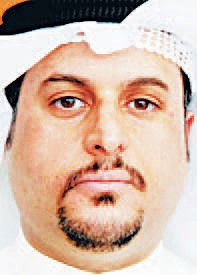
From his article in the Arab Times:
Camera ban regressive idea
‘Don’t stifle home-grown talent’
For a country that possesses a Constitution which safeguards civil liberties and freedom of speech, Kuwait sporadically sure likes toying with those liberties such as tentatively banning the Blackberry service, shutting down You Tube, impeding public gatherings and marches, banning and censoring books, literature, films and magazines which are available elsewhere in the Gulf.
This week according to media reports, and highlighted extensively in local Weblogs and Twitter, a palpable growing outcry is directed at the tentative plans by The Ministry of Information, Ministry of Social Affairs and Ministry of Finance to outlaw public photography and relegate it to journalism purposes only. This has allegedly resulted in the ban of Digital Single Lens Reflex Cameras (DSLRs) in public places. If this charade is true, then it bodes ill for this country, another regressive move into the annals of ignorance.
During the 1980s video cameras and photographic equipment were also shunned by the authorities. I remember visiting Failaka in 1985 and being confronted by a military officer who demanded I hand in my bulky video camera until I left the island. These types of infringements in the name of security were insignificant — we still had an attempt on HH the Amir, explosions at Foreign Embassies in Kuwait and an actual invasion.
Why does this country always attempt to stifle home-grown talent? Banning cameras in public places is demoralizing to all the passionate, talented young Kuwait men and women who have excelled in this field and love their hobby, not to mention visitors who attempt to document their travels here. Moreover, banning DSLR cameras is irrational and counterproductive if you think about it; in this day and age of iPhones, Blackberries, 5 MP plus camera phones, Google Earth and the like, anyone can take photograph of anything, quietly, without fanfare, which makes the potential DSLR ban even more preposterous.
I have just returned from a trip to Dubai where I witnessed dozens of tourists proudly using their cameras to document Burg Khalifa and the other picturesque locations. No one stopped them, impeded them or asked them what they were doing and you know why, because they respect people’s rights and are intent on making their country more appealing. UAE is able to manage security matters confidently because they have proper security and ID processes in place: eye scanners at airports and entry points, proper electronic government, high fines for breaking the law, a brilliant CCTV system in place in every street corner (not the shoddy black and white choppy, streaming-like quality of the limited equipment we have here) — they truly invest in their infrastructure, maintain it and upgrade it.
If Kuwait is serious about its security then it should invest in the same caliber of CCTV and not the bargain basement tenders that usually go towards ineffective systems (i.e. Highway signs with the useless ‘no mobile’ plasma screen) belonging to members of the matching ministry who want a ‘piece of the action’. The sad reality is the government sector here would rather ban something than actually strive to improve it through sheer hard work and effective processes. It’s just easier to ban; a question of laziness and neglect.
Needless to say, Kuwait seems unfazed when foreign jets infiltrate our airspace and take aerial shots of our oil refineries and military installations, or when agents and their local conspirators are found to possess blueprints and photographs of said installations, but no, lets go after the ‘little guy’, the amateur photographer or tourist on the street taking pictures. It’s a hypocritical, spineless action by the authorities.
Moreover, I suspect the issue is not just relegated to security, a myriad of reasons could have led to the support of this ban, fundamentalists who felt cameras and pictures are a ‘Tool of the Devil,’ government officials and ministries disgraced at seeing shots of Kuwait’s dilapidated infrastructure, environment and mismanagement on weblogs, internet forums and magazines. You cannot conceal the squalid side of Kuwait; it is there for everyone to see.
Furthermore, this law against public photography will not be enforced, just as seatbelt, no mobile while driving, no litter, no smoking areas, and other ‘laws’ cannot be enforced in this Land of Confusion.
Amer Al-Hilal is webmaster of http://www.hilaliya.com and can be reached at amer@hilaliya.com.
A Little TSA Humor
Thank you, KitKat 🙂



Kuwait Ministries Ban Photography?
I am in total shock.
Thank you, Bit Jockey, for sending this to me, an article from the Kuwait Times.
We had so much fun! We had photo challenges, Kuwait sunsets, National Day Celebration photos, so much fun. And now, you can get arrested for taking photos? Not of military or political or sensitive buildings, not for reasons of national security, but . . . just because?

Most photographers in Kuwait are careful not to photograph women, or any citizens without their permission. Why on earth was this ban created?
How on earth will they enforce it? What are the penalties?
KUWAIT: After the ban three ministries placed on photography, most Kuwaiti youth are a bit confused about what to do with their cameras if they can’t use them in public and why such laws were implemented in the first place. The Ministry of Information, Ministry of Social Affairs and Ministry of Finance recently came to the conclusion that photography should be used for journalism purposes only. This has resulted in the ban of Digital Single Lens Reflex Cameras (DSLRs) in public, on the streets and in malls
.
What most Kuwaiti photographers have come to wonder is how such a decision could be reached by authorities, especially considering that digital cameras and cell phone cameras have the same abilities. What most people think of photography as a hobby has become a bit misguided due to the fact that the country has so little exposure to art. While using a DSLR, passersby may wonder if the camera is being used for the wrong reasons.
Mohammed Al-Eisa, who picked up photography as a hobby more than 10 years ago, said that he has decided to take photos of animals or still life due to the fact that these subjects don’t mind having their picture taken and don’t make a scene. “I started facing problems the very first day I bought my camera,” Mohammed added.
What often happens is that a big black camera tends to worry people. Taking a picture of a stranger would seem like much less of an issue if you were using a more discreet camera or even a cell phone. Mariam Al-Fodiry said that she has faced similar problems with her hobby and that being a girl doesn’t help at all. She said that in some cases it makes the problem even worse. “Switching to abstract and landscape photography was one the options I considered after getting into enough trouble,” Mariam said.
Majed Al-Saqer said that sometimes people stop him while he is in his car with his camera, as if he were planning to kill someone with it. He said that he isn’t sure what the real problem is, whether it is people taking photos of each other or the size of the camera.

“To Serve You More Efficiently”
This is a photo we saw yesterday in the drive-through window at McDonalds. I will add that AdventureMan hates any kind of drive-through because he thinks there is a greater chance of not really getting what you ordered, but I love the convenience, and I was only ordering one simple thing:

Excuse me? If you have four ladies coming back from a shopping trip (say like) and each wants to pay her own order, you can’t do that? To serve us more efficiently, we can only make two orders per car? If I were a fast-food chain which relied on my customer’s good will, I would serve them, period.
Whenever a bank or a store or a fast-food joint start a sentence with “to serve you more efficiently” start looking for CUTS in service – shorter hours, fewer free services, fewer employees, fewer amenities.
When Bureaucracies Function Well
This week AdventureMan and I explored something new in our lives – Early Voting. We had heard about it from our friends. It’s not like absentee voting, where you are mailed a ballot and you mail it back in after you have filled in your votes. With early voting, you can actually go to a voting place and vote.

We went after lunch, and we didn’t know where it was, but once we got near, we started seeing signs. Great signage.
When we entered the door, there was a lady there to tell us where to go – and more signs, too.
When we got to the right floor, there were signs with arrows and “Vote Here” on them.
When we got to the voting office, there were lots of people to help us get our ballot. When I messed up my first ballot (I hadn’t read an amendment carefully), they quickly did all the necessary paperwork and got me voting again. The second time, the machine accepted my ballot. 🙂
All in all, a fabulous experience. And – they gave me a sticker! We were so impressed with the careful attention to detail that had gone into getting us to the right place and getting our vote accomplished.
Later in the week, I had a mammogram. Being new, I am not in the system, so I have to go through admitting procedures every time I go to a new doctor or a new institution. At the West Florida Hospital, as soon as I got to the right room, I could see a sign telling me where to wait my turn. The receptionist was welcoming AND efficient. There were a lot of people waiting, and one by one we were taken in to have our paperwork done. No need for a pen; you sign on a machine, like you do for credit card purchases in many stores. Then you sit in a small hallway until someone calls your name and you become a human train as a guide leads you to your stop. That part was half hilarious and half annoying. If I knew where it was, I might have gotten there faster on my own, but . . . I didn’t know where it was. As far as systems go – it worked. It kept people orderly. It got a lot of people in and out efficiently, and fairly. No one can break into the lines, claiming to be more important. I am guessing if there is a patient whose malady is serious enough to take precedence, they have procedures they can follow separate from the normal intake procedures.
I have to stop and admire when bureaucracies function as intended, to help us more efficiently accomplish our business. It is when they become a stomping ground for nepotism and inefficiency that they earn my ire.
When I arrived in Qatar, my bank had a Women’s branch which was convenient for me and I loved going there. I was often the only customer, and the women taking care of me were always charming, helpful and friendly. When the same bank broke into another section and became an Islamic bank, instead of a normal bank working with Islamic customs, I was no longer able to use the women’s bank, but I’ve always remembered their personal customer service.
On the other hand, banking in Qatar could be totally tortuous, if you had to use the normal bank where Mr. Important would walk right in front of you as if you didn’t exist, or certainly, as if you were far less important than he was. In Kuwait, at my bank branch, you took a number, and it appeared to me that most of the time the number system was honored, unless it was a personal friend, LOL. Personal friends, or friends of the family, or a friend of a friend of the family always get to go first.
I suspect there are similar exceptions in Pensacola, but less transparent. Mr. Important has his own banker he can go to without waiting, probably in a private office, and it is invisible to the rest of us. Ms. Important, on the other hand, probably has to wait in the waiting room with the rest of us for her mammogram.
What Mormons Do Right
Today, after church, AdventureMan took me to my very favorite place in Pensacola, Tudo’s (Vietnamese) and as we were waiting for our food, and our take out order (the Happy Baby has a bad cold so we are also taking lunch to his Mom and Dad) I notice the guys in the next booth are speaking in a foreign language, and because I don’t speak it, I can only guess, it was perhaps Maylay.
I think they had to be Mormons. They were in their twenties, and very clean cut. Two were probably foreign students, and two were in white shirts with ties, and dark pants, what I think of as Mormon-boys-on-their-mission dress, and it carries over into post-mission life. We saw them often, two by two, in Germany and in France, sometimes singing, sometimes going door to door, sometimes passing out pamphlets. They always spoke the language of the country they were in, maybe not so well at the beginning, but at the end of their two year mission, they spoke it pretty well.

From time to time, at the next table, they were all four speaking the same language, and it was not English.
So lets say, from a strategic point of view, that our goal is to spread the ‘good news’ (which, oh by the way, it is.) Doesn’t it just make sense that you make an effort to speak the language of your target nationality?
You would be amazed at how few of the other denominations who send ministers and evangelists overseas, how very few of them have much training in the language of the people they will be serving, or ministering to, or trying to share the good news with. You would not be amazed that when you are trying to communicate, especially big ideas, it really helps to be able to communicate. It also shows respect for another country and another culture, and humility to learn other languages and other ways. I can imagine that much of their success comes from an ability to build a personal relationship, and that is more likely to happen if you speak their language.
I am not Mormon, as you know, and I admire much of what they do right – I admire their neighborliness, their obligation to reach out and help where help is needed, and their stewardship of resources, built right into practicing the religion. I especially admire their ability to teach languages to the young missionaries they send out, and their vast library of genealogical resources.
Recent Comments
ExpatAlien on What Country am I Living … intlxpatr on Yellowstone: Old Faithful to C… Michelle on Yellowstone: Old Faithful to C… Cathy on No Grown-Ups in Charge intlxpatr on Waiting for Snow Wikipedia Donate Button

Amazina


Early Voting in Florida


 Here There and Everywhere