William Dalrymple: The Age of Kali
Having read and loved In Xanadu: A Quest by William Dalrymple, and having received recommendations by friends who say they read ALL of William Dalrymple, I started on this second book, The Age of Kali. I didn’t like it, not one bit. I am proud to say I read it all the way to the end, because often if I don’t like a book, I will say to myself “I don’t need this!” and toss it, but I didn’t, I stuck with it. I am proud because it isn’t easy to stick with a book you don’t like, and I didn’t like this book.

In Xanadu, Dalrymple was wryly funny, hilariously funny, and most of the humor was directed at himself. In The Age of Kali, there is nothing funny.
The Age of Kali is a series of interviews and adventures in India and Pakistan. The author did these interviews and took notes (some are published in slightly different forms as magazine articles) over a period of ten years and then strung them all together to form this book. There is little or no linkage from one to the other. They are grouped geographically.
Here is what I like and admire – this man achieves the most amazing interviews, many times just by asking the right person at the right time. He insinuates himself, asks easy questions, and then sticks in a hard question. He doesn’t seem to flinch from putting himself in danger, and he doesn’t stand on respect when asking his questions. I admire that he went difficult places, interviewed difficult people, and wrote the interviews up without fawning over the celebrity status of his interviewee.
What I don’t like is that he doesn’t seem to like anybody very much. There are no funny anecdotes. By the end of the first interview, I began to get an impression that he doesn’t like India very much (and I believe that is NOT true, as he lives part-time in Delhi) and that India is not a place I want to visit. He interviews corrupt politicians, descendants of the moghuls, Benazir Bhutto – and her mother, Imran Khan (the cricket player) and many others. In each and every interview, he maintains a distance that tells us he doesn’t like these characters very much.
Here are some quotes from early in the book:
These days Bihar was much more famous for its violence, corruption and endemic caste-warfare. Indeed, things were now so bad that the criminals and the politicians of the state were said to be virtually interchangeable: no fewer than thirty-three of Bihar’s State Assembly MLAs had criminal records, and a figure like Dular Chand Yadav, who had a hundred cases of dacoity and fifty murder cases pending against him, could also be addressed as the Honorable Member for Barth.
As he interviews Bihar politician Laloo Prasad Yadav:
I asked Laloo about his childhood. He proved only too willing to talk about it. He lolled back against the side of the plane, his legs stretched over two seats.
‘My father was a small farmer,’ he began, scratching his balls with the unembarrassed thoroughness of a true yokel.
OK, that was funny. I had to read it aloud to AdventureMan. One of the things that still unnerves me living here is that the men are always touching themselves – something so totally forbidden in my culture as to be simply unthinkable.
In his section about Pakistan:
These people – the Pathans – have never been conquered, at least not since the time of Alexander the Great. They have seen off centuries of invaders – Persians, Arabs, Turks, Moghuls, Sikhs, British, Russians – and they retain the mixture of arrogance and suspicion that this history has produced in their character. History has also left them with a curious political status. Although most Pathans are technically within Pakistan, the writ of Pakistan law does not carry in to the heartland of their territories.
These segregated areas are in effect private tribal states, out of the control of the Pakistan government. They are an inheritance from the days of the Raj: the British were quite happy to let the Pathans act as a buffer zone on the edge of the Empire, and they did not try to extend their authority in to the hills. Where the British led, the modern Pakistani authorities have followed. Beyond the checkpoints on the edge of the Peshawar, tribal law – based on the institutions of the tribal council and the blood feud – rules unchallenged and unchanged since its origins long before the birth of Christ.
When I read this, I think of recent headlines about the problems Pakistan is having maintaining order, fighting the status of “failed-nation”, and the chaotic administration of tribal “justice.” The old ways have endured – but as we learned in Three Cups of Tea, there are villages where villagers are eager to have modern schools, eager to educate their daughters, and they, too, are victims of the fanatics who burn the schools and throw acid on women attending school.
The author is told, time and time again by Indian citizens, that India has entered The Age of Kali, “the lowest possible throw, an epoch of strife, corruption, darkness and disintegration.” The book reflects the darkness, corruption and disintegration the author found. I only wish there were some moments of relief, of lightness, hope or humor to encourage the reader on his/her way, but the documentation of this lowest throw was relentless.
“I Look Deep Inside . . .”
We were at one of those official dinners, and, as is my habit, I found someone even more shy than I am and started asking questions. It’s an old trick; it gets me through the most endless affair. She turned out to be very smart, very witty and entertaining, this Nigerian woman, so elegant, so well-mannered. We were having a great conversation.
“So what do you do in Kuwait?” I asked, almost yawning, I was so ashamed of myself for asking such a boring, common question.
She paused, looking at me like she was measuring me.
“I look deep within people, and I tell them things about themselves they never knew,” she responded.
“Oh no!” I thought to myself, “is she some kind of fortune-teller?” (Fortune tellers are strictly forbidden in my religion.) I’m usually pretty good with the old poker-face, but my eyes probably shifted, looking quickly for a polite exit.
She watched me, her eyes twinkling, grinning like a fisherman with a live one on the hook.
“I’m a radiologist,” she added, and we both cracked up. She really had me: baited me, caught me, hooked me good, and then did the old catch-and-release.
Through the Eyes of AdventureMan
I’ve had some really smart friends in my life, and sometimes, those who are really really smart get confused about normal everyday things.
We had a wonderful friend, Bill. His wife was a high school teacher, and when he saw the sign “Aim High – Air Force!” on Ramstein Air Force Base, he said “Look, sweetie, there’s the high school!”
Another time, on Mother’s Day, we were sitting in church with Bill and his wife and my husband said to Bill “I really like your new Land’s End jacket!” and Bill said “How did you know it was from Land’s End?” and my husband said “Because you still have the label on the cuff.” We were all still crying from laughing so hard when the priest glared at the four of us (troublemakers!) as he processed down the aisle.
AdventureMan is a lot like that. He thinks differently. Driving along the Gulf Road the other day, he said “You wouldn’t think there was enough demand for models here that they would have a special school.”
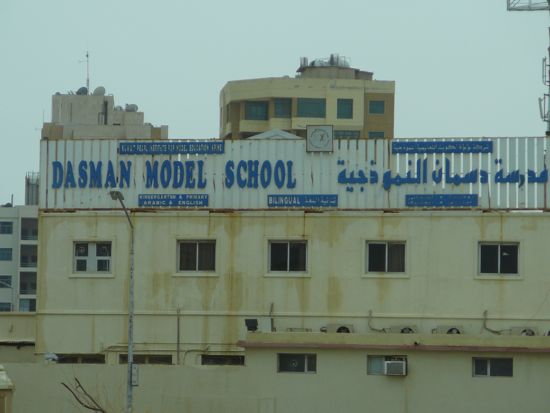
Then he said “what’s up with that?”

We both started laughing, because to us, it looks like something called an “entrenchment tool” or shovel, and we use them when camping to make a temporary toilet, so it’s not exactly something we would mount on the back of our truck, all gleaming and shiny. But we may be thinking differently, and there may be a really good reason this is done that we don’t know about, so if any of you know why it would be a good idea to mount a shiny shovel, please share!
The other night AdventureMan couldn’t get his at-home wireless connection to work, he’d been trying for several nights and couldn’t get a signal. I moved the stack of books and papers directly behind his laptop, between him and the router, and voila! instant wireless connection. He is a really really really smart man, but just has a little problem with the small things. 😉
(He always looks to see if I have mentioned him in the blog)
Over 45’s Risking Sexual Infections
This is from BBC News but similar news is coming out of the USA – one of the fastest rising rates of STD’s is in the nursing homes and rehabilitation facilities, among the elderly.
Many over-45s ‘ignore STI risks’
STI rates have been increasing among people over 45
Many middle-aged people are continuing to take an irresponsible attitude to their sexual health, say experts.
The Royal Pharmaceutical Society of Great Britain polled over 2,000 adults.
Nearly a fifth of those polled aged 45 to 54 said they had had unprotected sex with someone other than a long-term partner in the past five years.
There is a misconception that their risk of catching a sexually transmitted infection (STI) is “next to nothing”, says the RPSGB.
Sexually transmitted infections have doubled in under a decade in people over 45 and have been rising at a faster rate than in the young, recent figures from the Health Protection Agency show.
Older people are increasingly likely to be single or undergoing relationship changes and are less likely to consistently use condoms, perhaps because the risk of pregnancy no longer exists, experts have observed.
The RPSGB’s survey of 2,258 UK adults – half who were aged 45 plus – found older generations were flippant about the risks of catching an STI.
Feast Day of John Donne
In church, on Friday, the speaker was discussing Lenten practices, and told us of a woman who seriously committed herself to Lent, but allowed herself respite on the feast days of the saints of the church. She has one coming up today – the feast of John Donne, a great priest, poet and thinker in the church.
His life is fascinating, and when he falls in love and secretly marries the daughter of the rich and powerful man for whom he works, he is imprisoned. When released, he began preaching, and ended up revered for his work with the church, and his fine writings.
He was also ahead of his times. Here is one of the essays/meditations best known in our culture; it is often read at funerals, and says, as many are saying now – we are all connected. What happens to my neighbor, happens to me. In this earthly world, we are connected in ways we don’t even understand, and it is our duty, as well as our own best interest, to look after our neighbor:
MEDITATION 17, BY JOHN DONNE
NUNC LENTO SONITU DICUNT, MORIERIS
[Now this bell tolling softly for another, says to me, Thou must
die.]
Perchance he for whom this bell tolls may be so ill as that he know not it tolls for him; and perchance I may think myself so much better than I am, as that they who are about me and see my state may have caused it to toll for me, and I know not that.
The church is catholic, universal, so are all her actions; all that she does, belongs to all. When she baptizes a child, that action concerns me; for that child is thereby connected to that body which is my head too, and ingrafted into that body whereof I am a member. And when she buries a man, that action concerns me: all mankind is of one author and is one volume; when one man dies, one chapter is not torn out of the book, but translated into a better language; and every chapter must be so translated. God employs several translators; some pieces are translated by age, some by sickness, some by war, some by justice; but God’s hand is in every translation, and his hand shall bind up all our scattered leaves again for that library where every book shall lie open to one another.
As therefore the bell that rings to a sermon calls not upon the preacher only, but upon the congregation to come, so this bell calls us all; but how much more me, who am brought so near the door by this sickness.
There was a contention as far as a suit (in which piety and dignity, religion and estimation, were mingled) which of the religious orders should ring to prayers first in the morning; and it was determined that they should ring first that rose earliest. If we understand aright the dignity of this bell that tolls for our evening prayer, we would be glad to make it ours by rising early, in that application, that it might be ours as well as his whose indeed it is. The bell doth toll for him that thinks it doth; and though it intermit again, yet from that minute that that occasion wrought upon him, he is united to God. Who casts not up his eye to the sun when it rises? but who takes off his eye from a comet when that breaks out? Who bends not his ear to any bell which upon eny occasion rings? but who can remove it from that bell which is passing a piece of himself out of this world?
No man is an island, entire of itself; every man is a piece of the continent, a part of the main. If a clod be washed away by the sea, Europe is the less, as well as if a promentory were, as well as if a manor of thy friend’s or of thine own were. Any man’s death dimishes me because I am involved in mankind, and therefore never send to know for whom the bell tolls; it tolls for thee.
Neither can we call this a begging of misery or a borrowing of misery, as though we were not miserable enough of ourselves but must fetch in more from the next house, in taking upon us the misery of our neighbors. Truly it were an excusable covetousness if we did; for affliction is a treasure, and scarcely any man hath enough of it. No man hath affliction enough that is not matured and ripened by it and made fit for God by that affliction. If a man carry treasure in bullion, or in a wedge of gold, and have none coined into current money, his treasure will not defray him as he travels. Tribulation is treaure in the nature of it, but it is not current money in the use of it, except we get nearer and nearer our home, heaven, by it. Another man may be sick too, and sick unto death, and this affliction may lie in his bowels as gold in a mine and be no use to him; but this bell that tells me of his affliction digs out and applies that gold to me, if by this consideration of another’s danger I take mine own into contemplation and so secure myself by making my recourse to my God, who is our only security.
You can read his history and learn more about him here: John Donne.
First Kuwaiti Policewomen Graduate
Wooo HOOO on you, Kuwaiti policewomen! It is always hard to be in the vanguard, you take the criticisms, you take the disbelieving stares, and you handle questions, even from your own families. It’s always tough to be out front – to be a leader.
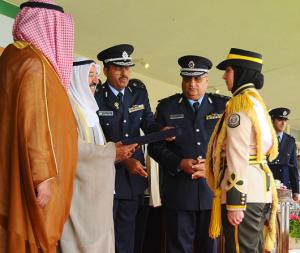
First group of policewomen graduate
From today’s Al Watan
KUWAIT: His Highness the Amir and Supreme Commander of the Armed Forces Sheikh Sabah AlـAhmad AlـSabah has attended on Wednesday the graduation ceremony of the 35th batch of military cadets, the 20th batch of specialized officers and the first batch of female cadets at the Support Authority Institute of the Saad AlـAbdullah Academy for Security Sciences.
The ceremony witnessed the graduation of the first batch of policewomen in the country. His Highness the Amir who arrived at the academy at 10:30 a.m. was warmly received by the Minister of Interior Lieutenant General Sheikh Jaber AlـKhalid AlـSabah, as well as other senior police officers.
The ceremony was also attended by His Highness the Crown Prince Sheikh Nawaf AlـAhmad AlـSabah, Vice President of the National Guards Corps Sheikh Mishaal
AlـAhmad AlـSabah, His Highness the Prime Minister Sheikh Nasser AlـMohammed AlـSabah, First Deputy Prime Minister and Minister of State for Defense Sheikh Jaber AlـMubarak AlـSabah, as well as other members of the ruling family, senior statesmen and members of the families of the graduating cadets.
Representatives of the 35th batch of military cadets then handed over the national flag to the representatives of the 36th batch. The Assistant Director General of the Academy for Education and Training Affairs Brigadier Dr. Waleed Khalaf BinـSalama read the ministerial decrees before inducting the new male and female police officers into the police force.
His Highness the Amir handed the graduates awards and certificates in appreciation for their efforts and then received the shield of the academy, that is dedicated to him, from Major General Yousef Mubarak AlـMedhahka. ـKUNA
Last updated on Thursday 26/3/2009
A Modern Parable
Thank you, Anita!
A MODERN PARABLE . .
A Japanese company ( Toyota ) and an American company (Ford) decided to have a canoe race on the Missouri River. Both teams practiced long and hard to reach their peak performance before the race.
On the big day, the Japanese won by a mile.
The Americans, very discouraged and depressed, decided to investigate the reason for the crushing defeat. A management team made up of senior management was formed to investigate and recommend appropriate action.
Their conclusion was the Japanese had 8 people rowing and 1 person steering, while the American team had 8 people steering and 1 person rowing.
Feeling a deeper study was in order, American management hired a consulting company and paid them a large amount of money for a second opinion.
They advised, of course, that too many people were steering the boat, while not enough people were rowing.
Not sure of how to utilize that information, but wanting to prevent another loss to the Japanese, the rowing team’s management structure was totally reorganized to 4 steering supervisors, 3 area steering superintendents, and 1 assistant superintendent steering manager.
They also implemented a new performance system that would give the 1 person rowing the boat greater incentive to work harder. It was called the ‘Rowing Team Quality First Program,’ with meetings, dinners, and free pens for the rower There was discussion of getting new paddles, canoes, and other equipment, extra vacation days for practices and bonuses.
The next year the Japanese won by two miles.
Humiliated, the American management laid off the rower for poor performance, halted development of a new canoe, sold the paddles, and cancelled all capital investments for new equipment. The money saved was distributed to the Senior Executives as bonuses and the next year’s racing team was out-sourced to India.
Sadly, The End.
Here’s something else to think about:
Ford has spent the last thirty years moving all its factories out of the US, claiming they can’t make money paying American wages.
TOYOTA has spent the last thirty years building more than a dozen plants inside the US. The last quarter’s results:
TOYOTA makes 4 billion in profits while Ford racked up 9 billion in losses.
Ford folks are still scratching their heads.
St. Oscar Romero
I didn’t even know we had a St. Oscar Romero, so when it came up on my screen, this morning as I was doing my daily lectionary readings I took a little time to read about him.
What an incredible man – and a modern day saint, too, a man for our times:
OSCAR ROMERO
ARCHBISHOP OF SAN SALVADOR, AND THE MARTYRS OF EL SALVADOR
(24 March 1980)
Óscar Arnulfo Romero y Galdámez (August 15, 1917 – March 24, 1980), commonly known as Monseñor Romero, was a priest of the Roman Catholic Church in El Salvador. He later became prelate archbishop of San Salvador.
As an archbishop, he witnessed numerous violations of human rights and began a ministry speaking out on behalf of the poor and victims of the country’s civil war. His brand of political activism was denounced by the hierarchy of the Roman Catholic Church and the government of El Salvador. In 1980, he was assassinated by gunshot while consecrating the Eucharist during mass. His death finally provoked international outcry for human rights reform in El Salvador.
In 1997, a cause for beatification and canonization into sainthood was opened for Romero and Pope John Paul II bestowed upon him the title of Servant of God. The process continues. He is considered the unofficial patron saint of the Americas and El Salvador and is often referred to as “San Romero” in El Salvador. Outside of Catholicism Romero is honored by other religious denominations of Christendom, like the Church of England through its Common Worship. He is one of the ten 20th-century martyrs from across the world who are depicted in statues above the Great West Door of Westminster Abbey, London.
You don’t have to be perfect to be a saint, in fact in the reading for today, St. Paul writes that “22 For I delight in the law of God in my inmost self, 23 but I see in my members another law at war with the law of my mind, making me captive to the law of sin that dwells in my members. 24 Wretched man that I am! Who will rescue me from this body of death? 25 Thanks be to God through Jesus Christ our Lord!
So then, with my mind I am a slave to the law of God, but with my flesh I am a slave to the law of sin.
We cannot, in our own strength do right all the time, even if we want to choose rightly. Oscar Romero may not have been perfect (because none of us are, it’s not like I know anything scandalous about him) but he dedicated himself to righting a major wrong he saw in society, and his persistence and dedication ended up causing his death.
MP Al-Muhaibi Condemns Male Teaching Female Students
From today’s <a href=”“>Al Watan
MP Jaber AlـMuhailbi condemns school incident
Staff Writer
KUWAIT: MP Jaber AlـMuhailbi has denounced the fact that grade 12 girls at AlـSabahiya High School are being taught by a foreign, male teacher. According to him, “the incident reveals a great amount of recklessness on the part of the Ministry of Education,” which he says disregards the traditions and values of Kuwaiti society.
AlـMuhailbi expressed his apprehension that there might be forces planning to replace the conservative educational system in the country with a system that openly encouraged ”mixed” schools for boys and girls.
He held Minister of Education Nouriya AlـSubaih solely responsible for the incident, said that it proved she was incompetent to shoulder her responsibilities as a minister.
He finally announced that he would put forward a number of questions concerning the aforementioned incident to the minister, and would inquire as to whether this was an occurrence seen in other schools, and asserted that there were plenty of female teachers capable of teaching female students in Kuwait.
He expressed his displeasure about the presence of a male teacher in a girls” school, calling it “unacceptable.”
Last updated on Tuesday 17/3/2009
12th grade? Isn’t that like the year girls graduate and go on to university classes (God willing/insh’allah) where they will be taught, as likely as not, by male professors?
Do these girls go to restaurants with male waiters?
Do they shop in stores with male cashiers? Male customer service agents? Male managers?
Learning self-control is like any other skill; it requires practice. You practice by confronting the realities of the situation. Society – in and out of Kuwait – is mixed. We sit next to each other on airplanes, we are seated next to one another in restaurants, our paths cross, daily. Kuwaiti girls are well brought up and can control themselves; they also have skills at turning aside the unwanted attention of the rare teacher who might overstep.
Mr. MP, we must be suspicious of those who see sexual issues lurking in every corner; what is in the heart of a man who sees sex everywhere? Give these girls a little credit. They are after an education, not some male teacher.
Don’t Call, Text, or Sign on to Internet . . .
until you arrive”

From today’s Kuwait Times
‘Avoid cell talk, SMS, life you save maybe your own’
KUWAIT, March 15, (KUNA): Ninety percent of road accidents are coupled with lack of attention while driving, Assistant Undersecretary for Traffic Affairs at the Ministry of Interior Major General Mahmoud Al-Dousari said Sunday.
His remarks came on the occasion of hoisting flags of Gulf Cooperation Council (GCC) countries, announcing the commencement of the unified GCC traffic week; themed “Don’t Call Until You Arrive”. The ceremony was attended by traffic directors and their deputies of all six governorates, as well as a host of senior officials in Kuwait and the Gulf. This year’s theme aim at conveying an awareness message, cautioning from the use of mobile phones while driving, and depending on other means such as hands’ free and Bluetooth in order to stay focused on road and steer clear of accidents, Al-Dousari noted, pointing out that more studies had proven the theory suggesting the association of lack of attention with using mobile phones while driving.
The issue was not limited to speaking on phone, it went beyond that to include text messaging, or even logging on to the Internet while driving; which would turn them into major distracters, Al-Dousari said, adding that consequences of such behavior would eventually lead to tragic endings.
Al-Dousari advised that the best way to remain focused on road was to divert all incoming calls to voice mail, as well as receiving and sending SMS messages after pulling off the road. Some 18,773 violations were registered since the law that prohibited the use of mobile phones while driving was implemented last year, he noted.
“The Traffic Week aims to raise awareness, as it includes a host of various educational programs. It is not a week of firmness, stake out and issuing tickets like some might think,” Al-Dousari said, pointing out that injuries resulting from accidents had significantly decreased in the past two years. There are strict orders to deport any expatriate who commits serious traffic violations such as reckless driving, driving on the wrong side of the road, speeding, violating the red signal and assaulting security men, Al-Dousari concluded.

General al-Dousari, how many expatriates have you exported for serious traffic violations?
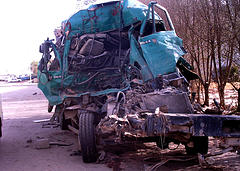
If you want to see fewer people on mobile phones, texting, signing on the the internet, running red lights, weaving while overspeeding, and assaulting security men, enforce your laws, enforce them all the time, and enforce them equally against every offender. If you enforce your laws, equally, against all offenders, traffic violations will decrease, traffic deaths will decrease, and all our lives, and those of our children, will be much safer.
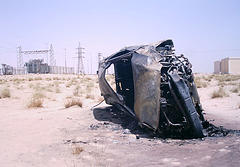
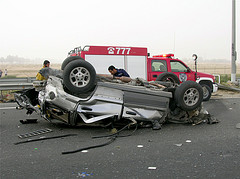
These photos are from a Flikr search for car wreck/Kuwait and, unfortunately, it is just a random selection among many. many. many.
Recent Comments
ExpatAlien on What Country am I Living … intlxpatr on Yellowstone: Old Faithful to C… Michelle on Yellowstone: Old Faithful to C… Cathy on No Grown-Ups in Charge intlxpatr on Waiting for Snow Wikipedia Donate Button

Amazina


Early Voting in Florida


 Here There and Everywhere